

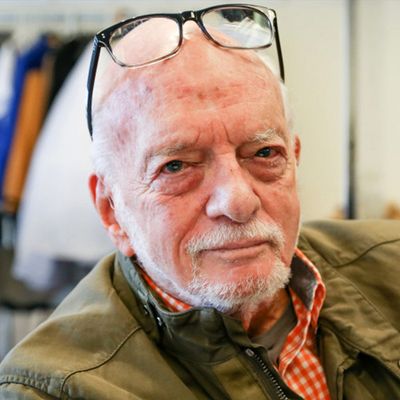
This Week: Celebrating the life and legacy of Hal Prince. Every week director Robert W Schneider and actor Kevin David Thomas pull back the curtain on neglected, forgotten, and under appreciated musicals, as well as bizarre performances, endearing television appearances, and all things show business... Read More
From the show: BEHIND THE CURTAIN: BROADWAY'S LIVING LEGENDS » Podcast
Guests
Featured Artists
Featured Shows

About
This Week: Celebrating the life and legacy of Hal Prince. Every week director Robert W Schneider and actor Kevin David Thomas pull back the curtain on neglected, forgotten, and under appreciated musicals, as well as bizarre performances, endearing television appearances, and all things show business. Become a sponsor of Behind The Curtain and get early access to interviews, private playlists, and advance knowledge of future guests so you can ask the legends your own questions. Go to: http://bit.ly/2i7nWC4
Transcript
This transcript was automatically generated and might contain errors.
[0:13] ♪ Musical number: "My Favorite Things" ♪
[0:18] Robert W Schneider: Happy Throwback Thursday, everybody.
[0:25] Kevin David Thomas: Nice.
[0:33] Robert W Schneider: Did you see Yankee Candle had a Sound of Music candle line?
[0:37] Kevin David Thomas: Wait, really?
[0:39] Robert W Schneider: Yeah, I really did. One of them was like raindrops on roses.
[0:50] Kevin David Thomas: Yep. I used to not understand, you know, Yankee Candle and what a big business it is. And I would drive up to Vermont to work in Northern Stage when I worked there, and we'd always pass the factory, and I was always like, ah, who buys candles? And now the older I get, I love a nice scented candle, Rob. It's really nice. You get home and you just want to relax a little bit and you put on whiskers and kittens, and you're like, oh, I feel great. This is nice, and they last a longer time. So, you know, hey, who am I? I don't know. A candle. I like candles now.
[1:18] Robert W Schneider: I think you should. They love Yankee Candle. Now, do you know how to sniff a Yankee Candle? Do you know how to sniff a candle to get the to figure out what the framework is?
[1:25] Kevin David Thomas: Take the top off and then put your nose in there and smell it?
[1:28] Robert W Schneider: No, no. Okay. You take the top off, but then you sniff the top.
[1:34] Kevin David Thomas: Ooh, the lid.
[1:35] Robert W Schneider: You sniff the lid, you're not supposed to sniff the candle.
[1:38] Kevin David Thomas: Oh, okay.
[1:39] Robert W Schneider: Yeah, so I thought now we should learn that.
[1:41] Kevin David Thomas: Yeah. Knowledge is power.
[1:43] Robert W Schneider: Very good. Wow. Now you know. You know, I went down a rabbit hole the other day. This is not my favorite thing, but there are some legends that I just don't know a lot about, and I want to know why they're so legendary. And so the great Tallulah Bankhead, you know, people often talk about her and she was very campy, even though she did some serious plays, and basically any play that she did towards the end of her career in the early 60s and late 50s, you know, the people would have come out in droves, especially a certain demographic, if you know what I mean, wink wink.
[2:15] Kevin David Thomas: Me?
[2:16] Robert W Schneider: Yes. But like she was very popular, and she almost would have takes to the audience. But I watched this episode of the Desi and Lucy show where she plays herself visiting them. It is so freaking funny. Her comedic timing is better than Lucy. I mean, her takes to the audience, everything. Oh my god, I love it. I just, I would, you guys, if you haven't, younger listeners, because I know our older friends know exactly who Tallulah Bankhead is, but if you've not watched this woman, it really is she's something special.
[2:48] Kevin David Thomas: I try to, I love Tallulah Bankhead, she's so funny.
[2:59] Robert W Schneider: Yes, darling, you know. What's that story that she went to church once and the priest was walking down with the bell and the incense, and she goes, Darling, darling, your dress was marvelous, but your purse is on fire.
[3:16] Kevin David Thomas: I mean, sad she was a sad person. I mean, she was like couldn't stop drinking and smoking, and she thought complications of emphysema. I mean, it was not, I mean, all the things that people loved about her were also part of the things that were her downfall. But my god, what a what and she was the subject of that play Looped. Remember that with Valerie Harper? She was the set of Looped, and then if you want to see good Tallulah Bankhead impressions, either Charles Pierce or Charles Pierce does. Leroy Reams does a really good Tallulah Bankhead.
[3:41] Robert W Schneider: Oh my god, that's when we had dinner with Leroy at Sardi's, he started the evening with telling us a very graphic story about her that I just will not repeat on the air. But it was a funny story. So anyway, so what's your what's your what's your favorite thing?
[3:58] Kevin David Thomas: Well, the reason why I went down the Tallulah Bankhead. No, though that it ties into my favorite thing. So I'm reading this book, and I'm sure that you have I have a stack of books on my nightstand that I, you know, eventually will get to. And this book I bought, and I don't remember why I bought it. It's called Follies of God. It's a biography, sort of, of Tennessee Williams. It's called Follies of God. Tennessee Williams and the Women of the Fog, written by James Grissom, G-R-I-S-S-O-M. It's first of all, it's so well written. It's a fantastic book. And basically, towards the end of his life, Tennessee Williams, in a very low moment of his life to near the end, summoned this writer, this 20-year-old writer, who was asking a letter of advice, and Tennessee Williams decided that this is the guy that's gonna help solve some of his questions in life.
And he wanted him, he sent him on a mission to on behalf of Tennessee Williams, or Ten as he called him, to talk to the people who mattered most to him throughout his life and to see if they if he mattered to them, and to basically assemble a bigger picture of who he was to these women that mattered so deeply.
[5:03] Robert W Schneider: And of course, one of the women were Tallulah Bankhead. A couple other women were women like Maureen Stapleton, Julie Harris, Bette Davis, Katharine Hepburn, Elia Kazan, who's not a woman, Marlon Brando, John Gielgud. I just read about Marion Seldes, Lois Smith, who I what dying to get on the show. And those some of these women were his close friends, some of them were his inspiration, or Maureen Stapleton was basically like a sister to him. They would just sit in bed and you know, comfort each other. And some of them were just idols that he just dreamt about and loved. But what's so fascinating in this book is that this writer really did sit down with all these women. So what you get is you get yes, you get all about Tennessee Williams, and he is almost like Leroy Reams truthful in many, you know, talking about his sexual exploits, talking about what it was like to be in LA and the men that he was with, and just what it was like to be a struggling artist and how he had to borrow money, and just a very honest take on a man's life.
Or and you know that it's honest because then you hear what all these other people have to say about him. And it's the good, the bad, and the ugly. And there was a lot of all of that in this book. It is also, I found to be almost a philosophical book because it deals with life and death and reflection and what it means to be an artist, and how an artist is someone who's constantly sometimes struggling, and yet we do it because we love it so much. And you get that from every single person that he encounters in this book. And because everyone's near the latter part of their life, they're a lot more reflective about the good parts that they've already lived in their life. And so it definitely has a more philosophical bent.
You learn why he what inspired if you're a Tennessee Williams fan, I have not read all of his plays. I do not know him probably as well as you know his work, Rob, because you studied so much of it. I feel like you probably did. But I only know, like I did Cat on a Hot Tin Roof, I did Glass Menagerie when a couple years ago. I was a gentleman caller, but that's like the only Tennessee Williams play I know. And he talks about why he wrote them and how they changed and how he didn't think he could do it, and how the director really helped, you know, focus, you know, A Streetcar Named Desire, for instance. He's very honest about all that. Yeah, I'm just looking at my notes real quick. Yeah, and he talks about the inspiration of creation and how we actually I find that we can all learn about our own artistic lives through his journey as well.
Again, this book is called Follies of God, Tennessee Williams and the Women of the Fog, superbly written by James Grissom, G-R-I-S-S-O-M. I do not remember why I bought it. I even looked and I bought it a year ago on Amazon. Someone probably, I was at a party and someone's like, You should read this, and I bought the book, and then I don't even remember who it is that recommended it to me. So if you're listening to this and you're like, Kevin, that was me, remind me because I want to thank you. Because it really is, it's just such a great book, and I'm really happy that I'm reading it.
[7:45] Kevin David Thomas: I read it. I have and I've never read this book, and now I think I'm gonna pick it up. I have a really interesting conundrum with Tennessee Williams that I'm going to ask you about, and then we'll ask our listeners about. Anytime I read one of his plays, I love reading the play. I love reading Glass Menagerie. Every time I read it, I cry like a baby, no matter how many times I've read it. Same with Cat on a Hot Tin Roof, Streetcar Named Desire. But when I see them, I'm never engaged in watching them. I'm engaged in reading them and I love reading them, but I'm never engaged in watching the production. Are there any playwrights that that's similar for you? Where you enjoy reading the play, but then when you see the play, you're like, eh, is it like Eugene O'Neill or Neil Simon or Arthur Miller, maybe Tennessee Williams? So I don't know. So I'm posing that question to our listeners. Is there a playwright like that that does it for you where you enjoy reading the play, but then you can't really watch the play?
[8:45] Robert W Schneider: I can't think of one. I don't read a lot of plays, but I know you do, and you're really good at that. Um, I, I'm, I don't know. And I, I, I imagine a lot of it has to do, and he talks about this in the book, is that if he wasn't there and a director who knows his work so intimately as him, I think that it's hard to get it to translate what's inside his head. That's why he's writing so many, he talks about how why he's he writes so many stage directions, and it would drive him crazy that every director is like, throw out the stage directions, don't read that. But for Tennessee Williams, he's like, that's the essence. That's how I get you into the world of what I'm working with in my mind and what I'm trying to, you know, get the the spirit with which it's happening.
And I know, I mean, when I was in school, everyone was like, oh yeah, scene study class, so like, yep, just do what you want to do, you know. And it's like, well, if you want to get what he was intending, I don't know. I, I, I wonder how hard it is to create a production that was exactly what he was intending. I don't know. I, I imagine there's a slight disconnect between the page and the stage. For me at least. I don't know. I don't think I could ever, I don't, I don't know if I'd ever want to direct Tennessee Williams. I just enjoy reading them on my own. Um, and maybe one day I'll play Big Daddy in Cat on a Hot Tin Roof.
[9:50] Kevin David Thomas: Yeah, you will. Like every day you are Big Daddy.
[9:53] Robert W Schneider: Okay, that's gross. That's disgusting. I couldn't even get through that. You gotta get over it, Brick! Just your friend. You gotta give me a grandchild.
[10:05] Kevin David Thomas: That's scary. That's uh, thank you. That was a line reading. Wow. I don't know who'd play Big Mama. Maybe you want to be in drag, you can be Big Mama.
[10:12] Robert W Schneider: I'd love to be in drag, yeah, sure.
[10:14] Kevin David Thomas: Okay, great. Well, I'm just, I'm throwing out ideas here. You can be Big Mama.
[10:18] Robert W Schneider: I kind of want to be Maggie, but uh, fine, you can be Maggie.
[10:21] Kevin David Thomas: I don't understand your problem, Rick. What's going on with you and Skipper?
[10:30] Robert W Schneider: Skipper? I hardly even know him. That's, that's fine. Every time I come home, it smells like cornbread and papas in here. It's the revival of Oklahoma. Mary, make more chili. Um, so we go. It's a sold-out ground, Mary. Get the cornbread. Pepper for the hot sauce? No? Okay. This poor woman. Um, oh my god, this is, this is camp. This is just camp, camp, camp for everybody today. Okay. Um, it does tie into musical theater, so you're gonna just have to check out the color. She's gonna pull the bank heading to the camp. Yeah, well, yeah, I mean, it feels makes sense to me. All right, folks. Um, in the 1970s, there was a desire on television to really embrace variety shows. We had things like Carol Burnett, we had Donnie and Marie, etc. etc. And then somebody got the bright idea.
What if we took a whole bunch of people who really can't sing and dance and we put them on a variety show together? And that show was called the Brady Bunch Hour. Yes, in the 1970s, they reunited all of the cast except Eve Plumb, who was like, I'm not coming back for this. They replaced her with a woman named Fake Jan, and they did a variety show written by former guest Bruce Vilanch, that um literally was just the Brady Bunch cast singing and dancing and doing sketches. However, there's a lot of good musical theater in there for everybody. So you can go on YouTube and watch it, but I have to just tell you a couple of my favorite things to keep an eye out for. Um, if you watch one episode, you'll have Florence Henderson sing "Send in the Clowns."
Well, she did Broadway, you know what I mean? While the Brady Bunch clan sings "Razzle Dazzle" from Chicago. Oh, I'm not joking. I'm not joking. Um, there's a Hollywood tribute where uh Milton Berle does a conga line and they all sing songs from Singing in the Rain. But one of my absolute personal favorites, because it makes you so uncomfortable, you're gonna like literally have to turn away, is episode six, which stars Rich Little, the comedian or the impersonator who had to tell you who he was impersonating. Um, he develops amnesia and believes he's one of the Brady children. It also gives him a chance to like show off his impersonation skills, like when he does uh Carol Channing in Hello Dolly.
But the best part of this, folks, folks, is when you get Ann B. Davis, who played The Maid, uh, and a couple of the the children and Rip Taylor, what the fuck he's doing in there, God only knows, doing "Ease on Down the Road" from The Wiz. Once again, folks, this is an all white cast singing "Ease on Down the Road" from The Wiz in this episode. All you have to type in if you don't want to watch the whole episode, and I really think you should, because you'll also get to see Barry Williams do "Pinball Wizard," is you'll also get to see um just type in "Ease on Down the Road, Brady Bunch," and you will see it. Maybe we'll even post it for you as well. It is a very special show, it only lasted a few episodes.
Um, and you can keep an eye out for Fake Jan and say hi to her, too. Um also if you go to the episode where the Brady kids announced they are inviting over the kids from What's Happening, because it's a crossover, you'll also get to hear a song called "Disco Lucy," which is the I Love Lucy theme just set to a disco beat. Incredible. Yeah, and but I mean it's literally so many like musical theater songs pop up. In one episode, you not only get to hear Billy Joel's "Piano Man," you also get to hear "I Got Love" from Pearly. So that's that's what we're talking about here, folks. That's a hodgepodge, a potpourri. So YouTube, the Brady Bunch Hour. There's only like nine episodes, so you should be able to get through it.
I would say this if you drink, drink. If you smoke out, smoke out, then turn it on and get ready. But that is mine this week. The Brady Bunch Hour and all of its musical theater goodness. So that's mine.
[14:46] Kevin David Thomas: Good one. Very good one. All right, then I'm gonna ease on down the road and buy a copy of Follies of God.
[14:51] Robert W Schneider: Enjoy, yeah. Check it out. All right, till next time, everybody.
[15:09] ♪ Musical number ♪
© Broadway Podcast Network, All Rights Reserved