

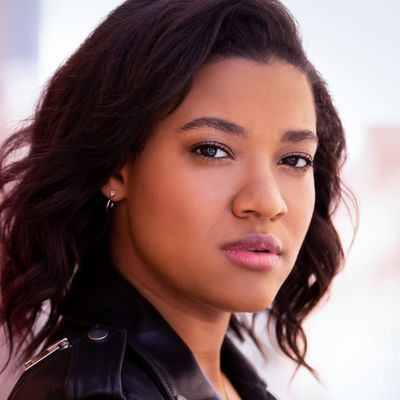
Shereen Pimentel steps into The Batter's Box for Episode 39 of Break a Bat! At the time Broadway had shut down due to COVID-19, Pimentel had just begun performances in the revival of West Side Story on Broadway in which she stars as Maria... Read More
From the show: Break A Bat! where Baseball Meets Broadway
Guests
Featured Shows


About
Shereen Pimentel steps into The Batter's Box for Episode 39 of Break a Bat! At the time Broadway had shut down due to COVID-19, Pimentel had just begun performances in the revival of West Side Story on Broadway in which she stars as Maria. She did all this while simultaneously finishing her senior year at Julliard!
Pimentel is certainly no stranger to the stage as she actually made her Broadway debut at the age of 9 when she portrayed Young Nala in The Lion King and discusses how making a mark in her industry at such a young age is not all that different from a young baseball player getting called up to 'The Big Show', and playing the game at a high level. We even played some Baseball meets Broadway crossover trivia in this week's edition of the 7th Inning Stretch! This episode also discusses the important role that a show like the re-imagined West Side Story revival can play in our culture amidst these troubling times.
Hosted by Al Malafronte
Produced by the Broadway Podcast Network
Edited by Matthew Hendershot
Connect with Shereen Pimentel on Instagram: @shereenpimentel
Connect with Break a Bat! on Instagram: @break_a_bat_podcast
Transcript
This transcript was automatically generated and might contain errors.
[0:08] Al Malafronte: Hello and welcome to the Break a Bat Podcast where baseball meets Broadway, an attempt to show that my two favorite mediums don't have to live in such separate worlds and maybe even break some stigmas.
[0:20] Al Malafronte: We're happy to have you with us. Now let's play ball.
[0:26] Al Malafronte: Hello and welcome to Break a Bat. I'm your host, Al Malafronte, coming at you remotely for the Broadway Podcast Network. Joining me tonight is a very special hitter who, despite her young age, has been a part of the Broadway community for quite a few years now.
[0:40] Al Malafronte: She originally made her Broadway debut at age nine as Young Nala in The Lion King back in 2009. Very special year for the Yankees. And then, in February of this year, she had just opened up the reworked version of West Side Story in which she plays the iconic role of Maria. Folks, I like to compare that one to being a closer for the Yankees. Our guest tonight is certainly making a big impact under the bright lights of Broadway, much like Aroldis Chapman is. And she was doing all that while finishing up her senior year at Juilliard, where she's since gone on to graduate from while we patiently await for Broadway's return and our chance to see her hit some big home runs over at the Broadway Theater. We're very thrilled to welcome her to the remote batter's box tonight. So if you'll please turn your attention to home plate just beyond the marquee, now batting Shereen Pimentel.
[1:32] Al Malafronte: Welcome to the batter's box, Shereen.
[1:34] Shereen Pimentel: Thank you.
[1:35] Shereen Pimentel: Thanks for having me.
[1:36] Al Malafronte: It's a pleasure, and I think some congratulations are in order. School's out for summer, school's out forever.
[1:42] Shereen Pimentel: Absolutely.
[1:43] Shereen Pimentel: I'm so excited.
[1:47] Al Malafronte: This must be like the first summer vacation you've had in quite a few years now.
[1:50] Shereen Pimentel: I know it's probably not the way you wanted to spend it in this, you know, quarantine life, but it's something, right?
[1:56] Shereen Pimentel: Yeah, it's my first summer vacation since my junior year of high school that I'm doing absolutely nothing. So that's weird. Definitely not normal for me. So I'm trying to see what it's like to go outside and enjoy the sun and do absolutely nothing during the day.
[2:21] Al Malafronte: Now, for the better part of your senior year, you were pulling double duty as a college student and a Broadway star. Is that a tough gig?
[2:27] Shereen Pimentel: Yeah. Um, yes and no. So I am a senior, so a lot less credits that I had to do, a lot less classes. Um, but obviously it was difficult just with West Side taking up so much time, so much rehearsal and tech rehearsal, um, and then trying to finish assignments and stuff, but I did it. I'm surprised myself that I did it, but I'm glad it happened for sure.
[2:57] Al Malafronte: Yeah, you've had a pretty unique career. Uh, and I want to throw a baseball player out to you, and maybe you know, maybe you don't. Are you familiar with who Andruw Jones is?
[3:07] Shereen Pimentel: No.
[3:08] Al Malafronte: All right, so Andruw Jones came up to the big leagues at a very young age. I thought that you guys were fairly similar in some ways because most of our baseball fans probably know him. Um, but back in the day he made his big league debut at 19, which is about as young as you can get when it comes to how the draft and the scouting system works. Got called up to the defending world champion Atlanta Braves, and within a couple months of his big league debut, he was playing in the World Series over at Yankee Stadium. Uh, he had a home run, his very first World Series at-bat. I thought that wasn't too dissimilar from you making your Broadway debut in a powerhouse like The Lion King at age nine.
[3:47] Shereen Pimentel: Yeah, that's pretty, that's quite close to my life.
[3:52] Al Malafronte: And I know you were a vocal performance major, Shereen, but at the time you were nine years old. Were you a singer first, a dancer first, an actress first? Give me a little background.
[4:01] Shereen Pimentel: I was a dancer first. Um, I started dancing when I was three years old, and so I wanted to be a professional ballerina. That was it. Um, and then I saw a few musicals, and that changed my whole life. And I thought I could sing like Beyoncé, so I auditioned for The Lion King. Um, not exactly Beyoncé, but like really wasn't that far off because I got the job, right? Um, but yeah, that's how it transitioned from being a dancer to being a singer.
[4:28] Shereen Pimentel: I took a leap of faith and auditioned for the show.
[4:32] Al Malafronte: So wait, you, so I guess at the time you were nine, so Beyoncé was Destiny's Child at that point.
[4:38] Shereen Pimentel: Just out of Destiny's Child, like just broke out. It was like crazy in love, like all that fun jazz.
[4:48] Al Malafronte: So at least like from a baseball perspective, and listen, I got into the arts probably around like age 11. So I was playing baseball for a few years at that point, but I always used to try to emulate different players and their batting stance. You know, if Derek Jeter fouled a pitch off his shin, I would do like the hobble at home plate, and you know, try to adopt their performance style. Is that what you were doing with Beyoncé too at a young age?
[5:10] Shereen Pimentel: Yes. Uh, it was Beyoncé and J-Lo and Mariah Carey, like a good combination of all three.
[5:17] Al Malafronte: Well, you know, all three of them all together. That was kind of my idea.
[5:24] Shereen Pimentel: A triple threat.
[5:25] Al Malafronte: Uh, exactly. Now you were a dancer. Were you now? I know you grew up not far from New York City. Did you live in a house that was both art-centric, sports-centric? Give me a little background on your upbringing there.
[5:40] Shereen Pimentel: We had no arts in our house except me. Just me. Um, and my brother really liked soccer. So that was it. Um, we would go to soccer games and then we'd go to dance recitals. Um, as I got older, I got a little bit into football just because of school. Um, and we were huge on football. And then the rest of my family got into literally every other sport as I continued going through the arts.
[6:10] Al Malafronte: That's awesome. And you mentioned that you have to catch a lot of shows. Any catch any Yankee games or Met games?
[6:17] Shereen Pimentel: I haven't, have I? Maybe a Yankee game. Yeah, a Yankee game my freshman year of college, but I haven't gone since. I gotta catch another one.
[6:26] Al Malafronte: I would have to agree. Uh, how about this? I'll come see West Side Story and you go catch a Yankee game at some point. Once if we're even allowed to have fans in the stands at any point in the near future.
[6:39] Shereen Pimentel: That's a deal.
[6:39] Shereen Pimentel: And even if we're not, I'll watch it on TV.
[6:42] Al Malafronte: Perfect. Now, often in baseball, it's tough enough to get to the big leagues, but it's even tougher to stay there. And you have a lot of young players put quite a bit of pressure on themselves because they want to make a big impact right away. They want to impress the front office, their coaching staff, the other players. Some thrive, some falter. At that age, you know, you being nine years old when you're doing The Lion King, do you feel that pressure on such a big stage or are you just having an absolute blast?
[7:10] Shereen Pimentel: Yeah, I think at first I was just having like you have a blast. It's like, um, am I right? Like with Little League, right? Okay. So you would like have fun and enjoy being a part of it. But as it progresses, you figure out that that's what you want to do in life, it does get a little bit stressful. And you start thinking about how can I get to the big leagues and how can I get to that point in life? Um, but no, when I first started, it just so happened I started in a Broadway show. It was a lot of fun and just like laughing and being a kid, just doing like a big kid's job.
[7:51] Al Malafronte: Now I know there's typically not many parts for kids on Broadway. Once your time in the show ends, was there some sort of adjustment to going back to real life, or were you still trying to get, you know, are you competing against a lot of people for those limited parts for teenagers?
[8:09] Shereen Pimentel: Yeah, um, I went back to regular life. I already stayed in public school, and so I already kind of was in this regular, just not working and not going to the theater every day. So it was an adjustment period, but I really wanted to learn more because I knew I wanted to do this as a profession and be an adult performer. So I did a lot of just like classes and choir and all that kind of stuff to get ready to do it as an adult. So I did kind of like bow out of the game for a hot second and then came back.
[8:46] Al Malafronte: Now we have, you know, obviously when you're, you know, I speak more a baseball language, uh, only because I picked it up earlier. Um, but obviously, you know, as I got older, I started doing sports and the arts simultaneously for as long as I could. You know, you have theater camps, you have baseball camps, you have travel teams, um, you have different workshops. And nowadays you have all these master classes and everything where you're doing certain things to hone your skills that you think put you in a position to get to a place like Juilliard.
[9:19] Shereen Pimentel: Yeah, absolutely. I actually went to Juilliard for three years before I started college. So they have like a high school program. Um, so I also did that. And that was big for me in learning music. Um, before that, I was doing like master classes and, as I said before, choir just to learn the singing. Um, but when I transitioned into doing the education side, I started learning how to actually read music and sit down at a piano and break things apart. It was a lot more about technique and making sure I had a good technique so I could always do it. Um, so yeah, that's kind of how I transitioned through each thing to end up at Juilliard.
[10:03] Al Malafronte: How tough is that audition for the collegiate level of Juilliard?
[10:09] Shereen Pimentel: Um, I would say it's quite tough because there's like eight people. It's like, um, it's like if you go to like an all-star game and there's like a bunch of scouts there, and you are gonna try to play the best you can, but not all the scouts are gonna love you. It's just the way that life goes. So you kind of walk into this audition like hoping that all of them will like you, but like it's very possible that half of them won't. Um, so I think that that's probably the hardest thing. It's just like eight people that have completely different opinions about you, and you're hoping that you put together this package that will allow you to attend this school.
[10:49] Al Malafronte: Is it a normal college life, you know, compared to what your friends had, let's say, at different universities and colleges?
[10:56] Shereen Pimentel: No, not at all. Um, we have, there's no Greek life, there's barely a campus because it's one building for school and then another building for the dorms, which our dorms are also shared with the School of American Ballet, so a few of the floors are for other people. Um, and we also have people working at Lincoln Center, like working in that same building. So it's very much like New York City life. Like it's not like a college campus in that way. We, um, you know, you end up going to like a party at a friend's house on 125th Street. It's not really like going to someone's house somewhere. Um, but you still try to make it as college friendly as possible. So they had a lot of like game nights and movie nights and ways that we can still get involved in the community, even though we didn't live right on campus.
[11:48] Al Malafronte: And you enjoyed it?
[11:49] Shereen Pimentel: I did. I'm a New Yorker, like I was born in Manhattan and raised in Jersey, but like I'm a New Yorker through and through. So like I was ready to be back in Manhattan, and yeah, I loved it.
[12:03] Al Malafronte: And you were auditioning for Broadway parts simultaneously.
[12:07] Shereen Pimentel: Yeah, um, I started auditioning again, I'd say my junior year, which is when I signed on with my agent and later on got West Side Story. Um, but that was always my plan. My plan was to go to school for a few years, and then as it started to wind down, signed with my agent and move on. And the doors just magically opened, honestly, like perfectly on time, which I was happy about. Um, but yeah, it did give me access to the city and to auditions.
[12:41] Al Malafronte: Now, before we head off to the West Side, we're gonna take a short break. It's time for the seventh inning stretch here on Break a Bat.
[12:56] Al Malafronte: All right, Shereen. Now, I know that you haven't made too many trips over to Yankee Stadium, but nonetheless, you know, I figured, you know, you deal with, you know, your standard run-of-the-mill Broadway interviews all the time.
[13:10] Al Malafronte: So I thought that uh, you know, our podcast is all about celebrating great performance both on stage, on screen at the stadium. Um, I thought that you and I could play a little game tonight.
[13:21] Shereen Pimentel: Okay, I'm gonna try.
[13:23] Al Malafronte: So it's called the seventh inning stretch. Uh, it's our awkward dance of bringing baseball and Broadway together. And what I'll do is I'll ask you a few questions, some baseball, some Broadway. You get enough right. You join what we call the winner circle here at Break a Bat with the trivia elite. I mean, we've had Abby Mueller's, you know, in that circle, Kate Rockwell, Johnny Damon. I don't do you remember Johnny Damon?
[13:45] Shereen Pimentel: Yes.
[13:48] Al Malafronte: Okay, yeah. So this is your chance to join that circle. And you know, it you know, they're great performers like yourself. I would love nothing more than to welcome you, you know, into that uh fraternity/slash sorority. We've actually had a lot more uh actually we've had more females enter the winner's circle, but the so I guess it's more of a sorority with Johnny Damon at this point. But uh and there's a little prize at stake too. So I thought it might be fun. What do you think?
[14:18] Shereen Pimentel: I'm competitive, so I'm down.
[14:21] Al Malafronte: Might not win, but I'm down to try. Let's do it. In the iconic 1993 baseball film, The Sandlot, the role of Mr. Myrtle was played by which of the following Tony Award winners? Was it A, Brian Denih, B, James Earl Jones, C, Brian Cranston, or D, Kevin Klein?
[14:51] Shereen Pimentel: Kevin Klein?
[14:53] Al Malafronte: The answer is James Earl Jones. Excellent performance. Only a few years after he won the Tony for Fences. Um but uh have you have you seen the Spock?
[15:08] Shereen Pimentel: I haven't.
[15:08] Al Malafronte: That's why I was like, I was like, I'm gonna get this wrong, but just try.
[15:14] Shereen Pimentel: Well, it was right.
[15:18] Al Malafronte: So I think it's like it's a summer movie, your first summer vacation. You know, I think that uh I think that you know now's the time where you might have to watch The Sandlot, especially after that trivia question.
[15:28] Shereen Pimentel: You're true, you're right.
[15:30] Al Malafronte: Now, uh, you know, James Earl Jones, part of the Disney uh fraternity or sorority uh or Disney lineage, Disney on Broadway lineage. Um that leads me to my next question. Um, you know, you are part of that Disney on Broadway uh family. Which of the following performers has yet to appear in a Disney on Broadway production? Is it Titus Burgess, Donnie Osman, Cherry Renee Scott, or Laura Osmus?
[16:01] Shereen Pimentel: Okay, I'm gonna do some press of woman mission. Hold on. Titus was in Little Mermaid for sure. We have uh Donnie Osman or Sherry Renee Scott. I don't think who's the last person? Laura Osmus.
[16:14] Shereen Pimentel: Oh I think it's Donnie.
[16:23] Al Malafronte: He did if it's Laura, I'm gonna cry.
[16:27] Al Malafronte: The answer is Laura Osmus. She did Cinderella. Not a Disney on Broadway production, but that's okay. It was kind of like a trick question there. Because I know a lot of people think Cinderella, but you know, is Rogers and Hammerstein. That's okay. That's okay. Some home runs are best served for later in the game.
[16:48] Shereen Pimentel: I know, it's like breaking my heart slowly as this happens.
[16:52] Al Malafronte: Question three. Who is the most recent member of the Yankees to hold the captain position? Is it A, Aaron Judge, B, Derek Jeter, C, Araldis Chapman, or D, Alex Rodriguez?
[17:09] Shereen Pimentel: No, don't do this to me.
[17:11] Al Malafronte: I know.
[17:15] Shereen Pimentel: I'm gonna I'm gonna just take a guess because I'm a team player. I am not just gonna give up. Um, and I'm gonna go with anyone. Um, I'm gonna go with A-Rod, even though I know I'm wrong.
[17:35] Al Malafronte: If you know you are wrong, you are wrong, you are wrong.
[17:39] Shereen Pimentel: I know, I know.
[17:40] Al Malafronte: It's Derek Jeter as much as I for A-Rod to get the captain title. He did not uh he did not get that title, unfortunately. The answer is Derek Jeter.
[17:53] Shereen Pimentel: That's okay. Every time I think of the like my first answer, and I'm like, there's no way that that's it. And then I pick the other answer, and it's always my first one. It's fine.
[18:06] Al Malafronte: Well, listen, I'll tell you this much. Uh in baseball, if you go two for five in a game, that's considered a successful night. So, how about this? If you get these next two questions right, you can join the winner circle. Make them easy.
[18:20] Shereen Pimentel: All right. Yes.
[18:21] Al Malafronte: Now we're gonna shift, you know, to your side of the uh the neighborhood here on Broadway. In the original West Side Story film, which Oscar winner was originally asked to play the role of Maria? Was it A, Audrey Hepburn, B, Barbara Streisand, C, Elizabeth Taylor, or D, Julie Andrews?
[18:44] Shereen Pimentel: I shouldn't know this. I'm gonna tell you right now I don't. Um I'm gonna go with Audrey Hepburn.
[18:53] Al Malafronte: Ding ding ding! She's got a knock, folks. Shereen Pimentel has her first hit of the ballgame and is all of a sudden back in contention for the winner circle. That is correct. Audrey Hepburn was pregnant at the time and not able to take on the role. So they went to Natalie Wood.
[19:12] Al Malafronte: Look at that. Look at that. All right. Now here's your chance to bring them home. What is Aroldis Chapman's translator's name? Is it Riff, Krupke, Tony, or Marlene Abreu?
[19:33] Shereen Pimentel: I'm gonna go with that last option.
[19:39] Al Malafronte: Yeah! You got it. Marlene Abreu is the correct answer. He is a favorite of the Broadway community. He, you know, eloquently translates all of Aroldis Chapman's interviews. Has been doing so for four years. He actually started off as an IT employee for the Yankees, and he has just brought Shereen Pimentel into the winner's circle, and now we gotta give you a prize.
[20:01] Shereen Pimentel: Exactly.
[20:02] Al Malafronte: It's just it's the slow burn, you know? Slow and steady wins the race. Well, first of all, can you imagine if the Yankees had a translator named Krupke? That would be uh Well Shereen, this will welcome you into the baseball and Broadway crossover community. I hope you can see the shirt. This is our Chapman on Broadway, long sleeve t-shirt. And yeah, he's kind of like our mascot, Aroldis Chapman. The Broadway crowd loves him, and on the back you got a little Break a Bat logo. Um, you know, I'm sure you'll wear that for those West Side Story workouts when you're uh getting ready to go back on stage uh hopefully later this fall. And um, yeah, I hope you wear it proudly.
[20:46] Shereen Pimentel: Oh, I will. And yes, those workouts will be happening.
[20:49] Al Malafronte: Oh, they will. It's gonna happen. Now, Shereen, I gotta say, your performance in the seventh inning stretch, but tell me, you know, especially late in the game, uh, your swing looks pretty good during quarantine. Have you been able to keep your singing voice in good shape as well?
[21:04] Shereen Pimentel: Uh sure. Yeah, no, I have. Um, I haven't been singing as much. Um, like music close to West Side Story. I've more been like going like folky and pop music and just trying to like accompany myself just for fun. Um, but I've been trying to keep it up, you know. I think it's something that you can never lose. You just make decisions on what you want to do with it. And so that's been my decision to do stuff that's easy and and fun to do.
[21:32] Al Malafronte: How'd you get linked up with the revival?
[21:36] Shereen Pimentel: Um, that's funny story. I was doing a bunch of auditions, and that was my last audition that I had before I went to JFK and flew to London. Uh, because I was touring an opera for 10 days in Europe. So I did this audition for the understudy standby. Um just I got the appointment. Um, and I thought to myself, there was no way that they were gonna hire me for a standby. Like, no, I was just gonna go and they're gonna be like, that's great. She was fine, let's move on. Um, four days into my tour, my agent called me and told me that uh when I came back, they actually wanted me to read for the role. Um, and that was really exciting, and I did not think that that was possible. So when I got back, we tried to figure stuff out. Um, but many people were out of the country, and I finally had an audition scheduled for July 2nd. Um, I was in Colorado the day before that.
[22:39] Shereen Pimentel: So I found out when I was flying back that no one could make it to my audition except for the casting director, and it was gonna be moved two hours earlier. So I flew into JFK, I'd say around like one, two o'clock, um, and I had to change, go have a voice lesson, drive to Midtown, um, and have this audition at five o'clock, which I was full of anxiety um and did it. Then it was Fourth of July and many people went on vacation and no one talked to me about what was going on. And I was kind of put on a hold basically. And July 5th, they called me and said that they watched my audition tape and that I got the role. So yeah, two auditions. I never met the cast or like the creative team until rehearsal, um, other than the music director. So it was definitely a whole bunch of uh things I didn't expect.
[23:40] Al Malafronte: Now do you know going in that it's going to be a very different spin uh from the original and uh you know once you did find out how'd you first react?
[23:48] Shereen Pimentel: Yeah um I knew a little bit but not a lot. I could tell just from like the notes I was getting in the audition that they were looking for something different um and looking for Maria to have a lot of agency which I was excited for. Um once we kind of talked about what the differences were once we got to rehearsal I was still excited also nervous um because it was like taking something that's classic and almost treating it like it's brand new and it's just being written and that's that's hard to do because we all have like our ideas of what a show is uh especially something that's so classic and and everyone's seen it um some iteration of it um but I was excited more and more as we like put it together and and created something because it was just interesting to see how you could take a classic and make it so relevant and and make it for people now. Um yeah, I I enjoyed it.
[24:45] Al Malafronte: What were some of the biggest differences that you tried to implement into your performance, you know, from the movie and you know, even the original Broadway production?
[24:54] Shereen Pimentel: Yeah, I think the biggest difference is um Maria has like, as I said before, a lot of agency and and a very strong will and and like a steel spine is was like the imagery I like to use. Um she always knows exactly what she wants no matter what is happening. Every single decision is deliberate. And um though she's young, that doesn't make her like whimsical and like fragile. That is a part of who she is, but I think that like her as a person is like three-dimensional. And so I wanted to see her as a person instead of this like character, this like elusive um girl in a white dress. I wanted to see more of like a person in a white dress going through these things like anyone would um in their everyday lives.
Um yeah, I think that was one of the biggest things. And then the second thing was I'm a person of color. Um, and that in in a sense like a Broadway or a movie that has never been done, having Maria be a person of color. And and I was really excited to to be that person to do that. I'm half Puerto Rican and half Jamaican.
[25:59] Shereen Pimentel: And so to be a Puerto Rican and also to be, you know, a black woman, it's like it's just things that people have not been able to see. Um, and I think that it's something when I was a kid, I really, really wanted to see. And so I wanted to make sure that like it was as authentic as it possibly could be every night for people.
[26:20] Al Malafronte: You brought up some good points, and I certainly want to touch on those in a moment. Um, you know, in baseball, we talk a lot about fans impacting the game and its players. We root for the players representing our franchise and the players feed off of that. You know, so much of our passion as fans and students of the game is steeped in its history. West Side Story has a tremendous existing fan base all across the globe. But as we know, your version of the show is rewriting the history of an iconic franchise and you're rewriting the history of an iconic character. I think when an audience comes into that theater, there's a level of mystique, but also a level of the unknown. And I think those feelings are a lot like what we feel walking into a game at Yankee Stadium on game night. From an actor's point of view, how does the audience drive you when you're doing a show like this and putting your own spin on Maria?
[27:09] Shereen Pimentel: Yeah, um I think that they drive everyone, but especially me a lot. Um, naturally being a performer, you do want people to love your work and accept what you're doing and walk out of there thinking that they saw something amazing and that in some way it touched them in their lives. Um, and so I really do appreciate hearing from people who came to see the show that they enjoyed it or that it's something that they didn't think it was, but they were able to kind of hop on the train with us and go through the story with us. Um, but I also appreciate hearing people who might have different opinions and don't agree with it because I think that that's the point of doing art. It's not to make everyone sit and say, oh yes, we all agree.
It's actually to make people have a discussion and figure out why they might not agree. Um, and I appreciate when people have really strong opinions, no matter what side that they're on, because that meant that they watched it and they actually cared enough to make an opinion. Um, and I think that's what's most important. I people have asked me many times like what do you want to do when you're done with West Side Story? And the one thing I've said is like make art that makes people think and makes them talk. And that doesn't matter what medium I'm able to do that on. I think that that's just what I want is to have people leave whatever I made and make them want to have a conversation like go home and you have to like debrief however you feel.
Um, but yeah, I do the show every night and I make art for the people watching. I don't just do it for myself. Yes, it is some catharsis, you know I feel good when it's done, um but I do it for the people that show up and come to see it and want to be involved in it.
[29:01] Al Malafronte: What do you remember about opening night?
[29:04] Shereen Pimentel: Everything, every single crazy moment that we had. Um, I was up at 4 a.m. on opening night because we were on the Today show. So I had to get my hair and makeup done and be fully dressed but also pack my bag for the rest of the day um and be ready to move from like Uber to train to this place. Like I did not have one second to spare. So yep that was a long time for me. And we did the legacy robe and the excitement that was in that theater um with the audience and with us backstage we had done such a long preview period and we were so ready to open the show um and then going to the party and having so many people stop me before I even got to anyone who is pressed and talking about how much they enjoyed the show and appreciated what we made. Um, I remember it all. Um, it's definitely like a highlight of my life right now for sure.
[29:40] Al Malafronte: You touched on being a person of color earlier and you know given the troubling climate that we have in America right now and you know the efforts that Broadway and the Broadway community is making um to do the efforts that the Broadway community are making right now to help combat that. What social role do you think a show like yours can play to both help and to teach?
[30:34] Shereen Pimentel: Yeah, um I think it has to take on a lot of roles. We decided that we wanted to take a classic and put it into right now some people may not agree with the way that it was done um but I think that it gave the ability for us to look at what um the world is. Um, we many people have talked about the fact that there are people of color who are jets um and on the first day that was that was a discussion that we definitely had was the fact that on the first page of the West Side Story libretto it says um the jets are an anthology of America and so basically it was trying to give people the correct interpretation of what the anthology of America is now um and that includes people of color right we cannot exclude those people.
Um, and then also as a Hispanic person, those people look different, right? Hispanic I have friends who are Hispanic who look white and also look like me and also look darker than me. And so being able to kind of bring all of that, there is so much nuance, I believe, with the conversation of race. And as we embark on this conversation, we're slowly going to bring up the idea of like colorism and how that is really, really important to talk about. But I think that our show wanted to figure out a way to have both conversations at the same time. That's difficult, right? To talk about the broad idea of race and colorism at the same time is like that's a lot to unpack in one. But I think that we tried to, and we tried to also bring about the idea of like Officer Krupke not being a joke and it actually being about police brutality and us actually looking at what that means for black and brown people in America.
And so that's why I was able to look at it and say, wow, like we did, we were trying to hit something that now in society we're trying to hit on as we're all home and reflecting and trying to educate ourselves and trying to fight for something. You know, it's something that we were trying to hit on early in like last December, of like figuring out a way that we can put that on stage to show people. But yeah, I think that that's what our show has been able to do. And I think that us as cast members have been able to band together and like talk about the way we feel as people of color in this industry, it's hard. Um, it is not easy. It's definitely an industry that tries to be as open-minded as possible, but that does not mean that it is not a part of a system, you know, that it's not American and that it doesn't, you know, still have problems that need to be fixed. So yeah, I think that the cast members have really been able to like band together and and they've been my sounding board at least to be able to like talk about how I feel um through all of this.
[33:49] Al Malafronte: Yeah. And it's great that you have that unity, especially, you know, um, you know, by the time you come back, hopefully uh, you know, hopefully that we have this time now to listen and to learn. You know, there's so much healing power in art. And with a show like yours, you know, with that sort of message and that sort of backbone, I think that there's no show that's more important to come back to Broadway right now.
[34:14] Shereen Pimentel: Yeah, I agree. And I hope that we see some forward change. Like I don't think that West Side Story was like the answer to all the things that we want to talk about. But I think that um maybe it rubbed people the wrong way and made them feel uncomfortable, but that's the same thing that this movement does and it's so important. You shouldn't feel comfortable with these things because they are really uncomfortable and and you should want to fix them. You know all of like all of us in life should should want to um try to work on them. So I do hope that when we get back we can talk about it more and and like just have the open conversation about it.
[34:57] Al Malafronte: Absolutely Shereen I can't wait to come and see it. Now just so you know, we do one last segment to wrap every show here on Break a Bat. And I'd like you to just I would like you to think of this as the ninth inning, you know, kind of like uh, you know, your last chance to hit here. You got to be on your game, or all the chaps might be on the mound throwing out 105. You gotta think quick and we'll ask you a question and say the first thing that comes to your head. You think you can handle it?
[35:24] Shereen Pimentel: We're gonna try. We tried a game already, and the and you know, I salvaged it, but we're not 100% sure what's gonna happen this time.
[35:34] Al Malafronte: I think it'll be all right. Let's see how you're doing. Fastball derby. Favorite New York City meal.
[35:41] Shereen Pimentel: Oh my gosh, ramen, which is weird, but it's ramen.
[35:46] Al Malafronte: That is a first for that answer.
[35:50] Shereen Pimentel: Okay, my favorite ramen place is Ippudo on 51st Street, and they only there's only two I know. They're both in New York City, and you can't get takeout. So that's why.
[36:00] Al Malafronte: Okay, I like your dream role.
[36:04] Shereen Pimentel: Uh Cinderella in Into the Woods.
[36:07] Al Malafronte: Actor or actress you've learned the most from?
[36:11] Shereen Pimentel: Uh Viola Davis.
[36:15] Al Malafronte: Your desert island song.
[36:19] Shereen Pimentel: Oh, uh Confessions by Usher.
[36:22] Al Malafronte: A great song.
[36:24] Shereen Pimentel: That's it. That's that's a great answer.
[36:29] Al Malafronte: All-time favorite film.
[36:31] Shereen Pimentel: Um, A Walk to Remember.
[36:35] Al Malafronte: Favorite late night snack, two show day. Uh, you get home from West Side Story, it's after midnight. What do you grab before you hit the cash?
[36:42] Shereen Pimentel: Um, kettle corn popcorn.
[36:46] Al Malafronte: Proudest moment of your career.
[36:50] Shereen Pimentel: Opening night, probably.
[36:53] Al Malafronte: And lastly, what's the best piece of advice anyone ever gave you, and what was it?
[36:59] Shereen Pimentel: Um, my mom told me one time that for every one yes that you get, you will get 500 no's. And I think that that was really great for, and she told me that actually at a very young age, and that was really great for me to understand that like things aren't easy. And even though you get that one yes, there are going to be a lot of failures, and there's gonna be a lot of people saying no. Um, but at some point there is going to be that one yes, and you kind of just have to like wade through all the no's and all the hard times to be able to get to that one thing. For me, like right now, that's West Side Story. But like after that's done, there might be 500 no's, and that's okay. Like something else um is gonna come along later on.
[37:41] Al Malafronte: Awesome. Well, listen, Shereen, I can't thank you enough for coming to the batter's box tonight. Um, you know, lastly, where can everyone connect with you on social media?
[37:50] Shereen Pimentel: Um Instagram and Facebook um at Shereen Pimentel. I'm really easy first and last name.
[37:58] Al Malafronte: Awesome. Well, thank you so much again for coming on tonight. This was awesome.
[38:04] Shereen Pimentel: Yeah, thanks for having me. Anytime.
[38:07] Al Malafronte: This is Al Malafronte signing off for the Broadway Podcast Network. We'll see you next time.
[38:16] Al Malafronte: Um thanks for listening to Break a Bat. This is produced by the fine folks at the Broadway Podcast Network. Visit and subscribe at BPN.fm slash breakabat. You can find me online at break underscore a underscore bat underscore podcasts. And you can also find the Broadway Podcast Network on Instagram at Broadway Podcast Network. It's been so great having you here with us today, and we'll see you next time.
© Broadway Podcast Network, All Rights Reserved