

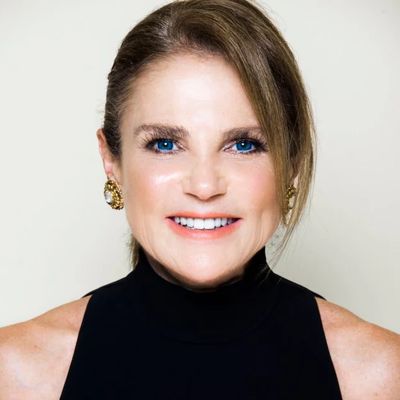
We have Tovah Feldshuh, star of Funny Girl, as our guest. Tovah celebrates a milestone this month - 50 years being on Broadway! Listen as she shares her unconventional journey to getting on Broadway and decades of incredible stories along the way... Read More
From the show: Breaking Broadway with Kerry Butler
Guests
Featured Shows
About
We have Tovah Feldshuh, star of Funny Girl, as our guest. Tovah celebrates a milestone this month - 50 years being on Broadway! Listen as she shares her unconventional journey to getting on Broadway and decades of incredible stories along the way.
Learn more about Tovah at tovahfeldshuh.com/. Follow her on Instagram @tovahfeld, Facebook @TovahFeldshuh, Twitter @TovahwithaV & YouTube @SolidGolda.
You can find me on Instagram @kerrybutler1 and TikTok @kerrybutlernyc.
For coaching and teaching, visit my website at kerrybutlercoach.com, follow @kerrybutlercoach on Instagram, or email me at kerrybutlercoach@gmail.com.
Transcript
This transcript was automatically generated and might contain errors.
[0:04] Tovah Feldshuh: Once I played a penny who just couldn't stop the beat. Yes, with rather skits on her feet. Although it's recently to see a real comic version of Tina.
[0:36] Kerry Butler: Now come with me, Emma. I am your host, Miss Kerry Butler. Together, you and I are breaking Broadway.
[0:52] Kerry Butler: Welcome back to Breaking Broadway. Today's guest is a Broadway legend. She's celebrating her 50th anniversary on Broadway. Fifty years ago, she was in Cyrano on Broadway. She's done ten Broadway shows, four Tony nominations, tons of television, tons of film. Most recently, Pippin, and I just saw Tovah Feldshuh in Funny Girl, and you were amazing. You worked every second on that stage. I was laughing so hard. Congratulations on an amazing performance.
[1:38] Tovah Feldshuh: Thank you. I'm very honored to have been asked to play the role. And it's also a historic moment. It's not only my 50th year on Broadway, but I'm the first actress of the Jewish faith to play this role on Broadway.
[1:52] Kerry Butler: Wow. Oh, I didn't know that.
[1:54] Tovah Feldshuh: Yeah, because they usually turn to the Irish Catholics who are great people and great actresses. They just don't happen to be Hebrews. So whatever, whoever got the brainy idea to go, oh, maybe we should cast a person who happens to be born into this religion.
[2:10] Kerry Butler: So wow. Well, I'm glad they finally did it because yeah, you really understood the role and just brought so much to it.
[2:19] Tovah Feldshuh: Thank you. Um, so on our show, we usually like to talk about your journey to becoming an actress. Like, did you grow up wanting to be on Broadway?
[2:30] Tovah Feldshuh: I was born on Manhattan's East Side, 90th in Lexington. My parents came home from a wedding December 26th. My mother had cramps. She said it was from the stuffed derma. It wasn't. My father said, why don't we go to the hospital? And I was born two hours later at 2 a.m. on December 27th in an undefined decade. And in all events, I was brought up in Scarsdale, New York, and my upbringing would not have led me to the theater, though my parents were very cultured. I was given my first subscription to the Metropolitan Opera when I was 11 and 12 years old.
[3:05] Tovah Feldshuh: Wow. I remember how much it cost, and it was in the old opera house. I was taken to Leonard Bernstein's young people's concerts, and of course, I was taken to Broadway for my brother's birthday. I saw my first show, which was Damn Yankees with Gwen Verdon. Oh, wow. And we were in the mezzanine or the balcony, and I was just enthralled with it. My father was a lawyer, a graduate of Harvard Law School, and I adored my father. And actually, as we are recording this on May 11th, my father died on May 11th, 1996. And I consider this a magical day. I woke up this morning and a bird tried to get in my window here on Central Park West. The window was slightly open, and he kept going, ooh, ooh, ooh, ooh, and that has never happened to me in my whole life. But I feel on the anniversary of my father's death, who knows who sent that little messenger to me. Many religions have that tradition, most notably the bird that came to marry about the annunciation.
[4:09] Tovah Feldshuh: In all events, my father was a Harvard lawyer, and I applied to Harvard Law School and made the waitlist.
[4:14] Kerry Butler: At the same time!
[4:16] Tovah Feldshuh: Yeah, yeah, yeah. I would have, had I been accepted, I would have been an attorney, I would have been a litigator. So that I got a break on Law and Order and they kept me for 13 years was no accident. I started in...
[4:28] Kerry Butler: I was gonna say, yeah, you knew what you were talking about.
[4:31] Tovah Feldshuh: I knew what I was talking about because I had been in the court watching my father, including the Supreme Court. So when I played Ruth Bader Ginsburg right before the pandemic for a premiere of a new play by Jonathan Shapiro at the Wallembrog Center in Los Angeles, I had been brought up around that kind of erudition. And at the same time, my brilliant brother, a graduate of Dartmouth, had won a scholarship to Lambda and then won the McKnight Fellowship to go to the Guthrie Theater in Minneapolis, where they paid for his master's. He'd eventually get a PhD as well. And he became a journeyman in that company of the Guthrie under Michael Langham. She had taken over from Tony Guthrie. And the best of Canada was there, Len Cariou was there, Carol Shelley came down, Roberta Maxwell, these great, they brought these great actors from Stratford in Canada.
[5:26] Tovah Feldshuh: In all events, David said to me, why don't you apply to the McKnight Fellowship at the same time you're applying to Harvard Law School? I said, that's such a wacky idea. He said, just do it. You never know. You love to act, which I did. I love to act. Um, but when I asked my mother, I said, I'd like to go to Juilliard, my mother said, you're not going to a trade school.
[5:46] Tovah Feldshuh: She has in a Bronx accent. And so I tried to follow my father's path. And there are many things about my upbringing that were not at all bohemian, but quite bourgeois. And that which was considered boring in my 20s has now borne out a 47-year alliance with my husband, 46 years married, and we knew each other a year before we married. So all those traits that were considered non-wacky, non-artistic, down the middle line, have served me very well in life.
[6:23] Tovah Feldshuh: So for everybody who's out there who still believes in marriage and bringing up children under the umbrella of a lifelong commitment, I say I give you a standing ovation. My being married is one of the hardest things I do, much more difficult than doing Juliet or even Isabella in Measure for Measure, both of whom I've played. Anyway, so I didn't get into Harvard, I was waitlisted, and I won the McKnight Fellowship five years after my brother won it.
[6:54] Kerry Butler: And my brother was...
[6:54] Tovah Feldshuh: You hadn't even really studied as an actor at this point.
[6:58] Tovah Feldshuh: I, when it happened, I was accepted at Vassar, Smith, and Sarah Lawrence. And my mother said, I wanted to go to Vassar, and I would have known Meryl had I gone. My mother said, who's gonna teach acting up in Poughkeepsie? It's just, it's up the Taconic Parkway. You shouldn't go, it's so isolated. Go to Sarah Lawrence. You're so creative. I had written a senior class play, so I was interested in acting. But I was a very strong student. And the values in my family was that you had to be educated. You had to be educated. I speak five languages. My parents were very, very, my children went to Harvard and MIT, were very intellectually devoted. So in the sense that education is considered a tool for freedom and for a worldview.
So I won this scholarship. By then, David was going to become the youngest associate artistic director of a major repertory company. He was in his mid-20s. I was a little kid, I was 21, and I went out there and I held spears and understudied all the size seven leading ladies before the Maxwell and Diane Wiest. These were leading ladies. She was a wisp of a thing. I spent two years, I never went on for any role for any of the... what happened is that they were I sang and I danced. I loved singing and dancing. I did it at Sarah Lawrence, and I continued to study tap with Helen Butler, the Helen Butler of the Rockettes, who was training the Rockettes in those years that I would come in. I did exactly what my mother said. I commuted into New York to study tap, and I got, I auditioned and got Uta Hagen herself as my acting teacher.
[8:22] Tovah Feldshuh: Wow. And I would come in every Wednesday and study with Uta Hagen. And that was a life changer. I worked with Martha Schlamme, who was then working with Alvin Epstein at the time. There were already legends from Yale. As she was my first basic acting teacher. She and her common sense and her grace and her supportiveness of her students has never left my cellular memory. Never. She would never say, this is not good. She would say, that's interesting. Why don't we try it this way? So when I coached soccer, I coached soccer for the city of New York for five years because my daughter, I took her to the soccer field. She was five. They had no coaches. And she said, Mommy, mommy, please, please. And I coached soccer.
So before the matinee of like, you know, lend me a ten or whatever, I was on the soccer field. But I remember they would say to me, because they were five years old, I think we were the purple Barbies that year, or the four kid carries. And they'd say, coach, coach, I hit the ball with my elbow and it went in the goal. And I knew to say, that's interesting. I have an idea. Why don't we try it with your feet? Let's try it with your feet. I got a new way. Let's try. And then, and that's how I would re-guide them.
[10:03] Tovah Feldshuh: So I graduated from Sarah Lawrence. I won the McKnight Fellowship. I sang and danced at the Guthrie, which for them was like being a circus performer or somebody, you know, who should be in commercials and should not be on a classical stage. And then Cyrano was divined as a musical, starring Christopher Plummer. And I could sing and dance. And though I had no major roles at the Guthrie, they wanted to let me go. They were not going to promote me. I was never going to become a leading lady there. Michael Langham was not a fan of my work. He said, you'll never be an actor. You'll only be a performer. So the only parts I had is when we were trying to raise money, I would sing stuff like Fred Astaire and Ginger Rogers and do my tap dancing in long gowns.
And at that time, I was, I was, you know, I was a pretty, I was a pretty, very pretty girl and with thick, thick long hair. In all events, Michelle Shea, whom I love, vacated the role of the food seller. That's 14 lines in a red dress in the musical of Cyrano, because she got a job in New York. I believe it was with then what was called the Negro Ensemble Company that would go to Broadway. And she said, bye-bye. I'm out of here. And they said, oh God, give food seller to Feldshuh, the little Feldshuh, go. We can get her out of the company with some honor because we want to keep Doctor, we want to keep David Feldshuh. So get rid of her. So I had 14 lines in a red dress, and Michael Langham was directing.
And one day Michael Langham did not show up for rehearsal for the musical of Cyrano, and he had been fired. It was like watching the pharaoh or the sun god fall from the sky. And in his place came Michael Kidd, the choreographer of Seven Brides. And all of a sudden, if you could sing and dance, you kept your job. And the rain started to fall on some of the company, and many people were let go. One day in rehearsal, he said, can anybody do a cartwheel? I said, I can do a cartwheel, sir. I can do a cartwheel. And he said, all right, Tovah, I need you to cartwheel three times from stage right to stage left during the final number of act one, scene one. And I did it. And I kept my job. And the play, the musical went with Michael Kidd from the Guthrie to the Royal Alex in Toronto to the Colonial in Boston into the Palace Theater.
We started previews in April, and we opened Saturday night. We opened, I don't know if it was Saturday, we opened May 13th, 1973. And Chris Plummer would get and win the Tony for Best Actor in a musical.
[12:43] Kerry Butler: Wow, that is a great story.
[12:45] Tovah Feldshuh: It was great. So I figured I was trying to be, you know, kept taking dancing lessons like crazy at Farnworth Howard School of Dance. It was in the 50s near the Ed Sullivan Theater. I remember I was in dance class, or I was in acrobatic class. I took acrobatics, tap and ballet. And I was in acrobatic class with Lola Vassarstein. And Lola Vassarstein had a child at Yale. I said, how are you? Sister Val. I'm not so good, you know. She's from Vienna. I'm not so good because my daughter, she's at Seattle, she has no husband, nothing. She writes plays. Her name is Wendy. Wendy Wasserstein, she's the rights play. So I became friendly with Lola. And then of course I met her daughter, Wendy. So we were all, I was in, you know, my own acting academy when I first came to New York in 1973.
I used my salary and paid for voice lessons, tap lessons, ballet lessons, acrobatic lessons, and acquainted myself with the Alexander Technique. And I figured I needed, I would came in really in the chorus with a small speaking role. The role on, unfortunately had the first line of the play. So in my debut, I started the play.
[14:02] Tovah Feldshuh: Wow. Oran, I remember it was oranges, pomegranates, lemonade. She comes out as a food seller and tries to sell her food before the performance of Montfleury. I became friendly with Chris Plummer, who became a lifelong friend. He was a pianist. I was a pianist. I started to audition.
[14:19] Tovah Feldshuh: And I immediately, it's the Chinese proverb, change your place, change your luck. I immediately got parts. I got the title role in Brainchild by Michelle Le Grand and Hal David, produced by the notorious Adela Holzer, who actually was very good to her actors. We all got paid, but apparently she was involved in some kind of Ponzi scheme and eventually went to prison for a brief time. Wild. That show closed out, I think it closed to the Forest Theater in Philadelphia, but I then, you know, established a lifelong alliance with Michelle Legrand and Hal David. And that didn't come in. And then I was immediately offered by David Merrick the standby for Mabel in Mac and Mabel. And I turned it down.
He said, Miss Feldshuh, you're out of your mind. I'm not even saying you have to be in the theater as an understudy. You can call in from 160 West 71st Street where you're living and see if you have to go on that night. And we will tell you you'd be a standby. I said, Mr. Merrick, I stood by and understudied for two years at the Guthrie. I never went on. It is a, the understudies are the heroes of our business. They are underrehearsed and they are over-expect, they have over expectations placed upon them. And I said, I will never and I never have. I will never put myself in that position again. And I never have. It's funny, it's funny the power of vision, Kerry. The power of living your life in certain areas in the future.
It hasn't happened that often for me, but now I cultivate. Now I am committed to living till 104. I'm committed to playing Supreme Court Justice Ruth Bader Ginsburg after Funny Girl finishes. I mean, this is a vision. This is not yet fully formed in the material universe, but I had the honor of doing a two-hander and playing her just before the pandemic and getting to meet her and getting to know her. Wow. So in all events, I'm chattering on. I immediately kind of use almost manifestation to kind of figure out the life that you want to live. Well, the first life I wanted to live was to be a leading lady in repertory. So I went from Brainchild, maybe Brainchild was my first break in 1974, yes.
So in 1973, when Cyrano closed, I was then offered the leads, the ingenue leads at the Cleveland Playhouse. I remember to do Death of a Poet and one other thing, and it's Stage West in Springfield to do The Drunkard and then to be opposite Armand DeSante in the Cherry Orchard Play Arena. And I said, Oh, I'm going to go to Cleveland Playhouse. It's a longer offer. And my agent said, You're not going to Cleveland Playhouse. You're going to Stage West in Springfield. And in your Brokenday and in your Toyota that your father gave you when you graduated from college, you're going to commute into New York every Sunday night for Monday auditions. And that's how I got the Mac and Mabel standby, which I did not take.
And I said, Mr. Merrick, if you ever have a part for me, the answer is yes. And that came very shortly afterwards. There was a piece called Dreyfus in Rehearsal. I was to play Lucy Dreyfus, which is very, very much of the moment. If you have seen Parade and what happened to Leo Frank. So again, Alfred Dreyfus was unjustly accused of a crime he never committed and exiled to Devil's Island because he was a Jew and because of anti-Semitism. Incidentally, everybody should see Parade. It is epic, it's astounding, it's important, and if you want to understand the heart of prejudice, to be honest with you, as a Caucasian, get into that theater. And the empathy, the visceral empathy it gives you for the black experience is also unbelievable.
It's unbelievable because if this is what happens to a Jew, I can't imagine what it was like in Georgia at that time for people of color. Anyway, the Merrick offer came. Garson Kanin directed. He would later be the witness at Andy's and my wedding. Ruth Gordon was one of the stars, she was a matron of honor at our wedding, and the play closed in two weeks at the Ethel Barrymore Theater. But before the show closed, two scripts arrived at the Ethel Barrymore. One was Where's Charlie, opposite ground Julia for 500 a week at Circle and Square, a Broadway musical. I would play Amy, you know? One with Amy. Right. And the other was Yentl the Yeshiva Boy, to open at the Brooklyn Academy of Music for $132 a week under the banner of the Chelsea Theater Company, Robert Calvin directing.
And I said, Well, there's no question we're gonna do Where's Charlie, and we're gonna play Amy, and it's not an ethnic role, and I have to, you know, be careful that everybody knows I'm a classical actress. So we accepted Where's Charlie. And I made the 104 bus from 71st Street in Broadway, where I live, back to Star Castleton's office at 119 West 57th Street, and I read Yentl the Yeshiva Boy by Isaac Singer, adapted by Leon Apple. I got to his office and I said, Is this part gone? Could I please audition for it? What do we do about Ted Mann and Circle of the Square? He said, Tovah, just get on the subway, go out to Brooklyn and audition. This is the title role. This would be your play. And it's a new play.
You never know what can happen to a new play. And I got Yentl. And we called Ted Mann, and he said, How dare you? And he didn't hire me for another decade, and then he hired me. I tried, I said I was sorry 12 times. You know, we had only accepted the parts for 48 hours, but I was cast late, I guess, because he was starting his rehearsals very soon after that. So I got Yentl, it opened way off Broadway in Brooklyn. There were lines around the block, and the thing transferred to the theater, and within 18 months of the closing of Syracuse, being really a core spear carrier at the Guthrie, I was on the marquee. The Book of Mormon is playing now. You know, at the O'Neill Theater. In the first two acts of my life, I felt that work and love was all.
That was it. As a matter of fact, my identity was very, very much ensconced in my work. And I never courted the crown of fame. I courted excellence, just like you saw as Rosie Bryce. That the carving of Rosie Bryce in my interpretation, and God bless Michael Mayer for giving me the freedom to do it, along with his notes and our wonderful Joanna, his assistant director's notes, and Michael Raftor, our conductor. But along with that, it really was a collaborative process. But that took work. That part, if you ain't careful, can be beige wallpaper. And I had to seek the humor in it, and I had to infuse the Judaism in it. Whether it's Jewish, Greek, or Italian, those mothers are similar. But she is not a mother from Greenwich, Connecticut.
Right. She is not, you know, a Yankee, as they say. And that needs differentiation. It needs history. So anyway, I've courted that bar of excellence all my life so that nobody could take from me that I was a good actor. I knew that if I could establish a level of skill that was hireable and desirable, that that would last me my lifetime. And that influenced a lot of decisions. I turned down where Three's Company. Alan Shane flew in to see me, took me to the plaza palm court, and said, we want you to do this series called Three's Company. And I basically was offered Joyce DeWitt's role, which was you. I said, I said, I read the script and said, I can't take it. He said, Are you crazy? Sandalike David Merrick, are you crazy?
And I said, I don't know how to act. He said, You just won five awards on Broadway. I said, It's an accident. It's an accident. I've based my whole life on my father. I'm a practicing heterosexual, but I'm very athletic. I'm a tomboy. I hung upside down on my baby trapeze swing set in Scarsdale. So then when Barry Weisler asked me to play Berta, the grandmother in Pippin, and he put me up on a trapeze 30 feet in the air as the audition, he said, I said, How do you feel? He said, How do you feel? I said, I feel great. I said, How do you feel? Whether he was scared to death. I wanted to be a great actor. And instead of doing that, I went from Yentl to Stratford at the Leeds in Stratford and in The Crucible and in opposite Eileen Atkins as you like, if you can imagine Dame Eileen Atkins.
And then I went on to do Catherine Hepburn on television, the Holocaust miniseries, and most importantly, to be with Jack O'Brien at the Globe Theater and do five plays for him, which was Juliet in Romeo and Juliet, Isabella in Measure for Measure, Marjorie Pinchwife, the title role in The Country Wife, my first one woman show called Tova, Tova, a rush hour review, which I did six to seven before, and Two Gentlemen of Verona, which I had a small part. But it was under his baton. And by the time he finished with me, and I finished with my coach, Diana Maddox with these classics and having the leads in these classics, I knew what I was doing. Or I perceived that I knew what I was doing. So I came from a different ground of being.
And as we say, as my mother's generation would say, nobody could call me Pisher, which means a person who may, you know, who can't get to the ladies' room on time. So nobody can call me somebody who's incompetent. Or a Pisher is also referring to as a little baby, a baby, a person who is, you know. When I was at college, Andy Warhol was just emerging, talking about 15 minutes of fame. I said, the guy's nuts. The guy is nuts. The guy was a genius. Who knew that the Kardashians and reality TV would come up to such a strong degree, and that stories would be so engaging that actors would start to lose jobs. Before there was all this cable stuff and the vacuum of television increased in size, we were losing real estate to reality shows. So he was right that to be notorious is also to be famous, but not necessarily not always for skill.
[25:00] Kerry Butler: When you had such a short, when you're going into a show, you have such a short preparation. So what are the first things you do like when you're going into a show like Funny Girl to prepare?
[25:09] Tovah Feldshuh: I had 18 days of gosh. So what do you do? I worked on what was comfortable, what keys were comfortable for me, and I defended those keys. I said, I'm not adjusting to anybody else's keys. I've got to do these eight times a week. At that time I didn't have a full year contract, but they convinced all of us to extend. So Lee and I will be in the show an entire year before we close on September 3rd. I worked musically on it. I also did research on Rosia Bronick, that's her real name, and what the real story was. I, of course, I think I'm not sure that I even saw the movie. I didn't see the movie again. I didn't want to imbibe K method. But I did see Beanie and Jane do the piece, and I did see Julie Banco and the great Liz McCartney, who is the understudy for Strakosh, Meeker, and Rosie Bryce.
She's amazing. We're so grateful to her. She protects the, these are the heroes, the swings and the standbys who protect the show. Oh my God. Because nothing stops the machine of a big Broadway hit anymore. We didn't even lose a performance for COVID. They were so careful to spend a lot of money on testing. So how do I prepare? Well, I certainly worked 12 hour days. And I went as deep as I could and memorized as quickly as I could, but my memory is deep, profound, but it's slower than it used to be. So I need extra time. I know that. So I would arrive at rehearsal with my assistant an hour or two early and drill, drill, drill. I overprepared to go with the flow. Overprepared to go with the flow.
And in terms of acting, even with Golda's Balcony, when I played Prime Minister Gold of my year, which became the longest running one woman play and still stands as the longest running one woman play in Broadway history, the actor has to know everything. So the character can know nothing. So the character walks on fresh every day and makes it up as if they wrote it, not as if it was written by somebody else. The other thing that turns me on, and I say every night to my wonderful person who played Ziegfield, Peter Francis James, and now the adorable and amazing Paolo Montalban, I say this is somebody's first Broadway show, and this is somebody's last Broadway show. Knock it out of the park. Because the one thing that changes from moment to moment of day to day is that audience.
And you never know what kind of a turning point you're creating in your life or in their life. You don't know. You don't know if you're filling a memory bank, so called well, saw me as Golda. And she came backstage and she said, I just couldn't believe what I was seeing. I couldn't believe what I was seeing. And when I see like Ben Platt do Evan Hansen or do the parade, I can't believe what I'm seeing. It's like magic when you watch the younger, the young actor do a genius role. Well, Jared Grimes in Funny Girl is unbelievable. He plays Eddie Ryan and he's a tap dancer of mastery. Just tremendous. And my dearest, my dearest friend of the company, great ally. So I prepared diligently. I never stopped working. We didn't know what we had, like anything.
[28:38] Tovah Feldshuh: We did the Holocaust mini-series. We had no idea that it would shake the earth and change the textbooks in Germany, it would be a huge hit. We didn't know. Same Lee and I didn't know if we were going to be well received. We had no idea. We just did our best, did our best at our best. And we're very lucky because Leah is not just famous, she is something else. She's brilliant. She's a force of nature. And her part, yeah. That's her part. She's yeah, she's phenomenal. She's a really and her standby on Thursday nights ain't chopped liver either. Julie Banco is an unbelievable artist and actress. And this is I regard this as her launch as well. So I've been blessed. And I never expected to be doing a full-out musical at this moment in my career, but I'm thrilled, and it's you know, you can eat whatever you want.
You're on the American musical theater diet. Yeah. Um I bike to the theater and bike home with Jared to ride my bicycle as much as I can. Sometimes I use the car and driver, but I try to bike just to stay strong. And then the big challenge, Carrie, as you know, having done Broadway runs, is not just the debut, it's the maintenance.
[29:51] Kerry Butler: Yes.
[29:51] Tovah Feldshuh: It's the maintenance, the staying well, the non-injury, the PT, the acupuncture, the, you know, whatever it takes to you think you can do your life and the show, and you learn very quickly you can do your life or the show. So Monday becomes this huge, very compact chain, you know, um, catch up day. But look, you know how many, you know what percentage of equity is on Broadway across the United States? One percent. 1% of us make it to the Broadway stage. 1% of all actors make it. So is it a blessing? It's a huge blessing. Huge blessing. And the level of skill in Funny Girl is not to be believed, except when you go down the street and you see six and you see parade and you see these other incredible, credible hits, and the level of skill is crazy. It's just crazy great.
[30:46] Kerry Butler: Yeah.
[30:49] Tovah Feldshuh: You've had such a long career. There must have been moments where did you were there any moments where you like doubted yourself or like, am I ever gonna work again? Or like dry gone through a dry spell? And how did you get through that?
[31:01] Tovah Feldshuh: It was tough. I um was on a trajectory, and again, from my own bourgeois values, I can look back on this now and realize what was going on. When I married Andy, who was a Harvard lawyer, after all, like my father, I remember the day of my marriage, March 20th, 1977. My mother said, Tova Darling, you can do whatever you want now. And I thought she meant, you know, I had just come off of Yentl. I was starring in about the star in Three Sisters with Ellen Burston and Rosemary Harris with Margaret Hamilton. That's the wicked witch of the West in uh right, exactly, and Wizard of Oz. She played on Fisa, our nanny. I mean, we had a uh Barnard Hughes, Den and Denham Elliott, extraordinary people in that cast.
In all events, um, I thought she was going to say you can do film, television. She said you could do whatever you want. Now you're marrying a Harvard lawyer. So I did three sisters. I went to I went uh I kept working on my honeymoon. I was offered a movie. I kept going, but slowly I I started to begin to unspiral my career. I didn't know I was really I didn't know that. Well, I wanted to be a good wife. And Andy wanted to live in California. He had grown up in Washington, DC. And I said, Well, you know, I just start on Broadway, and I then I did Peter Pan uh for the producers of Yentel, and we played opposite George Rose in Boston Philly in the musical opera house in St. Louis to 11,000 people a night.
Okay, let's go to Hollywood, and now we're gonna conquer Hollywood. I did three movies in a row that did not make money, and I can get work. So those years we spent four or five years in LA. I did another part of the forest, which is the prequel to Little Foxes, and met Lillian Hellman, who said to me, I hope you're as good as Trisha Neal, who established the role. Um I uh did some fabulous work with Jack O'Brien. Uh huh that I accomplished. I kept I kept going on my excellence crusade, my excellence vision. But like you pointed out, Carrie, very uh brilliantly, that was part of my vision and future vision.
[33:15] Tovah Feldshuh: Now there's a difference between a wish and a. I mean, I actually am committed to living till 104. I'm not kidding you.
[33:22] Kerry Butler: I believe you.
[33:24] Tovah Feldshuh: I do that, I think about it every day, and I do what's necessary to maintain my health and to kick my leg up to my, I kick my leg up to my forehead every night, eight times a week. And that takes work. That means that before the five-minute call for act two, I'm already on the stage doing huge uh leg stretches using the back of a one of the props or the back of a couch, you know, and putting my head on my ankle over and over again, first gently, but it's a whole process that I have to do before the lights go down. Now it only takes me five or six minutes, but they're every day in, day out, day in, day out. I do 54 uh push-ups with the chorus boys day in, day out.
[34:10] Kerry Butler: Wow.
[34:10] Tovah Feldshuh: 30 sit-ups, you know, stuff like that. So in all of it, and this is with vision or saying to yourself, my body is a vessel of radiant health, whatever affirmation. You I think every person should should have an affirmatory. Huge, you know, I am loved, I am lovable, I am loving. Whatever you want to put in your head, so instead of putting in, I don't like this person, that person doesn't do what I like, we're not of the same. Instead of putting that in your head, you put in the best in me loves the best in you. And those who are more religious, the divine in me loves the divine, divine in you. Did you have the best of you functioning so that you uh don't suffer depression or don't suffer um anger, except when chosen on the stage, I suppose.
[35:05] Kerry Butler: Right, right.
[35:05] Tovah Feldshuh: Particularly, particularly at this age, you don't want to, you don't want to unnecessarily stress yourself. And basically, Carrie, I believe, you wake up in the morning, you make it up, and you go to sleep at night, hopefully 90 or 100 years later. And we really do, we think that we are our minds. We actually have choices. We have choices. Um sometimes I have trouble sitting standing up straight because the bottom of my back hurts at this point. So I'm laying on, I have a massage table, and I I'm laying on the massage table upside down with my head in the cradle, you know. And I noticed if I fall asleep on the massage table, when I get off the massage table, my back is completely straight. Straight.
Doesn't hurt, nothing. I said, oh my God, are you telling me that this posture of me hunching over is actually a choice? Because I don't experience it that way. But even that's even that's a choice. So we have a great deal of power um as to what we put in our brains to accomplish what we need. If life is not merely reality, but if life is in fact a dream, a dream that we make up every day, then man, the sky's the limit. And then as an actor, at eight o'clock or seven o'clock, you get to take on somebody else's dream.
[36:28] Tovah Feldshuh: I mean, Rosie Rosie Bryce's dream is to preserve and protect her young. She is in the corner. Fanny Bryce. She is in the corner. And and uh uh balanced by certain bourgeois values of the time. Sadie, Sadie, married lady. What a relief that is. All right. So she married a guy who might be a little, you know, a gambler, a compulsive gambler. I don't know that she knew that he was a crook or an embezzler, but she knew he was a compulsive gambler, that that's what he did for a living. Uh, but that she was married and he was gorgeous and she was in love and she would have children. That was the most important value in certain ways.
[37:09] Kerry Butler: Yeah.
[37:09] Tovah Feldshuh: So I have one more question for you. Um, if you would give advice to your younger self, what would you say?
[37:22] Tovah Feldshuh: If I would give advice to my younger self, I would say to my younger self, I wish you had the wisdom to now, in your twenties, adopt empathy and community as your first values. You know, uh I thought it was Mendelson. We couldn't find the quote attributed to him, but basically the quote is I feel that love and work are the most important aspects in life. And when you near the third act of your life, love is everything. Everything. Because from love, everything comes from affiliation, empathy. And when you meet somebody that doesn't gel with you, try this one. Like this person, I have a son. Like this person, I too have stress. Like this person, we're from the same religious background. Like this person, we both have husbands.
So that you affiliate through will, if not through heart. And then uh, you know, that's what I would advise. I didn't learn to lead a company till I was in Saravat, which isn't bad. I was not the leader of the company for Cyrano, uh, Dreyfus and Rehearsal, Rogers and Hart, Yentel. I had to learn how to do it. I didn't do it pretty well very well. But by Saravah, uh, I would just gotten married. I was a very good leader of the company. I would, you know, buy the barbecue chicken and have everybody to the apartment and host them. You know, when you when you have the biggest part and you have the final bow, that's the time to spread your wings for empathy and inclusion.
[39:19] Kerry Butler: Yes.
[39:20] Tovah Feldshuh: Don't be don't be jerky. The elevator. Use your power for good.
[39:24] Kerry Butler: Yeah.
[39:24] Tovah Feldshuh: Use your power for good. The elevator man and the I remember when I left Pippin, I gave a party, and I was just a supporting player. But I it was a great role, Briar. I gave a party in the lower lobby, and the Weissler's as long as I was filming that bill that gave you the coffee. And of course I invited the crew. I invited everybody downstairs, and not just our crew, but the union men who worked at that theater, which was a music box. And they couldn't get over it. And it was it was so obvious to me that anybody in the building should be included. Uh anybody. Um, so that's what I would tell my younger self. That to if you have the privilege of having some big part and to head a company, whatever you can do for the other guys is wonderful. And frankly, it's smart. It's it's smart. Because it keeps Shalomba by it. It keeps peace in the household. And you know, the fish.
[40:24] Kerry Butler: Yes.
[40:25] Tovah Feldshuh: This fish comes down from the head of the fish. The Guthrie was naughty and clever because Michael Langham was naughty and clever. But Michael Mangum had also been in the prisoner of war camp. So he was naughty and clever and damaged. And maybe we're all damaged, but his damaging affected a lot of actors in the company. He was a he was a bully and it was tough. It was really tough.
[40:49] Kerry Butler: Yeah.
[40:49] Tovah Feldshuh: He would humiliate people in public and it was it was not kind. It was not but there are many people. When you have a great story.
[41:01] Kerry Butler: Yeah.
[41:01] Tovah Feldshuh: Jerry Zach's Jack O'Brien, Michael Mayer. These are men with great hearts. And then uh uh actors of you know, my brother was headed head of the theater at Cornell. You could see I worship my brother. And he would always take his children near the actors. He loved actors. He said the actors get a bum rap. They're the most empathic people I know. So if you're playing other people well, and you have to have empathy for your character, have empathy for your fellow actor.
[41:28] Kerry Butler: Yeah.
[41:29] Tovah Feldshuh: Look them in the eyes, connect with him. The audience is not gonna leave you. The audience is gonna step into your relationship. Watch Michaela Diamond and Ben Platt and parade. They're absolutely glued on each other. And though I'm unable to watch it, I have no doubt that Ramin Caramelou and and Leah Michelle are glued to each other. People step into the relationship. You know, you don't you don't have to you don't have to play it, play the house unless otherwise advised. You play the text and the other people with you, and the house will get it.
[42:02] Kerry Butler: We'll get it.
[42:03] Tovah Feldshuh: Absolutely.
[42:04] Kerry Butler: Well, thank you, Tovah.
[42:06] Tovah Feldshuh: Thank you so much for uh being here with us and sharing those amazing stories with us and great advice.
[42:14] Tovah Feldshuh: My pleasure. Keep envisioning your own life, Carrie, and may you go from strength to strength.
[42:23] Kerry Butler: Thank you so much for listening. If you would like me to come to your school or theater group and give a master class or a talk back, please reach out at kerrybutlercoach.com. If you like this podcast and want more episodes, please go to bpn.fm slash breaking broadway and subscribe, like, or share. Together, you and I are breaking right.
© Broadway Podcast Network, All Rights Reserved