

My guest again this week is Richard Schoch, author of the much-acclaimed book, How Sondheim Can Change Your Life. Last week, Richard took us deep inside the inner workings of both Gypsy and Company... Read More
From the show: BROADWAY NATION
Guests

Featured Shows


About
My guest again this week is Richard Schoch, author of the much-acclaimed book, How Sondheim Can Change Your Life.
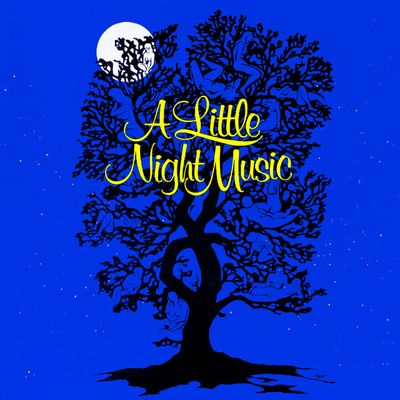
Last week, Richard took us deep inside the inner workings of both Gypsy and Company. In this episode, through his insightful analysis of the musicals Follies and A Little Night Music, and the fascinating characters who inhabit them, Schoch illuminates Sondheim’s incredible genius for plumbing the depths of human experience.
If you missed the first episode in this series, you may want to catch up with it before embarking on this one.
Transcript
This transcript was automatically generated and might contain errors.
[0:00] David Armstrong: Welcome to Broadway Nation. I'm David Armstrong, and my guest again this week is Richard Schoch, who is the author of the much-acclaimed book, How Sondheim Can Change Your Life.
[0:14] David Armstrong: Last week, Richard took us deep inside the inner workings of both Gypsy and Company, and in this episode, through his insightful analysis of the musicals Follies and A Little Night Music and the fascinating characters who inhabit them, Richard Schoch illuminates Sondheim's incredible genius for plumbing the depths of human experience. If you missed the first episode in this series, you may want to catch up with that before embarking on this one.
[0:46] David Armstrong: I have to say that one of the great privileges and pleasures of creating and hosting this podcast over the past five years has been the opportunity to meet and interact and become friends with so many brilliant musical theater authors and historians. And I owe them so much because they inspired me to take the concept and themes of this podcast and of the course that I teach at the University of Washington School of Drama and expand them into my own first book, which is titled Broadway Nation, How Immigrant, Jewish, Queer, and Black Artists Invented the Broadway Musical. As many of you know, it was published just two weeks ago by Methuen Drama, which is an imprint of Bloomsbury Publishing, and so far, I'm thrilled to report that the response has been terrific.
[1:30] David Armstrong: Professor Stacey Wolfe of Princeton University and the author of the amazing book Changed for Good, A Feminist History of the Broadway Musical, writes that David Armstrong's Broadway Nation is a lively, engaging, and fascinating journey through the vibrant history of the Broadway Musical. Whether you're a historian, a theater maker, or a passionate fan, Broadway Nation is an important and impossible-to-put-down tribute to the diverse voices behind the great white way. Wow, thank you, Stacey. I'm especially pleased that the publishers have released the book both in hardcover and paperback simultaneously and have priced the paperback at only $34.95. You can find it everywhere books are sold, but I recommend that you go to the publisher's website, bloomsbury.com, where you'll receive a 10% discount. If you enjoy this podcast, I know that you will love the book.
[2:20] David Armstrong: Now let's talk about one of those Jewish and queer inventors of the Broadway Musical, Stephen Sondheim. Here we go. So let's talk now about Follies. You opened with advice to high school drama teachers. It's a little bit of a joke how I start the chapter on Follies, and I say that high school drama teachers should get their students to perform Follies and not Into the Woods, the most popular Sondheim for young people. But there is a serious point, which is that Follies can show young people. By the way, when the show was not a great hit in 1971, young people, including a young Frank Rich, really liked the show because in Follies, a young person can see an image either of their parents or of their own future.
[3:10] Richard Schoch: People who are in middle age, who have an accumulated past of regret and lies and betrayals and bad decisions, and are now paying the price for it. People who don't like themselves very much because of decisions they've made. You know, it's not an appealing future. But if a young person can have, through the gift of theatre, an encounter with the future, and a future that has not worked out so well, then maybe they can use that encounter to have a better future, so that they don't end up like Phyllis and Sally and Buddy and Ben. So yes, as I say in the book, the world would be a much happier place if more teenagers today are encouraged to sing I'm Just a Broadway Baby.
[3:54] Richard Schoch: I don't think I mentioned this, but the subtitle for that chapter is How to Survive Your Past. Right. And of course, it takes place at a reunion. We've all been to a reunion of one sort, another school reunion, a family reunion, even, you know, just meeting an ex for a drink. These are all moments when our past is suddenly right there in a flash, right in front of us. And we realize the past has never really gone away, right? As Faulkner said, the past isn't really past. It's always with us. And this is the dramatic device of the reunion. The characters are forced to confront their past, even though they don't want to. They want to continue to lie about everything, including this beautiful song in Buddy's Eyes, which is a beautiful, lush, romantic ballad.
[4:36] Richard Schoch: And it took me quite some time to realize, gosh, what a beautiful, beautiful love song this is. Oh, no, it's not. It's a total lie. It's a complete fiction that she is telling to herself and to Ben, Sally and to the world. But like so many Sondheim shows, in a way like Company, Follies forces its characters to confront reality. And the genius of Follies is that it forces the characters, the main four characters, to confront reality through the artifice of Follies. That theater is the best way to be real.
[5:11] Richard Schoch: And you hone in in this chapter on Who's That Woman. You highlight, of course, the two different types of songs that are in the show. In Buddy's Eyes is a song happening in real time. In the Present is a contemporary song. And then, of course, the other half of the score is made up of pastiche songs, brilliant pastiche songs that do double duty. And especially with Who's That Woman, you write that he made an old-fashioned song do new things. He took an escapist tune and turned it into a discourse on life. Talk a little bit about that number, which many people have described. I didn't get to see the original production of Follies, but everyone I know will tell you that that was the greatest staging of a musical number ever put on the stage and one of the most impactful musical numbers ever put on the stage.
[6:02] Richard Schoch: It's not entirely capturable for me from subsequent productions or from the recordings of what exactly made that so powerful. Yes, I'm glad we get a chance to talk about Who's That Woman, sometimes called the Mirror Song. And in the context of Follies, it's an old Follies number, right? Half the score of book songs, as you said, and half the score, as your listeners will know, are songs that the Weissman girls used to perform 20, 30, 40 years ago on the stage, and now they're just reviving for the night of the reunion. So there's the character Stella Deems, and she's joined by five of the other characters, including Sally Ann, Phyllis, and Carlotta, to reprise their tap number, Who's That Woman, which is a fun, jazzy, gimmicky number about a woman who catches sight of someone's reflection, a lady who's let her life go by, and then realizes that she's looking at herself.
[7:05] Richard Schoch: Lord, Lord, Lord, that woman is me. But, you know, as performed as a Follies number, it's just sort of fun. But when performed by people who are 50, 60, 70 years old, their body's not what they were when they were Weissman girls, their singing skills not what they were when they were Weissman girls, and their hoofing skills in perilous decline, but they're having a go. When they reprise this number and perform it badly, all these years later, the line Lord, Lord, Lord, that woman is me takes on a powerful new resonance, and it actually becomes about the Weissman girls in their later years, when their career on the stage is long gone, when they are looking back, if you will, at the wreckage of their lives, there isn't anybody particularly happy in Follies, and they're looking back, they are confronting a reflection of themselves and wondering how it all happened. How did this come to be?
[8:07] Richard Schoch: And this is what I mean when I say Sondheim takes an old song, you know, a pastiche number and turns it into a discourse on life. He takes the most silly frivolous of Follies routines and turns it into this moment of profound self-scrutiny. They're holding the mirrors, Lord, Lord, Lord, that woman is me. Hit it, baby.
[8:29] ♪ Musical number: "Who's That Woman" — performed by Richard Schoch ♪
[9:57] Richard Schoch: And you make the right point, and it's very important to remember this, that just on the page or even just from the recording, it's impossible to capture the true dimensions and depth of this number, because we have to see aging people on the stage who are not the people they once were, who can't dance as well as they once could, who don't sing as well as they once did. And then the ghosts of their younger selves, the young Corinnes, here they come doing the tap routine correctly, and we get this sort of past-present, and you only get that in a performance. And that's why the number becomes a showstopper. It's the music and the lyrics and the bodies on stage trying to do things they can no longer do.
[10:49] Richard Schoch: And honestly, for anybody who's over 40, we know this experience of, my body just won't do the things it did when I was 25, even if it's just the treadmill at the gym. We know that we are someone different, that the years have changed us. And the question is not, how do we go back, or how do we stop the change? That's never going to happen. The question is, how do we accept, how do we come to terms with what the years have made of us? And that is the question posed by the number Who's That Woman? And, you know, done rightly, including the original production led by Mary McCarty, it stops the show. This otherwise seemingly frivolous number is an incredibly profound one.
[11:34] Richard Schoch: —Aided and abetted by Michael Bennett in that original production in creating that impact, which, again, seems uncapturable. I did see the London revival, or revisal, I guess, of Follies, where they did recreate the choreography for that number, but the set was different. So they weren't on two levels. It didn't quite do the same thing it did on Broadway, reportedly, not having seen the original Broadway, but it didn't have that effect there, even though it was the same steps.
[12:11] David Armstrong: Right. And we're always returning to the point, and here it is again, about the collaboration of theatre artists. So it's not just the music, or the lyrics, or the bodies, or the choreography. It's also the set, and the lights, and this sort of exquisite alignment, or to use a fancy word, the mise-en-scene. All the elements of theatre arts come together to produce a very powerful moment on the stage. It just reminds us, in a sense, how fragile and precarious theatre is. If one of the elements of the performance is off-kilter, the number as a whole may not work very well. And we should, of course, pay tribute to Michael Bennett, not just for Follies, but also for Company, one of the sometimes great, great collaborators.
[12:42] Richard Schoch: Completely. And you talk about the moment in What Will You Do Without You in Company that was so impactful, that again, was Michael Bennett's contribution to that show, which is, again, something I missed. Although I really enjoyed the recent revisal of Company, the gender-switched Company, I thought it was wildly successful. That number was one of the least successful elements of that show, and especially that moment, which I view as a turning point in Bobby's journey, just didn't exist.
[13:26] David Armstrong: Okay, now, everybody!
[13:26] Richard Schoch: Isn't it warm? Isn't it rosy, side by side?
[13:39] Richard Schoch: Once in a storm, company and cozy, side by side.
[13:49] David Armstrong: —Yeah, and, you know, your listeners will remember that, technically, it's very simple. It's a sort of husband-and-wife little tap step. I think the husband starts, and then kind of extends a hand to the wife, and the wife completes —
[14:01] Richard Schoch: Take it.
[14:04] David Armstrong: —That's right. Take it. Your turn now. Completes the step, and it's just a nice, little relationship expressed through dance. Takes under 10 seconds.
[14:14] Richard Schoch: And they go couple, couple, couple. And then it gets to Bobby and he does his step and then he extends his arm and there's no one there. And there's this terrible dangling moment of Bobby just on the cliff edge of aloneness. And then, you know, they all come crashing in with the music and he's saved. But the audience is remembering this was frightening for Bobby. There's no one there for him. And as I say, in terms of technique, it's not a particularly difficult routine. In fact, it's also repeated six times. But it was genius of Michael Bennett to find through the language of dance what Company as a whole is talking about, which is intimacy, fear of intimacy and being alone.
[14:58] Richard Schoch: Lack of intimacy. Yeah.
[14:59] Richard Schoch: Lack of intimacy. Yeah.
[15:14] Richard Schoch: Year after year, older and older, side by side. Sharing a tear and waving a shoulder.
[15:23] Richard Schoch: Powerful moment.
[15:24] Richard Schoch: Really amazing. Yeah. Bobby, in my view of that number, again, I didn't see the original production of that show either, but never recovers from that for the rest of the number. He's lost in this daze, I think. The number continues around him in its vaudeville fashion, but he is stumped.
[15:42] Richard Schoch: That's right. He is sort of shattered, devastated, defeated by this moment. Again, these moments of the truth. This is sort of a Sondheimian motif through all the shows. These moments of truth erupt into the songs. The artifice stops and the truth steps forth. Take a bow, the truth. And it's often terrifying. This one moment where, you know, the truth emerges for two seconds, but nobody is forgetting it.
[16:09] Richard Schoch: The resonance of that, as you said, for Bobby and I think for the audience, too, the resonance of that is staying with us for the rest of the show.
[16:17] Richard Schoch: So speaking of devastating moments and scenery, I love your description of the transition into the Loveland sequence in Follies, which you say is less of a smooth transition, though, than a hostile takeover.
[16:31] Richard Schoch: That's right. And one of the things I love about the theatre is you don't have to be logical. You don't have to make sense of what happens next. You don't have to connect the dots. I'll mix metaphors. You just jump into the next scene. So suddenly, we're in a new show. We are in Follies, a very surreal version of the Follies.
[16:53] Richard Schoch: Its cast is the four people that we've been spending the other show with, but now they've turned into the performers. I think it's easy to forget that there are 20 uninterrupted minutes of theatre music. And that's basically how Follies ends. There's a dialogue at the end. But basically, it's 20 minutes of music, orchestral, and then one surreal Follies number after another.
[17:19] Richard Schoch: It seems to be part of the strategy of Follies, which is that theatre and artifice and performance reveal the truth. And in the context of Sondheim's works, people often have moments of reckoning when they seem to be only performing.
[17:36] Richard Schoch: And in fact, earlier in the show, when they sing those book songs, as you rightly pointed out, they are not performing. They are the characters being themselves. They're not telling the truth. They're hiding. They're lying. They're concealing. They're covering up.
[17:50] Richard Schoch: And the genius of Follies is that it shoves the four characters into a crazy, surreal spotlight, says, do your number, do your 11 o'clock number, and something surprising will happen. You will face the truth. So we have the phrase, face the music. You will confront the truth in this song.
[18:10] Richard Schoch: Now, what you do with it, having confronted the truth, of course, is up to you. And what's interesting is the four characters react in different ways. But it takes this crazy, insane, illogical Loveland sequence to finally get Sally, Phyllis, Buddy, and Ben to tell the truth about themselves, whether they like it or not. And mostly, they don't like it.
[18:35] Richard Schoch: You wrote this, and I'm not sure I entirely understand what you mean. You describe the ending of the show as a thrilling moment, the undoing of theater by means of theater.
[18:45] Richard Schoch: So you think about the sort of various layers that are in the world of Follies. And at the very end, we're in this surreal Follies. And then Ben crashes out of it in his number, Live, Laugh, Love. And then we're back to the reunion. And he has this sort of reconciliation with Phyllis and Buddy and Sally seem also to have a certain kind of reconciliation.
[19:12] Richard Schoch: But we're no longer in the surreal Follies. We're back at the reunion. And then at the very end, we're out of the reunion and back into the world, the quote-unquote real world, as the guests leave the party, heading toward dawn and the bulldozers will come to destroy the theater, even though the ghosts in their headpiece and stilettos are still there hovering around the fringes.
[19:37] Richard Schoch: So we go from performance within a performance back to performance back to real life. But this is all done with, if you will, the vocabulary or elements of the theater, music, lights, staging, design, dialogue.
[19:56] Richard Schoch: It's not as if the performance stops, or the performance doesn't stop, but somehow the performance has stopped being a performance in two senses and returned us to reality. And again, I think this is a theme of Sondheim's work, which is that the artifice and illusion and architecture of performance can speak truth more clearly than real life can.
[20:24] Richard Schoch: But we cannot stay in the world of performance. We have to leave and return to our real life, which is why Gypsy doesn't end with the striptease number. It ends with the sequel to that, with the moment afterwards in the dressing room or outside the theater, just why Follies doesn't end in its own performance.
[20:47] Richard Schoch: It ends with the performance being over, although we're still in the theater, and the characters returning to the world. I think when we're watching this in theater, this is very easily intuited. When somebody like me tries to put it into words, it can feel a bit slippery and theoretical, but we understand it immediately that the layers are peeled back in the performance.
[21:11] Richard Schoch: And it happens very quickly. And here I think we have to give credit to librettist James Goldman. The libretto for Follies is not particularly lengthy. It's one of the shorter librettos, but it packs a punch, particularly in the last few minutes when all the layers of Follies are peeled away. We're back to the metaphor of stripping, are stripped away. And what we're left with is the literal dawning of reality as the reunion ends and the theater is about to be demolished.
[21:41] Richard Schoch: Yes, and the light of day is going to shine on all the illusion.
[21:46] Richard Schoch: Exactly. And in some productions, what you see upstage is a hole in the wall of the theater. It could be the actual theater or the illusion of a theater, and the daylight—
[21:57] Richard Schoch: The sun coming up, yeah.
[21:59] Richard Schoch: —streaming in, the sun coming up.
[22:01] Richard Schoch: Fantastic. Let's jump to A Little Night Music, which your subtitle is How to Handle Your Regrets. Don't go away. Richard and I will be back with more Broadway Nation right after this quick break.
[22:31] Richard Schoch: A Little Night Music.
[23:00] Richard Schoch: And you say that the opening to A Little Night Music with the leader singers sort of fools us into thinking that we're going to see a story about romance, but quickly reveals that it's actually going to be a story about regret.
[23:15] Richard Schoch: Right. I'm just obsessed with how shows open, particularly how Sondheim's shows open, and how they often open in ways that surprise or unsettle us. Though it was Hal Prince's idea to start with a vocal overture, as your listeners will know, most Sondheim shows, the exception of Merrily and Gypsy, Assassins, Little Night Music, don't really have overtures.
[23:36] Richard Schoch: But in A Little Night Music, you get a vocal overture. You get the five singers, the women, at least in the original production, grand piano on the stage, women in gowns, three women, two men, the men in white tie and tails, and there's a candelabra. First, they're not really singing. They're doing la-la-la and scales. They're warming up. And then they give us little snippets of songs that we're going to hear later in the show.
[24:00] Richard Schoch: There's this wonderful moment where they go from la-la-la, which is just a singer warming up, and it's just one little vowel shift to lie, lie, lie. And of course, there are two senses of lying. In a sense, lying in bed, as the characters are often doing in one configuration or another, but also lying, meaning not telling the truth, which is also what the characters do in one configuration or another. So to go from la to the pun of lie, that in itself is unsettling.
[24:29] Richard Schoch: And there's singing of love and couples and relationships, and then you see, well, this is five people. How are you going to pair off? It's not going to work out. It's going to be two, two, and one. There will be a remainder, like in a long division problem. Somebody's going to be left out.
[24:47] Richard Schoch: So I just love the way that in the music and in the staging, the vocal overture of A Little Night Music is saying, this is a show about relationships and maybe even about love, but it's about them not working out and somebody being left alone on the side.
[25:06] Richard Schoch: And who's that person left alone on the side, sitting on a bed, wearing a red dress, calling for the clowns and realizing that she is the clown? It's Desiree. And all of that is foreshadowed in the first five minutes of the show.
[25:23] Richard Schoch: And of course, then the bulk of your chapter is then about Send in the Clowns, which you call a very misunderstood song.
[25:31] Richard Schoch: Yes, I don't know if I'm courting controversy again. You know, Sondheim used to joke about his medley of hits, and it was Send In The Clowns, which, although A Little Night Music turned a profit, unlike Follies, the previous show, it was not a mega hit in the early 70s.
[25:45] Richard Schoch: And it wasn't until Judy Collins did the recording of Send In The Clowns and then Frank Sinatra and others in Barbra Streisand's version. You know, she sold four million copies in her Broadway album. But it really took off. And it's the song everybody knows and it's performed all around the world.
[26:02] Richard Schoch: Arguably his most famous song that he wrote both music and lyrics for.
[26:06] Richard Schoch: I think, without a doubt, his most famous, most recognized, most frequently sung number is Send In The Clowns. Even if you don't know who Sondheim is, and even if you've never heard of A Little Night Music, you will recognize everybody will recognize that.
[26:22] Richard Schoch: But Sondheim himself, of course, he was always very pessimistic, and he said, you know, I don't really like this number. It's too pretty. I think it sounds like it should be in a piano bar. And, well, he was right. It is sung quite often, and thank God, in piano bars around the world.
[26:37] Richard Schoch: But he was on to something, which is that the risk, especially when the song is performed outside the show, the risk is that a singer, and especially a singer with a good, trained voice, will turn this song into something that it is not.
[26:53] Richard Schoch: will turn the song into a lush, lyrical love song ballad. And it is none of those things. Those are instances in which a singer is using the song to flatter their voice, rather than using their voice to serve or enhance the song.
[27:13] Richard Schoch: I actually do feel quite strongly about this. So I guess in some sense, I'm a Sondheim purist, which is that there is a strategy, a design behind this number, and performers ignore it at their peril. Because the song, the lyrics are quite elliptical, elusive, metaphorical. What does it send in the clowns? The lyrics only work if Desiree's predicament is being honored.
[27:36] Richard Schoch: And then we have to remember, Sondheim wrote it for Glynnis Johns. I mean, the story is legend. He wrote it late in the day, you know, when they thought the song was going to be for Friedrich, but no, it has to be for Desiree. And he wrote the lyrics overnight, and then he wrote the music the second night. And Glynnis Johns learned it in a day for the Gypsy run-through, and then they went out of town to Boston, and then it became the hit song.
[27:59] Richard Schoch: But he wrote it for a great actress, Glynnis Johns, who had a serviceable voice, but not a great voice. It was someone like Gertrude Lawrence from The King and I. So she didn't have a great range, a bit wobbly on long notes, but she could really phrase a lyric and give it poignancy. So the phrases are short. They end with crisp consonants. Isn't it rich?
[28:22] Richard Schoch: Closed consonants.
[28:23] Richard Schoch: Closed consonants.
[28:24] Richard Schoch: So Sondheim intended them not to sustain those notes.
[28:28] Richard Schoch: Exactly. You've said it better than I could. I appreciate that. That's not how to do the song.
[28:34] Richard Schoch: It isn't it rich. And there are a lot of rests in the song. A lot of air. Yeah. A lot of air on the one hand for Glynis Johns so she could take a breath, but also for the character to think and pause and reflect and for the audience to take it in. So as Sondheim said, it is not a love song. He also said it is not even a torch song, which is to say a song of unrequited love, though in the hands of a lesser composer, that's what the song would have been. But it's not even a torch song. As he said, it is a song of anger, irony and regret. It is a tragic song, not a romantic song. It is a song of a person who realized that she has taken a chance, taken a risk, come to her senses, had her moment of reckoning too late.
She has taken the risk of opening her heart to Friedrich, saying, let's settle down after all these years. And he walks out on her. He says, do forgive me. I have no intention of being rescued. I want to renew my unrenewable youth. Goes back to his 19-year-old bride who won't sleep with him because he's such a fool. And he walks out and she's left there feeling foolish. Send in the clowns angry at him for walking out on her, angry at herself for not having said these words much earlier. But then by the end of the song, wistful and hopeful that maybe next year things will be better. But we have to see Desiree in her lowest moment of anguish and suffering. And then she pulls herself out of it, whether she's kidding herself or not.
Who knows? It's for the actress, the performer to decide, well, maybe next year. But something traumatic and painful happens to her in that moment. You know, the scene does not play out as she had hoped. In fact, it's just the opposite. She takes the risk. She makes herself emotionally vulnerable and she gets badly hurt. And again, all of us one way or another at one time or another in our life, we have had a parallel moment where we've taken a risk. We've made an emotional demand on someone. We've opened our heart and somebody just, you know, shut the door. Metaphor in the song. And we find it's not just that our feelings are not requited, that they are dismissed, that we are emotionally abandoned in the moment when we are trying to reach out.
[31:32] Richard Schoch: Isn't it bliss? Don't you approve? One who keeps tearing around, one who can't move. Where are the clouds? Send in the clouds. Just when I'd stopped opening doors. Finally knowing the one that I wanted was yours. Making my entrance again with my usual flame. Sure of my life. No one is there.
[32:29] Richard Schoch: And Desiree tries to overcome that moment by the end of the song. And you write that what we witness in this song is Desiree facing the truth that the joke is on her.
[32:39] Richard Schoch: Yeah. And this is the metaphor of send in the clowns. There's nothing mysterious about it. Desiree speaks only in theatre and showbiz images, the patois of the stage. And in a bad circus act or a bad vaudeville act when things weren't going well, you know, the stage manager would yank the performers, give them the hook, yank the performers off the stage and send in the clowns just to jolly things up and sort of rescue the audience. So Desiree is calling for the clowns because the double act of Friedrich and Desiree has bombed, has been a complete catastrophe, the mess of their lives. Stage manager, send in the clowns. Oh, wait, they're here because she's the clown because she has mistimed losing my timing this late in my career.
She has made a fool of herself. She's embarrassed herself. She's humiliated herself and she's just botched everything. She's called for the clowns only to realize that she herself is the clown. But I believe that in a way, this is also a beautiful moment because it is the classic Sondheim moment of someone finally stating the truth about themselves. Right. You know, a lesser character, a lesser composer, a lesser song would be blaming Friedrich. He's such a jerk. Why did he do this? You know, he's such a this, such a that. But that's not what the song is about. She doesn't really blame Friedrich, although she's angry at him. She blames herself for having missed her cues and mistimed everything, making my entrance again.
No one is there. She is finally, unlike Friedrich and unlike all the other characters, finally in the truth of her own situation. And as often happens in real life and in stage life, finding that it's a very uncomfortable thing to acknowledge the truth of your own reality. But if we don't, what hope is there for any of us in that regard?
[34:31] Richard Schoch: You also write that to inhabit this song is to accept humiliation. I think so. Here I kind of bridge the technique of the singer and the scenario or the reality of the character Desiree, which is why I think having a not so good voice is kind of a good thing when it comes to send in the clowns, because you won't risk turning it into something that it's not. You will be able to honor the dramatic truth of the song, which is Desiree finally giving up being the glamorous, fantastic star, actress, diva that everybody applauds because the song says she shows up and there's no audience. She's performing madly, but no one is watching her and no one is listening to her. For her to end up in the truth of that moment, she has to stop playing the great diva, the grand dame of the stage, just as the singer.
And I really do believe this. The singer has to stop thinking, I have a wonderful voice and I'm going to show it off in this song. No, you're going to sing those short phrases, David, as you said, with those closed off consonants. You're going to take a breath. You're going to have lots of rest and you're going to sing it slowly. And it's not going to be lush and lyrical and romantic. It's going to be angry and ironic and regretful and in a way, self-accusatory. So I think it's just a wonderful image or metaphor in a double sense, the performer and the character for how to accept the truth of your own life, which is sometimes that the person you're pretending to be is not the person you really are.
[36:15] David Armstrong: Your point is so valid. Audiences, however, often don't want to hear the song performed that way, I think because of its popularity, because of Barbra Streisand, because of everything else. I directed the show now a number of years ago with Hayley Mills as Desiree, and she gave a fantastic performance. She was radiant in the show. But Hayley Mills has a very similar voice to Glynnis Johns. Her performance of Send in the Clowns was spot on, was fantastic. But there were some complaints from the audience that felt like it wasn't performed the way they thought the song should be performed. Telling them that this is how Sondheim wrote it is not necessarily going to change their view of it. But it's interesting that what happens outside of a show can affect the performance within the show.
[37:44] Richard Schoch: Absolutely. That's such an interesting point, how our familiarity with the song, as done in pop recordings, concerts, cabarets, we will hear Send in the Clowns so many more times outside the theatre than we will ever hear it inside the theatre. It's a great thing when a song becomes popular, and the more Sondheim the better. But there are also risks and downsides, which is the song stops working in the way that the artist intended it to work. So an interesting question is, do we want Sondheim to have had his medley of hits, or do we not want that? Is it a good thing or a bad thing that Send in the Clowns is so popular? Good in some ways, not so good in others. Very interesting.
[38:44] Richard Schoch: And of course, A Little Night Music is a comedy, so it ends with a happy ending the way comedies are supposed to. Talk a little bit about that, because it's this humiliation that Desiree faces and confronts here, then turns around, in fact, with a reprise of Send in the Clowns that turns the tables in a way. And you wrote that when the smiles of the summer night grant you the grace of a second chance, don't be a fool and miss it. Right. And then I think I write, be like Desiree and take it.
[39:28] Richard Schoch: Isn't it rich? Are we a pair? You here at last on the ground? You here, baby? You're right. There is a happy ending to A Little Night Music and also to Send in the Clowns, which, as you just said, is reprised in the final minute. Was that a farce? And it's no accident that when Friedrich joins in the reprise, I think Desiree says, me as a merry-go-round, going round and round, never stopping. And then he sings, me as King Lear. And this is a wonderful moment of both self-realization and humility, because King Lear is an old, foolish man. That's Friedrich realizing he's been acting the fool and has stopped. And because of that, he and Desiree can have the kind of mature relationship that I think they deserve because they've learned their lesson. Make way for the clowns. Applause for the clowns. They're finally here.
[39:43] Richard Schoch: So, a happy ending in that Desiree and Friedrich end as a couple, but not so happy in other ways. Or should I say, at least on mixed metaphors, a different palette, a different resonance, in that there's a death. Madame Armfelt, Desiree's mother, dies at the end of the show. And that last waltz, there's some agitation in the music. You know, it's not a lovely Strauss schmaltzy waltz. I'm doing my own internal rhyming now. But it's not, you know, a traditional Viennese waltz. There's something edgy and a little bit scary. And we have to wonder about the other characters or about ourselves. I love that it's a happy ending with qualification at the end of A Little Night Music. There's a reunion, but there's a death, and there's some suspense in the music so that everything is not so neatly tied up.
But because of that, we can believe that Friedrich and Desiree have united, will be together for the years ahead. It doesn't feel cheap. In fact, it feels the opposite of cheap. It feels hard-earned. Like the characters in Follies, they had to go to hell and back to come to this moment. It didn't happen easily or by chance. They had to suffer for it.
[41:05] David Armstrong: Fantastic. I think we should leave that here for today. And we'll pick up with Pacific Overtures on our next conversation. That's good, because that's a very theoretical one, so I want you to think about it. And that's where we'll pick up the conversation on the next episode of Broadway Nation, when Richard Schoch returns with more fascinating insights from his recent book, How Sondheim Can Change Your Life. If you love this podcast and want to delve even deeper into the world of Broadway musicals, I invite you to become a patron of Broadway Nation. For as little as $7 a month, you can receive exclusive access to never-before-heard, unedited versions of many of the interviews featured on this podcast.
I often record twice as much conversation as ends up in the edited public episodes. And you also have the exclusive opportunity to hear additional in-depth conversations with my frequent co-host, Albert Evans. And all patrons will receive special on-air shout-outs and acknowledgments of your vital support. To join, simply go to broadwaynationpodcast.supercast.tech. That's all one word, broadwaynationpodcast.supercast.tech, or simply click the link in the show notes to this episode.
[42:24] David Armstrong: Broadway Nation is written and produced by me, David Armstrong. Special thanks to Powell's Mox for his help with editing this episode, and to the entire team at the Broadway Podcast Network.
© Broadway Podcast Network, All Rights Reserved