

In this episode I explore the history of what is called the “Concept Musical”, including its key creators: Harold Prince, Stephen Sondheim, Kander & Ebb, Bob Fosse, Michael Bennett and their game changing musicals Cabaret, Company, Follies, A Chorus Line, Chicago, Cats, and Dreamgirls... Read More
From the show: BROADWAY NATION
Featured Artists
Featured Shows


About
In this episode I explore the history of what is called the “Concept Musical”, including its key creators: Harold Prince, Stephen Sondheim, Kander & Ebb, Bob Fosse, Michael Bennett and their game changing musicals Cabaret, Company, Follies, A Chorus Line, Chicago, Cats, and Dreamgirls.
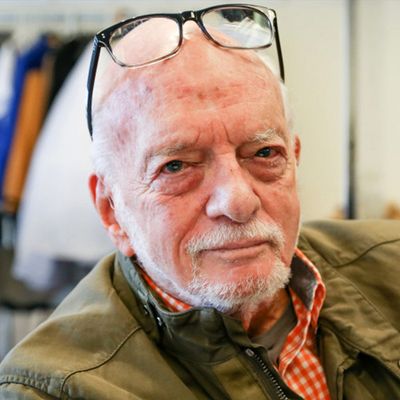
The central figure in the emergence of the Concept Musical is Harold Prince. In a career that lasted more than 60 years, Prince produced and/or directed more than 40 Broadway shows, and in the process received 21 Tony awards more than any other single individual.
Transcript
This transcript was automatically generated and might contain errors.
[0:05] David Armstrong: Welcome to another episode of Broadway Nation, the podcast that tells the extraordinary story of how immigrants, Jews, queers, African Americans, and other outcasts invented the Broadway musical and how they changed America in the process.
[0:18] David Armstrong: I'm David Armstrong, and I call this episode Hal Prince and the Concept Musical: The Modern Era of Broadway Part 5.
[0:30] David Armstrong: The key figure in the emergence of what is usually called the Concept Musical is Harold Prince, who was known to his friends and colleagues and in the business as Hal.
[0:39] David Armstrong: Over a career that lasted more than 60 years, Hal Prince produced and or directed more than 40 Broadway shows, and in the process received 21 Tony Awards more than any other single individual.
[0:52] David Armstrong: Hal Prince was born in 1928 in New York City.
[0:56] David Armstrong: His adopted father was the child of Polish Jewish immigrants.
[0:59] David Armstrong: His mother was from a Jewish Canadian family.
[1:02] David Armstrong: At an early age, he was taken to Broadway shows by his theater-loving parents, and he soon discovered a lifelong calling.
[1:08] David Armstrong: Graduating from the University of Pennsylvania at age 19, Prince looked for a way to break into the theater.
[1:15] David Armstrong: He started out working for George Abbott as an unpaid intern and eventually worked his way up to being assistant stage manager of the Ethel Merman Irving Berlin hit Call Me Madam, working under stage manager Bobby Griffith.
[1:28] David Armstrong: After briefly serving in the Korean War, he returned to Abbott's office to stage manage the Broadway production of the musical Wonderful Town, written by Joe Fields, Leonard Bernstein, and Comden and Green.
[1:40] David Armstrong: Then, with the blessing of Mr. Abbott, Prince and Griffith formed a production company, and together they produced the next three musicals that George Abbott wrote and directed, including the Pajama Game and Damn Yankees.
[1:52] David Armstrong: And then the young team produced West Side's Story.
[1:54] David Armstrong: Then branching off on his own, Prince produced A Funny Thing Happened on the Way to the Forum and Fiddler on the Roof, among many others.
[2:02] David Armstrong: He was still in his 30s and considered to be the boy wonder of Broadway producers.
[2:07] David Armstrong: But his true ambition was to direct.
[2:09] David Armstrong: He struggled at first, had several flops, and was about to give it all up until he finally achieved a major success with the groundbreaking show Cabaret.
[2:19] David Armstrong: And it is Cabaret that is considered to be the first concept musical.
[2:23] David Armstrong: The idea of the concept musical actually begins with Jerome Robbins and Fiddler on the Roof.
[2:28] David Armstrong: Famously, during the development of Fiddler, Robbins kept pushing the writers and Hal Prince to uncover a unifying theme that would focus the production.
[2:36] David Armstrong: Lyricist Sheldon Harnick remembered it like this.
[2:39] Sheldon Harnick: Working with Robbins was like working with the world's greatest district attorney, asking us question after question, probing what is the show about, and not being satisfied by the glib answers we were giving.
[2:50] Sheldon Harnick: We kept saying it's about a dairy farmer and his daughters and trying to find husbands for them, and he'd say no, that's not what gives these stories their power.
[2:58] Sheldon Harnick: Ultimately, we said, Oh, for God's sakes, Jerry, it's about tradition, isn't it?
[3:03] Sheldon Harnick: And Jerry said, That's it. Write that.
[3:06] David Armstrong: Hal Prince, who was the show's producer, would later say that that unlocked everything that the show needed.
[3:15] David Armstrong: Once they'd figured this out, Robbins insisted that this concept had to guide the entire production.
[3:20] David Armstrong: Harnick remembered that he would say again and again, Well, if that's what the show's about, why isn't it in this scene? Why isn't it in that scene? Why don't we see it in this character or that character?
[3:30] David Armstrong: Robbins insisted on a unifying idea or concept that would tie the entire show together.
[3:36] David Armstrong: Fiddler on the Roof. Sounds crazy, no?
[3:41] David Armstrong: But now, little village of Anatefka, you might say.
[3:45] David Armstrong: Every one of us is a fiddler on a roof, trying to scratch out a pleasant, simple tune without breaking his neck.
[3:53] David Armstrong: It isn't easy. You may ask, why do we stay up there if it's so dangerous?
[4:00] David Armstrong: We stay because Anatefka's our home.
[4:04] David Armstrong: And how do we keep our balance? That I can tell you in one word. Tradition.
[4:11] David Armstrong: Tradition. Tradition. Tradition. Tradition. Tradition!
[4:27] David Armstrong: Hal Prince would pick up on this idea and run with it.
[4:31] David Armstrong: And fortunately, over the following years, he found the perfect partners to collaborate with.
[4:36] David Armstrong: First, there was the songwriting team of Cander and Ebb, both of them gay, both of them Jewish.
[4:42] David Armstrong: And together they wrote 16 Broadway musicals, including two mega hits, Cabaret and Chicago, as well as dozens of hit songs for stage and screen, including New York, New York.
[4:53] David Armstrong: Composer John Cander was born into a Jewish family in Kansas City, Missouri, in 1927.
[4:59] David Armstrong: His father worked in his father-in-law's egg and poultry business.
[5:02] David Armstrong: His parents both loved the arts and often took their two sons to local theater and orchestra concerts.
[5:08] David Armstrong: And every year they were treated to a trip to New York to see theater.
[5:11] David Armstrong: After serving in the Second World War, Cander studied music at Oberlin College and then earned his master's degree from Columbia University.
[5:19] David Armstrong: After college, he began conducting Summerstock Theater Productions and then was hired as a rehearsal pianist for the original Broadway production of West Side Story.
[5:27] David Armstrong: Picking up on his talent, Jerome Robbins then hired him to write the dance arrangements for Gypsy.
[5:32] David Armstrong: Lyricist Fred Ebb was born in 1928 to a Jewish family in New York City.
[5:37] David Armstrong: Unlike almost all of the other theater artists I've profiled, Ebb reported in an interview that there was no music in my house.
[5:43] David Armstrong: Nobody played the radio, nobody sang. I developed a love for music independently.
[5:49] David Armstrong: He first fell in love with theater after he saw Al Jolson perform on Broadway in a musical called Hold On to Your Hats.
[5:55] David Armstrong: Cander would later say, I love the fact that it was live, that it was real, even though it was all illusion.
[6:02] David Armstrong: He had to work his way through college, but graduated from New York University with a bachelor's degree in English literature and then a master's degree in English from Columbia.
[6:11] David Armstrong: Both Cander and Ebb had some early success writing with different partners, but then they were matched up by a music publisher, and Hal Prince and George Abbott hired them to write the score for a show called Flora the Red Menace.
[6:23] David Armstrong: This show starred 19-year-old Liza Minelli in her Broadway debut.
[6:28] David Armstrong: The show was not a success, but it had some terrific songs, and it led to Candor and Ebb's long association with Liza Minnelli and also to Hal Prince asking them to work with him on Cabaret.
[6:50] David Armstrong: Based on the Berlin stories by Christopher Isherwood and the play adaptation of them by John Van Druten, both of them gay, Cabaret tells the story of a young American man named Cliff who travels to Berlin during the Weimar Republic and becomes entangled in the life of a fascinating, capricious, second-rate cabaret star named Sally Bowles.
[7:11] David Armstrong: Meanwhile, the Nazi Party rises to power around them. Cabaret is a great show, but it's also a very flawed one. It's a transition piece between the Golden Age and the concept era, and as a result, it is really kind of two musicals in one that sort of alternate with one another.
[7:28] David Armstrong: One is a traditional Golden Age style musical play with a story centered on two couples and songs that come right out of the story and define the characters. And the other musical is a spiky revue of cabaret songs that break the fourth wall and reflect and comment on the main story.
[7:46] David Armstrong: Most of those songs are performed by the character simply called the MC, who ties the two parts together.
[7:55] David Armstrong: Leave your troubles outside.
[7:58] David Armstrong: So life is disappointing.
[8:01] David Armstrong: Forget it.
[8:02] David Armstrong: In here, life is beautiful.
[8:06] David Armstrong: The girls are beautiful.
[8:09] David Armstrong: Even the orchestra is beautiful.
[8:13] David Armstrong: As I said, in hindsight, this original version of Cabaret can feel a bit like two musicals that have been grafted together and not entirely in a satisfying way. But that's only because we've seen what would come next.
[8:26] David Armstrong: We have seen the more tightly conceived musicals that Cabaret would lead to. The 1972 Oscar-winning film version of Cabaret, directed by Bob Fosse, tried to fix this issue by eliminating all of the book songs and keeping only the diegetic or performance songs.
[8:42] David Armstrong: And then, with every Broadway revival since then, the original authors have continued to rework and revise the show in an effort to bridge the gap between the film and the original. However, at the time, that original production of Cabaret was both a critically hailed and a popular success.
[8:58] David Armstrong: It won eight Tony Awards: Best Musical, Best Score, Best Direction, and Best Choreography for Ron Field. And this and a run of over 1,000 performances put Candor and Ebb on the map and established Hal Prince as an innovative and visionary director.
[9:37] David Armstrong: Don't go away, Broadway Nation will be back right after this short break. Following up on the success of Cabaret, Hal Prince then teamed up with Stephen Sondheim and George Firth to create the landmark musical Company.
[10:04] David Armstrong: Company is one of the best examples of a concept musical because it can so clearly be seen to be dramatizing an idea or concept rather than a specific story. In this case, the concept is marriage, its pros and its cons, and its place in modern society.
[10:20] David Armstrong: Many people have called it the first plotless musical. More accurately, I would say that in this show, Prince and the authors return to and reinvent the revue format of the Silver Age.
[10:31] David Armstrong: Each of the scenes and songs explores a specific aspect of marriage in a manner much like the comedy sketches and musical numbers in a classic revue. These individual segments are loosely linked by the character of Robert.
[10:44] David Armstrong: Phone rings, door chimes, in comes company.
[10:50] David Armstrong: No strings, good times, room hums, company.
[10:56] David Armstrong: Late nights, quick bites, party games, deep talks, long walks, telephone calls.
[11:04] David Armstrong: Thoughts shared, souls bared, private names.
[11:06] David Armstrong: All those photos up on the walls. This was all part of the modern age's shift away from the Golden Age style of integrated musical plays towards a more unconventional, non-linear kind of storytelling.
[11:22] David Armstrong: The surreal, absurdist, shifting realities and details of Company's birthday party scenes are prime examples of this. Company was only the first of six extraordinary musicals that Prince and Sondheim would create together.
[11:53] David Armstrong: The others were Follies, A Little Night Music, Pacific Overtures, Sweeney Todd, and Merrily We Roll Along. Three of the six, Company, A Little Night Music, and Sweeney, received the Tony Award for Best Musical, and all of them were produced and directed by Hal Prince with music and lyrics by Stephen Sondheim.
[12:00] David Armstrong: I'm watching Cisco Pito Pat. Said, I could do that.
[12:18] David Armstrong: I could do that.
[12:21] David Armstrong: Knew every step right off the bat.
[12:25] David Armstrong: Said, I could do that.
[12:27] David Armstrong: I could do that.
[12:30] David Armstrong: On the first two of those shows, Prince and Sondheim were joined by choreographer Michael Bennett. He was born Michael Bennett De Figlia in Buffalo, New York in 1943.
[12:40] David Armstrong: His mother's side of the family were Russian Jews. His father's side had emigrated from Sicily. His mother put him into dance lessons at age two, even though his father was highly resistant to this idea.
[12:51] David Armstrong: His mother said she could tell that Michael was different from the time he was a baby. He didn't act, well, you know, normal, she said. He was always moving, bouncing, struggling like.
[13:01] David Armstrong: During high school, he was allowed to spend his summers in New York City studying dance, and that's where he was highly influenced by seeing the original productions of The Pajama Game, Damn Yankees, and Guys and Dolls.
[13:13] David Armstrong: He said, I always knew what I wanted to do. I wanted to become Jerry Robbins. I wanted to become this brilliant choreographer-director in the theater.
[13:22] David Armstrong: He dropped out of high school to play Baby John in a US and European tour of West Side Story. And then he danced in the chorus of a few Broadway shows and began choreographing summer stock productions.
[13:34] David Armstrong: Eventually, this would lead to him creating the choreography for two Broadway musicals that were both flops but with great choreography. And then one big hit musical, Promises, Promises.
[13:46] David Armstrong: These shows got him noticed, most notably by Hal Prince, who invited him to work on Company. His work on Company was spectacular and highly acclaimed, and Prince was eager for Bennett to choreograph his next show, Follies.
[13:59] David Armstrong: But Bennett was itching to direct in much the same way as Prince had once been, and Bennett said he would only do it if he was the co-director of the show. It was going to be a big, elaborate, involved show, and Prince agreed.
[14:13] David Armstrong: Once again, Michael Bennett's work was brilliant, and he won two Tony Awards for choreography and for co-direction.
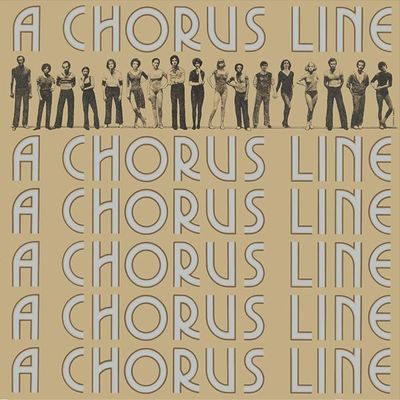
[14:20] David Armstrong: And many people who saw that show still contend that the song and dance number, "Who's That Woman," was the best number in Broadway history. I didn't see it, so I can't attest to that, but I've heard that from multiple people. The greatest number that ever was, "Who's That Woman?" Both Company and Follies were concept musicals, and Michael Bennett would bring the concept musical to its highest peak with his 1975 show, A Chorus Line. The book for A Chorus Line was by Nicholas Dante and James Kirkwood. The score was by composer Marvin Hamlisch, and the lyricist was Edward Kleban. But the show was conceived, directed, and choreographed by Michael Bennett.
[15:01] ♪ Musical number ♪
[15:37] David Armstrong: A Chorus Line has an unusual backstory. It begins with a group of dancers who had all been together in a flop show and felt abused and powerless after the experience. Two of them, Michon Peacock and Tony Stevens, decided to get a bunch of dancers together to just talk, sort of a consciousness-raising session, which were very popular in the 1970s. And they invited Michael Bennett to be a guest. That first night they met late because many of the dancers came after their Broadway shows. They had a dance class, they drank wine, and they sat around and they just started to talk. And luckily, they had a tape recorder running while they did it. Michael Bennett was very taken with the stories that the dancers told, and he inspired them to have several more sessions in which they did more of the same, and he began to ask specific questions during these sessions.
Nobody was quite sure where this was leading, and neither was Michael Bennett. But eventually, he approached the producer Joe Papp at the Public Theater and asked if the theater would provide some space for a workshop to work on some staging and script ideas that might come out of these personal stories. This began something that had never really been done before. Shows being developed in a workshop setting with a group of artists all working together from the very beginning, working with writers, working with directors, working with producers, but the actors themselves, the performers, being intimately involved in the creation of the show right from the beginning. Ultimately, this would lead to A Chorus Line, which was crafted from the real stories of actual Broadway dancers.
In some ways, you could say it was the first reality show, as it had many of those elements. Although, of course, ultimately, actors would be hired, sometimes the actual person and sometimes not, to play those parts and to speak those stories and to speak those words on the stage. And the songwriters were inspired by those stories and those words to create songs based on them. A Chorus Line and Company are often both described as being plotless musicals, but A Chorus Line has a very highly charged dramatic situation at its core. In many ways, it's similar to a sporting event. Who is going to win? And again, this comes years before any of the television reality show contests that we're so used to now.
There's dramatic tension from the very beginning of the show because we know that only eight of them will be chosen at the end of the night. When Chorus Line first opened at the Public Theater, the rumors began to build that something special was happening downtown, and it became an impossible ticket to get. It was a relatively small theater, and everybody in New York, everybody in the business wanted to get in to see the show that they had heard so much about.
[19:16] David Armstrong: And all the musical Chicago would take many of the ideas and concepts of Cabaret and take them even further. It was directed by Bob Fosse with music and lyrics by Kander and Ebb, and its star was Gwen Verdon. And she was the one who always wanted to do a musical based on this source material, a play from the 1920s. What they were all able to achieve was a musical about the jazz age that was very much a comment on what was going on in the 1970s, specifically the Watergate trial. One of Chicago's concepts is that every musical number would be done in the style of a performer from the 1920s, as we talked about previously with Bert Williams and the song "Mr. Cellophane."
[20:03] ♪ Musical number ♪
[21:51] David Armstrong: Hope I didn't take up too much of your time.
[21:58] David Armstrong: What's amazing about this show is that they are able to take this very cynical story and these very disreputable characters and still delight, amaze, and completely entertain us and entrance us. Both A Chorus Line and Chicago were part of the 1970s dance explosion. The Broadway wing of this explosion included Bob Fosse's Dancin', the musical 42nd Street, as well as Cats. But it wasn't just Broadway. For the first time, we suddenly had ballet and dance superstars embraced by the general public. People like Mikhail Baryshnikov, Twyla Tharp, and dance was featured in movies like The Turning Point, Flashdance, and Footloose. Bob Fosse's Dancin', which opened in 1978, was in every aspect a revue.
No book, no story, no characters. Just a cast of incredible dancers performing a series of dynamic dances, plus a few songs, all choreographed in Fosse's signature style and set to classical pop and Broadway music that ranged from Bach to George M. Cohan to Neil Diamond. The show played 1,774 performances and earned Fosse a Tony Award for his choreography. Much of the choreography from Dancin' would be used again in the show Fosse after his death. The 1980 musical 42nd Street was part of both the Dance Explosion and the Nostalgia Craze. It was based on the 1932 film of the same name and was directed and choreographed by Gower Champion. The show used a very streamlined book to string together a series of spectacular 1930s flavored production numbers and to retell the story of a chorus girl who, by a stroke of fate, became an instant Broadway star.
It was certainly no coincidence that 42nd Street began with a stage full of eager chorus kids all tap-dancing their hearts out as they auditioned to be in a big Broadway show. 42nd Street ran 3,400 performances.
[24:36] David Armstrong: This inspired an entire generation of UK performers to study and train so that they could replace the Americans during A Chorus Line's three-year run. Lloyd Webber was so impressed by this amazing increase in danceability that he decided to write a show specifically to showcase this new British crop of triple threat performers. The result was Cats. Based on a book of poems by T.S. Eliot, Cats is essentially a themed revue. There is no real story, just a series of musical numbers in which each cat character comes forward to perform their particular song and dance routine. What seemed like another terrible idea for a musical became one of the world's most popular shows, running 21 years in London and 18 years on Broadway. It was a black musical, it was part of the dance explosion, and it looked back nostalgically at the early 1960s and the era of the Supremes.
[26:50] David Armstrong: And although in form it was more or less a traditional book musical, the physical staging of the show was highly conceptual. And the show featured an extraordinary design in which all of the elements danced, not just the actors, but also the scenery and the lighting and even the costume changes happened center stage and were part of the action. The period from A Chorus Line through Dreamgirls marked an extraordinary rebirth of Broadway, when it was once again very near the center of our American culture. But as we will see in the next episode, a major health crisis, the AIDS epidemic, will devastate Broadway and will put an end to one era and give birth to what we call the British invasion of the 1980s.
[27:51] David Armstrong: There is a life of our design to our Broadway Nation is written and produced by me, David Armstrong. If you enjoy these podcasts, I hope that you will do me a big favor by subscribing, rating, and especially writing a quick review of the show on Apple Podcasts or wherever you listen. And also you can follow Broadway Nation on our Facebook page, Twitter, and Instagram, where I often post photos, video, and additional information about the musicals that are profiled in each episode. Special thanks to KVSH 101.9, the voice of beautiful Vashon Island, Washington, and to the entire team at the Broadway Podcast Network.
© Broadway Podcast Network, All Rights Reserved