

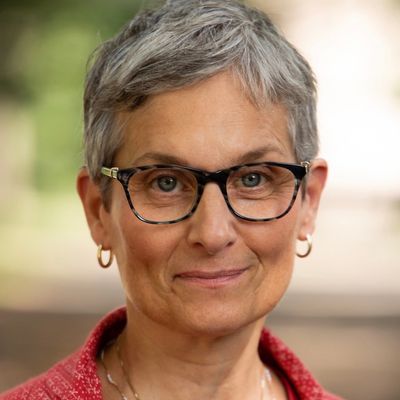
This is the second half of my conversation with author Liza Gennaro, whose fascinating book is titled: Making Broadway Dance. If you missed part one you may want to catch up on that episode before listening to this one... Read More
From the show: BROADWAY NATION
Guests
Featured Shows
About
This is the second half of my conversation with author Liza Gennaro, whose fascinating book is titled: Making Broadway Dance.
If you missed part one you may want to catch up on that episode before listening to this one.
Liza is currently the Dean of Musical Theater at the Manhattan School of Music and she also has had a very active and successful career as a dancer and choreographer. Interestingly, she is closely related to this subject matter of her book because her father was the Tony Award winning choreographer and star dancer, Peter Gennaro. He is profiled in the book as well as in this episode.
By the end of Part 1, we had made it to the late 1940s when Agnes de Mille was dominating the field of Broadway choreography. Between 1943 and 1945, De Mille had four hits in a row – Oklahoma!, One Touch of Venus, Bloomer Girl, and Carousel – and three of them choreographed in her signature “Americana” style. This unprecedented string of successes made her the most powerful choreographer in the commercial theater, and soon led to her becoming the first director-choreographer of the “Golden Age” with Rodgers & Hammerstein’s Allegro.
De Mille’s most significant contribution to the Broadway Musical was breaking the mold of the traditional Broadway chorus girl by insisting on hiring actor/dancers who could fully embody the characters that they were playing.
This new approach to Broadway dance, and this new kind of Broadway dancer, would be adopted by everyone who followed in her footsteps – especially Jerome Robbins – who years later would write, “Agnes broke the conception of what the Broadway dancer could be in the Broadway Musical. What they looked like, what was desired of them, and what their contribution to the show was.”
And, as you will hear, Robbins took that idea and ran with it, just as De Mille’s “Americana” style was starting to lose its luster.
That’s just the beginning Later in the episode Liza and I discuss Michael Kidd, Bob Fosse, Gower Champion, Michael Bennett, Graciela Daniele, Susan Stroman, Kathleen Marshall, Bill T. Jones, Stephen Hoggett, Lorin Latarro, Kelly Devine, Sergio Trujillo, Jerry Mitchell and more!
Become a PATRON of Broadway Nation!
I want to thank our Broadway Nation Patron Club members, such as John Schroeder and Alan Brodie whose generous support helps to make it possible for me to bring this podcast to you each week. If you would like to support the creation of Broadway Nation, here is the information about how you too can become a patron.
For a just $7.00 a month you will receive exclusive access to never-before-heard, unedited versions of many of the discussions that I have with my guests — in fact I often record nearly twice as much conversation as ends up in the edited versions. You will also have access to additional in-depth conversations with my frequent co-host Albert Evans that have not been featured on the podcast.
All patrons receive special “on-air” shout-outs and acknowledgement of your vital support of this podcast. And if you are very enthusiastic about Broadway Nation there are additional PATRON levels that come with even more benefits.
If you would like to support the work of Broadway Nation and receive these exclusive member benefits, please just click on this link:
https://broadwaynationpodcast.supercast.tech/
Thank you in advance for your support!
Transcript
This transcript was automatically generated and might contain errors.
[0:00] David Armstrong: Hello, this is David Armstrong.
[0:02] David Armstrong: I'm going to be taking the month of January off to work on my upcoming book, but in the meantime, I'll be sharing some of my favorite episodes from the past that you may have missed or may enjoy hearing again.
[0:14] David Armstrong: Thank you so much for listening to Broadway Nation, and I especially want to thank our patron club members, including our newest members, John Schroeder and Alan Brody, whose generous support helps to make this podcast possible.
[0:28] David Armstrong: If you would like to help support the creation of Broadway Nation, I'll have information at the end of the episode about how you too can become a patron.
[0:36] David Armstrong: Now, here's a specially selected Encore episode.
[0:40] David Armstrong: See you in February.
[0:48] David Armstrong: Welcome to another episode of Broadway Nation, the podcast that tells the remarkable story of how immigrants, Jews, queers, African Americans, and other outcasts invented the Broadway musical and how they changed America in the process.
[1:18] David Armstrong: This is the second half of my recent conversation with author Liza Gennaro, whose fascinating new book is titled Making Broadway Dance.
[1:26] David Armstrong: If you missed part one, you may want to catch up on that episode before listening to this one.
[1:31] David Armstrong: Liza is currently the Dean of Musical Theater at the Manhattan School of Music, and prior to that, she had a very active and successful career as a dancer and choreographer.
[1:41] David Armstrong: And she is directly related to the subject matter of her book because her father was the Tony Award-winning choreographer and star dancer Peter Gennaro.
[1:50] David Armstrong: He's also one of the subjects of Liza's book and this episode.
[1:54] David Armstrong: At the end of part one, we had made it to the late 1940s when Agnes de Mille was dominating the field of Broadway choreography.
[2:02] David Armstrong: Between 1943 and 1945, De Mille had four hits in a row: Oklahoma!, One Touch of Venus, Bloomer Girl, and Carousel.
[2:11] David Armstrong: And three of them were choreographed in what became her signature Americana style.
[2:16] David Armstrong: This string of unprecedented success made her the most powerful choreographer in the commercial theater, and soon led to her becoming the first director-choreographer of the Golden Age.
[2:27] David Armstrong: As Liza noted last time, Agnes De Mille's most significant contribution to the Broadway musical was in how she broke the mold of the traditional Broadway chorus girl by insisting on hiring actor-dancers who could fully embody the characters that they were playing.
[2:42] David Armstrong: This new approach to Broadway dance and this new kind of Broadway dancer would be adopted by everyone who followed in De Mille's footsteps, especially Jerome Robbins, who years later would write, "Agnes broke the conception of what the Broadway dancer could be in the Broadway musical, what they looked like, what was desired of them, and what their contribution to the show was."
[3:05] David Armstrong: And as you will hear, Robbins took that idea and ran with it, just as De Mille's Americana style was starting to lose its luster.
[3:13] David Armstrong: Here we go.
[3:14] David Armstrong: When she gets into the mid to late 40s, it starts to feel a bit dated.
[3:19] David Armstrong: And by then, Robbins has taken over.
[3:21] David Armstrong: And Robbins brings urbanism and jazz and Bernstein, and audiences are just overwhelmed by him.
[3:28] David Armstrong: And he's extremely prolific.
[3:30] David Armstrong: He has so many shows so quickly.
[3:33] David Armstrong: And he's working at New York City Ballet with Balanchine at the same time.
[3:37] David Armstrong: And of course, mentoring with George Abbott, who he was assisting and choreographing for and co-directing with.
[3:43] David Armstrong: And who were the other choreographers who came after that Americana movement?
[3:46] Liza Gennaro: Well, for theater, certainly Michael Kidd.
[3:49] Liza Gennaro: I would say Michael Kidd was the other really major one.
[3:52] Liza Gennaro: Anyone who's seen the movie of Seven Brides for Seven Brothers, you'll see that.
[3:56] Liza Gennaro: And then the other choreographers, you know, I think of are more the ballet choreographers who I mentioned already.
[4:03] Liza Gennaro: In musical theater, once Robbins starts doing his thing, the Americana style is not as interesting and is not as producible.
[4:12] David Armstrong: I love that you take sections of the book to profile these various choreographers, some of which we know very well and some of which we don't know well.
[4:20] David Armstrong: And of course, one of those had to be your dad, Peter Gennaro, which was a delight to know more about him.
[4:26] David Armstrong: I don't know that there's been a lot written about your dad other than this book.
[4:30] David Armstrong: Of course, you should be the expert.
[4:32] David Armstrong: But was that challenging in any way to write objectively about your father in this regard?
[4:37] Liza Gennaro: It was.
[4:38] Liza Gennaro: It was challenging.
[4:39] Liza Gennaro: And I just finished writing another chapter for an Oxford University Press book that'll be coming out in a year on musicals and television.
[4:48] Liza Gennaro: And I focused it on my father's dances on variety shows.
[4:51] Liza Gennaro: So I really dug in there, even more so because when I was working on Broadway dance and talking about it, it was fun for me.
[4:58] Liza Gennaro: You know, I was enjoying doing it.
[4:59] Liza Gennaro: And what I tried to do with all the choreographers, and it was very fun to do with my father, was to really unpack what their training had been and what their exposures to dance had been, and then to see how they all brought it to the commercial theater.
[5:14] Liza Gennaro: So that was interesting.
[5:15] Liza Gennaro: And also just my father's relationship with the Catherine Dunham school, and then why Robbins chose him to co-choreograph West Side Story with him.
[5:25] Liza Gennaro: And what my father brought to West Side Story that Robbins didn't have in his bag of tricks, which I think was really what my father gained from the Dunham School, which was the dances of the African diaspora, the Latin dances, the Mambo in the dance of the gym, and of course the America and the rest of the shark material.
[5:51] David Armstrong: Nobody look in America.
[5:59] Liza Gennaro: Just so people know, when we watch West Side Story today, the original, whether it's the movie or see a stage production where they're recreating it, almost everything the sharks do is your father's work with Robbins supervising.
[6:11] David Armstrong: Yeah, exactly.
[6:12] Liza Gennaro: Robbins didn't want to choreograph West Side Story, and Hal Prince told him if he didn't do it, he wouldn't produce it.
[6:17] Liza Gennaro: So he got a co-choreographer.
[6:19] Liza Gennaro: He asked my father to assist him first, and my father said no, because my father had begun choreographing at that point, and he said I would co-choreograph it.
[6:27] Liza Gennaro: So that was the agreement that they made.
[6:29] Liza Gennaro: But I was interested when New York Public Library for the Performing Arts did a Google exhibit on my father's participation in West Side Story, and they had hundreds of pictures, the Martha Swope pictures from the rehearsals.
[6:43] Liza Gennaro: And in looking at those, it was quite interesting because you could see where my father was far more involved than I ever realized.
[6:51] Liza Gennaro: He did the Mambo, which is the Jets and the Sharks.
[6:54] Liza Gennaro: There are pictures of him working on the prologue.
[6:58] Liza Gennaro: And you know, I don't know if Robbins was just using him to work it out, or if he was demonstrating, you know, who knows.
[7:04] Liza Gennaro: But it was interesting that he was very much a part of that entire experience.
[7:08] David Armstrong: And as we know on musicals, it's a collaborative art form.
[7:11] David Armstrong: You know, the costume designer may be the person who comes up with the great idea for the finale of the show.
[7:17] David Armstrong: Ideas come from everywhere.
[7:19] David Armstrong: So when I read scholarship that tries to parse out this person did this, that person did that, it's frustrating to me because it's a lack of understanding of how the process works, which is that everyone is going for the same thing.
[7:34] David Armstrong: And when it works at its best, you've got a strong leadership and a director, and then everybody's just following suit and figuring out how to tell that story that way.
[7:45] David Armstrong: So I think that the participation of my father, though we always say it was the sharks, there's that embedding of just a person's being in a show.
[7:54] David Armstrong: You can't really, not tangible in a sense.
[7:57] Liza Gennaro: Absolutely.
[7:57] Liza Gennaro: I'm sure he had a tremendous amount to do with the entire show because he's there and he's brilliant.
[8:02] Liza Gennaro: And Robbins is going to use everything he can to make the show better, including your father's brilliance in doing that.
[8:28] Liza Gennaro: And yet he was taken into the Catherine Dunham Company as one of the company members.
[8:34] Liza Gennaro: So clearly he just had an affinity for this that went beyond any immediate heritage.
[8:39] Liza Gennaro: Well, it was the swing on the Dunham Company, and then he danced with the experimental company.
[8:45] Liza Gennaro: He was raised in New Orleans, Sicilian immigrants, and they lived across the street from a Black Baptist church.
[8:51] Liza Gennaro: And as a child, he would, you know, follow the jazz funerals.
[8:54] Liza Gennaro: So he had a real feel for that kind of dancing.
[8:59] Liza Gennaro: It made sense on his body.
[9:01] Liza Gennaro: He really didn't train completely formally until after he was out of World War II, which is when he went to the Dunham School on the GI Bill.
[9:09] Liza Gennaro: He also studied in New Orleans when he went back at one point.
[9:13] Liza Gennaro: Actually, my parents got married.
[9:15] Liza Gennaro: My mother was a ballet dancer, and she said, "We've got to go to this class."
[9:19] Liza Gennaro: And it was Lilia Holler, who I think had been with the Ballet Russe.
[9:22] Liza Gennaro: I'm actually just currently doing some research on her.
[9:25] Liza Gennaro: But she was a serious ballet person and he studied with her as well.
[9:29] Liza Gennaro: And so you can see in his dancing on the television shows that he's really fusing ballet with these black dances coming out of the black communities, jazz, but in a very different way than Balanchine was doing.
[9:44] Liza Gennaro: So Balanchine is bringing the European aesthetic to it.
[9:48] Liza Gennaro: Where my father is in America learning these dances from childhood.
[9:53] Liza Gennaro: So it's fascinating to me to see how that translates onto the body.
[9:57] David Armstrong: Well, you and I both grew up watching your father dance on the Ed Sullivan Show.
[10:01] David Armstrong: You probably got to be there in person at times, but I have vivid memories of that.
[10:05] David Armstrong: He choreographed that show for quite a long period, didn't he?
[10:08] Liza Gennaro: Yeah, yeah.
[10:09] Liza Gennaro: He probably about eight years, something like that.
[10:11] Liza Gennaro: He was a weekly.
[10:12] Liza Gennaro: And of course, Perry Como Show and the Kraft Musical.
[10:15] Liza Gennaro: I mean, he did all of those variety shows.
[10:17] David Armstrong: It's really interesting for any scholars to look at the periods of the variety shows.
[10:21] David Armstrong: Let's move to the director-choreographers, which is a big part of your book.
[10:25] David Armstrong: So it's natural that a choreographer would want to direct the show as well as choreograph it, relating to some of the things you said earlier, just in terms of being able to not have to follow the lead of the director, but to actually lead the entire show themselves.
[10:39] David Armstrong: And also it was inevitable that I think producers would want them to do it because it was all about the flow of the show, was about making the show as we move into this golden age and where we want to integrate all the elements of the musical.
[10:52] David Armstrong: The best person to do that was the director-choreographer, because they literally made the whole show of one piece.
[10:58] Liza Gennaro: Yeah.
[10:59] Liza Gennaro: And De Mille is the first of this era with Allegro, and it's not a success.
[11:04] Liza Gennaro: Although what I found so interesting in doing the research was I had always heard, well, Allegro didn't work because De Mille was a mess and she couldn't direct, and that was the problem.
[11:14] Liza Gennaro: And then you look at the reviews and you see actually she got very good reviews.
[11:17] Liza Gennaro: And what she was doing was very innovative, and it was the book.
[11:17] Liza Gennaro: It was the book as it usually is.
[11:24] Liza Gennaro: When the book doesn't work, the choreographer gets blamed.
[11:27] Liza Gennaro: They fire the choreographer.
[11:30] Liza Gennaro: So she had a rough time on that one.
[11:32] Liza Gennaro: And I don't think she ever really recovered.
[11:34] Liza Gennaro: I mean, she did direct a few more times, but never had great success.
[11:37] Liza Gennaro: Whereas Robbins starts directing, he does Peter Pan, which he does the book and he does the rewrite, and then he's working on Pajama Game as the co-director with Abbott, and then he's Balzerine by himself, and then he's just takes off.
[11:53] Liza Gennaro: And because he had an outlet, a parallel career at the New York City Ballet, where he had an outlet to have his movement expression.
[12:03] Liza Gennaro: And he was focused on that there.
[12:05] Liza Gennaro: But on the shows, I think he was less concerned with again this idea of invented movement.
[12:12] Liza Gennaro: He was interested in the storytelling in all aspects.
[12:15] Liza Gennaro: So as a director-choreographer, this was a perfect fit for him.
[12:19] David Armstrong: It just worked for him. And he went from show to show. And I think he was probably very, very good about choosing the shows that he took on. And he was getting offered everything because his shows were successful. That's a big piece that you know people forget. You're only as good as your material. You've got to have good material. He got to choose. Yeah, he got to choose, and she was just getting, you know, whatever was coming along, she was taking. So then coming out of Robbins, you have a very young Bob Fosse, who has an incredible experience working with him on Pajama Game. As I write in the book, it's kind of startling when you see the amount of the choreography that was done by Robbins.
And pretty much the only thing done by Bob Fosse, and I don't mean only negatively, was Steam Heat, which was spectacular. And defined him. I mean put him on the map. But the rest of it, he's acting basically as Robbins' assistant or doing the first draft, and then Robbins is fixing it.
[13:13] Liza Gennaro: Exactly. And he's another sponge, and he's learning and figuring it out and you know, setting his ego aside and soaking it up so that when he moves on, he just really takes off. As I relate in my book, years later, Fosse's biographer Martin Gottfried told Robbins that Fosse had admitted to him that when he was hired to do the Pajama Game that he didn't know much about musical staging. Robbins replied, well, he learned fast. He's very like Robbins, they're very invested in a kind of Stanislavskian approach or a method approach, and they're really using that with the dances.
[13:53] David Armstrong: How do you approach a dance like whatever Lola wants?
[13:53] Liza Gennaro: Whatever Lola wants.
[14:05] David Armstrong: And little man.
[14:08] Liza Gennaro: Little Lola wants you.
[14:12] David Armstrong: What is Gwen Verdon doing in that dance that's making it so complete in terms of telling us who she is and what's happening in the moment?
[14:23] Liza Gennaro: And that has always been fascinating to me because when you see revivals, it's the rare revival where you see a performance that really pops off the stage. I'm always kind of looking and thinking, what's missing here? And I think that a lot of times what's missing is the director. What Gwen said was when she did Lola, she didn't do it sexy. She did it like the ugly little fat girl that she was that sold her soul to the devil, and now she's got this new body that she's playing with.
[14:58] David Armstrong: It's me.
[15:05] Liza Gennaro: That's you. And that makes the numbers so much richer. When the choreographer has that kind of knowledge of acting and what is required to tell story and express ideas through the body relating to the libretto, I think is when you really get that explosion of powerful, powerful work. And of course, Fosse was able to do it over and over again, as was Bennett. And Gower Champion, who's kind of another thing to me because he really uses dances that are part and parcel of the Broadway lexicon of movement. He's really not trying to do anything with dance. He's just genius at building numbers and at making the entire production work seamlessly.
[15:58] David Armstrong: And making the whole show dance in a way.
[16:00] Liza Gennaro: Exactly. That's a great way to put it. Exactly. The steps could be any steps.
[16:04] David Armstrong: He's gonna weave them together into this sort of magical nonstop event.
[16:09] Liza Gennaro: Yeah, I think that's a great way to say it is that the steps, they could be any steps. Whereas with Robbins, they can't be any steps. They have to be those steps. Same thing with DeMille, same thing with Fosse. It's not less good. I'm just trying to show it's different, that there are different ways to approach the form. And if it works, it works. And it's not easy to stop a show. And it's not easy to get big hands, and it's not easy to build a number. So anybody who can do that, I don't take that away from Gower Champion or those choreographers. That is that it's very special skill. But it's a little bit different, is all I'm saying from what DeMille and Robbins to a degree were doing.
[16:48] David Armstrong: You have a paragraph in your book where you talk about the challenge of stopping a show and how that's not to be underestimated.
[16:54] Liza Gennaro: Yeah, because it's a lot to do with what's before the number and what's after the number, what's happening within the number, and then how the movement builds and the structure of the number. And when you see Bennett was so good at it, you know, even like in Coco, and I reference a wonderful YouTube clip from Coco, where they're just walking, but the way they're walking and the way they're building and the way he's using bodies on the stage in formation, which was also a Robbins thing, where he put those bodies is so specific and is telegraphing so much information.
[17:29] David Armstrong: That's something that I think gets not really examined enough in terms of Broadway choreography.
[17:35] Liza Gennaro: And he was genius at it. And Bennett could do the same thing. And Bennett could also do it with dance dance, the way he would repeat a phrase and then change it a little and change it a little and change it until you were just sitting on the edge of your seat. That's a very difficult thing to do. You also go into a great description of how Fosse defines himself with Big Spender. He has a great career prior to that, wins lots of Tony Awards, is the king of Broadway in many ways, but really, in your view, comes into his own with Big Spender.
[18:10] Liza Gennaro: I do feel that because you know, now in dance schools, they teach the Fosse style.
[18:16] David Armstrong: The miniature walked in the joint.
[18:20] Liza Gennaro: I could see you were a man of distinction.
[18:24] David Armstrong: A real big spender.
[18:28] Liza Gennaro: Good looking so refined.
[18:33] David Armstrong: Say, wouldn't you like to know what's going on in my mind?
[18:38] Liza Gennaro: So let me get right to the point.
[18:42] David Armstrong: I don't pop my cork for every I see.
[18:49] Liza Gennaro: Hey, Big Spender.
[19:03] David Armstrong: And what they're teaching is what he really lands on with Big Spender and then continues doing over and over again. He touches on it in New Girl in Town with the ballet in the bordello, which gets cut, and then they kind of sneak it back in. This famous dance that we've never seen, unfortunately. And if you see the pictures, and I do have a picture in the book, you see how much it's like cabaret, what he did with cabaret with the chairs. That was fascinating to me that he was doing that then, and that Abbott was saying, no, no, no, no, you can't do that. And then he was able, not too many years later, to find a way to make it work within the context.
[19:42] Liza Gennaro: And of course, you have to look at the period that it's coming out of, which is now we're in the sexual revolution. And the pill has been invented. It's a whole new world, and audiences are much more able to accept the kind of objectification of the female body and the overtly sexual female body, which is what I think Fosse just latches on to. And it's sensational and it's titillating, and audiences do love it. And he does it again in Pippin and he does it everywhere. He no longer has any concern for time and place. He's gonna do his thing, that movement thing, which is similar to DeMille. They latched onto a movement style that worked for them, and they just kept doing it. They can now impose that on whatever the story is, whether it's the world of Charlemagne in the Middle Ages or the world of Chicago in the 1920s.
[20:35] David Armstrong: Exactly. Where he purposely, I think you said, didn't use any actual Charleston steps in the show.
[20:41] Liza Gennaro: He's determined not to put a Charleston in it.
[20:44] David Armstrong: Yeah, the wonderful dancer and choreographer Tony Stevens, who assisted him on Chicago, said he said, I do not want to use one Charleston in this show. Which is, I mean, if that's your project, how fantastic is that? It was very different from what people had done before. Robbins would never have done that. But the fact that Fosse was able to do it, and honestly, also that it was the same thing over and over again, but it was always new yet. That's amazing that he was able to keep it within the context of the show and kind of keep doing it, but kind of keep making it new and different all the time.
[21:18] Liza Gennaro: Hard to almost describe. In a way, isn't it almost like a lot of modern dance choreographers that use the same vocabulary over and over again and yet somehow create new and captivating dances?
[21:29] David Armstrong: Yeah, it's a modernist approach.
[21:31] Liza Gennaro: And I think Fosse really bridges the gap between DeMille and then Bennett, because he's still kind of got this modernist intent. And at the same time, he's got the method Stanislavski thing. And then Bennett comes along, and Bennett's really not particularly interested in any kind of defining movement, creating new kinds of movement. He's got a vocabulary that's coming out of the social dances of the period. It's jazz, he's trained as a jazz dancer and a hoofer. He really then models something else that then happens.
[22:10] David Armstrong: Don't go away. Liza and I will be right back with Michael Bennett, Susan Stroman, and more right after this quick break.
[22:34] Liza Gennaro: Yeah, the people that didn't have the modern background, you know, they might have had some, but the thrust of their training was as jazz dancers and sometimes some ballet, like with the Cassie dance. That movement vocabulary, it's all a kind of 1970s jazz dance.
[22:58] David Armstrong: It's almost kind of jazz dancing that you would do in a jazz dance class.
[23:03] Liza Gennaro: The difference is the mirrors and the song and the dress she's wearing and the way he structures the dancing and when he turns the mirrors on her. It's everything that he builds around the movement that's telegraphing the story far more so than the movement. The movement is a marathon, and she's basically like Giselle dancing herself to death. But really, the story is being told through all of the theatrical elements that are happening around her.
[23:31] David Armstrong: And that's certainly very different than if DeMille had done that dance.
[23:36] Liza Gennaro: It would have been far more focused, I think, on a choreographic expression on the body, less so than the bigger picture of the elements.
[23:45] David Armstrong: I think what you're saying, correct me if I'm wrong, that if DeMille had done Music and the Mirror, the movement would have been more psychologically based, as opposed to Bennett is doing that through the whole experience, but not so much through the dancing itself.
[23:58] Liza Gennaro: Yeah.
[23:58] David Armstrong: Donna McKechnie might disagree with me on that.
[24:01] Liza Gennaro: Well, I think I know what you mean. If you talk to Donna McKechnie, she will take you beat by beat through that dance to what each of those movements is telegraphing. And I get that. But the vocabulary of the movement is common vocabulary. What I'm saying is that DeMille would have invented movement that told that on the body. It's subtle what I'm saying, but there is a distinction there. And the fact that he was drawing on these kind of jazz dance movements was new to that time.
[24:35] Liza Gennaro: These kind of jazz dance class movements. And that he's using less of a psychology than like an inner monologue, I guess, which could be considered a psychology, but he's kind of doing an inner monologue with her through the dancing. Whereas DeMille is creating an entire dance with Lori Makes Up Her Mind in Oklahoma, in which she's exploring this one character's psychology and what's stopping this person from moving on and what she can't get through because she's got this attraction to this man that she despises. And how that all plays out in the course of the ballet and through the movement and through the postcard girls, it's a very different process of developing movement, I think, than what Bennett's doing. And I'm not saying good or bad, I'm just saying it's different.
[25:31] Liza Gennaro: One of the analogies I found fascinating was the connection between the postcard girls and Big Spender. That Fosse was clearly influenced by DeMille in that regard.
[25:41] Liza Gennaro: Yeah, I think he was very influenced. And DeMille, who created those girls through the lens of Lori. So Lori, who has no sexual experience, is trying to imagine in this dream what these sexualized women would be like. So DeMille has them in this kind of flaccid, droopy, broken doll kind of positions. And then Fosse takes that and kind of flips it on its ear because they're still broken dolls, but the reason they're broken dolls is not because they're through the lens of someone who doesn't understand sex. They're broken dolls because they're women who are worn out by sex. So it's an interesting up-ending of the idea.
[26:25] Liza Gennaro: In the section of her book about the rise of the director-choreographer, I quote the critic Walter Kerr, who made the observation that as the choreographer-director became more and more preoccupied with his secondary chores, we began to get a lot less dancing.
[26:41] David Armstrong: I think there's truth to that. Why was that? Do you think?
[26:44] Liza Gennaro: Well, I'll blame Robbins. Because Robbins was so genius at integrating the dances and making them look like they just popped out of those people at that moment and like you could jump up on the stage and join them. That I think it's very hard to do. And I think a lot of choreographers were not doing it well, and producers started to lose interest in dance. I think there's part of that going on, but I'm not sure.
[27:12] Liza Gennaro: Well, one thing I think you say in the book, or at least I got from it, is that as a director-choreographer, when you're now making the whole show dance, just focusing on dance is less important to you than it is serving the entire show. So you end up making choices that tell the story, even if it means that we don't have these big giant dance moments that take over the show. We now integrate everything through the show.
[27:38] David Armstrong: People often say there's not a lot of dancing in Fiddler on the Roof.
[27:41] Liza Gennaro: Well, there's tons of dance. The whole show dances. But I understand what they're saying. There's not a big ballet.
[27:46] David Armstrong: Yeah, there's not a big ballet, but there is the ballet where the old lady comes back for, you know.
[27:54] Liza Gennaro: Exactly. But people don't think of that as a dance, even though that is entirely a genius choreographic moment. As is, of course, the bottle dance. That whole wedding, it's all choreographed. But that's what I mean about Robbins. Not many people could do that. And I think that after a few tries and shows not being successful, I think people just started to kind of not consider dance. And it's also the period of postmodernism. So you're not going to be really drawing on those Judson choreographers, and Trisha Brown are not going to be particularly interested in working on a Broadway show, and they certainly don't give a crap about narrative. I think the whole thing just shifted.
[28:31] Liza Gennaro: And that's when you do get Bennett, who's able to come in and push it forward. And I think the great tragedy is Bennett's death because we have no idea what musical theater would be like today if Bennett had lived. And the AIDS crisis generally just took out so many of those choreographers who were trained in those systems. But I think it made a space for Bill T. Jones, and I think it made a space for Stephen Hoggett, and I think it made a space for a lot of women choreographers. And Graciela Daniele was certainly the torchbearer for many years. And she connects those two eras in a way. Then Susan Stroman and Kathleen Marshall get their opportunities. Now they weren't really around prior to that, but they're in the right place at the right time to seize those opportunities.
[29:18] David Armstrong: They've done 30 shows in 30 years between them.
[29:21] Liza Gennaro: Yeah, it's amazing. And both of them very successful and given a lot of power because you know, as Graciela Daniele, I quote her in the book says, but the bottom line is who's making the money. And you know, they were able to do that.
[29:31] David Armstrong: Yeah, the show made money, then you get hired again.
[29:35] Liza Gennaro: Open it, letting it die.
[29:45] David Armstrong: Hello. How you been looking in around? Seeing a sales every day.
[29:57] Liza Gennaro: Hello. Take us now into this current era, this sort of new wave of non-dance choreographers becoming the choreographers of Broadway.
[30:07] Liza Gennaro: Well, Bill T. Jones, I would say, is a dance choreographer. And he brings, well, the whole show is done out of time. So he's able to do his kind of postmodernist thing without really being narrative and with it being kind of emotion-based and working with the actors, which he did very, very well. And then you have Stephen Hoggett who comes out of Frantic Assembly and a devised practice and physical theater and has learned about choreography from Frantic Assembly, hiring these really edgy avant-garde choreographers in England. He's an English major and he develops these systems of improvisation, which he works with the actors and they create, he gives them tasks and they come up with movement phrases, and then he kind of curates it and pulls it all together and creates the number that way.
[30:57] Liza Gennaro: So a lot of times his choreography feels kind of like an essence of the idea that he's finding ways to move the body, and everyone may be doing different things, and it enhances and layers the meaning in a very interesting way.
[31:14] Liza Gennaro: Whereas DeMille, Robbins, those people, it was legible dance. This is not that kind of legibility, nor is it trying to be that kind of legibility.
[31:25] Liza Gennaro: So it's kind of opened up a whole new door to how to approach movement in musicals, and it gives an opportunity for everybody to dance.
[31:35] Liza Gennaro: So you don't necessarily need a dancing ensemble because the kind of movement he's doing is very accessible to lots of people with different levels of danceability.
[31:46] Liza Gennaro: And is actually made from those people. The performers themselves are helping to create that movement or at least contributing to it.
[31:53] Liza Gennaro: Exactly. And the thing I talk about in the book is the kind of lack of the button, you know, the button of a number. What is the button? Jerry Gutierrez always said it was the event of the number. And they're very hard to find and they're very hard to do. And people are not that interested in them anymore. Numbers kind of just stop now. And it's fine. It's different. It's just a different way of approaching it. I enjoy it because I like to see when it gets shaken up, people trying new things because the audience will go with whatever you're giving them until it doesn't work, and then they turn on you. But if you can, if you can keep it going, audiences are very open, I think, to new ideas, and they'll start to accept, oh, okay, that's a different thing, and they kind of process it and then the next show and the next show. And these things do change.
[32:44] Liza Gennaro: Sometimes I feel the lack of button is an arrogant sort of idea of, well, I don't want the audience's approval for what I do. If it's not coming from that sort of pretentious attitude, it actually works really well. I don't think people understand how influential Stephen Hoggett has been, especially on Lauren Latarro and Kelly Devine, to women who are really active on Broadway at this point, have been heavily influenced by that kind of thinking, but yet come from a dance background.
[33:11] David Armstrong: Yeah, Lauren Latarro came out of Juilliard. I think her work is very, very interesting. And Camille Brown, I think is really fascinating right now. I'm just love to see everything she does. And I'm really interested to see how she develops and where she takes all this.
[33:26] Liza Gennaro: So, as the historian now looking forward, where is Broadway choreography going? How do we make Broadway dance into the future?
[33:34] Liza Gennaro: Well, it's dancing a lot. And I think right now, what I like about it is there's lots of different things going on. You have Sergio Trujillo doing his work, which is very difficult, very dancy dance. He's great with a book. Jerry Mitchell is great with a book. You know, they know how to tell story, they know how to do that thing. And they both come from the Michael Bennett, Jerome Robbins legacy, basically. You could trace that path very easily from DeMille to them. You really can, absolutely.
[34:05] Liza Gennaro: And then you have the Stephen Hoggett stuff and the Bill T. Jones stuff. And then you have these choreographers that are really coming from deep modern dance, like the person whose name is escaping me who did the most recent Oklahoma revival. And that was very modernistic. So where will it go? You know, this is what's fun about it. Who knows? The Broadway theater, for all the people can critique it. I think that it can withstand a lot of manipulation, and it can absorb really any style. You can do a show about anything, and any kind of dance can find its way into the musical theater and be made palatable to a musical theater audience. That's one of the things I really love about it. And as much as I've studied it, I don't really feel like I can predict it.
I think post-pandemic, there's going to be a real burst of creativity and how that all plays itself out on Broadway and the most commercial of commercial theater. It's going to be really fascinating. I'm excited about it, always excited to see where it's going to go.
[35:08] David Armstrong: Me too. Can't wait. Thank you, Liza Gennaro, for joining me today on Broadway Nation. It's been so great to talk about your new book, Making Broadway Dance.
[35:17] Liza Gennaro: Well, thank you. This was so much fun. I so appreciate your having me on.
[35:22] David Armstrong: Hello. Thank you.
[35:25] David Armstrong: Broadway Nation is written and produced by me, David Armstrong. Special thanks to Powell's Mox for his help with editing this episode, to KVSH101.9, the voice of beautiful Vashon Island, Washington, and to the entire team at the Broadway Podcast Network.
[35:44] David Armstrong: If you love this podcast and want to delve even deeper into the world of Broadway musicals, I invite you to become a member of the Broadway Nation Backstage Pass Club. For as little as $7 a month, members will receive exclusive access to never before heard unedited versions of every season two interview and many from season one as well. And this includes additional in-depth conversations with my frequent co-host Albert Evans. Last but certainly not least, you will receive special on-air shout outs and acknowledgment of your vital support for this podcast.
[36:19] David Armstrong: To join, just click the link included in the show notes for this episode on our website at www.broadwaynation.com. That's BroadwayNation.com. Thank you.
© Broadway Podcast Network, All Rights Reserved