

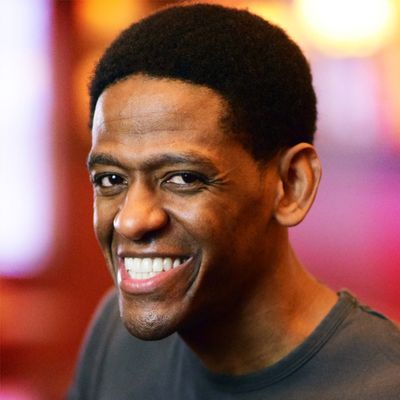
Jared Grimes / @grimeystepz. Jared Grimes steals scenes as Eddie Ryan, Fanny’s (played by Beanie Feldstein) faithful friend and confidant... Read More
From the show: Built For The Stage Podcast
Guests
Featured Shows

About
Jared Grimes / @grimeystepz
Jared Grimes steals scenes as Eddie Ryan, Fanny’s (played by Beanie Feldstein) faithful friend and confidant. Associated Press called him “a bright spark of talent and energy” and Deadline applauded Jared with “delivering the show’s real star turn in a crowd-pleasing tap dance routine.” In addition to FUNNY GIRL, Eddie is well-known as the cult leader, Adrian Shannon, on the Netflix hit, MANIFEST which is currently filming its 4th season.
He started out dancing in the subway when he was 16 before he landed a gig as a backup dancer for Mariah Carey (check out his NY Post story here). When he was just 24, Jared became the youngest solo choreographer in Cirque du Soleil history for his theatrical show, Banana Shpeel. Jared has also choreographed several musicals, most recently including The Tap Dance Kid, at the NY City Center in February. Additional Broadway credits include A Soldier’s Play and After Midnight.
Try a Free Trial of BFTS and work 1 on 1 with Coach Joe! https://builtforthestage.com/free-trial
Transcript
This transcript was automatically generated and might contain errors.
[0:14] Joe Rosko: Hey, what's going on? Welcome to Built for the Stage Podcast. This is Joe Rosko, founder of Built for the Stage, Broadway's number one fitness platform. If you haven't tried a free trial, go to the website, BuiltForTheStage.com and love to chat with you. Special thanks to BPN Broadway Podcast Network. Okay, let's get on to our special guest today. As always, an exciting episode. This guest recently just opened up FUNNY GIRL, the Broadway revival, where they're playing the character Eddie Ryan. You've seen our guest on Broadway a few times now. Extremely athletic, extremely gifted tap dancer, one of my favorite, if not my favorite forms of dance. So I'm super excited to welcome to Built for the Stage Podcast, Jared Grimes.
[1:02] Jared Grimes: Hey Joe, how you doing?
[1:03] Joe Rosko: How you doing?
[1:04] Jared Grimes: I'm doing very well.
[1:06] Joe Rosko: Happy Tuesday to you.
[1:08] Jared Grimes: Happy Tuesday to you as well.
[1:09] Joe Rosko: Tap Tuesday.
[1:10] Jared Grimes: You know, we'll call it a Tap Tuesday.
[1:12] Joe Rosko: Tap Tuesday. I love it. Okay, wait, let's get into Tap Tuesday here. Tap dancing, when did you get into it? Who was a major influence in your life? How did you become a master at tap dancing?
[1:25] Jared Grimes: Oh man, I started tap dancing when I was three. You know, I first the first human being I saw tap dancing was my mom. So, you know, I used to come downstairs and she used to like be working on routines in the kitchen with her friends and stuff like that. And tap was actually her worst discipline. Like she was more of a concert dancer, you know, modern jazz theater. So I used to always see her, you know, working diligently on tap. And so, you know, anything I saw my mom do, I wanted to do, you know, the same thing. So I got her to give me a pair of shoes. Well, basically, she got me a pair of shoes because I was just all over the place. So, you know, she was trying to focus my energy into, you know, something that could, you know, potentially pay off.
So, you know, I was running around doing everything, every activity under the sun that you could think of that a little kid could get his hands into. That's what I was doing. And tap was one of the things I could get my feet into. And so, you know, I started off with her being my first teacher, and then I just bounced around from teacher to teacher to teacher. And then it stuck. I started seeing movies of like the Nicholas Brothers and Fred Astaire and Sammy Davis Jr. and Gregory Hines at an early age too. And, you know, I was just like, man, like, you know, I in my mind I couldn't I didn't really understand as a child that like grown-ups, you know, outside of my mom, you know what I mean, were tap dancers or were doing this, you know, at that age.
And frankly, you know, I only saw my mom doing it. So when I started to see, you know, older male figures in movies and who were like superstars doing it, you know, like, you know, Gene Kelly, Bill Robinson with Shirley Temple, like I was just like, oh my goodness, like this is actually a thing. It's not just something fun that you do in the kitchen with your mom, you know, every Saturday morning. So, you know, I just I kind of stuck with it and I studied those guys, you know, in those old black and white films. And, you know, at a certain point it just kind of showed the art form, the craft kind of chose me. And, you know, at that point I was just like, all right, cool. Well, I have a responsibility to make sure people remember these guys and these gals from the past, such, you know, Jenny Lagon, to name a few, from the past that kind of paved the way for, you know, me to kind of get on stage as like, you know, buddy girl, like all this Wilson in theater and just kind of do all the things that I, you know, I love and that I saw those guys doing and I saw my mom doing when I was a little kid.
[3:51] Joe Rosko: Was it self-realization at some point when you were growing up that like, oh, I'm really good at this? Or was it your mom or someone else that maybe pulled you aside and said, hey, like you have a you're gifted in this, like if you really apply yourself, you could be something great? When did that transition happen for you when you yeah, you kept doing it for fun, but when was it not just about having fun, but you realizing, oh, I can make a life of this?
[4:25] Jared Grimes: You know what's funny is is early on, like every dance class that I was in, I was always the only boy. So I think at first I become accustomed to hearing the fact that I was good just because I was the only, you know, boy in dance class. And, you know, I think I started, I moved to North Carolina when I was six from Jamaica Queens, New York, and I started doing these dance competitions. I'm talking about like, you know, in the in the in the night, midnight, mid to late nineties, you know, dance competitions were like a big thing, the Midwest and the South, and you had all these companies that were touring and, you know, hosting these big events where, you know, if you made it through, you could win money and you can win trophies and stuff like that.
So I think that, you know, when I turned nine, I actually started doing those. And, you know, my very first couple competitions, you know, I was making it all the way through to the end, and I was winning, I was winning with tap dance. You know, I used to do jazz, I used to do theater, I used to do, you know, lyrical dance, like everything you could think of, but my tap dance routines were the ones that were winning a lot. And, you know, I think at that point, like probably around like nine years old, I was like, all right, cool, like, you know, I got the hang of this, you know, I don't think I would be, you know, winning these competitions if I wasn't, you know, okay at the craft of tap dance.
And, you know, I just I every competition that I won or that I did well at, I just, you know, I was just like, all right, cool, let's take that energy to the next one. And let's take that energy to the next one. And what I started to realize is that wow, like, yeah, I'm pretty obsessed with getting better. With evolving at an early age because whatever I would do at the last event or competition, I would want to one up that. Like I didn't want to do the same thing. I didn't want to feel the same way that I felt about the last win. Like I always like I got into that like competing with myself thing. And at an early age, the competition of the platform that I was performing on became irrelevant to, you know, me striving for greatness or perfection in the craft.
And I think that's when, you know, I always liken it to like a mad scientist. Like I make any platform my lab, and I go in there and I, you know, I put all these potions together and see if I can kind of come up with just absurdness when it comes to, you know, the craft of, you know, the arts or in tap dance. And if I can like surprise myself, if I can wow myself, then, you know, once I open my eyes or I pick my head up, you know, out of all the things that I'm trying to create, and if people are, you know, are happy with that, then I'm good. But you know, I kind of put, you know, my standards and the bar that I set for myself first early on, and I would try to exceed that every time. And that's when I kind of figured out, okay, well, I think if I'm in that kind of headspace when other nine-year-olds are pretty much just thinking my mom forced me to do this competition, like you know what I'm saying?
I was like, I think I'm, you know, I think I have something here with, you know, with tap, and I think I can really officially call it, you know, a passion of mine. And I feel like I'm pretty good, you know, if I'm in that headspace. So like around nine years old, I feel like I kind of started to take off with it confidently.
[7:38] Joe Rosko: Yeah, as a business owner that's constantly marketing or advertising service, whatever, when I'm putting together this material, I say to myself, what you said is like when you wow yourself or when you say, oh, that's good, you know you're on to something. And if you don't feel that way, then you have to like self-reflect and say, well, if I don't care, then why would they care? Why should they care? And I think that's great as artists to kind of have that reflection of like, if I'm not moved by this personally myself, then why should I expect anyone else to be? So that's really cool you brought that up.
[8:22] Jared Grimes: Exactly. Thank you, man. I appreciate it. So okay, so again, you just opened up FUNNY GIRL. Tell us about it. Tell us about opening, tell us about just the process. What are some of your favorite moments of it? Just congrats again. Amazing.
[8:35] Jared Grimes: Thank you so much, man. Well, yeah, FUNNY GIRL is one of everybody's favorite musicals of all time, due to the popular Broadway show 58 years ago with Barbara Streisand and then the movie with Barbara. And we, you know, we have a different take on it with Beanie Feldstein at the helm leading us courageously, comedically, and just, you know, she's a savant when it just comes to being on stage and being a megastar. So I didn't even know she was on the show when I got, well no, I think I found out a little bit before that, but when I was auditioning for the show, there was no lead. And everybody knows that when it comes to, you know, FUNNY GIRL, it's significantly about that lead, and then all the dominoes kind of fall in place.
So it was just an audition like that, you know, my one of my first mentors, Ayadeli Cassell was a choreographer, so that was one of the main reasons why I stepped into the room. And, you know, I saw that I was to be auditioning for the role of Eddie Ryan, which historically was not an African-American character. And I was like, oh man, well, here's a chance to add a different perspective to open people's minds a little bit to what, you know, a black choreographer in the early 1900s who has this best friend relationship with a young Jewish girl in the early 1900s, like, you know, what that would be like. And, you know, I love, you know, as I was saying before with the last question, I love pushing the boundaries, I love, you know, breaking the rules, I love defying the odds.
I love running right at the obstacles as opposed to avoiding them. And this seemed like a pretty cool challenge to get people to forget and to believe in a new take on the show, in particular my character, Eddie Ryan. And I think in the very first preview, when I stepped out on stage, I think it really hit me. I was like, wow, this is the first time we're introducing, you know, a black Eddie Ryan. You know what I mean? And I was just like, for a little bit, it like it was like overwhelming. Then all of a sudden it was just like, let's get it. Like it's showtime, you know what I mean? And it was super fun, and you know, opening night was amazing, because all of our friends and family and loved ones were there to see that new take on the show and to see everybody have such a good time with it and just to be laughing hysterically, you know, at all the jokes and, you know, really enjoying, you know, the dance and the singing in the show.
You know, I really felt like, and I still feel like that we're really doing something really good for theater and the entertainment industry after two years of, you know, all being at home. You know, I think we all are seeking opportunities to laugh and to relate and to release and to just let go and just have a great evening or just a great couple of hours if we can, you know, afford ourselves that because over the past two years, you know, we were all on computers or on phones or we were all wondering what was gonna happen. So, you know, FUNNY GIRL is one of those escapes that just allows everyone to just positively laugh their butts off, you know, for a couple of hours. And, you know, it's a show that everybody can relate to.
You know, everybody has an inner Fanny Bryce in them. Everybody has an inner Eddie Ryan in them, an inner Nick Arnstein, an inner Rosie Bryce, like all the characters really, really tap into a certain aspect of who we all are. And I think that when you can kind of show people the ups and the downs and the light sides of that and the dark sides of that, you know, all the good and the bad that comes with how we relate to all those characters, and then we can all just laugh about it at the end of the day collectively, you know, and we've made a connection that, you know, the arts really can do like no other thing in this world.
[12:26] Joe Rosko: Yeah. I wanna rewind and zoom in on something you had said. I have on my board here, I was listening to an autobiography, and it's um Andre Agassi, the tennis player, his autobiography, and he talks about dreams being tiring or tiresome, that they come with a price, you know, they come with a price. And you had you mentioned that maybe just instinctively that you lean into adversity or you lean into like challenging and defying the odds. Is it just natural or how do you approach that? How do you get yourself to that headspace? I think our listeners could really just benefit from hearing it someone of your caliber, how you approach leaning into the difficult times.
[13:24] Jared Grimes: Well, it's it's I don't know where I got it. I mean, I know my mom is super competitive, and my dad is super competitive. So my mom was super competitive with the arts, and my dad was super competitive with sports and athletics and stuff like that. And you know, I kind of combine those two, but you know, I kind of took it to a whole different level in our household because I feel like, you know, once again, at an early age, when I saw my mom, you know, tap dancing, like one of the earliest things I can remember is like before I even even had a pair of shoes, I was already competing with her. Like I already wanted to add something to the steps that she was doing. I already wanted to teach her something about what I thought about the step.
And it wasn't an ego thing, it was just that, oh no, I have an idea. And the same thing with my dad, you know, as soon as I, you know, I got into athletics and stuff like that, you know, as soon as I learned how to hit a ball, I was already trying to learn how to hit a home run. You know, and I when I just learned how to hit a ball, I was already trying to knock it out the park. It wasn't, you know, it wasn't enough to just hit it back, you know, to my dad or just to connect with the ball. And I think, you know, early on, that kind of let me know that whatever is presented to me in the moment, I'm already trying to figure out what people think it's not supposed to be. That's just how I'm built, man. I just like it's just like if the dead end is right there, it's like in the path to the easy way or the obvious path is this way, I'm going towards a dead end.
[15:02] Jared Grimes: I'm trying to, I'm trying to figure out how to make that not a dead end. Or I'm trying to make you figure out how even a dead end can be, you know, the light at the end of the tunnel. You know what I mean? It's why like somebody it's to this point. Like I took the SAT, right? I didn't know any of the answers on SAT, but I was the last one to finish. So my mom was like, how did you not know any of the answers? But she was the last one to finish. I was like, you know, because I was sitting there and I was staring at those questions, like, I there's just so many different ways to answer these questions. Like, you know what I mean? I couldn't figure out or I couldn't comprehend. Like, obviously, I know what the answer is, but why couldn't it be, you know, B, C, D or E? Like, like, who's to say that?
I mean, I'm to the point where I'm like, who's to say two plus two really is four? Like, what does that really mean? You know what I mean? I'm like, that's how maniacal I am about like, you know, you know, feeling like I could actually fly, or, you know, or like I could actually, you know, barrel through a brick wall. Like, I feel like there's always a way if you truly believe um that it can be done. And um, like I said, at an early age, I kind of I I kind of had that itch. Um, and then I just put that forth um towards any um, you know, any task that I had that day. So whether it was gymnastics or whether it was basketball, or whether it was theater, whether it was voice lessons, um, acting lessons, whether it was tap class, hip hop class, ballet class, jazz class, you know what I mean, science club.
Like, I was always the kid that like was in the back of class. I wasn't in the front. I was always the kid in the back of class listening to everybody, you know, put forth their answers or or what they thought. And I was decoding that and trying to figure out where my answer was within all of that, as opposed to answering exactly what the teacher had put on the board. Um, so like a sponge, I just kind of soak up everything around me, and I try to find an instinctive answer as opposed to the the answer that's on paper, or as opposed to the answer that the teacher is telling me that is the answer just because she's been taught to tell me that that is the answer. That's never been enough for me.
Um so uh yeah, I mean, that's just what it is, and uh, you know, and then it becomes addictive, and then you you step out of your door every single day, you know, looking for you know someone or something to challenge you, and you can't rest at night unless you've conquered, you know, what people think is unconquerable.
[17:24] Joe Rosko: Wow, it's impossible. Yeah, you're you're you're awesome. This is this is um, yeah, everyone listening, the past two to three minutes of what Jared just said is like the definition of how greatness is achieved, you know, you you can't do the 99% and expect to be the 1%. You have to be the 1%. You have to do what you're saying, which is amazing. Um, and you live, and from what you're saying, you live it 24-7. You live the you live the uh you live the quote, uh, you don't have to get ready if you stay ready.
[18:07] Jared Grimes: Yeah, exactly. And exactly. And then at the end of the day, ready might not even be ready for you. You know what I'm saying? Like, we can take it that far. It's just like, you know, you and I tell people all the time, I you know, I use the word infinite a lot. Okay. Um, and people are always like, you know, how do you how do you do this? Or why do you think that? And you know, I I throw the word the word infinite around. Um, and I, you know, I tell people, I was like, I'm I'm I'm not afraid of anything. Like, and there's like the idea of saying you're not afraid of something to prove something, but you know, then there's the idea of saying you're not afraid of anything, like you will really just jump and you'll figure it out on the way up or down, you know, and and and I'm not saying literally like to go to you know somewhere and then just jump, but like yeah, you know, whatever the challenge is, whatever the opportunity is, I'll stay, I'll still I'll step forward and I'll put I'll put what I have and my preparation and and and and my um my recognition of my blessings and and and and my gifts and you know how hard I work.
I'll put that on the line any day up against anything, even if I don't know it, like we could be fencing. I've never fenced before in my life, but I'll step first out and be like, look, I'm gonna I'm gonna take what I know and I'm gonna figure it out in a moment. I'm not gonna go down easy. I know that. I know that much. I'm gonna figure it out. And I've never fenced before in my life. I never even thought I would even talk about that, but that's just the first thing that popped up in my mind. It's like, hey, look, you know what I mean, whatever it is, I'm about to go toe-to-toe with it. And um, you know, I'll learn something from that. And um, you know, I know I was talking to my dress with the other day, and you know, we talk a lot about, you know, uh perfection and uh, you know, what people perceive to be a win or a loss.
Um, and I it just casually. I was like, I don't think I've ever lost anything in my entire life. And she was like, wait a minute. And you know, and I I talk about playing, you know, like hooping, you know, on the weekends and stuff like that, and obviously you lose games. I mean, that's a part of it, but I'm one of those people to be like, yeah, I know we lost, but I got this win within the game, I got this win within the game, and I got this win within the game. And that's why the next five games we won, because from that loss, I recognized what was a win within that. Like I gained something from that, you know, that that that L. So I was like, was it really an L or was it an L to you just because you had more points than us that game?
You know what I mean? Like it's like I needed that one in order to beat you the next five games in a row. Like I needed that one. So it's just like, is it really a loss? Is it really wrong? You know what I mean? Are have you really failed in life or or have you just succeeded in a different way?
[20:58] Joe Rosko: Yeah, you either you either win or you learn.
[21:05] Jared Grimes: Yeah. Facts. Facts. Yeah. Yeah, yeah. Oh, you're you're uh you're you're a coach, Jared. Are you a coach and not telling us? What's going on here?
[21:14] Jared Grimes: Man, I just, you know what I mean? I just I le I lead by faith, man. That's that's kind of like you know, my mantra. And I, you know, there is um there's the idea of a shark that uh, you know, a shark always has to keep a forward moving motion in order to breathe. A shark is one of the only animals in the wild that has to continually move forward in order to pump oxygen through its gills. Can't swim backwards, and if it's standing still, it's not pumping oxygen through its gills. So always tell people, yo, steady moving forward like a shark. Steady moving forward like a shark, or everything stops. You're not moving forward if you're not gaining ground. If you're not seeking something, if you're not reaching for something, then you're not breathing.
[22:06] Jared Grimes: Yeah, man. And a shark looks like one of the most vicious, you know, things on the planet, too. So it's just like it just adds more fuel to that, like, you know. I have a friend, he is obsessed with like shark mentality, shark season, da-da-da-da-da-da. But I've never heard him talk about the the oxygen thing. I wonder if he knows. He'll be obsessed with this. I mean, it's just, I mean, it's why they're mythical. They're just, you know, and I'm not even like a shark. I love all animals. I'm not like a sharp buff, but like I'm so fascinated with that particular uh animal for that. And it's kind of been one of my, you know, one of the things that I constantly always remember in the back of my mind.
It's just like if I ever feel like anything in life, you know, people around me or or things around me, or even myself is is moving backwards, then I actually feel like I can't, you know, that I'm not breathing correctly or I'm not operating correctly. So I always try to stay, you know, steady moving like a shark.
[22:55] Joe Rosko: I that might be like my new favorite mantra that you just gave me. I love that. I love that. I didn't I had no idea.
[23:02] Joe Rosko: All right, so staying off of the stage, more after hours talk. Are you watching the NBA playoffs right now? You got any favorite teams, any favorite players?
[23:10] Jared Grimes: Well, my favorite, my favorite player is uh LeBron James, and you know, we we didn't have a we didn't have a great year of this year over there in Lakerland. But um, but I'm kind of excited for the the new generation of um the younger athletes coming forward. So I'm a big fan of, you know, Luka Doncic, uh Ja Morant, um, Jason Tatum and Jalen Brown over there with the Boston Celtics. I'm really rooting, but I've never rooted for Boston for anything, but I love this team with uh Ime Adoka over there. Um they had a big win yesterday, big win yesterday. And a lot of athletes, a lot of athletes like John Murray, I think you just saw I'm sorry to cut you off, but a lot of athletes, like I gravitate towards them because of their um dance-esque, their elegant-esque um style of play.
And usually, you know, even like Michael Jordan, usually those players are the most dominant ones in the game, the ones that are like Varishnikoff or like Gregory Hines or like Samby Davis Jr. or like Fred Astaire, those are the ones that are the most fun to watch. So, you know, sports and basketball, that basketball in particular is my favorite because it's you know what I mean, it's the most danced S one, in my opinion.
[24:13] Joe Rosko: Yeah, Ja is not a basketball player, he is a performer.
[24:18] Jared Grimes: Exactly. He's an artist. Yes. It is what he does is insane. It's great, it's another level. It's another level.
[24:25] Joe Rosko: Yeah, man, super bendy, man. Super bendy.
[24:27] Jared Grimes: And he can like, yeah, he can fly. Like he can legit fly.
[24:30] Joe Rosko: He can legit fly.
[24:32] Jared Grimes: Yes. Someone was saying, uh an analyst was saying, Ja jumps, and after he jumps is when he decides what he's going to do. You know, he has that uh that ability to like levitate up there and then just create while he's in the air.
[24:52] Joe Rosko: It's will too. It's will it's it's crazy because his will is is out of the out of this world too. So you can imagine, you know, somebody having just the will to to accomplish something in the moment, and then they do supernatural things like that. That's where the supernatural comes from. When he attacks the rim, he's very similar to uh Russell Westbrook.
[25:14] Jared Grimes: Oh, yeah, yeah. They're just tenacious. They are like no fear, like you're like you're saying earlier, just get out of the way.
[25:24] Joe Rosko: Yeah, they're superheroes, man. Like I said, it's just that's that's why I love um that, you know, I keep saying the word dance esque, but I I love that that type of athlete that has the elegance and the grace to, you know, be able to jump in the air and figure things out. Kind of like what I was saying in one of those uh previous uh conversations with questions that we were going through. It's like the ability to just jump and to let your faith and your will and your you know your confidence uh in in yourself, you know, figure it out for you. The minute you, you know, you start to think, then that's when you remove yourself from you know supernatural or you remove yourself from the zone or you remove yourself from uh you know, allow allowing magical things to happen.
I mean, the brain is important, but in my opinion, it should operate last when you're when you're an artist. Um, and I, you know, Russell Westbrook, John Morant, like you see them, man, they're operating on on spirituality and faith and and and preparation and and readiness and you know uh pig headedness and stubbornness and you know, all the the many things, the many colors, the many layers that make us um who we are that ironically, you know, make us, you know, or give us our flaws, like all those many things that are perceived as flaws a lot of times, you know, are your greatest gifts and in the moment can really make you jump over somebody or fly or walk on water.
[26:49] Joe Rosko: We need to get this episode to Russell because he needs to hear this again after his after his struggles this season. We need to say, hey, Russ, go back to those young years and just let it rip, baby. Just let it rip, you know?
[27:06] Jared Grimes: Yeah, man. You know, and it's chemistry is a big thing too. Like, um, you know, you're you're what you have around you also has a lot to do with how you you tick. And um, you know, I think just this this year, just the collection of parts, front office and stuff like that, it might have just been a down year for them. And you know, sometimes you have to have that happen in order for you know you to figure that out. Because even a lot of the teams that are thriving now, they had like a lot of down years. And they had to kind of figure things out. And once they put the pieces together in the right way, now they have you know, younger, thriving, you know, oh my goodness, just just leaders in the game.
I mean, a lot of those those guys are like 22, 23, and 24 years old. So like the superstar has gotten younger because people are have figured out how to build and take that hit for a couple years and then build around somebody who has the mentality of what we've been talking about in this entire pack podcast. They build around them when they are scratching the surface of it so that way by the time they really like it clicks for them, then all of a sudden all the parts around them are right and they just win. They just win. They don't get in their own way. Um, the machine works for itself and they can thrive, and you know, we're talking about them as opposed to talking about you know the stars of yesterday, like you know, the LeBrons and the Kevin Durance and the Kyrie Urbans, even the Stephen Curry is like now they're the new generation is starting to come in and you know do things differently, and it's just like it's amazing to see. So you know, it might be it might be it might be good to kind of let the the older statesmen kind of take a back seat this year and you know allow John, the young generation to take off.
[28:39] Joe Rosko: Yeah, absolutely. All right, Jared, I appreciate you giving us the time. The episode was amazing. Um, there are a handful of episodes that with my clients, I will say, hey, give this a listen. Like this is gonna be transformative for you. And this is one of those episodes. So I really appreciate your thoughts, your time, your insight. Thank you so much.
[29:02] Jared Grimes: Thank you so much, man. Super pleasure, man. Hope to do it again sometime.
[29:05] Joe Rosko: Yeah, that'd be great. We'll be uh I'll be coming up to see the show uh late May of this month.
[29:11] Jared Grimes: Oh, for sure. It's a good time. It's a good time. Oh my goodness. Definitely a good time. I can't wait.
[29:16] Joe Rosko: All right, everyone, thanks for listening to Bill for the Stage Podcast. That was Jared Grimes, uh, currently in the cast of FUNNY GIRL. If you want to check out Jared's Instagram, you can find that in the description of this episode. I'm Joe Rosko. Athletes are act actors, actors are athletes, so start training like one. Later.
© Broadway Podcast Network, All Rights Reserved