

Earlier in the week, we brought you Samantha Pauly, Trent Saunders and Ektor Rivera as they got ready to go on stage. But I thought that just wasn’t going to be enough to really show you backstage before a show... Read More
From the show: Curtain Call Podcast
Guests

Featured Shows
About
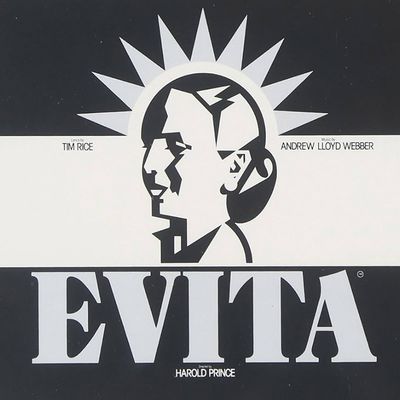
Earlier in the week, we brought you Samantha Pauly, Trent Saunders and Ektor Rivera as they got ready to go on stage. But I thought that just wasn’t going to be enough to really show you backstage before a show. Hopefully you’ll get a feel of what it’s like to be part of a company as I go from room to room and chat with some of the fantastic theatre professionals working on Jamie Lloyd’s production of “Evita” at Regent’s Park Open Air Theatre.
Transcript
This transcript was automatically generated and might contain errors.
[0:23] John Schwab: Hi, John Schwab here from Curtain Call, and welcome to episode 133 of the Curtain Call Theater Podcast.
[0:29] John Schwab: The podcast that brings you backstage as close as you possibly can be, often while the shows are actually happening to meet the people that make that theater happen.
[0:36] John Schwab: Just a quick reminder that you can download and subscribe to the podcast from the Apple Podcast app or from iTunes.
[0:42] John Schwab: That way your feed will be automatically updated when we release episodes.
[0:46] John Schwab: But you can also listen to us on many other podcast training services such as Stitcher and Google Play.
[0:52] John Schwab: Please rate and review our podcast if you have a spare 30 seconds and help us reach more theater lovers out there around the globe.
[0:58] John Schwab: They're constantly changing their algorithms, and the more reviews and ratings you get, the higher up you go, and we become more visible.
[1:06] John Schwab: So I thank you in advance. And now for this week's second podcast.
[1:36] John Schwab: So why don't we just start after the dance and fight call? I talked to the dance captain Amy Thornton, whose job it is to make sure that Fabian Aloe's choreography is as strong in the last week as it is on opening night. Have a listen.
[1:57] Amy Thornton: This is so different. Yeah. Um, so much of it being that the staging is completely different. This is almost like a Carter version, but it's not. It is kind of like the quality cartoon version cheapens what it is. It's Beyoncé Coachella. That's what it is. You know, when she did it and she kind of had the bleachers. That was like their vision, I think, with it all. Like she was gonna be a Beyoncé figure. Um, tell me about how you guys keep the dancing going and keep—I mean, this is eight days a week. Those guys, I couldn't believe what I was watching when I watched it on Tuesday.
[2:30] John Schwab: Oh right, it was insane.
[2:32] Amy Thornton: Like it is proper—you talk about Beyoncé, yeah, look like Beyoncé's dancers. Yeah, it's not much is happening, you know, it's incredible. Yeah. It's um, we've been really lucky because Fabian, the choreographer, has been very present over the course of the run, and he's come and he's done little cleanup calls here and there, and I love that because it keeps it fresh and it keeps you giving like something new to think about every night. So you don't get—even though it's a short run anyway, you know things unravel quickly, and you're an actor as well, you know how it works.
[3:00] John Schwab: Yep.
[3:00] Amy Thornton: But it's kept it like every night feels different, every night feels like a new energy. Um, and we've had two nine-show weeks.
[3:10] John Schwab: I heard that.
[3:11] Amy Thornton: Yeah. And you know that could very quickly become like a bad sort of energy within, oh, everyone's like, oh god, I'm over it. Hasn't been that at all. Everyone loves the show because it's very rare these days that you get to do a creative process. You know, a lot of my career has been like, oh, so you stand on four here, and then you're Susie's track, so then you go into that wing and you come back on and bathe for like—you don't really get to be a part of a creation. And that has been the beauty of this, which I think has made the cast collectively a lot tighter and wants to live the best version of the show every night.
[3:48] Amy Thornton: Yeah, and I started like the week by saying, Look, we've got three weeks left, and I am not of the mentality of like, oh, we've only got three weeks left. I'm like, we've got three weeks left to deliver an awesome show every night. So I'm gonna keep cleaning things, and you keep tightening things, and I think it's the best way to keep everyone energized and motivated.
[4:06] John Schwab: You can tell the attack. I mean, does being—okay, does being outside help? Because normally, if you're in a regular West End theater, you've got a cross theater, you know, everything is the same. You go in, the climate's the same, lights are the same, everything else. Being outside is hard.
[4:18] Amy Thornton: Yeah. We've had 32 degrees with burning sun in those funeral jackets. Yeah. And we had about—what was it, three weeks ago when we had that torrential rain week, and it was freezing. You see everyone's breath coming out. Then we had wind, and we had loads of leaves on the floor, so you're dealing with that. Like, it's hard being outside. I didn't realize quite how hard the elements would be. Um, but it's magical, yeah. Because there's nights where the smoke just catches in the wind, and you just go, Oh my god, that was fucking awesome.
[4:48] Amy Thornton: Matt was saying—we sat down, he was telling Shane, your stage manager, before the show, we saw it on Tuesday. Yeah, before the show started, it was a beautiful night, like tonight. Yeah, and there was a breeze in the wind. And Matt thought that the sound of the breeze in the trees, it was just perfect. Yeah, it wasn't like a tr wind, yeah, it was like a little breeze, and it sounded like, oh, the show's about to start. Everybody hushed because they thought, Oh, the sound's so—that's just the sound of the trees, and it was perfect.
[5:13] Amy Thornton: And you get moments as an audience member, because I've watched a few things here, you get moments where you completely switch off to the fact of being outside, and something will happen, like a gust of wind or a bird, and you go, Holy fuck, or the Queen's helicopter. Oh my god, we've had a few of those in the lament at the end. Like, oh, shut up, really. Um, but that—the other day on Saturday when it was really windy, and we were dressing around as Aver at the end, and this big gust of wind just blew all these leaves. It was like—and they just settled at the right moment. You're like, that kind of shit you can't pay for. No, you know, it's so magical.
[5:46] Amy Thornton: I have to say, this company as a whole have been amazingly supportive of each other. Like we've had all the covers on for their main parts, which in a—what, seven-week run? Yeah, that's really unlikely. Um, but again, it's just been another test of everyone going, we've got this, and like we had four people off one day, and it didn't swing anyway.
[6:09] John Schwab: Yeah, yeah, yeah.
[6:09] Amy Thornton: I mean, bless them, their on-stage tracks are busy enough, but they've been amazing, all of them. It's been—because again, I don't think that happens on every show, and I can honestly hand on heart say as a company, as a collective, it's one of the nicest companies I work for.
[6:24] John Schwab: Yeah, it's great to see so many—because I think that absolutely shows in the show itself at night, because everyone truly is loving what they're doing and loving working with each other. Everyone really respects each other, I think, as well.
[6:39] Amy Thornton: We're all very different. You've got some people here that are here for their singing, you've got some people here that are for their dancing, like me. Um, everyone really truly respects that, even into the orchestra and stuff. Like, we—there's no way we could do what they do, and they can't do what we do, and so we have that admiration for each other, and it's nice because it's a short gig that that won't go away.
[7:00] John Schwab: Yeah, following on from Amy, I pop in to see musical supervisor Alan Williams and musical director Laura Bengay to talk about the approach to the music and also how to keep those voices healthy.
[7:11] Alan Williams: I'm gonna assume that people know the music. Um, sh—I’ll shut up again. I'm assuming—I assume that people know the music of Lloyd Webber.
[7:23] Laura Bengay: It's hard to say.
[7:23] Alan Williams: Yeah, yeah. You should have stuck with—you should have handed it back. Anyway, um, but like how do you guys—how do you approach it to bring—make it fresh and new and say people know the music, but they don't know all the songs actually.
[7:34] Laura Bengay: I think there's about three or four songs in this, but it's interesting how many songs people haven't heard of in this show. So you treat those like they're brand new, it's a brand new musical, and you know it's the first time anyone's ever hearing them. Um, but in terms of the approach, um, you know, there's so many recordings already available, you know, you can listen to them. So I guess this wasn't an amalgamation of them, but we were sort of influenced by them, listening to all the different versions and came up with our own that came out of rehearsals that came out of these bodies and these performers.
[8:02] Alan Williams: Right. Um, so I guess that's how the fresh approach ended up because we—it evolved throughout learning from each other and learning from the creative, you know, Jamie and Fabian, how it was being staged.
[8:14] Laura Bengay: Yeah.
[8:15] Alan Williams: But you know, it's a very athletic company. They're not like traditional stand-and-sing opera singers, they're quite physical singers.
[8:21] Laura Bengay: So chat was already a little bit.
[8:24] Alan Williams: Yeah, so that was already a different sound that we went for, that sort of voice. Because they're all great singers, but they're not opera singers necessarily. So, you know, it's quite guttural at times. It really sort of comes from the heart because they just really sing it.
[8:37] Laura Bengay: Yeah.
[8:39] Alan Williams: It's like a fan of music anyway, like, you know, the rhythm section is so—when I say rhythm section, like the drums and the bass player, you know, anyone playing percussion, whatever, but it feels like the percussion of this is—is the dancing on stage. It's like half the percussion. And they really work together with the orchestration. It astonishes me.
[8:59] Alan Williams: I just felt they were so in tune on this. I mean, a lot of the orchestration that we're using, which was written while—I'm talking. Um, which was written, you know, sort of 15 years ago, this orchestration. Um, but a lot of the rhythm section stuff isn't written and it's just sort of left for interpretation. So we have—you know, that comes in the players you choose and what sort of approach they bring. So I made sure we had a really good, you know, drummer and percussionist that were prepared to throw things at it and just—well, throw everything at it, actually, not big—you know, just let them go wild. And but that's pretty much what we did with the guitar as well.
[9:35] Alan Williams: Yeah, and with the—even with the bass players, like there's a fill in there, you just play as many notes as you like, you don't need to stick to what's on the part, just overplay and fill it in. And that way it came—it became really exciting, I think, with what everyone was bringing to it, the players individually.
[9:49] Laura Bengay: Keeping everybody up to speed, up to scratch, you know, and in an outdoor production, and you know, with changing weather, temperatures, humidity, everything else, you know.
[9:59] Laura Bengay: Not just the musicians, um you know, the singing.
[10:05] John Schwab: Yeah, you know, how has that been for you this time? Because I mean we met on Ms. Elder, which is slightly different.
[10:10] John Schwab: So they're a little bit younger than that. Do they listen better?
[10:13] Laura Bengay: Um, it's different out here because, um, like it was really interesting just doing that warm-up in the room with them because we haven't sung in an indoor space for quite a long time.
[10:27] Laura Bengay: And so it just makes sure your ears just work in a different way, I think, outside. And there's also so much stuff that you can't control, so you'll end up like you'll be doing a scene, and then there's a big play going over the head or whatever.
[10:41] Laura Bengay: It's the lawn mower that gets me on the match.
[10:43] Laura Bengay: Yeah, the lawn mower, that's in the key of one of the songs as well. It's just, but um, I think the talent is like the temperature shifts affect people's voices in really different ways.
[10:56] Laura Bengay: But they're really good at looking after themselves. I think we've had like, yeah, we've had, you know, all the covers have been on, which have been great for them.
[11:08] Laura Bengay: Um, but yeah, it's just kind of them adapting to whatever conditions are present that day. Like today it might rain, so it's just how you, it's like a rain.
[11:20] John Schwab: We’ve been here for a few shows; it's never rained on our visits.
[11:24] Laura Bengay: Really?
[11:25] John Schwab: Yeah, because you're home in there.
[11:29] Laura Bengay: Anyway, I thought I'd go along to a few dressing rooms to ask the guys what it was like working on Evita, but just more than that, working at the Open Air Theatre in general, one of London's, if not the world's most iconic theatres.
[11:43] Laura Bengay: The first time we all went out, it was like, oh god, we can see people moving.
[11:46] Laura Bengay: Yeah, you know, because you can literally see people's faces from the get-go, and you don't have that in theatre usually. So, okay, at the Adelphi, you walk in, same weather, same lights, same audience there, you know they're not gonna move; there's other people over here on the side, you know.
[11:46] John Schwab: So that must change your or keep you guys present in the show right now.
[11:46] Laura Bengay: Yeah, terrifying. It is daunting at first because you feel that you're on, uh, centre court of Wimbledon kind of thing because of the green seating and stuff like that, and you're just, yeah, it's terrifying.
[12:22] Alan Williams: I'd hate to imagine what it feels like to be like a rugby player, a tennis player in a 90 thousand seater stadium and seeing everyone's faces.
[12:32] Laura Bengay: Masses of pressure.
[12:36] Alan Williams: We love seeing Melbourne.
[12:37] Laura Bengay: I know, we want a full theatre; we don't want to see.
[12:37] Alan Williams: Exactly, it's like we've got these, you know, we've got imagination, we use pictures in our head, and all we can see is people.
[12:47] Laura Bengay: Yeah, like, oh, I've seen the show a few times before, and this is a brand new thing.
[12:51] Alan Williams: Like, this is exciting.
[12:52] Laura Bengay: I was talking to Sam about as well. Like, I've only ever seen it full casting, everything else.
[12:57] John Schwab: Tell me about how refreshing it is to approach a show like this, kind of stripped back.
[13:02] Laura Bengay: You guys are absolutely, you have nothing to help tell the story other than dance, really.
[13:07] Alan Williams: Yeah, it's all about the depth of it, really.
[13:10] Laura Bengay: We've completely gone about the core of the story, yeah, fundamentally.
[13:14] Alan Williams: And even with your part, isn't it? With the mistress, it's exactly the same.
[13:17] Laura Bengay: As, yeah, it can turn into quite a surface type show when I think this time they've gone for the raw aspect, and even for us, like it has helped so much with the dance routines in terms of intention, which is why when people watch it, they rave about the choreography because it's so raw and it's gritty and it's exciting and completely different to anything that's ever been created before in this show, and being on as well, yeah, yeah.
[13:46] Alan Williams: Yeah, babe.
[13:47] Laura Bengay: That's our little 50-minute car.
[13:49] Alan Williams: Uh, yeah, it's definitely full on. I mean, we literally can't breathe at the end of Buenos Aires, but it's because we give so much because you can't not.
[13:55] Laura Bengay: Yeah.
[13:56] Alan Williams: And that's your first break.
[13:57] Laura Bengay: It does the start of Buenos Aires's show.
[13:58] Alan Williams: No, no, we don't; we are seeing, you know, a little sea solar break.
[14:03] Laura Bengay: I mean, um, I think with nothing around you, Frankie, like in that the mystery scene of C. I mean, that was heartbreaking.
[14:09] Alan Williams: Like that was incredibly heartbreaking.
[14:11] Laura Bengay: Just you, the being stripped—spoiler alert, big strip of the—but um, again, what a beautiful moment to be given as a sort of thing.
[14:19] Alan Williams: Yeah, and I think, well, I've never seen a production of Evita before or the film, but I think from previous productions, the mistress just kind of appears and sings that song and then disappears again.
[14:31] Laura Bengay: But what an amazing thing Jamie has given me as an actress is like an arc for this character from the very beginning, as soon as I walk on that stage, even though you might not realize, but she's planted as the mistress from the very top.
[14:44] Laura Bengay: So she's given this whole arc around before the song.
[14:48] Alan Williams: So you just, it's not like a Buenos Aires.
[14:51] Laura Bengay: Don't just come in and sing a song, which is really, really satisfying as an actress to be able to have that and build up to that moment with the song, and yeah, it's cool that I'm on stage and I'm getting ready, I'm doing my wig and getting dressed for the audience to see.
[15:06] Laura Bengay: Um, so they see this character come from nothing, yeah, be given all this luxury, and then it's literally within a matter of minutes stripped back from her again.
[15:14] Alan Williams: Um, but what's kind of amazing about this venue as well, that I remember the first time I sang it, I was like, oh my god, I can see all these thousands of people's faces because it's at the time was still broad daylight, yeah.
[15:27] Laura Bengay: But now as we're getting into September, it's dark again, and I'm like, oh, that's, I'm constantly adjusting.
[15:32] Alan Williams: I'm like, I can't see anyone now.
[15:35] Laura Bengay: It's completely changed, and next week's gonna be different.
[15:37] Alan Williams: Literally, yeah.
[15:38] John Schwab: How has that been adjusting to the summer jobs?
[15:40] Laura Bengay: Uh, it's been a lot, hasn't it? I mean, and there's been a bit of sickness, and I think that's because our bodies are just desperately trying to like adjust to this new, yeah, the first week we opened it was rain.
[15:50] Alan Williams: And yeah, our tech was rain.
[15:52] Laura Bengay: Uh, we had, we've only had one rained off show, but in terms of temperature, it's completely, it completely varies day to day.
[15:52] Alan Williams: Day to day.
[15:59] Laura Bengay: And last week was incredible, and now it's, we just, we're, I mean, we came in today with cloud and a bit of a breeze, and it's like, oh, that's gonna be fun for Jump Craft from Argentina when we're underway.
[16:10] Alan Williams: Yeah, brand shorts.
[16:13] John Schwab: And one last thing. What is it like when Lord Andrew Lloyd Webber comes to watch a show?
[16:20] Alan Williams: Tell me, uh, as well, like what was it like, uh, doing this in front of Andrew Lloyd Webber?
[16:23] Laura Bengay: Oh, incredible. Because it's, I'm sure he's never seen a production of the show.
[16:27] Alan Williams: Yeah, yeah, yeah.
[16:27] Laura Bengay: And he came to see a preview.
[16:29] Alan Williams: So when the previews, you know, you treat that as an extra rehearsal, and it's like really he's coming to see this before press night, but I suppose in a way it's good, so then he can almost sign off and approve of it.
[16:40] Laura Bengay: And what was amazing is with, um, um, a new Argentina, he said the way we did it was the way he'd always envisioned that song being.
[16:47] Alan Williams: It's basically like a big Trump rally, um, and it can become a little bit, this is a musical theatre number at the end of Act One, which it's not.
[16:56] Laura Bengay: No, and he was thrilled with that, wasn't he?
[16:59] Alan Williams: Exactly what he followed.
[17:00] Laura Bengay: Yeah, did with that number.
[17:02] Alan Williams: So that was great and very cool to be part of that.
[17:05] Laura Bengay: Uh, it was quite daunting, wasn't it?
[17:07] Alan Williams: It was knowing that he's there, and of course you can see the audience.
[17:11] Laura Bengay: Yeah, like, uh, especially when he came, it was quite early, uh, in the run, so the daylight was with us for the first act.
[17:19] Alan Williams: So subconsciously you were going, no, he's not there.
[17:23] Laura Bengay: Where is he then?
[17:24] Alan Williams: And just having a scoot around.
[17:27] Laura Bengay: It was great.
[17:27] Alan Williams: Well, uh, we didn't get to meet him afterwards, so he came and he pieced out.
[17:32] Laura Bengay: Yeah.
[17:32] Alan Williams: But we heard Jamie said that he liked it.
[17:35] Laura Bengay: He had one note, which apparently is and was to like take the tempo slower in one song.
[17:40] Alan Williams: For New Argentina.
[17:41] Laura Bengay: Like that was the note.
[17:43] Alan Williams: Because for this production.
[17:44] Laura Bengay: And it was a specific, he was like, I love what's happening.
[17:48] Alan Williams: It would be more effective for this production if you slowed down New Argentina.
[17:52] Laura Bengay: So that it rocks harder.
[17:53] Alan Williams: But Mike, do you take that note?
[17:55] Laura Bengay: Mm-hmm.
[17:55] Alan Williams: Yeah.
[17:56] Laura Bengay: Did we take Andrew Lloyd Webber's note?
[18:00] Alan Williams: Sir Andrew, of course we did.
[18:10] John Schwab: The company of Evita from Regents Park Open Air Theatre, the 2019 season. Unfortunately, the run ends tomorrow night.
[18:18] John Schwab: But as I said in the last episode, I don't think Saturday will be this production's final curtain call.
[18:24] John Schwab: Now, before I go, just a few housekeeping notes. If you're a theater professional, head on over to CurtainCallOnline.com and sign up for a free profile page.
[18:32] John Schwab: All you have to do is create an account with an email address, make up a cool password, and away you go.
[18:36] John Schwab: You can follow us on all the socials: Twitter, Instagram, and Facebook at Curtain Call, and you can follow me at John Schwab.
[18:41] John Schwab: That's John with an H. We'd love to hear from you if you have any suggestions or feedback for the podcast.
[18:46] John Schwab: Just get in touch with us via any of the social media platforms I just mentioned, or write to me personally at John@CurtainCallOnline.com.
[18:52] John Schwab: It just leaves me to say a huge thank you to Ektor Rivera, Trent Saunders, Samantha Pauly, Amy Thornton, Alan Williams, Laura Bengay, Adam Pierce, Alex Carval, Lauren Drew, Francis Male McCann, and the entire company of Evita at the Open Air Theatre.
[19:05] John Schwab: One breath. As I said, the show finishes this Saturday, the twenty-third of September, but I have a feeling we might just see it again sooner rather than later.
[19:14] John Schwab: Thanks for listening to the Curtain Call Theatre Podcast, and I will catch you all next week.
[19:18] John Schwab: Bye.
© Broadway Podcast Network, All Rights Reserved