

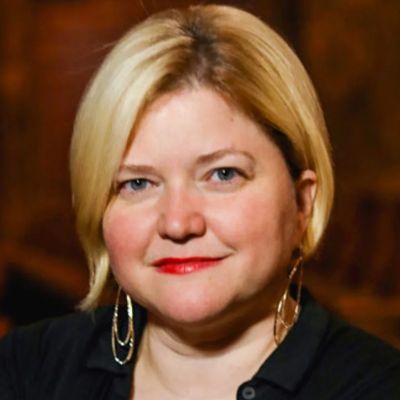
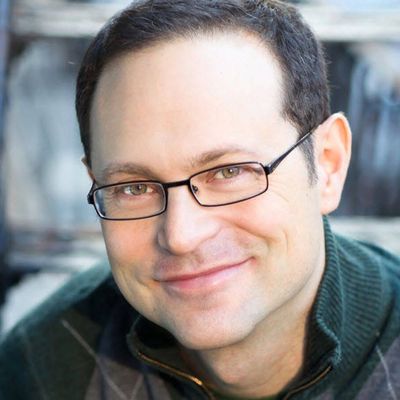
Dive deep behind-the-curtain with THE PROM's extraordinary music team led by Composer Matthew Sklar, Music Supervisor Mary Mitchell-Campbell and Music Director Meg Zervoulis. The daunting challenges and thrilling breakthroughs faced by PROM's music team on their trek to Broadway is the stuff of theatre legend... Read More
From the show: Deep Dive Broadway
Guests
Featured Shows
About
Dive deep behind-the-curtain with THE PROM's extraordinary music team led by Composer Matthew Sklar, Music Supervisor Mary Mitchell-Campbell and Music Director Meg Zervoulis. The daunting challenges and thrilling breakthroughs faced by PROM's music team on their trek to Broadway is the stuff of theatre legend.
The show must go on!! How did PROM's music team overcome off-the-charts challenges on Opening Night when Manhattan was hit with an epic, paralyzing, snow storm? Join us for Part II of our Deep Dive with Composer Matthew Sklar, Music Supervisor Mary Mitchell-Campbell and Music Director Meg Zervoulis for unforgettable insider stories on the making of THE PROM.
Connect with Dori
Transcript
This transcript was automatically generated and might contain errors.
[0:07] Dori Berinstein: Hi, this is Dori Berinstein. Welcome back to part two of our adventure behind the curtain with THE PROM music team. Our guests today are Tony-nominated composer Matthew Sklar, music supervisor, award-winning orchestrator, and co-executive director of A Step, Mary Mitchell-Campbell, and music director and conductor Meg Zervoulis. Let's dive back in.
[0:29] Dori Berinstein: I'm thinking about when the cast album was recorded and watching Meg conduct. Oh my god, the best! So great. Meg was a rock star in those sessions. Everybody was blown away. I mean, everybody from Sony, you know, everybody was blown away by watching Meg run that room. Because we decided that, you know, really we wanted to be in the booth and let Meg just run the session. And she did it brilliantly. And I cannot believe that it was your first one.
[1:02] Meg Zervoulis: I know.
[1:03] Dori Berinstein: I mean, that's remarkable. Honestly, Meg, remarkable to me because everything was done so efficiently and clearly. And if there was something that needed to be addressed, kind of with the clock ticking, you did it, you know, in as few words as possible.
[1:19] Meg Zervoulis: Yeah.
[1:19] Dori Berinstein: And some people panic in that situation. And you were as cool as a cucumber. And it was just astonishing. We kept like smacking each other, like she's so good. We were so happy.
[1:32] Meg Zervoulis: Yeah, it was really cool.
[1:33] Dori Berinstein: But was it interesting? Talk about how this wasn't, it's not, we didn't just take one day and knock out the cast recording. It was a process.
[1:39] Meg Zervoulis: Yeah, it was a process.
[1:42] Dori Berinstein: And I thought, I think that it was so many reasons we worked out great. But you know, in terms of figuring out when and how and where, and also the music as this was happening was continuing to evolve.
[1:56] Matthew Sklar: You and Chad were still working.
[1:59] Dori Berinstein: Yeah, and so that adds to the complexity of everything.
[2:03] Meg Zervoulis: Yeah, absolutely, absolutely. It was a big puzzle, but it all worked out and the album is, I think, really great. I think it turned out really well. I think it represents the show really beautifully and just the actual performances that we got out of everybody are really strong. So I'm glad that that will be there forever and that's a beautiful thing.
[2:20] Mary Mitchell-Campbell: Yeah, and the cast that you guys got to work with and create music that they could hit out of the stratosphere, unbelievable. Shape it around the talent that we had, which was crazy.
[2:36] Matthew Sklar: Yeah, one take Brooks, right? One take Brooks.
[2:39] Mary Mitchell-Campbell: That's right. Did he really only do "Barry's Gonna Crumb" once?
[2:39] Matthew Sklar: I think it's that we took and we did a safety.
[2:39] Mary Mitchell-Campbell: Yeah, yeah, his performance on the album is first take. We did a second one just for safety, but the first one was like electric and we were like, there it is, we got it. Thank you, Brooks.
[2:56] Dori Berinstein: Yeah, and I'm thinking about opening night of THE PROM. Oh, what a saga! Oh my gosh! From the vantage point of the three of you, talk to—I mean, luckily Matt was a little—I mean, we sort of—I mean, you guys protected me, I think.
[2:56] Meg Zervoulis: Well, first a little bit protected him.
[2:56] Dori Berinstein: A massive snowstorm! Yes, biblical snow out of nowhere! A massive snowstorm, not predicted, really completely crippled the city in a way that was completely impossible to move.
[3:31] Mary Mitchell-Campbell: And we learned early on that we were gonna have some challenges with some of our musicians getting to the theater in the midst of crippled city status.
[3:47] Matthew Sklar: New Jersey was basically shut down.
[3:50] Mary Mitchell-Campbell: Yeah, the roads were literally shut down, and people couldn't get to New York. A lot of people who were coming to see the show couldn't come to see the show. A lot of friends and family in the city. Airports were closed. Meg's family.
[4:00] Meg Zervoulis: Your mom.
[4:01] Mary Mitchell-Campbell: My mom made it.
[4:02] Meg Zervoulis: Um, Brendan didn't, and your agent is a very good idea.
[4:05] Mary Mitchell-Campbell: My agent didn't make it. My parents missed act one. They took them five and a half hours to get 27 miles. And they got there at intermission, thank God. So they were able to enjoy the rest of the night.
[4:17] Dori Berinstein: But oh my god, it was crazy. It was crazy. But these—I didn't know, I didn't know exactly what was going on. We had like a little one of our situations, we had fair warning.
[4:27] Meg Zervoulis: Yeah.
[4:28] Dori Berinstein: That we're 30 or something.
[4:29] Mary Mitchell-Campbell: Yeah, we sort of knew kind of early-ish on that one of our musicians was most likely not going to make it. He threw up the white flag relatively early and said, "We're in trouble."
[4:41] Dori Berinstein: And so we scoured around and found a sub to be at the theater ready to go to sight read.
[4:47] Matthew Sklar: To play opening night.
[4:48] Dori Berinstein: To sight read opening night.
[4:50] Meg Zervoulis: To sight read opening night.
[4:51] Mary Mitchell-Campbell: Sounds really crazy when we talk about it.
[4:53] Dori Berinstein: It doesn't have to be a lot of things. If you look back at that, like it's amazing that we got through the performance.
[4:56] Meg Zervoulis: It really is.
[4:57] Mary Mitchell-Campbell: And then, but then our one of our other players, we just thought that maybe they were gonna make it, and so we didn't really call the sub in early because we thought it was gonna happen, and so what ended up happening was like the show started without them.
[5:14] Dori Berinstein: Yeah, he arrived during "Dance With You."
[5:17] Mary Mitchell-Campbell: The sub.
[5:18] Dori Berinstein: Yeah, and that was because I was texting with the player that was in the traffic jam and texting literally every reed player I knew in the city, saying, "Do who lives in Midtown?"
[5:30] Meg Zervoulis: During Act One.
[5:31] Dori Berinstein: Like during Act One, I didn't know this.
[5:34] Meg Zervoulis: I was next to Meg's mother and Ted's family, pretending everything was fine.
[5:41] Dori Berinstein: I was like, I and everyone, I was like, "Yeah, no, it's great." And I'm like madly texting people, being like, "Who do you know? Like SOS."
[5:48] Mary Mitchell-Campbell: I heard you borrowed someone from Mean Girls.
[5:53] Dori Berinstein: No, I had everyone at Mean Girls to start texting as well.
[5:58] Mary Mitchell-Campbell: Oh, okay.
[5:58] Dori Berinstein: I had them like, I was like, "Scour the city. Like, I need to find a warm body that can come in and play right now."
[6:03] Meg Zervoulis: Um, and sight read, like now.
[6:06] Dori Berinstein: For opening of a Broadway musical. And we had no sound guy, so we really couldn't start.
[6:12] Mary Mitchell-Campbell: Oh, that's another thing that we didn't happen. Our sound person was the reason we had a 45-minute delay.
[6:13] Dori Berinstein: 45-minute delay.
[6:18] Mary Mitchell-Campbell: I remember when I finally knew what was happening. I was kind of just walking around calmly because there's nothing I could do. And I was walking down the aisle and I saw Marc Shaiman sitting on the aisle.
[6:30] Dori Berinstein: Yep, and I let him know what was happening. He's like, "How are you so calm right now?"
[6:38] Mary Mitchell-Campbell: I was like, uh, there's literally nothing I can do. And so I was just kind of walking around in a bit of a daze.
[6:44] Dori Berinstein: Marc Shaiman was watching me text as well.
[6:46] Meg Zervoulis: Oh yeah, yeah, because you were sitting with him, yeah.
[6:49] Dori Berinstein: I was surrounded by people. Live theater. My God.
[6:52] Mary Mitchell-Campbell: Yeah, it was insane. And you know, and we started the show, and I knew we were down one player, one reed player, because we only have two reed players, so I could tell when we were down one.
[7:04] Meg Zervoulis: And then, uh, but I will say, for most of the show, I didn't notice that because the players came in, especially, you know, I mean, it was, and I don't know how you're the biggest rock star ever, ever, ever. If you can sight read for Isaac Stern and you can get through that performance, you guys can do anything in your life.
[7:23] Mary Mitchell-Campbell: But she was so calm and so like, and there were some really interesting bumps in the road. Everyone pulled together, I thought.
[7:28] Dori Berinstein: Yeah, they really did. The whole band during the scenes, like our associate Ted, who's marvelous, left his room, ran over to the bass room, teaching the bass player how to play the next song. I mean, it was amazing.
[7:42] Mary Mitchell-Campbell: And the woodwind player who eventually showed up, who actually used to play with Buddy Rich. I mean, he was like legendary, not exactly a theater musician, but could, you know, do what we needed him to do.
[7:54] Meg Zervoulis: The um, his section mate, Julie, was kind of teaching him, you know, between every scene, just frantically teaching him the next few charts. I mean, it was heroic, it really was.
[8:04] Dori Berinstein: And we just stayed on the microphone through the whole night, and my mom, I remember after seeing after the show, she was like, "Wasn't that an amazing audience?" And it dawned on me that it was such like an emergency panic mode that I can't even tell you if the audience clapped that night because it was just, you were in shock.
[8:20] Mary Mitchell-Campbell: The audience was, they had no idea.
[8:24] Dori Berinstein: No, they had no idea. It was completely seamless. It was a magnificent night. It sounded incredible. Nobody had any play.
[8:31] Mary Mitchell-Campbell: And one thing that was also amazing with the delay, um, is that as we were leaving the theater, the reviews had come out. So we knew that we had gotten great reviews. So it was such a beautiful night, because usually you kind of have to wait.
[8:45] Dori Berinstein: But we were in the theater when they came out, and that was like also something I'll never forget.
[8:50] Mary Mitchell-Campbell: That was thrilling.
[8:50] Dori Berinstein: It was so thrilling. That was really thrilling. Well, everything about that was such a crazy experience. And I had no idea any of that went on.
[8:58] Meg Zervoulis: And like for a few weeks, I think.
[9:01] Mary Mitchell-Campbell: I don't think I re—we didn't—we told you some of it.
[9:04] Meg Zervoulis: We just didn't say all of it because it wasn't really useful.
[9:07] Dori Berinstein: Yes. And I'm so glad I didn't know. I was like, I want him to have some fun.
[9:11] Meg Zervoulis: Which I did, and I thank you for that. But even going back further, I mean, we were in the Longacre Theater, beautiful magnificent theater, which we cherish and adore. But it isn't a house that's known for musicals.
[9:25] Dori Berinstein: And so I tell me all about looking at the pit for the first time and realizing there's no way the orchestra can fit.
[9:36] Matthew Sklar: We were talking about this yesterday.
[9:38] Meg Zervoulis: Yeah.
[9:39] Matthew Sklar: I was remembering this conversation because I showed up with Meg and we had a few walkthroughs with Howie and Aaron. I remember walking in and I was like, "Okay, so yeah, this isn't gonna work." People were like, "Well, it has to work." And I was like, "That's be—I appreciate you and what you're saying, but this pit is the size of a bathtub and I'm not—can't fit nine players together."
[10:04] Dori Berinstein: Yeah, and I'm not trying to be difficult. I'm totally on board with like we will figure something out, but this isn't gonna work. Like you physically can't do it.
[10:11] Matthew Sklar: Um, yeah, it was one of those situations. And then we figured it out. I mean, it was very creative. There's some very creative solutions that occurred, one of them being the way that Meg's rig is set up, which is my favorite creative solution.
[10:26] Meg Zervoulis: The Lofgren swivel we call it. It's made by one of the house guys at Longacre, and it's this amazing, very sturdy swivel contraption that the keyboard lives on, so that a body could go up to the podium and basically enclose themselves in.
[10:43] Matthew Sklar: Um, it's pretty much—
[10:45] Meg Zervoulis: The keyboard actually swivels out.
[10:46] Matthew Sklar: That's so great.
[10:47] Meg Zervoulis: She climbs in and it swivels back.
[10:49] Dori Berinstein: Yeah. And we're sitting on the audience floor. So they removed two seats from the first row, from row A basically, and that's how we were able to get the extra kind of square footage to make the plan work.
[11:01] Mary Mitchell-Campbell: Yeah, so we ended up with five players in the pit. Keyboard two is in Meg's dressing room. And then drums, bass, and guitar have rooms in the basement of the theater.
[11:15] Dori Berinstein: Well, I'm just so glad they ended up in the building.
[11:17] Meg Zervoulis: Correct.
[11:17] Dori Berinstein: Yeah, seriously. Some as opposed to somewhere else, yes.
[11:20] Mary Mitchell-Campbell: Because that was a possibility.
[11:21] Dori Berinstein: Yeah, we were trying to think like can they be in the—are they gonna be in the boxes? Or we have to like—we got—we were—we were there was no stone left unturned.
[11:28] Meg Zervoulis: We're gonna figure it out if we had to.
[11:31] Dori Berinstein: Wasn't it true when you were conducting the number for THE PROM at the Tony Awards this year that you were conducting from the fourth floor bathroom at Radio City?
[11:40] Meg Zervoulis: Yes, that's the way they do it.
[11:42] Dori Berinstein: That's how they do it. And luckily I had seen her just do that one year prior. And to go back to the cast recording thing, yes, that was an amazing experience, but I had just witnessed my mentor doing it eight months earlier. So I was like taking notes, taking notes, taking notes.
[11:56] Meg Zervoulis: Uh huh.
[11:57] Dori Berinstein: That should be mentioned. But yes, it's conducted in a bathroom and it's glamorous.
[12:06] Mary Mitchell-Campbell: Well, career highlights. What is there a moment in the creation of the show, whether in down in Atlanta or subsequently, when there was just a number that was really hard for a variety of reasons to land from your perspective?
[12:29] Matthew Sklar: I remember always liking the song "Unreally Heart" very much.
[12:36] Matthew Sklar: It meant a lot to me. Um, Casey Nicola always felt there was something missing from it. And we went through all of our development process. We went to Atlanta with it, and the song worked, but he said he wanted it to soar and thrill. So while we were doing our lab right before Broadway, we decided, all right, we're gonna attack this, we're gonna figure this out, we're gonna figure this out this morning. So, uh, Mary Mitchell and I went downstairs to the rehearsal studio that was a floor below where everybody else was, and we just said, all right, we're gonna figure out what this is. And Casey kind of gave us a guideline. He likes to kind of sing what he's thinking in his head, and then you kind of try to make music out of that.
And so we kind of got the shape of what he wanted, and we just had to make that work. And Mary Mitchell and I just went back and forth and created that vocal arrangement. I remember we were trying it, and he's like, almost. Then we went back downstairs, tried it again, almost, almost, almost get it, and then finally we got it, we got the version that's in the show now. And as soon as we got to this big a cappella chord that happens, every single person in the room was just sobbing, including us. It was really emotional, and we felt like we got it, and finally, um, Casey was satisfied, and I realized that's what a great director does. You know, he pushes something and he says, it's good, but it needs to be great, and it's not there yet.
And I'm not mad at you. I just, uh, I know that this can be better. And so we just put our heads together and we made it happen. I'm so glad because now that song is really probably my favorite in the show because I think it tells a story and it's very emotional, and it's reaching our audience in a kind of a profound way. I've been getting letters at the theater and through social media about how much that song means to people, and you know, it's very meaningful, and I think all the work and the back and forth that went into it is ultimately very satisfying because we pushed ourselves. We really pushed ourselves on that one.
[15:00] Meg Zervoulis: We did, and it was very gratifying now that it's there. I think it's one of the most satisfying, musically speaking, moments every night for all of us there—cast, band, crew. I mean, there's something just, it's a perfect mathematic science.
[15:18] Mary Mitchell-Campbell: Yeah, and moments John Clancy made of amazing orchestration that's so anthemic and beautiful, and we only have nine players down there, and the sound that's coming from that band and from those kids on stage is really astonishing. It's very moving. And you know, I get goosebumps every time I see it, and I've seen the show a lot. And without fail, it really always moves me every time. I remember the first time I heard it, uh, and I was sitting out watching rehearsal, and I made a note: Kleenex sponsor.
[15:55] Matthew Sklar: Yes, yes, exactly. Because it was just overwhelming.
[15:59] Meg Zervoulis: Yeah.
[16:00] Mary Mitchell-Campbell: And, you know, record-breaking goosebumps too.
[16:04] Matthew Sklar: Absolutely. It was cool. And this, the other challenge, I mean the other challenge, three bazillion challenges that you guys faced throughout the creation of the show. But this is not a simple score that you guys wrote. Um, it is so complex and it's different musical styles.
[16:22] Meg Zervoulis: Yeah.
[16:22] Matthew Sklar: And so having clear voices and how you bring those voices to life in different ways with a very limited orchestra, as brilliant as all those musicians are, must have been ridiculously challenging.
[16:37] Mary Mitchell-Campbell: The choice of instrumentation kept us all up for months. I mean, because if you make the wrong choice, you're stuck with it and you really messed up. So I can't tell you how many versions and what, you know, how many scenarios and what's the best one and you know, it was so difficult to figure out because of the limitations and we knew that we understood the limitations and we had to stick to it. But, uh, nine is a very small number for this score because it has to live in two worlds.
[17:11] Matthew Sklar: Um, but I feel like we did ultimately make the right choices. You know, the two trumpets versus one trumpet and trombone. I fought for the two trumpets and I think it was the right choice. I wish we could have had a trombone as well, but not having a single trumpet, I think added a lot to the orchestration for the Broadway sound in a way that I think helped us. And we just had to, what's the least, um, what has the least liabilities? What is the instrument? But we really played that out. I mean, I think we talked about that stuff for months and hours and hours, I mean long conversations.
[17:53] Meg Zervoulis: Yeah, yeah.
[17:53] Mary Mitchell-Campbell: And our orchestrators, you know, they probably had different opinions on what it should be, and we finally honed in on it, what it was, but it was a long discussion.
[17:53] Matthew Sklar: It was a long discussion.
[18:07] Meg Zervoulis: But you also found musicians that play so many different instruments.
[18:11] Mary Mitchell-Campbell: Yeah, it's just extraordinary.
[18:13] Meg Zervoulis: And they're very adept at styles.
[18:15] Mary Mitchell-Campbell: Yeah. So that's what you have to do on Broadway. You have to be a chameleon of styles because every show is gonna be different. It's gonna have different, you know, uh, different, you're gonna have to be have different, uh, yeah, you know, you know, and we were very careful about the choosing of those people, which was also quite collaborative with us and our musical coordinator, Howie Joins.
[18:35] Matthew Sklar: Yeah, and you got a great group together and also good people, like really great people.
[18:40] Meg Zervoulis: And such great people that supported the cast recording, Scott Ryzette and Scott Farthing for everybody from Sony Masterworks Broadway, they're amazing and they have great ears and they really believe in the show and, you know, and also we were able to enhance the orchestra for the cast recording, thank you to you.
[18:59] Mary Mitchell-Campbell: Yes, and I mean that if we had our dream, we would have had 15 in the pit. That would have been great. So at least on the cast recording, you know, that dream lives.
[19:11] Matthew Sklar: It's the dream lives. And when we license the show, we're gonna license it with 15. Because that's what, you know, because some theaters will be able to accommodate that and that will be great. And, you know, going forward looking to the future, there's also figuring out what prom on the road is from your vantage point, you know, and what that means and then, um, the movie coming up, right? Uh, and potentially new music which is very exciting, uh, to be determined and, um, you know, so many other things that, you know, it lives on and will be owned by schools and universities and cruise ships all over the place forever, which is so great.
[19:21] Dori Berinstein: Before we wrap up on this, I wanted to talk for a moment about the fact that you all give back so much and do so much beyond the work that you do in the community. Um, Matt was just recognized by the Dramatists Guild with the kind of most extraordinary award, so unbelievably deserved, um, the Frederick Lowe award which is given to one composer every year and recognized for your incredible achievement, um, and that's, you know, voted on by your peers.
[19:21] Matthew Sklar: Yeah, that was the best part about that. It came out of nowhere. They sent me an email and it's voted on by the council of the Dramatists Guild which is like, you know, you look at that list of people and it's pretty astonishing. So that meant the world. Some of the previous winners? Not too shabby.
[20:47] Meg Zervoulis: Yeah, my god, yeah, no, and I, it's everybody you've ever heard of. It's crazy.
[20:47] Dori Berinstein: Yeah, well you belong on that. Very well deserved. Um, and Meg, you're also, um, a professor and you're very involved in arts education and giving back in that way, and that's an amazing thing.
[21:08] Meg Zervoulis: Yeah, right. I took one and a half years off right now, but I'm an adjunct professor at Montclair University, so I do collegiate kind of music. I was a school teacher for many years, and I do a lot of work with music and autism. So those are my kind of extracurricular, non-musical things.
[21:30] Dori Berinstein: And the extraordinary work you do, Mary Mitchell, with A Step just changes lives all over the world. I'd love for you to talk a little bit about a second career, which is running a nonprofit called A Step, which is an acronym for Artist Driving to End Poverty, which is a global nonprofit that uses the arts to work with underserved children, um, in mostly the United States and in the New York City area, in Florida, a little bit around the US, and then in Africa and India.
[22:02] Mary Mitchell-Campbell: And so I've been doing that for about almost 15 years, which is crazy.
[22:08] Dori Berinstein: It's so amazing, it's really extraordinary. And so many people in the Broadway community are involved in supporting it.
[22:12] Mary Mitchell-Campbell: Yeah, we've had lots of Broadway performers go to India or go to Africa or work here in New York City working in a homeless shelter or in the juvenile system. We have a lot of different programs working with a lot of different kids, but basically using the arts as a way of teaching them to imagine going to college and imagine getting out of the cycles that they're in. So everybody, when after you're done listening to this podcast, you have to go to ASTEP. What is the website?
[22:40] Mary Mitchell-Campbell: Astep.org and read more about it and make a contribution because it does extraordinary work.
[22:49] Dori Berinstein: Um, so final question for you guys. This has nothing to do with music, I'm just curious. So The Prom ends, and we have Trent becoming a school teacher. We have, you know, happiness with a prom happening for Alyssa and Emma. Um, who knows what's gonna happen with Dee Dee and the principal. Um, what is the sequel to Prom? What is the sequel to Prom that we'll be working on together in just a few years, I'm sure.
[23:22] Matthew Sklar: Everybody's looking at me.
[23:24] Meg Zervoulis: What's the sequel to Prom?
[24:04] Matthew Sklar: Um, I think Barry and Dee Dee and Trent write a musical about their experience, and they star in it, and it's called The Prom.
[24:04] Mary Mitchell-Campbell: I don't know.
[24:04] Meg Zervoulis: Very meta.
[24:04] Matthew Sklar: Yeah, very meta.
[24:04] Meg Zervoulis: Very meta.
[24:04] Matthew Sklar: I don't know. I think Dee Dee moves to the town, and she gets it, she decides to stay.
[24:04] Mary Mitchell-Campbell: Yeah, Dee Dee opens a community theater.
[24:04] Matthew Sklar: It's a community theater.
[24:04] Meg Zervoulis: Exactly.
[24:04] Matthew Sklar: I love it. What happens to Barry?
[24:04] Meg Zervoulis: I think Barry, um, I think Barry, I hope Barry calls his mom.
[24:10] Mary Mitchell-Campbell: Well, yeah, I want Barry to call his mom, absolutely, and I hope he finds love.
[24:15] Matthew Sklar: Yes.
[24:16] Meg Zervoulis: He deserves it.
[24:18] Dori Berinstein: Absolutely. Well, thank you guys for being extraordinary. Thank you for being role models to everybody in the community in the work you do, but also the work you do outside the community, uh, and for being just the most extraordinary human beings.
[24:33] Matthew Sklar: Thank you, thank you, thank you.
[24:35] Dori Berinstein: Thank you for having us.
[24:40] Dori Berinstein: Thank you for listening to Deep Dive Broadway, produced by Dori Berinstein, edited by Alan Seales, and special thanks to Bia and Brittany, who are fabulous. You can find me at bpn.fm/deepdivebroadway. My Instagram is Dori.Berinstein, which is B-E-R-I-N-S-T-E-I-N. Please subscribe and leave lots of fabulous comments. And check out my website at dramaticforces.com.
© Broadway Podcast Network, All Rights Reserved