

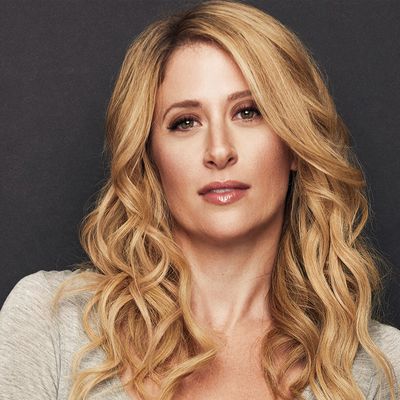
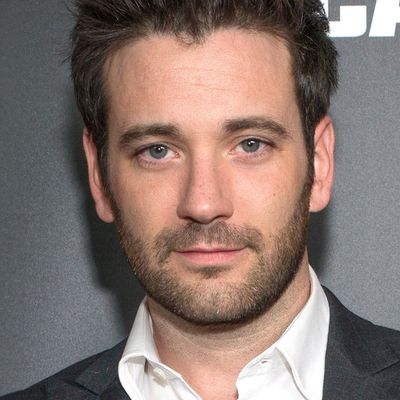
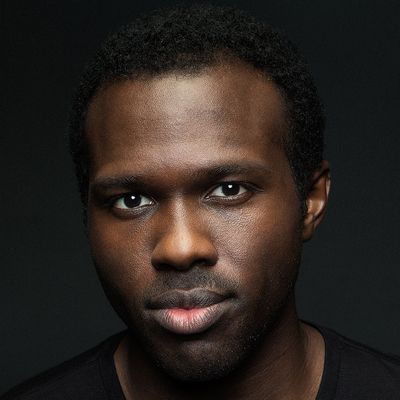
In this episode of Half Hour, Jeff and Richie take a close look at the 2025 Broadway revival of Ragtime at Lincoln Center Theater’s Vivian Beaumont Theater, with Joshua Henry, Caissie Levy, Brandon Uranowitz, and Colin Donnell leading the cast... Read More
From the show: Half Hour with Jeff & Richie (Post-Show Broadway Discussions and Interviews)
Guests

Featured Shows

About
In this episode of Half Hour, Jeff and Richie take a close look at the 2025 Broadway revival of Ragtime at Lincoln Center Theater’s Vivian Beaumont Theater, with Joshua Henry, Caissie Levy, Brandon Uranowitz, and Colin Donnell leading the cast. They compare Lear deBessonet’s Broadway staging to the earlier New York City Center presentation, weighing the strength of the performances, the impact of a more pared-back production, and how the material lands with today’s audiences.
The conversation covers the score by Stephen Flaherty and Lynn Ahrens, Terrence McNally’s book, design choices that support or undercut the storytelling, and what this revival might mean for the upcoming Tony Awards. Jeff and Richie also discuss how Ragtime’s mix of fictional and historical figures speaks to contemporary questions about race, class, immigration, and the American dream.
Follow and connect with all things @HalfHourPodcast on Instagram, TikTok, and YouTube. Share your thoughts on this Ragtime revival and your own experience at the Vivian Beaumont in the comments on Spotify, and let us know what you would like us to cover next. If you enjoy these post-show conversations, follow Half Hour and leave a rating and review so more theater lovers can find the podcast.
Transcript
This transcript was automatically generated and might contain errors.
[0:00] Jeff Malone: Welcome to Half Hour with Jeff & Richie, the podcast where we explore the latest shows we see, sharing our insights and opinions on the performance of storylines and everything in between. In today's episode, we're discussing the 2025 Broadway revival of Ragtime, playing at the Vivian Beaumont at Lincoln Center Theatre. Whether you cannot catch the show in person or you want to expand your thoughts after seeing it, this episode is for you. And as always, we want to inform you that this episode will contain spoilers. So if you're ready to dive into this production, stick around with us. I'm Jeff.
[0:29] Richie Grasso: And I'm Richie, and we're thrilled to be your hosts for this episode. But before we start the conversation about Ragtime, here are a few words from our advertisers.
[0:36] Jeff Malone: Welcome everyone to a new episode of Half Hour with Jeff & Richie. Today, we're discussing Ragtime.
[0:40] Richie Grasso: Ragtime is a sweeping musical adaptation of E.L. Doctorow's novel that follows three fictional families in pursuit of the American dream at the dawn of the 20th century. Black pianist Cole House Walker Jr. and his beloved Sarah, Jewish immigrant Tata and his little girl, and a wealthy white family led by matriarch Mother, all grasping for the same dream if only they can hold on to it. Featuring a lush score by Stephen Flaherty and Lynn Ahrens, and a stirring book by Terrence McNally, and original orchestrations by William David Brone, all of whom won Tony Awards for their work, Ragtime weaves fictional narratives with real historical figures and events, creating a rich tapestry that blurs the line between personal struggle and national identity, making history feel both intimate and epic.
Incoming Lincoln Center Theater Artistic Director Lierre de Bezenet directs a new production, envisioned by the Grand, Vivian Beaumont Stage, starring Tony nominee Josh Henry, Casey Levy, and Tony winner Brendan Uranowitz.
[1:37] Jeff Malone: Alrighty, theater hot take for the 2025 Broadway revival of Ragtime. I feel like my hot take here is like, I really love this show, and I think that this is an almost nearly perfect musical, but I felt a little bit more attached to the Encores version of this musical than I did at Lincoln Center.
[1:57] Richie Grasso: Oh, okay. I will say that I thought that this revival got it mostly right. There are some things I would have changed and done differently. I liked it being transferred from City Center to a grander stage with more production elevation. However, I don't think that all the production elevation went to where it could have gone for the epic size and space that this space was for this show. So mostly got it right for me. A few things I wasn't a huge fan of, but it was still stirring and wonderful and beautiful. And I think we should talk a lot about that in the coming minutes.
[2:31] Jeff Malone: Yes. Alright. So let's do as we always do. And kind of, I don't think we need to fully go into the full plot and concept here, other than like, if you felt anything differently from, you know, the story this time around, because we have this in our other podcast episode when we saw this at City Center Encores, and we did a big deep dive into the production then. But did you feel anything differently from the story and like the plot and concept seeing it again?
[2:57] Richie Grasso: So not really, because, you know, so many revivals on Broadway lately have been with a new book by or with a new orchestration by or with an edited version by. And so that's been like the big trend with revivals lately. Sometimes that's totally warranted, not always. With Ragtime, it almost seems like it was untouched and we just have the original work just revived again, right? With new performers in it. So we haven't changed major plot points. We haven't changed the score. We haven't cut things down. For the most part, it seems like it's kind of stayed true to what it was in the 90s in its original run. It did have a Broadway revival in the early 2000s as well. And so this is actually the second Broadway revival of this.
Seeing it at City Center, it doesn't seem like plot and concept changed much, except for a few design choices that have seemed to change from the no turntables to the turntables and some select choices there. The orchestra being on stage at City Center Encores, the orchestra now being below stage. Little design choices like that. But it seems like nothing's really changed from Encores last year to now. And it certainly doesn't seem like anything's changed majorly in terms of any plot or concept or character development or anything like that. And most of the cast even stayed the same too.
[4:13] Jeff Malone: Yeah. I think like, you know why I brought that up too, because I was, you know, once you see something once and then you continue to listen to like the score after. I think you kind of grow into like a different attachment to the story here. So I think, you know, like the opening number to this musical is so great and so grandiose. And like, it's like when you think of like amazing musical openings, like I immediately go to a show like Ragtime. And I felt like watching this, I was able to kind of dive into this story a bit more on really following the three groups that we follow throughout the whole musical and kind of really listen to and understand what they're saying and like why this introduction is so important to us in the musical.
So I think like that was one thing from a book and concept. I really was able to study a bit more in seeing this and saying like, oh, okay, I totally understand how this was written, why this was written. And like, it's beautiful in such an interesting way.
[5:16] Richie Grasso: Yeah. I mean, I will say that I think there's some beautiful things happening. You have a great book. There was also a movie, but there was non-musical and then musical. And I do hear rumors once in a while they're trying to make a movie musical version of this, which would be really amazing one day. You're taking a really specific time period in American history that was such a turn of the century is an understatement. I mean, so much was happening at that time. And I love that Terrence McNally's book really takes this a lot with basing it off the actual book of blending the fictional characters with the historic characters. It's a really smart move from like a concept perspective. Like we could have just had a historical documentary style musical about this time, which at times this show feels like that a little bit, which is Henry Ford and Booker T. Washington, all these famous people.
Right. And then we could have also just gone completely fictional with the characters and they kind of ignored some of the famous people at the time. I think that the blend of it is so smart because it really shows like maybe smaller, not famous people in history and what they were going through while we were hearing tabloids and newspapers of Evelyn Nesbitt and these people and what was going on in the big stream, the mainstream versus what the families maybe were dealing with in New Rochelle or in the city and things like that. Right. So it's a really, really smart way. And then it shows this blend of culture and how the beginning really shows the divide and how things progressed and how things really didn't progress well.
And then in some ways, things progressed really well. And so it just allows you to say this was what America was like. Has America grown from this? Has it not? In what ways has it? In what ways has it not? Right. You can really look back and say, wow, could we have a Ragtime-esque show written like this now? There's a lot of divide now. And could we ever say in 2025, Father Booth, you know, could you say that of this turn of the century that we've gone through the last 25 years? And could we say what has been divided now? What has changed? What has not? I don't know. I guess the question is, could this concept work in another time period in American history besides the early 1900s?
[7:30] Jeff Malone: Well, it could work, I think, in any time period. But why this concept works so much is the effect of the music that's in this musical. So you're naming the musical Ragtime, which is the style of music that we are getting. We are having ragtime music also throughout the whole score. So it's like taking that as the concept and putting it into the musical around events that were happening during that time is what's so different and unique and works. We have way too many different styles of music, I think, in the year 2025. I think so many people forget that usually a genre of music owned the time period. There's no real genre of music that really owns the time period anymore, because there's so many different things.
And especially in the digital age of music, you know, pop music and hip hop and country and Latin and so many different styles of music dominate all of the charts at the same time. Whereas in Ragtime, this whole turn of the century music movement was also happening.
[8:37] Richie Grasso: Right. But then could you counter that and say, well, all the different styles of music today are such a blend of cultures today? And is that what Ragtime is trying to say is how much more or not more of a blended society are we now than a long time ago? Are we better than 1906? It would just be interesting to kind of see another musical with this similar concept. And it could even be another country, another time period. It doesn't have to just be. But it just totally worked in such a way that, of course, it won all these Tony Awards. It's based on a really famous book. Then there was a movie. Then they made this really great musical that's been revived twice. You know, and it's a big show.
It's an expensive show. It's not a show that can be easily done. You know, there's a lot of people in this show. So I think that plot and concept stuck really well. And that is what I think at the root of this is probably my favorite part is the score, the book, the concept, the plot.
[9:28] Jeff Malone: Yes, everyone's put different directorial interpretations on it and different character interpretations on it. But there's something about just this piece that speaks and it's just epic and it brings joyous laughter and it brings sad tears and it brings the emotional bandwidth of everything you can feel in two and a half or three hours. It's a long show. I think even like just sitting here and talking about this now, I'm more on the side of things like I have not seen the film and I don't really know much about the actual book and it is still called Ragtime. So I would actually love to know what the actual music involvement is in the book and in the film. Is it talked about? What kind of like a character does that play?
[10:09] Richie Grasso: I'm sure Kolaus is a pianist. I would have to look to see if Kolaus is still a piano player in the original, I would assume. But I think there's got to be also a reason why the book itself was named Ragtime. Yeah, because that must have had a musical influence, which then influenced Aarons and Flaherty to say.
[12:11] Richie Grasso: I will say, though, that they write a really nice ballad, because all three of those shows have some beautiful, I-want-ballad moments in there. And if you look at "Waiting for Life to Begin" and "Once on this Island," and then you look at "We Can Never Go Back to Before," right? The mother song of Ragtime. And then even "Seussical," there's that, oh my God, I can't remember all the songs, there's Horton has a big, or there's a big songy thing with the clover, and oh my God, someone's going to be like, I know what song you're talking about, but you know, like, there's a, there's, it'll come to me halfway through this episode, probably, but you know what I'm saying? Yeah. So like, I think they write really well.
And they write orchestrally, which is nice. They're not writing for, they're writing for orchestras. And I think that's really nice, for the most part. I mean, some, Ragtime, clearly the biggest orchestra, orchestration for them. But yeah. All right. Well, I think this is a great time to take a quick break. And when we get back, we'll get into this production now, with the direction, actor performances, design, and even compare how this production holds up to the City Center's Encores.
[13:11] Jeff Malone: All right. And we're back. So we did have the chance to see this production at City Center's Encores last year. This has now transferred from that to the Vivian Beaumont and Lincoln Center. So right off the bat, kind of like, how do you think this production compares to that one?
[13:28] Richie Grasso: So there's a few things, right? So most of the casting stayed the same. It looked like a lot of the costumes stayed the same. And of course, things got elevated. So I feel like, oh, a really like, tough time has to be like, when you go from a concert version to a Broadway revival, you have to look at budget, right? You have to look at timeline. You have to say, how are we elevating this? And if it, the first steps, I wasn't in those rooms, obviously, but if I had to guess, it seemed like the first steps were like, let's put a turntable on stage to move us through these different years in time. And I love that, right? So the turntable to me, like, 99% of the time always works. I just think that, like, if you have that technology to move people like that, it's epic.
And then it was like, put the orchestra below. Cool. Awesome. Great. Like, kind of missed the, I kind of, I won't lie, that I kind of missed when the stage would open up for the overture of "South Pacific" and "King and I." And I think my fairly, they always did those, like, the last 20 years, they've opened the stage and you saw them. And with the orchestra being such a central character to Ragtime to me, it was a shame we didn't really see them much like that. But I know you had this turntable above them, so maybe they couldn't do that. So then I'm looking at that, but then I see, like, some stylized change in choreo and staging, but I don't see enough. And so my one start is, you know, we're going to talk all about scenery in a second, so I'm holding back on my scenery take, right?
But the direction of this still seems like the actors are bringing so much, and I don't really see a thousand percent more of direction. And if Lear de Bazinet is taking over as artistic director and then bringing this vision of this piece here, then one example is in the beginning, when the two boys are introducing each other, the boys, the father builds a house and he's telling the baby at the piano, the little baby, the little boy, about, let me tell you about your family's life a little bit. And then they go back, and obviously this character is a baby the whole time until the little boy comes out again at the end, right? Where was the presence of this narration of this flashback idea that we're going to tell the little, the coal house's son about his parents' story?
Where was then those boys, like, re-appearing throughout the piece? Now, maybe only needed one or two times to remind us as the audience that we're in a flashback. That is like a directorial 101 that I found was so missing. And then at the end, they were like, oh, and there's a little boy again. And then I was like, whoa, whoa, whoa, three hours ago, they were introduced as a flashback. And we never saw a repeat of that motif or theme until the very end. That was a ball that was dropped for me because it was a vision. It was clearly a vision. And I was like, oh, good for her. That's kind of cool. Like, he's telling him about in 1902, father, let me tell you about, and then for that ball to be completely dropped was unfortunate.
Yeah. Especially because like, that is when a director is putting a spin on a revival now, like, and that is the concept you might be going for. Maybe, I don't know if she even knows that was maybe her concept she was going for because it was not followed through in the execution because we know, and I've known because like other people have told me that they did see past productions. And normally, Coal House Jr. is not on the stage in the very beginning. It's only at the end. And it's like the wow factor. So, you know, to do that, you're now bringing him in. Okay, well, follow through. It's like something we always say all the time about these directors is like, follow through with what your intention was, or like, if we're thinking about what your intention was, like, I don't know, you're not fully getting it there, then, you know, and I look at this and I say, okay, we're at Lincoln Center now.
So we're at the new regime of Lincoln Center, because like, new artistic director, new artistic director, there's so many different, which is tough in a way, because now we have Ragtime, which just got extended to June. So now we have basically the whole season is one show, right? Sometimes it's three. Most of the times it's two for them to have this big epic piece for one year good for them. But now we've introduced this whole Broadway, there's off Broadway, too. But their whole Broadway season for the most of this year now is just this one show, which is great and fine. But now we're like defining everything off of one show. I almost wanted to like what the next season is going to be pretty soon. You know what I mean?
[17:37] Jeff Malone: Correct. But what I'm, what I'm getting at here is like, okay, it made perfect sense for Lear to go from City Center Encores!, which is like the revival central of bringing old works and putting them on the stage in the concert style. And now we're going to Lincoln Center. And you and I had this conversation before, like when Lear was announced that she was going as the new artistic director at Lincoln Center is like, what is she going to bring differently now because we are not going to want concert style productions at Lincoln Center. Lincoln Center is known for big, bold and beautiful revivals that everyone is expecting. And we have talked about many, many times about Ragtime being a production that kind of gets to grace the Lincoln Center stage.
And now we're here. So when we get into this production, now it's I'm saying, listen, a lot has not changed from City Center. Yes, we great. We put a turntable on the stage. That's nothing new. We've seen turntables before and how you direct the actors on that turntable, which we will get to shortly, is also a very big deal now on how you're going to execute that. But not only that, I'm going to go right into the punch here of the scenic design overall, because we want big, scenic, heavy shows at Lincoln Center, unless you're going to go super concept with the piece. Right. And I'm sorry, but I did not feel like we went and said, OK, we're getting a big, beautiful set. No, and I think the first time and I want to counter people who are going to say, well, we don't always need a set or like, why do you why is it always about big?
Why do people always say this show is screaming for a large set? And I'm sorry, but the scenery was extremely, extremely disappointing. It was one of the worst aspects of this. And I want to talk about why, because you have so many moments of like stand and sing. And I get that like if you wanted to once or twice put the actor or duet or soloist alone on the stage, that would have been the wow in this one five minute moment there alone. It would have been more impactful. But to have ballad after ballad after ballad with nothing on stage. I'm sorry. We have these beautiful silks hanging from the stage and I can see all the seams in them. Yeah. I was like, whoa, whoa, whoa. Was that just stitched together and hung?
Where are we? Like, I'm sorry. That was so disappointing. And to have this LED wall, psych, whatever you want to call in the back, changing the colors. OK, great. Let me tell you, the lighting designers had to work hard to light this really empty space. And I thought the lighting was one of the strongest because you have nothing to light, but stage area. So that made the lighting designer's job ten times harder. And I'm not saying they needed to add projection either. But there were moments where like, wait, you have the car. But then in "Wheels of a Dream," they were supposed to have driven the car there and they're referencing the car and the car's not on stage. Yeah. Why was the car only on stage at certain points?
Like you have this huge, huge stage. And I'm not please, I'm not saying fill stage with scenery. But when you saw that epic set in "My Fair Lady" and you saw that gorgeous set and that boat in "King and I" and you saw the boat came out for like, what, 10 seconds? Yeah. And when you saw "South Pacific," it was like a beach on stage. It was like you would have swore there was an ocean back there because it was just gorgeous. I don't know why then we just completely went with this extremely stripped down bare bones. Now the costumes were elevated. The orchestra was full, like there was so much the ensemble. It's not like they went with six people in the ensemble. Like clearly they put the money into staffing it, which is great. We had that at the on course production of this. Yeah. So to move this over here, I get it. But you have this opportunity to like do something different.
[21:22] Richie Grasso: With the production when it transfers to Broadway. And I know maybe they try to kind of like stay true to what that production was, but that's not how I think we wanted this to go in with the big bang here when you're putting your first musical production on Lincoln Center. It's not only that though, because we said the same thing with Floyd Collins last season, which was a different artistic director, and it was a bare stage show. And I'm like, how are we doing these big shows with bare stages? And I'm like, it's just disappointing because you're charging a lot of money for tickets. They're making a lot of money a week. It's selling out left and right. And you can't even say—I'm not saying you need to clutter a stage with scenery.
That's not what I'm saying at all. But that house having like a little doorframe and a staircase that then, I'm sorry, you hear as it's rolling off stage. I'm like, I don't know. We had automated turntables, but we couldn't get automated tracks put in to just track them on and off. They were actor moved. I think a lot of things were actor moved. And they're loud. And I'm like, what is going on here? Like, maybe these are just things that I noticed, but that was very disappointing. The scenic design mostly. I just think that's a disappointment.
[22:32] Jeff Malone: Right. And someone would argue like, oh, it's a limited run. Well, no, they knew they were probably gonna extend this as soon as the ticket sales went out the window when they announced it. Like people want it. They're hungry for a revival like this. So it's, but Lincoln Center has always been limited. It's never like something goes and just sits down at Lincoln Center. So like to argue that and say like, well, that's why they're not gonna put the money in the set. Right. No, like, no, no. And I know we can talk about so much of this for so long, but I will also say, I will say that the Linda Cho's costume designs are incredible. She won a Tony Award for the Great Gatsby costume design. That woman is very, very good at what she does.
And those costumes are absolutely gorgeous. So I will say that the lighting was incredible. I thought that making it, it just, the other aspects of this worked really well. In terms of actor performances, like, yeah, Brandon Uranowitz is like bringing it all. It's clear he's a Tony winner. He is acting through this incredibly. I think he is one of the strongest parts. Josh Henry, I'm so sorry. That is a Tony nomination for sure. That is hopefully a Tony win for him too. Cole House is an incredibly difficult role and he is carrying the emotion of that. So those are my standouts. Casey Levy's great. I like her. It's not Maren Macy to me. I've seen the clips of Maren Macy do this. I find that there's just something missing.
She's mostly great in the role. I feel like she's missing some emotional connection to something in Back to Before. Like we're like so, so, so, so close with her, but we're not a hundred percent there. These are just my actor takes. I would say there's the acting that's missing from it. Like she can sing the role very nice, but you are missing, you're not acting enough through the song. I actually think there are many of the performers on the stage, some of them are missing the acting portion of this. A lot of the supporting roles seem to be missing some of that, not character. And connecting with the book. I mean, I think there's a lot that you have to connect with with the book in a piece like this. I will say that I think that Nichelle Lewis really grew into this role.
[24:31] Richie Grasso: Yeah, she did. Since we saw her at City Center, vocally and acting. I think if anything, she's giving a great acting performance through song in many of her numbers. I also think Sheena Taub really acts so well, especially as Emma Goldman. She's very strong as Emma Goldman. I really appreciated that too. And there's so many people on that stage doing so many amazing things. I will say Brandon and Joshua and Casey are really holding it. Yeah. They're really holding it together. Those are hard roles and they're not bad. I really enjoy all of this. It's hard to not see Mary Maisie, Brian Stokes Mitchell and Audra McDonald do this in the original and then not want to immediately go and compare, you know, because those were like epics.
I know people who went to see the original Ragtime multiple times. That was like an incredible piece in the 90s. So they're all doing great stuff. We're just being nitpicky on some things here, right? But I just think to just put these actors and to have to carry these huge songs on bare stages left and right, and then float in a lamppost. Well, I think—
[25:32] Jeff Malone: To float in a little, a table and, or whatever, like a doorframe. I just, ah. Right. And to like close, I think of this section here, it's like, we're being nitpicky on this is because like, it's still felt too concert style in my opinion here. We just lost the binders from City Center. Yeah, right, right. That's what I have to say there. So, all right, let's take another quick break. And when we get back, let's move into our own experience at the show and what we think might happen at this year's Tony's for Ragtime. Great.
[26:01] Jeff Malone: All right, and we're back. So let's get into our own experience at the show and then what we think about might happen.
[26:09] Richie Grasso: Yeah. So before the show, we actually were attending the show with a large group of students. There was a group of students that had asked us to come speak to them and their parents a little bit about the show before. It was an evening performance. They had school the next day. We weren't able to do a talk back after. It was late. It's a long show, but we were able to meet before and kind of talk to them a little bit about, without ruining any plot moments, we talked about theater etiquette. They were mostly middle school age students. So we talked to them, a lot of them about like your theater etiquette in the Broadway show. What you should look out for in a show. We went over the different titles of things with them. And I thought that was a nice experience. What did you think of that?
[27:45] Jeff Malone: So my experience with that is, I thought it was a great experience to really be able to sit there and talk with this group about how to kind of sit and break down how we see theater. And it's something that we do on the podcast, which is great. And there's so many different aspects than just watching a show and being able to talk about the show after and how they did that with probably their peers. Yeah, and it was nice that I, just to be able to get them excited about something and not just put them in front of this big, epic piece like this and not give them, I even remember telling them like, look out for lights, look out for costumes, look out for, there's so many people working backstage.
Like realize what you're about to see takes a village of people, right? And I think it was good for kids to know that. I enjoyed the experience. I think they really enjoyed the show, the kids, the group that we were with. There was also a ton of people in the lobby, like the buzz is at Lincoln Center. It's great. It's just wonderful stuff. And I think this show is in the right theater being there. I think the experience anytime at the Vivian Beaumont is nice.
[28:46] Richie Grasso: Yeah, how do you feel like overall this show is doing at Lincoln Center?
[28:48] Jeff Malone: I think it's doing great overall. It's clearly got extended till June. It's going to run all through Tony Awards and let's talk about Tony Awards. I'm sure they're, listen, my prediction will be, I don't, this is a tough season because it's, we're light on things now. We think there's more things coming in the spring. It's hard to tell what's coming. A lot of things not announced yet. But we're a little revival heavy. A little revival heavy, I think between chess, between, Cats, the Jellicle Ball. We're going to have Rocky Horror coming. So there's like a lot of revivals coming or here. I will say this will get a lot of Tony nominations. I do see it getting a Best Revival nomination. I think that the leads will all get nominated or most of them.
I really would hope Joshua Henry wins this Tony Award. I think he's due for a Tony Award. I think this could be his. It could win Best Revival. However, Cats is doing something completely different. We have no idea what Rocky Horror is going to do. It'll be interesting. And we have not seen chess yet. And we haven't, and that was a big change. And we've heard amazing things about what Nicholas Christopher's doing, what Aaron Tveit's doing, and also what Lea Michele is doing in that production. So those are three big names. Very similar to Ragtime with the three big names in the lead role. So, you know, I think once we see that, we're going to be able to better compare like, oh, who's going to get nominated there?
Who's actually getting this? And like, yeah, I mean, I don't know. I do think it will get nominated and probably even some design things that will get nominated with costumes. I don't know if Lea will get nominated for direction, maybe, but you know, it will be something that we see.
[29:16] Richie Grasso: Definitely. Yeah. I'm looking forward to seeing what, and it's so far away still, but I think we'll see what the next few months bring of new shows and what we think.
[29:23] Jeff Malone: Definitely. And what are you kind of hoping for next after Ragtime at Lincoln Center?
[29:27] Richie Grasso: I would like us to, you know, all these revivals you just mentioned, we haven't had a Golden Age one in a while, even though Ragtime feels Golden Age. I would like a Golden Age musical to come back to Lincoln Center again. I don't know, Roger Hammerstein, a Lerner and Lowe, something we haven't seen in a while. Maybe it's a Brigadoon or something, something we haven't, you know, I don't know, something just that we wouldn't—
[29:50] Jeff Malone: Yeah, I'm curious, like what is the big Golden Age theater you would want?
[29:52] Richie Grasso: I will say that we haven't had a Sound of Music revival in a while. I do love that score. That sells tickets. I think that could be pretty epic for Lincoln Center to have the Sound of Music there. It'd be nice. You know, we've had the Carousel revivals in the South Pacific and the My Fair Lady, which is Lerner and Lowe, right? And there's been big shows, King and I. It'd be nice to see what's next there. And even the, you still want that production of Mame.
[30:14] Jeff Malone: I still want the revival of Mame. That could go there. We need a big, splashy, Broadway revival of Mame. I'm waiting for it. We haven't had it. I was saying it was about Funny Girl Forever, then we got that. So maybe someone's listening to it. We'll see. I don't know. Mame, Mame, Mame.
[30:30] Richie Grasso: Yes. All righty, so.
[30:31] Jeff Malone: Oh my gosh, just out of time. What are your final thoughts on Ragtime at Lincoln Center?
[30:34] Richie Grasso: Listen, we're being nitpicky about this because we want the best at Lincoln Center always. And this was a great production. And so many people are enjoying it. It got amazing reviews. And I'm just happy to see it on the Broadway stage again, because I think it's an important show, especially now when I'm watching this show and I'm like, oh, yeah, this is still relevant today. Scary, but it is. And I think it's gonna be a big one this year for people that still continue to see.
[31:06] Jeff Malone: Yeah. Oh, I loved it for the most part. Again, like you said, we're being nitpicky on some of these things because we really just want it to be as best as possible. I just hope we continue to see more full lush scenery on Lincoln Center stages. That's what I'd say.
[31:18] Richie Grasso: Especially that stage.
[31:19] Jeff Malone: Yeah, especially that stage, you know, and it's like, it just felt very bare bones.
[31:23] Richie Grasso: Yeah. But I loved the score. I cried a few times. The acting is phenomenal. This is a gorgeous piece and everyone should really go see it at some point. And I'm glad it got extended because I know tickets have been expensive and hard to come by. So I think it's great that it's going to run now for a little longer.
[31:39] Jeff Malone: Definitely. So that's really great.
[31:41] Richie Grasso: Yeah. Amazing. Well, that does wrap up our discussion for this episode. We hope you enjoyed our deep dive into Ragtime. And remember, we want to hear from you. Continue the conversation with us on Instagram and TikTok at Half Hour Podcast and drop us a comment on Spotify and let us know your thoughts on Ragtime. Please also leave us a review. Your reviews mean so much to us. And remember to subscribe to our channel for all past and future episodes. Until next time, I'm Jeff.
[32:01] Richie Grasso: And I'm Richie saying ta-ta for now. Bye.
© Broadway Podcast Network, All Rights Reserved