

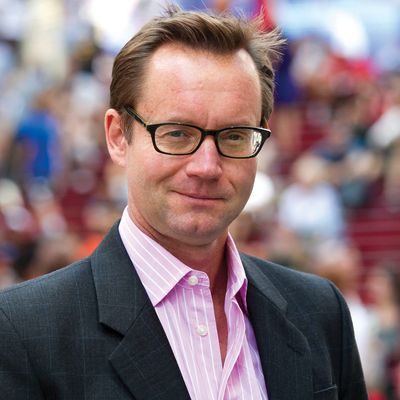
Michael Riedel is an American theatre critic, broadcaster, and columnist. He is the co-host of "Len Berman and Michael Riedel in the Morning" on 710 WOR in New York City, weekdays 6-10am. Riedel has been a controversial and influential Broadway columnist of the New York Post for over 20 years... Read More
From the show: Josh Swallows Broadway
Guests
Featured Shows
About
Michael Riedel is an American theatre critic, broadcaster, and columnist. He is the co-host of "Len Berman and Michael Riedel in the Morning" on 710 WOR in New York City, weekdays 6-10am. Riedel has been a controversial and influential Broadway columnist of the New York Post for over 20 years. Razzle Dazzle: The Battle for Broadway won the 2015 Marfield Prize for arts writing and is widely considered to be the successor to The Season, William Goldman's classic 1967 book about Broadway. His second book, Singular Sensation: The Triumph of Broadway was just released back November, 2020 and it's friggin good!
Riedel's skewering of Broadway shows and personalities in his column have made him a controversial and often feared figure on the New York theater scene. He has been called "the enfant terrible of the New York press".
- Get Singular Sensation: The Triumph of Broadway
- Get Razzle Dazzle: The Battle for Broadway
- Support me via Patreon!
- Twitter: @JoshLamon
- Instagram: @Josh.Lamon
Produced by Alan Seales and Elizabeth Wheless.
A proud member of the Broadway Podcast Network.
Transcript
This transcript was automatically generated and might contain errors.
[0:00] Josh Lamon: Hey everybody, welcome back to Josh Swallows Broadway.
[0:03] Alan Seales: Here I am with our producers, Alan and Elizabeth.
[0:07] Elizabeth Wheless: Hi, friends.
[0:08] Alan Seales: Hello, hello, hello, hello.
[0:10] Josh Lamon: Elizabeth, you're in the middle of a hurricane. How's it going?
[0:14] Elizabeth Wheless: Well, considering that I've grown up with hurricanes every year, this is nothing. It's a cat one.
[0:19] Josh Lamon: 70 mile an hour winds, doesn't matter. Cat one.
[0:23] Elizabeth Wheless: Fuck that. I'm gonna go fishing.
[0:25] Josh Lamon: Honestly, people do.
[0:27] Elizabeth Wheless: I remember when I was when I used to live in Florida, I had a kite that I connected to a fishing rod, and as a hurricane was rolling in, I was probably very stupidly flying a kite with a fishing rod.
[0:39] Alan Seales: Oh hell yeah.
[0:41] Elizabeth Wheless: Oh yeah.
[0:43] Josh Lamon: Yeah, because I got really tired of reeling it in manually, you know, like you do with your string and you go like back and forth, back and forth, back and forth to reel the string in. I was like, how do I get that even better? And so I put it on a fishing line, uh fishing rod.
[0:56] Alan Seales: You were an adult.
[0:57] Elizabeth Wheless: No, I was like 10 or 8 or something.
[1:01] Josh Lamon: It would have been better if you were an adult. That sounds like some major stuff.
[1:07] Josh Lamon: Well, speaking of lightning striking, um how's that for a segue?
[1:15] Elizabeth Wheless: I love that.
[1:15] Josh Lamon: I'm really excited about today's show. Um one of my like I've been a huge fan of Michael Riedel for a long time, and he's a controversial person. Like I've been in two shows that the man has gone after in his columns, but it has always been my biggest guilty pleasure. But then when he started writing books like Razzle Dazzle and Singular Sensation, my fandom just kind of exploded because I don't know. He's a genius, he's a brilliant storyteller, and I think he loves Broadway more than all of us combined.
[1:54] Alan Seales: I don't disagree.
[1:56] Elizabeth Wheless: Okay, Elizabeth, it's true.
[1:58] Josh Lamon: It's true. I mean into it. I will be for it. You're more experienced than I am. I'm looking at this book here. This is this is what? 200 300 pages of Broadway love. I want to see that out of you, Elizabeth.
[2:12] Elizabeth Wheless: And is his new book is coming out in November, right?
[2:17] Josh Lamon: What was that?
[2:18] Elizabeth Wheless: You broke up.
[2:19] Josh Lamon: Oh, I'm sorry. Hurricane stuff. Um I said I said his new book is coming out in November, right?
[2:27] Elizabeth Wheless: Yes, and I just got to read it, and I am so excited.
[2:31] Josh Lamon: So without further ado, here we go.
[2:40] Josh Lamon: Josh Foggos. Josh Swaggos. Josh Swallows. Josh Swaggles. Josh Longos. Josh Swaggos. Josh Swallows Broadway.
[2:57] Josh Lamon: Hey everybody, now that you've heard the theme song, really welcome to Josh Swallows Broadway. Today's guest, I'm so excited about. He is the brilliant and famous columnist, Michael Riedel, who is not only the author of one of my favorite books, Razzle Dazzle, but now he has his brand spankin' new book, Singular Sensation coming out this November. Welcome to the show, Michael Riedel!
[3:24] Michael Riedel: Well, I'm flattered, Josh, uh, but um there's a part of me that thinks I should call the FBI. Obsessed. That's a scary word.
[3:34] Josh Lamon: It is, but I am. You're my miracle. Um I always turn to you, especially before I was really like working in the industry, to know what was happening on Broadway. And um I always just wanted to like be your best friend.
[3:52] Michael Riedel: Well you get to know me. You you won't make that mistake again, trust me. Ask ask people like uh oh, Julie Tamore and uh Rosie O'Donnell and a few of the other people I skewered over the years.
[4:08] Josh Lamon: Let me but you know what though? Uh you know, your new book, Singular Sensation, you champion these people though.
[4:19] Michael Riedel: Yeah, no, I mean on the whole, um, on the whole, I do uh love theater people, and they're great fun. They're eccentric and they're very colorful people to uh to capture, certainly in my column and in my books. And um, you know, they live uh they live on the highwire, and uh man, when they soar, they come up with some of the greatest shows of all time. But when they fall, they often fall without a net.
[4:43] Josh Lamon: Yeah, and I've been in a few of those myself. Um what inspired you to get into writing the gossip columns?
[4:52] Michael Riedel: Well, I um, you know, I was not really a theater critic, although I know have known many theater critics in my day, and I just thought uh that would not be the life for me, uh, to go to the theater every single night and then to rush home and have to write a book report, uh, was seemed kind of boring to me. I preferred to mingle with theater people, to get to know them, to interview them, to write about them. And I was always interested, because I was never um I'm never a uh big theater fan. I like the theater, but I wasn't a fan who wanted to be around it all the time. I was more interested as I started writing about it in the business aspect of things, because as you know, um these shows cost a tremendous amount of money and and people put so much of their reputations and their financial life and their emotional life on the line to get these Broadway shows on.
[5:42] Michael Riedel: So there's just a dramatic, it's a dramatic business to cover. Uh because as I say, you know, when they hit it, if you hit it with a Lion King, you can make worldwide nine billion dollars. But if you flop out with Spider-Man, you could lose a hundred million dollars. Isn't that remarkable?
[5:57] Josh Lamon: Yeah, and I always thought the business aspect, the high stakes business aspect of it, was fascinating. And I I spent a lot of time getting to learn the business from some fun producers, many of whom appear in my book Singular Sensation, The Triumph of Broadway, and indeed my first book, Razzle Dazzle, The Battle for Broadway. I don't know, I had a natural affinity for the producers, and I think they liked the fact that I was engaged, interested in the behind the scenes way shows come together, and that just led me to start saying, you know what, I'm gonna cover this business this uh industry, not as a critic who just reviews the art form, but I'm gonna take a close look at how the business really works.
[6:34] Michael Riedel: And that led me to some, you know, to some great stories that I had uh in my columns over the years and to some you know fun stories that I put in uh Singular Sensation.
[6:43] Josh Lamon: Yeah, well, also Razzle Dazzle, I would say it's fair to say that you've you're also somewhat of a theater historian at this point.
[6:51] Michael Riedel: Yeah, I mean when I wrote Razzle Dazzle, I really I really thought, okay, I need a I need a big idea for a book. I can't just string together a bunch of stories, and then I hit on the idea after talking to people who are sadly no longer with us, but people like Jimmy Niederlander, who created the Niederlander Empire, uh Jerry Schoenfeld, who is the president of the Schubert organization, and some other old-time producers, that their business was really in the crapper in the 60s and 70s when the city was going bankrupt. Times Square was sleazy and dangerous, cultural tastes had changed and you know rock, rock music was now the uh the in in in fashion and Broadway just seemed so out of date something that your grandmother would go to see.
[7:36] Michael Riedel: And I began to think, well these guys stuck by Broadway in the 70s and really kind of held it together. And then they got shows like Michael Bennett with a chorus line and Dream Girls and then Andrew Lloyd Weber came in with cats and uh Cameron McIntosh came in with Le Miz and then Cameron and Andrew did Phantom together. And that kind of shored up the business in the 80s. And I realized that by by rescuing Broadway by keeping Broadway together these guys helped begin the redevelopment of Times Square because as Jerry Schoenfeld once told me he said, you know, our business was over with if our neighborhood collapsed we would collapse with it.
[8:16] Michael Riedel: So we not only had to find shows but we had to figure out a way to work with the city to try to get Times Square on sounder footing so people wouldn't be terrified to go to Times Square. And uh you know they worked damn hard to do it and in the end as I argued in Razzle Dazzle it was Broadway that really helped lift the fortunes of Times Square and ultimately uh New York City itself. And then Singular Sensation covers the 90s because my book ended in the Razzle Dazzle ended in the early 90s and Simon and Schuster, my publisher, wanted a sequel, and I thought, well, you know, the 90s were an interesting time, and I I covered all these shows. I thought that was really when then when Broadway was pushed back into the real mainstream of American popular culture with shows like Rent and Chicago and The Lion King and the Producers and Angels in America.
[9:04] Michael Riedel: I mean, shows that were as well known as any movie or TV series back in the day. And I began to think, you know, I could write a story about that decade where Broadway, you know, which had been kind of a backwater of the entertainment industry, suddenly became a place where movie studios wanted to be involved. Disney and uh Warner Brothers, every movie studio was getting involved in Broadway back then, and where big stars, people like Liam Neeson and Nicole Kidman and Judy Dench uh were coming to Broadway. And then I thought, okay, well, a lot of good stories to be told there, great shows to talk about. Uh, and I thought, well, how do I end this book? And then the obvious answer, I was looking at my window one day, and I thought, oh, once upon a time, I looked out my window and I saw the World Trade Center.
[9:45] Michael Riedel: And in fact, I saw the World Trade Center get knocked down. And I realized that Broadway hit this huge high point with the success of the Producers with Nathan Lane and Mel Brooks. I'm sorry, Nathan Lane and uh Matthew Broderick, Mel Brooks' show, of course. And I remember that summer being a really thrilling time on Broadway. I mean, it's just booming. You know, the whole Times Square was buzzy and exciting, and you'd go to a restaurant and you'd see Mel Brooks and Ann Bancroft, and Mel would walk into Joe Allen or Orso, and the whole place would burst out into applause, and he'd go from table to table, basking in everyone's compliments. And Anne would sit at their table. She'd let him walk around maybe for five or six minutes, and then she'd say, Mel, eat.
[10:24] Michael Riedel: And he'd probably put it on the table. And it was just it was so cute, I gotta tell you. But it was a tremendously exciting time for New York and the business. And then, man, you know, Tuesday, September 11th, we wake up and suddenly New York is under attack. And I remember calling Jerry Schoenfeld, the head of the Schubert organization, and uh, and he said, Michael, I don't know what we're gonna do. He said, I don't know how we're gonna recover because he was just on the phone with a mayor, and um uh Times Square was on Rudy Giuliani's top 10 list of terrorist attacks. There were fears at that time that there were more terrorists in the city, there were fears that there were more bombs that were gonna go off. There was a tremendous fear because in Moscow, terrorists had taken over a theater and they killed 170 people.
[11:08] Michael Riedel: There was a tremendous fear that if you went to Broadway, the terrorists could storm the theater and shoot the audience. So we really didn't know what was going to happen, but it was Mayor Giuliani, he was sane back then, uh, who said, you know, I'm not gonna allow this city to be brought to its knees. And he called all the producers together and he said, I want Broadway up and running on Thursday night, September 13th. I want to show the world that New York is open for business. And it was, and I deal with this blow-by-blow account of how they got Broadway open two days after this terrible attack in Singular Sensation. And then um, within a year, within a year, Broadway was posting record grosses again.
[11:47] Michael Riedel: So the subtitle of my book, Triumph of Broadway, by no means did I mean it to be ironic as it is now, because of course now Broadway's closed for the foreseeable future, and yeah, I'm not quite sure how we're gonna come back. But I finished the book in February before before the pandemic hit, and it was really a celebration of all those great shows and personalities of the 90s, and then facing this crisis, how Broadway rallied and staged this incredible comeback.
[12:13] Michael Riedel: That was the scheme of the book.
[12:15] Josh Lamon: Well, one thing that both of your books do for me is they give me a lot of hope. Um, you know, your first book with Razzle Dazzle, showing us the story of the Schuberts and how these theaters came to be was so fascinating. But, you know, with Singular Sensation, what I love is these are the shows that really were coming up when I was starting to move to New York.
[12:41] Michael Riedel: Yeah.
[12:42] Josh Lamon: Um, you know, Rent, Titanic, all of those shows, and um it's so fascinating to see how Broadway kept on evolving, yeah, changing, and becoming more mainstream. And I really believe that it was doing the same thing with shows like Hamilton.
[13:04] Michael Riedel: Yeah.
[13:05] Josh Lamon: And I believe that we will again. And your books really do bring that to me.
[13:11] Michael Riedel: Yes, I think so. I mean, this is unprecedented now. Broadway's never been closed this long ever in its history. And even during they had some strikes that lasted a few weeks, but when this pandemic first came out, first broke out in New York. I remember when they shut down Broadway. I was talking to everybody, and everyone said, "It'll be two weeks. We'll be back in two weeks. We'll get it together, we'll pull ourselves back in two weeks," and eight months later with no end in sight. I don't really think it can come back until there's a vaccine. First of all, I mean, you could not engineer a pandemic to hurt Broadway more. You've got actors, right, who go on stage and sing and project, which is a huge way to spread the virus.
And then in the cramped orchestra pits, you've got all these musicians blowing on their instruments. Another huge way to spread the virus. So the people who work on Broadway won't feel safe until there's a vaccine. And then the people who go to Broadway won't feel safe, sitting in a, you know, but these are fairly small theaters. They're not these gigantic arenas, you know, in New York, they're fairly small theaters. And it's just gonna take some time before people have the confidence and the sense of safety before it comes back, and that could be, you know, a year, year and a half. I just don't know at this point.
[14:23] Josh Lamon: Yeah, no, it's terrifying. Um, especially because social distance seating is not going to bring in the amount of income that's needed to maintain a Broadway show, especially at these prices. It's fascinating in Singular Sensation seeing how much shows cost back then.
[14:45] Michael Riedel: I know it's well, you know, I have a couple of chapters on the behind the scenes struggle, and it was a struggle to get Chicago onto Broadway. Fran and Barry Weissler, who produced it, it was, you know, as you know, was at Encores for only four performances. And Fran and Barry loved it. And Fran called Fred Ebb. They were close to Kander and Ebb. And she said, "Oh, Freddie, we love your show, and you know, when it moves to Broadway, if you could just give us a little piece of it, we would be so grateful." And Fred said, "Fran, nobody's called, nobody's interested in moving to Broadway." And the reason was it was a concert, and who would pay $75? That was the top ticket price. Who would pay $75 to see a concert on Broadway?
And Fran and Barry could not raise the money to get Chicago to Broadway. And at the end of the day, they decided, well, we believe in the show, so we'll violate Mel Brooks's cardinal rule of showbiz and we'll put our own money in the show. And as I end the chapter in my book, Fran and Barry crawled into bed that night, and Fran turned out the lights and pulled the covers over her head. "So what have we done?" And you know, now jump ahead twenty-two years later, and the worldwide gross of Chicago is at $3.5 billion, and Fran and Barry Weissler own 75% of it. So what did they do? They got rich. That's what they were doing. But you see, you know, these stories, which I do love to tell, and people know that they're gonna know these shows, and they're gonna know, Ria, Rent turns out to be a hit, okay?
Lion King turns out to be a hit, Chicago turns out to be a hit. But I learned from my friend Peter Stone, who sadly is no longer with us, but Peter wrote two great musicals, 1776 and Titanic. Now, 1776, right? You know they signed the Declaration of Independence, but Peter manages to create this suspenseful musical where maybe they don't sign it, and you're hanging on the edge of your seat as you're counting the lineup of all the 13 colonies going to line up so we can create a country. Now, Titanic, yes, you know the ship is gonna sink, but Peter again manages to create the sense of suspense. Jeez, you hope it just misses the iceberg. And I once asked him how he did it, and he said, "You and I know how these things turned out, but the characters don't." So you have to put yourself in their mind.
They do not, the founding fathers do not know if they're going to be able to pull a country together. And the people boarding the Titanic had no clue that 1,700 of them were going to die. So when I started when I wrote this book and researched it, I went back and I interviewed everybody involved in the shows. And I said, just put me in your minds at the time you had the idea for the show while you were writing the show. What were those early rehearsals like? What was that first preview when you went before an audience that paid for its seats? What was that like? Going into these Tony Award battles? How did you feel? I said, "Don't project ahead. I want to know exactly what you thought at that particular time." And that's how you end up with stories of Fran and Barry Weissler saying, "My God, what have we done?" Because they did not know. They did not know what Chicago was going to become.
[17:52] Josh Lamon: I love those two so much, especially Fran. The entire, like all of tech of Finding Neverland. And as you know, there was a lot of tech of Finding Neverland. I would just sit with Fran in the house and she would tell me fabulous stories.
[18:08] Michael Riedel: Oh, yeah.
[18:09] Josh Lamon: Yeah. No, she and Barry are great characters. They're kind of my court jesters. Because they're so funny, you know. I mean, Fran and Barry, they came from nothing. You know, I mean, their whole life is improbable. Barry was this, you know, young, struggling actor, schlepping around these Shakespeare plays, high schools in New Jersey. And Fran was a married housewife. And you know, she was working in the box office as a volunteer at this high school where Barry brought his little Shakespeare troupe in. And she remembered seeing Barry, who's, you know, 10, 15 years younger than she is, and he said, "This ridiculous little man in tights prancing around on the stage." And she sat around for a talk back and they started talking and they kind of became friendly.
And Fran was going through just getting a divorce at the time, and they decided to become business partners, and then they became lovers and then they got married. And you know, they began their career taking plays around to schools, but they found out that if you took a play to a public school, you couldn't charge admission, you couldn't charge the students for tickets, so they couldn't do that. So then they thought, well, what do we do? Our whole model is making money from the ticket sales, but public schools won't allow us to charge the students. And Fran had a friend who told her, "Fran, play the Catholic schools. They're private. They can make the kids pay. And on top of that, they're non-union. So you don't have to pay extra for the union guys to turn the lights on and off after the school hours." They slapped Shakespeare plays to Catholic schools for years, you know.
[19:45] Michael Riedel: Wow.
[19:45] Josh Lamon: And then their first probably play was Othello.
[19:48] Michael Riedel: Is that right?
[19:49] Josh Lamon: Yeah, they did it with James Earl.
[19:51] Michael Riedel: They had a commitment from James Earl Jones to do a Paul Robeson show that they were gonna take to a college. And then Paul Robson's son objected to the script and said he would stage protests all over the place. And James Earl Jones called him and said, "I can't do this. I can't be in a play that's gonna be protested by Paul Robeson's son. So you gotta let me out of the contract." He said, "But I owe you one." And you know, they were not making much money then, and they were depending on the income from that play to really tie them over. And then they went up to see at Stratford, Connecticut, the Shakespeare Festival to see a play with Christopher Plummer in it. I think he was Henry the Fourth, part one.
And part two for some reason had fallen apart. And Fran had the idea, why don't we see when we can get Jimmy to do Othello and Chris Plummer can play Iago? And as I show in the book, you know, Fran was a nobody back then, and she tried to get an audience with the great Christopher Plummer.
[20:45] Michael Riedel: Such a great part of the book.
[20:47] Josh Lamon: Oh, yeah, and she, you know, I won't spoil it all here, but just suffice it to say that she knocks on the dressing room door and the dresser says, "Mr. Plummer is resting. He will see you when he's finished resting." So Fran sits outside his dressing room door for an hour, and then the dresser says, "Mr. Plummer will see you now," and she goes in, and there he is in his, he's got an ascot on and a velvet smoking jacket, and he's sitting in a peacock chair. He's got patent leather slippers on, you know, looking every inch the Hollywood glamorous movie star of another era. And she goes, "Hi, my name is Fran Weissler. And my husband and I, we have..." He holds his hand up and he says, "Mrs. Weissler, is that your name?
Let me explain something to you. You do not offer an actor a part. You call the actor's agent and offer the part to the actor through his agent. Now, my agent happens to be at ICM, which is out in California. And by the way, there is a three-hour time difference. So I think you must factor that in when you make the phone call." And Fran was like, "Well, okay, okay." And then he banished her. He just banished her from the dressing room. She's bowing as she's walking out desperately trying to find the handle behind her so she can make the but she got Chris Plummer and she got James Earl Jones and they got Othello to Broadway, and then they became Broadway producers, and it culminated, of course, with the brilliant job they did in Chicago.
And as I try to show with certainly with Rent in Chicago, both of those shows they also changed the way Broadway was marketed. If you remember the ads for Chicago, they were incredibly sexy. Those women sexy William Ivy Long costumes, and no one had done an ad like that. And Barry was really pushing the limits of it all. But man, I remember those ads came out. All of New York was, "I've gotta see this show. This is the sexiest show in town." And Rent was for young people. So the producers of Rent, Kevin McCullough McCullough, and Jeffrey Seller, they thought we have to reach young people, and so therefore, we are not going to use the word Broadway or Musical in any of our ads. Because if we call it a Broadway musical, young people are going to go, "A Broadway musical?
That's something my grandmother goes to see at matinees." So if you go back and you look at the old campaigns at Rent, they do not use the word Broadway, and they do not use the word musical anywhere in those ads.
[23:21] Michael Riedel: That's so amazing.
[23:22] Josh Lamon: But also what they did with the pictures of all the cast. I mean, it was so sexy. All of them were complete individuals. And as a teenager at the time, when you're trying to find out who you are, and a musical like that is saying, like, yes, there are other gay people. Yes, AIDS does exist. And well, what Rent is a watershed moment in the 90s, and that's why I give it quite a few chapters in my book, because you have to remember that early 90s, we still had the hangover of the big British shows. And the last of those shows was Andrew Lloyd Webber's Sunset Boulevard, which was the most expensive musical of all time, $14 million, but it was, you know, full of conflict and feuds, and Andrew fired Patti LuPone, and he fired Faye Dunaway, and he had to fight with Glenn Close.
[24:09] Michael Riedel: And I covered all that stuff, and I thought, well, this is a good way to begin the book, you know, a big show that looks like a monster hit, but behind the scenes, everyone's at each other's throats.
[24:18] Michael Riedel: Fortunately, it's been long enough that I was able to interview Glenn and Patty and Andrew, and they were all pretty honest and candid about what they went through on that show.
[24:26] Michael Riedel: And we all thought that show was a hit, but in fact, it was so expensive and so big, it sort of imploded and collapsed.
[24:33] Michael Riedel: And it won the Tony in 1995.
[24:36] Michael Riedel: The only competition that year was Smokey Joe's Cafe.
[24:38] Michael Riedel: So Sunset Boulevard de facto won score and book.
[24:42] Michael Riedel: There wasn't even a contest because Smokey Joe's Cafe was a review of old Lieber and Stoller songs, right?
[24:48] Michael Riedel: So you know, Andrew scoops up everything that year.
[24:51] Michael Riedel: Now a year later, he presents posthumously the Tony Award to one Jonathan Larson, who before Rent, we'd never heard of this kid before.
[24:58] Michael Riedel: My only knowledge of Rent was I got a phone call from the press agent Richard Kornberg on uh, well, it would have been what, January, January 28th, 29th.
[25:09] Michael Riedel: Uh, and he said, you know, Michael, um, Jonathan Larson died last night.
[25:13] Michael Riedel: And I said, Who's Jonathan Larson?
[25:15] Michael Riedel: I said, Well, he's this kid, he's working on the show called Rent down at the New York Theater Workshop.
[25:20] Michael Riedel: And I said, Well, you know, Richard, um, I'll help you out.
[25:24] Michael Riedel: I'll give you a little mention.
[25:25] Michael Riedel: I was at the Daily News then, I'll give you a little mention.
[25:27] Michael Riedel: But Richard, our readers have no idea who Jonathan Larson or Rent is.
[25:31] Michael Riedel: And then you went to see Rent, which, you know, cost $125,000 as compared to $14 million for Sunset Boulevard.
[25:38] Michael Riedel: And you realized, or you saw already thought, oh, this is going to change everything.
[25:42] Michael Riedel: Because up until Rent, most of the Broadway shows were set in fantasy worlds, okay?
[25:48] Michael Riedel: You know, the Paris Opera House of 19th of the 19th century, Norma Desmond's eerie mansion of Hollywood in the 1950s, uh, the 1848 Revolution in Les Miserables, and Katz is set.
[26:01] Michael Riedel: I have no idea where the thing is set.
[26:04] Michael Riedel: But Rent was suddenly a show that was contemporary.
[26:08] Michael Riedel: It was New York, here, and now about issues that New Yorkers were dealing with, and in particular young New Yorkers with a rock score.
[26:17] Michael Riedel: And suddenly Broadway stopped being a place for your grandmother and became a place that young people wanted to go to see.
[26:25] Michael Riedel: And as you know, Josh, everybody who writes for Broadway now is there because of Rent.
[26:31] Michael Riedel: You know, Bobby Lopez, who did uh Avenue Q in the Book of Mormon, loved Rent.
[26:35] Michael Riedel: Uh, Lynn Manuel Miranda saw Rent 30 times or something like that.
[26:39] Michael Riedel: Brian Yorkey, Tom Kitt, all of these people, they fell in love with the musical theater and wrote their contemporary shows because of what Jonathan Larson did.
[26:48] Michael Riedel: And it was um, it was interesting to try to recreate his final years because people think, first of all, it's funny because people, if you mention Jonathan Larson out, they say, Oh, he died of AIDS, right?
[26:59] Michael Riedel: No, he did not die of AIDS.
[27:00] Michael Riedel: He died of uh of an aneurysm uh right before his dress rehearsal.
[27:04] Michael Riedel: And they think, oh, and the show was a big hit.
[27:07] Michael Riedel: Well, no, it took a little time for it to become a hit.
[27:09] Michael Riedel: And oh, Jonathan must have been doing well, right?
[27:12] Michael Riedel: No, he was absolutely at the end of his rope.
[27:14] Michael Riedel: He was totally broke.
[27:15] Michael Riedel: And he said to people who I interviewed who told me this, he said, if this one doesn't go, I have to leave the theater and find something else to do with my life.
[27:22] Michael Riedel: This is it.
[27:23] Michael Riedel: This is my last chance.
[27:24] Michael Riedel: That's how desperate he was.
[27:26] Michael Riedel: And the tragedy is that um, you know, he went home after uh after the dress rehearsal and put on a uh the tea kettle and dropped dead of his aneurysm.
[27:35] Michael Riedel: He's probably dead before he even hit the floor of the kitchen of his little walk-up.
[27:39] Michael Riedel: God, it's so heartbreaking, but um you really chronicle it so beautifully in your book, especially um, you know, talking with his sister and with his family and the people that were really there, like Kevin.
[27:53] Michael Riedel: Uh, funny story, my allergy doctor when I was a kid, I had to get shots three times a week, is Kevin McCullum's uncle.
[28:02] Josh Lamon: Oh.
[28:02] Michael Riedel: And he put in a bunch of money to Rent, and that's why he was able to close his practice and I had to find a new allergy doctor.
[28:11] Michael Riedel: Well, it's interesting.
[28:12] Michael Riedel: Again, you know, Jeffrey and Kevin, I interviewed them and they didn't have any money back then.
[28:16] Michael Riedel: I mean, Jeffrey had absolutely no money.
[28:18] Michael Riedel: He had, you know, he lost his job.
[28:21] Michael Riedel: He was working for Fran and Barry Weissler in their office.
[28:23] Michael Riedel: And uh they said it's time for you to move on.
[28:25] Michael Riedel: Get out of here.
[28:26] Michael Riedel: In fact, it's funny.
[28:28] Michael Riedel: Uh, I put this in the book.
[28:30] Michael Riedel: Jeffrey had seen um uh Tick Tick Boom, uh, which was one of Jonathan Larson's early musicals, and he wrote Larson a fan letter saying, you know, if you ever have time, I'd love to meet you for a drink.
[28:42] Michael Riedel: And the as he was getting fired from Fran and Barry's office, the receptionist page him and said, Jeffrey, a Jonathan Larson is on the phone for you.
[28:50] Michael Riedel: And that's how their friendship began.
[28:52] Michael Riedel: Kevin had a he had a uh booking office.
[28:55] Michael Riedel: He booked shows on the road, but he had bought his partner out, so he was left with very little money.
[29:00] Michael Riedel: And so they had to go to this guy who uh became a very good friend of mine, Alan Gordon, who was a billionaire.
[29:06] Michael Riedel: And Alan came up with two-thirds of the uh of the money for uh for Rent, and Jeffrey and Kevin scraped together the rest from relatives and friends, and well, his relative the allergy, the allergy doctor puts them on.
[29:18] Michael Riedel: Yeah, there you go.
[29:19] Michael Riedel: Uncle George.
[29:21] Michael Riedel: Um yeah, it's uh I don't know.
[29:27] Michael Riedel: It's just it well, one thing that I love is that for me, I started, you know, really working around Broadway around 2008, and all these people were already established, you know, kings and queens of the theater, whereas it's so neat opening up your book and being like, oh my gosh, Jeffrey Seller was once a kid like me.
[29:50] Josh Lamon: Right.
[29:51] Michael Riedel: Sure.
[29:51] Michael Riedel: Absolutely, yeah.
[29:52] Michael Riedel: It's yeah, no, it was it was an interesting group of uh interesting group of people who came up through the ranks then.
[29:58] Michael Riedel: And uh, you know, Jeffrey and Kevin, they were a new breed of producer.
[30:00] Michael Riedel: But but you know, you find these funny details along the way.
[30:03] Michael Riedel: Uh, and I I do love the gossip of Broadway, and fortunately a lot of people were happy to gossip with with me for this book.
[30:10] Michael Riedel: But you know, Jeffrey and Kevin, they're young kids, they partner up with this older guy, Alan Gordon, who has six seats on the stock exchange, owns buildings all over the place, comes from a famous real estate family.
[30:23] Michael Riedel: And Alan was hilarious.
[30:24] Michael Riedel: I just love him.
[30:25] Michael Riedel: Alan was a guy who thought everybody was a schmuck and everybody was an idiot, and he was a billionaire who took the bus to and from work.
[30:31] Michael Riedel: I remember once having dinner with him uh one night, and uh we finished up, and I said, Well, I'm gonna jump in a cab.
[30:38] Michael Riedel: Are you you want to grab a cab?
[30:39] Michael Riedel: He said, I'm eyeing that bus.
[30:41] Michael Riedel: I said, Alan, you're a billionaire.
[30:43] Michael Riedel: You take the bus.
[30:44] Michael Riedel: He said, How do you think I'm a billionaire?
[30:46] Michael Riedel: By squandering money like you on cabs.
[30:50] Michael Riedel: But you know, here so here you have Jeffrey and Kevin, they're young, and then you got Alan, who is a very successful businessman.
[30:57] Michael Riedel: Well, Rent hits, and the Wall Street Journal profiles Jeffrey and Kevin as the new young kids on the block who are going to save Broadway and make it relevant again.
[31:09] Michael Riedel: And Alan gets left out of that article.
[31:11] Michael Riedel: Yeah.
[31:12] Michael Riedel: Well, my God, Alan went completely crazy, and that sowed all of this tension between Alan and Jeffrey and Kevin, and it leads up to the point where the Tony Awards, the eve of the Tony Awards, and you know Rent's gonna sweep everything.
[31:27] Michael Riedel: Jeffrey says, I think I'm the one who should speak because I was the one who was closest to Jonathan.
[31:33] Michael Riedel: They were genuine friends.
[31:35] Michael Riedel: And Alan said, if you don't let me speak, I'm gonna punch you off the stage trying to see the best.
[31:43] Michael Riedel: Well, if you go, if you go back at those Tony Awards, you will see that Jeffrey, Kevin, and Alan, they each have 30 seconds to give a speech, and nobody got punched.
[31:53] Josh Lamon: Oh gosh.
[31:54] Michael Riedel: I still I loved that you brought in the opening of those awards when Rosie, or not Rosie, when Nathan Lane was dressed as Julie Andrews in Victor/Victoria.
[32:04] Michael Riedel: Right, right, right.
[32:05] Michael Riedel: Because Julie had declined her uh her Tony nomination because she was the only person nominated from Victor/Victoria.
[32:11] Michael Riedel: Forbidden Broadway did the best Victor/Victoria sketch where they changed, you know, uh silly girl or whatever it was to giving up your Tony like a naughty child.
[32:21] Michael Riedel: That's right, I forgot about that.
[32:23] Michael Riedel: God, it's so funny.
[32:24] Michael Riedel: And um, you detail Garth Drabinski in your book so incredibly.
[32:33] Michael Riedel: What a character.
[32:34] Michael Riedel: Well, yeah, I mean, I knew Garth well, and I was one of the first reporters just to have my doubts about his financial empire.
[32:41] Michael Riedel: He created this company called LiveEnt that produced Kiss of the Spider Woman and uh Showboat and Ragtime and Flossey, and it was a publicly traded company, and it looked to the outside world as though it were this incredibly successful company with these huge, these big hit shows.
[32:57] Michael Riedel: But a few of us, just those of us who knew our way around Broadway knew how expensive it is to put up a show and how expensive it is to market and advertise a show, we would scratch our heads and say, you know what, I just I don't see how these numbers work.
[33:12] Michael Riedel: I mean, every single weekend section of the New York Times is just gobbled up by these ads for Showboat.
[33:18] Michael Riedel: I mean, he's spending half a million dollars, a million dollars a week on these shows just in advertising alone.
[33:25] Michael Riedel: And canny people like the Niederlanders and the Schuberts would just shake their head and say, something is wrong here.
[33:25] Michael Riedel: Something is wrong.
[33:32] Michael Riedel: But Garth got bigger and bigger, and he bought theaters around the country and he built the Ford Center on Times Square right there.
[33:39] Michael Riedel: And he produced Ragtime, hugely expensive.
[33:42] Michael Riedel: And everybody, he had a huge company, and everybody lived well.
[33:44] Michael Riedel: They had the most lavish offices up in Toronto that you can imagine.
[33:48] Michael Riedel: And then, of course, it all came collapsing, and it turned out that uh Garth and his business partner, Myron Gottlieb, had kept literally kept two sets of books.
[33:58] Michael Riedel: They had a set of books that they showed investors and and the Securities and Exchange Commission that showed all these shows were making tons of money.
[34:05] Michael Riedel: And then they had the secret set of books that showed all of the spending, made it impossible for these shows to ever return money.
[34:13] Michael Riedel: And there was just a an ever-deepening sea of red ink.
[34:16] Michael Riedel: And at the end of the day, um, Garth and Myron, they went to jail for fraud and forgery.
[34:21] Josh Lamon: Yeah.
[34:22] Michael Riedel: Do you think things would have been a little bit different if they would have uh if they would have brought in Ragtime earlier in the season with the life and um was it Titanic that season as well?
[34:35] Michael Riedel: Yeah, I think that was one of the great miscalculations in the history of Broadway because they needed Ragtime.
[34:41] Michael Riedel: They needed Ragtime to be a smash, and they needed it to win the Tony Award.
[34:46] Michael Riedel: And it opened in Toronto uh two years before New York, and and it got great reviews in Toronto.
[34:51] Michael Riedel: It was it was rough, it was raw, it was exciting, it was vital, and uh the New York critics went up and raved about it.
[34:58] Michael Riedel: And people up who worked for Garth begged him, bring it in right away because the season was kind of weak.
[35:04] Michael Riedel: It was the life, steel pier and Titanic that year.
[35:07] Michael Riedel: And Garth wouldn't do it.
[35:08] Michael Riedel: I mean, he was building his Ford Center, and he thought Ragtime would be the perfect show for his perfect theater, and he was not going to open the Ford Center with anything but Ragtime.
[35:18] Michael Riedel: So he chose to wait a year and he sent Ragtime to LA where it completely fell apart and lost a ton of money.
[35:24] Michael Riedel: And then he decided, well, I'll come in the next year.
[35:26] Michael Riedel: Well, little little show came along that nobody was really talking about called The Lion King.
[35:31] Michael Riedel: And it just ate Ragtime, beat it for the Tony Award.
[35:35] Michael Riedel: And within a few months, Garth was looking for new investors in his company, and he found Roy Furman and Mike Obitz, the founder of CAA.
[35:42] Michael Riedel: And then Roy and Mike began to do a forensic accounting, and that's when they discovered the two sets of books, and Garth was out.
[35:49] Michael Riedel: And then shortly a year or so later, Livent went totally bankrupt and exists no more.
[35:56] Josh Lamon: Wow.
[35:57] Michael Riedel: It's uh I don't know.
[35:59] Michael Riedel: The book is uh is so much fun to read.
[36:03] Michael Riedel: It is so incredible hearing about these Tony races and um and how all of that works.
[36:10] Michael Riedel: Now, with you, you say that like you weren't like big into theater, but didn't you do some plays when you were growing up?
[36:17] Michael Riedel: I did, yes. I was in the all Christian version of the Diary of Anne Frank. I grew up in a small, I grew up in a small town in upstate New York called Geneseo, and there was only one Jewish family, the Levins, and everyone said, Well, you know the Levins, the Jewish family. And the 11 kids they auditioned for the Diary of Anne Frank, but they didn't get cast. So it was the Diary of Anne Frank with Presbyterians, Episcopalians, and uh Catholics. It was a bit like it was a bit like David Laveau's production of Fiddler on the Roof. A fiddler with no Jews.
[36:52] Michael Riedel: That's right, exactly. Diary of Anne Frank with no Jews. So yeah, I did that, and it was fun. You know, being in plays was fun. It was interesting to do, but it was never anything that I thought, I mean, I you can't make a living at this. I'm no actor, and I didn't know what a director was, really. I didn't know what a producer was, certainly. I just did not know the world until I got to college.
[37:17] Michael Riedel: I went to Columbia and I had to find a job one summer because I wanted to stay in New York. I didn't want to go back to Geneseo, but I needed to earn some money, so I, you know, I could help my dad pay the um the dormitory fees for the summer. And I saw uh on the this is way before computers, uh, so we would go into the student center and there'd be a message board with little advertisements for possible jobs for students, and I saw uh summer internship pays a hundred dollars a week for Broadway producer Elizabeth I. McCann. I thought, hmm, well, I don't know. I mean, I'm in New York, I've seen a couple of Broadway shows, could be interesting. And uh so I went to uh work for Liz McCann that summer.
Later she became a great friend. To this day, she has absolutely no memory of my being in her office for about six months. She called me kid, she never learned my name at all. She called me kid. And when I would say to people, I'd say, and I want to introduce my friend Liz McCann, she gave me my start in the theater, and she said, Jesus Christ, don't tell people that. They'll never talk to me again.
[38:24] Michael Riedel: But it was fun, you know. We worked on, we worked on this play. I'm not gonna tell I'm not gonna give you the title because uh that's part of the punchline. But so with there was this play Liz was doing that summer, and it had an English cast, and one of my first jobs I had to do for her. I remember I came to the office and she said, Oh God, I got this actor. We put him up in this hotel in Midtown, and oh, he's complaining that the air conditioning unit isn't working. She said, Go over there and fix it. I was like, I'm a history major from Columbia. I don't really think I know how to fix an air conditioning unit, but if that's the job, that's the job. So I remember walking through Times Square to go over to this.
It was kind of a cruddy hotel he was in, actually. I thought, well, I don't know what I mean. I stopped at uh a hardware store and bought a screwdriver, so I looked like I knew what I was doing. And uh knock on his door and I go in, and this elongated man who looks like he's just gotten out of bed, says, Yes. I said, Oh, I'm I'm I held up the screwdriver. He said, I'm I'm here to fix your air conditioning unit. And he said, Oh, it's beastly hot in here. Beastly hot, beastly hot over there. So I walk into the hotel room there, where the kind of in a little kitchen apartment type thing you had, and I see this um rather fetching calf sticking out from uh under the covers of his bed, and this woman gets up, and she's the ingenue in the play, all right?
Oh my god. It's so hot in here. Oh, it's so hot in here, and he's it's beastly hot in here, beastly hot in here. But I go over to the air conditioning unit, and I just stuck the screwdriver in, I jiggled around and it started. It was incredible. The theater god smiled on me. He said, Oh, thank you, thank you very much, thank you. And I left. And that elongated man was one Alan Rickman, the star of Les Liaisons Dangereuses. And the girl in the bed was B.D. Edney, who was the ingenue at the time.
[40:21] Michael Riedel: That's incredible. Yes. Yep. Yep. That's how I got to know Alan Rickman. We became kind of beastly. Oh, I'm not reading. Beast. Jesus, these people are nuts. Anyway, I got out of there with my life. So. But that was fun. And then, you know, hanging out with Liz, that's when I got to meet. Well, I didn't really get to know them because I was I was an intern. Nobody was paying any attention to me. But I would deliver things to Jimmy Niederlander's office, and that was kind of this crazy freewheeling, dusty old grubby place above the Palace Theater. And you know, Jimmy would be sitting in his office with his feet on the desk, yelling into a phone, and the secretary was this old broad, you know, what do you want, kid?
What do you want, kid? I said, Oh, this is for Jimmy. And there was um Julius was the elevator operator who he would pray with you. He'd open the Bible and pray with you as he took the um elevator up to Jimmy's offices. And Jimmy actually bought Julius with the theater. Jimmy bought the Palace Theater, and Julius had been working there as the elevator operator for years. So Jimmy said, Well, you can keep running the elevator. Kept he came, he bought the Palace Theater and Julius came right with it. And they were they were insane. And then you'd go over, I'd have to deliver opening night tickets or you know, this is before email. So if you had important documents that had to go back and forth, I was kind of the runner in the office.
You know, Liz would say, Take this over the Schubert's, take this to Jimmy. And so you go from Jimmy's office over to the Schubert offices, and they were, you know, above the Schubert Theater. They'd been um Lee Schubert's uh penthouse apartment, and they had Flemish tapestries and leatherbound volumes and antique furniture and big grand pianos, and they were very quiet. Every everything was very quiet.
[42:03] Michael Riedel: They had an elevator operator too, who's still there, by the way. He would give you, he would give you the word of the day. He read the Thesaurus from cover to cover, and say, Here's the word of the day. What does it mean? And you'd have to try to figure out what his word of the day meant. And then you'd get in the Schubert offices, and it was it was silence. It was very quiet. You know, there's like this was real quiet, abiding power. And you'd go over to the woman, the receptionist. The one at Jimmy's would be, What do you want, kid? What do you what do you want? Why are you bothering me? She's smoking big gold glasses. The receptionist, the Schubert, she said. I'd say, This is from Mr. Schoenfeld and Mr. Jacobs.
And she'd say, Thank you. Goodbye. Just get up there. Two crazy worlds, you know, but but very powerful people. And I suppose it was from my running back and forth between the Niederlanders and the Schuberts that planted the seeds in my mind for Razzle Dazzle about the power behind the business, the real power of the business. And that is the theater owners.
[43:03] Michael Riedel: I think that we should make your two books into a mini-series. I really do.
[43:10] Michael Riedel: Well, I'll tell you, I can't give you the details right now, but um, in fact, uh, there is a mini-series that is in the works for Razzle Dazzle, but none of the deals have been signed, so I can't reveal anything yet. But it's gonna be written, it's gonna be written and directed by somebody very, very, very well known. Now, when the book first came out, funnily enough, uh, it was optioned immediately by Radical Media. They picked it up, I mean, even before it was published, they picked it up. And I was kind of excited, you know, because I thought, ooh, yeah, I had visions of my my book would become the next M*A*S*H and I'd be so rich I could buy a house in Laurel Canyon. How nice I was. But you know, they developed these things, they developed them.
And they had a good pilot, Doug McGrath, who wrote um the Carol King musical, Beautiful, wrote a good wrote a good pilot episode uh for Razzle Dazzle, but they couldn't sell it to anyone. The problem was, if you remember, you just had the TV series Smash, and that was not a hit. So everybody said, Well, we'd love to do a Broadway show, but you know, Smash was a failure, so we can't take a chance. But like everything, you know, you wait a little while, memories are short, there are new executives in these uh production offices. So um uh Razzle Dazzle has a has a new lease on life as a miniseries because nobody but you and me remember Smash anymore.
[44:28] Josh Lamon: Well, I mean, but thank God that it's becoming a mini-series because Smash wasn't real at all. I mean, you were incredible on it, playing yourself.
[44:37] Michael Riedel: Right. Yes, remarkable. I had a blast though. I love I love doing it. First of all, I had my own trailer, that was great. And when we would be on uh location, I would just leave the trailer door open, you know, in the hopes that people would walk by and look in to see who was there. And then Douglas Carter Beane walked by one day and he said, Michael, don't go all Hollywood on us, please. I'm begging you, don't leave us, don't leave us. Nobody ever nobody but Douglas Carter Beane never recognized me in my trailer. But the best part was I used to go hang out with Angelica Houston, who was great, she had so many terrific stories, and she would she'd have her script with her and we'd talk and we'd gossip and she'd tell me great stories about Hollywood back in the day, and then she'd say, Now, what do you think of our scene?
And I'd say, Oh, I think it's okay. She said, When I really say that to you, I'd say, actually, you would because she was playing a producer and I was playing the columnist. Yeah. I'd say, actually, you probably say it this way, and then I'd write a new line out for her, and then I would say, and you know, if you said that to me, I would actually say this to you, and then you'd respond this way, and then I would say this. So what I was secretly doing, I was adding more lines for myself. Because I know on a on a uh television set, the star can do whatever the star wants to. So if the star wants to change the line, the star can change the line. So I would just sneak a few more little bits in for me, and we got away with it. It was fun.
[45:54] Josh Lamon: Oh my god. See, I just feel like a proud Jewish booby right now, being like, That's uh Michael. I bet your parents were doing that.
[46:01] Michael Riedel: That's a baby. Well, in a Presbyterian kind of way.
[46:07] Michael Riedel: Well, I also love just you know, this is a little corny, but that you dedicate the book to your parents.
[46:14] Michael Riedel: Oh, yeah. Well, they supported me in everything I did. I mean, you know, what do you I was gonna be a lawyer? I uh you know, I studied history at Columbia, and I was uh the next move for me was to be a lawyer. That's that's was the plan. So when you tell your and then I got this crazy summer job after Liz McCann editing this tiny little magazine called Theater Week, and uh it was for three months, and I had a blast interviewing all these theater people, and you know, I remember saying my to my parents, I said, You know, I think I think I may uh drop the idea of going to law school and stay at this little magazine and make eighteen thousand dollars a year. How's that sound?
[46:50] Josh Lamon: How do they respond?
[46:51] Michael Riedel: They were like, listen, if if it makes you happy, you know, do what you gotta do what you want to do, it's fine, you know. I mean, the reason I stayed, Theater Week was great fun because I was I knew Broadway people, but I didn't really know a lot of the history of Broadway back then. It's funny, I'm I guess you could call me a historian of Broadway now, but I I certainly didn't know the history of Broadway. I knew Stephen Sondheim and I knew Andrew Lloyd Webber, but I my first assignment was to go interview this old guy who he was writing a new Broadway musical, and I was only, I really didn't know who he was, so I went over to his office and he had an office above the Mark Hellinger Theater. He had to walk up these creaky old stairs and this rabbit worn of these dusty old offices. It looked like it was 1946, I swear to God.
[47:41] Josh Lamon: Wow.
[47:41] Michael Riedel: And then I go into this kind of a cruddy, ratty office. And again, everybody back in those days had a broad as a secretary. Some woman sitting there at the desk with gigantic glasses, always smoking. What do you want? What do you want? It wasn't like, how are you? Nice to see you. May I help you? What do you want? That was it. What do you want? I said, Well, I'm here to interview so and so. And I looked in, there's this guy, and he's banging away on the piano and says, In, kid! In everybody called me kid back and goes, In!
[48:10] Michael Riedel: What do you think about this? And he plays me this song. And while he's playing this song, he's got a little black and white television set perched on top of the piano with the OTB on it. And he's got a phone and he's playing away, and then he picks the phone up and says, put a hundred bucks on Splinter of the Grass. Phone dial and keeps playing. So he's making bets while he's playing me the song. And he's got a s he's got a cigarello in his mouth. And I noticed the piano has all these burnt marks on it because he would put the cigarello out on his piano. And he had he had big sunglasses and a big gold chain. And I remember saying, uh, well, that's very nice. Uh, could you play me a song that you wrote that I might as might know?
And he said, Well, how's this one for you? And he goes, Da da da da da da da. And it was Julie Stein. And then he sat there for the next two hours. He played me the score to Gypsy. He played me um uh Funny Girl. He was playing me songs from his new show, which was the Red Shoes. And I regret to say those songs were not as good as the old classics that he played me. And the show at the end was a failure. But I remember leaving two hours with this guy, and I thought, boy, if if this is the job, I don't want to do anything else. And I came up with this idea series on the great old Broadway composers. So I went to meet with Jerry Herman and Charlie Strauss and um uh Lee Adams, uh, all these guys, Cy Coleman, and you have to remember, Josh, this is the 80s, right?
So these guys have been kind of forgotten. You know, the whole Andrew Lloyd Weber world had eclipsed these guys, right? There was no that they had not had hits in many, many years. So they were thrilled that a little kid like me wanted to profile them and interview them. I mean, Charlie Strauss had not had a hit since Annie. You know, nobody was interviewing Charlie Strauss. So I got to know all these guys, and you know, they became friends, and uh some of them had great comebacks and uh great revivals of their shows, and sadly most of them are uh are no longer with us, but but it was fun, and the other great thing was I got to see their houses, and they had great houses. I do. Jerry Herman had a townhouse. Oh my god, it was the most beautiful thing I've ever seen. John Cander had two townhouses. I mean, the only huge house I've seen is the is the big Weissler estate. Um up in Westchester.
[50:36] Josh Lamon: Well, did Frank did Frank give you her tour?
[50:39] Michael Riedel: Oh she takes you down the long hallway, and uh she has the all the posters of the shows are there. She comes to Chicago and she says, and this is the house. This is I'm sorry, this is the show that allowed us to buy this house. And then she goes through a few more posters and comes to Susical and says, and this is the show that almost forced us to sell this house. I really want to do a show all about the making of Sucicle. I mean, the stories there from like Jen Cody to Kevin Chamberlain to Fran are legendary. Yeah, you know, I was kind of um I touch a little bit on Suzical in the book, but Suzical comes along uh a little after my time frame. So I just happened to mention it toward the coda of the book, if you will.
But I I really I realized, I mean, I couldn't at the end of Singular Sensation, I really could not improve on how Broadway came back after uh after September 11th. And I really kind of end um I end with that great TV commercial. Remember they made uh New York, New York there in um yeah, and uh I tell the story that Nathan Lane told me because he and Matthew were in the producers and they were leading the whole parade of stars, everybody in costume, and they're dressed as Bialostock and Bloom, and then boom, out of nowhere, Elaine Stritch shows up, you know, in her white pantsuit and her white pork pie hat. And of course, she has not been around to rehearse, she doesn't know the steps, but she wants to be next to Nathan.
So she plants herself next to Nathan and he's trying to teach her the steps, and her hand smacks him in the face, and she's going this way. When the other crowd's going this way, she doesn't know what she's doing. And they the directors in the trailer looking, he said, Gotta move her. We've got to move her. She can't be there. She doesn't know what she's doing. Move her. So, you know, being the big big director that he was, he sent his little assistant to tell Elaine she had to move. And uh they move her down the line and then they go, action, and she won't runs right back to Nathan Lane by his side. And if you look at that clip, there's Elaine. No clue what she's doing, but she's right next to Nathan. Where she wants to be because no one is gonna tell Elaine Stritch where she's gonna stand.
[52:45] Josh Lamon: My uh my first encounter with Stritch in person was opening night of hair in uh 2009. I was a swing on opening night, so I had nothing to do but sit outside. And um at intermission, she comes out of the theater, the white suit, everything, with like a little entourage of gays behind her. She stomps up to the stage door, swings it open, yells, You kids are great, slams the door shut, and then keeps walking down towards Ninth Avenue to get a cab or something.
[53:18] Michael Riedel: Oh, that was I once took Elaine out to uh dinner in the West Village where I live. Now, Elaine, she used to walk everywhere. That was her exercise, and she was living up at the Carlisle, and it was a beautiful May day, and she walked from the Carlisle on the Upper East Side down to my down to the restaurant, which was on uh Perry Street and the river. It's you know, as far away in New York, two places that you can be. So she walks down, and then I I come out of my apartment and go over to the restaurant, and I see Elaine trailed by about 10 gay guys who she managed to pick up on her stroll along the river. I totally totally in awe that they cannot believe that she's yakking with them and talking to them, and blah blah blah.
And then I meet her and I say, Oh, hello, hello, Elaine. And I look at these guys. I said, hello, and she turns to them and she says, All right, boys, the table's not big enough. Scram. She was great. I loved her. She and I became very good friends. I spent a lot of time with her. Uh just fabulous. During uh Into the Woods in Central Park, uh, Maeve, her longtime dresser was Donna Murphy's dresser, and she left Maeve this incredible voicemail that was like, Maeve, I need two tickets to tonight's performance of Into the Woods. I understand it's sold out, but you tell Oscar, if there's a damn Suntime show, tickets are doomy.
[54:43] Michael Riedel: Well, I think I I have this in the book. She did that amazing. You would not have seen it. You wouldn't have been in New York then. But one of the one I think the chapter I'm most proud of in the book is the chapter on the comeback of Edward Alby. Because he was out in the wilderness for a long time. He could not get a play done in New York because he'd had so many failures. And then he writes this remarkable play called Three Tall Women, and he has one of the best second acts in the American theater. And shortly after Three Tall Women, Lincoln Center did this brilliant revival. I still remember it as if I saw it yesterday of a delicate balance with uh Rosemary Harris, George Grizzard, and Elaine Stritch.
And it was it was one of the most moving productions of anything I've ever seen. Such a great play. But Elaine was nuts, of course. And you know, she'd come running out of the uh stage door in her panties ten minutes before the play started to check with the guys at the box office to make sure no one had stolen her house seats, right? So the audience would be filing in, and there's Elaine Stritch in her panties, screaming at the box office guys. And then she and George, they did not get on well. And I kind of detailed in the book uh the reasons for that. But one night he just had enough, and when the curtain came down, he slugged her. He just slugged her, and she ran into her dressing room and she got her curling iron out and she chased him around the backstage, trying to hit him with her curling iron.
And Andre Bishop told me, he said, you know, the only safe place in that theater was when the curtain was up. He said remarkable performances. But he said when the curtain came down, you didn't know what the hell was gonna happen. And he said the stage manager was having a nervous breakdown. I was having a nervous breakdown, and he said we could have extended the run because the demand was so great for it. He said, but he said, I thought I would be in an insane asylum, and so would my stage manager. So we called Edward and we said, Edward, it's just too crazy backstage with these with these characters. So we're gonna we're gonna not extend the run. And Edward couldn't have cared less, you know.
He had a great production of a delicate balance, come back assured. He was just kind of amused by the whole thing. Edward floated above it all. As Terrence McNally says in my book, Edward was the least theatrical theater person he ever met. Edward had no interest in the game of showbiz, no interest in the gossip, no interest in the parties, no interested in being seen here and there. He was he was a complete uh a complete artist who just didn't have much use for the whole showbiz quality of show business.
[57:10] Josh Lamon: Yeah. Well, Michael, I'm really blown away that I got to talk to you today. Um I I hope, is there ever going to be a moment in time where we can have a book of all of your columns?
[57:27] Michael Riedel: Well, um possibly, you know, this book, Singular Sensation, I really, you know, it's based on a lot of reporting I did back then, but I did not want it to be just a compendium of columns, and I didn't want it to be a memoir. That's why I went back and interviewed everybody, everybody involved in these shows, because I really wanted to create it from their perspective. And it was a it really amazed me, and it kind of humbled me as to I thought I knew a lot back in the 90s, but I my columns only scratched the surface of what was really going on that people can tell me about in detail for this book now because it's going on 20, 25 years ago, so they feel comfortable talking about something that's now so far in the past.
So um I think if you were to look at my I I went back and read some of my columns after I finished it finished a chapter, and I thought, I can't believe I didn't know this and I didn't know that, and they only told me a little tiny, gave me a little tiny glimpse of this. So, you know, in a way, my columns were the seeds for singular sensation, but the you know, the branches and the trunk are the interviews I did with all of those people that I covered all those years ago.
[58:32] Josh Lamon: And it's so fabulous. It really is. Well, um I mean, I hope everybody runs and gets singular sensation as well as Razzle Dazzle, and then in 10 or 15 years, if you want to do a new book, we can talk some Finding Neverland and into the woods stories that will have your head spin.
[58:51] Michael Riedel: Oh, I'm sure. Well, I guess there will be a third book, but it's probably will have something to do with how Broadway comes back uh after this pandemic, and that's gonna take some time. So in the meantime, enjoy Razzle Dazzle and uh Singular Sensation.
[59:03] Josh Lamon: Thank you, Michael. You're a hero, you're amazing, you're a mench, and um if I ever need you to fix an air conditioner, I'm gonna let you know, okay, boo.
[59:12] Michael Riedel: I am your man, my full back career, hand-in-handle.
[59:16] Josh Lamon: Ah, well, thank you, Michael, and thank you everybody for tuning in for this episode of Josh Swallows Broadway. Josh Swallows Broadway is produced by Alan Seales, Dory Berenstein, and myself, Josh Lehman with associate producer Elizabeth Wheless. And special thanks to our Patreon producers David Rimmer and Josh Harris. You can join them. All you have to do is go to Patreon.com/slash Josh Swallows Broadway. Leave a rating. Leave a review. This is how I continue living. Help me live. Thank you so much for listening. Thank you for keeping Broadway alive. And swallow you soon. Josh Swallows, Josh Swallows, Josh Swallows, Josh Swallows Broadway.
© Broadway Podcast Network, All Rights Reserved