

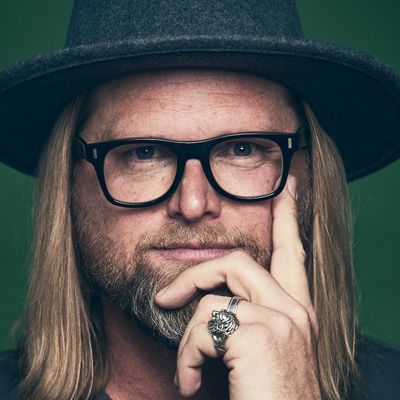
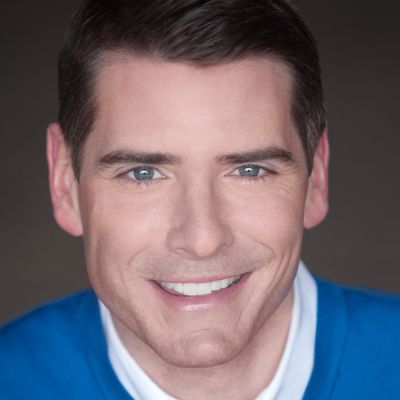
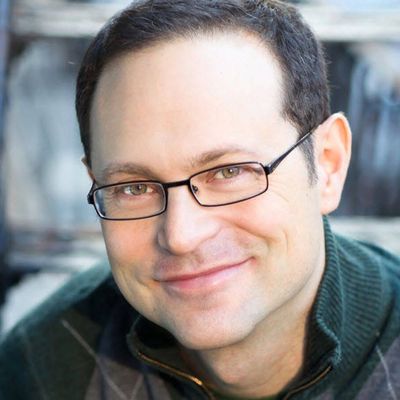
“Unruly Heart” isn't only the name of a song… it has transformed into a global movement with The Unruly Hearts initiative. The Prom team Matt, Chad, Bob, and Adam share stories about the original creation of the songs and what they hope audiences will take away after hearing the score... Read More
From the show: Let's Build "The Prom": The Music, Inside and Out
Guests

Featured Shows
About
“Unruly Heart” isn't only the name of a song… it has transformed into a global movement with The Unruly Hearts initiative. The Prom team Matt, Chad, Bob, and Adam share stories about the original creation of the songs and what they hope audiences will take away after hearing the score.
Transcript
This transcript was automatically generated and might contain errors.
[0:09] Bob Martin: Hi, I'm Bob Martin. I'm uh co-book writer, co-screenwriter of The Prom.
[0:13] Chad Beguelin: Hi, I'm Chad Beguelin. I'm lyricist and co-screenwriter of The Prom.
[0:17] Matthew Sklar: Hi, I'm Matthew Sklar, composer of The Prom.
[0:20] Adam Anders: I'm Adam Anders, producer and executive music producer of The Prom.
[0:24] Gordon Cox: Hi, I'm Gordon Cox. I am the contributing theater editor at Variety and the host of Variety's Stagecraft Podcast.
[0:31] Gordon Cox: I wonder if we could talk a bit about some of the songs in detail. First of all, I wonder if we could talk about "Unruly Heart," which has become sort of an anthem for not only the show, but it's also the name of this initiative that two of the stars of the film, Joel and Pellman and Ariana DeBose, launched to direct folks to organizations that support LGBTQ plus youth. Um, what uh tell me tell us about uh what role that song uh you know fills in the story and uh how it what it means to you.
[1:04] Matthew Sklar: I'm into lead with this unruly. You know, we wanted it to be a song that the character wrote herself and really was about her experience sort of coming to accept herself. And um the idea of an unruly heart came to me, and I thought, well, that's kind of interesting. You know, you can't control it. You can't you try and you try and you just keep failing until you realize you should just uh let it be the best thing about you. Um, and so I don't remember if it was lyrics first or music. I had a I had the tune first. I had the tune first, but I don't know if I had the bridge yet. But I but I what I remember is I wrote the tune first. Um and we had a version of it that we were all pretty happy with, and we did that out of town in Atlanta.
Um, and then uh we had another workshop lab after after Atlanta. Um and Casey said he really likes the song, but something is missing. And he just asked me if I come up with a bigger vocal build um towards the end. And can you please do it before lunch? I remember that. Um and uh so I remember running downstairs with Mary Mitchell Campbell, our music supervisor, and just trying to figure it out. And then and then we felt like we had it. And then we ran upstairs and taught it to everybody and we presented it to Casey and he was sobbing, and everybody in the room was sobbing, we're like, Oh, okay, that that was a great moment. Um, and I'm so glad you know he pushed us to do that because it made it better.
And that's what makes him a great that's what makes him a great director. He just keeps pushing you to make it constantly better, even when you think it's wait, what's wrong with that? Oh, he was right. It was I'm glad we did that final push because I think that that final um, you know, that acapella chord when all the kids are singing, it's just so powerful and it makes me emotional every single time I hear it. And to me, that that song is you know very much the heart of the movie and and the Broadway show.
[3:17] Chad Beguelin: Um for me, anytime I see any version of The Prom, either on stage or on film, the song that is on a loop in my head for the following, I don't know, two weeks is "Tonight Belongs to You." And uh that that number, which is the eight minutes of it.
[3:27] Matthew Sklar: Yeah.
[3:31] Chad Beguelin: I mean, yeah, it goes on and on. But that's such an interesting song in that it is uh it is such a sort of lively uh song and feels like this, you know, feel good empowerment anthem that then gets subverted uh by the end of it. And I wonder uh tell me a little bit about the creation of that. And then Adam, I feel like that song in particular gave you a lot of leeway in terms of how big you could go in terms of creating a sound and uh and a drive for that piece.
[4:23] Adam Anders: I I remember it taking a long time to write because there were so many elements, and it was quite frankly really cinematic when we were writing it for the stage because it was going to so many different places. Um, and it needed to be a melody, a lyric, and a chord structure that would feel right for Barry, and then also right for the kids. Um, and then we needed a section for Mrs. Green, and for some reason I just felt like she should sound like a plucky Tupperware lady. So I just did a kind of a pizzicato strings thing for her. And I remember really enjoying that. And by the way, Carrie Washington sounds amazing doing that, and I had no idea she could sing like that. Um, but it was all it was all really fun to write, but it was a huge puzzle.
Um, working with with uh, you know, Chad and me, and then and then Casey working with Glenn Kelly to figure out what the dance music was, and and and it's yeah, I think on stage it's like seven and a half minutes or something like that. Um, but it was really it was a tough nut to crack. It was also lyrically, uh, I wanted something that would keep changing. So it's "Tonight Belongs to You, Tonight Tonight Belongs to Me, Tonight Belongs to Us, Tonight Belonged to Them," you know, so that it kept the ownership of that prom kept getting passed around and and sort of changing it at at each stage.
[5:35] Chad Beguelin: Right, right.
[5:36] Adam Anders: Yeah. And and then Adam, did you have fun with uh blowing that song up?
[5:41] Adam Anders: It actually was a lot of fun because I love how many movements there are to it and how it keeps changing and switching gears. And um, you know, yeah, and Carrie was a revelation. I think when she sang that, that's when we started trying to figure out how where we can shove her and everywhere else.
[5:54] Chad Beguelin: Yeah.
[5:54] Adam Anders: And I don't know if I've met an actor that loves to sing more than her, just the sheer joy of singing and how much it means to her. Um, so it it meant a lot to us to try and find more things for her to do. Um, but that's a side note. Um, but yeah, she sounds so good when she comes in there. I love it every time. Uh and I think the biggest uh transformation uh from you know the original to this version is is the big, you know, the what we call the sad prom or the the big prom or the the fake prom. I don't know which prom there's so many proms there's so many proms.
[6:25] Chad Beguelin: That prom.
[6:26] Adam Anders: I call it the mean prom in my head, but sad prom.
[6:29] Chad Beguelin: The mean prom.
[6:30] Adam Anders: Yeah.
[6:30] Chad Beguelin: No, sad prom is uh the sad prom is literally stuff.
[6:33] Adam Anders: Yeah, yeah.
[6:33] Chad Beguelin: Now she was screwing me up. Uh mean prom let's call it that.
[6:36] Adam Anders: Evil prom.
[6:36] Chad Beguelin: That's even better.
[6:37] Adam Anders: Yeah, yeah, yeah. But that needed to just be huge, right? And and uh and but then it had to feel which this was one of the things we were able to do that you probably couldn't do because you had like three minutes probably in the studio on Broadway. We got to program something for the kids, you know. It's like there's no time. Whereas we could do like a full-on EVM, you know, uh skirlics or whatever, you know, what is the DJ do who's actually DJing this prom, you know, and what would that sound like for kids today? And that's what we really dug into. And we spent actually probably the most time on that dance break than we did um on and then building to that final chorus and then finding the sound of that.
You know, we we recorded that the group uh that sings that last chorus at Henson, which is you know, the We Are the World room uh in LA, uh the best choir room in the world. So it just could sound huge. Again, it's like you know, with Netflix supporting us, we could do those things. Like I'm like, this is what I want to do. I hear this in my head, let's go there. And they're like, okay, you know, which was really fantastic. So it was just fun to just keep building that thing until it's just massive at the end. Um and then it was never big enough for Ryan, of course. And I went on the stage mixing, and he's like, It's not big enough, make it louder. I'm like, my ears are bleeding. Like, how much louder can it be? I mean, I swear he's deaf. He's gotta be deaf.
[7:57] Matthew Sklar: Um, and then uh I feel like "Tonight Belongs to You" is connected to "Time to Dance" in my head. I sort of think of "Time to Dance" as the reprise that actually achieves the thing that we all thought uh, you know, "Tonight Belongs to You" actually was that uh that closes both the film, you know, before the original music comes in and uh and the show.
[8:17] Chad Beguelin: Yeah, I mean, I don't think of it that way because uh "Time to Dance" is even longer than "Tonight Belongs to You."
[8:23] Adam Anders: Oh like either two really so no, we did not approach it that way, but obviously it kind of is a reprise for every song in the movie in a sense. Um and uh, but we thought of it as its own animal um when we when we attacked that one. But I don't know how you guys feel, but yeah, I mean it was definitely uh a response to uh the act one finale, but it was also so much information happens in that song, both in the lyrics and in the little scenettes that happen in it. So it's really we're trying to sum up everybody's story and big thing. So it was it definitely went through a lot of different uh versions till we finally landed with this.
[9:02] Chad Beguelin: Yeah.
[9:03] Adam Anders: And for the film, uh the scenes happen in different places. And I think one of those things was majorly thrown at you at the last second, Adam.
[9:11] Adam Anders: I I vaguely remember that that you were in hell that day, but you I mean figured it out beautifully. And I think the flow of it, which is quite different than the Broadway version, really works beautiful on film with Carrie returning, which which is a big change. Um, but it's very emotionally satisfying, both musically and dramatically.
[9:29] Chad Beguelin: So I was really happy with how that that happened, and it was it was a last minute change from what I remember.
[9:34] Adam Anders: There were a lot of last minute changes on that one. One that happened right on set where I did a massive edit on set.
[9:39] Chad Beguelin: Yeah, yeah.
[9:40] Adam Anders: Which completely threw everything. And the funny thing is the next day I was supposed to fly to London to record the orchestra on all the songs, including that one. So I'd already done the score for it. We'd already done the charts, and now I'm doing this massive edit. And then we realized I'm like on the plane, and I get an email that we need to add something else. And I'm like, oh my gosh, like what are we gonna do? It was a complete cluster. So then I ended up doing like three different versions of it in London. And then of course, all three of those didn't work once we got an edit in the editorial. So then we still had to redo it again. So it was a really difficult one to figure out because like you said, the scenes kept moving constantly, and they required different score.
[10:17] Chad Beguelin: Yeah.
[10:18] Adam Anders: So it was just like, so you they would just kind of lift one section and drop it in the middle of the song somewhere else. I'm like, that doesn't work. It sounds fine, just put a crossfeed on it. Like it doesn't matter. It was horrendous. Uh and I sent an email to Matt, don't worry, I'm fixing it.
[10:35] Chad Beguelin: Yes, yes.
[10:35] Adam Anders: And you did. And you did fine.
[10:38] Chad Beguelin: Thanks for noticing.
[10:40] Adam Anders: But in addition to these, you know, great big numbers that do a lot of work and involve basically the entire cast of uh the film. Then you also have these numbers that are sort of real uh, you know, kind of star turns. I think particularly of Meryl Streep and James Corden's for their individual numbers. I wonder if you could tell us about what specifically surprised you and uh thrilled you about what each of them brought to you know, Meryl for "Ladies Improving" and James for "Barry's Going to the Prom."
[11:11] Bob Martin: Well, the first time I heard Meryl sing "Ladies Improving," I was just blown away. I had no idea, you know, she had that belt and she really has it. It was just amazing watching her work. You know, I heard the her, you know, uh I heard the pre-record, but then watching her shoot it on set. Um, I was there that day, and every single take she does is different, and every single take is brilliant. I mean, she gives the editor so much to do. I don't know how they make their decisions, because it's really remarkable watching watching her work and and work through song. I mean, she's a great interpreter of song. She's really just just wonderful. And and James is an amazing, he's a great singer. And you know, I I love that uh, you know, I didn't know until I heard it that he was gonna pop up the end of "Barry's Going to Prom" going up to the high G on Barry's going to prom. And that was just made me very giddy. Yes, Barry. Look at me, Mom! Barry's going to that was just so so great.
[12:41] Chad Beguelin: But they're both, you know, they're both stars for a reason. They're just world consummate performers, just world class.
[12:48] Adam Anders: The thing the hardest thing with Meryl was like you just said, Matt, that she every performance is different. Um, so pre-recording her and locking her into something was problematic in a sense. Because she hadn't she hadn't fully uh visualized the scene yet.
[13:05] Chad Beguelin: Yeah.
[13:05] Adam Anders: So we had to work through that with her, and and I spent a lot of time on that in particular because she's still creating the performance, right? So she's like, Well, how can I sing it this way if I end up maybe doing it that way? And it was just kind of that back and forth. Well, I remember when we were shooting "Ladies Improving," she said she announced to everybody that she's like, I'm gonna be re-recording the audio for the first two lines, and I'm gonna be performing it, so it's not gonna match. Don't worry about it. I know what I'm doing. Something like that. Like, except we ended up keeping the original.
[13:32] Chad Beguelin: Oh, fantastic.
[13:32] Adam Anders: Yeah, but you can edit that out, Dory. We changed something else. Um but the fact that we gave her that flexibility.
[13:40] Chad Beguelin: Yeah.
[13:41] Adam Anders: So it was like, you have the freedom, do whatever you want, we will figure it out later.
[13:45] Chad Beguelin: Right.
[13:45] Adam Anders: And then once we had the edit, then we could look at it and go, that no longer works. And it wasn't necessarily what any of us thought would work or wouldn't work. So she was right, she just misplaced her statement.
[13:58] Chad Beguelin: But uh yeah, it it was amazing actually how much just stayed the same.
[14:04] Gordon Cox: Thanks for listening. This has been a production of the Broadway Podcast Network in association with Netflix and Sony Masterworks. Be sure to watch The Prom on Netflix and grab the soundtrack everywhere streaming music is found.
[14:23] Gordon Cox: It's time to dance!
© Broadway Podcast Network, All Rights Reserved