

In this special mini episode featuring bonus interview footage, Holly and Chris chat with six of the talented performers who have played Carrie in the landmark productions of this legendary show, and find out what it’s like to bring to life this iconic character to life on stage... Read More
From the show: Out for Blood: The Story of Carrie the Musical
Guests
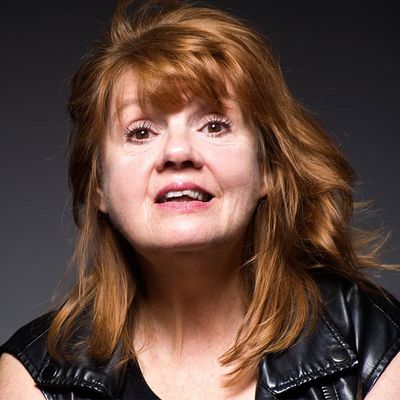
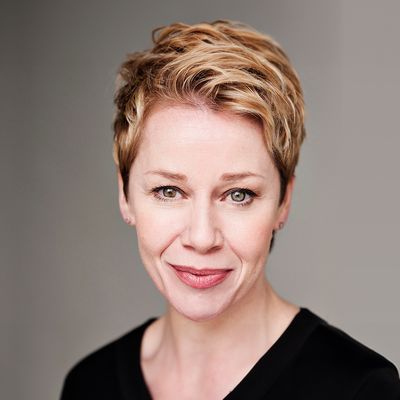
About
In this special mini episode featuring bonus interview footage, Holly and Chris chat with six of the talented performers who have played Carrie in the landmark productions of this legendary show, and find out what it’s like to bring to life this iconic character to life on stage.
Featuring Annie Golden (workshop production), Linzi Hateley (original Stratford and Broadway production), Molly Ranson (off-Broadway revival), Keaton Whittaker (Seattle), Emily Lopez (La Mirada/Los Angeles) and Evelyn Hoskins (Southwark Playhouse, London).
Join us on our social channels and share your feedback!
Out for Blood is hosted by Holly Morgan and Chris Adams, edited by Tom Moores, with original music by Odinn Orn Hilmarson and artwork by Rebecca Pitt.
Out for Blood is a proud member of the Broadway Podcast Network.
NEW! Chris's book Out for Blood: a Cultural History of Carrie the Musical is out now! You can order now from the publisher or all good book stores. You can now also order OFB t-shirts, hoodies, totes, stickers, pins and more here!
Transcript
This transcript was automatically generated and might contain errors.
[0:00] Holly Morgan: Welcome to this very special bonus episode of Out for Blood!
[0:27] Chris Adams: We just couldn't stay away!
[0:29] Holly Morgan: Over the last year, yes it has been a year, we've spoken to nearly 70 people connected with Carrie the Musical since its earliest days. We had so much brilliant, unused interview footage that we thought some of you would like to hear more from the people who've played a part in the Carrie story over the years.
[0:43] Chris Adams: Because, turns out, from the wonderful reception that we've been receiving from you all, we're not alone! We're not alone anymore! In our obsession with this musical!
[0:56] Holly Morgan: I'm glad that we got the audition out of the way early! And who better to tell us all about Carrie than all of the performers who have played Carrie in Carrie the Musical so far.
[1:08] Chris Adams: Six Carries for the price of one, like Musical Theatre Matryoshka. And feel free to skim back through the last ten episodes to hear even more from these marvellous ladies.
[1:16] Holly Morgan: Let's go back to the very beginning!
[1:18] Chris Adams: Oh, okay, great!
[1:19] Annie Golden: Hi everybody! This is Annie Golden, the first Carrie ever! Yes, the Carrie Musical Workshop!
[1:33] Annie Golden: I was approached about doing the Carrie Workshop by the writers in 1986. And that's what they said, they said, we're doing a musical, the movie Carrie, and so I was like, oh wow! And I never thought the lead or the title role, I just thought, yeah, I'll be, sure, I'd like to be one of the teenagers, you know, and then they said, we'd like you to be Carrie.
[1:57] Annie Golden: So right away I started doing my backpedaling, you know, caveat of, well, I don't read music, and I do everything by ear, and I'm not really fast, I'm not quick, and if there's choreography, it takes me a while to catch up, and they're like, oh no, you'll be fine, you'll be fine. And so I was, but I always had to say that, and now, now people, they look at me, like incredulous, they're like, you know, but you've had a career for 40 years on Broadway, dancing with choreographers, you know, but I still say it, you know, my voice would go and go and go and go until it couldn't go anymore, and then Dean Pitchford was the one who gave me this device where he said, when you're in the closet, and you're singing, when you have to, you know, our father who art in heaven, he said, when you have to cover your ears, and he helped me find a head voice, which I didn't know, you know, so it was a learning process, and it was a helping process, and it was really just a learning curve, and it was wonderful, and there was a device of, you know, the mirror, and I remember, in the girls' room, and I remember Laurie over my shoulder, singing to me, you know, it was just so beautiful, and then singing with Maureen, and you know, as mother and daughter, and it was a real feather in my cap, too, because, you know, I was just shooting from the hip, and doing the best I could, and trying to get over, and Maureen, who was, you know, very trained, and the other kids who were trained, they were taken with me, so I knew I was on the right path, and I wasn't making a fool out of myself, you know, which was great to know, which was good to know, but it's wonderful to be part of something, and now that it's, the tide has turned now, that it's, it's iconic, Carrie, you know, so to be a part of that is, when I got the recording of the workshop, I don't like to listen to myself, it's hard for me, but when I gave a listen, I didn't hate it, I didn't cringe, I, I kind of was moved to tears by it, that it was, look how far I've come, and, and I thought that I wasn't given this opportunity because I wasn't worthy, and listen, you know, it wasn't that, you know, it was validating.
[4:43] Annie Golden: It took a while after this workshop to attract producers and vital funding to mount a major production of the show. When British director Terry Hands came on board, he settled on the idea of a half-British, half-American cast and production team. Auditions in London led to an incredible discovery, 16-year-old Linzi Hateley.
[5:01] Linzi Hateley: Hello, my name's Linzi Hateley, and in 1988, I played the part of Carrie. I did, I did Chess, the concert once, and we had to go around, and I went, hello, my name's Linzi Hateley, and I'm playing the part of Elaine Page. The weekend we spoke to Linzi last year was a busy one. The following day, she was recording an online Carrie reunion hosted by Seth Radetzky.
[5:17] Linzi Hateley: Yeah, I mean, I think maybe if there's anything good that comes out of this strange time that we're living through is that it does maybe give people the opportunity to reminisce a bit and look at life and reflect, and yeah, things like this seem to be happening, and it's a strange one for me that it's all happened within one weekend, so it's a real full-on Carrie thing, but actually, I talk with Kenny a lot because we're practically neighbours, and it's always been, you know, a very, I don't know, a big talking point for us, you know, we're passionate about it in different ways, and it's a big part of me, so yeah, I'm now proud of it.
[6:10] Holly Morgan: Well, that's important, I think, isn't it? It took a long time.
[6:14] Chris Adams: We heard all about Linzi's audition for the show in episode two, but here she shares a bit more detail.
[6:16] Linzi Hateley: Yeah, well, I was at a theatre school, Italia Conti, and I'd just gone into the student course. I was 16, and there's an agency attached to the school, and I'd been a junior there for a few years, and I never got put up for anything, you know, I was just one of those sort of, there were some really cute-looking kids that got work all the time, and I just wasn't that, you know, I was kind of a gawky, sort of chubby teenager, but I sang very well, you know, my voice actually for a young youngster had developed quite early, and it obviously, you know, was getting quite an impact within the school, but I never got any work, and then I got called up to the agency, and they said, we've got an audition coming for you, and I was like, oh my god, an audition?
And it's for Carrie, the Stephen King novel, Carrie, and I just sort of thought, I didn't really think, I didn't really think a lot in those days, to be honest, I was just delighted that I'd even made my way up to the top floor to the agency, because, you know, I'd sort of never been up there, and they said, you're going along to the London Palladium, and you need to get yourself some dance gear, and a song to sing, and so I didn't really know exactly at that point that I was going for Carrie, I just knew I was going for Carrie the Musical, and I went along with my leg warmers, and the whole outfit, probably even a headband, knowing me and my big 80s hair, and I remember very, very clearly standing on the London Palladium stage and thinking, my god, if I, you know, I've died and gone to heaven just actually before I've done anything, and I learnt a routine with all these phenomenal dancers, and they were all quite a bit taller and a lot thinner than me, but I just went with it, I just thought, well, you know, maybe they're looking for all different shapes and sizes, and we learnt a routine to Michael Jackson's Bad, and they blasted it through the sound system, and it sounded amazing, that I can almost remember the routine, and then I either was called back the next day, or it happened at the same time, it's a little bit vague, but I think I came back the next day, and all the creative team were there, all the, you know, Dean Pitchford, Michael Gore, Terry Hands, Debbie Allen, and they got me to sing again, and I sang on my own, and then Dean Pitchford, and always remained such a warm and gentle person, came up to me and said, would you mind putting your hair down, and taking off your makeup, and just looking like you naturally, and I think the thing was, I was 16, and I just thought, I'm never going to be employed unless I make myself look as old as possible, so I kind of put the hair up, and put lots of makeup on, and put my heels on, and tried, because I thought that that's probably what was necessary, because I didn't know what I was doing, and so I came back, I took all my makeup off, I sat in this dressing room, where there was a lot of the other girls that were, and I seem to remember Sally, Sally rings a bell, because I just remember thinking, God, she's fierce, and I remember hearing her, and thinking, oh my God, she's just amazing, and seemed to be so confident, she might not have been, but she came across so confident, and so, you know, feisty, took my makeup off, went back in, sang on my own again, and there was a noticeable excitement within them, I didn't know what that meant, but then they said, right, can we teach you a bit of a song, and they played, doesn't anybody ever get it right, Carrie, and as soon as I heard that, I was just like, this is amazing, this is absolutely amazing, it just, for me, I instantly connected with it, and I just thought, I know what, I know what this, this feels right, so I sort of learnt, I learnt quickly in those days, I can't read music, still can't, but I think I've got a good ear, and so I learnt it very, very quickly, and they said, right now, now do it again, and really mean it, like, you know, this is, and so I just blasted it at the park as much as I possibly could, and there was a sense of something, something felt, felt good there, and that was it, and I went home, and I thought, well, that was mad, that was, that was just mad, I didn't go home, I went to my Young Women's Christian Association, which is where I was staying at the time, and I sort of, with my friends that I was, you know, studenting with, I said, I've just had the most surreal day, you know, it's been amazing, I've met Debbie Allen from Fame, and I've done this song that was amazing, and I think I took the music home with me, and someone sort of said, oh God, this does sound really good, and then I went into college the next day, and I didn't hear anything all day, and I just thought, oh, well, maybe that's it, and it was just an amazing, amazing moment, and then in the afternoon, it was actually, ironically, it was my 17th birthday, and I was called up to the agency, and I walked all the way up to these flights of stairs, and I thought, I hope it's not bad news, because it's my birthday, but anyway, and I walked in, and I was given this card, and I opened it, and it was a birthday card, and it said, happy birthday Carrie.
[12:03] Linzi Hateley: As we heard from the cast, some of the scenes in the show featuring Lindsay and the other high school girls were pretty harrowing. There was no acting required, there really wasn't, I never, I can genuinely say that my whole experience of Carrie was just based on instinct and reaction, you know, I just reacted to whatever was given me, because it was very unpleasant, it just wasn't very nice. Obviously, further down the line, I mean, the people that have played Carrie since have more experience, and I think, you know, in hindsight, I think the nature of the piece, and maybe the effect that it's had on me over the years, I think actually, you probably could do with someone older who looks younger, like Evie, who did it, you know, at Southwark, and stuff like that, but as a 17-year-old who is still growing and learning, I think actually, it was actually quite, you know, quite a, well, just a sort of traumatic, you know, I was playing the part and feeling the part.
[13:10] Holly Morgan: Looking back, what does she think about being part of this infamous show?
[13:15] Linzi Hateley: You know, there were so many, so many potentially good things about the experience, you know, I mean, the fact that it was offering an opportunity for Brits to work in New York and Americans to work, you know, those sort of things didn't happen in those days, and I think
[14:00] Linzi Hateley: I was given the role of Eponine in Les Miserables in the West End. It was the start of a long career in musical theatre.
[15:14] Chris Adams: Of course, after the show drastically closed in 1988, there was no official production of Carrie until the reworked, contemporised version which opened off Broadway in 2012.
[15:27] Molly Ranson: Hi, I'm Molly Ranson and I played Carrie White in the 2012 revival of Carrie. I think I'd actually recently watched the movie because it was around Halloween when I had my audition. I was getting, you know, the Halloween spirit watching my favourite scary movies. And then I got this audition like soon after for Carrie the musical and I was like, Carrie the musical. That sounds like a crazy idea. But yeah, I learned the music and I thought it was like, whoa, this is interesting. This is cool. I love that character like from the movie. Like I mean, Sissy Spacek is so amazing in her portrayal of that role. And I just I like playing like weird, weird people. So I don't know. It just kind of like, oh, I want to do that.
That would be a fun role to do. I think it would have been impossible for me to not have had Sissy Spacek kind of like as the inspiration for what I was doing, at least in some kind of way, influencing me in some kind of way. Because, I mean, I just always feel like she's the iconic Carrie in my mind. But I don't know. I think that I just kind of like how you approach any role. There is something, I don't know, within that role that I kind of connected to. I mean, I haven't had similar life experiences as Carrie, thankfully. But, you know, like there there was just something about her, like the kind of like the fragile quality to her, the sensitivity and that kind of like hidden power that I really identified with and tried to bring into my audition.
[17:08] Molly Ranson: So for me, it was the dramatic conclusion of the show, which sticks in my mind as a highlight. I mean, I loved doing the destruction. I really loved it. It's so satisfying, you know, after like all of this like kind of stewing energy and tension and like holding it all in to like be able to like have this cathartic release. It feels incredible. You know, it's so satisfying and also like very intense and it shakes you up. But it feels like a release. And I always loved doing that part of the show. I loved singing that part of the show. Being a part of bringing Carrie back to life was hugely exciting for me, Stafford and the rest of the Off-Broadway company. That updated version of the story became the official licensed edition of the script, meaning that for the first time, schools and community groups all around the world could stage the show themselves. To know that like, you know, schools are still doing this all over the world. And like it's just it's really awesome having them do the version that they'd always dreamed of. It's pretty cool.
[18:10] Molly Ranson: I have seen, I've done various like master classes and things like that over the years. So like I'll sometimes get to see, you know, little bits of Carrie. I think I saw a production at NYU and I think that was the first one that I saw. And it was really, really moving to go and see this group of people like bring it to life and to be, you know, like reliving this thing that I had experienced and was such a huge part of my life for years.
[18:47] Chris Adams: Now that the writers had a version of their show that they were finally satisfied with, other creative and innovative productions sprang up around the world. One of the first in Seattle starred Tony winner Alice Ripley as Margaret and Keaton Whittaker as Carrie.
[19:01] Keaton Whittaker: I was new to the Carrie story when my friend, director Lewis Hobson, approached me about taking on the role. I had done. It was the year before my audition for college. So I sang. Oh, my God, I'm blanking on the song. I'm Not Alone, which is cut actually from Carrie, which I'm sure you guys know. But I was singing that was the only thing I knew about it. And it was really just my friend, Lewis, who directed it, just like approached me about doing it. And that's all I knew from it. It was like a cut song. She's like a really misunderstood, like sad. Her mom's a crazy Christian. And so she like has like just really sheltered and very like just kind of a strange high school kid, like very lonely, kind of a loner. And then she discovers halfway through the show, not even in the beginning of the show, that she has telekinetic powers. And then, yeah, everyone's like she's very bullied and very angry.
[20:05] Keaton Whittaker: I remember like being really exhausted, like the whole process. It was really like. Yeah, I was exhausted and I like it. It's crazy to me. I think we did like I didn't do eight a week, but I think we did like six or seven a week. That's a really tough thing. I think it would even be tougher for me now just because I'm a little bit older and like settle into it a little more. I don't know. Can you imagine? I would love to do it. I would love to do that show again. Honestly, I always say I think it's a really interesting I'm an interesting pick for the part. I wouldn't necessarily like put myself in it if I thought if I was like someone told me I was going to do that show, I would put myself as Chris almost every time. And yeah, I really would. I think that's like more of the type that I've kind of come into. But yeah, I don't know. I think I think I'm an interesting pick for it, I will say. But I really, really enjoyed doing it was really challenging.
[21:01] Keaton Whittaker: So the creators of these new productions were also discovering the importance of venues for their new interpretations, where the original show had been staged in a cavernous Broadway theatre. Directors were now experimenting with intimate and immersive spaces. So we got to do it in this really awesome old theatre called The Moor in Seattle. And it's like huge and really haunted, apparently, and like very, like really cool for like the aesthetic of our production. It was like it's just like and also gigantic, like a huge theatre. So, yeah, it's awesome. There are really cool people in it. There was like some people like some kids like my age that were like a lot of the ensemble was like teenage of actual teenagers. And then people like Alice and Kendrick Haspel played Miss Gardner. And it was awesome.
[21:43] Emily Lopez: If the spooky theatre in Seattle was appropriate for the Carrie story in California, director Brady Schwind went one step further, rechristening the show Carrie, the killer musical experience and fully immersing the audience into the story. I'm Emily Lopez and I played Carrie in the L.A. production of Carrie. Just inches away from audience members who are physically moved around a high school set. It was an intimidating and often uncomfortable role for me.
[22:06] Emily Lopez: Well, you said when when you said the word uncomfortable, it kind of just encompassed so much of what that whole experience was like it, especially with the way it was arranged with people being so close. I mean, honestly, for like, I don't know how long it took. I thought I had like magic powers when the show was done because it's just Carrie is like a spirit that just pervades everything. It's like the darkness, the fear, the like the confusion of like trying to organize these kind of different beliefs or things that are actually happening. Or, you know, in a world where in a real world where our world is, you can convince yourself that anything is possible. So that was what was so amazing about this show.
It was just like like it was so crazy. I just was like hearing the Margaret and Carrie songs and and so many parts would just stuck to me so hard that I, I just thought like I have to do this show. I don't know if it would ever happen or like, but I have to sing these songs like I have to do this. I have to do this. And I mean, I grew up in a house with like extremely scary religious. Like my grandmother was like that, like not just extremely religious, like very mentally ill. And that was my life. And it was just and I guess I knew Carrie. I knew the movie. I knew all of it. But after that, it just was different. Like something changed. I mean, they really did something really special. But I guess I'm biased because like our our show was like real.
It was like reality because you could never like, especially in Los Angeles, you were never away from the audience. So the whole from beginning to the end of the show, like it was all Carrie. Like there was no there was no offstage moment of like, oh, I'm me. Like, what do I need to get ready? It was all a part of the story. Every moment that was like, I mean, chills like that. I'd never had that before. And I thought it was really scary. Like I was so excited because when the lights went off in that production and and it just was like, wait, what's going on? Like I was scared. And that even to me felt immersive already.
[24:40] Chris Adams: Around the same time, an even more intimate staging was being mounted right here in foggy London town at the Southwark Playhouse. One of the first interviews we did was with Evelyn Hoskins, the first British Carrie since Lindsay's original interpretation.
[24:53] Evelyn Hoskins: Carrie's first song is Carrie, which is like five minutes of like just it's a rollercoaster, a marathon of a song. And, you know, I don't know. I guess I just got on it like you would a rollercoaster and you just ride it and you sit in each moment. But with Carrie, it really did like take over my life, like in a way that a role had never done before. And I would I would finish the show covered in blood and I would shower, go home, I'd go to bed and wake up at like midday. I'd have maybe one meal and then I'd do the show over again. Like that was like it was so like all encompassing and not in a bad way. I didn't ever feel like unsafe. And as with all our Carries, this was a role that I would never forget.
[25:45] Evelyn Hoskins: Oh, for me, honestly, it is probably the highlight of my career so far. It was a dream. It really was. It's just it's just such a great role.
[26:00] Chris Adams: You've been listening to a special bonus episode of Out For Blood. Out For Blood is a proud member of the Broadway Podcast Network. For more information about us and the podcast, please visit us online at bpn.fm slash Out For Blood. If you enjoyed Out For Blood, leave us a review on Spotify, Apple Podcasts or wherever you downloaded from. And don't forget to subscribe just in case. And join us on social media for lots more Carrie content. Find us at Out For Blood podcast on Instagram and Facebook and Out For Blood pod on Twitter.
[26:25] Holly Morgan: Out For Blood was hosted and produced by me, Holly Morgan.
[26:27] Chris Adams: And me, Chris Adams.
[26:29] Chris Adams: Sound engineering and editing by Tom Moores.
[26:31] Holly Morgan: Paddy Jervis is our audio consultant.
[26:33] Chris Adams: Original music by Odin Orn-Hilmarsen.
[26:35] Holly Morgan: And artwork by Rebecca Pitt. Thanks this week to all those Carries. Annie Golden, Linzi Hateley, Molly Ranson, Keaton Whittaker, Emily Lopez and Evelyn Hoskins. Thanks for joining us for this special bonus episode. Are we finished yet? Maybe just keep a little eye on your feeds for something extra in the near future. See you soon. Bye.
© Broadway Podcast Network, All Rights Reserved