

With many shows now back on stage, three of Broadway's newest senior appointments in the world of Equity, Diversity, and Inclusion (EDI) join host Ollie Southgate to discuss their experiences, intentions and expectations in their new roles and the kinds of change they hope to bring about across the industry... Read More
From the show: Putting It Together
Guests
Featured Shows
About
With many shows now back on stage, three of Broadway's newest senior appointments in the world of Equity, Diversity, and Inclusion (EDI) join host Ollie Southgate to discuss their experiences, intentions and expectations in their new roles and the kinds of change they hope to bring about across the industry.
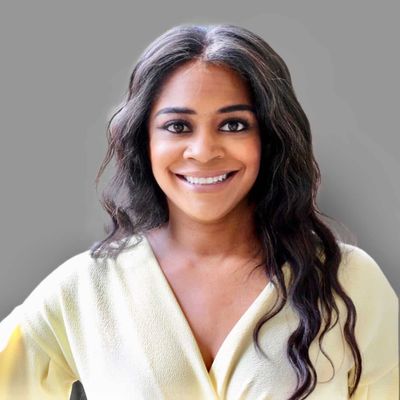
With Christina Alexander (Director of Social Responsibility at WICKED), Chloe Beck (Director of Equity, Diversity, and Inclusion at MOULIN ROUGE: THE MUSICAL) and Gennean Scott (Director of Equity, Diversity, and Inclusion at the Broadway League).
Transcript
This transcript was automatically generated and might contain errors.
[0:08] Ollie Southgate: Previously, on Putting It Together.
[0:11] Ollie Southgate: Hundreds of actors and members of the theater community are blacking out Broadway to protest what they call the industry's long-standing history of racism, abuse, and inequity.
[0:20] Ollie Southgate: They say the show will not go on until they feel safe both on stage and behind the scenes.
[0:26] Ollie Southgate: My hope was that we close down Medea and we're opening back up in The Sound of Music.
[0:31] Ollie Southgate: I want it to be a completely different show.
[0:34] Ollie Southgate: Those rallying want their union, Actors Equity Association, to be more transparent about dues.
[0:40] Ollie Southgate: Are you putting it into BIPOC organizations?
[0:42] Ollie Southgate: Are you putting it into helping trans lives matter?
[0:45] Ollie Southgate: Are you putting it into the deaf and disabled community?
[0:47] Ollie Southgate: We can't go back to the same American theater industry that we were.
[0:52] Ollie Southgate: I have never seen a time in which our industry has been so coalesced around one idea.
[1:00] Ollie Southgate: And that idea is that we have to change, and we will change.
[1:12] Ollie Southgate: Why does the same thing not apply to black lives?
[1:17] Ollie Southgate: Hello there, I'm Ollie Southgate, and from the Broadway Podcast Network. This is Putting It Together. Since our last episode, what's happened on Broadway? Uh, nothing really, just two years of the lights being dimmed on Broadway. Welcome back to the theater. Broadway is back. Have we mentioned that? I couldn't imagine being anywhere else. This industry has meant so much to both of us. I know that, and has been so life-changing, and it was really important to me to be a part of what I sort of think of as the welcoming committee. Reminding people we can do it safely. Everyone comes in their masks. They're so generous, they're so quiet. We've not had one problem. It's been amazing. It marks the biggest step so far in the return of theater to the city.
[2:12] Ollie Southgate: Broadway, you know, not the only thing that was shut down for a whopping 18 months during the pandemic, but also the famed GKTS discounted ticket booth. But both are returning today. That ticket booth will reopen at 3 p.m. Broadway. It is back. Passover, the first play to reopen since the pandemic begins previews tonight. And it is providing a much-needed boost for Broadway and beyond. Everyone who comes to see a Broadway show or works on one is required to show proof of vaccination, and masks will be required for audience members throughout the performances.
[3:15] Ollie Southgate: Between it being announced back in April and it actually happening a few weeks ago in September, a lot changed in the COVID environment. Breakthrough cases have been high, anti-vaxxers have remained vocal, and the news coverage of it all has felt as intense as ever. And it's important to add here, it hasn't entirely gone off without a hitch. Disney's Aladdin has already had to cancel a week and a half of performances due to breakout cases. At the time of recording, it's due back on stage October 14th in just a few days. But so far, that's about it. If you look at the latest data, it seems fairly likely there may be similar short hiatuses to come, and we'll have to learn to navigate those.
[3:47] Ollie Southgate: But as someone who's seen three Broadway shows in the last three weeks, the systems, they feel robust. Mask wearing is genuinely being enforced, vaccine proof is genuinely being checked. The atmosphere inside a Broadway theatre right now is electric. But for all the celebrations, there's something else about Broadway's return that we need to also stay focused on. With shows back on stage, it's the first time we can really assess whether the business is making good on certain promises it made during the shutdown. When the country and the world was forced to take a long hard look at itself in May 2020 following the murder of George Floyd, it wasn't long before Broadway was called out specifically for its history of white supremacy, its whitewashing of the art form, and the lack of meaningful action it's taken to do anything about that.
[4:24] Ollie Southgate: And for the first time, nobody had anywhere to hide from it. Nobody could claim they were too busy to make it a priority. Everyone was made to listen. And since then, well, there's been progress. Whether it's enough progress is still a matter of opinion, and I'll be getting three vital opinions on that topic from my guests today in just a moment. But first, here's what we know has happened. In the beginning, an eerie silence. The murder of George Floyd took place on May 25th, 2020. That was a Monday. The video of it taking place had made international news by Tuesday. There's growing pressure on social media, but it's not until the weekend that the statements from Broadway productions and organizations come. Actors Equity described the events as unconscionable and indefensible.
[5:10] Ollie Southgate: The company of Hades Town says they're raising their voices in support of change to fundamentally alter the systems that have led to the hate, division, and intolerance that we are seeing. Most posts shared one thing: the hashtag Black Lives Matter. And after the initial, rightful outrage at the events of that week, across the month of June, the focus moves to the wider issues, the systemic ones that allow racism to pervade on Broadway in a quiet but immeasurably damaging way. Asmerette Gebra McHale writes a piece for Broadway News on June 4th with the headline, "I'm tired of being the token Black Friend." It's incredibly well written, by the way. I recommend looking it up if you've not seen it.
[5:41] Ollie Southgate: The Broadway production of Tina holds a truth meeting where black members of their company who want to can speak to express their truth. The stage manager Cody Renard Richards starts a wave of social media posts in which non-white theatre professionals share the racist encounters they faced in the past. Broadway is a very inclusive industry. We're very open, you know, we're very big on gay rights, trans rights, women's rights, and equality. But with that said, um, racism is everywhere. It's in every art form, and as black people we experience it daily. The Broadway Advocacy Coalition holds a three-day forum under the title Broadway for Black Lives Matter. New organizations are also created, including Broadway for Racial Justice, and the We See You White American Theatre Movement begins.
[6:19] Ollie Southgate: And in the coming months, a wave of new senior appointments both on and off Broadway, including at the Broadway League, the Dramatist Guild, Second Stage, and the Shoewood Organization. The Broadway ad agency aka announces it will donate 500 hours of work to emerging independent black theatre producers. New BIPOC artistic advisors, resident directors and playwrights, and other creative roles are also announced, alongside many new shows with all or majority black companies. There's Thoughts of a Colored Man, Skeleton Crew, Chicken and Biscuits, Passover, and further ahead, For Coloured Girls and Revivals of Ain't Supposed to Die a Natural Death and The Skin of Our Teeth. Katori Hall's The Hot Wing King wins the Pulitzer Prize for Drama. The Broadway League has its inaugural Juneteenth event.
[6:55] Ollie Southgate: Over a hundred major theatre organizations, including Broadway's biggest, sign their names to Black Theatre United's list of reforms for the industry called A New Deal for Broadway. The Broadway Advocacy Coalition is later awarded a special Tony Award, and speaking of the Tonies, its usual lineup of mostly white hosts is not present this year. Leslie Odom Jr. and Audrey MacDonald take their place, and the speeches certainly follow a theme. This is the 74th Tony Awards, and yet I am only the first Latin A writer to win in this category. I say that not to elicit your applause, but to highlight the fact that the Latin A community is underrepresented in American theater. In New York theater, and most especially on Broadway, we constitute 19% of the United States population. And we represent about 2% of the playwrights having plays on Broadway in the last decade. This must change.
[8:13] Ollie Southgate: But those bodies, those souls, those spirits, they are what makes Broadway. And the second we started making this business and creating the business and working through the business through a lens of humanity and honoring those bodies and those souls and those spirits, the more the art will be transformative, the more the art will change lives, the more the art will change this world because the world has been screaming for us to change. No disc to Shakespeare. No disc to Ibsen to Chekhov to Shaw. They're all at the table. But the table got to be bigger. The list on paper or on podcast, I guess, it certainly feels long. That wasn't even all of it. Just a sample of what leapt out of me reviewing the headlines on Broadway over the past 18 months. There's no denying that some change has already happened. But there are still big questions. Is it performative? Is it temporary? And fundamentally, is it enough?
[9:11] Ollie Southgate: Three major new appointments also made industry headlines in the last few months. Three new senior roles were created, two of them at a couple of Broadway's biggest shows, one of them at its most senior hierarchical organization. These are my guests today, and we had a terrific and insightful conversation this week that I'm thrilled to share with you. So let's find out how Christina Alexander, Chloe Beck, and Gennean Scott put it all together. I am doing well, thank you. Then over the summer, two very high-profile Broadway shows announced the appointment of in-house roles. Back in July, MOULIN ROUGE brought on Chloe Beck as their director of equity, diversity and inclusion for their productions on Broadway in London on tour and in Australia. Chloe, welcome to the show.
[10:18] Chloe Beck: Thank you so very much for having me. I'm so excited to be here.
[10:21] Ollie Southgate: So excited to have you. And finally in August, Christina Alexander joined the team at Wicked as the director of social responsibility for their Broadway, West End, and National Touring Productions. Hello, Christina.
[10:31] Christina Alexander: Well, hello, hello. So glad to be here today.
[10:34] Ollie Southgate: Thank you. So glad to have you. Um, so thank you very much to all three of you for being here. I would like to start with the fact that all three of these roles are newly created ones. You're all the first people to shape what these roles are going to be and what their purpose will be in the long run. So, my first question to all three of you is what brought you to them? What's your history in the arts or in EDI? And how did your appointments uh come to be over the past year? So if we go in that same order again, we'll start with you, Gennean.
[11:02] Gennean Scott: I came to the league from Omaha Performing Arts. Omaha Performing Arts is a part of the Broadway League. So I've been familiar with uh the Broadway League in the past. Uh in Omaha, I served as the vice president of Humane Capital and Inclusion, uh, where I was I'd been there for seven years prior to to relocating here. And um, I was charged with expanding our program base, uh, not just uh as it relates to our staff, but looking at our marketing, our development, and um our recruitment and retention rate. And Chloe, how about you? What's your past experience and how did that all come together for your new role at uh MOULIN ROUGE?
[11:47] Chloe Beck: I, for my entire career, have worked in student affairs on college campuses, and after the pandemic, or during the pandemic and in multiple pandemics on black and brown bodies and queer bodies, I caught myself realizing that the work that I was doing didn't match my private work in terms of EDI space, and I wanted to be in a space where I could be all encompassing and not have to compartmentalize my work so much. And I am in love with all things media, pop culture, talent, all those things. I always have been, but I just never knew how to bridge the gap between those two worlds. And in that moment when I was just, I was like, I want to do EDI work, but I definitely want to move away from that college space so I can really impact people who might not have just a lot of shared knowledge that you typically get on a college campus.
And the stars aligned and MOULIN ROUGE came up, and it's so funny because I actually did not like the movie. I had no love for it in that particular way, but like I love music, and my partner is a huge fan. And she just listened to the cast recording. And as soon as I heard it, I was like, that's where I need to be. And the universe agrees. So I'm here. And it is just the truth, beauty, and freedom, love that that's our pillars is just like what I needed, and it feels so good to be in a place where all of it's starting to feel like it's aligned in that way.
[13:10] Christina Alexander: Truthfully, I've been in the arts my entire life since I was three, performing professionally. And so it's been something working in the arts has been what my entire career sort of revolved around with stints as a social worker or a counselor here, or so I've had work that way for a while. I was and am a lifelong learner and educator. So I've been teaching from kindergarten to university. I've taught on all of those levels, always work in the arts. And probably around 2013, 2014, I got involved in doing EDI work, and my interest was always doing specifically within the arts sector, that I felt like I'm from South Florida, and I felt like one of the challenges that we have in South Florida is that it's such a diverse place that diversity is actually our issue, and so it makes it more difficult for us to have these kinds of conversations.
And so I've been really committed to how can we have conversations about diversity, equity, inclusion, access, belonging. How can we have those kinds of conversations in spaces where we've always assumed they were already inclusive and equitable and diverse, that perhaps they weren't. So when the Wicked opportunity came up, a friend of mine saw the listing, and so she said, girl, Wicked. And so that has been sort of our joke since the process began. So when I got a second interview, she got a text much as it said, girl, Wicked. Throughout the process. So when she got the final messages, it was like girl, and in caps Wicked.
[14:42] Ollie Southgate: That's great.
[14:43] Christina Alexander: So awesome. Interesting what you mentioned there about that reputation that the theater has as kind of an artificial level of it's the place where everybody comes together and all are welcome and all are one. And it really sort of got exposed last year that that was not truthfully the case. And I mean, a lot of people inside the industry knew that already, but I think it was probably something of a shock to the people who you know were just kind of more casual audience members and things like that. What do you think it was that kind of fostered that sort of false reputation that was on the front of it?
[15:20] Chloe Beck: Since I'm the one who has the least experience of being on the other side of art, like I'm a consumer, I can say I had no idea how much it takes to get to the thing that we see on stage, which is usually where that diverse representation lives. I never thought like hmm, cast, and I never thought, hmm, director, all these other spaces, but I think the image that we so often get to see is the photo of the show or these star roles, but the reality is like our company alone is 400 people, and there's so much work that needs to be done in so many spaces, and it's not just the stage. But for people who are receiving the experience, you get what you get, it's very face value. And I don't think it was like trickery.
I just think that if you're not paying attention or really looking or wanting to know or need to know about all these other entities that it takes to put on this show, you would easily think, oh, they got it figured out, you know, and it's just not the case because it's so much more than just the people on the literal stage that makes up this experience. Part of the thing is for those who were in the arts is that Broadway was always so elite that there was such a divide, there was such an us and them. If you ever got the chance to be a Broadway performer, or Broadway was so separated that there wasn't ever a thought about how things could be less than amazing because it's all the best of the best, and the best it was always built that way.
And Broadway did a really great job of having very little transparency about what wasn't working or what some of the challenges were that may have been facing the entire industry. That when things slowed down enough that we could hear what people have been trying to yell for all of these years, everybody felt galled by what they were hearing. When I think if we're being honest with ourselves, we can all sort of recognize that it probably has been happening for far longer than the time that we've been aware of what's been happening, if that makes sense.
[17:18] Gennean Scott: I think the other thing has been that these positions that we now have they didn't exist because the business was so busy being about the business, and that business that people saw was on stage. No one saw behind the stage, no one saw the things that were leading up to getting on stage. And a lot of the folks on stage had no one to speak to because those back offices didn't, they didn't see anyone who looked like them. So they perceived that there was no one that they could talk to, or there may have just been no one that they could talk to. Broadway isn't unique to this. This is plaguing every industry. It is not just in Broadway. So I think we also need to, you know, to make that clear. But I think everyone just took a minute and said, okay, how are we doing our fellow humans harm?
And what can we do to change that? These positions were created. We know each other now, we've connected. And I think I can speak when I say that we are all committed to that change and to changing that narrative.
[18:28] Ollie Southgate: Absolutely. How much of what the three of you do sort of came in the job description, and how much of it was about showing up and saying, well, you missed this pretty major thing.
[18:39] Gennean Scott: I'm gonna start there. Well, I think we can all be pretty transparent in saying very rarely is a job description of a brand new position able to encompass all the things that are gonna need to happen. Anytime you're doing EDI work, very often the first thing you want to do is an internal assessment of some kind. So, yes, there's a job description, but so much of the work is let's figure out what's actually here so we can figure out how to do the things you want to be doing, right? So I think that that has absolutely been part of the experience here. One of the things, and I think it's been alluded to by both Chloe and Janine also, is about offering people a place to be heard that hasn't really been part of what an industry has made space for in the past.
Not just commercial, but in many ways also nonprofit theater is about product, not process. And this work is about process. Right. So it absolutely puts us in mind to say all of these things are great, and we're going to get to it in what feels like an intelligent amount of time, but there's a scaling that has to happen when we also include what we didn't know.
[19:51] Ollie Southgate: What was that initial process of finding out what you didn't know? Was it just conversations with the company? Was it interviewing people?
[19:57] Gennean Scott: I think truly what's interesting about this is in my case, I'm working with a show that's been around for several years. So there's a whole lot of discovery that gets to happen in a way that a newer show doesn't have that breadth of experience to have to dig through to figure out what's in place or what needs to be in place, or what are some of the resources that need to be there? Those are just things that we figure out as we go through the job. And so some of that is in the description, and some of that is the work that we take on because we know it's what will support the show better. It'll support everyone involved, the company better. And I think if we weren't somewhere in here incredibly idealist about changing the world, we wouldn't be in the work.
[20:40] Ollie Southgate: So absolutely. Chloe, you're actually on a show that hasn't quite had the lifespan like it has yet, but everything we know about it tells us that it certainly will. What were the early lessons when you joined MOULIN ROUGE and also I guess the early lessons, as you've already said, of being new to that side of theater and live arts in general?
[21:01] Chloe Beck: 100% everything Christina said, and I will echo the immense learning curve. Like when people are throwing acronyms, I'm like a PSM. Like what are I had to learn Broadway while trying to learn the people while trying to figure out where I fit within this space of C level exec, but for the people and just trying to figure out the nuance. I always say I'm the director of equity, diversity, inclusion, listening and nuance. Because for me, I started with a very small initiative, something that I thought would be so impactful and so great. And that helped put me in my place in the best way because when it is a position that has no book of, hey, this is how you do it, you read those books like do a 30, 60, 90, go do this, go do that.
And I'm so grateful that I caught that very early on because I know all of the work and time and attention I would have put into my process. I would have had no one coming with me because there were some things I needed to engage with that happened four years before I even knew that this would be my seat. And in doing that, it's the listening. It's the listening. Not only are there like, you know, real things that are MOULIN ROUGE specific, but we also just came out of a pandemic where some of these people sat in an apartment by themselves for 18 months, so people weren't listening to them about anything, right? So just trying to navigate the newness of new people and learning to trust and hoping that because EDI is a hot ticket item all over the world.
Are you a figurehead? Are you really here? Is my company really going to support you to do the things that we need you to do? And it was me showing up as Chloe before I was the director of anything. They needed to know Chloe Beck. They needed to know that I am in love with all of them from these same headphones that I'm using. They needed to know that I could handle the good, the bad, the questionable, all of it. And something that I'm so protective of is their trust because one of the things that is circulating around as I'm learning is that there's so much around your reputation. It blows my mind that people who, as a consumer of this content sees you as a star, but you think you're the lowest on the totem pole.
That disconnect is so massive to me. And I'm like, how? You're you sing all the songs, and they're like, well, be quiet and sing them. And I was like, I would have never thought that or known that, or know that that was their perception based on their experiences in Broadway. So I think it's great to be energized and excited and want to follow your description, but also know that there is so much space on those lines, read between them.
[23:32] Gennean Scott: Read between those lines because I don't even know where my job description is, but I know I'm making such a massive impact here, and I highly, highly doubt that it's in any of the bullets that I was actually hired for just yet.
[23:43] Chloe Beck: Right.
[23:43] Gennean Scott: But I'm so excited because now that I've gotten through that barrier, now I can bring people with me to now make the changes that will be long-lasting. And Janine, we've had a few conversations in previous episodes of this podcast about the league and sort of its role over the last 12 months and about how that perceived from the outside as this idea of some sort of overarching authority for all things Broadway, when really, you know, 90 plus percent of these decisions are made, you know, according to the wishes of a show's producer. So I guess my real question is how much of what you're doing at the league is sort of providing advice and guidance and trying to push people in a direction versus things that might be considered rules or directives that the league is sort of putting out for Broadway shows.
[24:33] Christina Alexander: A lot of it is not only providing resources and providing education, but because we are in charge of the brand of Broadway and all things Broadway, it also looks like creating those opportunities for our audience to be able to feel like they are a part of Broadway, in addition to looking at how we as a brand are represented or not represented. And so a lot of the work that I've been doing so far is listening, listening to our members and listening to the community and listening to those community advocacy groups to see what it is they'd like to see in Broadway or to happen with Broadway. And where do we go from there? We also have the unions. How do we create diversity there? And how do we educate? Because first we have to make sure that the environment is ready to be diverse. So how do we educate? And then how do we bring on that diversity? And once we do that, how do we help you all to retain the diversity that you're bringing on?
[25:46] Gennean Scott: We had Charlotte on this show last September, and I just want to quote her here and get everyone's response to something. This was yeah, September 2020. She said on this topic, I've never seen a time in which our industry has been so coalesced around one idea, and that idea is that we have to change. I believe there is a common spirit of we must change and let's get to it. There was a lot of concern last summer and fall that the big sort of awakening moment that the industry and the country had was something that only could have happened in this moment of stillness that the pandemic had brought down, and that it was very easy to say big overarching things at the time, but that the action, you know, had to be proven and had to follow.
My question is: a year after all of these things were said and done, not just by the league, but by every show and a lot of organizations across the industry, do you still feel that the spotlight is as strong on these issues, or have any of your jobs become about making sure it does remain front of mind?
[26:45] Christina Alexander: I don't see this going away. I don't see this moving to the background in any way, shape, or form. We were put here, we were hired here for a reason, and this is a journey, not a destination. At no point are we ever gonna be like, we've arrived, because people. People are people and people are humans, and we are products of our environments, and every environment is different. So we're never going to reach that point where it's like there's no more racism, there's no more inequities, and life is grand. We're never gonna get there. But we can work to get there, and we can work to get to a place where everyone is accepted and everyone is treated with respect and everyone is represented, not just on stage, but behind stage and in the administrative offices.
What we're able to see now that feels different is that now we're moving back into production, which means that that moment of stillness is starting to pass, and now we've got to figure out real ways to be intentional about the work while we are still also very much needing to sell tickets and needing to open a show. We're not just able to talk, we also have to be doing Broadway, whatever that means, right? We still have to be creating this fantastic art. However, I think the other challenge that has existed for us for some time is that we often see that, like Chloe said, equity, diversity, and inclusion has been kind of a hot topic. It means that very often folks in our positions sort of get put into places where people are ready to be in the work, ready to do, I'm ready to do, I'm ready to do.
I want to do it right now and let's get in. And like I said before, sometimes there needs to be a time of listening. There needs to be a time of assessing where are we, what's going on. And so I keep looking for where this quote came from, but I've been using it for the last couple of years, which is progress moves at the speed of patience. And in an industry that is not necessarily very known for patience, it's exactly what the work calls for. And I also like to remind people that it is a practice, meaning that we need to be committed to doing this every day, not just for a time. So echoing Janine, there is nothing performative from us about the work that we're doing. And we understand that we have to be able to move at a speed that people can remain at consistently.
We don't want to do things that's a one and done. We've ticked off some box somewhere that's probably imaginary anyway. Rather, we want to make sure we're doing work within an industry that is also helping to build community. Because I think one of the things that we've heard over the years is industry. I have almost never heard community as it relates to thinking about what Broadway is. And so that is a big part of the work here.
[29:41] Gennean Scott: And so, according to the current estimates, at least, there's just shy of a hundred thousand jobs that Broadway makes possible in one way or another. We don't have the demographic necessarily of those, but certainly on the business side, it does not take much looking around to see that most of those people are white. We do know that in the last full season, just four percent of the Broadway audience identified as black in an industry-wide survey. It was the lowest ranking of the five ethnic background group options. Does the presence of more black producers and creative teams and casts mean more shows that will put Broadway on the entertainment radar? Or does getting more black audiences to Broadway first help move the needle on the makeup of people pursuing those kind of careers and being inspired by it?
I mean, if we start with the show level again, I want to start with you this time, Chloe. Basically, what the balance is between audience diversification and staffing diversification and changing that picture as well.
[30:39] Chloe Beck: I think that's a both and and I want to make it crystal clear. People of color, black people, we know what Broadway is. We understand it, but one of the barriers to it is sometimes financial, it's sometimes not feeling welcome. So I do think that's why it would be helpful to see more people like you in spaces to kind of let you know like it is safe enough for you to at least sit there for the show. I struggle with should there be like an all black cast and all this and all that, like yes, yes, there should, but that shouldn't be the only reason because I, Chloe Black, as a black woman, have so much more admiration and love for Diana than I would a show that might be slated to be for me. So I don't want to like typecast us in that way because your interests are your interests, but I do think when you have some shows with a really certain price point ticket, like that could be your world's favorite show, but like not at the expense of Maslow's hierarchy of needs.
So I think a conversation around just like financial access and finding ways where we can potentially give back and make it more accessible is very important, but also it is extremely important to have people in those positions in those spaces creating so some of these stories can be told because we're on the other side of that. Some people don't find a story, some people can't see outside of their literal truth in the lived experience. So I think it's a both and just compassion around both of those things, right? Like I would love to give away every ticket to MOULIN ROUGE, but that will be my salary. So just trying to find that balance is so key. Not one thing is the solution.
[32:13] Gennean Scott: As we look at trends within communities in general, what Broadway offers has not been the thing that is accessible to many communities outside of what feels like a privileged few. It's the same work that I have to do in a local theater market and say what you want is to tell a story about a particular group of people and think that if you're telling that story, that's what's going to invite them to come into the space. What you haven't recognized is that from the beginning, you haven't created a space that people want to come into. So what ends up happening is we have a show that has a predominantly black creative team, a predominantly black cast, and what you will see is folks will come to see the show, but it does not change the demographic of how often folks are coming to see shows in general within the industry.
Because what we have not done is look at what are the factors that are not inviting folks to feel comfortable in the space to begin with. And I think that's one of the big challenges that we're having now, recognizing that when we think about audience development and engagement, there is a level of justice, there is a level of work that needs to be done so far before they walk into the building. And if I'm being very transparent, why do I want to be there in the first place? It's hard enough to buy a $50 ticket to see a local show. Now you want me to pay $139 to come see a show out of town. And I'm sure that's exciting for a moment, but then that's what it turns into. A moment. It does not create a lasting growth of population wanting to be in the space.
And so I think if we're doing our work, we will be doing more of the educating, but also community-related research and outreach to recognize what the needs are we are not meeting, why it is that people don't feel welcome in these spaces. So fine, you're gonna tell my story, but let's be honest. Often it's the predominantly white institutions that get funding to tell the ethnic stories, not the ethnic-based theater companies. That is already something that happens very often. So when we're looking at who it is that shows up to see those stories being told, it's not generally the people whose story you're telling. Broadway is not just New York. I mean, I come from Omaha, Nebraska, where I worked at a performing arts center that presented Broadway shows.
So it's not just in New York, and it's not just the black community, you also have to look at the disabled community as well. How are they perceiving Broadway and how do they perceive their experience within Broadway? And so I agree, it's not a one thing fits all. We have to go grassroots, we have to go into those communities, we have to show ourselves as approachable, we have to develop relationships and less of that transactional type of thing. We have to develop sincere relationships in which we give back to those communities that we are talking about and create programs that are action based and not programs that are just front facing that make us look good.
[35:26] Ollie Southgate: How do we actually move the needle to create change?
[35:31] Christina Alexander: Absolutely.
[35:32] Ollie Southgate: And all three of you have talked about there not being a final destination on this kind of work and about it being constant and ongoing. It is a business that's famous for being quite mired in tradition and slow to accept significant change and slow to, you know, actually make it happen. Um, another thing Charlotte actually said in that interview was that she was working with a number of organizations to ensure that 10 years from now we do not look the same. Now she was talking about obviously a complete change. I think certainly progress will be made a lot sooner than that. How fast do you think it can or will change? Or have any of the three of you felt a change happening already, at least in attitude?
[36:16] Gennean Scott: I feel a shift just in talking to all the individuals that I've talked to. No one has said to me, well, I don't really know why we're doing this. You know, I think everything is fine. I think this, you know, I think this is an all lives matter type of thing. No one has come to me with that, and no one has given me that impression at all. I think that they have literally put their money where their mouth is because they have made space many shows in the midst of a pandemic and being shut down for 18. We're still in the pandemic, by the way, being shut down for 18 months with the possibility of, you know, who knows what's gonna happen. And in that uncertainty, these shows, these organizations, these individuals in this industry have created a position, funded the position, and funded the programs and the initiatives to go behind to be successful in this position.
So I believe that there is a shift. I believe that there is an awakening that is happening within this industry. Has there been change yet? There's been some progress. I mean, there's been some change, but we literally just started. So when Charlotte said in 10 years, I think the industry is gonna look different before 10 years. But thanks for the grace of the 10 years. But I think it will, I think we'll look different, you know, in less than 10 years.
[37:42] Chloe Beck: I most definitely like I we have to keep saying it, the fact that I'm sitting here is a major change, right? And I think as someone who's doing the work for my show specifically, the fact that now people who I just referenced saying they thought they were the lowest person on the totem pole now has the agency and the trust to go talk directly to a producer now when they would hold on to something because they were scared that it would hinder their growth on Broadway, that's the change I want to see. The fact that communication does not have to make me the EDI translator, but I fostered an environment where people feel comfortable to just navigate the issue and not have to worry about the hierarchies that are slowly starting to shift.
So, and in the fact that the people on this call, you know, like I come from a campus that was very siloed, you worked in your division, you did your thing. So I kind of hesitantly assumed that that was this truth, but even the change between our titles are different, our scopes are different, but we have each other, and I look at them as my cohort of people who, like I, Chloe Beck have only been doing this for so long. I don't have this, Janine, Christina. Can one of you help me see it? That's the change. And the fact that we're willing to share, and shows are no longer being scared to say, Oh, we also are doing that. It's not this secret house anymore. So I think that in transparency alone, that change is so monumental that we can start to repair and notice trends and then collectively say, How can we make sure that none of us are doing this or inflicting this or gonna fall through?
Like I went through that, don't go through that. So oftentimes, bro, we had to navigate a lot of this without being able to see what their friend was doing because we only celebrate 10 Tony wins. We don't celebrate Chloe almost quit, you know. So I think that honesty and that truth and that transparency is a huge, huge, huge indicator of the change to come because we're all looking, but we're looking with loving, compassionate eyes, not judgment.
[39:42] Gennean Scott: Oftentimes, we because there was such an energy around this work, we all assume that everyone has the same exact knowledge or the same exact fervor for this work. And I think in an industry where people who I think, like Christina said, people want to help, they want to get it right, but they don't know how. In our company, we're working on pronouns and gendered language. So now in real time, we're like, ah, let me call you in. You said guys, and things like that, and then you'll have someone who's never had to engage with their pronouns, they never had to navigate it, but they want to get it right, and they might make that mistake. And I think sometimes we're so passionate about like everyone should know and get it and do that we alienate and we ostracize and we make it even more polar.
So remembering that we didn't all learn how to walk and talk at the same time, it's gonna take that same level of patience. Christina, you went in today with that patience thing. Uh be patient with each other because a lot of people want to get it right, they want to be so intentional, but they just don't have it. And on the other side of that, it's not your job to teach. You can also say I'm out of bandwidth, but the compassion around it. I don't ever want to make someone feel poorly for not knowing it versus someone who said I don't want to know it.
[41:04] Ollie Southgate: So if change is going to come from all different directions, all different areas of the business, most of the people who listen to this show are at some level working in a theater-based career or aspiring to. What would be your ask of someone who doesn't necessarily have as directly connected a title as the three of you do, but is working in this space? What would be your advice and ask to somebody working in this space who wants to keep it moving and keep it going in the right direction? What is kind of the key to more open conversations?
[41:37] Christina Alexander: Ask how you can help. Ask what you can do. I know that seems almost like an oversimplification, but the truth is that very often that is exactly what is not happening. That somehow, and I know this is gonna sound a little reductive, but somehow I think very often people think magically you're going to see the opportunity appear to jump into something that feels like you can be a part of something. And if you are at a show or if you know someone who's in the work, if you're on LinkedIn, figure out who's doing the work and ask how you can help. See what's going on and use where you are, the privilege that you do have to inform in some way and be part of the change in that way. And sometimes you feel like I don't know what to do.
So we don't do anything, but we understand from those everyman plays and the stories, those morality plays from years ago, that nobody ended up doing the task that someone was asked to do, right? And that's what ends up happening here. So ask how you can help.
[42:45] Gennean Scott: I would follow up with, and I got this beautiful lesson from these two mentors on the screen with me making sure you check in with yourself because this work is a lot. And sometimes your passion will just burn up into a flame because you you are so passionate, you want to do the fixes, and you have the passion, but sometimes you don't have the bandwidth. And in doing the work, it's so often that you forget to include you in all the helping you're trying to do. So making sure that if this is the work that you want to do, making sure you have internal markers and spaces and opportunities to sit it down or to walk away or to protect yourself, and sometimes it's just the heaviest of task. Um, so always making sure that you are capable and are in the space to continue to want to do the work in a way that is not detrimental to who you are and what you love as you overall, right?
This is one part of my life, and because I'm new, I'm making it my life, and that's me telling myself, Chloe, you are so much more than this, or like Chloe, there's so many other facets of your life that you're equally as passionate about. So keeping space and making space to be a holistic person in doing this work, I think is very important because burnout is real. I'm one more hashtag away from saying, you know what, I don't want to do this anymore some days, and you have to be able to acknowledge the not so good part because it's great when you get that win and you're invoking that change, but some days you don't get that win and you still get up and you get on that next call and say, and we're back. So making sure you're prepared for what this work is.
[44:19] Chloe Beck: I agree. We have to lay a solid foundation. And the work, the work does start from the bottom and it works its way up. I'd also say to be a support, to be an ally or an accomplice, to say, okay, I see this, you know, how can I help? But not just how can I help, but actually help. Because some people offer help and then you never see them again. It's like, wait a minute. You know, so we we have to we also have to have that follow-through that goes along with saying that you're gonna help, provide some actionable help. And to also be a support system, what we found through each other is that Christina always says, you know, when your face doesn't look the same as it always looks, you need somebody to be like, uh-uh, girl, what's going on?
And we and we found that kind of as you could probably tell we talk to each other, right? Uh we've we found that within each other. Um, because like Chloe said, you need a support system when you do this work. The work is heavy, it's taxing, and especially with us who identify in multiple ways with being a part of the marginalized group. Sometimes, and I'm gonna use the word that we all hate, it's triggering, and we need each other. And I think I think that's the biggest thing. If anyone who's going into this work or coming into this industry, you got to find yourself a great support system and be ready to be there to support.
[45:53] Ollie Southgate: Once again my guests, Christina Alexander, Chloe Beck, and Janine Scott. You can find out more about Wicked at Wickedthemusical.com, MOULIN ROUGE at MoulinRougeMusical.com and the Broadway League at Broadway.com. Putting it together is produced by Dory Berenstein and Alan Seals for the Broadway Podcast Network. Our theme music is by Eulis Pacan with additional music in this episode from Olive Music and Lost Harmonies. My recording engineer this week was Kimberly Garris. Thank you again, Kim. And additional thanks go to Adrian Brian Brown, Tom D'Ambrosio, Heath Schwartz and Kelly Stotmeister. Artwork and editing is by me, Ollie Southgate. You can find me on Twitter, I'm at OllieSouthe, or check out my website at Ollysoutgate.com. As ever, that's Ollie with an IE, not a why.
One more quick note before I go. This month I was so thrilled that putting it together won the gold award for best arts and culture podcasts at this year's W3 Awards. On the off chance you liked it so much you came back to keep listening, a huge thank you to the jury at the Academy of Interactive and Visual Arts. I'll be back on the first Friday of next month with more on the return of Broadway and the changes and challenges across the business. That episode hits your feed Friday November 5th until then thanks for listening and goodbye.
© Broadway Podcast Network, All Rights Reserved