

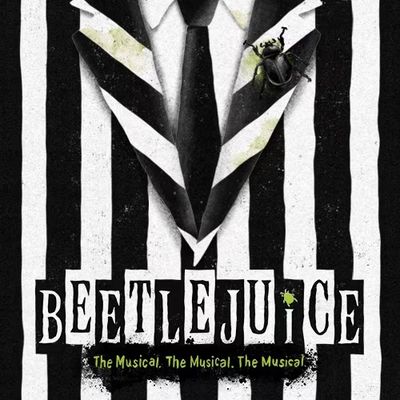
The new musical's creators reveal how the show has changed since its DC tryout... Read More
From the show: Stagecraft with Gordon Cox
Guests

Featured Shows
About
The new musical's creators reveal how the show has changed since its DC tryout.
Transcript
This transcript was automatically generated and might contain errors.
[0:06] Gordon Cox: Welcome to Stagecraft, Variety's Theatre Podcast, bringing you backstage and behind the scenes with the stars and creators of the hottest shows.
[0:14] Gordon Cox: On Broadway, off Broadway, and beyond.
[0:16] Gordon Cox: I'm your host, Gordon Cox.
[0:19] Gordon Cox: On this episode of Stagecraft, I'm talking to three of the creators behind the new Broadway musical Beetlejuice. Based on director Tim Burton's 1988 screen comedy about a gothy teen, her snooty family, a straight-laced recently deceased couple, and one outrageous demon.
[0:35] Gordon Cox: This new stage version comes from songwriter Eddie Perfect and book writers Scott Brown and Anthony King. Eddie Perfect is the Australian writer-composer who's made a big splash on Broadway this season, first with King Kong and now with Beetlejuice, while co-writers Scott Brown and Anthony King both have busy careers as TV writer producers, with King working on shows like Broad City and Silicon Valley, and Brown on Sharp Objects and Castle Rock.
[0:59] Gordon Cox: Theatergoers, though, might recognize their names as the creators of Gutenberg the Musical, the show they created back in 2006, or you might remember Brown's byline from back when he was the theater critic at New York magazine. All three of them are in the studio with me to tell us about wrestling and the anarchic spirit of Beetlejuice onto the stage, what they kept, what they changed, and what they learned along the way.
[1:19] Gordon Cox: Hey, Eddie, Anthony, and Scott, thanks for joining me.
[1:21] Eddie Perfect: Thanks for having us.
[1:23] Anthony King: Thank you.
[1:23] Scott Brown: So I'm talking to you, we're recording this the morning of your first preview performance for a paying Broadway audience. How are you guys feeling?
[1:30] Eddie Perfect: Well, you put the word paying in there, and that has given me chills. So I mean I saw it yesterday. I saw a rehearsal yesterday. I just didn't pay for it.
[1:42] Scott Brown: That's true.
[1:48] Gordon Cox: Okay, right, right, right?
[1:48] Eddie Perfect: Correct.
[1:49] Gordon Cox: Okay.
[1:50] Eddie Perfect: Yeah, yeah. Good.
[1:50] Eddie Perfect: Um, it's good. I mean, you know, we look at this as like we're like shopkeepers. We're like, people are paying money? That means we get some of it, right? What could be bad about that? I hope they like our cookies.
[2:04] Anthony King: Yeah.
[2:05] Eddie Perfect: It feels like we made a big batch of donuts, and yeah. Let's try the donuts.
[2:09] Scott Brown: Yeah.
[2:10] Eddie Perfect: I don't want to throw the donuts in the beer.
[2:12] Anthony King: Yeah.
[2:15] Gordon Cox: And you you've arrived on Broadway after Beetlejuice had a run in the fall, a tryout run in DC. And so this is kind of the end of a storied Broadway process of, yeah, you the show tries out out of town and then you do some work on it, guided largely by what you learn from those performances to get it to Broadway. Tell us about what you learned and who you learned it from. Eddie, let's start with you.
[2:40] Eddie Perfect: All right. Well, this is the part of the process after you've already done a main stage production that does not exist in Australia. So basically in Australia, if you're making a new piece, you know, you create it, you workshop it, you rehearse it, you put it on, and whatever you learn kind of goes with that show to the grave. Either it succeeds or it doesn't. This part of the process where we did, you know, a bunch of workshops over multiple years, and then we eventually rehearsed and put it up in the National Theater in Washington, DC. We did a six-week season, I think. And then we got to take everything we learned about the show, which comes from a multitude of sources, comes from all of our combined opinions on it, but also largely about what audiences are responding to, critical response.
[3:32] Eddie Perfect: They gather a whole bunch of data too that's pretty interesting that has to be sort of interpreted. And then you get this do-over.
[3:39] Anthony King: Like surveyed data, like surveys like that.
[3:41] Eddie Perfect: Yeah, survey data.
[3:43] Anthony King: Yeah.
[3:45] Eddie Perfect: Which is really interesting as well. You know, some of it's it, and that all really depends on the questions being asked as to how you kind of extrapolate what the meaning is and how you're gonna apply it. But this is the part where we got to we what we closed in early November, and basically from that point until this point has been kind of constant sort of rewriting. We did another workshop, we put it into rehearsals. So we learned a huge amount about the show. I mean it's a comedy, it's a kind of a dark comedy, and we learned what audiences feel comfortable laughing at, what they feel uncomfortable laughing at, and then what we feel comfortable making the audience feel uncomfortable about, and what we feel uncomfortable making the audience feel uncomfortable about, all that sort of stuff.
[4:29] Anthony King: So it's a bit of an alchemy, really, isn't it?
[4:31] Scott Brown: Right.
[4:32] Anthony King: Yeah, there's some what's interesting to me about what I feel like I learned from DC was we because it is a comedy is always so subjective, and we had audiences that were so raucous, and then we've kind of through the survey data found out that some of the people that love the show, some of the jokes they were like, I don't know if I can tell my parents to come to this. Because they were just like it's a little dirty or whatever. And it was kind of like interesting to go like, oh, you love it. But you don't know, and so it was like those are some of the things we were looking at when we were kind of rewriting is like how do we make those people go like still love it, but also want to tell their parents to go and it's a little bit of like an understanding, I think also that like we all come from comedy backgrounds.
You toured comedy in Australia, I did comedy here, wrote comedy with Scott, and you know, Broadway is a bigger audience, and so just expanding that tent, I think was a big part of what we were doing after DC.
[5:20] Scott Brown: Broadway is a bigger audience than who then I think it's just a big it's a mass audience.
[5:41] Anthony King: Because in some more so than like some of the TV writing that you're doing because I think so.
[5:41] Scott Brown: I think so.
[5:45] Anthony King: Um I think so because it has that collective experience.
[5:48] Gordon Cox: Uh-huh.
[5:49] Anthony King: You know, television is more you and your spouse watching whatever watching it in the living room.
[5:55] Gordon Cox: Right.
[5:55] Anthony King: Which is why it probably translates more from the kind of comedy that you create, you know, in at UCB or in the basement somewhere or some kind of thing that has like a, you know, sort of a niche audience that isn't more interested in edgy things and being kind of, you know, knocked off a cliff by something and people responded to that kind of stuff in DC, but it's as Anthony said, it was a question of like did it expand out to that larger audience. DC was kind of like the midnight movie version of Beetlejuice.
[6:25] Gordon Cox: All right. And you've been reviewed already because there were reviews in DC of the show as it existed in DC. What did you learn from those reviews? And Scott, do you read reviews differently as someone who used to review yourself?
[6:40] Scott Brown: Uh yeah, I mean, there are like two kinds of people who don't read reviews, right? There are the actors who say they don't read reviews, and then there are critics who say they don't read other people's reviews.
[6:49] Anthony King: Right.
[6:49] Scott Brown: And they're both lying. But no, I mean it was fascinating being reviewed and kind of like reading through and reading the reviews as a critic was kind of interesting too. Just kind of looking at how people were receiving it emotionally. I think when you know when most people read reviews, they just kind of think of it as, you know, a document. Like, oh, it's like here's a report on the show.
[7:12] Anthony King: Right.
[7:12] Scott Brown: Should I go see this or not? Should I go see this or not? Which, you know, that's part of the review's job is to do that. But it's also just kind of an emotional map of like how the person who was watching it felt, what they expected, how those expectations were upended, either pleasurably or not. And it was very interesting reading those reviews through that lens.
[7:32] Gordon Cox: What did you learn? What was the main takeaway from the reviews and how did it differ from the takeaway that you got from audiences, general audiences?
[7:40] Scott Brown: I think I mean, I think one thing we learned from the reviews that was that if there's a possibly a certain expectation going into the show, either that it's gonna track more to the movie than it does, or that there are just certain takeaways from the movie that the person already has. The movie is such a strange thing, it's such an amorphous, beautiful, bizarre kind of object. And I think people have a very personalized relationship with that movie because it admits so many different interpretations and people can receive it so in so many different ways.
[8:20] Scott Brown: So I think, you know, if the show has to be somewhat welcoming to people who have not just different interpretations of the movie, but no interpretation of the movie at all. And I think opening the show up emotionally was part of the big thing that we learned that we had to do, which you guys sort of agree with.
[8:41] Anthony King: Yeah, one of one really interesting thing was that even, you know, reading some of the or hearing some of the feedback from audiences who really loved it, they didn't necessarily love it for the reasons that we wanted them to love it for. You know, so you know there'd be people would be like, Oh, you know, it doesn't, you know, there's I we love that it's raucous and it's fun and they were the kind of top line things you know it's not serious it's absurd but underneath there is a huge amount of absurd comedy in Beetlejuice. I mean it really is one of those shows where we've been given license as writers to kind of create anything to go anywhere to conjure anything to you know suddenly have a gospel choir appear from you know there are no rules really except kind of delight but you have to be careful to make sure that the delightful web you weave doesn't trample the emotional story and I think we all felt that that the story we wanted to tell primarily was about this you know a young girl suffering with through grief with a father who won't acknowledge her grief or talk about the mother that she's lost and how damaging that is and that and then our story really was that you know humans need each other, they need to talk to each other, they need to hold on to each other and life is worth living for the I guess the people that we surround ourselves with whether they're you know like a bunch of glorious misfits or or not and that story I think could be clearer and that's what we worked really hard to make clearer this time around but also we don't want to jettison any of the absurdity.
[10:17] Gordon Cox: So it's a real balancing act.
[10:19] Anthony King: Right.
[10:19] Gordon Cox: And how like have you written a whole lot of new songs like and what's your take for this is actually could be a question for all of you what's your take on how much is new how much has shifted since the structure of the show is basically the same, but a lot of the I look at it as like a lot of the like Eddie was saying, a lot of the emotional content that was in the show I think was buried at a level that the audience wasn't aware it was there. Like we were, but it wasn't just wasn't connecting. And so I feel like so much we did an enormous amount of rewriting and a lot of it was just unearthing that and bringing it to the surface more and making a lot of the subtext text.
[10:56] Anthony King: Okay.
[10:57] Gordon Cox: Yeah.
[10:57] Anthony King: We definitely got into a place where we were like, well, I mean, I think the audience is with us on this, you know, they're or ahead of us. I mean they've you know, we don't want to be too on the nose here. We don't want to shove anything down their throats and instead we pursued like you know, pace and laughs in a way that was good and like enriched the show. But then we looked back and found out like left the audience behind and weren't on the nose, they didn't know right yet. And dealing with the polarizing idea, that's always a real challenge. I found that really interesting. Like we're at like for example, just to be specific, in act two in the netherworld in Beetlejuice, we in DC we had that this this boy band just rose out of the stage for no reason who were like kind of co-opted by the Juno, the head of the Netherworld to kind of do a sort of an infomercial type song that welcomed you to the blissful numbness of the Netherworld.
[11:52] Anthony King: Right.
[11:53] Gordon Cox: And you know, it was totally absurd. And people either loved that or they absolutely loathed it. And the audiences went insane for it. They loved it. And then there are people that were like, What is this? Just the word So you how dare you feel like ruined my netherworld. And we didn't we didn't hear them because they didn't make any noise.
[12:11] Anthony King: Right.
[12:12] Gordon Cox: Exactly.
[12:13] Anthony King: Yeah.
[12:14] Gordon Cox: So that's really tricky 'cause you're like, do I kill half people's darlings? Or you know, like who are you? What do you do with a polarizing idea? And that's a real challenge, you know.
[12:25] Anthony King: Um that is one of the things that got rewritten and sadly the boy inferno are no longer with us.
[12:32] Scott Brown: Alas.
[12:33] Anthony King: But they live in my heart.
[12:36] Scott Brown: And in a box of merchandise that no one will ever buy.
[12:40] Anthony King: Yes.
[12:41] Scott Brown: I have some of it.
[12:42] Anthony King: Yeah, there is a t-shirt.
[12:43] Scott Brown: So that's nice.
[12:45] Anthony King: Let's see if people really loved Boy Inferno. Um let's talk a little bit about how you've all first got attached to the project.
[12:53] Scott Brown: Um Scott, you just wrote a piece in New York magazine uh about your experience going from being one who reviews to one who is reviewed.
[13:01] Gordon Cox: Um in which if I understood it correctly, you were involved in Beetlejuice even before you started reviewing a New York magazine?
[13:08] Scott Brown: That's how long.
[13:10] Scott Brown: That feels like forever ago.
[13:11] Gordon Cox: No, it does.
[13:12] Scott Brown: It takes a long time for a Broadway show to get to Broadway.
[13:14] Gordon Cox: But that I mean that when was that?
[13:16] Gordon Cox: How long ago was that?
[13:17] Scott Brown: That was I think both of those things happened in twenty ten.
[13:19] Scott Brown: Uh I think the uh Alex approached us about the show in twenty ten and then I This is Alex Timbers, the director.
[13:19] Scott Brown: Alex Timbers the director.
[13:28] Scott Brown: Um and then a couple of months later, uh New York magazine called and I was I was sort of in a long uh bake up for that job and there were some other people rotating in and out.
[13:38] Scott Brown: So it wasn't completely clear, but it started to become more of uh, you know, my only gig around about then.
[13:43] Scott Brown: I remember calling Anthony and saying, What do you what do you think about this?
[13:47] Scott Brown: 'Cause we'd we'd just gotten involved in in Beetlejuice and like it seems this seems kind of weird.
[13:53] Gordon Cox: And I talked to Adam Moz about it and said like I don't uh there's some.
[13:59] Gordon Cox: Yeah.
[13:59] Gordon Cox: Right.
[13:59] Gordon Cox: Um and what what appealed to you both of you about the idea at the time?
[14:04] Scott Brown: Uh for me it was immediately it just because of how fantastical and absurd it is, it just immediately felt like, oh, this could be a musical and there's so many things to musicalize about it.
[14:13] Scott Brown: And the other thing was from the beginning.
[14:17] Scott Brown: Because you're kind of like heightened world like that.
[14:21] Scott Brown: I think to me, there's always a question when you're turning anything into a musical of like why are people singing?
[14:25] Scott Brown: Why is that language connect with the material?
[14:28] Scott Brown: Uh and so because Beetlejuice is so heightened, you immediately I wasn't like going, Well, what is Beetlejuice gonna sing about?
[14:35] Scott Brown: Or how is he gonna sing?
[14:36] Scott Brown: It's like, oh, I can see he's already a showman, right?
[14:38] Scott Brown: He's almost a lounge singer.
[14:39] Gordon Cox: Yeah.
[14:39] Scott Brown: Anyway, so uh so it just made sense.
[14:42] Scott Brown: And then the other thing was from the beginning they wanted to make Lydia the main character.
[14:46] Scott Brown: Right.
[14:46] Scott Brown: Uh and we grew up watching the Beetlejuice cartoon where it is Lydia and Beetlejuice.
[14:50] Scott Brown: Which in my memory was hilarious.
[14:51] Gordon Cox: Yeah, is it funny?
[14:53] Scott Brown: Have you watched it later?
[14:54] Scott Brown: Yeah, yeah.
[14:54] Scott Brown: Uh um It was one of those slightly edgier cartoons that had like right now.
[14:58] Gordon Cox: Like everything in the nineties.
[15:02] Scott Brown: Yes.
[15:03] Scott Brown: But uh but it is funny, and it was about like Beetlejuice is almost Lydia's pet in that uh her like fantastical pet.
[15:09] Scott Brown: And so that was exciting too of like, oh, building it around because the one thing about the movie I think that's hard to musicalize is the driving emotional story of the movie is kind of uh middle class uh property wars.
[15:25] Gordon Cox: Yeah.
[15:25] Scott Brown: Yes.
[15:26] Scott Brown: And that's kind of hard to sing about, right?
[15:28] Scott Brown: It's um it's a design battle, it's like an extreme filmmaker kind of.
[15:32] Scott Brown: But buried in that is this like teen who Dealy's not her mom and they don't really get into that.
[15:38] Scott Brown: And so once it was like let's make that front and center, it was kind of uh it was like, oh, there's something here to to to tell an actual emotional story about.
[15:46] Gordon Cox: Right, right.
[15:47] Eddie Perfect: And then Eddie, when did you first get involved?
[15:49] Eddie Perfect: I came along later.
[15:51] Eddie Perfect: Yeah, much later.
[15:53] Eddie Perfect: I I think I've been on the project for four four years or something.
[15:57] Eddie Perfect: But um I that's when it really started going.
[16:00] Scott Brown: Yeah it was a very long I'm talking about writers now.
[16:04] Scott Brown: Was it you guys um breaking sort of breaking down what a musical would look like before you found a song that's right that's right.
[16:11] Eddie Perfect: And then long periods of like change over it, Warner Brothers and us doing other things.
[16:17] Scott Brown: Yeah.
[16:17] Scott Brown: Yeah.
[16:18] Eddie Perfect: Yeah it's not like it was not like a constant building in the shop for all of those.
[16:22] Scott Brown: Yeah.
[16:22] Scott Brown: Almost nine years.
[16:23] Eddie Perfect: I mean I was I so I was really lucky because it was a script, you know and a really funny script.
[16:29] Eddie Perfect: And like and for my brain, like perfectly laid out script where it would be like there's a scene and then in these big parenthetical sections in bold it'd be like there's a song and then this amazing song brief.
[16:41] Eddie Perfect: And like just by magic that's kind of like how I loved to work and I have worked a lot is like you know writing to a brief or either of my own creation or of someone else's creation.
[16:52] Eddie Perfect: So I was like immediately yeah I can hear what this might be.
[16:56] Eddie Perfect: And um and so I was like pitching on the show and it coincided with me um trying to start working in New York and I knew the script was floating around and I knew there wasn't a writer yet but I I I kinda had to like um cajole my way into pitching on it and um wrote a song for Beetlejuice and wrote a song for Lydia and it kind of went from there.
[17:21] Gordon Cox: So are either of them still on the show?
[17:22] Eddie Perfect: Yeah both of them are still on the show yeah yeah I wrote another I wrote an opening number which is not in the show which um got cut like years ago called Death's Not Great.
[17:31] Eddie Perfect: Um and in fact it's like I mean, I don't know I don't know what's normal for a for a musical, but there are extraordinary amounts we've we've w what's been so exciting about the making of this show is that um there's an extraordinary amount of scenes and songs that have been cut from this.
[17:47] Eddie Perfect: We we had the time and uh luxury and the tenacity, I think, to follow certain paths and end up in Cul de Sachs and see what worked and what didn't work and we were never afraid.
[17:59] Eddie Perfect: We give it a culture of not being afraid, which sort of stems from these two guys here of if it's not working, let's cut it and start again and see what we can what we can do.
[18:08] Gordon Cox: And that's remained all the way up until like right now.
[18:11] Gordon Cox: Right.
[18:11] Gordon Cox: And for some American audiences or a lot of American audiences, it seems like wait, who's the Eddie Perfect guy who's suddenly writing for Brian shows?
[18:18] Eddie Perfect: Yeah, with a study.
[18:19] Eddie Perfect: You've done a whole lot of stuff.
[18:20] Eddie Perfect: You've done a whole lot of work in Australia.
[18:22] Eddie Perfect: You came to New York coming uh doing a whole lot of it.
[18:25] Gordon Cox: What specifically in your C V do you feel like uh chimes most with the work you've done at Beetlejuice?
[18:30] Eddie Perfect: Like what have you drawn on most?
[18:32] Eddie Perfect: Um, probably my own career as a cabaret performer performing my own songs.
[18:37] Eddie Perfect: It's not a million miles away from Beetlejuice, to be honest.
[18:40] Eddie Perfect: Like um the the combination of um trying to charm an audience but to scare the pants off them and walk a line of um safe, unsafe um, to still have them but to m kind of manipulate them and to sometimes the shock and to seduce and to start all that things w were things that in comedy and especially music comedy, I was really interested in, you know, like how can I play with how much rope have I got to play with this audience?
[19:13] Eddie Perfect: And so that really informed, you know, um the Beetlejuice character because he's not constrained by a fourth wall.
[19:19] Eddie Perfect: He's basically he's kind of like an MC ins trapped inside a Broadway show.
[19:24] Eddie Perfect: So that was really informative, and also I like to write funny sad, you know, like I think um the idea of a comedy that earns its moments of pathos that are unexpected um are really delightful and we've seen them play out my favorite kind of um comedy.
[19:40] Eddie Perfect: I think comedy is very a very emotional art form if I think it's probably the most emotional art form without wanting to um piss any drama people off.
[19:48] Eddie Perfect: But um but you know it it it's it's human and it's real and it's our faults and it's our failings and it's our our needs front and center which makes us kind of vulnerable and and I think that's really a really fun dynamic to play with.
[20:01] Eddie Perfect: So I think that's it was just a miraculous perfect fit for me I think for me.
[20:07] Gordon Cox: Well yeah and then Anthony and Scott you've done a whole lot of work in TV since Gutenberg the musical how has working in that medium kind of influenced the way uh you've attacked uh Beetlejuice?
[20:07] Anthony King: I think for me it's that the at least the background I have in in television is with writing mostly comedy is like if something if like a joke doesn't hit you rewrite it.
[20:29] Anthony King: Like you just immediately are like well then we can make it better.
[20:32] Anthony King: Uh and that I I don't know if that's always the uh uh guiding principle in theater where it's more like the author has written the Bible and you will perform the work a lot of times and uh so that collaboration luckily I think Alex Timbers uh our director is is very open to that and so it that's been really fun to be able to just like keep trying to make it uh funnier and better and push things.
[20:57] Anthony King: Um and uh and I also really the other thing that from television is once we have the actors attached is writing toward their strengths uh as well.
[21:05] Anthony King: Um, which is uh, you know, just something you get to do in television because you know who's gonna say these jokes.
[21:11] Gordon Cox: Right.
[21:12] Anthony King: So is it different assessing whether a joke land because in TV you're just assessing the joke in the writer's room, yeah?
[21:18] Anthony King: Like you're getting reaction to the stuff.
[21:19] Anthony King: Essentially, uh how how close do you have as like a table read?
[21:23] Gordon Cox: Yeah, how useful or more confusing is it to have thousands of people reacting at once?
[21:28] Anthony King: What's confusing about it is that it changes night to night.
[21:31] Anthony King: Right.
[21:31] Anthony King: Uh right.
[21:33] Anthony King: So there's uh uh I mean there's some things that always land, obviously, and then the the there's other jokes that some nights kill and the next night, and then you're wondering.
[21:41] Anthony King: Yeah, is it the room?
[21:42] Anthony King: Is it the timing?
[21:43] Anthony King: Is it it just makes you question there is a different uh pressure of having a standing there with you know 1,500 people watching a show that you don't get in television?
[21:53] Gordon Cox: Yeah, yeah.
[21:55] Anthony King: There is an immediacy to it that is really helpful and super terrifying.
[22:01] Gordon Cox: And how did um all of you, but I guess Eddie, you specifically think about because Beetlejuice is not a musical, but it has a musical identity for a lot of us, I feel like, and not only because Deo's in it, but also we all know like Danny Elfman is one of the few film composers that everybody that like knows his name.
[22:17] Eddie Perfect: Yeah.
[22:18] Eddie Perfect: Um, how did you think about coming up with your own musical language for that?
[22:21] Eddie Perfect: Well, and this is this is ridiculous story.
[22:25] Eddie Perfect: I think I've told you this, but when I was first talking to um Scott and Anthony and Alex Timbers on the phone, um it was about 4 a.m.
[22:35] Eddie Perfect: because this is Australia, and I was in Brisbane doing a show.
[22:38] Eddie Perfect: But you know, I'd been up all night ready for this phone call.
[22:41] Eddie Perfect: You hadn't gotten up early.
[22:42] Eddie Perfect: I was pretty interested in it.
[22:43] Eddie Perfect: I was like, I'm ready.
[22:46] Eddie Perfect: And I can't be in um a weird hotel room because it's like I need to be able to talk, so I'm like walking the streets of Brisbane at 4 a.m.
[22:52] Eddie Perfect: It's a lovely town.
[22:53] Eddie Perfect: It was good weather.
[22:54] Eddie Perfect: And um and Alex Timbus was going, yeah, I kind of hear the music being kind of carnivale, sort of circus, a little bit kind of oingo boingo.
[23:03] Eddie Perfect: And I didn't know that Danny Elfman had a band called Oingo Boingo.
[23:07] Eddie Perfect: Oh so I was thinking, Oingo Boingo, right?
[23:09] Eddie Perfect: An automatopoeia, is that what that was?
[23:11] Eddie Perfect: I'm like, I'm I'm like, yeah, yeah, I think I'm really getting your vibe.
[23:15] Eddie Perfect: And but I went I went home and started writing.
[23:20] Eddie Perfect: I mean, oingo boingo.
[23:23] Eddie Perfect: It's a good one.
[23:24] Eddie Perfect: I should have Googled, but I was born in nineteen seventy-seven, so I'm like not a digital native, and I don't automatically do that.
[23:30] Eddie Perfect: So I was like, Oingo Bongo, no, I get it.
[23:32] Eddie Perfect: We're like, we're talking on that on that light level.
[23:36] Eddie Perfect: And I killed myself thinking, Oingo Boingo, Jesus Christ, what is this?
[23:39] Eddie Perfect: Um, but I was like, Oingo Bongo's got a you know, it without knowing that it was a band, I was like, okay, I think I know what he's talking about.
[23:46] Eddie Perfect: And so when I was writing Beetlejuice's song, the whole being dead thing, you know, I I was like listening to a whole bunch of different music from Tom Waits to and when I I came out I I I went back to Mr.
[23:57] Eddie Perfect: Bungle, an amazing band who like um are great at fusing multiple styles together because I knew that Beetlejuice needed to be as surprising and as diverse as he was in the scenes.
[24:08] Eddie Perfect: The scenes he'd like turn on a dime, sweet, sour, all over the place.
[24:12] Eddie Perfect: And I'm like, well, it's gonna be really boring if he just stays on the one track in song.
[24:16] Eddie Perfect: So finding all those styles and fusing them together and kind of was a mixture of s sort of scar and um like circ kind of weird circus music, and and eventually I wrote the thing, and it was wasn't like two years later before I worked out that Danny Elfman had a band called Oingo Bongo.
[24:31] Eddie Perfect: I could have just looked up on Spotify.
[24:33] Eddie Perfect: So anyway, it worked out fine.
[24:37] Eddie Perfect: But it did conveniently sound like the words or go boingo sound, right?
[24:42] Gordon Cox: Yeah, you know it on yeah, yeah.
[24:42] Gordon Cox: They actually they sound like when the song came in and it started out oy go boingo.
[24:49] Gordon Cox: What is this?
[24:49] Gordon Cox: That's what you wanted to say.
[24:51] Gordon Cox: Like you would say no, that was not at all how it does.
[24:55] Scott Brown: You've sort of alluded to this.
[24:57] Scott Brown: The um the storyline departs fairly significantly from the from the film.
[25:02] Gordon Cox: Um what did you feel like it was what guided those changes?
[25:06] Scott Brown: Number I think you've talked a little bit about that already.
[25:08] Scott Brown: Um, but also what did you feel like it was important for you to keep and why?
[25:12] Scott Brown: I feel like there's a version of this musical that exists without any sandworms in them.
[25:15] Scott Brown: But they're rest assured, listeners.
[25:17] Scott Brown: There's a sandworm.
[25:18] Scott Brown: Yeah.
[25:20] Scott Brown: I mean, you know, first draft, the sandworm was the main character.
[25:22] Scott Brown: It was all about sandworms journey.
[25:24] Scott Brown: Yeah, no, no.
[25:26] Scott Brown: Uh no, I mean, uh Anthony.
[25:30] Anthony King: It's a big dilemma.
[25:31] Scott Brown: It's a real dilemma for some.
[25:32] Scott Brown: It's kind of it was sort of a part of your world, sort of like, why is there so much sand?
[25:38] Scott Brown: Um, uh Anthony alluded to this earlier.
[25:41] Scott Brown: There's, you know, the one interesting thing about the movie that feels like this sort of you know beguiling absence there is like Delia is not Lydia's mother in the movie.
[25:50] Anthony King: They make that clear that's a very good thing. Lydia is the one-owner writer character. And Lydia is the one-owner writer character. And uh, yeah, and they they make it clear in the movie that that she's not her mom. I thought you had made that up. I have to look that up, actually. I thought you guys had made that change because I, in my head, Catherine. The only change we made is that Lydia's mother died. Right. Right. But I I thought you had made up that she was a stepmom or a girlfriend. And I turned out no, as I discovered. It's actually in that, but it's very, it's very, it's buried very deep. I think there's one line in the whole movie that makes it clear that you know she's not calling her Delia to be impertinent to her mom.
She's calling her Delia because she's not her mom. Right. Um, and uh, but it's it's buried really really deep. There's a lot of things buried in that movie really deep. At one point, Beetlejuice says something about you've been to Saturn? And and you're like, and it just in you know, in the just stream of crazy things that he says, that's in there. That used to be that was actually a plot point in the movie about Yeah, the early drafts of Beetlejuice, the screenplay are really fascinating. They're very dark. Oh, did you look at all those? Oh yeah, yeah, we've looked at a lot of that stuff. It's all very dark and yeah, very violent. Yeah. It was like a full-on horror movie with these astrological sort of components.
He's named for a star, and yeah, it was much more a part of the plot. But and so then what as the movie exists now, did you feel like it was important for you to keep? For me, it was the the kind of I think the sensibility of Beetlejuice. Um obviously in the movie he's trapped in a train set, which is uh or not a train set, but a model of the town, which is hard to do on stage. Uh and so we we had to talk a lot about about what is what uh what is trapping him instead. And then when we kind of found this idea of him being frustrated that he has no that he's been made powerless and invisible to to everyone, um because what does a ghost want to do but haunt uh and scare uh and that there's a connection to Lydia feeling invisible in her grief and that these two people who feel uh not seen by the world, you lash out in bad ways when you feel that way. Uh and so once we found kind of that emotional core, it that helped kind of guide all the choices in the show, basically.
[27:54] Scott Brown: Right. Yeah. I mean, there's so much room for Beetlejuice that that you know that the movie doesn't. I mean, Beetlejuice is is on screen in the movie for about 14 minutes. Yeah, which we don's not off which people forget. Yeah. Um so yeah, I mean, just giving him wants and needs, giving him some kind of, you know, emotional yearning was like and you know, around about the time we were cracking that, Eddie, you know, was making this gorgeous ballad called Invisible uh that Lydia sings, and and it all started to seem you know, like of a piece that way emotionally. Yeah, I didn't go back to the film a whole lot, I must say. But I mean I I watched it again, I'd obviously seen it when it first came out and watched it again um when we were talking, I was writing the initial songs, and I've dropped back into sections to try and get a sense of them.
But the most recent time I went back was to look at the Netherworld again when it came to rewriting, you know, the um the the boy man moment and just trying to get a gauge on some of those characters in there and what they you know what they might offer up in terms of a song or a or a scene in there. Um and it's really hard to balance between you know um the sort of fandom and what people want us. I I've done a couple of adaptations from film to stage, and everyone has been everyone has different like kind of algorithms and theories about what must stay from the movie and and what m you know and but we don't want to put the movie on stage, but there are things like but yeah, you must have this iconic line or this iconic character, and I mean I I I'm really feel like Beetlejuice is kind of paid homage to the film, has a lot of the the kind of aesthetic world, I mean the visual language of the of the the piece that we've created, well the the David Corins and William Ivey long have created on sort of sets and even Kenneth Posner on lights.
This world is is very much like the film. It's it's crazy and it moves. It does it conjures the spirit of a Tim Burton movie in a very uh direct way. Yeah, and once that's kind of taken care of, it does give you a lot of license to kind of go on on a flight of fancy in a different direction, and people will go with you. Like you've got a these are the characters. Once you go, yes, these are the characters, these are the world. And I think you're kind of open to seeing where it goes. And I like the fact that we've taken it to different interesting. And we want to take things from the movie but repurpose them. Like we're obviously we want to go to the netherworld, which is a big thing in the movie, but who goes to the netherworld is different.
Yeah. And and we want to do Banana Boat, because that's like a musical moment from the movie that everyone loves, and obviously it has to it's a musical, so it's not going to be lip synced like it is in the movie. Um, but also who's causing that and why is different. Uh and so there's so we're we try to like take things that people love from the movie that we love from the movie, but use them to tell our stories uh so it kind of is I I don't think it was fan service as much as these these are if you're adapting something, like what are the tent poles that you love, and then how can we use them to tell the story we're gonna tell? And it has been great from the beginning of we were never pressured to just like put the movie on stage, right?
[30:55] Anthony King: Uh, which is which was exciting. You mentioned a little earlier, Anthony, that uh um the the animated series like cartoons from the 80s, yeah, 90s, and many things from the 90s, like Randon Snippy and things like that, like uh uh are a little more are would be considered the word problematic, which yeah, I don't think existed back then, right? No, it didn't. How how much of that challenge was there in adapting a work, a comedy from a a sort of raucous, obnoxious comedy, like purposefully obnoxious comedy from that era into uh our sort of rapidly kind of evolving sense of the stuff. I I mean that's always been a conversation because I think Beetlejuice is a character who is in the movie is a sexual harasser.
Uh um, and I think you know, he's marrying a child, uh, and so the like how to grab hold of it. Which was fine in the 80s, yeah. I was like, that was cool of it, right? Everyone did that yeah the world's gone mad what happened um but it so I think those things were always question and I think even the character of Otho is a little in the movie is is now you'd be like oh he's very much a stereotype and um Otho is the kind of guru designer yes yeah uh and um so we wrestled with a lot of those things of like how to bring them how to keep the edge but but also grab a hold of it uh and like put it in like for us like the the wedding at the end now is is not is is L Lydia the character of Lydia like grabs a hold of that idea uh and gives her the power of of it instead and that was some of that is is how to make it right more palatable.
[32:27] Scott Brown: Right. Yeah.
[32:28] Anthony King: Yeah putting Lydia in control of a lot of things was a was was fun for us and and solved a lot of those problems. Right. The nice thing is that like of all the taboos though death is still the biggest and also the one that like is you know the the most the one that transcends politics most of all possibly just because it's so completely unarguable. So I mean in terms of like oh how how can you how can you be shocking without uh just you know rehashing uh you know old you know being problematic uh you know the death gives you a lot of opportunities that way right it's like you're there's we're ne we're never going to evolve past being shocked by that right it's interesting I think a lot and also um sex or or or sexual power is such a huge topic at the moment, you know um who who has power, who has agency, what we can laugh at, what we feel safe laughing at, you know, and and I also like think the you know the the the show our show never punches down to anyone right it always it always punches up because that's where we come from with with comedy but having said that there is a lot of um material especially in DC that was like unsafe you weren't sure where to put it it was kind of scary and manipulative and there is more we are living in times where there's a there's a kind of a little gap between receiving the information and and comedy works completely on surprise and shock you know you get a piece of information that jolts you and you and you laugh and now there is a there is a perceptible gap between receiving that information and then processing it to go am I allowed to laugh at this who is the who is the subject of the joke is it is it a joke about a subject that where is the power being shifted here and when you've got all those kind of micro processes going between the information and the laugh it can be difficult.
[34:26] Eddie Perfect: There was a lot of laughing with hands over mouths which I love to see you know which is like am I allowed to laugh at this is this is this naughty you know but they're you know you you only have to talk to um um New York stand up comedians and and they will tell you I mean there I think stand-up comedians at the coal face of how um a culture is experiencing their world and what they are prepared to laugh at and what what they're not and it is a very interesting time where the where the plates are shifting underneath all the time is this is you know who is being robbed of their power by this joke, you know, who is it's really uncertain time. So it's a hard time to be making comedy, but I also think it's a very important time to be making comedy.
[35:11] Gordon Cox: Before we go, what's on everybody's plates next, Eddie?
[35:14] Eddie Perfect: I'm gonna be unemployed up to the 24th.
[35:16] Gordon Cox: Oh, yeah, is that it?
[35:18] Eddie Perfect: I plan on just taking my kids to school. Um walking around Central Park, feeding the birds. I'm gonna feed some birds and uh talk to the turtles and hope like hell there's another job on the way.
[35:30] Scott Brown: Yeah, yeah. Eddie does a lot of his best writing in Central Park.
[35:33] Eddie Perfect: I do.
[35:35] Gordon Cox: Okay. It's pretty great.
[35:36] Anthony King: I go straight from this from the opening of this to Atlanta where I'm shooting a show I'm making for Comedy Central with the comedian Roy Scoville called Robbie, that'll probably be out uh next year.
[35:46] Scott Brown: Cool.
[35:46] Anthony King: Uh I've got a young adult book out.
[35:50] Gordon Cox: Cool.
[35:50] Anthony King: And I'm going back up to Massachusetts where we're shooting season two of Castle Rock.
[35:55] Scott Brown: Right, which just announced a really great cast.
[35:57] Anthony King: So that'll be amazing. We're really, really excited. The dailies are looking pretty. We're gonna do a switch where that cast does Beetlejuice and our Beetlejuice cast. We're gonna do a big cross out. This is an exclusive, you're getting an exclusive here.
[36:10] Gordon Cox: Uh what is the next Broadway, what is the next movie you guys want to adapt to Broadway?
[36:14] Anthony King: I don't think I would do another movie adaptation. I mean, I've done a couple of them now. What really interests me is is creating an entirely new idea where you where that I mean we never really felt completely limited by Beetlejuice, but there are there were a lot of rules. We had we had to like work, we had to kind of solve a lot of rules, you know. Who can be seen, who's dead, where do you go, when do you come back, who can come back? All that stuff is really was complicated. Um so I like I love the idea of uh of a an original musical where you can set down the path and go, okay, where is where are we going with this and just make what you want.
[36:49] Scott Brown: Right.
[36:50] Gordon Cox: Um do you guys, uh Anthony and Scott, do you see yourselves uh coming back to theater anytime soon?
[36:56] Scott Brown: I mean, theater is where we both first fell in love with making things. Uh so I would I would like to. I mean, my movie, I've always I don't know if there's a big enough audience for it, but I've always wanted to do the Hudsucker proxy. Uh I think it just would be a amazing musical. Uh, and I love the iconography of it and the characters and um And we could get Tim Robinson we could get Tim Robbins. That's our shot. Jennifer Dizzerly. Uh but uh but yeah, I just for me the the three-headed uh music lyrics book collaboration with a director of musical theater is what fires me up uh in in everything. So it's it's definitely it's like the drug I want to keep chasing.
[37:39] Anthony King: The rock, the rock and music. I'm gonna make a musical about the rock.
[37:41] Gordon Cox: 12 years old.
[37:42] Anthony King: Okay.
[37:42] Gordon Cox: Uh huh.
[37:42] Anthony King: The rock.
[37:43] Gordon Cox: You mean the the hammer or how about the rock in the rock?
[37:48] Anthony King: Musical adaptation of the rock, starring the rock.
[37:50] Scott Brown: Yeah, no, right.
[37:52] Anthony King: Yeah. Let's do it.
[37:53] Gordon Cox: And with the I got nothing on.
[37:59] Anthony King: Well, I can't wait to see it.
[38:02] Gordon Cox: Yeah, exactly.
[38:02] Anthony King: Yeah, yeah.
[38:03] Gordon Cox: Um guys, well, thank you for being here. Um tonight. Talk to you soon.
[38:07] Eddie Perfect: Thank you.
[38:07] Scott Brown: Thank you.
[38:14] Gordon Cox: That was Scott Brown, Anthony King, and Eddie Perfect, the writers of Beetlejuice. Now in previews at the Winter Garden Theater and opening April 25th. If you like what you've heard on this and other episodes of Stagecraft, don't forget to rate and review us on iTunes and subscribe wherever finer podcasts are dispensed. I'll be back next week with another new episode. Until then, see you at the theater.
© Broadway Podcast Network, All Rights Reserved