

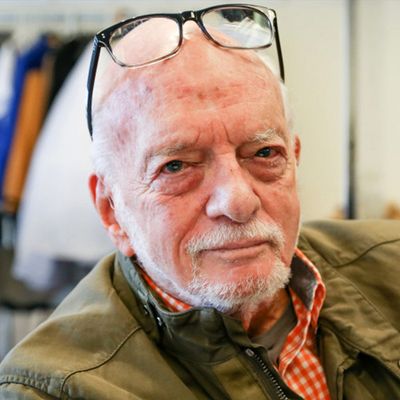
Legendary Broadway producer-director Harold Prince, recipient of 21 Tony Awards, talks turkey about his storied career, his current projects, the recent revivals of his work -- and why he never wanted to be producer at all... Read More
From the show: Stagecraft with Gordon Cox
Guests
About
Legendary Broadway producer-director Harold Prince, recipient of 21 Tony Awards, talks turkey about his storied career, his current projects, the recent revivals of his work -- and why he never wanted to be producer at all.
Transcript
This transcript was automatically generated and might contain errors.
[0:06] Gordon Cox: You're listening to Stagecraft, Variety's Theater Podcast.
[0:10] Gordon Cox: Every week we'll bring you in-depth interviews with the creators behind the hottest shows on Broadway, off Broadway, in London, and around the country.
[0:17] Gordon Cox: I'm your host, Variety's Theater editor Gordon Cox.
[0:20] Gordon Cox: My guest this week is one of Broadway's legendary figures.
[0:23] Gordon Cox: Over a 60-plus year career as a producer and a director, he's won a record-shattering 21 Tony Awards.
[0:29] Gordon Cox: And the list of original productions he's had a hand in is truly staggering.
[0:33] Gordon Cox: Let me take a deep breath here.
[0:35] Gordon Cox: The Pajama Game, Damn Yankees, West Side Story, Fiddler on the Roof, Cabaret, Sweeney Todd, Company, Follies, Merrily We Roll Along, Evita, The Phantom of the Opera, and I'm still not done.
[0:44] Gordon Cox: He's Harold Prince, the man everybody in the theater industry knows as Hal, and he shows no sign of slowing down.
[0:50] Gordon Cox: He's got a production running on Broadway right now.
[0:52] Gordon Cox: That's Prince of Broadway, a review of his own work, playing at Manhattan Theater Club's Freedman Theater through October 29th, and a new book, just released in September, his memoir, Sense of Occasion.
[1:02] Gordon Cox: He's here on Stagecraft to talk about the show, the book, and his storied career.
[1:06] Gordon Cox: Hal, thanks for being here.
[1:08] Harold Prince: Happy to be here.
[1:09] Gordon Cox: Let's start with a question that is raised by both the show, Prince of Broadway, and the book, Sense of Occasion, which is do producers have an oeuvre, and do directors have an oeuvre in the way that writers and composers do, for instance.
[1:27] Harold Prince: Well, certainly it's more common with directors, because we're working from very personal taste.
[1:36] Harold Prince: However, what's lamentable is it used to be true of producers.
[1:40] Harold Prince: When I went to the theater for the first half of my career, I could sit in a theater and tell you who produced the play or the musical.
[1:52] Harold Prince: Now you can't tell who produced anything because it's all about money.
[1:57] Harold Prince: How can you raise money?
[1:58] Harold Prince: So everybody's busy worrying about how you can finance a show.
[2:03] Harold Prince: So they'll finance whatever they think will make money.
[2:06] Harold Prince: It's a different priority.
[2:09] Gordon Cox: Right. How would you tell, for instance, who were the producers who you could identify and how would you tell?
[2:15] Harold Prince: Mostly. I could tell Leland Hayward. I could tell, I can tell you how in a minute.
[2:19] Harold Prince: I could tell the Theater Guild, I could tell obviously Fuhrin Martin and George Abbott and so on.
[2:30] Harold Prince: But what you knew was largely Hermann Schumlin, a play that perhaps he produced of Lillian Hellman's and directed.
[2:43] Harold Prince: You knew that he did Lillian Hellman and serious and issue-driven plays.
[2:53] Harold Prince: Then you did Fuhr and Martin, and they did great musicals that were quality musicals and joyful, not issue-driven at all, but just terrific.
[3:04] Harold Prince: And then I think probably you would pin me down as issue-driven.
[3:10] Gordon Cox: Okay, I was just gonna ask, what do you think unifies your work?
[3:10] Harold Prince: I think probably mostly issue-driven.
[3:17] Harold Prince: I think across both producing and directing.
[3:17] Harold Prince: Oh, well, obviously, when I was producing, I was wanting to direct the things I produced, but the opportunity hadn't arrived.
[3:26] Harold Prince: George Abbott hired me, and George Abbott, I hired in a manner of speaking to direct Pajama Game and Dabney.
[3:35] Harold Prince: He's my partner and I did.
[3:36] Gordon Cox: Right.
[3:37] Harold Prince: And but that's a show, lighthearted as it is, Pajama Game is a show about a strike in a Midwestern pajama factory.
[3:48] Harold Prince: That was interesting.
[3:50] Harold Prince: Now, mind you, it wasn't anywhere near as dangerous as had it ended up in my hands, but I was the producer and I was very happy to have it realized.
[4:07] Gordon Cox: Were you aware working on as early as Pajama Game that you were leaning toward directing?
[4:14] Harold Prince: Oh, I didn't want to be a producer at all.
[4:18] Harold Prince: It's a gift horse, and I could not look it in the mouth.
[4:22] Harold Prince: I ended up in George Abbott's office at the age of 20, having graduated from Penn.
[4:29] Harold Prince: And George Abbott, who was one of the best-known producer names.
[4:33] Harold Prince: Absolutely, and director and playwright, and originally an actor, a leading man.
[4:40] Harold Prince: Anyway, I was there from '48 to '50, first as an office boy, then as an assistant stage manager.
[4:56] Harold Prince: And then the Korean War started.
[4:57] Harold Prince: And I was the first person drafted in Manhattan.
[5:01] Gordon Cox: In fact, I don't recall that being in your book.
[5:04] Gordon Cox: That you were the first person drafted in Manhattan.
[5:06] Harold Prince: I think it is.
[5:07] Harold Prince: Maybe, I think it is because I'll go back and look.
[5:10] Gordon Cox: Yeah.
[5:10] Harold Prince: I'm not certain, not quite so it's a story worth telling because the Daily News ran my picture.
[5:17] Harold Prince: And under it, it said Korean threat.
[5:22] Harold Prince: Obviously, I didn't even get to Korea, not obviously, I didn't get to Korea, I got to Germany as part of the occupation troops.
[5:28] Harold Prince: I recall.
[5:29] Harold Prince: So when I got back, I was bumped up as first assistant stage manager, or what they called the stage manager, and then the production stage manager was over him.
[5:42] Harold Prince: And I stand in the wings and I'd think the show was a huge hit called Wonderful Town with Rosalind Russell, and I thought and said to my partner, who was my boss at the theater, we can do this.
[6:00] Harold Prince: All we have to do is come up with the capitalization.
[6:04] Harold Prince: Let's do it.
[6:05] Harold Prince: And he said, he was 30 years older than I.
[6:08] Harold Prince: Well, should we?
[6:10] Harold Prince: I said, Yeah, let's do it.
[6:11] Harold Prince: So we did it.
[6:12] Harold Prince: And we found this book, and we talked the agent into letting us have the book on the basis that George Abbott would direct it, which he did, and it was a hit.
[6:25] Gordon Cox: Yeah, and that was the start of the book.
[6:26] Harold Prince: And it was the start of a hell of a life.
[6:30] Gordon Cox: Yeah.
[6:31] Gordon Cox: Which you, which is detailed by both the show and the book.
[6:36] Gordon Cox: I imagine you were working on them at the same time, so I imagine.
[6:40] Harold Prince: Uh yeah.
[6:41] Harold Prince: I think yes, I think that's so.
[6:43] Harold Prince: Actually, I didn't intend to write the book.
[6:46] Harold Prince: I intended for it to be written by a fellow named Foster Hirsch, who wrote originally or wrote a book about me.
[6:52] Harold Prince: And then I thought, no, I can't do this.
[6:56] Harold Prince: I've got, it's gotta be in my words.
[6:59] Harold Prince: And so I said, Foster, all right?
[7:02] Harold Prince: And he said, sure.
[7:03] Harold Prince: I hoped you do that.
[7:04] Harold Prince: So I did.
[7:05] Gordon Cox: Let me ask you some questions that I know everybody asks you because I think they're gonna want to know your answers to these questions.
[7:13] Gordon Cox: Um, in the book, I noticed that you talk a little bit about, um, you don't love the mindless shows as you sort of alluded to, but you quite, you really liked Bye Bye Birdie and you really love Guys and Dolls.
[7:25] Gordon Cox: Nothing is ever consistent.
[7:27] Harold Prince: Right.
[7:28] Gordon Cox: Um, but in the end you prefer something like The King and I.
[7:31] Gordon Cox: Um, what you must get asked this all the time.
[7:34] Gordon Cox: What newer musicals do you love now and why?
[7:39] Harold Prince: Well, I thought Hamilton was first rate.
[7:49] Harold Prince: And obviously I might be predictable in that regard because somebody got the idea of doing a musical of a serious historical book about Alexander Hamilton.
[8:09] Harold Prince: Very unlikely subject.
[8:11] Harold Prince: I always thought unlikely subjects were the fodder of musicals.
[8:16] Harold Prince: And to some extent I was correct, because usually almost every season that I produced and directed, the show that everybody anticipates is never the show I do.
[8:29] Harold Prince: It's the show that they anticipate because they know what it's gonna be.
[8:35] Harold Prince: And then they sit down in the theater, and it isn't the show they thought they made up in their minds, so they're disappointed.
[8:43] Harold Prince: So you come in behind, and it's kind of a round end.
[8:50] Gordon Cox: Is it always a detriment? Or is it always the challenge that you have to get over? Is it sometimes useful that you can surprise it?
[8:57] Harold Prince: Oh, sure.
[8:58] Harold Prince: Oh no, I think it's always good to be surprising.
[9:01] Harold Prince: I, you know, it's Diaghilev who said Astonish Me.
[9:07] Harold Prince: Oh, yes, and he was the greatest producer who ever lived.
[9:10] Harold Prince: Right.
[9:11] Harold Prince: Astonish Me is what we should be doing in the theater, and too frequently we don't even aim for that.
[9:21] Gordon Cox: You mentioned also that you don't go see revivals of your shows, or many of them rather. Is that correct?
[9:26] Harold Prince: Oh no, I don't.
[9:27] Harold Prince: Because I put, if I do a good job, I've put a great deal of time into percolating the project, and it seems to me that when you do a revival, you don't have that time, you don't spend a few years percolating, and maybe my vision contained, I like to think, a metaphor.
[10:05] Harold Prince: I like metaphors.
[10:07] Harold Prince: And for example, you take Sweeney Todd's easiest metaphor to talk about.
[10:12] Harold Prince: It was written about a Grand Guignol subject of a man and a woman who chop people up, cannibalism, and sell them as meat pies.
[10:21] Harold Prince: And I thought, what binds all the people in this show together?
[10:28] Harold Prince: And I realized it took place pretty much at the inception of the industrial age.
[10:34] Harold Prince: So let's put it in a factory and let's do it in the industrial age.
[10:38] Harold Prince: And when I proposed that to Sondheim and Hugh Wheeler, the author of the book, they said, Oh, do we have to rewrite this material?
[10:49] Harold Prince: I said, You don't have to accommodate it at all.
[10:51] Harold Prince: I'll just put it there and everybody will get the point.
[10:54] Gordon Cox: Right, right.
[10:55] Harold Prince: Yeah.
[10:55] Harold Prince: That metaphor is very often the spine of so many of the musicals I do.
[11:02] Gordon Cox: Of your productions of the musicals? Does it how important is it that the metaphor be baked into the text itself?
[11:12] Harold Prince: Sometimes, sometimes not.
[11:14] Harold Prince: It didn't matter in Sweeney.
[11:16] Harold Prince: Sweeney gets done all the time.
[11:18] Harold Prince: It's very popular revival, and never has it ever taken place in a factory again.
[11:24] Harold Prince: However, the show opened with a factory whistle.
[11:29] Harold Prince: An excruciating sound in the theater.
[11:32] Harold Prince: This is one of my favorite little recollections in the book.
[11:36] Harold Prince: I hadn't noticed this, but you're absolutely right.
[11:38] Gordon Cox: And I tampered with the whistle during rehearsals, so it was painful to the audience.
[11:45] Harold Prince: Well, it was there every time Sweeney killed anyone.
[11:50] Harold Prince: But now it appears in every revival of Sweeney, and generally nobody's been killed.
[11:56] Harold Prince: So it's just a big sound effect that people caught into.
[12:01] Harold Prince: The Little Revival downtown does put it where it belongs with the murders.
[12:08] Gordon Cox: That's true.
[12:09] Harold Prince: It does.
[12:09] Gordon Cox: It is, it is pretty. You haven't seen that, correct?
[12:13] Harold Prince: Yes, I have.
[12:14] Gordon Cox: Oh, you have.
[12:15] Harold Prince: I went to see that one.
[12:15] Gordon Cox: Oh, yeah. Did you enjoy it?
[12:17] Harold Prince: I thought it was good.
[12:18] Gordon Cox: Yeah.
[12:19] Gordon Cox: Did you see, I have to ask you about the cabaret that ran for so long?
[12:21] Harold Prince: The Roundabout?
[12:22] Gordon Cox: No, I never saw it.
[12:23] Harold Prince: Wow, you never saw it.
[12:24] Harold Prince: No, because, and everybody liked it that I knew, yeah, but I knew that no attention had been paid to the development of the Joel Gray character.
[12:35] Harold Prince: Apparently nobody cared.
[12:37] Harold Prince: Didn't matter.
[12:38] Harold Prince: It made a star of the man who played it.
[12:41] Harold Prince: But to my mind, if you don't do the first act about a tragic bad taste entertainer who represents Germany during the Depression, and then which no country suffered more.
[12:59] Harold Prince: And then in the second act, he pulls himself together and by means of National Socialism, the Nazi Party, he prospers.
[13:12] Harold Prince: And so he really, this meek, bad taste little guy, turns into Adolf Hitler.
[13:18] Gordon Cox: Right.
[13:18] Harold Prince: And that seemed to me vital to the whole metaphor of the show.
[13:25] Harold Prince: But no, they didn't pay any attention to it, and the show was a huge success.
[13:31] Gordon Cox: And you mentioned in the book that you get asked a lot the difference between working with Stephen Sondheim and working with Andrew Lloyd Webber. And what do you tell them?
[13:40] Harold Prince: Well, there I really talk about the similarities.
[13:42] Harold Prince: Yeah.
[13:43] Harold Prince: Obviously, there's nobody like Steve.
[13:45] Harold Prince: He writes his own lyrics, and there's nobody who to touch him in that regard.
[13:52] Harold Prince: There have been in the past, of course.
[13:55] Harold Prince: But not really touch him.
[14:00] Harold Prince: Fred Ebb was a great lyricist.
[14:03] Harold Prince: Sheldon Harnick's a great lyricist.
[14:06] Harold Prince: I've worked with a bunch of them.
[14:07] Gordon Cox: Yeah.
[14:08] Harold Prince: But basically, Andrew, what's similar about them is they're both theater men, they love theater, they understand what makes something theatrical on stage.
[14:21] Harold Prince: It sounds a strange thing saying you're in the theater and you don't know what's theatrical, but a lot of people don't.
[14:27] Harold Prince: And they do.
[14:28] Harold Prince: And Andrew knows subjects that grab audiences.
[14:33] Gordon Cox: And you're still quite close with Sondheim, it sounds like that's an impression of that.
[14:37] Harold Prince: Well, both of them.
[14:37] Harold Prince: I think there is an impression or maybe a tendency to assume that there is some sort of acrimony after Merrily We Roll Along, and it doesn't seem to be.
[14:44] Harold Prince: Well, I think everybody has a, everybody's minding your business.
[14:49] Harold Prince: And what you have to do as you grow older is disregard that.
[14:54] Harold Prince: I would like to say I disregarded it as a young man, but I didn't, and it used to upset me. No, now it's nobody's business but ours. No, of course, we're friends. Good ones. What do you think of what do you consider the biggest fights of your career?
[15:11] Gordon Cox: Fight?
[15:12] Harold Prince: Fights, yeah. That's such a good question. I'm not prepared to answer yet. Let me see. Uh well, to be absolutely honest with you, and we won't I won't be specific, but there are shows I've embarked on and not stayed with. And that's because the atmosphere surrounding them doesn't emulate collaboration for me. I know there are an awful lot of authors who don't regard themselves as collaborating with directors, which is fine. A lot of directors do five, six shows a year. I do one if I'm lucky. And now with finances the way they are, I do fewer than one. Uh but I need to collaborate from day one. Not only with the authors, but with the designer. Because I need to know what a show is going to look like. Because that's the motor, the way you're going to move the show. And those are all factors that are not unique to me, but probably not common to every director.
[16:35] Gordon Cox: Right. And what do you consider your biggest success?
[16:40] Harold Prince: Well, uh, it's that whole thing about success, failure, hit, flop. Yeah, actually, can you can you uh tell us about that for those who haven't read the book? Is Phantom of the Opera.
[16:51] Harold Prince: It's uh gonna be 30 years old here in January, and it is 31 years old right now in England. I love the moment in the book that from the part of the book that you wrote earlier where you say, I don't think anything will run as long as Fiddler on the Roof. And then of course you have to correct yourself. And then I done that. By the way, uh I would not say that any longer about Phantom. I I would think uh we'll be outstripped someday by uh either uh uh the Disney show uh or uh um Wicked, or maybe both. Who knows? Shows are running so damn long, and that I can explain.
[17:33] Harold Prince: Uh we did not have an international audience. What we did was we do a play, a musical or a play, and if it seemed to be international fodder, we would reproduce it in London, and then occasionally in the German speaking countries, very rarely in Scandinavia, and very rarely in Tokyo. That was it. Now not only do we work all those uh places, but travel being what it is, uh the show is 30 years old now because it owes a great deal to foreign visitors. And the nature of these musicals is such that they are not dependent on the language on uh so much as the look, the sound, uh the atmosphere, and the story.
[18:36] Harold Prince: Let's talk a little bit specifically about Prince of Broadway, the show at uh NPC's Broadway Theater, The Freedmen, uh, that uh is a review of your work. Uh you mentioned uh in the book that one of the things that attracted you to it is the idea of going back and staging these numbers, not exactly as you staged them before, but with new eyes. Can you give us now that the show is up and running, can you give us uh an example or two of sequences that you feel like you really looked at in a new way, uh putting that show together?
[19:07] Harold Prince: Um not so much. I think what really happened was Jerry Robbins did a review called uh r uh rr I don't know, Robbins's Broadway or whatever. Yeah, what was that called? Jerome Robbins Broadway. Yes, yeah. And uh I I knew Jerry very well, and uh and he was he couldn't remember. Well, I can't remember how these things are staged. I don't live much in the past, and I don't remember. And uh so I saw that he'd bring in the original uh artists who did the material, and they'd sit with him and reconstruct how they were staged. And I thought, gee, I don't want to do that. So though we use pretty much we're influenced by the scenery and the costumes of the original productions, that's very important to me because I could not rethink all the design elements.
But then when we rehearsed the sequence, we just approached it like it was something new. Now a lot of them look almost the same as what they were before, but then a lot, not at all. Very interestingly, Phantom, which is still running three blocks away, uh at the Majestic. I'll plug it. Yes. Uh that uh that is on a quite different set and and staged very differently.
[20:33] Gordon Cox: And let's talk also a little bit about the book specifically, uh writing it. So explain for the people who don't know.
[20:42] Harold Prince: There you wrote a big chunk of this book, uh, 19, what did you say in 1974? Actually, I wrote a book in 1974 called Contradictions. Yeah. It was motivated by an author of the editor of Harper's Magazine, who said, You're very young to have had all this activity. Uh how about telling how it happened and how you feel about it? So I said, fine. And then I didn't do it. And then I finally wrote him and said, I'm I'm gonna do it next year. I was years behind. And then finally, obviously there wasn't interest in it. So I did it. And it was published, and it was called Contradictions for good reason, because a good deal of what I say in nineteen seventy-four, I don't believe, in nineteen seventy-five, much less two thousand and seventeen.
So um I thought uh I'd I'd like that book reprinted. It's about a third of the book, maybe, and I'd like to uh revisit all those chapters up to nineteen seventy-four and amplify, either add things that occur to me or disagree with myself. And that's what I did. Then when I got to 74, I had to start with the rest of my career career, which is much longer.
[22:08] Harold Prince: I was gonna say that's a lot of writing you had to put. 26 years and 17 years, how many is that? 36 43. Yep. Forty-three years more. Well, another thing you mentioned in the book is that you were um easier to work with earlier in your career than you uh became later. Is that no? Did I really say that? It's absolutely untrue.
[22:29] Harold Prince: Interesting. My my wife remember we're married a long time now. My wife remembers that that she would leave the room when I talked to my lawyer or anybody else because I was shouting and I was impossible. Now I'm oh I'm a pussycat for God's sake.
[22:44] Gordon Cox: Oh, okay.
[22:49] Harold Prince: No, when you're young, there's a a desperation element in your creating a career, and your back is always to the wall, or you assume it is. And uh I mean, you know, I uh when I did pyjama game with my partner, Bobby Griffith, I uh I decided that uh that it had to be a hit. It was my first foray, and that if I didn't have a hit, I'd be passed way back beyond square one.
[23:24] Gordon Cox: What's next for Prince of Broadway? Where does it go next?
[23:28] Harold Prince: Well, um there's a uh we're we're talking about a tour, of course. It'll it'll take some time. Uh we are on a limited engagement, we've been extended for a week, which is terrific. And so it'll have been about three months and one week, which is terrific, and the business has been wonderful. So now there'll be a tour in the United States, probably not for a year and a half, two years at least. And our producers, uh part of our producing team is Japanese and quite marvelous, but also an or they run an organization called uh Broadway Across America. Yes. Which is Tours in America, but they also have a heavy uh input in Southeast Asia and Europe and Scandinavia. So they're working on Southeast Asia, Europe, and Scandinavia. So I think there'll be a lot of life in it. And I think uh it seems to appeal to tourists, which is very good for us.
[24:29] Gordon Cox: And you talked toward the end of the book about some new projects you're working on. Um let me s let me ask you what and let's see what you can tell me.
[24:36] Harold Prince: Uh well, I can't tell you much. Yeah, you mentioned well, you're working with Doug Wright on something, right?
[24:40] Harold Prince: Well, Doug Wright is writing a a play with music and dance, and I'm told that I will get a script in December. It's about a year late, but I'm waiting. And he's very good. It is about historical characters, is that right? Can you give us any more details on that?
[24:58] Harold Prince: Mm-mm. Okay. No, but it is about historical characters, and it's uh uh very exciting. Yeah. So I um I'm I'm excited about it. And there's a uh sort of doc a documentary film that was made that again I can't be specific, that I that I'd very much like to work on with two young composer lyricists and uh uh a book writer who's a musical based on a I'm sorry, a musical based on a documentary, is that right? All right. I'm sorry to be so secretive, but there's a good reason because there are a lot of people involved.
[25:35] Gordon Cox: Right, right. Uh and you also mentioned uh a return to the original production of Evita, is that right? Tell me what's happening with Evita.
[25:44] Harold Prince: That's in rehearsal. Yeah, that's wonderful. I'm very happy about that. Because when the Evita came to Broadway a few years ago, I I was disappointed to be blunt. Did you see it?
[25:54] Gordon Cox: What?
[25:54] Harold Prince: Did you see it? No, actually, uh I my assistant at Phantom took me over to the theater for the final matinee. And we stood in the wings, and I got to meet the three leads who could not have been more charming. And at one point they're doing the rest of the the end of the show, and they're looking in the wings, and this guy is standing. There must have been hard, but they came off. Ricky Martin could not have been more charming, more terrific. And he's a wildly talented guy. But um, it was not remotely what we had done all these years earlier and I love what we had done. So I I it was a hard nut to crack. So and I'm very proud of it. It's among the proudest ch uh achievements, if that's the word. Yeah. Um so I really want it seen again and a lot of people uh remember it fondly and something with Alfred Urey is you also mentioned something with Alfred Ure yep.
[27:00] Harold Prince: That's all you can tell us. That's all I'm I'm not I don't like people who keep secrets. In fact I'm the last person who ever kept a secret. I tell everything. But uh we're talking on radio it's true.
[27:12] Gordon Cox: It's true. Yeah.
[27:13] Harold Prince: Um do you ever retire when you're in the theater oh people retire all the time. I think uh directors more than anything retire from theater more than film because it the wear and tear is terrible. And and you know Gadge retired. Kazan. Yeah yeah I was I was gonna say please explain who Gadge a lot of retired a lot of people retire. They just can't take the word and uh uh Kazan turned to writing uh uh and wrote very a novel and an autobiography. Right. But um I uh no I I have no desire to retire. And I have to tell you uh I'm surrounded by people who don't want me to. My wife, my daughter, my son, my office gang. They they want me to keep going. And I think it's probably a good idea because I'm uh of a certain age. And uh everything's happening up here still, and for a long as that happens, I I should take advantage of it.
[28:20] Gordon Cox: I think that's a great place to uh end our talk. Although I feel like I should point out that actually you said something very interesting before we turned on the microphones, and that was that you eat a jelly donut every single day for breakfast.
[28:32] Harold Prince: Oh, that's gonna make it to the show. I love that. I like it. I eat a jelly donut every single day from the South Bronx. I'm not sure. This is our factoid. I know well. I'm not sure that uh that's the most nutritious breakfast. But coffee, yogurt, that's good, and uh juice.
[28:50] Gordon Cox: Sounds like the breakfast of the jelly donut, it's a kid's thing.
[28:53] Harold Prince: Yeah. Maybe that's what's keeping me um.
[28:55] Gordon Cox: Yeah, that must be it.
[28:56] Harold Prince: Well, thank you, Hal. It was really great to talk to you. Uh we loved having you here. Thank you very much.
[29:01] Gordon Cox: Thank you.
[29:08] Gordon Cox: That was Harold Prince, the legendary Broadway producer and director, talking about his show Prince of Broadway and his new memoir, Sense of Occasion. That's all for this episode of Stagecraft. But be here next time when I'll be talking with Tony Shaloub and Katrina Lenck, the stars of the band's visit, the buzzy off-Broadway musical that's making the move to Broadway. And I'll be speaking as well with two of the show's creators, songwriter David Yasbek, and playwright Idemar Moses. Until then, thanks for joining me and see you at the theater.
© Broadway Podcast Network, All Rights Reserved