

Bob Martin and Beth Leavel get political with their critically acclaimed new musical comedy... Read More
From the show: Stagecraft with Gordon Cox
Guests

Featured Shows

About
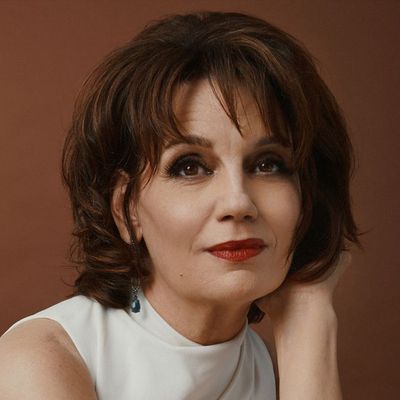
Bob Martin and Beth Leavel get political with their critically acclaimed new musical comedy.
Transcript
This transcript was automatically generated and might contain errors.
[0:05] Gordon Cox: Welcome to Stagecraft, Variety's Theater Podcast, taking you behind the scenes with the hottest shows on Broadway, off Broadway, and beyond.
[0:13] Gordon Cox: I'm your host, Gordon Cox. On this episode of Stagecraft, I'm talking to two Tony winners, the actress Beth Leavel and the writer and performer Bob Martin.
[0:21] Gordon Cox: Leavel is currently starring as the Broadway diva D.D. Allen in The Prom, the new musical that Martin wrote with songwriters Matthew Sklar and Chad Begelin.
[0:30] Gordon Cox: The show about a group of comically egotistical Broadway actors who swoop into small town Indiana to help out a teenage girl who just wants to take her girlfriend to the high school prom opened in the fall and it won over even the grumpiest of Broadway critics.
[0:43] Gordon Cox: Now it's getting talked about as a contender for Tony nominations this spring. The Prom is only the latest team up for Leavel and Martin after winning Tonys for their contributions on The Drowsy Chaperone and then working together on musicals Minsky's and Elf.
[0:55] Gordon Cox: Leavel and Martin are among Broadway's most frequent collaborators. Hi Beth and Bob, thanks for being here.
[1:02] Gordon Cox: So The Prom comes from a whole group of people that the two of you have worked with multiple times. There's director Casey Nicholaw, who directed The Drowsy Chaperone and Elf and Minsky's and Matthew Sklar and Chad Begelin, who wrote the music for Elf, and then also wrote the music for Halftime, a show that you, Bob, were working on. So you're almost an ensemble at this point, all of you. What does that how does that inform the way you work on shows, having that kind of history and experience with each other?
[1:30] Beth Leavel: Well, the seven do you want to start?
[1:31] Bob Martin: Yeah, I'll start and then you can make it sound more better. What it means to me as an actor is we have a relationship, so I feel completely safe in a room. So you walk in already feeling like you're gonna succeed because you care so much about the people behind the table that are taking care of you, and vice versa. So that just I feel like I'm already one up having a relationship with Casey and Matt, and not so much Bob Martin, but Casey and Matt and Chad. I'm just kidding. So that's just a that's just such a help when creating, giving birth to something new, to feel safe, to feel like you can make mistakes and they're writing for your strengths, and they will tell you when you could do it better, or they could write it better, or it's just like I said, it's a safe place to be an artist.
[2:19] Bob Martin: Yes, and when you have a group that you're familiar with and you have a shorthand with, then you drastically reduce the amount of, you know, politics, personal politics that's involved in the creative process, which you really want to put that, you know, have that at a minimum, right? So we can be critical, we can, you know, without hurting because we know we respect each other and it's just a really efficient and fun room to work in with all of these people.
[2:49] Gordon Cox: When did Bob, as you were working on this, when did the idea of Beth in the role of D.D. first occur to you?
[2:55] Bob Martin: I think it was immediate. I think I don't believe there was ever a consideration that we would work with anyone else in that role. And it's not because you're a diva, but it's because you have the ability to play one.
[3:09] Beth Leavel: You didn't say she's not a diva, though.
[3:12] Bob Martin: I did not say on the record.
[3:16] Beth Leavel: I didn't say she's not a diva, right?
[3:19] Bob Martin: Yeah. No, but yes, it was always Beth. So what's that like to sort of write for how did that then influence how you wrote that character in terms of how you wrote for what knowing what you could do?
[3:33] Bob Martin: Well, again, as Beth said, we know her strengths, and I mean it's I think you're always writing for performers in the theater. It's what makes the theater far more interesting than television and film for me because you're in the room for weeks at a time with the actors. And I even believe that the audition process itself is part of the writing process.
[3:54] Beth Leavel: Yep.
[3:55] Bob Martin: As you see people come in and interpret your material and then you begin to bend it towards the, you know, whatever actor you feel is right, or someone takes a completely surprising approach to it, that requires you to change the character quite dramatically, but you're gaining something that you hadn't thought of. I mean it's entirely collaborative that way. So to bring somebody in who's, you know, I know Beth's toolbox, so to speak, I know what she can do, I know exactly where to write for her. It's great.
[4:27] Gordon Cox: And when did you two discover each other? When did you first meet? Was that working on The Drowsy Chaperone? And how did that come about?
[4:34] Beth Leavel: Yeah, my agent called me in, just had an audition for and I knew Casey, I didn't know any of Bob and his troop. And I just came in with my own song and got a callback and then didn't get the part.
[4:50] Bob Martin: I didn't know that actually, really.
[4:51] Beth Leavel: She didn't know.
[4:52] Bob Martin: I did not.
[4:52] Beth Leavel: And Casey was kind enough to call me and say, you know, and literally I almost immediately went, I don't I totally understand. I don't feel like I'm the one to give voice to this person, this Beatrice Stockwell.
[5:05] Gordon Cox: Why did you feel that way?
[5:06] Beth Leavel: I just it wasn't on the page yet. Remember when Bob was saying sometimes when someone comes in and anyway, I feel like we once I was finally cast after they searched the world for some time and gave up and said, oh, for God's sake, well, Meryl was busy.
[5:23] Bob Martin: Meryl was busy.
[5:25] Beth Leavel: They just ran out of time. So it's like, oh God, quick. And they drew my name from the hat and they went to California, and then we started figuring out who this woman was. We really didn't know what the character was.
[5:48] Bob Martin: We saw a number of different takes on the existing material, and we started to see what Beth was doing. It's like, oh yeah. And then we started to really work with you to create the character. It was really a collaborative discovery of this person, this woman, this fabulous woman.
[6:05] Gordon Cox: And what do you each recall responding to in the other person and the way they work that really clicked with you?
[6:11] Beth Leavel: Well, I think Bob is one of the smartest people on the planet.
[6:15] Bob Martin: You're welcome.
[6:16] Beth Leavel: And Stephen Hawking's dead now, right?
[6:19] Bob Martin: Really?
[6:19] Beth Leavel: Oh, yeah. So I've moved up.
[6:21] Bob Martin: I've jumped up one place on that list.
[6:24] Beth Leavel: In comedy.
[6:24] Bob Martin: Yeah.
[6:25] Beth Leavel: And I just love his writing, and he's a kind person, and I feel like what he writes, I can get a laugh.
[6:33] Bob Martin: Okay.
[6:34] Beth Leavel: And if we can't get a laugh, then something's wrong with me.
[6:38] Bob Martin: But mostly is wrong with Bob.
[6:40] Beth Leavel: No, that's not true.
[6:41] Bob Martin: That's not true. Because what we always say is Beth can't get the laugh, it just doesn't work. Because Beth can get a laugh with anything. And then so if we, you know, a barometer that we use for the strength or weakness of material is how hard you're working. If you're working too hard, we take it away and rewrite it.
[6:58] Beth Leavel: Great.
[6:58] Bob Martin: Now, how many rooms can you be in when they give you that opportunity? Like, darling, you're working too hard. Let me take that away from you.
[7:03] Beth Leavel: That's right.
[7:07] Bob Martin: Thank you.
[7:08] Gordon Cox: And so then, Bob, how do you describe what Beth's sort of specialties are?
[7:13] Bob Martin: Well, again, I guess it comes back to collaboration. You know, we, I remember a moment in Elf so embarrassing. I learned so much when we talked with God.
[7:28] Beth Leavel: No, but we had to create, do you remember a scene you were with Michael I guess at the apartment and we had to create a joke for you to cross to the door? We must have hit you with like 50 jokes. Because it was literally just we just needed to cover like 10 feet across the stage but it couldn't be silent.
[7:48] Bob Martin: So Beth is the kind of person like that that we can do that. I you know, you'll go out there with whatever crap we give you and help us find the moment.
[8:00] Beth Leavel: And what line worked? Do you recall?
[8:02] Bob Martin: Oh well I don't even want to say because the joke has subsequently been removed from the touring version of the show.
[8:08] Beth Leavel: Okay because it was rooted in that time and it was not a particularly strong joke.
[8:13] Bob Martin: But we worked hard to get there.
[8:15] Beth Leavel: Oh just tell me what it was because I don't remember those if it's those damn Mormons again I'm gonna punch him in the face or something like that.
[8:23] Bob Martin: It was a little it was a lame joke but you know you crossed the stage subsequently well of course because you get a laugh with everything but I wish you could see that was a couple cross your eyes eye roll and always works.
[8:42] Beth Leavel: Yeah.
[8:43] Bob Martin: No there's um no Beth is just an extremely skilled comedian. She's but I would argue the best on Broadway, I would say.
[8:52] Beth Leavel: Um and that's ridiculous.
[8:57] Bob Martin: And that's just the, you know, to reduce you to a level of a tool. It's if you're crying to create your life easier.
[9:05] Beth Leavel: I see that.
[9:05] Bob Martin: Yes, yes, you have to have the best tools. She is a wonderful tool.
[9:09] Beth Leavel: Thank you.
[9:10] Bob Martin: And The Prom is an entirely original musical, which is to say that it's not based on any pre-existing book or movie or play. And it came about in sort of an unusual way. Bob, start off with telling us a little bit about how that idea got to you.
[9:24] Bob Martin: Um Jack Fertel contacted Casey Nicholaw and he saying he had an idea for a show and gave him, and this was we should say eight years ago. I believe so. I'm trying to remember if it was I around eight, right? I think.
[9:39] Bob Martin: Um but he caught he uh Casey called us in to have a meeting with Jack and he and we sat down and Jack really pitched us the premise. Jack Fertel, we should say, is a producer and a creator and a man of the theater, and he has lots of stuff. Literally wrote the book on musical theater.
[9:56] Beth Leavel: Actually true.
[9:57] Bob Martin: Yes. Yes. Um and so he pitched us this idea of about this girl who's, you know, wants to take her same-sex partner to the prom, but the PTA reacts by canceling the prom. And that's based on a this was inspired by a news story.
[10:09] Beth Leavel: A number of incidents that happened.
[10:11] Bob Martin: Uh yeah. Um and but his twist on it was that a bunch of egotistical Broadway performers want to come down and try to help her. Um and it was such a clever take on what we thought was very important material. It was a very clever comic take on that that we just jumped on it and we never altered that premise really.
[10:34] Gordon Cox: Is there any hesitation at all for a writer to take on somebody else's idea, or did you feel any hesitancy at all?
[10:43] Bob Martin: Um no, not at all, actually. I guess should I have?
[10:48] Gordon Cox: No, I just wondered.
[10:52] Bob Martin: Yeah, exactly. Well, you know, the world of being a lyricist has changed over the last few years. No, honestly, when in the days when I first came onto the scene with Drowsy, I was nobody here and the idea of working in musical theater was relatively new to me and it was an entirely original piece and we didn't think there was anything unusual about that. Subsequently, because of the financial realities of Broadway, there's a lot of adaptations.
[11:18] Beth Leavel: Right.
[11:18] Bob Martin: Most of the ideas that come to you are people from studios who are going through their catalog and finding films and coming to you and suggesting adaptations. So actually Jack suggesting a comic an original comic premise was more what I was used to and was refreshing. So I didn't complain.
[11:37] Gordon Cox: And then Beth, what was your first exposure to it?
[11:40] Beth Leavel: Um Casey called and said, What are you doing? Can we have a table read of this new musical with Bob and Matt and Chad? I went, Mm-hmm I'm busy.
[11:47] Bob Martin: Yeah, no.
[11:48] Beth Leavel: So I literally ran over and we sat around and did a table read and I think I've got to be.
[11:52] Bob Martin: Oh, did he call and say what are you doing right now? Is that what just happened?
[11:54] Beth Leavel: Okay. Yeah, wow. That's I'd be happy. I would leave right now. Thank you so much.
[12:02] Beth Leavel: And we sat around, me, Angie, Chris Sieber and Brooks Ashmanskas. We sat around with Casey. These are all people still on the show.
[12:09] Bob Martin: Yeah, yeah.
[12:10] Beth Leavel: So we have been connected with it for seven years and watching it develop and morph and grow and change, but the heart of it, the heart of it is still remained the same.
[12:19] Bob Martin: Yes.
[12:20] Beth Leavel: The tone and the politics of the show have changed.
[12:24] Bob Martin: Right.
[12:24] Beth Leavel: But the heart is the same.
[12:26] Gordon Cox: Over the seven years, was there ever a moment where you thought, oh no, this isn't gonna be topical anymore? This isn't gonna be relevant.
[12:32] Beth Leavel: Oh, that's very interesting.
[12:34] Bob Martin: Go ahead.
[12:35] Beth Leavel: Well, we simply we did during the Obama administration to name names. Things are going quite well.
[12:41] Bob Martin: Sure.
[12:43] Beth Leavel: You know, and we started to think, yeah, this is not gonna be an issue by the time we get to Broadway, which is amazing to think about right now that we actually it that it was that the world was in that state, or at least America was in that state at that point.
[12:55] Bob Martin: Right.
[12:56] Beth Leavel: Um and we started to we actually embraced the positive wave of sort of inclusiveness that seemed to be embracing like we had speeches in the show about how the history has changed and you know you have to choose to be on the right side of history, and Alyssa's saying things are going great now, like it's a world is it's much better place, and we had all this really really positive message within the show, and then things changed dramatically.
[13:26] Bob Martin: Although it still has a positive message, we should say.
[13:28] Beth Leavel: No, the show has a positive message, but the world got darker.
[13:31] Bob Martin: Yeah, yeah.
[13:32] Gordon Cox: And then the show premiered at the Alliance Theater in Atlanta. What did you guys learn from that production that you brought with you as you worked on Beth, your character and like Bob the book?
[13:43] Beth Leavel: Um I think that challenge with D.D. Allen is she's so funny, but there has to always be based on no one. Yeah, literally, all of us I think have a D.D. Allen somewhere inside of us. It's been really fun to open that. Not just theater before come out. So to make that character likable and lovable, so even in all her flaws, you will follow her journey and want to know her and care about her and what happens with her.
[14:13] Gordon Cox: Is that particularly hard for someone as big and as potentially abrasive as D.D.? Like do was that a challenge for you?
[14:19] Beth Leavel: I think a little bit. Um just setting the tone at the very beginning, I think has been a challenge. And we learned that in Atlanta, and I think we've done it so successfully now on Broadway.
[14:29] Beth Leavel: That flawed but lovable.
[14:31] Gordon Cox: And what are you doing differently? Can you characterize Bob what you're doing differently in terms of how you set that strike that balance?
[14:36] Bob Martin: Definitely on I think particularly with D.D.'s arc in the show that she we really she's she starts in the as the broadest of our principal characters, I believe.
[14:45] Bob Martin: For real? Uh wow. The principles are broad, let's just say for those who maybe haven't seen it. But I need some kind of trump or something. Well, I just mean I'm sorry, it's true. It is a group of broad characters, absolutely. But you get to a place of uh great self-awareness that you do not have at the beginning of the show. That's what I mean. Exactly. And you literally ask somebody to teach you how to be a human being. Exactly. So you you get to that point. Um just a sideboard that actually have a character that has an arc in in a musical comedy and has the opportunity for that is so rare and I'm so grateful. Keep keep talking. But um, yeah, I mean the big the big discovery in Atlanta was that we that the musical had to invade um a a real place.
Instead rather than there being kind of two or rather than b there being one um language, one musical theater language, both in in the Broadway uh part of the story and the uh Indiana part of the story, we realized that Indiana had to be a real we had to be a it had to be a recognizable place populated by recognizable people. And that our that would allow our um clowns as we call them over the top. The our principles to be more over the top as and then they're sort of b brought down to earth by by the principal character and by you know uh Emma. This is the name of the high school student they go to um so that was the the the big lesson and uh um both finding sort of humanity with within our principal characters but really grounding the the Indiana story on it and in Atlanta we had an audience for the first time so we had our scene partners telling us what worked and what didn't which was always great.
[16:37] Beth Leavel: Yeah what was remarkable is is how well the politics landed in Atlanta. And I didn't know what to expect having never been to the American South before. And Atlanta would be the American South. It is yes although they think of themselves in a different way I believe but I think that's probably true but yeah um but it it's actually quite a liberal area but but um people were really uh hit hard by the subject matter in many ways and and and we had people come uh after the show in tears saying they did identified with the mother of Alyssa who's you know really burdened by her own prejudices in the show.
[17:11] Bob Martin: Right. And you know it was uh it was it was we really started to realize oh wow this could have a an impact. And and then what have been some of the reactions that you've gotten we talked about you know the it turns out uh unfounded concern that the this show was no longer going to be topical when did what are the reactions that uh you've gotten more recently on Broadway that uh made clear to you that this was really hitting home well I'm just sidebar and saying that most of the reactions I'm getting are how spectacular the show is and how wonderful it is to have an original musical comedy on Broadway and how satisfying the storytelling is. And in addition to that, you have these some of the people in the audience can actually see themselves mirrored on stage for the first time, and it's really an emotional journey for them that ends up being quite the celebration.
So I've had people thank me, hug me, cry to me, all of the above. And really that's what art does anyway. But I think it's doing it so beautifully in this show. I love to go outside in the autograph line and just listen to what they say and how the show makes them feel and how they can sing. They've already memorized the uh the scene of the thing.
[18:24] Beth Leavel: Oh, yeah, yeah, that's always amazing, isn't it? It's fabulous. Yeah. And the show was on um the Macy's Thanksgiving Day parade, and it was the first LGBTQ uh kiss to be ever featured on that broadcast. Um talk talk about some of the reaction to that, both positive and negative.
[18:44] Bob Martin: Well, the the reaction has been overwhelmingly positive to it. Yes. But there was a very vocal and ugly uh negative reaction to that, as we expect. We actually expected it to be uh a larger uh number of people. Um and it made but personally speaking, it made me think that actually that these the negative voices that we hear about in this country are being artificially amplified. So we think there are more people who have these this belief system than there actually are. I mean, uh I could be wrong about that, but the the incredible wave of love and support that came about as a result of that appearance. Uh that was really amazing.
[19:22] Gordon Cox: Right. What was it like for you, Beth? You were in it. What was it like for uh you that moment on the well, you know what? It's it's so normal to me. So I even thought, wait, oh right, two girls are gonna kiss. So what? Right. So what? But I had to think, well, you know, there's an awareness, let's see what happens. And like Bob said, it was really so amazingly positive. And it was just the way this number ends. That's how it ends. Right. They, you know, love is love. Yeah, that's how it's staged in the show, right? That wasn't changed for the no, not at all. No, we thought that we were tender and sweet and genuine and authentic, and like I said, yeah, love is love.
[20:08] Bob Martin: Right. Yeah, I mean, uh some of the if you read the Twitter feed around the uh, you know, if you're sort of reading it in real time, it was remarkable to see people say, Oh my god, I just saw myself represented in the Macy's Day Parade. I never thought this day would happen. And they and you know, like lots of hard emojis and everything. It's just and it was just like, oh wow, this is so moving and such a beautiful thing. How often do you get a chance to be involved in something beautiful like that? You know?
[20:36] Beth Leavel: Agreed. And while the kiss was happening, I just have to tell you that it was five degrees. Yeah. So that's it. It was cold that day. And I'm in a slave jumpsuit. It's true, you were on two. You were, yeah. I was going, or or these my feet. I can't feel them anymore, and I could just see people going, give her a coat, bless her heart. So it was cold. That was uh that was the journey that morning. Like, hurry up and kiss up, you can get out of here.
[21:05] Bob Martin: But it was great. So, like Drowsy chaperone, the problem is steeped in Broadway and the history of Broadway and sort of Broadway fans and stuff, and there's a lot of jokes in there that are kind of for the fans and are really sort of inside jokes for people who really follow the theater and love the theater, which um is a great thing. But also I'm sure you're both aware that uh like other shows you've worked on, like they're very theater centric, but also have to be uh broad enough to you know appeal to audiences who maybe don't get that cat's joke or understand the Patty Lapone joke or whatever.
[21:37] Beth Leavel: Yeah. Um how do you do that? That's something you've done more than once, uh, both of you.
[21:42] Bob Martin: Well, I think I I you know, I I think the key is not to make the jokes gratuitous. So, like a perfect example is um the joke about gypsies, right? That happens in the top of the second act with Angie's character says, You gotta do this for all of us people who used to be called gypsies. Right. Um, like after the first couple of weeks, nobody got that joke, right? I'm assuming. Like when I I just went saw it about a week ago and it's crickets during that moment. But at the same time, she's saying something that's significant, even if you don't understand what that means.
[22:13] Beth Leavel: Right. She's actually explain that.
[22:15] Gordon Cox: Just in case some of our listeners don't know what that joke means. Explain it.
[22:18] Bob Martin: Um, uh what you should explain it.
[22:21] Beth Leavel: You're you're just you were like breathing in, so I was gonna let you explain it.
[22:25] Bob Martin: There's a big tradition um in the Broadway community that it's the dancers are called gypsies, and that's what's changed this year to be more political politically correct, and is now called uh the legacy robe. And there's the legacy robe uh every opening of a Broadway show. It's a beautiful tradition where each a person is given to wear the gypsy robe because they have had more ensemble contracts than anyone else. And they put the robe on, and the robe has the history of each show that's been in it, uh does a patch and they run around. It's very ritualistic, it's beautiful and they come and anyway. So now it's not called the gypsy. For obvious reasons, yeah. Legacy.
[23:06] Beth Leavel: But what's it what do the dancers call themselves though?
[23:10] Bob Martin: Gypsies.
[23:11] Beth Leavel: They still call themselves.
[23:12] Bob Martin: No, I don't know what they call themselves.
[23:15] Beth Leavel: Hey you.
[23:17] Bob Martin: That's ensemble as well.
[23:20] Beth Leavel: Because I used to go to show to show to show to shows.
[23:23] Bob Martin: Right.
[23:23] Beth Leavel: So that's how that joke came about because the line was you have to do this for all of us gypsies.
[23:28] Bob Martin: Right. When you were writing this show, yeah, when we were writing the show, they changed that term, and but they didn't replace it with anything. Right. So we thought, well, let's embrace it and just say people who used to be called gypsies and point out the fact that there's no term to replace it.
[23:40] Beth Leavel: Right.
[23:40] Bob Martin: Ha ha one person's reaction.
[23:43] Beth Leavel: Well I still like it.
[23:45] Bob Martin: Yeah, yeah. Carrie still gets a huge laugh.
[23:49] Beth Leavel: The reference to Carrie the Musical?
[23:50] Bob Martin: Yep.
[23:50] Beth Leavel: Yep.
[23:51] Bob Martin: Okay.
[23:51] Beth Leavel: Yep.
[23:51] Bob Martin: Yeah, that's a good thing.
[23:52] Beth Leavel: Every night.
[23:53] Bob Martin: So that's uh that really resonates. We should uh for uh listeners who don't know, Bob uh was also one of the creators of Slings and Arrows, the fine uh TV show that was also very, very theater centric, and yet I know people who have nothing to do with theater who love that show. Whereas I feel like, no, I've worked in nonprofit theater, it's exactly like that. But what what do you find? This is a question for both of you, what do you find is universal in the experience of working on theater and being with a group of theater people that uh everyone else responds to as well.
[24:22] Bob Martin: Well, you know, I mean Slings and Arrows was basically a a workplace dramedy. Right. So the it was about the tension between sort of art and commerce in a not-for-profit theater company, but it could have been it could have been at a you know paper manufacturing company as well. It could have been anywhere. Uh and so I think the the you know the inter-office, so to speak, politics are recognizable, I think.
[24:44] Beth Leavel: Right.
[24:45] Bob Martin: Only just more flamboyant.
[24:47] Beth Leavel: Right.
[24:50] Gordon Cox: Do you find do you find your are you drawn Beth, are you drawn to doing work that is about the theater mostly because you work a lot with Bob or is that just a thing that you enjoy
[24:50] Beth Leavel: I I love to tell a theater good theater story. But I also enjoyed Elf and that wasn't a theater story. That was true. I enjoy but you know I I look at my the history of the shows I've done and the ones that I just love like 42nd Street and crazy for you. It's it's satisfying and so theatrical to play someone and it gives me permission to sing loud as well.
[25:20] Bob Martin: Right.
[25:20] Beth Leavel: And tap dance and stuff.
[25:22] Bob Martin: And I'm not sure they do that.
[25:23] Beth Leavel: Like I wasn't able to do that in ELF and I I missed that. So it's it's exciting. I love telling a theater story and Didi is like the ultimate ultimate theater diva to to tell this story. It's really she's she's so much fun.
[25:38] Bob Martin: But apparently it's exhausting so visibly visibly exhausting.
[25:45] Beth Leavel: No there's no way anybody could have known except for me.
[25:48] Bob Martin: This is this is a reference to a conversation we had before the mic turned on where I mean basically Bob told Beth she looked really exhausted.
[25:54] Beth Leavel: That's really what it was it was we had a nine show week last week.
[25:58] Bob Martin: Yeah.
[25:59] Beth Leavel: You know kidding and so there she goes and so what are you guys working on next together?
[26:08] Bob Martin: I hope to be in this for a long time.
[26:14] Beth Leavel: Yeah, I hope you are too I I mean I live.
[26:18] Bob Martin: Yes.
[26:20] Beth Leavel: Um I I you know, as we were talking before we started recording, uh it's the it's uh work yeah, like I have no choice but to keep many shows in development just because of the long developmental timelines of these things. So there's like about seven shows. If it's possible to cast Beth in all of them, I will. And if it's possible to do all seven, I would.
[26:40] Beth Leavel: Yeah.
[26:41] Gordon Cox: Well, which what which one of those is the ones we're gonna see first? Can you give us any hints or anything or no?
[26:47] Bob Martin: I'm hearing a rumor.
[26:48] Gordon Cox: Oh, which which rumor?
[26:51] Bob Martin: I mean, uh the the there's the one that's most w it's furthest along now is a show that I'm doing with Adam Ghetto called Millions.
[27:01] Beth Leavel: Oh yeah.
[27:02] Bob Martin: And I'm super excited about that because Adam is this crazy genius and his music is so gorgeous and it's a beautiful story and it's really moving and funny and and um and so we're we're very well along with that. I would hope that um within a year we'll have it a production somewhere.
[27:15] Gordon Cox: Right. And who will Beth play in that?
[27:17] Bob Martin: And who will Beth play in that? Um see I don't know if Beth has been around.
[27:21] Beth Leavel: I'm working for Beth.
[27:22] Bob Martin: I'm working for it.
[27:23] Beth Leavel: I rule that, you know, that you the male lead.
[27:25] Bob Martin: Yes to say, let's go.
[27:27] Beth Leavel: Let's go.
[27:28] Bob Martin: Come on now.
[27:30] Beth Leavel: Uh no, I have heard a rumor about drowsy chaperone too.
[27:33] Bob Martin: Oh yes, there is a a sequel?
[27:35] Beth Leavel: There is a sequel to Drowsy in the works.
[27:37] Bob Martin: Yes.
[27:38] Beth Leavel: Yes, and Beth will obviously be in that.
[27:40] Bob Martin: I mean, certainly that would be playing that.
[27:43] Beth Leavel: Well, that's the beautiful thing about that is you're gonna age with the characters.
[27:46] Bob Martin: Right. Uh can you say more about where where we are with you know Man and Cher.
[27:51] Beth Leavel: Will you be in it?
[27:52] Bob Martin: Yes.
[27:54] Bob Martin: Yes, I believe I would be in it.
[27:55] Beth Leavel: I mean I mean Man and Cher will be in it.
[27:57] Bob Martin: Yes, yes, yes. What it basically it was time we we thought, well, you know, it's time for Drowsy to come back. It's been more than ten years. Um, but instead of just bringing it back to Broadway, we thought, well, it's Drowsy sappone. It's an unusual show. So why don't we uh have Man and Chair present another show, basically.
[28:15] Beth Leavel: Great.
[28:16] Bob Martin: So we're writing on the other show within the show, and it changes, of course, because Manning Chair would have a lot to say about contemporary world and the state of musical theater at this time and everything else. Um, same collaborators, and um, and I hope the same cast.
[28:32] Beth Leavel: Uh, you know, two lines.
[28:33] Bob Martin: I mean, extended.
[28:34] Beth Leavel: That would be astonishing.
[28:35] Bob Martin: Yeah.
[28:36] Beth Leavel: Yeah.
[28:36] Gordon Cox: Well, let's please make that happen.
[28:37] Bob Martin: Yes, we're trying.
[28:38] Gordon Cox: All right. Thank you both.
[28:39] Beth Leavel: Thanks for being here.
[28:40] Bob Martin: Nice to talk to you.
[28:48] Gordon Cox: That was Beth Leavel and Bob Martin from Broadway's The Prom, now playing at the Long Acre Theater. If you like what you've heard on this and other episodes of Stagecraft, don't forget to rate and review us on iTunes and subscribe wherever finer podcasts are dispensed. On the next Stagecraft, I talked to Jeremy Pope, the rising young star of Broadway's choir boy, soon to jump into a lead role in the new Temptations musical, Ain't Too Proud. Until then, see you at the theater.
© Broadway Podcast Network, All Rights Reserved