

How playwrights Katori Hall, Jeremy O. Harris and Matthew López think about shaping the future of Broadway... Read More
From the show: Stagecraft with Gordon Cox
Guests
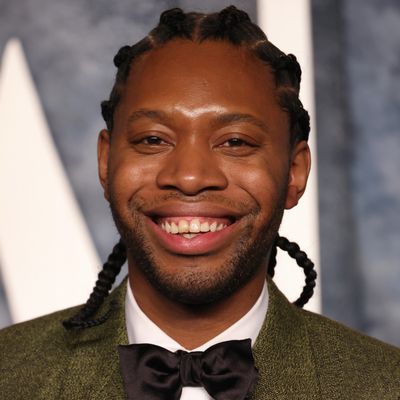

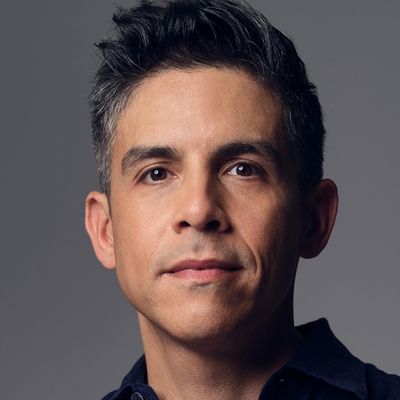
Featured Shows

About
How playwrights Katori Hall, Jeremy O. Harris and Matthew López think about shaping the future of Broadway.
Transcript
This transcript was automatically generated and might contain errors.
[0:00] City National Bank: With an unrivaled passion for the performing arts, City National Bank proudly supports Broadway.
[0:06] City National Bank: Having served the entertainment industry for more than 65 years, they have grown to bank over half the shows on Broadway, giving them a unique insight that other banks just don't have.
[0:16] City National Bank: Though Broadway's shows will remain closed to everyone for the rest of 2020, there's no doubt that the show will go on.
[0:23] City National Bank: Center stage, backstage, offstage.
[0:25] City National Bank: City National will continue to work behind the scenes, servicing the theater community until the day doors open again and every day thereafter.
[0:34] City National Bank: Get to know them better at cnb.com.
[0:37] City National Bank: That's cnb.com.
[0:40] City National Bank: City National Bank, member FDIC.
[0:49] Gordon Cox: Welcome to Stagecraft, Variety's theater podcast, bringing you backstage and behind the scenes with the stars, creators, and industry leaders who are shaping the future of the theater business.
[0:59] Gordon Cox: On Broadway, off Broadway, and around the world. I'm your host, Gordon Cox. Last week, Variety hosted the digital event Legit, The Road Back to Broadway, featuring interviews and panel discussions with a who's who lineup of writers, actors, directors, producers, and activists.
[1:16] Gordon Cox: In this week's episode of Stagecraft, we present an audio version of our keynote conversation, The New Voices of Broadway. In it, I moderate a discussion with three of the most important and influential writers on Broadway last season. Katori Hall, the bookwriter of Tina, Jeremy O'Harris, the writer of Slave Play, and Matthew Lopez, the writer of The Inheritance.
[1:37] Gordon Cox: I talked with all three of them about how the theater industry's pandemic pause, coupled with the global reckoning over racial justice, has made them think in new ways about their work, their activism, and the future of Broadway. Here's our conversation.
[1:50] Gordon Cox: Hi everyone, I'm Gordon Cox, the contributing theater editor at Variety and the host of the Stagecraft Podcast. For our keynote conversation, we've brought together three of the most exciting writers working on the stage today. These are the new voices of Broadway who will be shaping what Broadway turns into when theaters return.
[2:09] Gordon Cox: Joining me are Katori Hall, the book writer of the musical Tina, and the creator and showrunner of the new critically acclaimed series on stars, P Valley. Jeremy O. Harris, the writer of Slave Play and the upcoming film Zola. And Matthew Lopez, the writer of The Inheritance, and the book writer of the new stage adaptation of Some Like It Hot.
[2:31] Gordon Cox: Hi everyone. Thanks for joining me.
[2:34] Katori Hall: Hey Gordon.
[2:36] Gordon Cox: So first of all, we had a little brief chat about this before this, but just so everyone listening knows, where are you all and how are you holding up? Katori, we'll start with you.
[2:44] Katori Hall: I'll know how about it. Um, my kiddos started homeschooling again. So we had like a nice post, you know, summer break. And so now it's having to, you know, juggle the work and the dreaming with making sure that your children can continue to dream. And so I am definitely in the mid pandemic parenting and oftentimes hey, come in, you know, and be like mama, what my chicken pot pie it? Like that's Yeah, and you're in Atlanta, right? With your family, Katori.
[3:32] Katori Hall: Yeah, I'm back down my hand.
[3:34] Gordon Cox: Jeremy, you were in London before, right?
[3:39] Jeremy O. Harris: I've been learning over the last six months how not to be a student, right? Like how to truly be an adult in the world, you know, because I think that after three years of grad school, you sort of forget that. Like you get enamored with the rhythms of like a fall semester, spring of winter break, spring semester, spring break, and then like, you know, end of the year show, summer, and then you're back to school again in the fall. And I think because Slave Play happened, like I found out I was going to Broadway like the week I graduated. I never had a chance to unlearn that system, right, for myself, or even like acclimate myself to like being a person who's not tied to an institution.
[4:28] Jeremy O. Harris: So at first for the first three months of lockdown, it felt like I was on spring break again from like all the rule things I had to do, like, oh I don't have any plays to do, like I don't have to turn any assignments in. And then around June, I was like, oh no, Jeremy, like this is real life, and like this is how life is, and like you're learning real life in a very surreal moment. And I think you should like really utilize the surreality of this moment to like do all the things that you didn't get to do when you were like working or schooling or whatever. So I like, you know, try I've decided to take it upon myself to give myself the gap year that I never got, while also working, figuring out how to be a working writer.
So like setting a set schedule for myself and like being like from three to five, you can't you can go outside and like take a walk in Florence, but from 8 a.m. to three, you're writing and reading and doing whatever you need to do. So it's been great.
[5:26] Gordon Cox: Right, yeah, yeah. And where are you, Matthew?
[5:28] Matthew Lopez: I'm upstate. We have a house up in the Catskills, and we left the day that the theater shut down. My husband's an educator, and the school closed, his school closed that day as well. So yeah, we've been up here for the most part since March. And because he's an educator, life quickly shifted for us because you didn't know. I mean, you know, Jeremy and Katori know this. It's like when you're in production or you become the show in the family or in your life. You are the main character in your life. And so suddenly things shifted and suddenly, you know, I got to be able to be there to support my husband while he was trying to figure out how to keep these kids educated, keep school open while not being there, and suddenly like the roles were reversed.
And it was nice to be able to after all these years of him sort of schlepping out to London just to support me. So we spent a lot of the spring, you know, working and he was doing a lot of just sort of, you know, he likens it to building a plane in midair when they were trying to figure out how to keep these schools open and then also how to reopen in the fall, which they've just done in a way. So, you know, I just sort of retreated to my little room and did some writing, and then I would come and make another meal and then retreat back. So it was for as frightening a period as it was in so many people's lives, I was very fortunate that I had something very grounding to focus on.
[7:02] Gordon Cox: That actually leads me into my next question, which is are you guys writing and how challenging has it been to either carve out the time or find the inspiration these days?
[7:16] Katori Hall: I don't know about y'all, but it's just it's incredibly hard. I just feel so for me, it's been about surviving and taking it all in. I just feel as though, you know, the most beautiful thing about being a teller is that you can think of yourself as a vessel. And this pause has just, you know, heightened all of the things that I don't know about. And then the things I really know, and also the things I really want to write about. And it's this collision of not only is there a pandemic, but we are dealing with this reckoning in our country when it comes to social justice and seeing people of color, specifically black people as human beings. So I think as a black woman, particularly a black woman who is two young boys, I've been really sitting in that ability, that burden of being the mother of two black boys.
[8:20] Gordon Cox: And Jeremy and Matthew, are you writing also?
[8:23] Jeremy O. Harris: I feel similarly to Katori, or I have felt similarly in the sense that like, you know, I think that so much of what I how I consider what I do as a writer is like not only am I watching what's happening in my present and like looking back towards the past, but I'm also writing towards some futurity, right? Some future stage that it'll be on or some future camera that'll shoot it. And imagining what world my work will end up in has been very difficult. So it's almost made it kind of impossible to sit say on the page for most of these months. I mean, you know, I feel like we accelerated from year 2020 to year 2045 inside of some like wild, you know, sci-fi novel in the last couple months. And I was really anxious about that acceleration and really sort of subsumed with anxieties that the world was giving me about the fact that this pandemic was affecting mainly the people on this, like on this call, you know what I mean?
It's like the immunocompromised are like essentially mainly people who are, you know, either poor, black, brown, queer if they're positive, like a lot of other things. So I was thinking about all those things and wondering like angrily, like how there could be writers like Nick Pizzolato on Instagram being like, wrote seven scripts this week, like pop pow, pandemic ain't gonna hold me down, you know. And like I wasn't mad at him, I was just sort of like confused, like just like anxious, like how is it possible for you and so impossible for me? And I think I just rounded a corner with myself where after months of re-engaging with the practices that help me build work, like watching too much anime or reading 17 books over a weekend and like feeling overwhelmed with thoughts, have gotten me now to a place where I've been like writing consistently. So for the last month I've been writing, but up until then I hadn't. And I've been really advocating for other people not to force themselves.
[10:27] Katori Hall: They didn't want to.
[10:30] Gordon Cox: And Matthew, you said you would duck into your room and do some writing during all this.
[10:34] Matthew Lopez: Yeah, I think Jeremy's right in that I think the treating this as if this were some extended writer's retreat was just not gonna work, you know. It's just not a good way to be a citizen in the midst of this. I mean, and weirdly, yeah, you know, asking us to be citizens in the spring meant staying home and staying away from each other. You know, it can lead to a great deal of reflection. And I think that Jeremy and I have had similar years. We the quiet that comes from that was probably very welcome. And but yeah, I mean I had I had deadlines and I had things that I needed to get done, which was you know, it was actually I think yeah, I mean no, seven banged out seven scripts this week. That I would suggest seeing a doctor if that were the case.
But there is a solace I think that comes from knowing that you have work to do and sitting down and doing it. And weirdly, I the three projects that I had sort of committed to doing in the next year and a half, they were all period pieces. So I was either in like 1910, I was in 1933, or I was in the 1960s in Italy. And so I mean there it was really a lovely escape.
[11:53] Katori Hall: Um, but the thing is is that you come out of that workspace and you're you have to be citizen again. And um, you know, I think also speaking to like what what comes next is like we also are in the very fortunate position of getting to uh to determine what comes next. It starts with with writing and uh writers theaters are closed for a year and um film production is slowly ramping up. And um when it when the theaters reopen, the what is produced uh will look different, it must look different, and it will look different because we as writers have the ability to to shape that. And you've all touched on this in some manner, but what what have you thought in the past was your responsibility as an artist in terms of how it overlaps with you whatever individual responsibility you feel for sort of civic engagement and activism and advocacy?
What how what has been your thinking on that and how has it changed at all in the last six months? It's interesting. Somebody sent me my Wikipedia page one day, and in it says that I'm an activist. But I think it has a lot to do with why I write. I at least I didn't see this black southern country cursalot girl on stage uh it who was unapologetic about her blackness and her southernness. And so in writing myself, um, I began to represent a whole lot of different people, and not just you know, black southern sales, but people who felt like they also didn't see themselves on stage. And so that kind of action, even though you know it it it's just words, but it's everything. That's the revolution.
Being able to um exist is sometimes a resistance. And so um the fact that not only do I continue to represent myself specifically in my work, but I have begun to kind of spread my wings, so to speak, and get other marginalized uh voices and even like marginalized people within you know marginalized communities. Like I just feel as though that's my ministry. That's that's what God told me that I was supposed to do, even though the income very clearly, I you know, I have to go through a very long path in to get there. Um, and so this thing of of why I write, um, it's like as someone knows that she is marginalized. I feel as though any opportunity I get, whether it's you know, the platform of the stage or platform of of the small screen, I have to represent.
And I must say, because of what is happening now, I feel that responsibility even more so. It's almost like my mission statement. Because this moment has been a moment, I think, of folks who have felt so marginalized and silenced and and just so dehumanized because of not being seen for their humanity. Um it my kind of my mission statement seems to be in alignment with you know, this this moment of of reckoning. And so um as I look into the the mirror, you know, um, as I begin, you know, a new creative process in terms of how I want to move forward into the future with my work, I just feel even more emboldened to to continue doing the thing that I was already doing.
[15:48] Gordon Cox: I'll have more with Katori, Jeremy, and Matthew right after the break.
[15:53] City National Bank: With an unrivaled passion for the performing arts, City National Bank proudly supports Broadway. Having served the entertainment industry for more than 65 years, they have grown to bank over half the shows on Broadway, giving them a unique insight that other banks just don't have. Though Broadway shows will remain closed to everyone for the rest of 2020, there's no doubt that the show will go on. Center stage, backstage, off stage. City National will continue to work behind the scenes, servicing the theater community until the day doors open again and every day thereafter. Get to know them better at cnb.com. That's cnb.com. City National Bank, member FDIC.
[16:40] Gordon Cox: And now, here's more with the new voices of Broadway. Katori Hall, Jeremy O. Harris, and Matthew Lopez. And Matthew, what about uh for you in terms of how you have thought in the past about your uh engagement as an artist and your engagement as an activist or an advocate, and has that changed at all in this time?
[17:01] Matthew Lopez: I think in in some ways it's inexorable uh to a certain degree if you're if you're an artist of color, if you're a queer artist. It it it just it it's just you you you you start from a different place. Um you view the world from a different place, and sometimes that quality of that that marks a writer of being an observer because you've never been asked to be a participant for so much of your life. Um I think it starts automatically from a different place. Um you know, I I've always been a very personal writer. I've never I've never sought to write um polemically. I've never uh it's just not how I it's just not w where I what I think creatively, how I think creatively. I can dash off an essay, but I can't dash off a play that's an essay.
And and so, you know, when when I was um sort of thinking about this question, I've been asked this question before, and I think you know, for me the answer that I've come up with is just it's it's um Sonia Sotomayor's um wise Latina formulation, which is that um you take a person from their their own perspective writing whatever it is that they choose to write, uh, and inevitably because of the life that they've lived and the perspective that they have because of the life that they've lived, their work is going to be reflected in that, even if their work is not about that necessarily all the time. And the example I use is Sonia Sotomayor is the first Puerto Rican justice of the Supreme Court, and they don't just give her the Puerto Rican cases to decide, you know.
Um and I think that any writer who wants to be uh a citizen in addition, um will inevitably think about that. And then, you know, the act of rewriting is then to be able to push, but push it in the direction that you want it to go. But um for me, it always starts and ends with with with my heart, with my soul. Um, and that usually informs the the project that I take on, and it usually informs the directions that they they travel in.
[19:09] Gordon Cox: And what about for you, Jeremy?
[19:12] Jeremy O. Harris: I mean, well, I think that like at the end of the day, I I was I went my mom and my family worked so hard for me to do something that like mattered. You know what I mean? Like, and like in their mind, mattering in a lot of ways was like something that had to do with like an active uh relationship with with um being in the civ in in the civic sphere. So like being a lawyer or a doctor. Like those are the things that they had like use all of their like very meager um resource or humble resources to like push me towards. And I fell in love with the theater. And so I I've always felt this responsibility that if I was gonna be in the theater, I had to do theater the way the Greeks did it, right? Like, you know, the theater of the Greeks was about like um was as much about like civic responsibility as it was about anything else.
It's about people witnessing the world, um, like responding to that world and then maybe doing something to change it, right? Like that's why like the only people who could see it were people who could vote, right? And I I I've also thought about how as um a theater maker, I can work um and use my voice to like expand um in other spaces in the theater. And so I think and I hope that like, you know, some of the things I started to do um in the last two years in the world of the theater, as far as like conversations about accessibility and conversations about like who theater is for and how you get the theater that you want um the the theater that you want to make for uh disempower voices or like other voices, how do you make sure that they they know that this is for them as much as like the game of thrones is or euphoria is?
Um those are at the center of like my a lot of my work. Um and I hope that things um can continue in that way. I mean, this year um was a really interesting uh I had to ask myself a really interesting question of like, you know, what is my responsibility to other theater artists now that I'm a theater artist who has um at a very young age gotten to the height of our uh of our sphere. And I realized that a lot of that had to be like, I have to take care of the the ones who can't take care of themselves in this moment, or at least like, you know, create spaces where other people might know that that's something we can do. And so I'm I'm hoping that in the coming months and the coming years, I can keep building on that and hopefully like find other allies in building on that and like really create this huge coalition wherein we can be a self-sufficient, um like huge organism of a of a community that like doesn't just make the kind of musical that you know people see and ignore and like does nothing to like change anything about like the status quo, but like will be making more work that like challenges like people's like um like ideas of how they see the the world that they're living in, that challenges who should be sitting in the seats next to them, that like uh is making it so that um theater is not a rarefied luxury object, but like an accessible object that like um that can reach the little kid in Virginia the way it reached me.
I don't know. That's a lot of talking to say like being someone who makes entertainment, it's very difficult to reimagine how to be um an active citizen. But I think that like the only thing that keeps me um coming back to the page is like reimagining ways to be an active, good citizen while also making things that are entertaining.
[22:45] Katori Hall: Jeremy, I have to just say Jeremy's so right about that, especially when it comes to the audience. And one of the things that I I'm so sad for you that you didn't get a chance to experience uh is what a London audience can be like. And Katori can speak to this. You walk into those theaters. When I walked into the Young Vic, every night, uh there the audience was predominantly young. And of that predominantly young audience, they were predominantly people of color. And they uh they only had to pay 10 pounds for their seat. And they also didn't pay 10 pounds and but put up in the shame seats, right? Like they were like there. And and when we moved to the West End, it it shifted, of course, a little bit because of the the economics of it, but it did shift all that dramatically. I genuinely shudder to think what my life would have looked like if I hadn't discovered theater, if there hadn't been theater for me to access as a as a kid.
[23:41] Jeremy O. Harris: And our audiences are in the United States and in New York are older. And when they come back, when theater comes back, will those audiences come back? Then one of the some of the most vulnerable people to COVID, we have a great opportunity to change the audience. You change the audience, you change what gets produced, you change who gets elevated, you change who gets amplified. And um it just, you know, it we can't rec we can't rely on the signature and time warner figuring out how to make tickets cheap for like five seasons and then stop doing that. I'm sorry, that's my soapbox. And um, but I mean Jeremy's right, it's the audience.
[24:20] Gordon Cox: Yeah, and based on all three of you have had uh Broadway experiences in this past season. Based on that, where did you feel like Broadway and the commercial theater in particular sort of fell down on its job? Like, what were the disappointments for you or have been the disappointments for you that you uh are that have now energized you to sort of work toward improving as we move forward?
[24:43] Katori Hall: I mean, I can I can speak to some of them. I mean, I feel like I like being like this is where you suck. Um, but like um I think that one of the things that was really frustrating, the inability, like it was like we ended up giving away a bunch of tickets for free to our dress rehearsal, but we were told by our general manager that like that doesn't happen. Like this can make make a bad precedent. I was like, what a precedent of giving students free tickets to see a work in progress showing of a show? Like this this should be standard practice. Like, and in fact, I wish I could invite high school students and college students to come to the entirety of my tech process. It might make my everyone feel a little crazy, but it would be like really informative for them in a lot of ways because it might make going to Broadway feel less insane because I can tell people on variety that doing a show on Broadway is not that much crazier than doing a show in high school.
And only in the sense of like the audience is generally bigger and like you have more money. But if you went to a school with a pretty good high school drama program, the tech is still gonna be the same. They're gonna say hold, they're gonna like, you know, they're gonna the lighting designer's gonna fight with the sound designer about who gets to go back, and it's gonna be all that stuff. So those are some of the small things that were really bothersome to me on a just sort of like practical side of it. And it's and it has to do with like how Broadway sees um itself in relationship to the community that it should be serving, right? Like the community that Broadway should be serving is the community of New York and anyone who wants to come to it.
And so often it seems to be um, how can we make this seem as rarefied as possible so that we can serve a wealthy community who wants to have like pristine like objects that no one else can have access to?
[26:29] Jeremy O. Harris: Yeah, definitely. I think for for me it's that thing of um I call it the only one syndrome, and I can just speak very specifically about my experience, you know, with Tina. It was it's it was such an amazing um journey, you know, to to open the show on the West End and then to come to Broadway, and then but there was that thing of being on that stage as a black person, and you are telling a story about black trauma, and once again looking out into that audience, and it does not look like you. And so it's this very, very, very almost traumatizing thing for um a black former and black performer and and a black writer to um in a weird way be airy the dirty laundry, right? You know, even though Tina's story has been told um before and the the retelling of it um was in this musical form, it was this this need to want it to feel like a church, to feel like a sacred space and needing the witness of black eyes and and having black bodies in those seats, and so it's very industrially linked to what um Jeremy was talking about this this audience um not being served, even though um I can say there was an attempt to bring in uh a multiculty audience, but it's the thing of that audience having not been developed and people trying to get you know, the person who quote unquote knows the black audience, get them into the seats, but by then it's too late, it's just too late.
And then from the inside of it, you know, our our creative team, um, I was kind of like the only one, and so it's that thing of having to represent an entire community when in all actuality, there needs to be more laying on of hands when it comes to stories that center the black experience um in regards to the creative team. And you know, I a few months ago, you know, there was this letter circulating around uh we see you, white American theater. Um, and I I as soon as that letter was circulated, I was one of the first people um who who signed it because there's this thing of feeling as if you know we are just not heard, we are not we're just not represented, um, particularly um as as black voices.
And so everything from um developing the audience to um looking at the critical body to really looking internally as to how these rocket ships are built on Broadway and to make sure that we're welcoming everyone into the fold, whether it's people who are in in the unions who are working, you know, backstage just as stage hands, like that union is Lily White. So there's just a lot of work to do as we as we move forward into the future with Broadway.
[29:28] Gordon Cox: Yeah. What are your thoughts on that, Matthew?
[29:31] Matthew Lopez: I feel like I kind of answered it already with my last thing. Um yeah, no, I just think that any industry that doesn't innovate is gonna calcify in that. And you you you you can't um you can't in in the 21st century still keep working the way you did in in in the 1960s. You can't you can't have a season on Broadway uh that that has slave play on uh in it and and the inheritance in it and Tina in it and then operate as if you're still you know presenting Neil Simon's work. Um and it just sort of feels like uh there I you know one of the things that was really encouraging to me is in the process of doing the play, I encountered so many young people who worked in these offices. So many young people who worked in the advertising offices and the press offices.
Um Curtihy, who is our lead producer, he he is the oldest person in his office by like two generations. Um and I think that you know hopefully you'll start to see it in the nonprofit space. But if Broadway wants to actually fully enter the 21st century, they need to start listening to their to their younger employees. They need to empower their younger employees, they need to pay them uh money to in order to keep them because uh they're the future audience, they are the future artists, and um I think we need um as venerated as Broadway's history is, and no more so than to itself, uh if they do not start in Broadway, and I just use Broadway as a catch-all, if Broadway doesn't start to look like, act like, operate like the rest of the world and the rest of media, it's just gonna get stuck in in the 20th century.
[31:30] Jeremy O. Harris: And can I just say one thing that just connects some of those things really, really, really quickly? One of the things that's so frustrating to me as well in the like wake of like you know, conversation about racial racial awakening vis-a-vis theater, is that there seems to be so much of an emphasis, um, especially by like non-black or brown people on like oh my god, we need more black people to see black shows, to be working on black shows, blah blah blah. But I also want them to think about the fact that like my mom loves taken, like Liam Neeson is her favorite actor. And yet, if Neeson was on a was on Broadway in a play, no one would market to my mom, you know, and she would just as quickly.
And my thing is that like I don't want to just be going to like shows by Matthew, shows by Katori, shows by myself, and seeing black and brown people in the audience. I want to be going to like the the plaza suite at um at fuck the with you know Sarah Sarah Jessica Park and Matthew Broderick and know that I will see another black person in the audience. The thing that makes me feel insane is going to a show sometimes written by friends that has been marketed only to white people that's about white people, and I am the only black person in there, and I'm living my best life, and I know other black people would enjoy it, but I'm just like, wait, why did we not invite it? Oh, oh, you didn't want you you didn't think we wanted to see this.
Okay, cool, cool, cool. You're you'll invite us in February. Great. And the other thing is you actually care about black people, you want to do shows like Slave Play, you want to do shows like Tina, then when a major protest is happening, dear theater owners, open up your fucking hallways to the black and brown people that are protesting for the rights of your performers and your writers on the streets. Open it up, let them use your bathroom, especially in a moment of a fucking pandemic when no one else is was is is no one else is using these spaces, these like empty pieces of real estate. And I think that like, you know, for me, I think that like there's so there's so many things that could be done by uh people in the commercial theater space to just show that they care that actually take so little from them and give so much to the community.
And I think that little things like that in those moments. I hope that the young people in these offices are pointing them to the Twitter conversations and pointing them to the Facebook threads and pointing them to the Instagram posts so that they know, hey, there are little things you can do that would make a huge difference in people's lives. And I know that I was really grateful when New York Theater Workshop and um and the public and the in the vineyard and a bunch of other off-Broadway theaters started taking that on during that moment, and I'd be interested and excited to see how broad we could take those lessons and integrate them in the coming years for the commercial theater house.
[34:12] Gordon Cox: Yeah. Well, we are about out of time. Uh we have a lot uh a lot to think about and a lot of work ahead. Um thank you, all three of you. Thanks for joining us for this conversation. I really appreciate it. Nice to talk to you.
[34:26] Katori Hall: Thanks, Gordon.
[34:27] Jeremy O. Harris: Thanks, Gordon.
[34:36] Gordon Cox: That was Katori Hall, Jeremy O'Harris, and Matthew Lopez, three of the new voices of Broadway who will be shaping the industry long into the future. A video version of this discussion, along with a producer's panel and a round table featuring the talented lineup of this year's 10 Broadway to watch list, is now available in the variety streaming room at variety.com. If you like what you're hearing on this and other episodes of Stagecraft, I'd so appreciate it if you took the time to rate and review us on Apple Podcasts. You can subscribe and find past episodes there, and on all the other pod places, including Spotify, and on the Broadway Podcast Network, which is a great place to find more theater for your ears. I'll be back in two weeks with another new episode. Thanks for listening and see you soon.
© Broadway Podcast Network, All Rights Reserved