

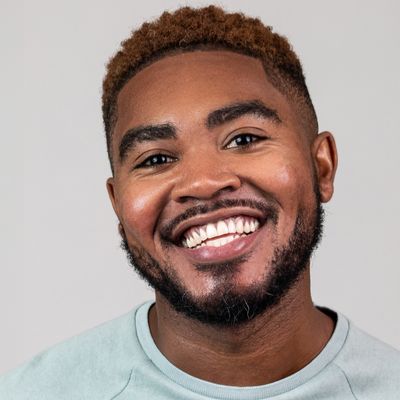
Host Christine Shepard leads a roundtable discussion of the return of Broadway with Ixchel Cuellar, Sara Edwards, Cody Renard Richard. They discussed what they want to the new Broadway to look like and how that can be achieved... Read More
From the show: The Ensemblist
Guests
About
Host Christine Shepard leads a roundtable discussion of the return of Broadway with Ixchel Cuellar, Sara Edwards, Cody Renard Richard. They discussed what they want to the new Broadway to look like and how that can be achieved.
Transcript
This transcript was automatically generated and might contain errors.
[2:10] Christine Shepard: Hey everybody, welcome back to Chris Chats with. It's your girl, Christine. Here again to share, talk, feel, you know. I'll be honest with you, this episode has taken me on a full roller coaster, up, down, sideways. It's a conversation between four people in the Broadway industry, and it was vital and extremely eye-opening and super helpful for me, and I think it will be helpful for others that listen to it. Yeah, I don't want to gab at the beginning like I feel like I usually do. It was a long conversation, but like I said, I feel like it was extremely important and I feel passionate about it being shared. Let's get into it, guys. Let's listen to four people talk about the return of Broadway.
[3:16] Christine Shepard: Alright, thank you guys so much for being here. I'm really excited because this conversation, it is happening in our homes and on social media and, you know, just in different spaces and places. And I think it's good to keep that going. But I'm interested to get all of you guys' different perspectives because we're cut from the same cloth, but we are different pieces of a cloth. Yeah, I'm just interested to see how they all mingle and stuff like that. So, let's get us started.
[3:50] Christine Shepard: So, the first and the last question, I want to do a classic, like, go around the circle, like, my name is Tammy, yeah, like, cool, around the circle. So, the ones I think we can just, you know, whoever feels like, alright, I have something to say about it, and we're all adults here, I'm not worried. Cool, question one. Please give your name, pronouns, and job title within the Broadway industry. Example, I am Christine Shepard, my pronouns are she, her, and I consider myself an ensemble slash swing member.
[4:26] Cody Renard Richard: Hi, my name is Cody Renard Richard, and my pronouns are he, him, his, and I am a stage manager in the Broadway world.
[4:36] Sara Edwards: Hey, my name is Sara Edwards, my pronouns are she, her, and I am an associate choreographer for Broadway shows.
[4:45] Ixchel Cuellar: And last but not least, hello, I'm Ixchel Cuellar, my pronouns are she, her, hers. I am an actor, dancer, singer, mostly doing ensemble, swing, and dance captain stuff within the Broadway national tour world. Bam, simple, we're all here, we're all excited to be here. Alright, let's get into it.
[5:09] Christine Shepard: First real question. Some would say our industry as a whole is outdated. I would be considered part of that some. What are some active ways we could bring it into the 21st century? I, because I feel like right now we're doing things that I don't know if I would consider them active. Like we're kind of setting all the like, we're like setting the table it feels like to try to start the, what I feel like is active work.
[5:38] Cody Renard Richard: Yeah, I think what's interesting is that, you know, I was reading this thing yesterday about how generations tackle certain work. And I think what's interesting is that our industry has been built obviously by the generations before us, and most of the people who are in power positions are of a certain generation. So the way they go about inflicting change or the way they go about accepting change is very different from someone who is in my generation or someone who may be next. Because now, you know what I mean, social media plays a big part of it. People want things to happen much quicker, and I think that that plays a big part in how, you know, we bring our industry forward. You know, there are a bunch of things that we all probably can list off that we feel are outdated, you know, and I think it's in order to come forward, we still have to go through the process of vetting to make sure that it's going to work and then also getting the people who have power on board.
And I think that's just getting, I don't know, creative in how we present these things because there's still, you know, a hierarchy. Even though, you know, we're trying to break a lot of that down, there's still that, you know, process I think that we sometimes don't want to go through.
[6:56] Sara Edwards: No, yeah. And sometimes I'm like, do I, is it the tactic of my quote unquote outsmarting it? Or am I trying to flip it on its head? Am I putting it in the washing machine and letting it dry? Like, what am I, what am I doing with it, you know?
[7:12] Ixchel Cuellar: Totally. I mean, I don't know, like, this is a harder question because I feel like just thinking about social media and our phones, I think that is one way to bring our industry forward, just communicating, you know. Everyone's been asking for transparency from the union, but what does that mean? You know what I mean? Like they started these weekly emails to give us, you know, an update of what they're doing, but people are saying that's not enough. You know, they're posting more on social media, people saying that's not, so just figuring out what is, what is, yeah, that, what transparency means and what information they can actually give us that's illegal. That's the other thing. People want things that in past years we weren't able to give out, so it's trying to figure out what that means too, I think.
[8:02] Cody Renard Richard: No, totally. I was going to say one thing that I've been sort of trying to work through in my head and that we've been talking about with one of the general management teams that I'm working with right now is, is talking to Equity about those first day of rehearsal meetings. Remember those?
[8:14] Sara Edwards: Yeah.
[8:16] Cody Renard Richard: I mean, sometimes, sometimes those meetings are like nails on a chalkboard. You know, like you're like, come, I just want to get to my script and get to my work. Can we stop talking about my 401k? But the truth is, is sometimes those moments end up being these beautiful, like, oh wait, I can do what with my money? You know, and you get to ask these really real questions that you wouldn't even bother because we're just spinning. We're just like, usually we're spinning through our shows, we're spinning through our auditions, and we don't, we don't pause. And right now we have been on this pause for so long that I think we're all, we're ready to come back to something new. And I would love to see those morning Equity meetings take a step up in a sense of like a, like a human resources, HR position that like, we're not just talking about our insurance and our 401k, but like we are talking about harassment and we are talking about racism and we are talking about all those things on the day one.
Like it should be a full blown training every day until, until we're exhausted by it and beyond it because then it would be right there in our faces and you wouldn't be allowed to look at your script or learn a line of music until you've been spoken to.
[9:29] Sara Edwards: In person, real upgrade to me.
[9:34] Ixchel Cuellar: No, yeah, and I think integrating it regularly would be really an interest. I would love to see the difference in that would do. I think some shows I've had a little bit like the first day seems a little more intense than others in a sense of they're drilling you and other times they're very like, alright, like, you know, it really depends on what room you happen to be in. But I think no matter what to implement something like having uncomfortable conversations or things like that regularly instead of just being like, alright, April 13th is the day we're going to talk about that thing you don't want to talk about and you slap it on the calendar and it becomes that uncomfortable holiday and then it disappears until there's an issue. I think to have it implement before you even get to the theater would be really powerful type of, you know, new wave into the type of new that we're trying to get into.
[10:21] Cody Renard Richard: Yeah, I mean, like think about people in the real world, like pedestrian people that don't do showbiz like us. I don't know what to call them, the muggles. All those muggles, like they go through training. If you get hired by a company, you're going to sit and you're going to listen to how to act, how to be in a company and be appropriate and be responsible, and we don't do that. I don't know if it's because we're constantly pushing the limits and asking questions and pushing boundaries with our art because that's also our job is to tell those hard stories, but we still have to do a better job of taking care of each other from day one.
[11:05] Ixchel Cuellar: What's interesting though is that we do push boundaries with our art, but we don't push boundaries in like the personal space. You know what I mean? This push for diversity has been something that we've been talking about for years and we haven't seen effective change in it. You know what I mean? So that's the other thing too. We can push with our art but we can also bring ourselves along in other spaces. So I think honoring that and making sure that we are still doing that too. Just to kind of piggyback on what Sarah said, I think that these trainings that we do aren't tailored to.
[11:43] Ixchel Cuellar: What we do in terms of like sexual harassment training, they talk about it as if we're in an office every day and we come, we sit at a desk and leave. We're changing. We're very intimate with each other. We're kissing each other. We're doing things on stage and off stage that are very intimate experiences. And we're not addressing those things in anything. And then shows that have stuff that have to do with racial bias in general, then we don't address that outside of it and expect everything to be fine. And it never is fine. And so that is something that I would like to see change. And being a very young member of the union, I'm still learning every day. And I think that there is this culture to quote Robin de Jesus, what his video, he's like, I'm just happy to be here.
We have this kind of feeling that we're just happy to be here. So we'll let things slide, especially young company members very often. And we don't speak up because we're afraid of something changing or getting in trouble or whatever. And I think that as young company members, young equity members, we need to speak up and come forward without fear of getting reprimanded. That comes into that play of part of the active change that I think we can do is an active mindset change and outlook of our importance, not only in the machine that we work in, but we're literally the gears like there is no show without us, which I laugh at all the time. You know, we're just constantly subjected to the things that, well, that's just showbiz. And I'm like, but we are showbiz. There is literally no show without every single one of us. The puppeteer strings are about to get snipped is kind of how I feel about the situation.
[13:31] Sara Edwards: I guess one other question I have is, but why is it the role of the actors to always come forward and say something? I guess if you have these company managers and production and the producers who sometimes we have to go to them to ask these questions that I would like to be sometimes addressed a little sooner. That's so interesting to me. What you were just saying, Ixchel, because the other thing is that I feel like the responsibility of the question of like who you go to. Right. Like we've been talking about that with a union, like they have a hotline that they're setting up. Right. Well, we don't know what that means yet. We're trying to get to the bottom of it, but they have a hotline. And then in some of the experiences I've had, people who have had issues have gone to stage management or they've gone to general management or they call their agent and say, this thing is happening.
I need you to help me deal with this. Right. But those people aren't equipped. They're not trained. They don't know how to help those people cope or really how to be a mediator. Right. Like, yeah, I was lucky enough to get to do some rehearsals last fall for The Music Man. And, you know, we were masked in a million protocols and all those things. And while we were rehearsing, we had a COVID safety officer in the room with us every day that was making sure and saying like, hey, pick up that mask or I forgot to get your temperature or whatever it was. And I'm not saying that we need to be babysat that much with our anti-harassment and anti-racism training, if you will. But I think that there needs to be someone on the management team who is trained to help with those things. It's just general management. God love them. And they work so hard and they take such great care of their companies. But I don't know that that's in their real job description.
[15:33] Cody Renard Richard: It's not. It's not. And that's the thing is that like that's not, you know what I mean? No one. You're right. No one's trained to do that. And that is not their job. And until there is a position that reflects that, we will continue to be in this cycle. So that's a great thing to bring up. And each Broadway show, each show, since we're specifically talking about Broadway, each show is its own entity. So, you know, you need someone who understands the workings of the show or is non-partial so they can be that person that can come in and mediate or whatever it is. But I agree with you like that's currently no one's job and it falls on a lot of people.
[16:10] Ixchel Cuellar: OK, I'm going to move on, even though I feel like we can kind of talk about this for a minute. I'm surprised I didn't think it was OK. What would it take for you to feel confident in returning to work on Broadway? Yeah, I don't really know how to answer this because I know that I can return to work tomorrow and create an environment that I want to work in. I mean, like I am confident in my own ability to create that atmosphere for people and for myself. When I think about it on a bigger picture, I don't even know where to start, you know, because there's so much that we want to see changed and there's so much that we want to see acknowledged, not even change in some aspects, as I know that, you know, realistically, it's more about acknowledgement and getting more people who are aware of what they're doing in these positions.
Right. I don't know. I don't know how to know. Yeah. I mean, even even when asking it, I feel like I'm kind of like juggling a double-edged sword because in some aspects it's happening, whether I really want it to or not, the people are pushing at the gate for it to be open. And I think that it's going to people are ready to work. People are ready to start and it's going to happen. So sometimes I feel like it's a do I feel like I'm ready to join the wave that is going to inevitably come. Personally, I feel like I'm at a no. I don't think I've given enough information to feel comfortable and to feel like that is a decision that is safe and prosperous for me, considering the fact that there are a multitude of ways I can be an artist.
[18:09] Sara Edwards: Yeah. Like I said, I feel like I'm kind of like with the question because even I I'm sitting here like. Also, I just I think it's important to remind ourselves that there are multiple ways to affect change. And one of the ways is doing it from the inside. If you are someone who works in this business, in this industry and you want to see something a certain way, just looking at equity, you know, like there is a lot of work that can be done from the outside. Yes. Raising your voice and yes, you know, coming together and doing all the things that we do so well does work. But also, you know, I think by sitting on the sidelines and not, you know, being an active participant within the community, I don't know if that helps.
You know what I mean? So so I get it. I get not wanting to go back until you until you are comfortable or confident in the people that are running things. But also, you can't change how they're running things if you're not also, you know, there holding on to what you want.
[19:02] Ixchel Cuellar: No. Yeah, totally. I it's weird. I don't feel like I'm waiting on them because I know that I can't put my faith in their timing. I have to function on my own timing. However, when I'm in the industry, I'm so immersed in it that I don't know if I truly realized my genuine safety levels. So then after exiting and being able to see myself in an outward appearance and realize, hmm, you know, prior to even a pandemic prior to anything, that wasn't a good environment that you put yourself into. And I can say that I would think in multiple different situations. So and I know that is a personal experience that I would have. I don't think everybody had my experience clearly. So I think that's where I am in the catch, because I do think you make up a very important point that the most effective change does come from the inside.
Absolutely. And not to jump forward in our conversation. But when I read this question, when I was thinking about this, I kept thinking the word accountability, because that is something a word that I think a lot of people throw around right now. But I also think that the rooms that I have been in, we have a lot of conversations about how nothing will move forward because the level of accountability that we are all holding ourselves to right now is palpable. And that alone, when we do get back to work, I hope will speak volumes in the rooms that we're in. I hope.
[20:40] Cody Renard Richard: Yeah. I don't know, I at this moment, I definitely I cling to the amount of optimism I have. But I am a realist, you know, and I think that goes back again to the sense of I can't function on their timing. There's a certain level of things that are going to happen. And there's going to be a bunch of slaps on the wrist and cuts of the ties and, you know, dropping of the names and yada yada this and yada yada that, that is going to continue. And I think sometimes definitely being a young person and being just perpetually oversaturated with things like cancel culture, and you know, things like reposting and reshare this and DM that and da da da this and da da da that, you just get so... Yeah, it is overwhelming.
And I think that is that plays a part in how some of us choose to become activated in what we want. You know, I think sometimes it's easy to be influenced by the noise that you continue to see. And not to say that sometimes the noise isn't what you need to hear. But sometimes it changes your thoughts. So then it's harder for you to really, you know, say what you want. You know what I mean? I think, especially in the theater, I do believe that we live in an echo chamber. And, and I don't think it's a bad thing. Because, you know, we're around people who genuinely most of the time think the way that we do. But when we live in this echo chamber, we're all saying the same things over and over and over again.
It's hard to get out of that. And like, yeah, for yourself sometimes, you know what I mean? So I think that that kind of goes into when we think about what does accountability mean? Because it really does mean something different for everyone.
[22:29] Ixchel Cuellar: I guess now that we're on the topic of accountability, because I think it's individual accountability, because I think that, and to what Cody said, is that it is an echo chamber. And we are bombarded with so many pixels of information constantly, especially during the pandemic, where we're in front of screens all day long, taking a step back and doing the research and the reading. And especially when it comes to our industry, because there's so many nuances that we don't know about. And there's so many things that I have learned in this past week that I didn't know before. And so taking the time to listen and read and kind of take it all in before I'm going to make my statement or declare how I feel, because I needed to take a second to really think about it. And I would hope that when we go back, people are doing the same thing and want to move towards progress and want things to be different and take...
[23:27] Christine Shepard: Welcome back to The Ensemblist. Today, we’re having a roundtable discussion about the reopening of Broadway and what we want the new Broadway to look like. I’m joined by three incredible guests: Ixchel Cuellar, Sara Edwards, and Cody Renard Richard.
[23:57] Ixchel Cuellar: Thanks for having me! I’m really excited to dive into this conversation.
[24:25] Sara Edwards: Absolutely! It’s such an important topic, and I think there’s so much potential for change.
[24:45] Cody Renard Richard: I agree. The pandemic has given us a unique opportunity to rethink how we do things in the theater.
[25:05] Christine Shepard: So, let’s start with what we hope to see in the new Broadway. Ixchel, what are your thoughts?
[25:25] Ixchel Cuellar: I really hope we see more diversity in casting and storytelling. It’s crucial that we reflect the world we live in on stage.
[25:45] Sara Edwards: Yes! And I think it’s also important to create more inclusive environments for everyone involved in the production process.
[26:05] Cody Renard Richard: Definitely. We need to ensure that all voices are heard, not just the loudest ones.
[26:25] Christine Shepard: That’s a great point, Cody. How do you think we can achieve that?
[26:45] Ixchel Cuellar: I think it starts with leadership. We need more diverse leaders in theater who can advocate for change.
[27:05] Sara Edwards: And we also need to support new works that tell different stories. It’s about expanding our repertoire.
[27:25] Cody Renard Richard: Exactly. We can’t just rely on the same old shows. We need to take risks and invest in new talent.
[27:45] Christine Shepard: It sounds like we all agree that change is necessary. What are some specific actions we can take to make this happen?
[28:05] Ixchel Cuellar: I think we need to hold organizations accountable. If they say they’re committed to diversity, we need to see that reflected in their hiring practices.
[28:25] Sara Edwards: Yes! And we should also create mentorship programs for underrepresented artists to help them navigate the industry.
[28:45] Cody Renard Richard: Those are great ideas. Additionally, we should encourage audiences to support shows that prioritize inclusivity.
[28:55] Christine Shepard: Those are all actionable steps. It’s about creating a culture of accountability and support.
[29:05] Ixchel Cuellar: Absolutely. And we need to keep the conversation going, even after the reopening.
[29:25] Sara Edwards: Right! This isn’t just a moment; it’s a movement.
[29:45] Cody Renard Richard: And we all have a role to play in that movement.
[30:05] Christine Shepard: I love that. Let’s talk about the role of audiences in this new Broadway landscape. How can they contribute to this change?
[30:25] Ixchel Cuellar: Audiences can be vocal about what they want to see. If they demand more diverse stories, producers will listen.
[30:45] Sara Edwards: Exactly! And they can also support organizations that prioritize inclusivity in their programming.
[31:05] Cody Renard Richard: Plus, audiences should be open to experiencing new works that challenge their perspectives.
[31:25] Christine Shepard: Those are all fantastic points. It’s a collective effort, and everyone has a part to play.
[31:45] Ixchel Cuellar: Yes! And we should also celebrate the successes we see along the way.
[32:05] Sara Edwards: Definitely! Acknowledging progress is important to keep the momentum going.
[32:25] Cody Renard Richard: And it inspires others to join the cause.
[32:45] Christine Shepard: I couldn’t agree more. Let’s keep pushing for a Broadway that reflects the richness of our society.
[33:05] Ixchel Cuellar: Absolutely! It’s time for change, and we’re ready for it.
[33:25] Sara Edwards: Here’s to a brighter future for Broadway!
[33:45] Cody Renard Richard: Cheers to that!
[34:05] Christine Shepard: Thank you all for this insightful discussion. I’m excited to see how we can all contribute to the new Broadway.
[34:25] Ixchel Cuellar: Thank you for having us!
[34:45] Sara Edwards: It was a pleasure!
[35:11] Ixchel Cuellar: I had control, but I had no actual control on anything that was happening because the minute everyone gets into the room, I take my spot back on the side and I watch the two white kids do exactly what I created for them that I didn't exactly know was for them, but I'm not exactly sure why it couldn't be for me. So I'm in this moment where I had to realize that I was actually dead wrong. Whether it was a conscious or subconscious choice, that was the environment and that is the process in which that creative process happened. And I don't blame anybody, like, you did X, Y, and Z purposely to try to make this seem such and such, or you excluded me X, Y, because I, one, haven't gone through that process to try to figure out who was the mastermind behind my oppression.
I got way better things to do with my energy. But also, I'm at a point where I'm just like, I have to realize that sometimes that is the situation you're in. It's not a no, no, no, like, no, you just like, you're just too tall for the, no, like, no, they knew what the bill was, but they also knew that the style of the choreo that they wanted, you probably could do it better. But instead of actually giving you what you probably earned and could have worked to deserve, we have to give it to somebody that looks different because we have a predetermined decision on what things need to look like. Okay. And I need to say that I was dead wrong in assuming that that's exactly what's happening. And that is a hard pill to swallow in my own personal experience.
[36:55] Ixchel Cuellar: I guess the first thing that comes to mind is like being a mixed person. My dad is Mexican, indigenous, Chicano, and my mom is white from Long Island. And they're both fierce activists. But I think that in this year, I was kidding myself with how my proximity to whiteness really has created space for me in many ways that I think I really had to take a step back and say, I really had to take a step back from and understand and acknowledge that. So yeah, I think that that is something that I don't know that it was a wrong versus right. It was just a, an awareness kind of awakening and a sense to be like, Oh, I've been benefiting from this. Right. I think one thing for me that this pandemic in the last couple of years has taught me was that, you know, I don't need someone's permission for me to live my purpose or to be great.
And I think that I thought that for a long time, I needed someone to tell me, Oh, you're good. Or like, or someone to give me a certain job, be in a certain room or to, you know, be recognized by someone else. And I think, you know, as we evolve as artists, and as people, when you find your power, and you find your voice, you're like, Oh, I don't really need someone else to give me this, I can either get it on my own, or I can find a way to do it. So I think that was one of the things that I don't know if I was wrong about it. But it was something that it was like an aha moment for me. Yeah. And I'm sure all the things that I've done up to this point helped me realize that and I'm grateful for the people gave me opportunities, but it's not about that is more about the people or the situations where you feel as if you're like we said, or like you're made to feel like you're lucky to be in the room and stuff like that.
[39:02] Sara Edwards: I think for me, I have been thinking about, I'm a mother of two now. And figuring out the world of choreography, and all of that as a woman in our industry is a whole other neck of the woods. Like as a woman and as a mom, like the rooms that I've been trying to put myself into. And I now realize some other things that need to be happening in that room that I looked past because I was trying to figure out my own thing. And I was dead wrong about just how severe that that was around me. Because I think I really had blinders on to my things are.
[39:35] Ixchel Cuellar: No, don't we all though? Like, I mean, I think we all successfully function in blinders on. And sometimes I feel like it's like a it's a survival tactic at this point, like, my God, if I let too much in that it will take me out from the inside. But no, I think that's that's a really interesting perspective. And clearly, I'm not a mother of two. So I have never.
[39:56] Christine Shepard: Someday, Christine, someday.
[39:58] Ixchel Cuellar: Who knows? But I think that that's like when I think about like the accountability thing for me, it feels like like that all ties up for me. And the safety of going back into the room, like has opened my eyes to exactly who I want to be when I'm in that room. And yeah, I think the people who I want in my room in this industry are going to be at a certain level that will match me step for step. Right. I mean, because I think that sometimes we talk about how it's like this, this almost like exclusive club that is Broadway, like how is it, you know, this such close knit situation that I can't seem to get into this secret club that is the Broadway community. And I think we all know a bunch of people that maybe haven't had their their Broadway moment, but are extremely capable and extremely talented.
And I want them to be in the room. You know what I mean? I hope with this new page turn, we see new characters, you know, we see new chapters that have new developments that that build the story that we're trying to have, because that's how you tell all these stories that I feel like aren't being told.
[41:10] Christine Shepard: All right. I think I think I have one more question.
[41:15] Ixchel Cuellar: Yeah, yeah. Cool. Okay, initially, I wrote so initially, I wrote the future of Broadway, give your honest prediction of something would happen. But I feel like instead, I would want to just be like, what's one statement that you feel like is a genuine hope, because I don't want to pretend that we are any type of magic. Tomorrow, it is going to be like this. And in three months, it'll be like that, you know, and I don't want to falsify that energy and keep that energy floating, because I think that does create a just a false sense of protection and security, you know, I want to be realistic with my goals. So yeah, so the future of Broadway, what one big hope, what's like your main hope right now that's on like the forefront of like your brain, like, all right, like, we're gonna get to everything. But like, y'all really gotta start with this.
[42:06] Cody Renard Richard: You mean, like something that that's gonna happen? Because I have because like, for me, like, if you're reframing the question, and it's about one hope that I want to see, and I know this is not something that's going to happen in next couple of years, but I want a black theater owner. And I've been saying this for years. And I was like, I need to get in touch with a millionaire because I can I'll figure out how to own an operating theater. Like I we need a black theater owners. And I stand by that. I love a lot of these people, and they've been doing it forever. But But that's what we need. We need a space. And we need we need Yeah, that's what we need. And, and like I said, that's gone. That's a long time coming.
But that's the one hope that I will never not stop shouting from the rooftops within multiple theaters, you know what I mean? Because I think that provides space for all these things that we're talking about, you know, equitable space, you know what I mean?
[43:05] Ixchel Cuellar: So that's one big old hope that I will forever scream.
[43:13] Cody Renard Richard: I guess to that end is just to see more diversity across the board, in producers and owners and casting and choreographers and all like I just want to see more than what we're seeing. I think it's that would be very fucking cool.
[43:28] Ixchel Cuellar: It's you guys have taken the words out of my mouth. It is diversity, we have to see that representation, it has to happen. And it doesn't have to happen for a season. It needs to like, be here to say, yeah, not like, well, let's test this out. No. It is it's here. And like, like, I look at my friends, and I want them to bring their children to Broadway shows, and and see themselves in entire companies of people. It's it's too. It's, it's absurd. And I think also, I think there's going to be like a renaissance out of this, too, is the other hope is like, like, I think we're going to see beautiful companies. And I think we're gonna, there's going to be things written. And I think things are gonna eventually when we get it right, which we're not going to, we're going.
It's gonna. And then we're gonna get it right. Like we're gonna, we're gonna work on it, we're gonna take we're gonna go forward and take a couple steps back. And eventually, when we get it right, there are going to be like confetti cannons, and there's going to be glitter. Broadway will be back.
[44:37] Cody Renard Richard: People try to, I think, scare us of the future. I'm excited for it. I really forward is great and is can be upward and pushing forward and striving and it will cause us to go backwards. But as I feel like as long as we're active, in our backwards, you know, we're active in our mistakes. We're present. And that's what caused you to learn that I feel like we it's a patience game. It's a we function on instant gratification on a daily basis. No way it can be fixed overnight.
[45:09] Ixchel Cuellar: So looks like Christine's that you were saying about how you feel like we're like, like, we're like, setting it all up right now.
[45:14] Christine Shepard: Yeah. And, and we absolutely are. And Cody was also saying, like, you know, you can affect it from the inside, or you can decide to affect it to try and be an activist from the outside, like, at some point, we are gonna have to like, rip that bandaid off. Yep. And we got to go back. Like, we just have we have to go back and try. And it's not gonna be ideal for everyone. And you have to know that. And that's, and that's just what it's gonna be. And it doesn't mean that progress would not have been made, because I do feel like progress will have been made and has been. But you know, we have to remember that it's not it's never gonna be perfect. You know, and we can keep striving for whatever version of that. Whatever that means for you. You know, yeah.
[46:08] Christine Shepard: The Ensemblist was produced today by Mo Brady, Jackson Klein, and me, Christine Shepard. There are two great ways you can be helping the Ensemblist right now. One is by leaving us a rating and review on Apple podcasts. The second is by becoming a Patreon member at patreon.com slash The Ensemblist. Please follow The Ensemblist wherever you listen to podcasts, whether that be on Spotify, on Apple podcasts, or at our home on Broadway podcast network at bpn.fm. Thanks for listening. Until next time.
© Broadway Podcast Network, All Rights Reserved