

For their first “quarantine edition” episode, Jamie, Rob, and Jennifer chat remotely with Tony Award-winning director Rachel Chavkin... Read More
From the show: The Fabulous Invalid
Guests
Featured Shows

About
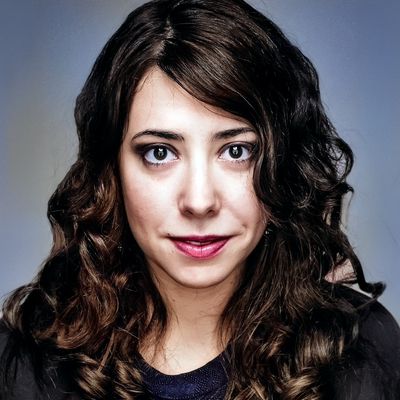
For their first “quarantine edition” episode, Jamie, Rob, and Jennifer chat remotely with Tony Award-winning director Rachel Chavkin. As we navigate through this difficult moment, Rachel reflects on what artists can do to help, talks about her latest work, and shares information on some organizations that are doing great things to support artists, theater-makers, and just about everyone else. To close, Rob talks about what you can do to support your favorite non-profit theatre company.
This week’s music: “Doubt Comes In” and “We Raise Our Cups” both from “Hadestown”, and “Megamix: Take Me To The World”, from “Losing My Mind: A Sondheim Disco Fever Dream”.
Find us on Twitter & Instagram: @fabulousinvalid
Facebook: www.facebook.com/fabulousinvalid
Rob’s reviews: www.stageleft.nyc
Email us at: info@fabulousinvalid.com
Jamie Du Mont
Twitter: @jamiedumont
Instagram: @troutinnyc
Rob Russo
Twitter/Instagram: @StageLeft_NYC
Jennifer Simard
Twitter: @SimardJennifer
Instagram: @thejennifersimard
Transcript
This transcript was automatically generated and might contain errors.
[0:09] Jamie DuMont: Welcome to the Fabulous Invalid, Broadway's podcast, where we present essential conversations with a curated roster of the best, most important, and innovative theater makers working today.
[0:19] Rob Russo: From actors to writers, directors, designers, and everyone in between.
[0:23] Jamie DuMont: We took our name from the title of a 1938 play by Kaufman and Hart that has since become a loving nickname for Broadway itself, always deemed on the verge of decline, yet always bouncing back, the Fabulous Invalid.
[0:35] Jamie DuMont: I'm Jamie DuMont.
[0:37] Rob Russo: I'm Rob Russo, writer and theater critic with Stage Left.nyc and Stage Left the Podcast.
[0:42] Jennifer Simard: And I'm Jennifer Simard, currently starring in my pajamas on Instagram from my apartment.
[0:49] Jamie DuMont: I think we're all in our pajamas or some version of that.
[0:52] Rob Russo: And that's because this is our first recording.
[0:55] Jamie DuMont: We are sort of living in a new world, right?
[0:58] Rob Russo: We are all home, we are all self-quarantined, and um times are different.
[1:05] Jamie DuMont: Times have changed.
[1:06] Rob Russo: Times have changed. The times are a-changing.
[1:09] Jamie DuMont: That's a Broadway show title, I think.
[1:12] Rob Russo: Um, yeah, it is.
[1:14] Jamie DuMont: Anyway, I digress.
[1:15] Rob Russo: Well, we might sound a little different because we are not recording on our—no, we're not together.
[1:21] Jamie DuMont: We're not on our normal platform. We're recording on this terrific web-based thing that the Broadway Podcast Network has supplied us with, um, which is fantastic.
[1:32] Rob Russo: It enables us to keep going.
[1:34] Jamie DuMont: But um, you're gonna notice, dear listener, over the course of however long we're doing this for, until we can be together, you're gonna notice some not perfect sound quality.
[1:44] Rob Russo: You're gonna hear some background noises you probably don't normally hear, and you'll hear some variances just in terms of everyone's individual mics, because people will be calling in and everybody's got different equipment or no equipment at all.
[1:58] Jamie DuMont: So um, the show must go on, you know.
[2:00] Rob Russo: The show must—well, and this is what the Fabulous Invalid is, right? I mean, this is our—the, you know, we've gotten some criticism over our show title from people in the past, which I understand, but really what it means and what I think we all love about the title of our show is that it literally refers to Broadway always bouncing back and always on the ready to thrive.
[2:25] Jamie DuMont: And I think that couldn't be more apparent than it is right now.
[2:29] Rob Russo: You're here.
[2:29] Jamie DuMont: You're here.
[2:31] Jamie DuMont: Well, all right, before we get to our guest today, we're very excited to have Rachel Chavkin, the Tony Award-winning director of Hadestown.
[2:40] Rob Russo: We are thrilled to have her with us.
[2:41] Jamie DuMont: Yes.
[2:42] Rob Russo: Oh my gosh, I'm such an admirer of her work.
[2:44] Jamie DuMont: And she's not only a great director, I mean, she's a real activist, right?
[2:48] Rob Russo: She's someone who is so engaged in our society and being a force for good and making change.
[2:55] Jamie DuMont: And, you know, it's no surprise to me that she was someone who—I don't know if we reached out to her or she reached out to us, but that we found each other in this moment to have a conversation about responding to this pandemic, because you know, she really is a leading voice in the community.
[3:10] Rob Russo: She is, and that is what we're going to talk to her about, right? Like, so I don't want to mislead anybody. We will have her back again to talk more in depth about all of the wonderful projects that she has worked on and will be working on.
[3:22] Jamie DuMont: But today I think we want to focus on the world events and what's happening and what you can do.
[3:28] Rob Russo: And I think in time we'll get back to the regular format of our show. We have some interviews in the can, which we'll release.
[3:35] Jamie DuMont: Um, God, that sounds terrible—in the can.
[3:38] Rob Russo: Um, but we do, we have them, and we will—saying "in the can," I don't think it's a good one.
[3:42] Jamie DuMont: I know, I don't know why. I'm—I guess I'm sensitive today.
[3:45] Rob Russo: But we have recorded interviews that we will release over the next few weeks, and we will continue to record, and everything will get back to normal.
[3:54] Jamie DuMont: Things may be slightly different, but that's a new norm.
[3:58] Rob Russo: Look at a new normal.
[3:59] Jamie DuMont: It's a new normal.
[4:00] Rob Russo: Exactly. So, Jen, I think you wanted to ask us something, right?
[4:04] Jennifer Simard: Well, yeah, I know that we've been talking about what we've been asking our guests—what piece of music, if any, or soundtrack or whatnot has helped get them through this event. And I thought it'd be fun to ask each other.
[4:20] Jamie DuMont: Yeah, absolutely.
[4:22] Jennifer Simard: So we have changed—we normally ask our final question is what is that show or thing that made you want to work in the theater? And we've changed it.
[4:29] Jamie DuMont: So yeah, we should add Rob, why don't you—what, Jen, why don't you go first? What's on your heavy rotation right now?
[4:36] Jennifer Simard: Well, my favorite instrument in the world is the cello, and I have been listening to Yo-Yo Ma, and he's been doing frequent showings on Facebook and on Instagram of different songs that he thought might soothe people during this time and sharing his gifts literally with the world. And I find it very comforting. And again, to me, it's the most beautiful sound in the world, the cello. So that's been my number one go-to. I love classical music. I will say, I have a feeling.
[5:07] Jennifer Simard: Well, now that I've said this, Rob will pick something different. But right now I'm obsessed with the, um, Losing My Mind, the new Sondheim—
[5:17] Rob Russo: I knew I was gonna do that.
[5:18] Jennifer Simard: The new Sondheim disco fever album or whatever.
[5:21] Rob Russo: I don't know what it's subtitled.
[5:21] Jennifer Simard: A Sondheim Disco Fever Dream.
[5:25] Rob Russo: That's it.
[5:26] Jennifer Simard: See, Rob, you should—I should have let you just take this one. I didn't mean to like shit all over it.
[5:31] Jennifer Simard: Um, but I will also say that a friend of mine in Australia sent me an album of Dorothy Loudon, who famously was Miss Hannigan in Annie on Broadway. Um, but he sent me an album of Dorothy Loudon live at the Blue Angel, which was a nightclub in New York, uh, very famous. And it is fantastic. If you can, it's not—I couldn't get it on Spotify, which is why they sent me the album.
[5:58] Jennifer Simard: It is on Spotify, but I'm a tech disaster, so I couldn't figure out how to make it work. And, uh, at any rate, it's fabulous. Dorothy Loudon, literally any of her albums, she cheers me up because she's so kind of wacky. And I'll just say, um, in addition to Losing My Mind, which is both a great song, a great album, and a depiction of I think everyone's lives right now, I've also, you know, this past Sunday was Stephen Sondheim's 90th birthday.
[6:26] Jennifer Simard: And so I've been sort of doing my own little Sondheim tribute in my apartment. I've been listening to all of his original cast albums from all of his incredible musicals. But the two that—the first one I actually listened to was Pacific Overtures. I don't know why, but it was the one that was speaking to me on Sunday. So, uh, I'm putting in a word for Pacific Overtures. Great album. Great show.
[6:46] Rob Russo: Oh, it's a great score.
[6:49] Jamie DuMont: All right. Well, I think we should probably turn it over to the delightful Rachel Chavkin.
[6:55] Rob Russo: Let's do it.
[6:56] Jamie DuMont: Great. Rachel, thank you so much for joining us today as we are—as we try to navigate through these difficult times. Artists, as always, uh, have an important role to play in our society. What are some of the issues you're most concerned with about right now? And how do you see the theater community coming together to make a difference?
[7:18] Rachel Chavkin: I think first and foremost, the thing that I find myself most worried about is the economy and how we are going to sort of recover, and I use economy very broadly in the sense of like the faith that there can be fellowship again and we can live life again, right? And thus buy things, right? You know, like it's all holistic and sort of part and parcel. And I think that the theater community, um, you know, is amongst the best because the nature of our work requires live fellowship.
[8:03] Rachel Chavkin: Um, if only between you and one other performer. I'm thinking about like Christine Jones's Theater for One. Um, but certainly most of the time we're doing this with a number of performers and an even bigger number of audience. The idea that we can gather in space together and heal together, even if that's about, you know, very, uh, sort of silly or off-topic things, I think is gonna be a major, a major part of recovery.
[8:35] Rachel Chavkin: And it may not be to where we have been before. You know, I think that to the second part of your question of like what can theater be doing? I got a beautiful email from a dear colleague, actually Jim Nicola, who runs New York Theater Workshop and who is a sort of very deep thinker. And um, he was engaging me in just thinking about like what should we be doing? Like in a really deep way as artists, like that was the presumption. It wasn't like, have you lost faith in art?
[9:13] Rachel Chavkin: Jim is, uh, will tell you the importance of someone telling a story to another person as the Titanic six. And actually, to a certain extent, at that point, what else is there other than telling a tale that brings you some degree of transcendence? Uh, um, and if we want to get like super macro to climate change, we can say that's kind of where we are right now. Um, which is not, you know, that sounds like I'm dismissing activists and the possibility of change. I'm not at all, but I do think that the value of a story is profoundly valuable.
[9:50] Rachel Chavkin: Um, and so I feel like I'm gonna be looking to just even my own theater to think about like how do we create space for the idea of kind of radical transformation? Because I do think that that is what is required in this moment and likely will be ongoing.
[10:11] Jamie DuMont: Well, on Monday, um, you joined with Taylor Mac to launch Trickle Up. Um, what can you tell us about this new project?
[10:18] Rachel Chavkin: Yeah, it's exquisite. I mean, and I, you know, I take no credit for it because basically Taylor asked if I would do this, and I will do anything that Taylor tells me to do. Um, so, uh, Taylor is one of a few artists and um organizations that have helped put this together.
[10:45] Rachel Chavkin: And um, uh, the idea—I'm pulling up a because I want to be, yeah, it's uh, in the initial thing he wrote me, it's here Arts Center, it's the Flea, it's New Dramatists. So those are also three organizations that I trust the hell out of. Um, the idea was he went to people who, um, he presumed, which, uh, certainly in my case is right, I can't speak for the other artists, but that we were probably okay financially based on the work that we're doing and where we are in our lives.
[11:24] Rachel Chavkin: Um, but that a—we might know someone who is not okay financially, and I think he's, uh, uh, sorry, Judy specifically specified, um, uh, someone who really needs help, and particularly artists who are working um near or below the poverty line and who were deeply impacted by the loss of work.
[11:49] Rachel Chavkin: And there's been a lot of kind of giving trees and stuff, but what was marked to me about this and why I was so eager to get involved is the idea is actually to make grants of, uh, and the word that they're using is commissions of $10,000. And as someone who—the first grant, excuse me, my company, the team ever got, uh, I believe was from the Greenwall Foundation for the amount of $10,000 in 2006.
[12:18] Rachel Chavkin: I can tell you firsthand like how, uh, profoundly altering that was for both me and our trajectory as an ensemble. Um, and I love the use of the word commissions because we're, you know, that is how artists make, uh, at the kind of most grassroots level is, um, if you can feed yourself, if you can clothe yourself, uh, that is what you—you are what is required to make the work.
[12:50] Rachel Chavkin: Um, and so by investing in the artists, we're investing in the future of our field.
[12:55] Rachel Chavkin: Uh and again, I think $10,000 is a meaningful amount towards that. Um and so the idea is like this wonderful network of I was just on it. It's like Susan Laurie Parks is singing a song, because of course she's a musician, and um there's playwrights doing poetry, and my friend Lear de Bessinay is reading about the Federal Theater Project, which is like so perfect for right now. Um it's just it's tremendous, and it's $10 a month, and you get access to all of this wealth of artistry, um, again, at the kind of most DIY grassroots level with totally substantial ideas. And uh 10 bucks a month, 10,000 subscribers, that lets us give out a lot of cash. Thank you so much.
[13:48] Jennifer Simard: Hi.
[13:49] Rachel Chavkin: Um Hi Jennifer.
[13:51] Jennifer Simard: Hi. Uh I like what you just said, by the way, like such a hierarchy of needs going on here from feeding yourself to clothing yourself all the way up to what you said about having something that brings you a degree of transcendence. Artists everywhere are suffering, not just actors like me, and there's been a lot of focus on the Broadway community. However, all mediums are impacted at all levels. What is something that our listeners can do right now to help? And if you had to pick a thing in addition to what you just said, is there anything you can think of?
[14:21] Rachel Chavkin: Oh, yeah, I've had a few people, and I always direct them to the Actors Fund, which of course serves all the disciplines in our field, not just actors, despite its name. And it's just, it's the place with the biggest track record. You're not inventing a wheel. So that's where I've been directing people. And of course, the other thing, which I actually I have a um a little baby, so I have been uh I have to say fearful of how much outside volunteering to do because of exposure potentials. Um but uh but I if I did not have a newborn in the household, um, or I should say upstairs, he's two flights up with his dads. Um, but uh I would be volunteering for the food bank uh and handing out stuff, which does not help necessarily the theater community specifically, but of course, um I think it's imperative that artists never think they are, you know, apart from the larger economy.
And and I sort of think about, I think about an artist uh the way I think about a factory worker in Reading or wherever, um, as someone who whatever that job is, we're making culture widgets um but uh but uh you know I I so anyway the food bank is there for all including actors including designers um and I would encourage volunteering there.
[16:14] Rob Russo: Well it's so amazing to me um uh thinking about a point you made earlier drawing the allusion to climate change and you know my my my mind just suddenly thought of two very recent projects of yours uh Hadestown and continuity um both of which you know have a lot to say about how um you know private actions ripple out across communities um and how you know um the environment uh informs uh our lives and and our choices and our futures um and and it's in this moment of pandemic I mean it it really is laying bare a lot of the structural failures in our society um that were all that were already there um and and I I'm wondering you know um how you see um the art that you've created and the art that you will create um as being sort of in conversation with with this moment.
[17:12] Rachel Chavkin: I mean I'm thinking mostly actually about a piece called Reconstruction that my company the team is making now that is um uh it's a massive company of artists I think 24 or 25 um and uh and it's a piece that is uh quite uh focused on race and interracial relationships as well as intra-racial. And very specifically, I'm now referencing Gillian Walker, who is one of our collaborators, performer, and writer in the piece. And this is based on something, a line of inquiry that Gillian brought into the room, but is the question of intimacy? And sort of all the there's a bunch of different storylines in the in the show, but I would say all of them are focused around the question of how do we and can we achieve intimacy in an anti-black America?
And so it's it's particularly concerned, I would say, with whether intimacy is possible, and if so, what has to be achieved or done in order to do this between a white person and a black person in America? And one of the ways that we've defined intimacy is do both parties understand the scope and depth of the exchange at hand. So even if that exchange is like two people sitting across the table from each other talking about where they want to go shopping that day, like everything that is a part of that interaction, um can we approach like true depth of understanding and thus be intimate with each other? So that's a piece like where our goal, the thing that we have said in the rehearsal room as artists is that we want this piece to be useful to audience members. We want it to be useful to people, white, black, certainly other people of color, though again, this piece is pretty specifically focused on those two sort of part members of our world.
[20:19] Rachel Chavkin: So I so I guess that to me is like emblematic of the work that I hope to be making in answer to your question is like work that is that is useful. It's why I love Hadestown so deeply is because it helps us think about all of the the depth of the you know global degradation of like the physical world via industry and a scarcity mentality, which is where Hades operates from. But it also ends even amidst the tragedy with this incredible image of hope and the idea that like that the um that the hope is in the courage to tell the story again and to imagine it might turn out differently. Um Amber Gray has talked about it uh because of course Amber herself is um I think um a deep activist and you know spends a lot of time uh via her work with Reverend Billy in particular and the stop shopping gospel choir. Um and she talks about she's like the next Orpheus is gonna make it and we have to sing to that person. Um so I I feel that really deeply.
[22:14] Rob Russo: How cold it's blowing the comes in that meets our stranger walking on the road. Rachel, you're the artistic director of Team, a Brooklyn-based ensemble dedicated to creating new work about the experience of living in America. That experience has certainly changed over the last week. What is Team currently working on in light of what's happening?
[22:43] Rachel Chavkin: Oh, well, I mean, I just talked about it. Reconstruction is the new team show. Um, and that's gonna premiere, you know, an old friend once joked um that uh uh at one point our acronym we had to become. I I say this shamefully because we didn't want to, but our uh an accountant when we were first like incorporating told us that we needed to become an acronym because we would never get a business license for the team. And so we like actually our first group writing assignment was like, what can we stand for? And um we ended up being a combination of a few different ideas, and this was only on our legal paperwork, but it was the theater of the emerging American moment, which I am shamed about because it's too pretentious.
Um but a friend further ribbed us at one point because it takes us a really long time to make a to make a play, because like most importantly, and this is not a part of the mission statement that you read, but the team writes all of our work collaboratively through what we call a horizontal writing process, and we edit it through consensus. I mean, it's a it's a crazy process that I have quite proudly described as aggressively inefficient. Um there are lots of fights.
[24:08] Rachel Chavkin: Is there fighting? Tell me about the fight.
[24:10] Rachel Chavkin: Um, there's actually like I would say we have survived as long as we have because we're all very good at passive aggression. So, like, right, so like we're we're able to sort of still be polite even when we're raging at each other for the most part. Um, and so often the way of oh, what were you gonna say, Jennifer?
[24:34] Jennifer Simard: No, I was just gonna just say my favorite joke is that all right, whatever fucked up way you want to do it, that's fine.
[24:40] Rachel Chavkin: Yeah, exactly. That's kind of that's kind of how we function until like you get to the next day and you're over it. And if you're not over it the next day, then someone totally does bring it up again. Um but uh anyway, I was just gonna say a friend joked that we should actually call ourselves um tram, the theater of the recent American moment because it takes us so long to make a show. So maybe in like 10 years we'll make a COVID piece. I just don't know.
[25:08] Rob Russo: Amazing. Well, the Steven Sondheim wrote very very keenly, art isn't easy, you know.
[25:14] Rachel Chavkin: That's true. Uh well, you've been very outspoken most famously in your Tony Award speech last year about creating space and opportunities for women and people of color within the theater industry. Um do you worry that this pandemic uh with everything sort of being put on hold and everyone kind of scattered has the potential to put that vital work on hold?
[25:37] Rachel Chavkin: Well, I mean, to a certain extent, like everything's on hold, right? So I guess I should say what concerns me most are the artists, and particularly obviously to the question, the women and artists of color who maybe were making a premiere that got sidelined or shafted, and I I think it's imperative that we not forget.
[26:01] Rachel Chavkin: Um, so I'm thinking about Celine's song's beautiful show, Endlings. I'm thinking about Martina Mayor's Sanctuary City, which, uh, you know, I hope will resurge. I'm thinking about all the Natalie Portman, C.A. Johnson's um, uh show that was at MCC. Um, and you know, I could I the uh I think probably the numbers are are countless. And and because our our field so uh profoundly kind of um uh prioritizes experience and depth of impact, uh and we tend to measure impact in very sadly narrow ways of like the number of people who saw it and was one of those people um one of the two you know white men who reviewed for the New York Times and did they like it? Like that that's obviously a really narrow critique, but but or criteria, but that criteria does have a uh like technically measurable impact on someone's earning power and and the and the opportunities that they're gonna get flowing out of the previous opportunity.
So um, so I just worry about all the shows that died and cannot be lost. So I hope we do think about that. And then I don't know, I don't know. I you know, I think it really remains to be seen as to whether people are gonna come out of this and be really scared, or people are gonna come out of this and be really brave. And of course, those two things are sisters to each other. Like I don't think there's actually any bravery without fear. Um so uh so I don't know. I'm attached to a show, Lempica, that is written by a woman, Carson Kreitzer, who did the book and lyrics, and Matt Goul did the music, and um Carson has been has spent her entire career working sort of as far away from Broadway as you can get, and this show is now on like an intensely um exciting Broadway-bound trajectory.
And uh, and so hopefully we'll be adding her voice. And um I know a lot of works in development that I think are gonna come crashing into you know the the sunrise uh as we move out of this. Um so that's thrilling.
[28:34] Jamie DuMont: Yeah, Rachel, it's Jamie here. I I just have to say um I saw Lempica twice at Williamstown.
[28:40] Rachel Chavkin: You did?
[28:41] Jamie DuMont: I did, I saw it back to back, which is rare. I can count on one hand the shows that I've seen in the afternoon and then gone back to the evening or gone back the next day. Um and Lempica to this day, and this that was what, a summer ago?
[28:54] Rachel Chavkin: Um 2018, yeah.
[28:57] Jamie DuMont: Yeah, so two to two years ago, and that show still haunts me. I cannot wait.
[29:01] Rachel Chavkin: In fact, yay, Jamie, that makes me thrilled. Rob and I have time and our calendar marked out to go to La Jolla. Hopefully, who knows if who knows if we'll be able to do that or not? But um we're very excited. It's such a beautiful, important piece of theater.
[29:18] Rachel Chavkin: Oh, thanks, thanks. I feel obviously the same, and like it's gotten so much better since we sound.
[29:26] Jamie DuMont: I'm really excited to say also.
[29:28] Rachel Chavkin: Funny how shows can do that when you keep working on the show.
[29:30] Jamie DuMont: I know, right? And loving them. Um, I also have to say, I have to say that I love the notion of the next Orpheus is gonna make it. I feel like that's an anthem for our time right now. It's it's really beautiful. Um, and speaking of anthems, um, I think in in these troubled times, before we let you go, um, we're all sort of leaning on music, and uh for me it's show tunes. Um, is there a particular song or something in your playlist that's helping you get through these troubled times?
[30:02] Rachel Chavkin: Well, actually, I feel like this is cheating, but I have all these new demos from Lempica. And so, um, and I'm a runner, uh, and uh very often I don't have time to run. And I should be clear, I'm an extremely slow runner. Um my body is achy, but uh, but I have been running around the park every day and listening to these new demos and staging in my brain, and that like really makes the time go by.
[30:33] Jamie DuMont: I bet it also helped it it must also just help you keep focused on the show and moving forward with it.
[30:40] Rachel Chavkin: Yo, God, totally, absolutely. Um, yeah, and have I'm very happy to say I think we um do have you know a path ahead of us because the show is so damn good, and we've been very blessed with um people who who believe in it.
[30:57] Rob Russo: Well, I'm not saying this because we have you trapped on our show for for a few minutes, but Hades Town is definitely the the score that's getting me through these times right now.
[31:06] Rachel Chavkin: Oh, I'm delighted about that.
[31:08] Rob Russo: Nice. Well, we're thank you so much for your time. We're gonna we're gonna let you go. Um Rachel, again, thank you so much for coming on and joining us today.
[31:18] Rachel Chavkin: Such a pleasure, truly.
[31:48] Rob Russo: Rob here with you may be wondering. As we talked about with Rachel, everyone has a role to play in this time of pandemic, from helping your elderly or infirm neighbors to get groceries to rallying your local community to support small businesses or donating money or medical supplies to those in need. The list goes on. If you're a fan of live performance and the theater in particular, which, let's face it, if you're listening to this podcast, chances are that you are, you may be wondering what you can do to help the theater community. Well, as Rachel suggested, the number one thing is to go online to ActorsFund.org and make a donation in any amount to the Actors Fund, which, despite its name, serves all professionals, not just actors in the film, theater, television, music, opera, radio, and dance world through direct support programs that address their health and welfare in times of crisis and need.
When your job is live performance, you can't work from home. So everyone from performers to backstage staff, ushers, and beyond, are feeling the economic impact of this pandemic right now. Something else Rachel alluded to is supporting the constellation of smaller nonprofit companies and artists across the landscape of New York theater and theater nationwide. Chances are, wherever you are, you're not far from a nonprofit arts or organization that serves your community and relies on ticket sales and donations to make ends meet. Without performances, budgets are going to get tight, and some companies might be forced to shutter. If you add upcoming tickets to a show at BAM or City Center, St. Anne's or the Park Avenue Armory, that won't be happening due to the shutdown, what critic Helen Shaw calls a phantom ticket.
Consider donating the value of that ticket back to the organization in lieu of taking a refund. Companies like Roundabout, Manhattan Theater Club, and Second Stage, that also have Broadway houses are feeling the crunch. But so too are off Broadway nonprofits like New York Theater Workshop, Arsnova, the Transport Group, the Vineyard Theater, Clubbed Thumb, La Mama, and the Public Theater, just to name a few. Indeed, the list goes on. Getting through all this will require people coming together to support each other, but we also need government action and other institutions chipping in. To that end, the New York Community Trust has announced that it is administering the NYC COVID-19 Response and Impact Fund, a massive system of grants and interest-free loans funded by the Andrew W. Mellon Foundation, Bloomberg Philanthropies, the Doris Duke Charitable Foundation, the Ford Foundation, and the Rockefeller Brothers Fund, to the tune of some $75 million, all earmarked for social services, arts, and cultural institutions.
That might sound like a lot of money, and let's face it, it is, but given the breadth of organizations out there, just the sheer number, it won't be enough to solve for every loss being sustained right now, and in the weeks and months to come. And so, while I know that everyone is feeling some degree of economic anxiety right now, if you do have the means, think about what artists and companies you love and would hate to see disappear from the cultural landscape, and consider making a donation of any amount. We'll all get through this by being there for each other.
[34:54] Jamie DuMont: Hi, it's Jamie. That's our show. Thanks for listening. And as always, you can hear us anytime on iTunes. The Fabulous Invalid is a production of OM, etcetera and the Fabulous Invalid LLC, and a proud member of the Broadway Podcast Network. Our theme music is by Lucky Chups. Today's episode was edited and engineered by Aaron Kaufman. You can find us online at Fabulous Invalid.com and on social media at Fabulous Invalid and on iTunes, Spotify, and wherever you find podcasts. Be sure to tune in Wednesday and stay safe and be well.
[37:09] ♪ Musical number: "Take Me to the World" — performed by Jennifer Simard ♪
[38:03] Rachel Chavkin: It's such a beautiful song.
© Broadway Podcast Network, All Rights Reserved