

WILLIAM IVEY LONG designs for opera, ballet, modern dance, theatre, television, and film. He has 76 Broadway credits - including the new musical DIANA, CHICAGO, BEETLEJUICE, TOOTSIE, CINDERELLA, GREY GARDENS, HAIRSPRAY, PRODUCERS, CRAZY FOR YOU, NINE... Read More
From the show: The Producer's Perspective Podcast with Ken Davenport
Guests

Featured Shows
About
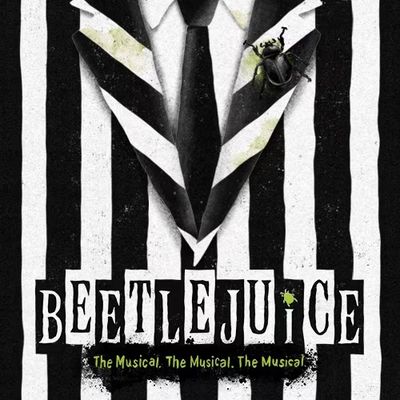
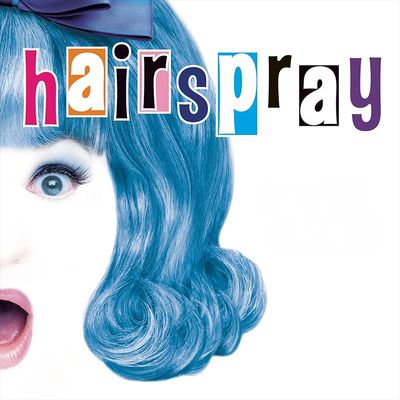
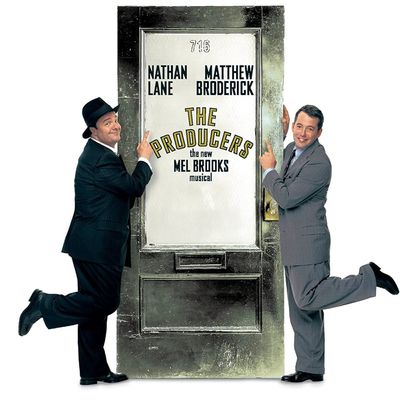
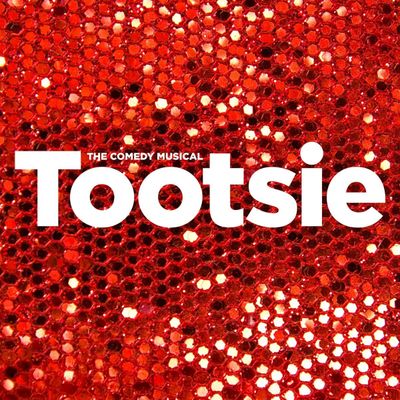
WILLIAM IVEY LONG designs for opera, ballet, modern dance, theatre, television, and film. He has 76 Broadway credits - including the new musical DIANA, CHICAGO, BEETLEJUICE, TOOTSIE, CINDERELLA, GREY GARDENS, HAIRSPRAY, PRODUCERS, CRAZY FOR YOU, NINE. He has been nominated for 17 Tony Awards, winning 6 times. He was inducted into the Theatre Hall of Fame in January 2006, and recently completed a 4 year term as Chairman of the American Theatre Wing.
To keep up with William . . . go check him out on instagram @williamiveylong.
This week’s #SongwriterOfTheWeek is Nicholas Kaminski! If you enjoyed the outro song in this episode, check him out here: www.facebook.com/kaminskicomposer.
Enjoy and thank you for coming back to our new season!
Keep up with me @KenDavenportBway on Instagram.
Check out my blog for daily content: www.theproducersperspective.com
This episode was produced by Mary Dina.
Transcript
This transcript was automatically generated and might contain errors.
[0:00] Ken Davenport: Most of my insane comments are true because you know the basis of comedy is truth. So the things that make you laugh the most, they're really true. I want to be a producer with a hit show on Broadway.
[0:17] Ken Davenport: You're listening to the Producers Perspective Podcast with your host, Tony Award winner, Ken Davenport.
[0:33] Ken Davenport: That was You Can't Stop the Beat from Hairspray, one of the get this 75 shows that this week's guest, Mr. William Ivey Long has designed for Broadway. Can you believe it? Let's get to him right now.
[0:45] Ken Davenport: Next up on the podcast, Mr. William Ivey Long, but first a little more hairspray.
[0:51] Ken Davenport: Because the world keeps speeding round and round and the hops keeping time to speed up sounds. Hello, everybody. Welcome back to the podcast. My name is Ken Davenport. This is the Producer's Perspective Podcast.
[1:03] Ken Davenport: I took a little extra time deciding what to wear this morning because I knew we'd be talking to one of the most celebrated costume designers in the world. Please welcome to the podcast, Mr. William Ivey Long. Welcome, William.
[1:15] William Ivey Long: Thank you very much.
[1:16] Ken Davenport: So Mr. Long is a six-time, six-time Tony Award winner in the past few years alone. Beetlejuice, Tootsie, Prince of Broadway, a Bronx Tale. Go back a few years before that. We're talking Producers, Hairspray, Cabaret, Chicago, some of the biggest hits we've had on Broadway over the last couple of decades. This season, he just told us he's ensconced at the Long Acre Theater right now with Diana. That's a fun one to do, I imagine.
[1:41] Ken Davenport: Also designed for the Met and designed for Mick Jagger. Is that true?
[1:44] William Ivey Long: Yes, back in the Steel Wheels tour, yes.
[1:47] Ken Davenport: So the diversity of your portfolio is just amazing. When and I and I love that you've designed for rock stars and theater, but obviously the bulk of your work is in the theater.
[1:58] William Ivey Long: It is, it is. It's live theater. And plays, musicals, uh reading. And when you can take your art and do it anywhere or any medium, why do you keep coming back to Broadway? What what about it?
[2:10] William Ivey Long: Gosh, I think I like, you know, there's no pressure in our business, and it's so calming. I think I come, you know, as sort of a living vacation. Um, I love live theater. I love storytelling with in continuity.
[2:26] William Ivey Long: I've done films, I've done uh TV, live TV, and well, live TV, it's it's similar to Broadway. I did Grease Live and I did uh Christmas Story Live. But films are shot by in a different way, out of order, out of sequence, uh by location, actually. It could be 20 years going to the same coffee shop, but the coffee shop just sort of ages and the people they shoot that in the same day.
[2:51] William Ivey Long: But what I'm attracted to is helping tell the story in sequence in two and a half hours. I love creating the arc of experience of both the character, the actor who is creating the character, and the audience member who is watching that character in actual time have that experience.
[3:12] William Ivey Long: In other words, they share that experience of storytelling in actual time. This really appeals to me.
[3:18] Ken Davenport: And where did it begin for you? Like what what about my parents went well?
[3:24] William Ivey Long: I have to say, this was during the sixties. We thought protesting and and acting up, um, they said, Well, the apple fell directly beneath the tree. Because my parents are both in the theater. Now they were academic theater academics, they were college professors who taught playwright. They were both playwrights and both directors.
[3:40] William Ivey Long: And they met at a theater school, uh, Chapel Hill at the Carolina Playmakers. And so uh my brother and my sister and I are all in the theater. We've we've just followed in their footsteps.
[3:53] Ken Davenport: So, what was the first thing that you designed?
[3:56] William Ivey Long: In my memory, the first thing that I designed was an Elizabethan ruff for my dog. And we were working, the family works every year. I still work with the Lost Colony, an outdoor symphonic drama on the outer banks of North Carolina. My parents were almost there from the beginning, began in 1937.
[4:17] William Ivey Long: And so we were there one summer, and of course that that was the family business. So Elizabethan seemed like, you know, the the close of the day. So I remember seriously remember, I think I was four, taking four years old. I can remember, I I know because I know the dog, and the dog was the dog when I was four.
[4:37] William Ivey Long: It was Mantio, named after the town. Black dog with white dots, and uh I took a the end of a um pillowcase that I guess was used for cleaning after it had fallen apart and been used too much, and I took a needle and thread which I had just recently learned how to use, and I went in and out and in and out, and I sort of in my mind invented um pleating.
[5:02] William Ivey Long: And I made an Elizabethan ruff and put it on the dog and then tightened it. So there was this sort of clown collar, but I thought it was an Elizabethan collar. And the dog wore it all day until I, of course, lost interest and went off and did something else. But um, that was my first costume.
[5:17] Ken Davenport: And how early in your life did you know that this was what you wanted to do with the rest of it?
[5:24] William Ivey Long: Gosh, I didn't. I've I've taken different paths. I've I have a degree in history, um, I studied art history for three years, a teaching fellow, Renaissance of Baroque architecture. Uh, and then I went to the Yale School of Drama to study with Ming Chou Li, and I have a degree in set design.
[5:42] William Ivey Long: And then I was coming to New York and I wanted another magical leader and experience, so I apprenticed myself to Charles James, the great couturier at the Chelsea Hotel. And that was in 1975, and I worked with him until he died four years later.
[5:58] William Ivey Long: And along the way, my friends from the Yale Drama School said, Oh, you have to come do this set, or you have to come do these costumes. So, but I never thought that's what I was going to be doing. I really thought I was gonna be a historian of some sort.
[6:12] Ken Davenport: So, why the change from set to costumes? Was it just because someone said, Oh, you should do this costume, or what was it about the storytelling aspect of costumes that attracted you more than sets?
[6:23] William Ivey Long: The when I went to the Yale School of Drama, I went really specifically to study with Ming Chou Li. And uh a great, great designer and a great humanitarian and and influence on generations of people, just one of the most exploding with integrity people you'll you'll ever meet.
[6:41] William Ivey Long: And I went to work with him and he was teaching scenery, sit uh scenic design. So I think if he were teaching chemistry, I would have majored in chemistry. I've always been interested in architecture. My hobby is restoring houses, and then of course, Renaissance of Baroque architecture is architecture.
[6:59] William Ivey Long: But uh, I don't know. I think without knowing it, I've always been fascinated by physiognomy, about body language, and about how people tell their interior story through movement and indication.
[7:15] William Ivey Long: And like my favorite time of the day, or when I'm on the subway, and I see so many different types and shapes and of people. And I try to think of who they are and are they pretending, you know, the red herring, are they pretending to be someone? What's the secret in that look that we don't know yet?
[7:32] William Ivey Long: So the subway by day and by night is my favorite place in New York. And I take about eight trips a day, going back to the different costume shops and theaters and my studio in Tribeca.
[7:44] William Ivey Long: So I think the storytelling through clothing, through studying body language, and as I said, physiognomy, I think that's what really attracts me to costume design.
[7:54] Ken Davenport: I want to get back to that, but just this set design costume design dichotomy, if you will. In in the UK, it's very common that designers do both, right? But that doesn't happen here as much. Why do you think that is?
[8:08] William Ivey Long: I think in the UK, the training is, in fact, it's called Design By. When you look at a playbill, and if it says design by, chances are it's Bob Crowley or it's another great English designer. Here, I do not know why we specialize more.
[8:24] William Ivey Long: I still do ballet drops and legs and borders and classic things like that for uh I did for the last two pieces that Paul Taylor created before he died. I did the scenery too. And um, so I don't know, you know, that's interesting. I I haven't really thought about that. Maybe they're more talented than we are.
[8:46] Ken Davenport: So I worked in a costume shop for one summer at Summerstock. Yes. One summer, and I vowed, I tried, you talk about threading a needle at four. I was 21 and I couldn't thread a needle. So I was like, there's no way I ever want to work in costumes or like, but do you actually have to know?
[9:03] Ken Davenport: This is such a simple question, but do you have to know how to sew in order to be a costume designer? What's the relationship between wardrobe and design?
[9:12] William Ivey Long: You know, that's also very good question. I I uh study tailoring, I studied pattern making. Uh my lowly job with Mr. Um Mr. James, Charles James, the great Charles James, was really sort of taking apart hand stitched seams, flattening them out, and then getting ready for him to say, let's take it in an eighth of an inch or let it out an eighth of an inch, because he created living sculptures, really clothing is architecture, and which is part of what drew me to him.
[9:45] William Ivey Long: And so my job was just putting getting everything down to the flat plane and seeing where his seams were, and as I said, just with glove, you know, gloves, patting it out, not ironing it, so that he could decide here, or Homer Lane, who was really his main main guy then, um, would would take the whole thing in proportionately.
[10:17] Ken Davenport: Tell me a bit about your process. So you get uh a call from a producer like me and says, I want you to work on this show. What and you get the script, I assume, or musical and a score. What's the first thing you do?
[10:30] William Ivey Long: Well, I'll tell you, I've developed uh a process. So the phone call comes in, and I still think you have to be I'm so ridiculous. I still think you have to be sitting by the phone. I still love landlines.
[10:43] William Ivey Long: Um, but so the call comes in, and it's almost always from the director, because on Broadway, the director is the leader. In films and television, the producer is the leader. Somehow they're different beasts.
[10:57] William Ivey Long: But on Broadway, it's the director. So in my, I have many repeat, many repeat connections with with favorite uh directors, and I love getting to know new ones. And they call you and say, and I say, when is it to make sure I don't have conflicts, although goodness gracious, you know, funding can disappear, and then all of a sudden it regroups and it's right on top of the same show.
[11:21] William Ivey Long: Like I had Beetlejuice and Tootsie open a day apart on Broadway last year, and that was not the intention.
[11:28] William Ivey Long: Um, but you say yes, and then I say, well, will you send me the script? They send me this script, and then um I ask if it's a period, is it going to be of a period, or is it going to be a concept? Then what I do is I get my books because I'm so old-fashioned, I love actually looking at books, and I have entirely just avalanche. I feel like the Collier brothers walking down the aisles of my studio, that's all gonna fall in. But we start Xeroxing, old-fashioned Xeroxing of pictures. And then my younger, much younger assistants, they're so clever and know so much more than I do. They can find things on the internet. So we print it all out, and I have created this sort of um environmental osmosis lab, and it's about 50, is it 50 feet by 40 feet?
It's my studio. I have two levels. I bought two uh floors of a button factory in Tribeca, and I'm right next to the Soho Rep. So it's sort of seeping energy of storytelling in theater. And I got these insulation boards, they're four by eight, and uh some are pink and some are blue. I just think they're for I don't know why what what the difference is, but there's some insulation content. But they both function perfectly for me. I paint them white, and then I pin all of these photographs, this research all around the room. And sometimes there's a theme on each of the boards, the four by eight boards, and I sort of anything I can think of that will help uh imagery that will help me drag the director's conscious and subconscious out of them because what happens is then the director comes to my sort of osmosis lair and we go around the room, and he or she I give he or she a little one of those smallest of the little yellow post-its, you know, like that's what I'm doing is what is that, about an inch by an inch and a half, two inches by two and a half, and we we talk about each board because they're by subject matter, like this is the leading lady, this is the leading lady's best friend, here are the trees outside the window.
You know, I do all the environment, just even though I'm not responsible for the trees outside the window, but I put them there, and the director then goes around and puts post-its on the favorite things or just things that they like. And sometimes when there's a particular comment, I come after and scribble that comment on that post, and we actually go around the room. Sometimes we jump back and forth because we do the people first. Well, it's all about people because it's clothing, but I also bring in lots of extraneous, uh just sort of mashup ideas uh to provoke, you know, thoughts and stimulation like that. So we go around the room, and by the end of that visit, which can be an hour or two hours, uh there are a lot of posters, a lot of little fluttering yellow little uh rectangles all around the room.
Then after the director leaves and I sit down and have more coffee, I try to figure out what we've just done. And of course I was memorizing it, but still then I have that record of they love this, this, this, this, and this. Then I take those and work up thumbnail sketches from those references. And the next time the director comes, they're little uh size of a very large thumb. What would that be? About two and a half inches to three inches, little people all the way around, and I do the by scene, and I'll sketch an entire row of people. If 24 people are all in one scene, I sketch, I put the principal in the middle and I sketch them because you should always be able to find, well, unless they're hiding, unless it's St. Joan looking for who's the real dauph.
Um, they all should there should be a focus, and I put the principal in the middle, and I do that for every single scene. And I start at the beginning and go all the way through. And it can be what, 15, 20 scenes, and then I bring the director back, and they're also now on top of those boards, and we go back and make notes about those. And then if many of them land, I'm happy. If they don't, I redo them, of course. And then I do larger sketches, like proper sketches. Now, proper sketches for me can either be a foot or 18 inches. They're two, and sometimes I do really, really, really tall ones, like 24 inches, but uh mostly they're they're like this, which is a foot. And you can pretty much tell from that, but I draw sort of big and sloppy, so actually the 14 to 18 size, and then I color them in, and the director comes back, or by this time the directors might even be in the theater, so I bring them all and put them all over the seats.
It's arduous. So then that's where I get the approval. Then many times when I'm working with new shops, say it's a period production, I often make moquettes. I make little dolls that are in proportion, like there's a half scale, different different sizes. There's I think they're about uh 24 inches tall. That's about a quarter scale. If you're doing a uh period gown, say, like when I I worked at the Metropolitan Opera, I'd never worked there before, uh, and I was doing uh The Merry Widow for Renee Fleming. I made all the little all of her eight dresses, I made them in mock-up form so that you could see front, back, side, all that. So um that's how I do it. It's quite a process. But I love there's such a systematic approach to it.
It's like, well, I'm a Virgo, you know, Virgo's making it. We too. No. Yes. August 30th. August 23rd. Oh, stop it. Well, there you go. Well, did I show you today? Seriously, look at this list. This is today. Wow. They type up my little sheets to pretend like it looks like the font is a typewriter. Because I still use a royal upright. I'll show you mine. Mine, my to-do those just on my own. Oh, yours is on your side. Well, I'm a Luddite, so the I break those things. So when you get a script, and now that I know more about this process, which allows so much creativity yet, collaboration with the director, you get a script. Do you actually like it when the writers say she's wearing a red sweater?
Do you like that? Or do you're like, oh god, I wish they'd just let me do my work and write it out? No, I love it. Because a red sweater, good goodness gracious, that's a red sweater. So, you know, of course I want to do that. First time, first show I did with Neil Simon, and I did Neil Simon's often on for 20 years, but I designed his last six world premieres, ending with, I think it was Rose's Dilemma. I think that was the last one. And but the first one that I worked with with home of World Premier's were was Laughter on the 23rd floor. And it was all about Sid Caesar and his cohorts in the comedy room writing that was it your show of shows? That the Sid Caesar show. And they all became, I mean, they were everybody, I mean, all the greats were in that um that room.
And Neil had written, and so and so comes out, Carl Reiner comes out in a camel coat and duh, and Woody Allen's in a sweater and a da, you know, like that. And of course, I embraced that, you know, because that's when Neil Simon writes, and I remember um my opening night uh card, which he of course typed, it was quite detailed. He thanked me for following his instructions. He said they were just guidelines, and I followed them to the T because I thought if Neil Simon can think of, can think of the words to describe an exact image. In fact, I was doing 45 seconds on Broadway with him, and he was describing a character, a lady who came in in a fur coat. And it was Marion Seldis who played the role.
Gosh, Marion Seldis, ladies and gentlemen. And I couldn't quite figure out what he meant by fur pieces were added on to make the to make it longer and bigger and different. And she had, she, the character played by Marion Seldis, had added these on herself. And I said, I miss Mr. Simon, um, I can't here. Would you draw this for me? I said, I just don't quite get the add on. I mean, is it like a you know, a quilt, or is it what is it? And he drew it for me because he based it on someone he saw walk into this coffee shop, the Edison Coffee Shop. And he drew it for me, and I have that, I have that drawing. So uh that was very helpful, very helpful. Any examples from your career when the author has written something and you're like, oh no, I think I think it's a hundred and eighty degree difference from that.
How do you deal with that? How do you approach them? Well, that happens all the time. Because remember, you work all the time, so you somehow figured out how to build it. It happens all the time. So what you do is as to your best ability with your fiercest heart, you give them exactly what they've written and what they think they want. But you also then show, but it could be this variation or this variation or this. You can do up to six or an odd number, five. And uh, as long as there's it's not a confrontation about oh, can't be this. I in fact, I often say to my staff, I said, now we're gonna need all of you to be involved with this because I can't say no. No is not in my vocabulary as the designer.
I have to say yes, and I will die trying, showing different examples, for instance. I said, but we can bring the wardrobe supervisor in who knows what's gonna last. I mean, I know too, but the point is I have to bring in the authority figures in the other in the process. Like we've got to do eight shows a week, this probably won't last, we probably have to make doubles, triples, quadruples, do we have that in the budget? So all of us play our game, but my job is to say yes and to deliver the sketch and often deliver the clothes, sometimes in inappropriate fabrics. Because I'm, I guess I'm the ultimate yes man. Because if it can be vocalized, if it can be articulated, a desire from a director or a playwright, it's what I need to make happen.
How early do you like to come on in a process of a musical? Is it when it's fully baked and the script is finalized, or do you like getting things really early? Like, for example, the producers, one of the biggest hits we've ever had. When did you come aboard that project? The producers was this extraordinary first time I met Mel Brooks, and he had engaged, he had spent a year. All of Broadway knew this because he's told all of Broadway, I'm gonna see every show on Broadway and I'm gonna find my dream director, says Mel Brooks. And uh, of course, he said it better than I said it. You know, everything he says is the best. So he went around and there was quite a buzz following him. Oh, Mel was just cited at such and such.
Oh, he was just cited at such and such. Luckily, he really liked Crazy for You, which I had designed for Mike Achrint as the director. So Mel chose Mike Achran and Susan Strowman was the choreographer, and they developed it together.
[22:54] William Ivey Long: So with the producers, and Mel choosing one of my most frequent collaborators, Mike Akron, and Susan Strowman, I came on right from the beginning just because we were all sort of already a sort of a team.
[23:07] William Ivey Long: But usually, now this is how it really usually happens, and I'm very happy and support this. Usually scenery comes first, then costumes, then lighting, then sound and projections, et cetera, down the and the new things yet to be created on that design list.
[23:25] William Ivey Long: And it's for a very important reason. Then I people the world with people, and then the lighting designer comes in and does miracles of mood and texture and focus and everything that lighting designers do.
[23:46] William Ivey Long: I never choose a color until the set designer has fully painted the renderings. And it's otherwise it's counterproductive. Because what if I what if I want these colors and they're already taken and I do mine first? So I don't think I've ever, ever not waited for the scenic designer to choose the colors. So that's the process.
[24:10] William Ivey Long: I'm brought on really after, sometimes at the same time, but I and I start working because I ask the same questions that the set designer does, like who, what, when, where, who are these people? Are there red herrings? Are there surprises? Are we supposed to know that is going to be a ripaway dress? No. So therefore I don't want to see the overlap, and I don't want to see the knee pads if they're going to be sliding on. So there are a lot of things that I ask. And um, but I'm definitely number two.
[24:37] William Ivey Long: That sounds like a very important collaboration between the designers, the four or five, whoever, however many we'll have tomorrow designers. Talk to me a little bit more about that process or your favorite set designers to work with and what that communication is like.
[24:52] William Ivey Long: Well, my favorite set designers to work with are whoever is designing the set. Um classically, I mean, talk about the history of Broadway. Tony Walton and Robin Wagner have been uh multi-time. In fact, I presented award, an award to Tony once. They asked me to present this Lifetime Achievement Award, and we looked it up on the internet, and I was his most frequent collaborator, other than himself, because he's English, so of course he does sets and costume. So yes, I have wonderful relationship with him.
[25:26] William Ivey Long: I work with, I work with everybody. I just I love it. It's always an exciting it's exciting. It's exciting, new new vibrations, new people. You often, often a director has a right hand person, and the right hand person is the set designer, because they sort of, you know, hunker down together and figure out what that room is gonna be, what that space is gonna be. And they work very closely together.
[25:53] William Ivey Long: And then costume designers are often, we're brought in for, you know, mix and match. So um, I mean, I have my own collaborators, but uh with whom I've worked many, many times. But basically, the the the director and the set designer are sort of a unit. I've always thought of them as as a unit.
[26:11] Ken Davenport: I'm gonna ask a very producer like question right now, but I think it's uh it's one that many people have out there because we think, oh, it's just clothes. So why are costumes so damn expensive?
[26:24] William Ivey Long: Well, that's a good one. I'm asked that all the time, of course. Well, here you go. There are two ways to answer it. Let's talk about contemporary clothes first, where many people ask that question, and we go, okay, what piece of clothing do you wear that you can wear eight shows a week for a year and gets dry cleaned on a union required basis, which destroys clothes more than wearing them. Because remember, it's not dry and it's not clean. It's toxic and it's wet. So that tears up the fibers.
[27:05] William Ivey Long: So you go to Bergdorf, say, and uh, if you're a lady, you buy a dress. Okay, that if you're the richest woman on earth, if you're in a modern day production of The Visit, say, well, you're gonna, that's gonna be a $10,000 dress. And it probably will last because it's been carefully made and carefully constructed, and there's probably movement implied in a very fancy couture dress. And also the comparison is costumes are to clothes as taxis are to cars. Because costumes and taxis, people get in, they run around, they get out, they get in, they run around, they get out, they get and they do this constantly. Your own clothes get a break.
[27:53] William Ivey Long: So the cost is for made to order clothes, double stitching. You make them with gussets so you can reach over your head and the shoulder doesn't graze your ear, shoulder pad doesn't graze your ear, which is what I dare say. Anybody listening to this, if they're wearing a jacket, raise your arm and see if that shoulder pad doesn't touch the bottom of your earlobe. Well, that's not pretty on stage. That's not a pretty look. So unless I guess you're doing a production of the odd couple and you won't want them to look unpretty. But um, so things are made to survive, and that means they have to be custom made.
[28:31] William Ivey Long: And we're still talking, mind you, contemporary clothes. People get paid. It's all about the labor. It's not the fabric. Let's jump to, I'm doing a production of Mother Courage, a period production of Mother Courage. And but boy, that could be done today, couldn't it? Unfortunately. Uh, but say it's a period production and Meryl Streep is playing it, and you're making one of the skirts, you're copying Bruigel because you can just see Bruigel as an image of a classic Mother Courage, and you make that skirt out of either silk brocade damask that she ripped off the wall of a palace and turned into a skirt, or you make it out of burlap.
[29:13] William Ivey Long: In other words, you make it out of $500 a yard fabric or out of burlap. I guarantee you it will cost the same. Because the burlap, which is almost free, you have to secure because it's hand woven and it's not handwoven, but it's loosely woven for, and uh, you've got to secure it and make it into a serious piece. The expensive fabric, you also have to, if it's going to be dyed, you have to like pre-wet it and make it dry so it won't shrink. You have to do a lot of things too, and then people get paid.
[29:42] William Ivey Long: Costume shops in New York have overhead. They have to pay their uh, you know, rent, which keeps going up. Then, if you're it's a union shop, which it probably would be if Merrill Streep is wearing this dress, their salaries that have been worked up, and everyone wants to get a have a better life and be paid for what they do. And so that's all getting more and more and more. And so you have to factor in how many hours everyone works on, and and many shops keep graphs. And I as I said, as a Virgo, I get these graphs, I understand completely. You'd you tack check in and how many hours did I work on that skirt before I move to another another item of clothing for from another show? And so each hour is billed and it all adds up.
[30:27] William Ivey Long: So really it's labor. It's not the fabric, it's not the shape of the dress, the length of the dress. You can have a mini skirt or a maxi skirt, and it's almost the same. I love this idea of like this reminder that of course there's a disintegration factor involved here. A shirt from HM will disintegrate after one wearing, frankly, and we have to wear it eight times a week. And in fact, into the in the discussion of disposable clothing, which I think is I'm so glad Fashion Avenue has taken this on. Uh, in fact, I helped sponsor a whole series of these films about landfill and all the clothes that are dumped into landfill.
[31:07] William Ivey Long: One of the side things that we learned about is I'm not going to mention store names because I don't want people to be mad at me, but there are some fast fashion fabrics that almost disintegrate anyway. So, but what if that's what you want on Broadway? You probably then have to remake a look, re um, shall we say, silk screen. If you want a Andy Warhol tomato can t-shirt, there's a very good chance you have to make that yourself. Well, after negotiating with the Andy Warhol Foundation. So there's a lot of things to think about that which go into the costs. Hidden that well, they're hidden costs, but they're not so hidden because I've just broken down many of them for you.
[31:49] Ken Davenport: Yeah, I think you just did all costume designers everywhere a major service because I know next time I was looking at a costume budget, I'll be like, oh yeah, of course. Just uh sign off on that real quick. So we talked a lot about design, but you've seen, I mean, how many shows have you worked on?
[32:05] William Ivey Long: Hundreds. Beetlejuice was my 75th Broadway show.
[32:09] William Ivey Long: 75th Broadway show. Broadway show. And we had a uh we had a rapturous diamond jubilee party at the after that opening. I was very recently spoiled by um a un USITT, United States Institute of Theater Technology monograph. I think I'm number 14, which is quite an honor in itself to be such a low number in the history of design. And uh I'm number 14. It came out a year ago, and Bobby Owen, uh, who's uh uh an educator and a wonderful writer, theater historian, uh, she figured out that I've designed 350 productions.
[32:50] Ken Davenport: That's incredible.
[32:51] William Ivey Long: She figured this out. Of course, I couldn't sleep at night if I knew I had.
[32:55] William Ivey Long: So of those 350 shows, or even the 75 Broadway shows, they can't all be hits, right?
[33:01] William Ivey Long: Uh most of them aren't hits, most of them aren't hits.
[33:04] Ken Davenport: Okay, we've talked a lot about design, but you have this very interesting perspective when you join these shows because you're working on the design element, but you're seeing so many shows develop. In your from your eyes, what makes a show work and what doesn't?
[33:20] William Ivey Long: Oh my goodness. If I knew that, I'd be the most valuable person on Broadway. Um, gosh, if I knew that, that would be like a divining stick. You know those.
[33:30] William Ivey Long: I think you know it. I think I think you know it.
[33:32] Ken Davenport: It's a good one.
[33:33] William Ivey Long: Well, I've been pretty lucky. I'm a lucky fellow. I've been at the right place at the right time. I mean, you well, think about it this way. You can choose your projects now. What makes you go, oh, that one? I'm going to invest my time and energy and resource into that one.
[33:46] William Ivey Long: The people. Oh, the director, the the uh other designers, the director, the playwright, it's a living playwright, and the story. It's but it starts with the people. It starts with the people. Absolutely, because you spend your life, you know, they're 24 hours a day, and you want them all to be magical. So I will do anything certain people ask. I mean, and I've done basically crazy things like, oh, now we're doing the Brearley's Girls' School, we're doing the annual gala presentation, you know, halftime show.
[34:20] William Ivey Long: Sign me up. Of course I'm there, because the director's two daughters go there. Of course I'm right there. So that's actually a true story. Um, most of my insane comments are true because you know, the basis of comedy is truth. So the things that make you laugh the most, they're really true. And anything about some of these shows, though, that you were like, ooh, that one smells like a hit. That one feels like a smash to me. For instance, last year, well, just last year, Beetlejuice and Tootsie. I love both of them. And they were I worked on them for different for two years or three years, and the fact they opened two days apart, I had none of us had anything to do with that. That was theater availability and this and that and that and this.
So Tootsie, which is just a fabulous production, and we'll have a lovely London production, lovely national tour. It closed uh much too soon. It won uh Robert Horan Best Book, his first time out. First time he's writing a book for one best musical. Uh Santino Fontana, one best actor in a musical, Man in a Dress, extraordinary. What he and his voice, oh, please, the voice, is incredible. So, and many of us were nominated, but two wins. Beetlejuice, not a win. We were a scrappy big old thing, big old animals. Sort of we were like a beetle. We were like crawling all around and burping smoke and and leaving dribble and you know, craziness. And we loved it. We who did it. We what a team. Alex Timbers assembled this mashup of crazy talented people.
The front page is filled with the great and the near great, and the fact we didn't, we could even focus in work was amazing because we had so much fun with each other. So that's the front page, you know, title page of these amazingly assembled people. So we didn't get good reviews out of town. Everyone went back to work. We got okay reviews in town, you know, the people who write uh criticisms, they're not all critics, uh, with a capital C, but because they're blog a thons and you know, people jumping out of the trees and writing things. So those weren't great. But guess what? Word of mouth, and it's a fabulous experience. You can take Great Grandmother, and you can take the yet to be born for a prenatal experience.
You can take everybody to that show. It is unbelievable. It's got it it has surprises, it has storytelling, it's a heartwarming story. There's a deeply emotional relationship between the little girl and her father, and uh an insane relationship between Beetlejuice and his mother. I mean, you can't make up the interactions of this and this and this, which is not like the movie. It's beyond the movie. It's more than the movie. So the movie was the template, but our experience is so word of mouth, people show up, they have made Betelgeuse costumes. They send them to me on Instagram for comments. I went the other night, and there were several three Beetlejuices. One was extraordinary, and I recognize, I don't know that I try not to know the names, but I recognize the handiwork.
They come in full makeup from our show, not from the movie. And there were three Lydia's with him, all with the safety pins, just where I put the safety pins. Not the Lydia, not little Lydia from the film, but our Lydia and our Beetlejuice. And every night they're they're like uh all these people are they're connecting to it. And I also think two things. I think one, Tim Burton is a great national treasure, and all everything we did is an homage to him. But also it allows great Broadway talent to recreate every night these off-center characters. And boy, it's they're allowed, especially Beetlejuice, he interacts with the audience. Alex Brightman. Um, and every night you get a new experience.
Another parallel phenomenon about how this has grown and grown and grown, in spite of reviews, is in addition to word of mouth, we're driving the producers crazy. The audience that drives them crazy because they don't, it's a new buying policy. They walk up to the box office and purchase their ticket that day. This is not the Tootsie audience, which would plan. We're coming to New York, we're gonna see, we're taking aunt so and so and so and so, and somebody's friend from college, they're gonna be six of us, we'll plan dinner, we'll get the ticket. No, people are in town, they see all these billboards for Beetlejuice, and they run and buy their tickets that day. So that's made it aware that we've got a new audience.
A new, and I've been to countless meetings we do in our industry and uh the American Theater Wing uh I've been involved with. Everyone is trying to figure out how do we get the new audience? How do we find the new the people who are not, you know, it's not in their DNA to go to a show a week or a show a month or like that. How do we find them? Well, miraculously, Beetlejuice has found them. So that door is open. We're selling to the rafters, but it's a different, it's tricky for the producers. How do they know? Do we have an advance? Well, now we do, but as it built and built and built, the advance was slow to build, but we were selling out. So it's it's answering an age-old question. How do you develop the new audiences?
And I think the answer is great work. That will lead me to my last question, which is my genie question. I want you to imagine that the genie from Aladdin comes to visit you and wants to thank you for your incredible work in the theater and your dedication and your love of it. I mean, the passion you have, obviously, for the for the theater is amazing. Again, you could design anywhere for any industry, and you keep coming back to us, and I am thankful for that. The genie grants you one wish for all of this. What's the one thing that drives you crazy about Broadway? Again, you're so positive. You're so nice. I'm sure everyone can frankly see your smile through this podcast. What gets you upset?
Would what make you want to flip up a table, tear a dress that you've designed in half, probably worth a half a million dollars, and ask that you would ask this genie to wish away? What's the one thing that drives you so crazy about Broadway that you'd love to just change in an instant? Gosh, that's you know, that's that's turning my point of view on its head. I don't do that. I don't get that far in. I'm a Pollyanna. I wake up every day and the day is magic. By four o'clock, I either need a drink or more coffee. Well, it's still a drink. Um, but every day I wake up. So I try to think on the positive side. Like, how can I make that better? So I don't want to wish it away. I want to, by example, have people choose another path.
And I like being part of showing that path. So I get the question, but I don't try to wish it away. I accept and and actually embrace horror stories and bad choices. Because the joy when you can show a producer who has been a bottom line producer saying this has to cost this and can't be one, you know, penny more or babba. To be able to, through example and through leading them by the hand through the whole process, with the look, we're making this by hand. You're seeing people stitch this, you're seeing people put beading on it, you're painting it so that it won't wash away when you dry clean it. Um, and you walk them through it, and if you include the naysayers and the people who are behaving the way you think they shouldn't, when you lead them by the hand and ask them to come to fittings and ask them to come to the workshops and they finally get it.
They may say, Well, you know I get it, but we still can't afford it. I'll take the I get it, because the next show they work on, they will give us a little more. So that's the way I try to do it. Sort of find a way in to get into the people who are creating the world you were describing, that the genie could just go poof and it's gone. Unfortunately, there are no genies, but we do have to try to make our world better. Now, of course, I could this could be talking about the bigger world, but I'm talking about my my small world, which is storytelling through live theater. And uh I really find it very rewarding when that producer or that investor or that director, well, most directors are already converted, but uh, but then that person who was a naysayer and didn't realize how you needed things to be, when you can convince them by example and by including them in inclusion, that's very, very, very satisfying.
What a great way to work in the business that you love, and what a great way to lead your life as well. And I think it is a good message to think about in terms of the big world out there. So, listeners, take that home with you. Thank you so much for listening to us, William. Thanks so much for being here today and sharing your experiences. We will see you next time on the Producer's Perspective Podcast. Thanks so much to William Ivey Long for sitting down with us today, and thanks to all of you for tuning in. If you're excited about this new season of podcasts, please do me a favor, review us on Apple Podcast. Helps other theater makers and theater fans like you find us. And when people find us, well, it just helps the theater overall.
If you're looking for more theater podcasts, check out Broadway Podcast Network, the brand new community and platform for Broadway themed podcasts and all sorts of other online content. There's some really, really fun stuff on there. For a peek behind the curtain of a Broadway producer like me, guess what? Follow me on Instagram at Ken Davenport B Way or check out my blog at the ProducersPerspective.com. It's where I'll fill you in on all my upcoming projects. If you're interested in learning how to raise money, check out my brand new book called How to Raise Money for the Arts or for Anything. You'll see the link to the book in the description notes of this podcast, or you can go to Amazon.com and search for my name or that title.
And now this week's songwriter of the week, Nicholas Kaminski. Check out his song, Dress in the Closet from Transgender Starborne Disco Queen of the Universe. What a title that is. You can visit KaminskyMusic.com for more information. But now listen to this new tune and follow Nicholas. We'll see you next week with a brand new episode of the Producer's Perspective Podcast.
© Broadway Podcast Network, All Rights Reserved