

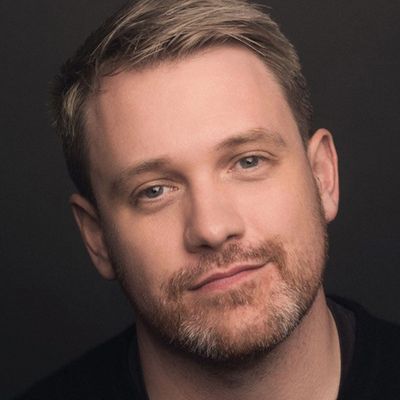
Michael Arden is an actor, musician and stage director. He made his Broadway debut as Tom Sawyer in the 2003 Roundabout and Deaf West revival of Big River. He played the title character in Pippin for the World AIDS Day Broadway benefit concert in November 2004... Read More
From the show: The Producer's Perspective Podcast with Ken Davenport
Guests
Featured Shows
About
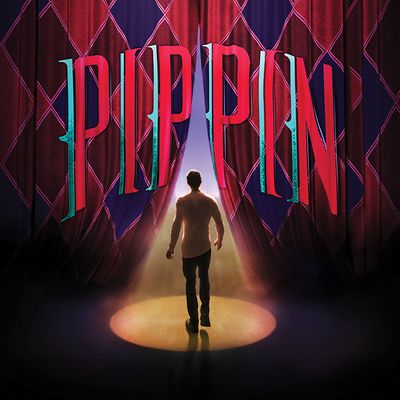
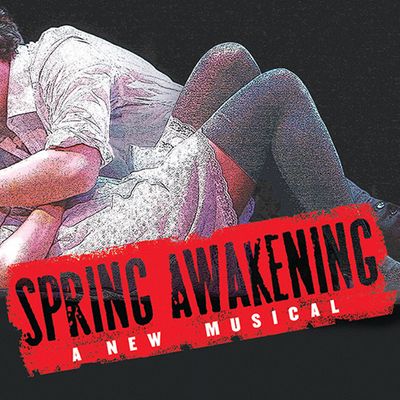
Michael Arden is an actor, musician and stage director. He made his Broadway debut as Tom Sawyer in the 2003 Roundabout and Deaf West revival of Big River. He played the title character in Pippin for the World AIDS Day Broadway benefit concert in November 2004. His regional theatre credits include Pippin, God of Vengeance, Falsettoland, Tom Jones' Harold and Maude, West Side Story, Songs for a New World, The Common Pursuit and The Winter's Tale. He directed Deaf West Theatre's acclaimed Broadway revival of Spring Awakening. The production marked his return to Deaf West and featured a cast made up of both deaf and hearing actors, performed simultaneously in American Sign Language and English. On May 3, 2016 Arden received a Tony Award nomination in the category Best Direction of a Musical for his work on the Spring Awakening revival.
Listen in to hear Michael and I talk about some things Spring and some things not, like . . .
- What it was like going to school at Juilliard . . . and how they reacted when he left early.
- Why there is a great theater scene in Los Angeles.
- How being a Director has made it both harder and easier for him to work for one as an Actor.
- What the heck is the Milan Conference and why does it make Spring Awakening ideal for incorporating hearing and deaf actors into the production?
- How you should wear multiple hats with pride.
Keep up with me: @KenDavenportBway
Transcript
This transcript was automatically generated and might contain errors.
[0:00] Ken Davenport: I wanna be a producer with a hit show on Broadway.
[0:07] Ken Davenport: I wanna be a producer.
[0:10] Ken Davenport: Hey guys, if you haven't been to the blog lately, make sure you go there and check it out. We just started a brand new forum.
[0:17] Ken Davenport: That's right. You can look for a job, post information about your upcoming show so producers and investors can come see it, or just gossip about the latest show you've seen.
[0:26] Ken Davenport: So check it out at the ProducersPerspective.com and now on to the podcast.
[0:31] Ken Davenport: Hello, everybody. I am Ken Davenport. Welcome back to the Producer's Perspective Podcast.
[0:36] Ken Davenport: Welcome to September. I know, I know everyone's sad summer is over, but don't be because you know what September is.
[0:43] Ken Davenport: September is Spring Awakening Month on the Producers Perspective Podcast. Woo-hoo.
[0:49] Ken Davenport: Each week for the next five weeks, we're gonna have one of the key creative team members of my production of Spring Awakening here on the podcast, including authors Duncan Sheik and Steven Seder, choreographer Spencer Liff, and the artistic director of Deaf West Theater, DJ Kurz.
[1:02] Ken Davenport: But today we're starting off Spring Awakening Month with the captain of the ship himself. The guy who has given us a chance to see Spring Awakening in a whole new light. The director, Michael Arden. Welcome, Michael.
[1:14] Michael Arden: Thanks, Ken. This is my first podcast ever.
[1:18] Ken Davenport: First ever?
[1:19] Michael Arden: Ever.
[1:19] Ken Davenport: So you're really breaking me in here.
[1:21] Ken Davenport: Yes, we will. We will go easy on you.
[1:23] Michael Arden: Okay, thanks. Uh as most of you know, Michael started his career uh on Broadway as an actor. Uh his Broadway debut was as Tom Sawyer in the 2003 Roundabout and Deaf West production of Big River, which we'll talk about in a bit.
[1:35] Ken Davenport: And I was one of the lucky folks who got to see Michael in the original production of Bear Off Broadway. And I remember thinking, who is that guy? That guy is gonna do some amazing things someday. And I've only said that about five or six people in this business, all who have gone on to big success, including Kristen Chenowith.
[1:52] Michael Arden: So you're in Kristen Chenowith.
[1:54] Ken Davenport: That guy went on to some great things.
[1:56] Michael Arden: That guy did.
[1:57] Ken Davenport: He really did. Um I listened to you on bootleg recordings of Bear for many, many a month. I had a nice cassette of that show.
[2:04] Ken Davenport: Michael went on to star in Times They are a changing on Broadway, did another Deaf West revival this time of Pippin. Started my guilty pleasure musical Aspects of Love at the Chocolate Factory in London. Most recently was Quasimodo in Hunchback at Paper Mill. Has been on a bunch of TV shows, including Anger Management. He's toured with Barbara Streisand and so on and so on and so on.
[2:27] Ken Davenport: Michael, take us back to the beginning. So where did you get bit by the theater bug?
[2:32] Michael Arden: Well, I was in a youth community theater troupe in Midland, Texas called the Pickwick Players. They're still functioning, and it was this amazing sort of after school program run by the community theater. And I started doing theater there. My first play I was in in that community theater was a Christmas Carol. I played Tiny Tim, although I was kind of a fat kid, so I was like not so tiny as Tim. And then right after that I did The Secret Arden, I played Colin and just I've been involved ever since. Ended up going to Interlochen Arts Camp and Academy. Um begged my family to let me run away from home and move from Texas to Michigan to finish my last two years of high school there, and then moved right to the city, went to Juilliard, and happened to go to an audition I wasn't supposed to for Big River, got the job, left school, and the rest is the rest.
[3:25] Ken Davenport: So you weren't supposed to go to the audition because Juilliard.
[3:29] Michael Arden: You're not supposed to audition while you're in school, but I did. Actually, it was gonna work out really nicely because uh it was a round show at the Roundabout, which are limited runs, and it actually was set to open and close all within my summer break. So I was just gonna do a Broadway show on my summer vacation. And then the show was a big success, and we extended a few weeks, and uh the moment they announced the extension, I got a call from Juilliard. They said, So, are you gonna be quitting the show? Are you gonna be coming back to school? I was like, Oh. So I was faced with a certain dilemma. And uh Jeff Calhoun actually gave me some really great advice at that time. I was really struggling with what I should do, if I should go back to school, or if not, and I was just really afraid that if I didn't go back to school, I wouldn't learn all I needed to know to work in the business, um, even though I was working in the business at the time. But he said, any decision you make, if it doesn't involve you being scared shitless, you shouldn't do it.
[4:25] Michael Arden: Which probably you can relate to.
[4:27] Ken Davenport: I can relate to that every single day. And Jeff is a great guy and a great director choreographer. It was one of my first gigs. I actually worked for him as well on Grease. Uh yeah, I'll tell a funny story about him another time when I was being in a cab with him thinking he was having a heart attack.
[4:42] Michael Arden: Oh no.
[4:43] Ken Davenport: And his only concern was that Grease Lightning be good. That's all that he said if I die, if I don't make it make Grease Lightning good, he said.
[4:50] Michael Arden: Uh I'm glad those weren't his last words.
[4:53] Ken Davenport: Yes.
[4:53] Ken Davenport: Uh and he did. And Grease Lightning was good. Did you enjoy Juilliard?
[4:57] Michael Arden: I did. I mean, it was hard. It was um I learned a great deal, especially about like classical text and I can approach a Shakespeare play now. I think I have tools at hand that I wouldn't have had before, and just technique work and voice and breath and physical work and stuff like that. And I think it's actually been really helpful to me as a director. I had some incredible acting teachers there. John Sticks, who is no longer with us, um a teacher named Rebecca Guy, just some great acting teachers.
[5:30] Michael Arden: But it was also really hard. I found it really um it's not exactly a feel-good place. I think most people, you know, for a while Juilliard had a high suicide rate, really. So I think, you know, they had to change the windows in the dorms because of that. So I think it's just it's just a lot of pressure because you're in this building. You're in one building that literally the windows don't open with the most talented musicians and dancers and actors, you know, supposedly around the world. And so that insular sort of bubble of looking around and thinking, oh, I have to be the best, I have to be the best, I have to be better, can become a little taxing on you physically and emotionally. So I definitely um had a rough time, but I'm really glad for what I learned there.
And it's funny speaking to other people who left, like I talked to Audrey McDonnell about it, and you know, she had a similar experience to me. But definitely I'm I'm I'm so happy that I got the training I did there. I'd love to direct there.
[6:36] Ken Davenport: I'm sure they'd love to have you back now as well. Uh so let's talk about the directing bit because you've had a very successful run as an actor. You work it seems to be as often as you'd like to work. Uh, and now you seem to be shifting gears a little bit to directing. What has what's drawn you to at first as an artist?
[6:54] Michael Arden: Well, I think uh I've done a lot of plays and a lot of musicals and television and film, stuff like that. Uh and I've had an opportunity to sort of watch directors for a long time. And I think I really started to become interested in it when I was working with Trevor Nunn because I found myself sort of obsessed with how he approaches uh text. And um I remember spending time with him in London during Aspects of Love and really just watching him and thinking, oh, that's I want to be him. I want to help actors and artists achieve their best work. I think that's much more rewarding, actually, than being on stage and letting the lights be focused on me. So I sort of got that idea and I had been writing, and I decided to start a theater company in Los Angeles that does site-specific work called The Forest of Arden, and I'd written an adaptation of this play, La Ronde, by Schnitzler, another 1890s German, well, Austrian play, and mounted it in ten different locations throughout Los Feliz and Silver Lake, and the audience all they were sent was a Polaroid with a street corner on, and they had to figure out where to show up, and they were taken from motel rooms to the back of limos to inside people's homes in this neighborhood on this sort of journey.
[8:18] Michael Arden: Um I just really found that I love bringing people together. I love like assembling a team of designers and choreographers. That's when I first started working with Spencer who and uh Blake Silver, my associate, worked on that, and my designer Dane, and and uh it's just been something that I find really rewarding. I don't think it's easier, I think it's actually much more difficult because you sort of have to do everything. As an actor, I think you're required to kind of know nothing. The best actors can sort of you have to know everything, but then when you step a foot on stage, you have to be ignorant to everything because you have to just enter knowing what character knows, which is usually not very much. And so um I have such great respect for actors because I am one myself. Um I think as a director, it gives me a chance to ask out loud all the questions that I had been asking as an actor.
[9:10] Michael Arden: So yeah, I found it a little difficult to be an actor since I've started directing.
[9:16] Ken Davenport: You just answered a question I was about to ask. Uh to talk about that. So what makes it more difficult now to go back on a stage or in front of a camera?
[9:27] Michael Arden: Well, I'm a I think I'm a bit of a control freak, so that that's part of it. And like I said, an actor you sort of have to just do your gig and then let hope everything else falls into place. And the storytelling isn't really your isn't your responsibility. You're just responsible for meaning what you say and saying what you mean.
[9:47] Ken Davenport: Have you ever had an experience as an actor where you have been a hundred and eighty degree differing opinion as to how to approach?
[9:55] Michael Arden: Oh, I'm certain of it. Yeah.
[9:56] Michael Arden: Yeah, I'm certain of it. I don't know how I'm gonna say when, but no, we won't make it. When I turn the podcast off. But definitely I think but I think also having been a director, having then gone back to acting projects, um even when I felt 180% in opposition to where I'm being led, I sort of get now as an actor that I it's my then job to just take the note or to, you know, if I'm asked to cross stage left, like it's my job to figure out why. I don't need to like stop the rehearsal process and say, well, I don't really feel my character would do that. I feel like that's such a waste of time.
[10:30] Ken Davenport: I would agree.
[10:32] Ken Davenport: When I first heard your name associated with Spring Awakening, I I literally was like, Oh, Michael Arden, he's amazing. I wonder who he's playing in this. Because of course, that's by nature how people are going to think about you.
[10:43] Michael Arden: Yeah.
[10:43] Michael Arden: Or how people have. Is that been a challenge as you start a theater company now?
[10:48] Michael Arden: Yeah. I mean, I think it's been um Luckily I started my theater company now in LA, where I think it's a little easier to be a multi-hyphenate than it is in New York, I think, in a lot of people's perception. Also, just I think LA's a little thirsty for really good theater. Because a lot of people are doing theater as a means to be on television and film, and that's not really why I want to make theater. I want to make theater for theater. But yeah, it's it's been interesting to see people's reactions to it. But the people who know me or have worked with me, it's it's sort of makes sense to them. I don't know if that answers that question.
[11:24] Ken Davenport: No, it it it does. Uh and I know a lot of people that listen uh to the podcast are wearing two hats. And some people that even talk to me like, oh, I'm an actor. I'm also a director. Or I'm a writer. Do you struggle with that as well about standing up and saying, no, no, this is who I am?
[11:42] Michael Arden: Yeah, I mean, I think it's difficult because it's hard to say what you say you are something unless you feel like you are confidently unsuccessfully something. But I think that's damaging in a way. I think you have to step into a room and whatever hat you put on you just wear it with pride, regardless of like how shabby that hat may be. So if I'm on an airplane and somebody asks me what I do, today I say I'm a director, you know. Uh a year and a half ago I said I was a writer to some people, because I had just sold a pilot and I felt like, oh, this is what I'm doing. I'd like to start walking into rooms and just saying, I'm an artist and what can I do to help create something.
[12:20] Michael Arden: It's a great way to think about it when you think about some of the greatest artists of all time. Da Vinci did so many different things.
[12:27] Ken Davenport: Yeah.
[12:27] Ken Davenport: Right, and was allowed and applauded for it. And I think you're right about Los Angeles celebrating people that do a lot more than here. Here we kind of look at people like, oh God, you do six things, and I'm one of them. I wear lots of hats myself. We talk a lot about Los Angeles and the theater scene. What would it take to have a great theater scene in Los Angeles?
[12:45] Michael Arden: Well, I think there is a great theater scene in Los Angeles.
[12:47] Michael Arden: So I think I think it's just a matter of I might seem kind of controversial for saying this, but I feel like it's a bit oversaturated right now. There's a it's a bit of like a wild west. Because there's so much theater happening, and yet because of the equity guidelines and with the 99 seat plan, which is now like a different thing than it was when I was working in it even a year ago. Um, it's just I think good work needs to be recognized and newer needs to be celebrated more in LA than it is. I think uh it's a bit of a self-fulfilling prophecy for people to say, oh, LA isn't really a good theater town, because it really is. Some of like the best actors I know are making theater in LA. I think it's just hard because you have to drive to the theater in LA.
I actually think, I mean, here in New York, like you can be at the theater in 20 minutes no matter where you live in the city. You could be at a theater. In LA, it's like 40 minutes and then you gotta park. But I feel confident, I felt really confident with where it's heading. I mean, I if Spring Awakening was any indication. When we were at the Wallace Annenberg, 80% of our audiences had never been there before. You know, and and they had the most diverse audience from age to ethnicity to just everything in between to deaf and hearing audiences. So I think there's really a thirst for it. People just have to be unafraid to say, hey, we're making new and important work here. It doesn't all have to be created in New York.
We can do it and do it not necessarily even with the eye of, oh, this is an out of town tryout. It's like, no, we want to make good theater for people in LA. Because I guarantee everyone in LA loves theater. They just, you know, sometimes feel that they don't have an opportunity. So I think we have to just create the opportunities.
[14:32] Michael Arden: So you audition for and get uh the role in Big River and with Deaf West. Uh tell me how your relationship with them developed over the years. I you did Pippin, obviously, and now you're directing Spring Awakening. Was this a constant relationship with them over the last several years? It's been sort of off and on, um, but always a sort of quiet part of my life, no pun intended. Um having walked into that audition room, not knowing a single deaf person or a single sign, sign language for Big River to now, being so immersed in in the deaf world that I can't imagine life otherwise. It's been a real journey. I after Big River, I s did other projects and didn't work with Deaf West for a while, and then actually both Jeff Calhoun and Steven Schwartz got me involved in Pippin.
Kind of it was a sort of a two-handed move there, because I I had done it twice for Steven before without ASL. Uh, and said, Well, I want Michael to do this, and I wrote Jeff, and so that seemed like a natural fit, I think. And it was interesting in that show, I was a voicing actor, so I didn't really sign that much. So I have a different perspective than I did during Big River, and I think that's when I sort of started thinking, oh, I would love to work with Deaf West and for the first time possibly, as opposed to trying to highlight how everyone is the same. I think it might be really interesting to highlight how everyone is different by having characters who are deaf and uh and not just are in a musical where they're living in a world where everyone knows sign language.
Because everyone doesn't know sign language. I mean it's it's really a divide I think language what it highlights is that language is such a divide I think not only for sign language but for you know we to have a language divide when we visit China or tourists on the street here who you can't speak to it's it's a tangible line. And so I became really interested in finding how by highlighting the fact that there are differences how then that brings us closer together. I don't know if that makes sense. It's sort of a weird way of it's just been something that's been on my mind ever since I I did Pippin and how we interpret for each other and why why we need to communicate across a language divide.
The necessity of communication has become really interesting to me. And when people choose not to communicate what that means and in theater you can't just show the good you have to show the bad too you have to just be honest so I think that's what we're trying to do here. But I don't know if that answers the question but it's just been this thing that I I've kept coming back to Deaf West throughout the years. And I think it's because what they do by creating theater that's simultaneously done in two languages like elevate the material in a way that even if you're a hearing person who doesn't know any sign language you're able to somehow understand the text more by seeing it come to life even if it's not the language you understand.
Just whereas like going to an opera and hearing music sung in Italian, you're able to understand some of Puccini's romance more than if you heard it in English. Even though you don't understand it. I think it's it's all sort of we understand more languages than we give ourselves credit for, just by osmosis, I think.
[17:51] Michael Arden: So tell me how Spring Awakening came about. Well, um, I've always wanted to direct Spring Awakening just a sort of random production of Spring Awakening, and it's been something I've thought about a lot because I happened to be at the first preview at The Atlantic and loved it and and uh You were a super fan of the world. I was a super fan, as Steven Seder likes to say. I did come along, I had some friends in the company, and I I was actually Leah Michelle's date to the Tony Awards that that year that that it won. Um so I was a fan of the show, and then Def West DJ approached me about possibly directing something for Deaf West, and I had been introduced to him by my friend Coi Middlebrook, who was the associate director on Big River and Pippin and had directed quite a bit with Deaf West before.
He said, Well, you know, you guys should talk. And uh I was talking to Andy Miantis, my fiancee, who had done the first national tour of Spring Awakening, and weirdly we sort of reconnected in life. We've known each other for a long time, over ten years now, but we reconnected when he was doing Spring Awakening and I was doing Deaf West Pippin at the music center in LA. Funnily enough, like those two Spring Awakening and Deaf West were just across the hallway from each other at that point, and um it was actually his idea, and he said, Hey, well, what if you looked at Spring Awakening? And I remember sitting in our living room and hashing out what it could be and what it would mean, and ultimately we thought that at its root, it's a story about the perils of miscommunication.
So, what better metaphor than you know, these kids who are denied a voice? It's about Spring Awakening, I think, is about any group of people who is marginalized, whether that be just people who are too young or an entire culture. So then we uh met with DJ at Intelligentsia Coffee on Sunset Boulevard, where the coffee's just okay, but the ambiance is great, and where there was an interpreter there with us, and we pitched this idea about doing Spring Awakening, and DJ seemed to like it, and we pulled together the funds to do a I think it was a one-week or two-week little workshop. We just met a few hours a day and random rooms in LA and tried to see if this was even worth doing. Talked about what characters would be deaf and what would be hearing, who would be hearing and why, and worked on a couple of numbers just to see if the signing lent itself to the poetry and these lyrics, and it did, I guess.
[20:25] Michael Arden: So talk to me about your approach uh as a director. So you have this idea you're sitting in your living room like, oh, great, and tell me about the research that you do for this, because every time I've heard you speak about this, you talk a lot about the historical aspects of the show and then of the concept. Where does your research begin as a director in general? Well, I think it begins just your research first begins with the initial play. So learning about why Vedekin wrote this play and what was happening politically at the time in 1891 in Germany, and the fact that this was just after the unification of Germany and how these ideals eventually led to what became, you know, what we know of as the Third Reich.
And so it's just a fascinating time in history. So I think you start there, and then we I actually didn't even know anything about the Milan Conference until we were in rehearsal for the first production at Inner City Arts. Because it's this thing that no one really knows about. I mean, uh deaf people know about it, but even some deaf young people aren't aware of their own history. So tell our readers what this Milan Conference is. The Milan Conference was um an international congress of educators of the deaf, which occurred in 1880 in Milan, so it's commonly referred to as the Milan Conference. And all of these educators of the deaf, all of them hearing people, by the way. I think only two of this entire congress of people were actually deaf individuals.
So it's all these hearing people meant to decide how to best educate deaf children and deaf students, and how best they could gentrify them into society. And it was decided after many arguments that oralism was the best approach, which means all deaf students wouldn't be allowed to sign, that all sign language would be forbidden in schools and in the educational system, and that the students would be forced to lip read and to use their voice and speak. So that spoken language was the only way to really be a quote unquote person in society. And so 1880, this was decided, all these educators went back all across the world, and this was the law of the land. So students weren't allowed to sign, they weren't taught sign.
So students coming in who were just at the age they would be learning sign language weren't taught sign. So I mean just imagine like not having a way to communicate at all. Who maybe their parents could sign, but then they were told that was wrong, so then the strife even began to occur within deaf families, and uh deaf individuals were were told they shouldn't marry at all in in parts of Europe and elsewhere, sterilization of the deaf began to occur. So this was like a real genocide in a way, not only of language but of a culture was beginning. It's called it's commonly referred to as the dark age of deaf history, which a lot of people still believe we're still in, even though sign language is is now taught and seen as a real language, which it is.
So um, it's it was happening at the time the play was written, and it just all sort of clicked into place. One night I think I was on in like a Google rabbit hole as I get into when I'm working on a project about like what would fireplaces have been like back then. And I just happened to, you know, deaf students, oh, it's the Milan Conference, and I just started Googling, and I stayed up all night. And I remember we were just at the beginning of the rehearsal process for inner city arts downtown, the first production we did, and I came in the next day like bleary eyed, and I was like, why didn't anyone tell me about the Milan Conference? And I remember the shock on their faces being like, oh yeah, the Milan Conference.
And I was like, tell me more. And then my whole sort of concept for how the show is going to be done changed. I thought, oh, we have actually a much more interesting and important story to tell in this. And so it's sort of then my plight in directing it to be able to tell that story that isn't on the page of Spring Awakening by Steven Seder and Duncan Sheikh. So it's just been clarity of, you know, casting and what's happening on stage and trying to bring light to this huge event and and and the fallout and aftermath of this awful, awful series of decisions that were made by people who had no right to make them, which is exactly what's happening in the play. It's like these these adults are choosing the fates for these children who that they have no right to.
Um it's kind of amazing. So I just like thank God for for the kismet of Vadekin having written this play 11 years after this thing happened. It's amazing. And you know, as I saw the show in Los Angeles, I had seen Big River, I had seen Pippin, and I loved them.
[25:34] Michael Arden: But there seemed to be something much richer, uh, and enhanced, if you will, about this production. And when I hear you talk about it now, that it just, oh yeah, that's what it is. It just your concept seems to have made the original musical and play just that much more brighter in terms of its storytelling. I think the play originally isn't, I mean, it's not so much a play as it is a comment. And as Steven Seder said really eloquently at our first rehearsal, it's an indictment of society. But it isn't necessarily dramatically the most interesting work there is, you know. There are no revivals of that play going on. No, no, no, there are because it's not sort of the structure of it isn't quite dramatic as audiences are used to.
So putting it in this context, I think actually makes it a better play. The actual source material. It actually, because there is a problem, but now there is a world in which the problem can exist that is, that is, uh, immediate for the characters in the moment. So I think that, you know, lucky us theater makers here in 2015 that, you know, we have this dark history to look back on. Not lucky for, you know, children growing up without a language who were sent to asylums, obviously. But I think, um, it's great that we get to tell this story. It's great that we get to like not only tell like a beautiful story about the human experience, but we get to educate and bring to light history. It's, it's, it's kind of, it's rare that happens with a revival, especially.
[27:13] Michael Arden: So I've directed a couple things in my day, and they were extremely challenging processes. Uh-huh. Everyone's looking to you for answers to everything. You're running a room of however many people, musicians running around, all sorts of it's challenging to begin with. But this I'm sure brings its own set of challenges because you're dealing with the company that in this case is 50% deaf. Talk to me about what it's like to rehearse a company like this. What are the challenges? I mean, it's not for the weak of heart. Luckily, I have been in those rooms before. I mean, I had on Big River, had a crash course, and I learned from the best. I mean, I learned from Jeff Halku, uh, Jeff Halkoon. Jeff Calhoun, who, um, sort of cracked the code in terms of like how do we interpret okay, we have an interpreter in the room and we need to make sure that both languages are honored at once.
So I sort of had a really fantastic sort of manual to go by that now I've decided to break all the rules of. But, um, it's difficult. I mean, you have to, everything you want to impart has to be communicated into two languages, which actually forces you to be more clear. So it turns out to be a better thing for me. Getting everyone together with the music, you know, is a difficult thing. Being in tech right now, you know, it's something that people say, Well, how's it going? And I said, Well, it's slow. Yeah, tech is slow. And I'm saying, but no, but you can't use the God mic. You can't say hold if something's going wrong or if someone's in danger. I mean, it's you just sort of think about the actual technicality of making this thing happen.
It's really, it's really insane what we're trying to do. Uh, you know, now you tell me. And in a theater where, you know, you're backstage and you can't see the stage or can't see what's happening. It's, it just requires every single person involved, from, you know, the props person to the dresser to every single actor to be to have a hundred percent concentration at all times, which is kind of exhausting mentally. I go home and I feel like my mind is melting after each day. But it's just, you know, it's a, it's hard to concentrate both with your ears and your eyes and just your attention for so long. But you know, we have cue lights backstage to let actors know when to enter and exit, and our stage manager TJ Kearney is a genius, and I really owe so much of the success of this production to him because he's able to sort of manage that stage in a way that most stage managers don't have to do.
There's a lot of things that you have to take into consideration. And we have an actor in a wheelchair too. So, so like, that's an interesting thing. We don't have a crossover on our stage, so it's about figuring out how we stage the play where she never has to enter and exit on different sides, things like that. But I found that every time we come up against a challenge, it forces us to sort of examine okay, well, what, what how can we not only solve this but how can we make it better? And every time we come up with a better solution.
[30:11] Michael Arden: I was recently watching this great show on Netflix called Chef's Table. Have you seen it? Yeah. You have? And, um, this one chef was very much into classically cooking, uh, his Italian classic dishes, and he had sort of a life change when he, because of art, and at one point when a critic came into his restaurant, his sous chef dropped the lemon tart and it like broke across a plate, and we thought, oh, it's over, we're getting terrible reviews. That this is the last tart they had to send out, and he looked at it and he saw this broken piece of pastry on the table in front of him, and he said, Wait a minute, this is actually interesting. And he framed it on a plate a certain way and called the dish.
Oops, I dropped the lemon tart, and now it's his like best seller. So, you know, I think sometimes our greatest challenges, uh, become our greatest sort of moments of achievement. Yeah, that's so true. And I'm just thinking about it in terms of that Milan conference, because you have it seems to be you have a choice in life or in art. You can choose to do what they did in the Milan conference and say, you know what, this we're just gonna ignore it. We're just not gonna figure out how to incorporate because we're too lazy to actually learn it and teach it and, uh, figure out how to develop it, we're just gonna say you can't do it, or you can figure out the new solution to the problem, and that seems what you're doing every day over there.
[31:33] Michael Arden: Yeah, I guess so. You know, and it's like just just trying to at all times tell the truth on stage, and then really, really attempting to if there are two guar, uh, two deaf characters in a scene together, it's silent because in the minds of those two characters, there wouldn't be an audible language. And, uh, if there are two hearing characters speaking to each other, we don't sign those scenes. Those are projected. So, uh, in the same way that the silent scenes are projected. So, in all times trying to just honor both history and truth is always sort of brings us to a better idea. So, what's next for you and the theater company? You have other projects? Uh, yeah, we're working on, um, a production of this actually another Vatican play, uh, called Lulu.
It's the third we wanted to do these three German morality tales. Um, and it's Vadekin's later play, which was also incredibly controversial and still is. It's, it's incredibly dark. It's about a woman who is irresistible to men, and then because of how she uses that to her advantage is led to her demise in the streets of London. Uh, so we're working on that. We've, uh, done a few readings of it, and, uh, also LaRonde that we done a few years ago is now being developed into a film, there's a script for it, and hopefully that'll be made in the next year. So it's sort of diversifying, and I'm working on a project in Los Angeles for an art gallery after this, but I don't really know. I just want to get to September 27th. I think the amount of work I need to do between now and then is sort of overshadowing what's beyond that.
[33:15] Michael Arden: So on a scale of one to ten, and don't think of me like the producer of Spring Awakening now. How nervous are you about the show? Like, in terms of we know it, uh, and I'll tell you, I we know the show is gonna be a great show. I saw in Los Angeles, the critics loved it, but just you personally, this is a big deal. Yeah, yeah, it's a big deal. It's like, you know, it's not like I'm directing a show at the Rattlestick and then hoping I get, uh, something, you know, at the underground roundabout and work my way up through the ranks. I mean, it's like my first directing in New York and it's on Broadway with a cast of thousands. Um, half of whom are deaf. Yeah, yeah. So, um, but I figured you just go bold or go home.
I'd say I'm like 70% nervous, but I think I'm just more nervous as to, you know, it's just my hope that, um, that audiences walk in the door with an open heart, but I think they will. I think this is a fantastic season that we're in. I think it's the most diverse season ever, ever on Broadway, probably in history. It's just, um, overwhelmed with I think people are creating theater in a non-ironic and non-self-loathing way right now, and I think it's really great. And I think there was a s a a time every, every show had to make fun of the fact that it was a, a show. And now we've sort of left that behind a bit. And so people are telling important stories and audiences are are acknowledging and appreciating that.
So eighty percent. I'll change my answer. It went up. Yeah. Yeah. That being said, you know, Jeff Calhoun said. We're in tech right now, so if you weren't scared shitless, it wouldn't be worth doing. It's true, it's true. And we're attempting to do like the hardest thing ever done. So I have to, I have to, you know, remain positive. But I am. I'm extremely heartened by this company and every single person involved creatively and our crew at the Brooks and you, you know, to have somebody like you who believes in something enough to take a terrifying chance. It's very it lets me sleep at least four hours a night. So thanks for that.
[35:21] Ken Davenport: Okay, I'm gonna ask you, uh, our my last question now, which is my infamous genie question. You ready?
[35:28] Michael Arden: Okay.
[35:29] Ken Davenport: I want you to imagine that the genie from Aladdin comes to visit you while you're not sleeping at night. So since you're up, I want to tell you that you've done such great work, not only as an actor, but now you're directing, you're doing groundbreaking work with the Deaf West Spring Awakening and for an entire culture. I want to thank you for that. By granting you one wish, I want you to imagine what, and no wishing for more wishes. I've heard that before.
[35:56] Michael Arden: Yeah, I'm not gonna tell you who wanted to do that.
[35:58] Ken Davenport: Uh, one wish. What is the one thing that really keeps you up at night about Broadway? The one thing that drives you so crazy that makes you so angry that you would ask this genie to change with a snap of his finger. The one thing that you could wish away about our industry, what would it be?
[36:18] Michael Arden: If I could wish one thing away about the industry, I think it would be wishing away the idea that one project or person's success is another shortcoming. I think it's really easy to look sideways and say, Oh, where am I in this line? As opposed to us all looking forward in a common direction, and saying, how can we all take a step forward and create the best work? Um, you know, there are a lot of people trying to do this, and no one is trying to make work that isn't less than spectacular. I think we have to just treat each other really, really well and support each other because we're all fighting. We're all, you know, marching in that lane is triangle forward. And it's just really exciting that we all get to tell different stories, and so we should celebrate each other a little bit more.
[37:10] Ken Davenport: I think that's a terrific, terrific answer. Uh, I'm now gonna let Michael get back to tech because there's a whole bunch of stage hands and designers and all the folks, uh, that I'm paying actually just waiting to get to work. They're waiting for him. Thank you so much for spending time with us today, and thank you so much for this incredible vision of Spring Awakening. Spring Awakening is already one of the shows I'm most proud of producing, and that's because of you and the vision you had and what I saw in Los Angeles, and what all of you are gonna get a chance to see in what, seven days from the recording of this.
[37:41] Michael Arden: Seven days.
[37:42] Ken Davenport: Michael just got a little bit more nervous there we did. 80 went to 85%. Um, thanks again for listening. See you all next week as Spring Awakening Month continues. Hey guys, don't forget to check out the brand new forum on the blog. We got lots of cool conversations happening there. Join in on the fun. Look out Broadway here by coming.
© Broadway Podcast Network, All Rights Reserved