

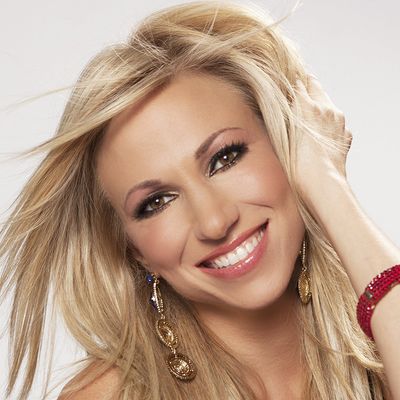
Well in my "Electric Youth," I loved Debbie Gibson! From "Lost In Your Eyes" (which is a personal favorite, to "Shake Your Love," "Only In My Dreams," "Foolish Beats" and more, I was a fan! You had to be in the eighties and in NJ for sure!.. Read More
From the show: The Roundtable with Robert Bannon
Guests
Featured Shows
About
Well in my "Electric Youth," I loved Debbie Gibson! From "Lost In Your Eyes" (which is a personal favorite, to "Shake Your Love," "Only In My Dreams," "Foolish Beats" and more, I was a fan! You had to be in the eighties and in NJ for sure! Well, really across the world, we were fans!
Did you know Debbie wrote all those hits, plays mean piano, and is a Broadway/Theatre Monster as well! Hear how many shows she did in how many years? INSANE! She does it all! She acts, sings, plays piano, produces, and is currently writing a memoir about her life! We hit all the topics!
Plus we talk her upcoming return to 54 Below for a show all about Love Songs February 7th & 8th! Grab a ticket quick, because they are almost sold out! As we knew they would be!
For tickets: www.54Below.org
For More Info On Debbie: www.DebbieGibsonOfficial.com
__________________________________________________________________
Check out "The Roundtable with Robert Bannon" here on BPN on the daily, on YouTube, Broadway World, and on social media! Like, comment, share, & subscribe!
For more info on Robert- www.RobertBannon.com
Follow Him on IG- @RobertMBannon
TikTok-@RobertMBannon
Transcript
This transcript was automatically generated and might contain errors.
[0:14] Robert Bannon: So if you look in the songs last year that are most streamed on my Spotify or my Tidal or my Apple Music, because I have all of them, uh "Lost in Your Eyes," which is 36 years old. You know, I'm born in the early 80s from New Jersey, and you know New Jersey. We love us some Debbie Gibson. And I'm a Broadway baby, and we love us some Debbie Gibson. And if you know "Shake Your Love" or "Out of the Blue," do you know how many people, when I said Debbie Gibson is coming on our show, have wrote me and told me their favorite songs? We grew up with you. We love you today. We love you on TV. We love you in our movies, and you're coming to my favorite place in the world at 54 Below. My friend Matthew was like, I was the first person to buy tickets. Me and my husband are sitting front row. We need to see Debbie Gibson for this Valentine's Day. And if we sing "Lost in Your Eyes," I'm just gonna cry. And then I'm gonna go eat ice cream and go to bed. Debbie Gibson is here.
[1:11] Debbie Gibson: We're here.
[1:12] Robert Bannon: We're here, we did it. I can't do a love song show without "Lost in Your Eyes." I mean, of course. Debbie Gibson, it is one of the most gorgeous songs ever written. The words of that song make me boo. I did it at my Pride Show at 54 Below.
[1:27] Debbie Gibson: Oh, I love that so much.
[1:30] Robert Bannon: I did it because it is when you think of songs. You were how old when you wrote the song?
[1:35] Debbie Gibson: Like 17. I, you know, I've been writing my book. I know like before we went on, I was telling you, like, um I'm delivering draft two, which is like almost the final of my book soon. And I write a lot about like these moments, and I've spoken about this before, but literally, I got home from school, I sat at the piano, and that intro just started playing itself. Like, I, you know, I believe in being proactive in honing my chops and my craft, but to me, the songwriting part of it is the mystical, magical, spiritual, like, get out of the way and let the song come in part of things. Like, I don't even know how that song came into the world, except I got to be the messenger of it.
[2:20] Robert Bannon: Well, I was reading about you, and I can't wait for the memoir, everyone, because your life is so fascinating. And if you're in New York, everybody needs to go grab a ticket. Debbie Gibson's love songs live at 54 Below this February. Go to 54below.org, Broadway World, Broadway Podcast Network, wherever you are. Get your tickets. So what is a show like? I've seen your show at 54 Below before. You do a whole retrospective view, but this is love songs. So what are we gonna hear? What's it about?
[2:49] Debbie Gibson: So I'm still putting it together because I'm always like, I've become weirdly the queen of creating new shows. Like we recreated the Electric Youth 35th this year. I did Winterlicious, I did Acoustic Youth, and now I'm doing love songs. So I'm always like, well, how can I make it different? There's a couple of covers no one will expect that I've been dying to do. There will be definitely like you've seen me where there's parts where it's just me and the piano because especially like my diehards. Shout out to the Devheads and the Diamond Dev Heads. My diehards love the Think with Your Heart album, they love the Body Mind Soul album, they love the Deborah and the MYOB. And there's little gems on each of those that will fit into the show, but if I did them all, we would be there for four hours.
So that'll change up. I'm doing four of these love song shows across the country, two are in New York selfishly, you know, because I'm a New York girl, hometown girl. But yeah, so there'll be a blend of, you know, more tracked up and live instrumentation type things with energy, but then like when you hear love songs, you might think it's gonna be all kind of like mellow. No, no, because I also, this is what I've been thinking about. There's love of self, there's love of Broadway, there's love of dance music, there's love of... right? There are unrequited love songs because not everybody is in love this Valentine's Day. Bye me. And so, you know, like even when I was doing the holiday shows and I did this big disco medley and I included the song "Last Dance," and Paul Jabbar wrote such an incredible song with that song, and I said, "God, this is a love song."
This is a song about not being afraid to need something or someone even if it's in a moment, but it could mean more. That song can mean whatever you want it to mean. So I've been really just looking for those songs that maybe they don't fit again the traditional prototype of what people think is a love song, a ballad with strings and whatever. And again, there will be some of those, but there's gonna be a variety that speaks to all kinds of love.
[5:06] Robert Bannon: Oh, I'm so excited! People, 54below.org, come on! Well, what I love about listening to your music while we get ready to talk to you, if it's the winter album, or if you go out, you know, back in time to the other albums that we all grew up with and lived with, is that what separates you, no shade to other top superstars, is you have musical chops times a thousand. Like you can sit down at that piano. I see you just on Instagram the other day, play "Lost in Your Eyes." I see you sit at a piano and play. You did a show at 54 Below where you had your book, you were just pulling songs out and playing.
[5:43] Debbie Gibson: My audition book, my God, that loose leaf stood the test of time.
[5:48] Robert Bannon: Yeah, and I love that. Like, I just think, well, I go to a live show, if it's gonna be as I put it, the small world at Disney, where it's like the machinery's going and it's the same thing every time. And I love the small world at Disney, but it should feel different and be different every time and be in the moment. And so there definitely will be that. And I love 54 Below because it reminds me of our family living room growing up and that joy of sitting around and playing and singing. And I think that's what that audience goes there for, and that's what I go there for.
[6:20] Robert Bannon: Well, get a Caesar salad and a drink and pull up a chair and see Debbie Gibson right up front and center. When these songs, all of them, "Only in My Dreams," "Shake Your Love," "Electric Youth," you know, they all are written by you.
[6:34] Debbie Gibson: Yes.
[6:37] Robert Bannon: Do people, I know you're the youngest person to have a number one written song and perform something that has been 30 plus years you've held that title. Did people encourage you to talk about that growing up? Was it something that was kept secret? Have you always considered yourself a songwriter first? How do you distinguish your artistry?
[6:55] Debbie Gibson: Oh, great questions. I mean, like the thing is when it first came up, like the music industry machine was so programmed to think that they had to hire older males to do everything, including write songs for young girls, which always was astounding to me. It's like, but who better to speak to? And I wasn't speaking to only young girls, I was speaking to boys, and you know, my LGBTQIA plus fan base. Like, I can't tell you how many people come up to me and they say those songs held my hand, and those songs felt like hope, and those songs felt... and it's because I too always felt like somebody who didn't fit into the checked boxes. Do you know what I mean? Like I just always felt that way, and I always felt like I spoke to my peers in that way, and I spoke to, you know, that first love and that first heartbreak.
And so it was comical and frustrating trying to make it make sense to these executives who were just like, "But you don't want to work with Babyface." It's like, "No, no, no, I want to work with Babyface, but not right now while I'm establishing my voice and my connection because I'm going to sound like Babyface featuring Debbie Gibson." And that's what my late great mama Diane fought hard for, and that's what I fought hard for. I wanted the connection to my audience and that vision to be pure. And so, yeah, I think that a lot of people know that I write my own songs and wrote those hits, and then a lot of people don't. And my manager Heather and I always joke that we're like, we're in the re-education process because it's a whole new chapter, and you know, I do think people enjoy knowing those facts. I think they just enjoy knowing that the artist is speaking from their heart.
[8:53] Robert Bannon: Yeah, and that's what we hear. When we hear them, we know that they gave something to you, so they resonate with us. And they're part of our lives, for sure.
[9:01] Debbie Gibson: Thanks. Even while, listen, even while working on the book, I'm very careful because I'm a wordsmith. I love words and I love crafting words. But if it gets too cerebral and crafty, sounding like I'm reporting on, I go, wait a minute, how would I just say this? How would this sound on the audiobook? Like it has to sound like a conversation to me always because that to me is how we all connect.
[9:27] Robert Bannon: Are you excited about... was the book painful? Was it exciting? What's it like to write a book?
[9:33] Debbie Gibson: It's so crazy because it makes me feel like I'm 83. But at the same time, I've lived so much life and so much showbiz life that I have to leave stuff out because like you can't. I'm realizing why people write multiple memoirs. Like you have to actually keep expounding and going deeper. And so I'm finding this balance between running through some facts that I know people will want, or maybe things they hadn't heard before, and then trying to stop and focus on one thing and paint a picture and try to recall some dialogue from that time, even if I was six years old. Like I'll give one little fun tidbit away that I was just working on this morning, rewriting because of that very thing. I remember playing the "Fur Elise" in the CYO talent contest at Sacred Heart Church.
And two other kids, well, it was like, you know, up into the teens were playing "Fur Elise." And I remember turning to my mom and I was six, and I said, "They're playing choppy." They're playing it kind of choppy. And like I had a teacher at the time that was helping me focus on the emotion and the dynamics. And you, I heard right. So rather than going, "Yeah, and da-da-da-da-da-da," I like put that little piece of dialogue in there because I vividly remember saying, "They're playing it choppy." And I wasn't trying to be snarky. It was factual to me. It was like, where are the dynamics? So anyway, those little things and what I was wearing and where I picked it out, and what the, you know, just to kind of give people that context.
And it is like, it is emotionally intense writing about my mother-daughter relationship. Writing about some relations. See, I'm not somebody who likes to... I'm a forgive and forget and move on person. I don't have a lot of bridges burned and things to reveal in that way and write.
[11:33] Debbie Gibson: However, there are some people in my business world who kind of left in a huff and I've extended the olive branch and they didn't want to have the adult conversations because you have to remember like my mom was speaking on my behalf for so long because I was a kid. And as I grew into myself, I was kind of like, I want to call that president of that labeler. I want to call that. And if they were like acting like a jilted boyfriend, like, well, I don't want to tell now I'm gonna write about it. You know what I mean? Like, it's not like out of fight, it's out of, well, now we only have my version of the story that I tried to talk to you about, but you didn't want to. So that's what's been really interesting.
And what stories are worth telling? What what feeds the bigger narrative? Because I didn't have any Me Too stories, but I have the stories of the male power play. I have a million of those. So it's what what in of those are worth telling, and why am I telling it? What's that intention? And so it is fascinating. It's like more time you want to spend on your own psyche than like anybody. It's like being in therapy all day when you're writing. So it's a lot. It's a lot, but it's it's really cool because I do think I have an I think the most interesting part of my story is that my mom and I together took on this landscape that we knew nothing about out of the pure love of music and out of the love of people and wanting to connect with people.
And who like we didn't have a map? Uh, and we were both, and she's such such a big part of the story, but we were always both very resilient, and even my team now, and and like we're kind of like, okay, it's the whack-a-mole game. Well, well, you're down that hole, you're in the dark going, where's my next place? I can pop up and we we keep going. I think it's like the it's a story about resilience, really is my entire life story. You know what's funny? That word I was just teaching my my cute little sixth graders the word resilience and being resilient, and when things are hard, we keep going. And then you're an example of a thousand dollar songwriting contest from W O R radio 17, 16, 17, 8 millions of records sold written by you.
And it's interesting because you talk about love and you talk about your family, your mom, and relationships, romance, and friendships, and all the different types of love, but also you've had great love for yourself to be able to preserve this music, and you always being a child star, the most famous person in the world, and you've you've reinvented and you keep going and make more music and make more art. If it's Broadway, if it's if it's the television things, if it's the Hallmark movies, which thank you for representing gay people and Christmas and Hallmark movies. You have continued to grow. You don't just sit back and say, did it. I'm gonna go to the mailbox and get my checks and take a nap. You keep going.
[14:31] Debbie Gibson: Thank you. No, I mean, I my my biggest fear is that I don't have enough decades left to do all the other things I want to do. Like, I there are so many, you know, I want to score films, I want to conduct a symphony, like I want to experience that. But mainly I want to be like Tina Turner, who just kept rocking until she couldn't know more, just chose a different, like she went, okay, great. Now I'm gonna go and do this part of my life. Um, but yeah, I mean, I think that like constantly navigating and discovering new parts of yourself. Like I loved growing up in New York and in theater, like in Long Island on Long Island, because you had to learn how to sing, dance, act, and then for me, it was the songwriting as well.
And so I say to like your sixth graders and whatever, are they theater kids or you just teach both? Public school and then theater, yeah. Oh, wait, my phone, I'm on my phone. So that was funny. Um so, you know, I say to like all young people, learn as much as you can and be versatile, because the thing you do might not always be the thing in demand. The job you're looking for might not always have openings, and so the more you can know within your craft, the better, and especially in the arts, you know, like yeah, yeah. I wish I kept I wish I stayed in piano lessons, and maybe I would have written a lost in your eyes moment. You're while we're here on Broadway Broadway. It's never too late to start the piano lessons, is my message for you today.
I can give you a C and a G7 and an F chord. I mean, that's a start. But I used to say it to my mom. She goes, I always wanted to learn piano. I go, Mom, you're gonna in five years, you're gonna be five years older anyway. So why not be five years older with five years of piano under your belt? You're you're a hundred part. Okay, you're on it. My mom is 60 67 years old and she's learning the accordion from a man. That's the hardest instrument in the world. Like I've tried to play the accordion, and it's kudos to your mom because that's a hard instrument. She zooms a little man in Italy for 25 hours a week, and he teaches her the she was playing Moon River the other day. So you're we're a Broadway show, and your Broadway history and West End history.
If it's Greece, if it's Lay Miz, if it's Beauty and the Beast, which I saw growing up as a kid, you in it, if it's Chicago, if it's cabaret, when did the love of theater, how did you when did Broadway come to you? And what was it like to do instead of a concert going back to your theater rooms and doing eight shows a week on on stage?
[16:59] Debbie Gibson: I mean, you know, I started as a very little girl in theater, and my first equity show was Sheldon Harnick and Michelle Legrand's A Christmas Carol at the Hartman Theater in Stanford, Connecticut. And Sheldon remained uh dear friend for you know, he was at my SARDE's uh character unveiling, and I spoke to his wife shortly before he passed, and so he was a very big influence on me and was very um uh he he and he was inspirational in the songwriting. He always gave that a lot of uh a lot of love and attention. Um, and then I auditioned for Lay Miz when I was 15, and Richard J. Alexander will tell you I didn't get the part, but I precociously said, You better scoop me up now. I'm gonna have a big record out next year.
And lo and behold, that part of my career started. And then when I was 21 uh or 20, 21, I was on tour, and we invited we, as in my mom really invited him to see me in concert because I was doing on my own as my encore in a pop concert, which everybody was kind of like, what? But much like wicked now, and I said this in a post recently, I said before there was Alpha, but there was Epanine. Eponine was the pop, the coveted pop role that bridged the gap between pop fans and theater fans because Francis Raphael delivered it with those popisms and those scoops, which by the way, they wouldn't let me do the scoops because then they were like, That's too pop. And I'm like, but she did it. But I needed to go more legit to prove myself weirdly.
But um, that was the beginning of the the and then I did between the Broadway, between the Broadway shows, the West End, National Tours, and Regional, I did 17 musicals in 17 years, and I became like fixated on checking every like short of Maria Von Trapp and Peter Pan. I pretty much, and oh my god, and and Sonia and their playing her song. I pretty much um checked off every ingenue that I wanted to play ever. And so it was a great time. I saw you, I saw you showed the um the gypsy picture. I love that gypsy's back. I can't wait to see Danny and Audrey and everybody in that production, and I got to do it with Betty Buckley. I write about that in the book too. I love Betty. We had an interesting time in that show. She taught me a lot, but it was um, it was an experience because we had to learn gypsy fast. We had like three weeks rehearsal to get gypsy up. And it was an exquisite production. It really was.
[19:43] Debbie Gibson: Three weeks. I love pay as a Jersey boy. We love paper mill. I mean, I did Funny Girl in three weeks. I did all the productions where it was like the budget, the budget, and it had to go up. And you know, the Fruit Playhouse doing Brigadoon and Company with Judith Light and Christopher Seabird. And I I've had such a great, like, I've run the gamut of doing like really legit theater with legit people. And like didn't fall into the stunt casty thing because I love I always I've always had the utmost respect for theater, and that's it's where I started.
[20:17] Robert Bannon: Well, you because you got the chops. There's no stunt casting when you book Debbie Gibson on a show because she can sing. I've got to lock myself in a room and it's kind of not like I have to go to great lengths to to do it, you know. So for anybody who thinks too like, oh, so and so just has a chops. Like, no, that mo there are some people who can like roll out of bed and they're born to hit those notes. That's not me. I have to really get in a certain like Olympic singing zone, and it's hard. You have to dig deep. But I knew that I had to honor the material and not show up and half-ass it. So well, we love you. And I love, and I hope everybody that's watching as we're talking at 54below.org, it's February 7th and 8th.
You can get your tickets. Come see the show. It's gonna be a magical special night. It's perfect because Valentine's Day is too crowded and busy and hectic. Come the weekend before and have a moment with your special loved one. Or treat yourself and your friends or whomever. Get a chance. Yes. It's just going to be a fun, unique show. Again, like incorporating elements of things people have seen from me and things people haven't. So to find out more information about you, where you're going to be when the memoir comes out, all the new music that comes out. The Christmas tour has become a thing. Like it's become your thing. Go to DebbieGibsonOfficial.com or we can all follow you on Instagram at Debbie Gibson so we can stay up. And she plays all the time on her social media. Like she's just standing there playing these songs on for you. So why are you not following her?
[21:53] Debbie Gibson: Thank you. Thank you so much, Robert. You're awesome.
[21:53] Debbie Gibson: Oh, I uh we adore you. All my friends, we toured with my big gay Italian wedding, and my friend, when I told them that I was in Florida last week, and I told them I was gonna be with you, and they were like, you know that growing up I had the biggest crush on Jordan Knight, and I watched the say goodbye video thousands of times, and I could sing her. I love that. You have a piece of our heart, really, with all of us. So thank you.
[22:12] Debbie Gibson: Thank you. I I'm excited. And um, next time you come on, I'm gonna just burst into song. That's my promise.
[22:18] Robert Bannon: I love that.
[22:21] Debbie Gibson: And then in five years, you're gonna have five years of piano lessons, and you're and I'm gonna play me on the show.
[22:27] Debbie Gibson: I'm gonna play for Lost in Your Eyes for you. That's what I'm gonna play.
[22:32] Robert Bannon: Please I love and feel you. Thank you so much for being here, David. Bye, everybody.
© Broadway Podcast Network, All Rights Reserved