

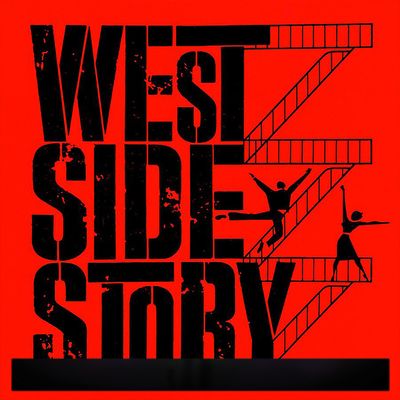
Mikaela Secada stops by The Roundtable with Robert Bannon to talk about starring in West Side Story at Paper Mill Playhouse. Coming from a family deeply rooted in music, Mikaela shares what it means to carry that legacy forward while carving out a path uniquely her own... Read More
From the show: The Roundtable with Robert Bannon
Featured Shows
About
Mikaela Secada stops by The Roundtable with Robert Bannon to talk about starring in West Side Story at Paper Mill Playhouse. Coming from a family deeply rooted in music, Mikaela shares what it means to carry that legacy forward while carving out a path uniquely her own. She opens up about growing up around the arts, the influence of her famous father, and the lessons that have shaped her as a performer.
We also dive into landing a dream role in one of the most beloved musicals of all time, the excitement of performing at the renowned Paper Mill Playhouse, and the determination it took to make her Broadway dreams a reality. From auditions and training to finding confidence in her voice, Mikaela gives us an inspiring look at the passion and perseverance behind her journey.
Watch The Roundtable with Robert Bannon on YouTube, BroadwayWorld, and the Broadway Podcast Network. Like, subscribe, and share to help us continue bringing you the artists, authors, filmmakers, and changemakers making a difference around the world.
Follow Robert on social media @RobertMBannon or visit RobertBannon.com for the latest interviews, appearances, and more!
#MikaelaSecada #WestSideStory #PaperMillPlayhouse #MusicalTheatre #Broadway #BroadwayWorld #TheRoundtableWithRobertBannon #RobertBannon #BroadwayPodcastNetwork
Transcript
This transcript was automatically generated and might contain errors.
[0:09] Robert Bannon: Well, welcome to the round table, everybody. My name is Robert Bannon. You're listening to us on Broadway World over here on the Broadway Podcast Network, iHeart and Spotify. I'm so excited for our next guest. I love the Paper Mill Playhouse. I'm a Jersey boy. Mikaela's, she's gonna be impressed by this. I am from New Jersey. I am right now very close to University of Michigan, her alma mater out here in the Mich in the peninsula. Oh I got Jersey in me, I got some Michigan in me, and I've got a lot of love and excitement for this production of West Side Story with the incredible Mikaela Secada, and I'm so excited that you're here. Welcome to the show.
[0:46] Mikaela Secada: Thank you, Robert.
[0:48] Robert Bannon: I guess we have a lot to talk about then.
[0:50] Mikaela Secada: We have a lot.
[0:50] Robert Bannon: Firstly, it's very cold to go from Miami or to go to from Florida to Michigan. You are tough. You are you're a tough cookie.
[1:02] Mikaela Secada: I didn't realize I grew up in the entire life. Um, and uh I did not know what seasonal depression was at all. And so when I realized that not only is it cold during winter, but it's cold during fall and spring, and it snows very much into the spring in Michigan. I didn't realize that that's something you have to deal with. So it was it was a rude awakening for sure. That freshman year in Michigan. People always tell me that it's no different than New Jersey. No, it is different from New York. In New Jersey when it's in New York, if it's gonna snow a couple inches, they tell you on the news, there's a weather alert. Here people wake up like oh, eight inches of snow, big deal. What? There's is there a plow? Is anyone saving us? No. You just go make it. It would be 16 inches of snow, and there no one would blink an eye. We'd be like, are they gonna cancel classes? No. No, they wouldn't, they would not. Crazy here.
[2:00] Robert Bannon: So for you, um, okay, let's just get it out the way. My mother is the biggest fan of your father in the entire world. It's just another day without you, everybody. Uh uh, you know, that's my jam. I'm of the age. I'm I'm boring for it. Um seeing him, seeing Gloria and him on tour together. We we were fans. We tore we were fans. So for you, music was the business you grew up in. So when did you decide to be a mus?
[2:26] Mikaela Secada: And and I saw him in Cabaret.
[2:29] Robert Bannon: I mean, he had his own his Oh my god, you saw him in Cabaret.
[2:33] Mikaela Secada: Yes.
[2:34] Robert Bannon: Stop it.
[2:35] Mikaela Secada: Oh my gosh. I was literally three years old during that, or maybe a little bit older, like four or five. But yeah.
[2:42] Robert Bannon: So good. So talented. So for you, when did you s get the bug?
[2:48] Mikaela Secada: When did I get the bug? I mean, from a very young age, my mom put me in dance class, so that is my foundation is dance. Um, and I always was drawn to the singing and the acting of it all. It was more like in my house and my safe space and whatnot. And as I got older, all my dance solos that I would take to competition got more and more theatrical to the point where I was just basically like lip syncing on stage. I was just lip syncing like Liza Minelli and Barbara Streisand on stage. Um, and so once I was like 13, 14, I I kind of realized that maybe dance wasn't gonna be my my bread and butter, like going into like a concert dance lifestyle. Um, and I knew that I was so into this com this like other aspect of dance, which was musical theater.
Um, so I finally like dipped a toe in when I was about 13, 14 years old and auditioned for my first musical. And from that point on I left dance. I I mean I kept dancing but I I I left competitive dance and just focused my my full blown time to musical theater and and learning the craft of singing, dancing and acting all at the same time.
[4:07] Robert Bannon: Oh I lost you.
[4:08] Mikaela Secada: Well I'm back. I have the what in the when it's not only cold out here in Michigan they have bad Wi-Fi too. You have we have um not only did you decide to go to U of M and study this but then you made it your job. So is it scary to be like to make the the announcement to yourself like I'm gonna pay my bills and be a performer like I'm gonna this is my l this isn't a hobby. This is my career.
[4:31] Mikaela Secada: I'll be fully honest you it is scary. Um especially um when I when I got I exited the the musical theater program in a very scary time in our industry which was the pandemic um I thought there was no industry to enter luckily I I got really lucky I signed with great agents shout out to HCKR um and was able to get work out of school regionally um but before that I thought there would Broadway was closed forever. Like we we didn't know what was gonna happen. So I I thought I was gonna fully go into like film and TV and move to California and that ended up not happening, you know what I mean? But once I got back to the future on Broadway, um, that was like my big break, and I was like, oh my God, I can actually make a living off of this.
You know, like I'm making a living wage in New York City. Like, what a blessing. Um, but it ebbs and flows, you know, because then Back to the Future closed and I was back on the grind. Um, I will be fully honest, I have an amazing support system. I'm engaged.
[5:45] Robert Bannon: I saw it sparkling and glittering away.
[5:47] Mikaela Secada: It is he did okay on with that ring. Hello. He did. He did so um luckily my fiance makes it um uh he's a great support system, especially when the highs and lows come. Um, especially like when I have to go and move out to Connecticut for three or four months to go do a job. Like he is very flexible when it comes to those kinds of things. But it's what you gotta do in order to, like you said, make a career out of what this business is, which is contract to contract, you know. So yeah, it's scary, but but it it feels doable and we take it one day at a time, you know. You just gotta know that there's there's times of prosperous wealth, and there's times where you're like, okay, let me keep all my coins in a row so I can make sure I can live, you know.
[6:41] Robert Bannon: Absolutely. We're talking everybody. West Side Story has come to Paper Mill Playhouse in Millburn, New Jersey. Go to papermill.org. It's not just paper. I would say Paper Mill is not just regional theater. Paper Mill is legendary Broadway pipeline work. Like if you it is the best theater you will see around the country. How's it been over there with the Paper Mill family out there in Millburn, New Jersey to put this show on?
[7:07] Mikaela Secada: It's magical. I I haven't had this much fun doing such a depressing show in I can't remember how long, you know. Um, I'm playing a dream role on an amazing stage. Uh it my dresser Lucia, when she came to introduce herself to me at our designer run, she was like, I'm gonna be your dresser, it's so nice to meet you. And then she like pulled me in really close and she like whispered and she's like, There's magic on this stage. Like, there is magic that happens. And like, I was like, oh my god. But she's right, like after performing on a Broadway stage and then performing at Paper Mill, like there's there's really no difference. It's it's truly amazing what happens there. And I saw a show there about a year ago. I saw Jersey Boys over there, and it's it's wonderful to be both in the audience and on stage. It's it's a wonderful place to be, and it's worth the commute, dare I say.
[8:05] Robert Bannon: It is. You don't only have to be on a 78 in New Jersey to go see it, go see it all around the Tri-State area. And what I love so much about Paper Mill is that they make it more affordable for people that if you can't afford to go see a show on Broadway, you can they have great deals for families to be able to see shows, and they have great programming for young people. So if you're looking for the next generation star, they do great classes and stuff there. So for you, you you you guys, I always loved when I was an actor before I was old. Um, I loved the posting. I loved the the sides and all for Paper Mill because you like they commute you in and it's close to New York, but you'd rehearse in the city. So, what was the rehearsal experience like for you? And how did you find your way into Anita?
[8:46] Mikaela Secada: Oh, well, I have wanted to play this role forever. Um I have auditioned for it so many times and not gotten it so many times, and having gotten it for this specific theater um at this specific point in my life has been like a career changer for me. Like I have like this newfound sense of inspiration in storytelling that I I think I I kind of lost for a while. Um so I uh I had listened to Chita Rivera's um memoir back when she passed away um not too long ago, a year and a half ago, and I revisited it right before starting rehearsals, and I made sure to listen to her Anita section because obviously she is the blueprint for Anita, and um that was like my my like preparation, you know what I mean?
Like you have to always go back to the people who crafted it before you and then after that I like kind of entered the room and started approaching it the way I would, you know, obviously honoring what she had done, um, but also just thinking who is this person, what does she want in life?
[10:03] Robert Bannon: Like what inspires her? Who does she love? What are her relationships and going at it from that place? I mean, in addition to that, the dancing is killer.
[10:16] Mikaela Secada: I was gonna ask. And all that kind of stuff in preparation, and it still didn't prepare me for how intense the dancing is in this show. Um, but it's also so fun. You know what I mean? Once you learn that choreography and you're able to do it from beginning to end, it's like you're alive, you know. Like there's just the adrenaline pumping through your system that you're like, oh my god, I can't believe I just did that. Um, and also working with an amazing group of actors in that rehearsal room, like there was a very special connection. I think we all had as we were putting the show together, even though it was only three weeks. Like it's um it's a special process to be able to rehearse a show like this, you know.
Um, new discoveries come every single day when you're in the room and you're making choices and all that kind of stuff. So I have such a profound respect for the rehearsal process, um, as I do for when obviously you get on stage. But yeah, that the rehearsal process is one of the most beautiful parts of putting a show together.
[11:29] Robert Bannon: You know, I was thinking uh if you've read the Cheetah book, everybody, she talks about it so casually, like they played this music. I got this part. I didn't think of it. It's um and we had we just had Rita Moreno here for our thousandth show as well. And she spoke, and she spoke about what it means to her, and you know, the people who played this role, the cheetahs, the Rita's, the Arianas, the etc., they become big giant stars, Michaela. There's something about the show stop. My friend Mike's was at opening night at Paper Mill, and he's I said to her him, I'm gonna talk to Mikaela Secada. And then he said, She's a star. Like that the number stops the show. The number stops the show. Uh listen, I gotta, I gotta tell Mark uh Hobie, he he keeps that show going though. We land into that lunge, lights off, moving on to the next scene. So we don't even bask in that at all. We're moving on to the next thing. You need to take a moment in your moment. It's incredible.
[12:30] Mikaela Secada: So for you in the times we're living in, it's it's gotta you you speak in your biography and your uh website, etc. about heritage and how important it is culturally. This show is as relevant as ever. I mean, the people Hispanic people across the United States are in battles, have been in battles since they've come here or been taken here, etc. And and it's important that these stories and representation get shown on stage. How how personal of that is that for you in your own culture and your own family history?
[13:02] Mikaela Secada: Um important. Um, I remember I like to do little manifestations and things like that. And one of the things I wrote down probably a year ago, after having done Back to the Future for so long, I was representing an all American girls playing Jennifer Parker, you know, it's like 1980s dream girl. But like Jennifer Parker is not me. You know what I mean? Like it's not necessarily the life that I grew up in. Um, so I I I put that I wanted to to live and represent more of like who it is I am and and and my heritage and and whatnot. So I got having like being able to do Anita, I feel like I'm living the the life of my grandmother, you know, like coming over to the United States and loving it so much.
You know what I mean? Loving what the United States represents for people who come over and sacrifice everything, leave their lives and their families um back home on different islands, you know, for a better life. Um, so when I sing America, that first chorus, oh my god, it's so proud. You know, that's that's why people sacrifice everything to come over here, because living in the in the United States means a better life. That's like the American dream at the end of the day, you know. Unfortunately, um, especially I'm I'm Cuban, I'm not Puerto Rican, but um, you know, we call it in Spanish Bajaros de la misma ala, which means birds of the same feather, because we basically live the same lives on different islands.
Um, it's only traditions and customs are a little bit different, but also so similar. Um, but yeah, just uh being able to show a strong Latina woman um who would do anything for the people that she loves, I think just represents who we are as a culture completely, you know.
[15:04] Mikaela Secada: I mean, things go south in the story, and um it's it's a tragic ending for Anita. But like you said, like that character in itself, she's just one of a kind, you know, like she has she's so strong, and and even though this story was written back in the 1950s by legends, but then again, they were white men. There's still so much that as a Latina, I feel like you can fill in and find and and enrich with with your own culture, whether you're Puerto Rican, Cuban, Mexican, who whatever it is, um, Anita represents something way larger than just a Puerto Rican woman in the 1950s.
[15:48] Robert Bannon: Absolutely. It's such it's such an iconic role. It's a piece of American uh history, and it is a piece of American theater history, maybe the greatest musical ever written. And uh it I it's very it's very she's very moving character to me because yeah, the other characters that Maria and Tony, etc. But she's complex, she's complex. She she's trying to, she has a different way of approaching things than Maria does, but she's but they have the same intention. They love, they're trying to find and protect their people and and find their place, and it's it's moving and relevant in 2026 as it was back in the 1950s.
[16:28] Robert Bannon: So for people, they can get a ticket. They only listen, you have this is how much weeks, you have to the 28th. There are not a lot of tickets left because people know these shows are good and they buy them and they go. So the every night has limited availability. Some nights are completely sold out. So you need to go like today, like this minute. Go right now, papermill.org. You have no gifts for your father for Father's Day. Get a ticket. Go to go to dinner in the cute little mill. It's very fancy out there in Millburn. There's a there's a new uh carriage house across the the pavilion from the theater. Where they have a restaurant right there. It's gorgeous, it's newly renovated, it's stunning.
I haven't eaten there yet, but I've heard great things. So you could make a reservation, get yourself a ticket. It looks like you put a lot of thought and effort, like you booked it months in advance. We won't tell them it's only been two weeks or a week. I'm not telling nobody. So take them, go see it because it's something that everybody, the entire family, is gonna absolutely love. Or go to the Millburn Deli. Have you been to the Millburn deli? They have a good guy. Wonderful, so good. They don't give me us free sandwiches for saying all this, but it's good. Free gobbler sandwich, Milburn Deli.
[17:43] Mikaela Secada: So um and you're taking care of yourself because I know it's a very demanding, that's a very demanding show on your body and your voice. And it's it's a show. It's it's quite a show. I I will say my body and my mind need attention once the show is is done at night. So we're talking after the drive home, Epsom salt bath, watch something that is meditative and gets my mind off of the story. I literally tell my fiance, I go, you have 12 hours. You're not allowed to quote, reference, or talk about what's anything West Side Story related. Because he loves to sing America. He loves it. So I tell him I go, I just need to like tap out, especially like with the last scene. No spoilers for those of you who might not have seen West Side Story. That last scene is really heavy. Um, and so yeah, the next two days, Paper Mills gives us two days off, which is wonderful. I'm just gonna be laying on my booty and watching Love Island.
[18:48] Robert Bannon: I was gonna say, I hope you're watching Love Island knocked on the couch somewhere. That sounds perfect. That's the way you recoup to be able to go. I'm behind, I'm behind on my episodes. I gotta catch it up. So look, everybody leave her alone. She's going on do not disturb right now. She got shows, she's got shows to watch. I hope you have the most incredible epic run. You can follow her on social media. The info will be below. You can get your tickets, the link to buy tickets will be below. And we can't wait for you to come back to Broadway, back to regionally, back to singing, back to performing. Whatever you want to do, you gain fans in us. We're excited to see you. Congratulations, Robert. It was a pleasure. I hope we get to talk again soon.
[19:25] Mikaela Secada: Yes, please. Such a pleas much love to your fiance, much love to your family. Thank your entire family for all the love and memories and music.
[19:31] Robert Bannon: I will I'll let my dad know. Please do. Thank you so much. Thanks for being here. Have a great one.
© Broadway Podcast Network, All Rights Reserved