
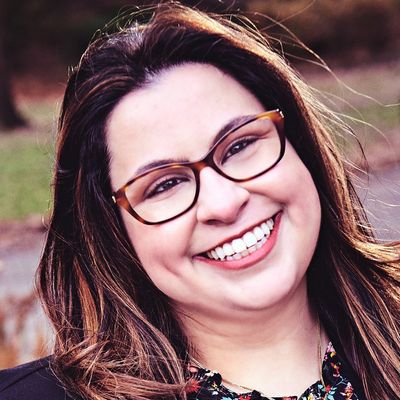
Let's face it -- 2020 was a dumpster fire, at best. In this episode, Diana Salameh, the Director of Marketing and Communications at Serino Coyne, co-hosts the final episode of the year - a year which has been unprecedented for the theatre industry... Read More
From the show: The Theatre Podcast with Alan Seales
Guests
Featured Shows
About
Let's face it -- 2020 was a dumpster fire, at best. In this episode, Diana Salameh, the Director of Marketing and Communications at Serino Coyne, co-hosts the final episode of the year - a year which has been unprecedented for the theatre industry. And not only for performers. Serino Coyne, the nation's longest-running theatrical advertising agency, was just embarking on the beginning of the Spring theater season - openings, etc - when Broadway suddenly shut down.
Diana and Alan discuss everything from their favorite shows they were able to see before everything closed, the blossoming of virtual storytelling mediums, and missing the shared experience of seeing live theater in general. Reminiscing on seeing SIX in early March, Diana shares her excitement for Broadway to reopen because SIX is “the kind of show that New Yorkers and tourists, everybody is going to need to lift our spirits... and help us escape.”
Like all theatre lovers, Alan and Diana both agree there’s nothing quite like sitting in a room full of strangers and going on an emotional journey with them. But in lieu of live theater, they discuss two productions from this year that were able to recreate this sort of communal shared experience really well - Hamilton and What The Constitution Means To Me. Diana also opens up what she has been doing in order to remain connected with her clients and their fans. She shares “the thing that has been the biggest rock for me is the Broadway Women’s Alliance”, a community of women on the business side of Broadway. Founded officially in January of this year, and focused on connection and empowerment, the Broadway Women’s Alliance has held about a dozen events for over 500 women in the industry during the course of the lockdown.
In this episode, we talk about:
- The first shows they saw in 2020
- Seeing SIX the musical
- Diana’s Christmas theater tradition with her best friend
- New creativity being born on virtual mediums
- Which of Henry VIII wives they each would be
- The Tony Awards
- The Macy’s Thanksgiving Day Parade
Connect with Diana:
- Instagram: @_dianasalameh
- Twitter: @_dianasalameh
Connect with The Theatre Podcast:
- Support us on Patreon: Patreon.com/TheTheatrePodcast
- Twitter & Instagram: @theatre_podcast
- Facebook.com/OfficialTheatrePodcast
- TheTheatrePodcast.com
- Alan's personal Instagram: @alanseales
- Email me at feedback@thetheatrepodcast.com. I want to know what you think.
Thank you to our friends Jukebox The Ghost for our intro and outro music. You can find them on Instagram, Twitter, and Facebook @jukeboxtheghost or via the web via jukeboxtheghost.com.
A very special thanks to our patrons who help make this podcast possible!
Cheryl Hodges-Selden, Paul Seales, David Seales
If you would like to see your name in this show notes or get a shout out on the pod itself, visit ttp.fm/patreon to become a member and show your support!
Transcript
This transcript was automatically generated and might contain errors.
[0:00] Alan Seales: Welcome to the final episode of The Theatre Podcast for the year 2020. This is now the annual tradition of the year-end wrap up. I'm going to call this, because it's 2020, the year-end crap up. Co-hosting with me today is Diana Salameh, who you may remember from episode 41, way back in the day. She's Director of Marketing and Communications at Serino Coyne, which is a marketing agency here in the city and who I've dealt with for many, many years. And I love her and she's wonderful. And that's it. Diana, welcome. Let's talk about some shows.
[0:44] Diana Salameh: It's so great to be here with you. Thank you so much for having me.
[0:46] Alan Seales: Oh, you are welcome. Thank you for doing this with me because it's just been a year. It's been a year. I started writing down everything that I had seen in this, for this 2020 end of year crap up. And it was like, January, tons of stuff. February, okay. And then March came.
[1:06] Diana Salameh: Yep. Yep. We were just getting into the spring season. We were just about to open everything and then Broadway shut down.
[1:20] Alan Seales: The first show of 2020 that I saw was Gazillion Bubbles for the second time. But the first original show I saw was My Name is Lucy Barton. What did you think of that one?
[1:33] Diana Salameh: Well, My Name is Lucy Barton is one of my favorite kinds of Broadway shows based on a book. And it had such an unbelievable following coming into it. It was one of those runs that there was a big fan following coming into it. But Alan, I just want to rewind for a second because your first show of 2020 is eerily similar to my first show of 2020. My first show of 2020 was Slava Snowshow. And I think that that and the Gazillion Bubble show were probably a prelude for the chaos to come in 2020.
[2:13] Alan Seales: It's just, yeah, just stand on stage, throw a bunch of crap at the audience and everyone goes, waaaaah.
[2:19] Diana Salameh: Yes. And then you follow that up with all of the serious and frankly depressing topics in My Name is Lucy Barton. And that's sort of a summary of 2020.
[2:33] Alan Seales: Well going on that theme too, I saw Slave Play around that time as well. So yeah, My Name is Lucy Barton, Emojiland, Slave Play, which Emojiland talks about building a wall and discrimination against other emojis. I mean, it was there. It was coming. If you put the pieces together.
[2:52] Diana Salameh: Yeah, the foreshadowing. Yeah, it was all there.
[2:56] Alan Seales: Is there a theater version of Nostradamus?
[2:58] Diana Salameh: Well, we're living it.
[3:02] Alan Seales: Diana Damas. Gosh, January was so good. I saw that. I saw a couple of live shows too, like concerts, Daniel J. Watts. And then in February, I saw Morgan James, both of them at Joe's Pub. I mean, that place, the concert venue is incredible. But like, gosh, you know what? Daniel J. Watts' show is about him growing up as a black man and the racism and the trauma he's experienced. I mean, this is, gosh, like, now that I'm putting this together, as we're talking about this, it's occurring to me like, of course, how could this year not happen the way it happened?
[3:39] Diana Salameh: Yeah, sometimes it takes a reckoning, right? It takes the world stopping for all of us to open our eyes to something that black people, people of color have been screaming at us for many years, and that the world has not been listening to. Daniel J. Watts, what a year for him, Tony Award nominee.
[4:03] Alan Seales: I know.
[4:05] Diana Salameh: And so to see an artist like him be able to end this year with a nomination like that, you know, going into next year, hopefully feeling hope for what's to come for him as an artist, for artists of color, for his show, for Tina. That makes me feel really hopeful about the future of theater and for artists like him.
[4:29] Alan Seales: Yeah, what else did you see? Because you're, I mean, it's your job. It's literally your job to see shows.
[4:35] Diana Salameh: Yeah, well, what a lucky job. One of my favorite things that I saw before the pandemic, before Broadway performances were suspended, was Six. Did you get to see Six, Alan?
[4:46] Alan Seales: That was the final show I saw. I saw their final preview on March 11th.
[4:51] Diana Salameh: Okay.
[4:51] Alan Seales: So that was literally the last show they performed before Broadway shut down on March 12th.
[4:56] Diana Salameh: I saw Six on March 1st. I remember it was sort of a point where we were all feeling pretty nervous about coronavirus, but, you know, nothing had shut down yet. We were sanitizing and being cautious and going to the theater, but not hugging our friends while we were there. It was kind of this...
[5:13] Alan Seales: Right, that was when we were doing the elbow bumps.
[5:15] Diana Salameh: Yeah.
[5:16] Alan Seales: That was like how we were making fun of it without accepting that it was a big deal.
[5:20] Diana Salameh: Right. And in retrospect, how funny that we thought it was safe to sit next to each other in a theater, but not hug. But we'll write that down in our diaries. But I had a blast at Six. I thought it was so fun. I thought the music was just absolutely delightful. The show reminded me of the joy that you feel when you go see Mamma Mia, that you really feel like you just get swept up in all of it, and you can't help but smile ear to ear. And I'm really excited for Six to come back to Broadway after the pandemic, because I think it's the kind of show that New Yorkers and tourists, everybody is going to need to lift our spirits and help us escape into a world when Broadway's back.
[6:09] Alan Seales: Well, that's something that so many people have been searching for. And Broadway shut down the escape, right? The escape, the immersion. I was talking with Nick Walker about this the other day, that he's a theme park nerd. And part of it is that the immersion, especially Disney World, does such a great job of the whole atmosphere, the scents, the park music, per location, so specific. And the queue lines, when you're waiting in line, everything is a theme. You're part of that world. And then to just take away the ability to go see live theater, or to go to a theme park, or to go any of this, there was so many issues that people were having, and they were craving all of this kind of stuff. And then I'm looking at my list of shows that I saw, and it was March, and then just literally nothing.
I think it was September, I went to see a show in Connecticut at a drive-in, or it was a theater who converted their parking lot into a drive-in, so they had socially distanced performance on stage. And then last month in November, to seize the show, that production company, I watched Saving Wonderland, which was written exclusively for Zoom. And I was like, I mean, nothing against Saving Wonderland. I think they're doing everything they can in this medium. But you can't beat the shared experience of sitting next to complete strangers and going on the same emotional journey as them.
[7:47] Diana Salameh: Yeah, Alan, you know, as you're talking about that, I'm staring at my Christmas tree, and I can't help but think something I'm really missing this holiday season is going to the theater with my best friend, John. It's become a Christmas tradition over the course of the past several years that, you know, we don't exchange gifts anymore, and we'll go to the theater together, and we'll see something. And sometimes it's just the two of us, and sometimes family members will come with us, or friends will come with us. And it's about exactly that. It's the shared experience of sitting next to each other and looking at the person next to you when you know they're going to laugh, or they're going to cry, or you just want to see their face when someone hits a high note, and the car ride back home to New Jersey, and stopping at the diner.
You know, it's that experience that, you know, when you go to the theater, it's not just about the two and a half hours that you spend there. It's the joy and the anticipation of going to the theater, and it's the comedown from that. And I really, really miss that. And I just, I try not to think about it too much, because if I do, I'll be really sad all the time. But I'm very excited for the moment where I can sit next to John again at the theater and experience that with him, just as much as I'm excited for Broadway to come back. It's about sharing it with someone else as much as it is about theater.
[9:24] Alan Seales: Absolutely. I completely agree. It's, I guess for me, thinking back to Slave Play specifically, I went there, and it's one of those things that does what theater does best and allowed me to experience something in a way that I would have never experienced it in real life, or see things through somebody else's eyes, or experience somebody else's experiences, more or less, of course, through this artistic medium. And I went with a friend of mine who is Brazilian, and from where she comes from, she's not a person of color. But here in the U.S., she is a person of color. She has to check Hispanic here in the U.S. And we went out afterwards for a drink and just dove into this conversation about white privilege and racism and how she's interpreted one way in certain locations and another way in another location.
And it opened us up to this conversation that we probably may never have had. And we've been sitting here in quarantine for nine months, and I'm looking around my little home office slash recording studio here. And I'm like, I just miss the randomness. And I miss the, not haphazard. I don't know what I'm trying to say. But I miss the spontaneous. That's what I want to say. Miss the spontaneity of what happens when you're on the subway going to see the show. You get the smell of the subway, which is good or bad. You go see the shows. You see the show with your friends. You meet up with all your friends. Or you have dinner beforehand. Or you go out for dinner afterwards. You have drinks afterwards.
Like you said, it's the whole experience. And that's what so many people, I think, don't realize about Broadway being shut down is that it hurts more than just the actors. Of course, the actors are hurt as well. But you have restaurants, and you have hotels, and you have all of that pre and post event activities. All of those companies that don't have anybody coming in anymore.
[11:37] Diana Salameh: That's right.
[11:38] Diana Salameh: Everybody, everybody loves each other. You can tell when you're watching them that that cast loves each other. And then in, in, uh, in May, I did the corn queen takeover here on the podcast. So I interviewed four of the Broadway cast and four of the Australia cast, and all of them just had so many positive things to say about each other, about the show, about Toby and Lucy, about just the whole production in general. And then now my kids ask to hear the soundtrack because I've been playing the soundtrack and it just touches everybody so, so well. And like, okay, so yes, that's my favorite. I'll go with SIX.
[21:22] Alan Seales: Oh, I love that. Okay. I have a question for you. If you were one of Henry VIII's wives, which one would you do? As interpreted by SIX the Musical.
[21:31] Diana Salameh: Right. Um, I would probably be Anne Boleyn, I think.
[21:38] Alan Seales: Interesting. Why?
[21:46] Diana Salameh: Because I'm like, well, let's have fun together, but we're having fun on our own, but crap, there goes my head.
[22:02] Alan Seales: Okay.
[22:03] Diana Salameh: Uh, yeah, yeah, maybe that, but I guess it depends on what day it is because there's also, um, oh, the third one. What's her name? Um, Catherine, Catherine of Aragon, right? The one who died during Jane Seymour.
[22:13] Alan Seales: Jane Seymour, who died during childbirth. Um, there are these moments when I'm like, my kids are my life. I just love everything about being stuck in quarantine with them. And then they make me angry and I'm like, I gotta go out. I gotta go outside. But no, um, depends on, depends on the day, depends on the mood. But I think probably Anne Boleyn, just because I've got a little bit of a restless side.
[22:40] Alan Seales: Okay. All right. I'll remember that.
[22:45] Diana Salameh: Yeah. Although I won't worry too much because you're the one that gets beheaded, not me. So.
[22:49] Alan Seales: Right. Right. Well, oh, I didn't know you were, I didn't know you were Henry VIII in this scenario.
[22:54] Diana Salameh: Well, you know, I don't know. I would not be one of the wives that gets beheaded. That I know for sure.
[23:01] Alan Seales: Okay. Who would you be?
[23:04] Diana Salameh: Probably Anna of Cleves, because I think I would be the one who like, I mean, she's the one that ends up with a pretty good deal of all of them. And I think that like, she's got the.
[23:18] Diana Salameh: So I think that is the one that's who I would be like, you know, she just ends up being like rich and kind of gets to do her own thing. She gets like the good alimony, the good alimony and never has any kids. I think that's who I would be.
[23:38] Alan Seales: What were you looking forward to the most that didn't end up opening?
[23:45] Diana Salameh: Oh, I think probably Company. Yeah, I was really looking forward to seeing Company. I love Company. Company is my favorite. I think my favorite Sondheim musical is Company. I say I think because there are so many Sondheim musicals and that's like the kind of thing that you can't quote yourself on unless you like go back and look, but I'm pretty positive it's my favorite Sondheim musical.
[24:04] Diana Salameh: And I wanted to see a female Bobby. I always want to see Patti LuPone. I would go see Patti LuPone perform in a basement somewhere. Like, I mean, we did during quarantine. And so I was really, really excited to go see Company. I loved everything about what they were doing and I was really bummed to not have gotten to see that. It was such a good cast.
[24:30] Alan Seales: Did you get to see it?
[24:34] Diana Salameh: No, I never did. I never did. I mean, just the cast though. We put all those people together: Katrina Lenk and Chris Sieber and Patti LuPone, everybody. It's just, oh God. Yeah, I was really, really looking forward to that.
[24:47] Alan Seales: Hopefully it's coming back. I don't know. You would probably know a lot more than I what's coming back, you know, just being on the inside.
[24:54] Diana Salameh: You know, let's turn off the mic here.
[24:56] Alan Seales: Oh my God.
[24:57] Diana Salameh: I think everybody wants to come back and I think everybody should come back. Everybody got the short end of the straw this year, so I think everyone should get to come back.
[25:05] Alan Seales: Would be working though in terms of rent. Are the theaters who are just sitting like Six right now? Are they paying rent? Is Company paying rent? Carolina Change? Are these production companies paying rent to do nothing?
[25:19] Diana Salameh: I'm not sure. You have to ask a producer or a theater owner that, not me. But everyone, I'm paying rent.
[25:26] Alan Seales: Are you paying rent?
[25:28] Diana Salameh: Of course, but I'm actively in my house, yeah. I'm not sure, but listen, no one's in a great situation as far as that's concerned, right?
[25:37] Alan Seales: Yeah, everyone's, everyone has huge teams and staffs and you know, the theater industry employs a hundred thousand people. And so on any end of it, it's not a great scenario. So I'm hoping that we can work our way back to theater getting back as soon as possible because that means that we're restoring not only the art form like we talked about earlier, but people's livelihoods and jobs on every sector of the work that we do.
[26:08] Alan Seales: So before we wrap up here, I just want to, you know, give you one more general question about the industry as a whole and being connected to it. What have you been doing that's obviously your job has been to market theaters and shows that are not active? What have you been doing to stay active and stay connected to the community?
[26:27] Diana Salameh: Yeah, well, we have still been working with all of our clients at Serino Coyne to make sure that we're staying connected to our fans, that we are getting ready for the day that Broadway does come back. We did a phenomenal event for Ain't Too Proud earlier this year that I'm very proud of that I encourage everybody to watch with our friend Nick Walker and the cast of Ain't Too Proud where we talked about themes of Black artists in America from the time of the Temptations in the 60s to what it's like for these Black men in America today. Things like that, that we're making sure that the conversations about Broadway are continuing.
[27:05] Diana Salameh: On a personal level, the thing that has been the biggest rock for me has been the Broadway Women's Alliance, which is a community of women on the business side of Broadway. And we are all about connection and making sure that we are empowering each other and that we are supporting each other in anything that we need to do. And this group of women has been God sent during this time. The group was founded officially in January of this year and we did our first two events and then the pandemic shut down Broadway. And I'm very proud that in the time that we have been in lockdown, we've done about a dozen events for over 500 women in the industry and that we have been more connected than ever.
[27:51] Alan Seales: So without that, it would have been a lot more lonely and a lot less connected in the Broadway world.
[27:56] Diana Salameh: 500, over 500 people, over a dozen. That's more than one a day.
[28:10] Alan Seales: Where can we find more information and watch the, get connected if people want to join up and learn more?
[28:12] Diana Salameh: Check us out on Instagram at Broadway Women's Alliance or you can visit our website at BroadwayWomensAlliance.com. Thanks for that, Alan. And visit us and please join the group. It's open to anybody who's female or female identifying. Our programming is targeted towards people who are on the business side of Broadway, but we are open to absolutely everybody given that everything's been moving to virtual.
[28:41] Alan Seales: I guess there's two things, two elephants in the room. One would be what did you think about the lack of Tony Awards that have happened so far? And then the other one, if we're gonna back up again a month, the parade, right? Because the parade had pre-recorded performances and just of course was different than it ever has been before.
[29:03] Diana Salameh: Yeah, so let's start with the Tony Awards. So what's interesting about the Tony Awards when it really boils down to it, I think the Tony Awards is important for two reasons. Number one, it's an honor of the artists that we're honoring, right? So I care about how those artists feel and do they want to have a ceremony right now? Do they want to have a ceremony next year? Do they want the nominations to happen now? Do they want the nominations to happen next year? So at the end of the day, I defer to them. It's what they want. It doesn't matter how eager I am to see Aaron Tveit be honored for his performance.
[29:44] Diana Salameh: And the second purpose for me is making sure that the world knows how amazing Broadway is and getting it out on the biggest platform possible. And that for me is a reason to make sure that we're waiting until we can get it on the biggest platform possible. So whenever that can happen is when I think that the Tony Awards should happen.
[30:05] Alan Seales: That was a very politically correct answer there. I applaud you for that.
[30:10] Diana Salameh: All right, I think that nominations should not have happened this year. I'll say that because by the time we come back, it's going to be past when the cutoff would have been for a 2020-21 season. So we're not going to have a 2020-2021 season and therefore we're going to have the beginning of 2019 with the end of 2021. They should have just waited and combined. And I think, I mean, nothing, I have absolutely nothing against all the nominations. All the nominations should have happened as they have happened, but I think it would have been nice to have a few more people to choose from in the pool.
[30:48] Diana Salameh: So the American Theater Wing announced months ago that they would hold the Tony Awards now in December. And I think it would have been nice to have a few more people to choose from. They announced months ago that they would hold the Tony Awards now in December and then we're now in December and there's been nothing. But the whole backstory is that they thought that Broadway would already be announced that it'd be coming back by now. So again, I think it was a little bit premature. I hope that going forward, they have a venue and a time before announcing that the Tonys are going to happen.
[31:27] Alan Seales: But along those lines, I completely agree with you that it needs to be on the biggest stage possible, the biggest platform possible. But what about the parade? What about the Macy's parade?
[31:36] Diana Salameh: Okay, here's what I'll say about the parade. We had two options, Alan: no Broadway or Broadway as you saw it. What's the option that you want? Because my option is Broadway as you saw it.
[31:51] Alan Seales: Yeah.
[31:53] Diana Salameh: Yeah, okay.
[31:54] Alan Seales: Fair.
[31:57] Diana Salameh: Very fair, very fair. I, yeah, I'll just, I'll agree with you on that. I'm glad we had something. I'm glad we had something. I wish it was more, but knowing some of the people in it, it was a hassle.
[32:06] Alan Seales: Yeah, they had to quarantine and they had to do all of this to make sure it was safe, which was very, very nice. So, you know, I'm kind of conflicted of like putting people at risk a little bit, but then also bringing this content to the world where, again, talking about the biggest platform you can have, so many people watch the Macy's Day Parade. So it's great to have that out there, right?
[32:29] Diana Salameh: Right. And we are in such a challenging situation in the middle of a pandemic where safety and health has to come first, right? And I'm so grateful to all of those actors who decided that they were going to take the time that they needed to, the weeks of quarantine, all of the rehearsal, getting themselves back into the routine of those shows to bring us all of those moments of joy on Thanksgiving. Like it's not lost on people like you and me who know that it wasn't about recording a five-minute performance. It was weeks of time and isolation in their apartments to make that happen. And I'm so grateful for it because I was smiling ear to ear.
[33:10] Diana Salameh: I mean, I'm gonna go back to Ain't Too Proud again when those guys came out there in their red jackets and started singing "My Girl." I was so happy. And to see, you know, NBC celebrate Broadway in that way by having four shows on there, that made me really excited. And next year, I'm gonna knock wood, it's gonna be up against an audience again on 34th Street. I look forward to that.
[33:37] Alan Seales: Me too. Me too. The parade would not be the parade without the performances. And you know, I miss the marching bands and I'm, you know, I miss everything. I miss it. This is nostalgia and it's something that again, it brings us together. It's this shared experience. Love it or hate it, we all go through it together. We'll be back.
[34:02] Diana Salameh: Awesome. And where can we find you on social media?
[34:09] Diana Salameh: You can find me at @_dianasalameh on Instagram or on Twitter. And I'm looking forward to meeting you.
[34:13] Alan Seales: You can get more of me at TheatrePodcast.com. I'm on Instagram and Twitter at @theatre_podcast. I'm on Facebook.com/OfficialTheatrePodcast. Please leave a rating, leave a review. This has been edited by Matthew Handershot. Send me your notes at feedback@theatrepodcast.com. Thank you to Jukebox the Ghost for the intro and outro music.
[34:27] Alan Seales: Diana Salameh, thank you so much for being here and for having this wonderful chat. And for everybody listening, please, please, please have a safe and happy and prosperous New Year. 2020 was not the best, but let's work together for a much, much better 2021. Happy New Year, everyone.
[34:51] Alan Seales: Take a deep breath, make the world a little colorful.
© Broadway Podcast Network, All Rights Reserved