

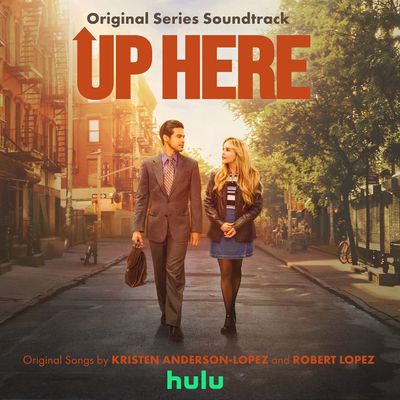
This is the fourth episode of a special 4-part takeover with cast & creatives from Hulu's new musical series UP HERE. Make sure to stream the entire 21 song UP HERE soundtrack everywhere you find your music... Read More
From the show: The Theatre Podcast with Alan Seales
Guests
Miniseries Inclusions
Featured Shows
About
This is the fourth episode of a special 4-part takeover with cast & creatives from Hulu's new musical series UP HERE. Make sure to stream the entire 21 song UP HERE soundtrack everywhere you find your music.
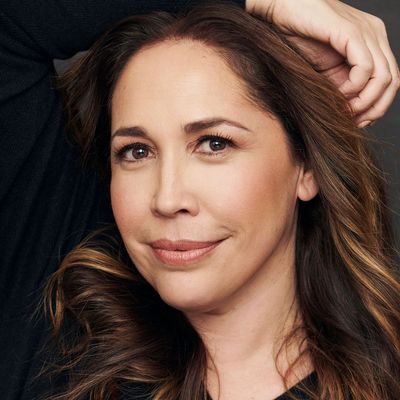
Andréa Burns is currently in the original musical comedy series, "Up Here" playing Rosie, a strong and supportive “Latin Jewish” mother. The actress lets us in on how she ended up in the show and talks about her childhood friendship with fellow actress, Katie Finneran. Being raised in movie musicals, she was always amazed at how you could use your singing voice to tell a story and describes musical theatre as one of the ultimate forms of expression. She speaks candidly about playing a homemade collection of Billy Porter's recordings in the delivery room as she was giving birth, the thrills of moving into New York to meet people and create something, and performing for the sake of performing, regardless of how a show is going to turn out. Andréa also talks about her latest role in "Up Here" and how she found familiarity with the character, Rosie. With the surge of musicals on tv and film, she reflects on its positive outcome, including reaching a wider, global audience to tell real human stories and make an emotional connection.
Andréa Burns is an actress who’s won a Drama Desk Award for her creation of the role of Daniela in the Tony Award-winning musical "In The Heights". Her other Broadway credits include "On Your Feet", "The Rose Tattoo", "Beauty and the Beast", and "The Full Monty" among others. She was in the original cast of "Songs for a New World" opposite Billy Porter, and was selected by Stephen Sondheim to create the role of Celeste in his musical "Saturday Night". She can be heard on the soundtracks for the film versions of "In The Heights", "Tick, Tick... Boom!", and "Vivo". Andréa's tv and film credits include "The Electric Company", "Jessica Jones", "West Side Story", and "Blue Bloods". Currently, she can be seen as Rosie in the original musical comedy series, "Up Here", streaming on Hulu.
Songs used in this episode:
- Can I Ever Know You
- Please Like Me
- Can I Ever Know You (Finale)
Connect with Andréa:
- Website: http://www.andreaburns.com
- Instagram: @theandreaburns
Connect with The Theatre Podcast:
- Support us on Patreon: Patreon.com/TheTheatrePodcast
- Twitter & Instagram: @theatre_podcast
- TikTok: @thetheatrepodcast
- Facebook.com/OfficialTheatrePodcast
- TheTheatrePodcast.com
- Alan's personal Instagram: @alanseales
- Email me at feedback@thetheatrepodcast.com. I want to know what you think.
Transcript
This transcript was automatically generated and might contain errors.
[0:00] ♪ Musical number: "Can I Ever Know You" — performed by Andréa Burns ♪
[0:29] Alan Seales: Welcome to The Theatre Podcast, intimate personal conversations with the industry's biggest names. As always, I'm your host, Alan Seales, and the music you just heard to open the episode is called Can I Ever Know You from Hulu's new original music series called Up Here, which sadly means that this is the fourth and final episode of the Up Here Podcast takeover. If you have not already, please go back and listen to the previous three episodes in the feed. This episode is now with Andréa Burns, who plays Rosie, who, as she puts it, is a lovely combination of Jewish and Latin mothers, something she has experience with on both fronts. She's an amazingly passionate and successful Broadway star who also happens to be an adjunct professor at Yale.
And at one point in the interview goes as far to say that musical theatre, by using your whole body to perform, is one of the very few total body ultimate forms of expression. So that's a fun little conversation we get into. Once you're done listening to this episode, make sure you go listen to the entire Up Here soundtrack, 21 original songs, of course written by Bobby and Kristen Lopez. It's out now everywhere you stream your music. And as always, as we've done in this takeover, instead of my normal transition music, here's a cut from a song from Up Here called Please Like Me. Here you go.
[2:13] Alan Seales: Today's guest is a Drama Desk Award winner, having originated the role of Daniela, the saucy hairdresser, in Lin-Manuel Miranda's Tony Award-winning Broadway musical In the Heights. Other Broadway credits include On Your Feet, The Rose Tattoo, Beauty and the Beast, and The Full Monty. She was in the original cast of Songs for a New World opposite Billy Porter and was selected personally by Stephen Sondheim to create the role of Celeste in his musical Saturday Night. She can be heard on the soundtracks for the film versions of In the Heights, Tick Tick Boom, and Vivo, one of my kids' personal favorites, by the way. And among many TV and film credits, she was seen recently in The Electric Company, Wonder Pets, Jessica Jones, and Steven Spielberg's recent West Side Story. Now she can be seen as Rosie in the original musical comedy series Up Here, now streaming on Hulu. Andréa Burns, welcome to The Theatre Podcast.
[3:18] Andréa Burns: Thank you. Wow. That was a nice little intro. My goodness. I've been around for a minute, I guess.
[3:24] Alan Seales: Yeah, you've done a couple things, so it's easy to talk about.
[3:29] Andréa Burns: It's so nice to be here. Thanks for having me.
[3:31] Alan Seales: Well, of course. You're in the show with Katie Finneran as well in Up Here, and I think you guys have been besties forever, right?
[3:40] Andréa Burns: Yes. We met when we were 14 years old. We were not going to the same school. We lived in Miami, and yeah, a lot of people don't know that Katie is a Miami girl. And we were at some kind of theater conference, and I think that's where I saw her for the first time. And then we went to this music camp. It was one week long at University of Miami, and I think we just sniffed each other out like, wow, you're in it to win it. I'm really into this. So are you. Let's hang out. So we became friendly, and then a couple of years later, they finally opened a high school for the performing arts in Miami. We both got in, and we were inseparable. And we were inseparable during high school. We moved to New York at the same time. Long before we had boyfriends or husbands, we were each other's spouse, pretty much. We kept each other fed. Yeah, we made sure the other one had money. We shared an audition dress. We have a lot of history together.
[4:48] Alan Seales: I did think about that. Sharing of clothing.
[4:52] Andréa Burns: Correct. We could only afford one.
[4:59] Alan Seales: That's very, very cool. That answers my next question that I was going to sort of get into, was your background and where you grew up. And it sounds like Miami, right? Obviously, I just mentioned that. And do you remember the point in your life when you realized that performing was what you had to do? Do you have a touchstone, a moment where you were like, that's it, I'm going to do that, and nothing else?
[5:14] Andréa Burns: I can't really pinpoint it to one performance. I wish that I could, but I was raised on movie musicals. My dad loved them. So he used to show me every movie musical in existence. And I just really loved that. I couldn't believe. And from a young age, I knew I could sing. The fact that you could use your singing voice to actually tell a story and act was really intriguing to me, really exciting to me. So I would say I was drawn to the musical theater from a very early age, just by the appeal of the medium itself. It wasn't pop singing. It wasn't opera singing. It was this thing where you used all different styles to communicate story and emotion. I just love that. I said, sign me up.
[6:13] Alan Seales: We're going to take a short break. Stay tuned for more of the episode.
[6:23] Andréa Burns: I was the same way. I grew up on the VHS tapes of West Side Story, ironically.
[6:27] Alan Seales: Yes, of course.
[6:28] Andréa Burns: Music Man and Singing in the Rain. So those three, I was the same way. I didn't have any particular moment where I was like, this is what I have to do. It just always was in my head of, I love this. I love the movement and the singing and the expression. And speaking personally, coming from a family dynamic that doesn't or didn't express emotion very well, I was drawn to people who did. Does that make sense?
[6:59] Andréa Burns: Yeah. Oh, yeah. Of course. Because you saw that it was possible, right? I mean, the little human in you was like, no, humans can actually do this and engage in a really open and vulnerable way. Oh, I love that. I love those rear tapes for us. For me, definitely West Side Story, OG, Fiddler on the Roof, huge. I was obsessed with Topol and his performance in that RIP. Just one of the best performances ever, I think. But like Brigadoon, Carousel, Oklahoma, Showboat, all the hits, all the musicals. I just loved it.
[7:37] Alan Seales: Yeah. And it's very interesting because you said you knew you could sing. I was just always drawn the same way to chorus. And I did a voice chorus and then madrigal and then some other things. Where have they gone?
[7:48] Andréa Burns: Right. Where has madrigal and voice chorus gone? It's such a happy memory I have. I love singing. One of the biggest thrills of working on In the Heights was all of the choral singing, all of the harmonies, all of the vocal arrangements, also songs for a new world. That's a happy place for me is harmonizing and blending with others. And I'm sad to see that a lot of schools don't have that culture anymore.
[8:14] Alan Seales: Yeah. There's something, a special place in my heart for Forever Plaid because the all-male four part so tightly, like tight knit harmony. Nothing better.
[8:27] Andréa Burns: Nothing. I love that kind of singing. I love when you're just like just off of somebody in a purposeful way. So it makes this harmony. Oh God, you can't beat that. I agree.
[8:38] Alan Seales: It's brilliant. It's beautiful. You've mentioned songs for a new world. I thought it was just funny that obviously an original cast with Billy Porter. Both of you have gone on to do amazing things. And talking about old friends, you had said in something else that I had seen recently that you brought videos of him into the delivery room.
[9:01] Andréa Burns: Not videos. Not videos.
[9:04] Andréa Burns: Audio recordings. Billy sang at my wedding.
[9:08] Alan Seales: Yes. And yes, I asked him to put together a collection. It was before he had his own albums. And a collection of his recordings because I thought, well, when I bring a child into this world, I want Billy Porter to be the first voice. The first voice he hears. There's just something about Billy's soul that really speaks to me. His musicianship and his heart. I'm so thrilled for his incredible, his global success and his fabulousness that is now known worldwide. But I think he's a consummate artist and music maker. His voice has always been really important to me.
[9:55] Alan Seales: I agree. It's one of those cultural icons of our generation. And you are too. Now that I'm saying out loud, you and Katie and Billy and Lynn and people of your friend group, right? It is a friend group. And this takes me straight into Up Here, because after talking with Tommy Kail and Sonia Taya and the Lopezes and Steven Levinson, every single one of you makes art because you freaking love it. Not because you have to, but because you need to and you love doing it. And I asked Sonia, I asked Tommy when I was talking with Sonia and when I was talking with Sonia and Tommy together, I was like, is this the first time you guys had worked together? And Tommy was like, yeah, but I've always known Sonia and I wanted to work with her.
And I was like, what about it? And so what you just said reminds me of what he said, was that you surround yourself with people, you have people that do it because you love it. You don't make art because it's something, what am I trying to say? It's just like, it's part of who you are and you're all good people and attracted to making art for the sake of art. You're making beauty. What you're doing is beautiful and filled with love because you love doing it.
[11:25] Andréa Burns: Correct. And it's really fun when you see other people who care that deeply about the same thing you care about. And it tracks all the way back to meeting Katie when we're 14, right? You're there and you've got your kids, your friends in drama class or whatever. And then you spot someone from another school who is giving it everything the way you are trying to give it everything. You think, wow, that person cares just as much as I do about this. This person is really turned on by this, just the way I am. I want to talk to them because in my immediate friend group, there are just not a lot of people who care that much about this. Right? So we're really drawn to that. And that's one of the thrills of moving to New York and coming here.
And I'm sure if you haven't seen New York, New York yet, this is a big theme of the story, which is why I love it so much. We come here and we meet the people who end up affecting our lives, but we're drawn here because we all want to create, right? We all want to build something, we all want to find something that we just could not find at home. Right? And we knew we had to come here and be where it was. And the people you meet along the way end up being the biggest gift of the journey, right? You think like, I just want to get to this thing. When I get on Broadway, that'll be it. But there's nothing more thrilling than the weeks we spent at 37Arts developing In the Heights, where Lynn was like sleeping in the- we had like no dressing rooms.
He was like sleeping in the aisles in between shows. And we were all so turned on because we believed in this thing. And we really knew that if someone would take a chance on it, or if it would get picked up, it would be really big. And those are the thrilling moments when you say, I think I'm sitting on something extraordinary. I hope the whole world gets it. And I think that's why those of us from In the Heights are such a family because we all knew in our gut that it was what we had to do. We all believed in it. And we all jumped out of the airplane together, crossing our fingers and hoping that the world would receive us the way we were receiving the piece. And that's what it's all about.
[13:43] Alan Seales: You helped create something that legitimately changed theater, changed the face of what we knew Broadway was possible of.
[13:52] Andréa Burns: Yes. And yeah. I was just going to say, we have Lynn to thank for saying, why not do this? But that was the celebration of it. But remember that before we did this, we didn't know it was going to change the face of theater. Right.
[14:08] Andréa Burns: We just hoped people would really enjoy it as much as we did. We hoped it was as refreshing and exciting as we found it. And that hopefully people would get as turned on by it as we did. But no, it's like nobody knows they're making history when they make it. You're just creating and doing the best you can. Right.
[14:28] Alan Seales: And it's exciting. Yeah.
[14:32] Andréa Burns: That's the best part. You can't be self-conscious about it either.
[14:41] Alan Seales: That's just, it's just part of the experience of doing this stuff. And I absolutely love all of this. And because all of these people, and Tommy Kail too, like, was part of these original conversations with you and Lynn. I mean, you've known Tommy for how many years now, right? And so did he bring you into Up Here? Or did that, did you get the audition for that? And then you were like, Oh, Tommy's directing, like, how did that happen?
[15:07] Andréa Burns: Yeah, pretty much. That's how it went. I was, you know, and I let him know, I was like, Listen, you know, I'm going to see you in the audition. So I want you to, I just want to let you know, I'm in the mix for this, or, you know, it was, you know, whatever, I was told about it. I see that you're doing this. If you think this is something right for me, you know, let's connect. And so I had a Zoom audition with the whole team that you've interviewed here, the Lopez's and Lev and Tommy. And, you know, it was a delight. And Tommy has been a great champion of mine, from the very beginning. In fact, when we did, when we were off-Broadway in In the Heights, I made my first album. And I asked Tommy to write the liner notes for that album.
Because he was just someone who could always, he really got me and he had a beautiful way of sort of articulating what, you know, what I brought to the party. And I always loved that. So he wrote me these beautiful notes. And so even in that audition, which I know, you know, there were Hulu execs present and all that kind of thing. I could sense him letting the whole room know how, you know, how much he loved me, how skilled I was at what I did. And I really appreciated that. I was like, wow, he just really wants to advocate for me so that people know, you know, they're, I will deliver, they may not have heard of me, but that I am good for this and I will deliver. And I'm glad that came across.
[16:49] Andréa Burns: Yeah. Oh, I love the show too. Up Here, it deals with, I mean, the voices inside our heads, and everybody's got them. Everybody's got them. A lot of people don't want to admit that they've got them. Some people talk to them literally, some people just don't realize that they're influencing you. And for those who may have not seen Up Here yet, who is Rosie in relation to our storyline? And when you first heard about Rosie, did it spark any familiarity with things in your own life?
[17:20] Andréa Burns: Oh, yes. So Up Here centers around a romance between Lindsay and Miguel in New York City, and I play Miguel's mom. And although we are a Latin family, as I told Tommy, I happen to be half Jewish. And so I told Tommy, this is the most Jewish mother I have ever seen. I was like, this is a Jewish mother who you wrapped up in a Latin mother. But I also love that my Latin mom friends are like, yeah, I'm in there too. I can totally see that, or my mom is in there. But I really, being lucky enough to have come from a Jewish grandmother, my Jewish aunt, I know what it's like to have somebody walk around and say, you're the best. You don't need anybody. You're the best. You're the best, mama. Everything you do is perfect, my Shayna Maitla.
You're the best. So that is a beautiful thing to have around. And I, for one, really love that the writers, in addition to all those critical voices in our heads, put her in there as a cheerleader. Because ultimately, I'm a reflection of, he's pulling me up. It's his thoughts. He's desperately trying to build himself up. And I think he calls memories of me up to do that. And I think more of us need to focus on the positive things people have told us, instead of really defining ourselves by the negative things people told us. So I was like, I know exactly who this is. And also, you know, the very Latin mama bear of like, nobody messes with my baby. Absolutely not. And you know, I have some of that too. I also happen to have a son I'm obsessed with.
[19:05] Andréa Burns: Yeah, Tommy is known since he was two years old. He's in college now. But you know, Tommy met him when he was about two years old. So yeah, he grew up backstage in In the Heights. It was a huge part of his life. So yeah, imagine. I mean, I was lucky enough to have all of these incredible male figures around, not to mention Luis Salgado, who founded Revolución Latina. And you know, Seth Stewart, like just incredible people. Chris Jackson, people that he just, you know, looked up to, and I was very proud to have him surrounded by. So anyway, yes, I saw that. And I said, I got this. I know who this is.
[19:58] Alan Seales: Did your son watch Up Here yet? And can he watch it objectively? Or is he like, God, this is too close to real life. I can't watch this.
[20:04] Andréa Burns: Well, I think the subjective part happened when I got cast because he said to me, so let me get this straight. You're going to be on TV known as some other guy's mom. He was like, I don't know how I feel about that. That feels weird to me. That guy is so that guy's gonna be your son. Like I'm not your son. That guy, everyone's gonna think is your son. So but then we found out it was Carlos Valdez, who believe it or not, Hudson had met before. Is that wild? Really? Not only my husband had taught him in a master class, because Carlos sought me out, we think what this was, I think Carlos and my son Hudson, were at a, like a theater closing a closing of a certain show. And with a lot of young people in it.
So Carlos was back visiting some friends. Hudson was currently studying with those friends. And Carlos came and found him and said, Hey, is your father Peter Flynn, my husband, who's a director and a teacher. And he said, Yeah, he says, Well, you know, I want you to know, like, I came to New York on a high school trip, we had a master class with some Broadway professionals, and your dad kind of changed my life. I was so knocked out by everything he said. And he just made such a huge impression on me and the way I approach my work. And I remember Hudson just being like, How cool is that? Because Carlos was on The Flash at the time. And, and so he was like, Oh my God, the guy from The Flash, you know, knows my dad, how cool is that? So then when we found out it was he who was going to be playing Miguel, it was just celebration all around. And my son said, Okay, Carlos is cool. I'm cool with everyone thinking of Carlos's mom.
[21:58] Alan Seales: We're gonna take a short break. Stay tuned for more of the episode.
[22:10] Andréa Burns: That's really, really cool. I love how that comes back. And it just reinforces something that I've heard over and over again is it be the person that you that others want to work with the next time. And obviously, you and your husband, and I mean, even Carlos too, if Carlos is cast in this role, as obviously somebody that people want to continue to work with, I'd love that these little moments like that continue to circle back in people's lives.
[22:32] Andréa Burns: It's so beautiful. It is beautiful. And I think because of that history, it's like our connection was pretty instant. I felt very connected to Carlos from the beginning. And, you know, I wasn't even face to face with him, most of our scenes, right?
[22:49] Alan Seales: Oh, right. Because he's not looking directly at you.
[22:50] Andréa Burns: He's not really looking at me. But so you need that connection. And I always felt that I'm a huge fan. I think he does beautiful work in this.
[23:02] Alan Seales: Oh, absolutely. And Mae Whitman, too, the two of them together. They're beautiful.
[23:07] Andréa Burns: They're absolutely fabulous, fabulous. Yeah, absolutely love it. And, gosh, I guess there's been this sort of not a resurgence, I guess I say resurgence, if it's the first time it's happened, a surge.
[23:20] Alan Seales: A surge, right.
[23:21] Andréa Burns: A surge of musicals on TV and film. And in the last couple of years, and it's I think it's sort of kind of birthed out of necessity from the pandemic. And like we lost theater and we lost Broadway and we lost the ability to get in person. So we started singing and dancing on TV, which is something that obviously you and I grew up on this stuff years and years ago, decades ago. But I think it's been lost until the last couple of years. So do you see that in like your circles and your friend group of things that are coming your way for auditions and all this stuff of like there's now becoming a new surge of movie musicals, TV musicals? And it started like, you know, with In the Heights and Tick, Tick, Boom and all this stuff that just all of a sudden just appeared at the same time?
[24:09] Andréa Burns: Yes, of course, I would have died for there to be a show like Up Here on TV when I was a kid. Right? Or Schmigadoon.
[24:18] Alan Seales: Yeah.
[24:18] Andréa Burns: Right? I mean, it's incredible. It's incredible what's happening now. Or as a matter of fact, I remember when the Into the Woods movie came out, and I saw it in Miami, I was home for like Christmas. And I was in a movie theater that I'd grown up going to my whole life. And, you know, in 1987, when I was in Miami, alone in my room listening to the Into the Woods CD, memorizing every single word, it, you could never have convinced me that down the road at the movie theater, they would be playing an Into a Sondheim movie, and it would be packed. I was so shocked by that. And so thrilled by that. So I think it's wonderful. I think it's terrific that we're also reaching more of a global audience.
And there are a lot of ways to tell a story musically. And it's we've been known in a very, very narrow, there's been a very, very limited perception of what musicals are and can be. And so we've been written off for a long time as something that is fake, and frilly, and, you know, inauthentic. And those are certainly not three reasons I signed up for this. You know, I love, I love telling real human stories. And, and the fact that you get to sing them, it's like an instant emotional connection. So I'm thrilled that people are going to get to see more of that kind of theater, they're more exposed to that. And, you know, we're looking at the success of Parade now, you know, I was part of the original national tour in 2000.
And, you know, people weren't ready for that. They were like, how can this be such a serious story? And it's a musical. And it shows you how much audiences have evolved that they are just, you know, the artists were, we were all in awe of it then. But audiences now have an appreciation for this kind of thing. And I just hope it continues. I don't know if it's history repeating itself or history just on being unchanged. Which is both, both of those are sad that it doesn't seem like we're making much progress. But I mean, Parade specifically is something that we've got we've got to have. And then musical theater on TV and a global audience is something I agree, I agree with you, too, that it's, it's very, very important to get we'll go back to the emotional expression, right, the ability to really talk beyond just your standard, standing, standing, and talking sort of thing. It's like you're singing, you're moving, you're dancing, when you get your whole body involved in something, it's a level of expression that that unless you've done it before, you don't understand.
[27:11] Andréa Burns: It's the ultimate level of expression, besides sex.
[27:16] Alan Seales: Yeah, yeah, it's rhythm, rhythm, which is also sex, rhythm is what holds us all together.
[27:22] Andréa Burns: Right. But I mean, it's a way that your whole body is involved in communication, in a way that you can do with anyone. Right? It doesn't need, it doesn't require intimacy, or you can have all of that within it. But this is a beautiful way of communicating with anyone. Because you're showing you're, you're expressing with your whole body and an audience gets to watch the magnitude of that. The feelings can be so big. They can have to be amplified through every mode of expression you've got. It's incredible. It's incredible. And I think that we, as art practitioners, do this as a service to for humans who can't quite process emotions in a confrontational way, or identify them for themselves. You can go to a piece of theater and be deeply moved and have a cathartic experience. Just by witnessing what is happening and connecting on a level that you don't even have to share with anyone else.
[28:36] Alan Seales: Oh, my gosh, I haven't, I have done hundreds of these interviews. And you just blew me away with that comparison, because you're absolutely right. It's, it's an extension of and I wonder, I was gonna say, it's an extension of people's love languages. And I wonder how many people in the performing arts actually, you know, need physical, physical touch and physical interaction as part of their love language, right? Because they're getting into the arts. And you hear this all the time, people finding their tribe, their chosen family, the when they don't have something at home, when they're not getting what they need at home, they they get it in a theater troupe, they get it in by singing, they get it by performing and expressing. And so I just wonder, I wonder if anyone's ever done these.
[29:52] Andréa Burns: That's quite a bonding experience. And if the show flops, double bonding.
[30:00] Alan Seales: Right?
[30:00] Andréa Burns: Very true, yes.
[30:02] Alan Seales: Yeah, yeah.
[30:03] Andréa Burns: Yeah, it's a traumatic experience to go through the rehearsal and if your anxiousness of learning your lines and learning your choreography and if something's hard and like the 12-hour days for tech and like all of that is, it brings you together in a way that you don't get in your normal, in your normal profession.
[30:20] Alan Seales: Correct. I mean, I wouldn't call it traumatic by any means. I would call it just the work requires a vulnerability and it obliges you to connect and share. And so, if that's in the job description and you can't do it, you can't really do the job. So, think about those as values in any workplace. What a beautiful thing it is to know you're going to go to work and at some point, you're going to do something you love. You're going to do something that scares you. You're going to be affirmed or you're going to receive direction and guidance to get better. Not just opportunities for growth, right? Not just a note that says you're not doing this right. But in the best rooms, the creatives are giving you, are helping you get to the next step and improve your game.
So, I liken it a lot to team sports and because I'm not a sports person, I like baseball. Baseball is the only one I like and I liken it to theater because even when one person on the team is on the back, that hit is for the whole team. When somebody kills it with the 11 o'clock number, everyone in the cast is excited about it. We all feel it. We take pride in it. And I think that's the thing that's different. With television, you can be so isolated and you're just kind of out there alone. And I think the beautiful thing about up here is it was a bunch of theater makers and we all know that a positive environment feeds us. We need that and collaboration is a really important part of the process. So, I think that's what made it wonderful.
[32:10] Andréa Burns: And obviously, Tommy is, I have great love for Tommy and he's at the top creating a warm, supportive environment, but also May, I have to say May Whitman, who just led so beautifully, so generously with kindness and humor and joy. And it was a great experience.
[32:36] Alan Seales: I really love to hear that. And again, it goes back to the same type of people that you surround yourself with by choice. And Tommy said something very similar about Sonya when I was interviewing the two of them is that especially on a TV set, it's very easy for the mood to kind of shift very quickly if something happens or there's a delay or a problem. And Sonya would come in and put everybody at ease. And Tommy used the phrase, soft hands, that Sonya wouldn't do anything without soft hands and making sure that everyone was okay and understanding why we were changing things or if we were changing things. And it sounds like, yeah, the entire cast, I mean, you're talking about Carlos and May and when you have Lev, Steven Levinson, as the executive producer and the showrunner, one of the EPs and the showrunner at the top next to Tommy, who is at the top, it seems like it's just so much heart, love and heart for just making good product all around. And then so everything is a byproduct. What we end up seeing is a byproduct of just loving what you're doing.
[33:40] Andréa Burns: Well, I love that. And they better let me dance next season because I didn't get any of the Sonya soft hands and I really now want them. But I, of course, love her work on this. I think it's incredible and I've been a fan for a long time. But Lev also, Steve Levinson, so collaborative. You don't often get that kind of situation in my limited experience, I'll say, of television that you feel like you can get right in there and start talking about your character, what they would do. And I feel like he always made time to listen to ideas.
[34:21] Alan Seales: And I really, really, whether they were used or not, I really appreciated that. He just made for such a collaborative environment, which I love.
[34:32] Andréa Burns: Yeah, it seems like such a good environment, a great show, 21 original songs. I mean, you can't ask for more. It's great.
[34:38] Alan Seales: Which we recorded before we even shot one thing, I'm sure they told you.
[34:45] Andréa Burns: Yeah, yeah. Which, you know, you have to know. So you're going in lip syncing to yourself, which I'm sure presents its own challenges.
[34:49] Andréa Burns: Because I think I can't sing the same thing more than once exactly the same way. It was nuts. I mean, for me, I only had my little thing, my one little thing to sing, but we did like 35 different takes of it. Yeah, just anything you can imagine. Sing it like you're screaming in the bleachers at his soccer team. Sing it like he's sitting in a room crying. Sing it like this. We just sort of tried to exhaust all of the possibilities that might come up because we knew this was going to be my little love song for him no matter what. And so we just explored what different expressions of love, ways of expressing that love were possible. And that was actually a really fun day in the studio with Kristen and Bobby.
[35:39] Alan Seales: Oh, that's so much fun. And real quick before we get to the end, I just want to bring up too that you're that you were an educator too, that you also do master classes, right?
[35:43] Andréa Burns: Oh, yes. And I taught at several universities, a regular NYU, I've been at Pace and Manhattan School of Music, but I'm actually a teacher, adjunct faculty at Yale University right now.
[36:03] Alan Seales: I've heard of it. I've heard of you.
[36:10] Andréa Burns: I'm a very passionate educator because my mission is always to bring from the field, bring the lessons I learned from the field to the classroom. Sometimes they can feel like two very different things. And I always want to, I don't know, I have this crazy desire to teach what I wish someone had told me ahead of time. So I really, I love it. And it also keeps me on my toes. I love being a working actor while I'm teaching because I have to walk the walk. And I love being a teacher while I'm acting because I learn, I take, look at my mistakes differently. And I say, okay, what is the lesson in this? What can I give my students from this particular screw up that happened? This thing that I got wrong, how can I make my way to right?
[36:53] Alan Seales: How do you teach vulnerability? I mean, because you were saying at the beginning, not at the beginning, but you were saying earlier that if it's a group of people, they're all vulnerable together. That's what makes the whole company that much better, right? So if somebody comes in and they have walls up and they don't know they have walls up, right? Because that's just who they are. That's how they develop. Where do you even start with that?
[37:14] Andréa Burns: Well, usually I can go to the text and just start asking questions about what is really happening in the text. And I learned a little bit more about the person and see maybe if they have anything in common with what's happening to the character or if they, or what they don't have in common at all with the character. We just start getting very specific. Ultimately, I believe that specificity equals authenticity. It will arrive. But if you come in with all your walls up, you are at best case doing something very general. And that's not exciting to watch. And because we're in the business of actually playing humans, you have to get as specific as you can about circumstances and characters, wants and hopes and dreams and disappointments. And once you get clear on that, it's like it opens the channel and the waters start flowing.
[38:18] Alan Seales: Yeah, it's very cool. And it goes back sort of the voices in your head, right? Because if you've got this voice that's telling you you're not good enough, or you've got a voice that's telling you, you may be better than you are. You have to face your voices, face your past characters in your lives kind of head on and realize what's a good voice, what's a bad voice, and interpret their influence appropriately to bring this authenticity to a character that you may not realize that you have a lot more in common with than you ever initially thought.
[38:43] Andréa Burns: Yes. And you know, I guess, if anything, the most important thing I try to bring into a classroom is the idea that you are enough. You are enough. You don't have to put something on but it's, of course, it's very easy to say. But even hearing somebody say that to you, particularly someone who with whom you signed up to be taught by, you know, I think, I think that's very affirming. And maybe no one has ever said that to a person before. But I believe that I believe that we, we all are enough. We're all worthy of love and belonging. It's just a matter of trusting that. And I also respect that that trust can be very far away for some people. But that doesn't mean it's not worth pursuing one teensy bit at a time.
[39:47] Alan Seales: We're going to take a short break. Stay tuned for more of the episode.
[39:51] Alan Seales: All right, so let's wrap up here with three closing questions that I ask everybody. The first one just very simply is what motivates you?
[39:55] Andréa Burns: I mean, making art. I really love to go to rehearsal. You know, it'll be harder for me to get out of bed on a day I don't have rehearsal than on a day I do. I really, really love what I do. Also, hanging out with really bright minds. Hearing somebody's wit, someone hearing great music. I mean, that that does that that that thrills me and motivates me and also a challenge. Okay, you're looking at this project and this might be hard. This might be a little harder than you think. So it scares you a little. That motivates me too.
[40:34] Alan Seales: What advice would you give to your younger self and younger people listening now starting out on a similar path?
[40:38] Andréa Burns: Trust yourself in your own self-education. It doesn't necessarily mean you have to have all the right teachers for everything. Do your research. Read books. It's great that everyone's watching videos, but read books. Learn about techniques. Learn about what other people do. Come to everything with beginner's mind and you will be amazed at how quickly you improve.
[41:12] Alan Seales: All right, last question then. If you could only see one show for the rest of your life, but you can see it as many times as you want, what would you see?
[41:16] Andréa Burns: Once on this island. Original cast. LaChanze. That's it. That's my happy place right there.
[41:27] Alan Seales: Do you have that on tape? Do you have any recording of it?
[41:31] Andréa Burns: I mean, I have the original cast recording, but also Billy Porter sang The Human Heart at my wedding with the original Steve Marzullo vocal arrangement with a choir of my friends, including Vicky Clark behind him. That's my jam. I love everything about that story and that original production and Graciela Daniel and how she told it and those actors. That's my happy place.
[41:56] Alan Seales: I love that. All right. Obviously, we can find you online at andreaburns.com. Where else can we find you on social media?
[42:01] Andréa Burns: At theandreaburns on Instagram. I'm on Facebook too, but not as often, but I'm there. Happy to see you. Thank you for watching up here and thank you for supporting the theater because we love it more than anything else. Don't we, Alan?
[42:28] Alan Seales: Yes, we do. Shared emotional, intimate journeys with complete rooms of strangers is the best. Love it.
[42:34] Andréa Burns: Agreed. Thank you, Andrea. It's been so awesome talking to you.
[42:40] Andréa Burns: You're so welcome. That was so fun.
[42:48] Alan Seales: Yeah, I love that you do this. I love how passionate you are. It's that thing about like seeks like. You know one when you see one.
[42:55] Andréa Burns: Yes, that is true. And I see you.
[42:56] Alan Seales: You see me.
[42:57] Andréa Burns: And now to finish off the episode again is the finale of Can I Ever Know You. Make sure to go listen to the soundtrack everywhere you stream your music.
[43:17] ♪ Musical number: "Can I Ever Know You (Finale)" — performed by Andréa Burns ♪
© Broadway Podcast Network, All Rights Reserved