
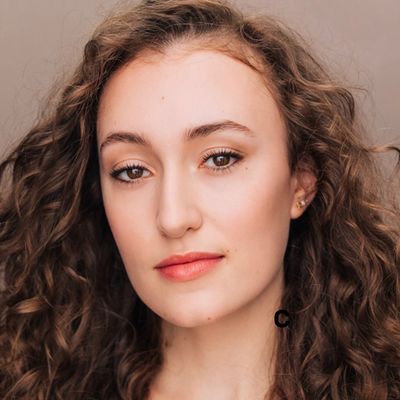
Cayleigh Capaldi may have the perfect pitch, but she’s not letting perfectionism get in the way of finding who she is as an individual and as a performer. She delves into her background, growing up surrounded by artists, and how it helped her embrace her talents... Read More
From the show: The Theatre Podcast with Alan Seales
Guests
Featured Shows
About
Cayleigh Capaldi may have the perfect pitch, but she’s not letting perfectionism get in the way of finding who she is as an individual and as a performer. She delves into her background, growing up surrounded by artists, and how it helped her embrace her talents. She also reflects on her role in “Titanique”, the challenges and joys of portraying Celine Dion, including incorporating her own style while honoring the character's legacy, and how the show helped her grow as a performer. Now part of “Figaro: An Original Musical”, she shares her involvement in the musical and the collaborative process behind recording the album. Cayleigh candidly shares her unique vocal abilities, and what actually happens to her throat muscles when she does a whistle tone. Having millions of views and thousands of followers on her social media, she talks about how it all started during the pandemic, and how she eventually found and established her niche–giving her a new and different avenue to be creative and express herself.
Cayleigh Capaldi is an actress and singer whose performance career started at the age of three and was recording professional vocals by the age of seven. She had her undergraduate studies in music and East Asian studies at Columbia University and trained in acting and performance at New York University Tisch School of the Arts, AMDA, and AADA. She hosted the “Discovery Channel Europe and China's Hangzhou Global Tour”, and has a massive following on social media where she's known for her incredible riff challenges, harmonies, whistle-tone videos, and perfect pitch videos. Her stage credits include “Tatanique”, “Frozen”, “Macbeth”, “Into the Woods”, and “Little Women” among others. Cayleigh can now be heard leading a brand new world premiere cast recording called “Figaro: An Original Musical”.
In addition to her film, TV, and theater credits, Cayleigh has amassed an impressive social media following of over 275K followers. Her fanbase has grown primarily on TikTok, where she has gained over 7 million total likes, 80 million views, and countless viral videos. She is best known for her riff challenges, harmonies, covers, and her musical theater & lifestyle content.
Connect with Cayleigh:
- Website: www.cayleighcapaldi.com
- Instagram: @cayleigh.capaldi
- TikTok: @cayleigh.capaldi
- Learn more about Figaro: An Original Musical: https://www.figaromusical.com/
Connect with The Theatre Podcast:
- Support the podcast on Patreon: Patreon.com/TheTheatrePodcast
- YouTube: YouTube.com/TheTheatrePodcast
- Threads, Twitter & Instagram: @theatre_podcast
- TikTok: @thetheatrepodcast
- Facebook.com/OfficialTheatrePodcast
- TheTheatrePodcast.com
- My personal Instagram: @alanseales
Transcript
This transcript was automatically generated and might contain errors.
[0:00] Alan Seales: Happy whatever time of the day it is for you right now, and welcome to an all-new episode of the Theatre Podcast. I'm your host, Alan Seales, and our guest today, Cayleigh Capaldi, grew up in a family that is no stranger to performing. Her mom is an Olivier Award-winning TV, film, and theatre actor. Her dad is a musician and lyricist who toured with the legendary rock band Foreigner, and Cayleigh just finished up a long and amazing run in the off-Broadway hit Titanic, and as this episode drops, she is about to open the very first regional production of Frozen. She's one of the very few lucky individuals in the world with perfect pitch, but as you'll hear, and also being a perfectionist, it causes a ton of internal conflict between embracing what makes her unique, which is of course invaluable in this world of theatre, while also trying to remain exact to the source material she has to perform.
Oh, and she can also sing in whistle tone. Don't know what that is? Strap in. So sit back, relax, follow me and the podcast on all the socials, and everybody please enjoy this episode with Cayleigh Capaldi.
[1:18] Alan Seales: I just had the pleasure of seeing today's guest in the amazing off-Broadway hit Titanic, but rewind even further than this past weekend, and we see that her performance career started at the age of 3 before recording professional vocals by the age of 7. Before beginning her undergraduate studies in music and East Asian studies at Columbia University, she trained in acting and performance at NYU Tisch, AMDA and AADA, I think? She hosted the Discovery Channel Europe and China's Hangzhou Global Tour, has a massive following on social media where she's known for her incredible riff challenges, harmonies, whistle tone videos and perfect pitch videos. Color me jealous. She can now be heard leading a brand new world premiere cast recording called Figaro, an original musical. Cayleigh Capaldi, welcome to the Theatre Podcast.
[2:09] Cayleigh Capaldi: Hello! My God, I'm so happy to be here.
[2:11] Alan Seales: Thank you. Thank you for coming on. And I don't even know where to begin because everything is so freaking amazing and awesome. But at age 3, you were... it's in your bio that you started your career at age 3. So let's just dive in there. You were born in London to a theatre family. Is that correct?
[2:34] Cayleigh Capaldi: That's right. Yes. Born and raised in London. Lived there till I was seven. And then we came to the States. But yeah, my whole family are performers. My mom is a Broadway and West End film and TV actor and dancer and singer. Olivier Award winner. I like to brag about her because I'm proud of her. And my dad is a classic rock musician. He was with the band Foreigner.
[3:04] Alan Seales: Shut up!
[3:05] Cayleigh Capaldi: Yeah.
[3:06] Alan Seales: Wait, really?
[3:07] Cayleigh Capaldi: Yeah.
[3:08] Alan Seales: He toured with them.
[3:09] Cayleigh Capaldi: Oh, my God. Yeah. Wow.
[3:10] Cayleigh Capaldi: He was definitely a classic rocker. He was also just a multi-hyphenate instrumentalist. And so the reason I started so young was because I traveled around with my dad and my mom, wherever my dad would perform with his band on tour. And he'd bring me up on stage and we'd sing little duets. So singing, as far as I remember, it was a duet.
[4:33] Alan Seales: We get that question.
[4:34] Cayleigh Capaldi: Yeah, we get that question.
[4:35] Alan Seales: Uh, you know what? I would say the latter.
[4:39] Alan Seales: Okay. So obviously this is in your blood, this is in your family, there's no reason why your parents would be like, nope, bad idea. But I guess given the success and the drive your parents had, it sounds like it got instilled in you and then at seven, you were, what was it? You were lending your voice to voice demos and audio content for apps. That wasn't even a thing when I was seven. Like how did that, were you just like a precocious kid that knew how to speak good in the microphone?
[5:04] Cayleigh Capaldi: Yeah. I mean, my parents were, they were never like stage parents. They never forced me into it. They never signed me up for things without my showing interest first. But, um, I always just had that drive because it was all I knew. I have more memories of growing up in my mom's dressing rooms or my dad's green rooms or, um, backstage. I have more memories of those places than like being home actually, like in a physical house. Um, so we were always just on the go and it was really fun. And so when I started showing interest in continuing in their footsteps, they were, you know, when I got a little older, they were actually kind of like, are you sure there's nothing else you want to do? Like, do you want anything just a little more stable?
Um, but I was like, no, I'm a goner. I'm a goner. So, um, yeah, I just always showed interest and they were always so, uh, excited to show me, you know, a way in. They would, you know, my dad would teach me mic technique from when I was little. And so I got used to doing that. Like just, it was just, it came very easily. And I think it just had to do with the exposure all the time. Um, and watching and learning and imitating and you know, cause I, like a lot of kids, I just wanted to be exactly like my parents. So I just tried to imitate them as best I could until I figured out what I wanted to do.
[6:45] Alan Seales: Well, when did you figure out what you wanted to do?
[6:47] Cayleigh Capaldi: That's a good question. It's, it's hard because I think I always had a sense of individuality within that world that I was growing up in. I thought, you know, I, I always wished that I was older than I was so that I could start working and that I could, um, grow up faster and, and do more with my life now. You know, I, I wish, I wish part of me had held onto some of that childhood patience and innocence. Patience is not really a word usually used in this industry. Like everybody wants to be somewhere else yesterday, you know? So that's something that I've definitely learned over time to just sit in the successes and not hope for something else immediately. But, um, Ooh, that just got a little, a little deep too early on.
[7:40] Alan Seales: It's never too early to go deep.
[7:42] Cayleigh Capaldi: It's never too early. Um, but yeah, I, I just, I would watch so many of my idols like on TV and I would listen to all sorts of music and I would, um, a lot of my early singing was imitation. So, you know, I would, another hallmark of perfect pitch, like I would in voice lessons when we would sing a new song, for example, I would always do the exact same riffs that I heard on the recording and I would do the exact same musical choices, dynamics. I wouldn't deviate from what I heard. And it was really my voice teacher of 17 years, Kimberly Connitz, shout out to her best voice teacher in the universe. Um, she was the one who really, my colleague, Gleb from Planet Zebulon also uses her because she is the best in the universe. You're right.
[8:32] Cayleigh Capaldi: Yeah, yeah, yeah, yeah, yeah, yeah. Absolutely. Absolutely. Intergalactic. Amazing. Um, so she was really the one who started encouraging me to find the choices that I wanted to make. And I don't think you really know that until you start growing up and you start figuring out like who you are as a person, rather than, you know, you're more than just an amalgamation of your influences. Yeah, it's scary to try to find out who you are and what kind of performer you want to be because you always doubt yourself and you always think, well, it's never as good as this or, you know, it's never as cool as that, but it ends up coming together. And I really think that it has come together in a great way. And I'm still, I'm still figuring it out. I don't think you ever stop figuring it out. But yeah, it was definitely a process of just coming out of my shell.
[9:21] Alan Seales: Okay. Okay. So let's, let, let me, let me dive in here a second and try to differentiate. This is my own curiosity because you were, you said you have perfect pitch, which is, uh, I mean, the ability to just produce the correct pitch. If I say, give me a C sharp, you give me a C sharp. Right. And that's just, and you can tell if you hear a note, you just know what it is. Yes. But that's different from emulating what you hear, which is memory. Right. And what I would call almost perfectionist being a perfectionist, which I get, I relate, you are pointing at me. Yes. I relate to that 100% because when I, when I, when I would take voice lessons years ago, I would want to create exactly what I heard.
Cause I'm like, that's the way to do it. That's the, that's what sounds good. Right. And get frustrated when I couldn't do it exactly right. And I would know, or maybe not, I don't know if I was on pitch or not, but I was still trying to emulate because of the perfectionist side. So yes, in the Venn diagram of Cayleigh, how much is perfect pitch versus how much is perfectionist?
[10:36] Cayleigh Capaldi: So for thinking about the Venn diagram, I think they are overlapping so far that they're almost like on top of each other, but there's still a tiny little bit on the outside that's separate. Um, yeah, it's, it is a symbiotic relationship between perfectionism and perfect pitch. It, I mean, perfect is in the word perfect pitch. So there's already this like requirement to be perfect. So there's this pressure. Um, it's like a double edged sword. And so in a sense, the perfect pitch actually helps you be more perfect, but in doing so it puts all this pressure on you and it holds you to such a high standard that is, I mean, you know, we're humans, we're not robots, we're not walking Spotify. So like we can't perfectly reproduce something no matter how much we want to.
Um, and so that has also been a huge thing for me to work at overcoming is just perfectionism. And I think perfectionism is the enemy of creativity and finding who you are as an individual, as a performer.
[11:54] Cayleigh Capaldi: Um, at least it has been for me because it hasn't been until I've really worked to break away from that, that I found more of who I am at my core as a performer.
[12:07] Alan Seales: Perfectionism is the enemy of creativity. I just want to repeat that because it is really important. Perfectionism is the enemy of creativity. Okay. So then, I mean, that's a recent thing. Yeah. And, or you said it's a recent thing you kind of discovered that. So how, how do you, or are you able when you're, when you're, you're recreating things and, and I'm kind of referencing, um, your massive social media following and you do these wonderful riff videos and, um, something that I love cause I'm a tech geek is, you know, you have a looping machine and you just layer, you build acapella versions of, of 16 bars or whatever the case is. So I'm just going to play a quick example for listeners now.
[13:33] Alan Seales: And I love that. As someone who used to arrange for his a cappella group in college in the exact same way, I would go and record, I would make a CD for the bass and I'd make a CD for the tenor and make a CD for the alto and the soprano.
[13:58] Alan Seales: I love watching you do this in real time. And if this tech had existed for me, I don't know if I would be in a different place now in my life. But anyway, I digress. So cool. So I don't even remember what my question was. I'm geeking out over the tech.
[14:15] Alan Seales: Oh, I'm touching on this stuff, right, where you're presenting yourself in this way of like you're creating all these things that are original and you're making your own arrangements, which is different, I think, from the riff challenges, which are like, can you replicate this known person for doing this known thing?
[14:32] Alan Seales: So where do you sit down and you're like, all right, I'm going to take the intro, the instrumental intro for this song and sing it a cappella and break it down, right? Is that easier or harder than just kind of like making your own thing?
[14:49] Cayleigh Capaldi: I think because you have the blueprint of the instrument and what's already been laid down, it gives you a direction of where to go. But then, as you know, arranging for a cappella, which I've also done, I was in an a cappella group in college to shout out to non sequitur, I think you make these like creative choices to transform certain sounds that you hear on a recording.
[15:18] Cayleigh Capaldi: I remember, I think one of my favorite ones that I ever arranged for my a cappella group was Stevie Wonder's "As." So that's a really complex recording. There's so much going on musically. I think it's like a fun challenge. Like you're looking at this giant, unfinished puzzle. And you're trying to think, all right, so if I take this horn lick, and I give it to the altos, then I can harmonize them with the soprano twos, and then the soprano ones will have to take over, you know, this little keyboard riff here.
[15:58] Cayleigh Capaldi: So it's kind of just like parsing through the options that you have of recreating something with your voice. And I think that really set me up and informed me for doing the TikToks that I do, which is basically just like taking whatever songs are trending, and finding a way to arrange them with my voice.
[16:21] Cayleigh Capaldi: And, you know, using my little logic tools, and not mental logic, but the DAW logic, as you know.
[16:31] Alan Seales: Yes, the software. Logic, Logic Pro.
[16:35] Cayleigh Capaldi: Yes, absolutely. And looping and coming up with how to make it engaging in real time, as a video. So there are lots of things that you have to think about and balance. I didn't get it right for the first time, for sure. It took me many versions of experimenting to figure out what would work, not only in an audio sense, not only what people were listening to, but also what would be visually engaging, like how I would do it.
[17:00] Cayleigh Capaldi: And how I would retain people's attention and interest.
[17:06] Alan Seales: Yeah, I understand the need, the need to be popular on social media. And the term influencer is kind of hit or miss with me. I'm not sure if I like that term. And I'm not sure if I dislike it. It's just there. So we'll say you have a big following on Instagram, people go to you to watch things because they know you're entertaining.
[17:26] Cayleigh Capaldi: Yeah. Thinking back, though, why and when did you say, I'm going to start, like, posting these specific types of things? Or was it just kind of like spaghetti on the wall at first? I'm going to riff. I'm going to do looping. I'm gonna make armpit farty noises. You know, what? What did you decide to do? Or I guess, why did you decide to start trying to do this?
[17:50] Cayleigh Capaldi: Man, I should have done that. I should have like done an armpit fart and be like, oh, that's an A-flat. I really started during the pandemic. Right in like August of 2020. I was at home with my family in California. I was just, you know, doing online classes for college. And I was so depressed. I was just like, I was in a void of creativity. And I think I'm not the only person who experienced this. But like, I felt like I didn't have any outlets to express myself. My friends kept talking about TikTok. And I was like, I don't want to download it. I want to hold out. I don't want to be like everybody else and get obsessed with TikTok. But I succumbed to the peer pressure. And I saw what was going on and, you know, pandemic era of TikTok. And I thought, my first thought was not necessarily that this was something I could capitalize on. But more so that it was something I could use to channel my creativity and challenge myself to stay active that way.
[19:04] Cayleigh Capaldi: Because I would have lost my mind if not. I was in California. My friends and my classmates were in New York. And so there was that added level of distance as well. So it provided a lot of connectivity. And mainly I started just duetting with people because I thought that was like the quickest way to get into it. So someone would post like a guitar instrumental cover of a song, 15 seconds max or something. And I would just duet it with my voice and sing and think of some like crazy riff to do that would be engaging.
[19:39] Cayleigh Capaldi: So that's how it started off. And then as I started, I started to figure out that like you get more traction when you duet a video that is doing very well. So I started looking for videos in my niche, like theater, singing, riffing. I think the first one that like really took off for me was a duet with a creator named Johnny who did like "Never Enough" from The Greatest Showman, but it just keeps getting higher. So I was like, oh, this is something that I can do. So it was just never enough, never, never, never enough, never, never, never enough.
[20:24] Cayleigh Capaldi: So it just kept going up and up. And that was the one that like really first took off. And then I started doing these like riff challenges, but in four octaves. So I would go down as low as I possibly could find where that would sit and then try to take it as high as I could up into my whistle tone. And those ones did pretty well, too. But I was trying to find a way to do what I do in a way that I hadn't seen yet on the app, which was hard because there were so many people on there doing what they did best. But I think I got in there at a time where I could like kind of establish my niche. And yeah, so I just kept going from there.
[21:02] Alan Seales: Hang on, everybody. We're just going to take a quick break.
[21:32] Alan Seales: We're going to take a quick break.
[21:52] Cayleigh Capaldi: Oh, dog. Banjo, right?
[22:22] Cayleigh Capaldi: Yeah, I think it encouraged me to like come out of my shell at a time where I could very easily have just retreated into myself, which in hindsight would not have been the healthiest thing. And I know that I have my fair share of gripes with TikTok and the implications of social media, but for the purposes that we're talking about, I think it was an indispensable part of my pandemic experience.
[22:59] Alan Seales: Do you care about comments or feedback or you just post as a one way faucet?
[23:05] Cayleigh Capaldi: I read the comments. I stop myself sometimes because it's just such a time suck and an energy suck. But I definitely read the comments. Yeah. And I'm trying to work on not doing that because there are always trolls. There are always people who are going to find something wrong with what you do. But I don't do it for that reason. Like I don't post or create for the comments, you know, I post or create because I want to do something. I want to create something and I hope that it entertains or brings joy to someone else, whether or not they decide to comment something.
[23:49] Cayleigh Capaldi: It's not the best feeling when you realize that what brings you joy also brings other people joy.
[23:55] Alan Seales: Yeah. Yes. And TikTok actually showed I think it showed us as a society that like there are so many things that can bring us joy. So many random things that we never even thought of as a possibility.
[24:10] Cayleigh Capaldi: Like that's what I was trying to find with. All right. What is what is this crazy weird thing that I could do that I haven't seen before? What if I went into my kitchen and tapped on a bunch of bowls and plates and figured out what notes they were? Just like the random silly things that you watch as you're scrolling in at 2 a.m. in bed.
[24:32] Alan Seales: Oh, man. I didn't even think about the implication of that with someone with perfect pitch. I walk in and I hear like the hum of HVAC, you know, some machine running at a ceiling somewhere. And I'm like, OK, that's my pitch. Right.
[24:47] Cayleigh Capaldi: So you can walk into any machine room. You're like, oh, that's a D flat over seven or whatever. I don't know. Music theory is not my strong suit.
[24:58] Alan Seales: But yeah, that's got to be such a blessing and a curse to just be able to know the notes that all the machines around you are playing.
[25:06] Cayleigh Capaldi: Yeah, there's the neighbors have some gardeners right now and they're leaf blowing and it's leaf blowing at a B flat and it's been going for about three minutes and it's the most annoying thing in the world.
[25:17] Alan Seales: Little things like that are annoying.
[25:21] Cayleigh Capaldi: Well, that's your that should be your next social media campaign. Their series of videos is just start recording machines and harmonizing with the machines.
[25:31] Alan Seales: Oh, my God. Like a drone underneath. And I just go.
[25:34] Cayleigh Capaldi: Yeah, yeah, yeah, yeah. So you're like, here's just go on YouTube, find a bunch of videos of machines running, do it with those and you're like and make songs out of machine noises.
[25:45] Alan Seales: I think that's a winning idea. I love that.
[25:47] Cayleigh Capaldi: Yeah, yeah, yeah, yeah. You've got to do that. Because if there's anybody in the world that can do it, it's got to be you. And then you get Lizzo to do it with you. And then the rest is history.
[25:56] Cayleigh Capaldi: There we go. And then we'll get Charlie Puth in there and we can both be perfect pitch buddies. Blah, blah, blah.
[26:01] Alan Seales: I love that. OK, well, you go for that. OK, it's a whistle tone. You mentioned that a couple of times. I'm fascinated with whistle tone because it is.
[26:10] Alan Seales: Let's see, I'm going to read the definition for those who don't know. The whistle register is the highest phonational register that in most singers begins above the soprano high D and pop quiz hotshot. What what's the actual frequency number of the high D or D six? Do you know the frequency number?
[26:30] Cayleigh Capaldi: Oh, my God, you've got me. I don't know.
[26:32] Alan Seales: Eleven seventy four point six hertz.
[26:35] Cayleigh Capaldi: Oh, well, there you go. There you go. Anyway, I would have known the answer right away.
[26:41] Alan Seales: Yeah. So it extends about an octave above a D seven above, which is a D seven or twenty three four nine point three hertz.
[26:49] Cayleigh Capaldi: OK, it's created by using only the back of the vocal folds and very little is known about it because the way that the throat in the vocal folds have to work makes it nearly impossible to get a scope in there.
[27:03] Cayleigh Capaldi: And I am I can't believe you're bringing this up. OK, keep going. I'm going to come back to that.
[27:08] Cayleigh Capaldi: No, no, no. That's where I was going to stop because I was literally just going to say, what the hell does that feel like? Okay. So, I – this was the craziest thing. A couple months ago, I had a checkup with my laryngologist. Shoutout to Dr. Michael Pitman at Columbia Auto-laryngology. The best. The best in the universe. Gleb uses him too, yeah. Gleb goes there. Good taste, Gleb. And I, you know, it had been like a checkup from a few months before and so I was just curious and I was like, listen, I've never seen my whistle tone on a scope before. Can we try to record it? And they were like, yeah, we've never seen it either. So, they got like, they got all the nurses in and they got all the other doctors in and the techs and the SLPs and they were all just kind of like huddled around the camera watching what it would look like and they put the scope down my nose, down the back of my throat into my – so that they could see the vocal folds and they recorded what it looked like to do whistle tone and it blew my mind.
It didn't look anything like I expected it to look. So, I know this is hard for our listeners but I'll explain it as best I can. So, if you put your two fingers together, like your two pointer fingers right next to each other, those are like the two folds of your vocal cords, right? Those are two cords and if you bang them together really fast, that's kind of how it looks when you're talking or when you're singing. That's phonation. To get that as strong and clear as possible, you want them to be in sync and you don't want any like polyps or nodes, little rough spots on any of them because that'll slow down the vibration. So, when you do true whistle tone, it's what's known as false cords. So, it's when the cords kind of fold over onto each other and create a second vibration.
So, I thought initially that it was the same vocal cords just like turning and folding on each other like that. However, when I looked at what they recorded in the scope, it's actually the muscles of the throat around the vocal cords squeezing together and like, you know, when you whistle with your lips, you create a teeny tiny little hole and the air goes through and it creates a pitch. That's basically what's happening in your throat. So, when I do whistle tone, you take the muscles all around the vocal cords, they squeeze together and create a little hole and the vocal folds themselves aren't actually vibrating. So, the pitch is not coming from the vocal folds. So, you're whistling with your throat muscles inside your throat?
Yes. So, that was what I discovered on the scope. It was the craziest thing. No way. Do you have that footage? I do. Did they give it to you? Yes, I recorded it. Oh my goodness. Okay, we're recording this video for this interview. I'm going to clip this out. I'm going to send it to you and you have to do edit with your vocal fold footage. I will. So, we can actually put this out there. This is fascinating to me. I know. It's so fascinating. I didn't post it because, you know, I didn't want people to be like, ew, gross anatomy, you know, but like, I think it's really cool. No, look at what Alex Brightman got so much attention for his Beetlejuice voice and then, you know, he posted the video of him saying, hey, look, it's safe.
I'm doing this. It's not hurting me. This is how I do it. That's the coolest thing. I've always been in such awe of how he did that and how he got the technique behind it to make it sustainable because that's the mark of a true professional. Yeah. So, I just thought that was mind-blowing. Well, seriously, I need to see this. I'm fascinated by the anatomy, especially voice and, you know, you and Mariah Carey just, you know, you're making your little tiny throat holes and whistling. That's cool. I don't know if it's the same for everyone, but that's at least how I create it in my body. Well, Mariah, who's a big fan of this podcast, I'm sure. When you listen, reach out. Shout out to Mariah. Let us know.
Big fan. Gleb is a big fan of Mariah, too. Best in the universe. Yeah, yeah, yeah. I mean, who isn't? Okay. So, God, there's so many things I want to touch on. I'm just going to mention this, and if we have time, we'll come back. Let's see. You're an honors graduate from Columbia University. You have a double degree in East Asian Studies and Music and a Berkeley College of Music professional degree in composition and orchestration. Oh, and in your spare time, you just speak fluent Mandarin. Okay. So, if we have time, we're going to come back to that. But I want to touch on Figaro, an original musical. Let's do it. So, I love... I was listening to this thing just end-to-end last night while I was cypherstalking all of your videos on TikTok, which is hard to listen to that and listen to TikTok, but I did it.
Amazing multitasking. So, this thing, I love the way Figaro, the composition, the tone of this musical is so cool to me because it kind of reminds me of musicals of past decades. It's kind of a throwback to sort of almost phantom-y, Phantom of the Opera. It's dark and brooding and haunting, but hopeful, and it has a full orchestra, right? So, it's different, but it still feels modern. Absolutely. I like to describe it as like a fusion of Phantom of the Opera and Moulin Rouge with a little hint of Tim Burton. Oh, I like that. Yeah, that's a better description, much better description. So, tell me about how you got connected with it then. So, Will Nunziata, our director, is friend by proximity.
We know a lot of the same people from Las Vegas. That's where we moved as a family after we lived in London. Oh, I thought that was a reference to Céline Dion. Oh, gosh, I wish. Caesar's Palace. But yeah, hashtag Titanic. So, I kind of, we knew Will, I knew Will like through different circles, like family, friends, and stuff. And he got in touch and was like, listen, we can't find anyone to do this role and we really want to do a recording. And I know you have like recording experience and I've heard your voice on social media and I'd love to like just record this with you and see what happens. And I was like, yeah, of course. I love collaborating, especially on new material. That's my favorite thing in the world.
And so, I came into the studio and met Ashley Janna, our incredible composer. And we just started this like a couple months long journey of recording the album. And it was incredible because we started off with like a great foundation of material. Like, we knew what we were doing. We had our music and our lyrics. But as we were in the process of recording, a lot of it changed. Like, they were constantly rewriting some plot points in the ending. They were getting great feedback from industry professionals and investors. You know, it turned into like a very collaborative experience in the studio. Like, we were rewriting things in the moment. Like, I would sing something and Ashley would think, oh, actually, we need to change that lyric here.
Or the song I'll Sing For You on the album. That's the one where I use my whistle tone halfway through. And I was like, OK. Ashley had already built this like really exciting legato sort of soprano-y build in the middle of the song. And it was supposed to have this like pinnacle of a high note. And I was like, actually, do you want me to go a little higher? And so we recorded that. And I was like, should I try going a little higher? Yeah, let's do it. And it turned into what it was on the recording, which then ended up changing for the live performance that we did on March 4th, where we were like, oh, my God, what if Sienna, the name of my character, what if she actually doesn't make it? Like, what if she cracks on the high note?
And because the song starts from a place of like, this is her first performance. She's incredibly nervous. Everything in her life is built up to this. She has so much pressure and expectation riding on this moment. And what if she just doesn't make it? And how would it set her up for the rest of the show? Because she has two more big 11 o'clock numbers at the rest of the show. So I was like, we have to have somewhere to go. In that respect, it just continued this spirit of collaboration. God, it was so validating to work on this because I was like, wow, my opinions matter in this process. I feel like I'm a part of creating this character and this story. But again, so much of that, I mean, at the helm is Will and Ashley.
It's such a beautiful, really such a beautiful album. And there are already, I think I was reading there's already plans for it to go to London next year. Is that true? Yes, gearing up to go to the West End in 2025, with more details to be announced. Are you going to be part of that? Are you allowed to say or you don't know? Not allowed to say quite yet. But as soon as we are able to share anything, then we absolutely will. By the way, for the record, I hate when people say that it's like, oh, you're gonna have to wait and see. But like, I swear to God, we do have to wait and see, unfortunately. Oh, no, no, no, no, I totally get it. Because I mean, you look at even the last, was it last year with two shows or in the last 12 months, calendar wise, how many shows were in previews and fell out because they lost funding?
I mean, stuff just goes away. And it stinks. It stinks. And, and things are closing. And it's like, it feels like a kind of unpredictable environment right now. I know it always is like there's there's never a surefire hit. But yeah, it's spooky scary out here. Spooky scary. It's spooky scary. I was literally gonna shift over to Titanic. Is that a good transition? That's a great transition. Yeah, Titanic. One of the goofiest shows I have ever seen, and still a running hit for good reason. Hang on, everybody. We're just gonna take a quick break. All right, now we're back. Given again, the perfectionism and perfect pitching ism, and etc, finding yourself in the performance space, being able to step into a goofy show like, like Titanic that just had that can go any way and still work, right?
Was that easy or difficult for you, especially, you know, as a going on for Celine, that role is just it can do whatever she wants. Yeah. At the time of recording this, this is my last weekend with the show. Yeah, I was gonna bring that up too. Yeah. And womp womp for sure. It's so emotional to think about leaving the show for now. Um, it has been the biggest gift of my life, my professional life so far. I have grown so much because of exactly what you said. And it's so spot on because going into the show and rehearsing and trying to figure out what I wanted to do for each of the principal tracks that I cover. Celine Rose and Ruth, Rose's mother, I was, I got really, what am I saying? I found there was the potential for me to get really paralyzed in the fear of not doing things perfectly, and not portraying Celine Dion perfectly.
And I was really encouraged to break out of that because I felt so comfortable and because the people in this cast and on the creative team made an environment that was conducive to people breaking out of these molds that they had been in before they came to this show and discovering the freedom and the excitement of just living in the moment and seeing what happens. Um, and I have never felt so free and alive. I'm alive. Um, and, and just like spontaneous and creative. Um, I found parts of myself that I didn't even know was there. Um, I didn't even think I was funny before I did Titanic.
[40:41] Cayleigh Capaldi: I did not consider myself a comedy person. And then I did "Titanique" and I proved to myself that I can do things that I didn't think I could do. And I don't have to underestimate myself. And now, going away from "Titanique" this time around, I think I just value myself as a performer and as a person so much more. And that's the biggest gift that it's given me.
[41:06] Alan Seales: For a role like Celine Dion in "Titanique," I mean, Marlon Mandel has such a unique comedy style, you know, co-writer, originator, original Celine. And I've seen the show multiple times. Like I said in the intro, I literally saw it this past weekend because Elliot Maddox is a friend, has a podcast on the network too. So I came to go see Elliot. And actually, Tess Marshall was in for Celine. And I'd never seen her perform. So every Celine I've seen is always like there's always this underlying through line of like, this is what the character is. And I know this is kind of a hokey question because, oh, a kooky, hokey, kooky, spooky question, because I mean, it's cliché and like, how do you make it your own?
But something like this particular character, this Celine, where I mean, there is improv involved. There is also your own take on it, where you're still trying, like, Tess sort of does the half mouth thing that Marlon did because it works. And like, I've never, I haven't seen you go on as Celine. So how much of each other's performances are you borrowing from? Or are you told like, just do whatever you want and make it your own?
[42:27] Cayleigh Capaldi: That's a great question. And I think that's something that we've discovered through the run of this show, especially, you know, the process of replacing somebody for the first time is like the great unknown. And it's very daunting because, I mean, we were always encouraged to like, honor the template, but then breathe your own life into it. And so I think for me, because I came in, in July of 2023. So last year, it was only about a month after Marla had left the show. And Nicole Parker was our Celine. And I think for me, like, I definitely based so much of my Celine off of Marla. Because she is the blueprint. She is the creator. And this is her baby. And I felt that it was my job to honor that as closely as possible.
Because her version of Celine is so intrinsic and integral to this show, that without carrying over certain aspects of her performance, it just doesn't really work. And so I based a lot of my performance off of that, a lot of her quirks, a lot of her isms. And she was so, so incredibly gracious through the rehearsal process, in terms of like, sharing what she's learned and sharing her insights. Because, you know, this has been hers for seven, eight years. So she has had such time and a journey to let it become part of her. And so that's not something that you can, you know, take for granted as someone who's coming in and starting this for the first time, like, Oh, yeah, I can do that. No, like, you got to study the blueprint.
And so that's what I wanted to do. And so the flip side of it is figuring out how I wanted to make it my own, in ways that were so respectful to the source, but could differentiate in the way that only I could. So a lot of that was like, I've been doing Celine since I was like, eight or nine, because she's one of my Yes, she's one of my I think I posted it online somewhere. But I have a self-tape from when I was like, 12 or something that I did for the Disney Channel or, or Nickelodeon or something, one of those two. And it was like, I think the prompt was like, show us your personality. And that was it, like, it was very open-ended. So I was like, I'm going to show off some of my vocal impressions.
And so like, I did Celine Dion, and I had Mariah Carey, and I did Beyonce, and I did Christina Aguilera, which I still do in my version of Celine sometimes. But so that Celine impression had been percolating for many years. And so when I got the chance to do that, I felt like I had a good foundation already. But then I just studied so much I one of the best bits of advice from Billy Akin Tyers, our associate director, was go on Instagram, and follow every single Celine fan account you can possibly find. So then when you refresh your feed, all you'll have are videos of Celine. And so you'll have a perfect study guide just to scroll through whenever you want. So that's what I did. And a lot of like, some of her dance, if you could call them dance, like very interpretive, incredible passion, awkward dance moves.
I wanted to incorporate in the show some of her like, very strange little mannerisms and the way she holds her mic and the posture of her mouth. And how wide her eyes get sometimes. And just her spirit, like her spontaneity and her, her unapologetic vivacity is just huge. And that's what I wanted to. That's what I wanted to study and breathe into my version of Celine and also riffing. I did a lot of riffing. Marla is the riff queen, riffs down, but I just wanted to add more. And sometimes I've never been called on Celine riffs. Sometimes when I'm on for Rose, and I go a little too far, they're like, Hey, can you just save it for Celine? Okay, okay. There was one time that Terrence, our other BGV, and he covers Jack and Iceberg and Victor.
It was one of Terrence's first times on as Jack and I had the pleasure of being his Rose. And so Terrence is also a freak of nature. One of the most insane voices I've ever heard in my life. Crazy range, crazy riffs. The two of us as Jack and Rose, it got a little dangerous because we were kind of just like egging each other on like, Oh, what riff do you want to do now? And Oh, how can I match that? We had notes that were like, you guys need to calm down. So noted.
[47:55] Alan Seales: Well, I think that's what makes it fun. And if you have somebody who could challenge you like that, or at least push you in a safe and professional way, you grow a lot. I love it. I love it. So let's see. I actually normally would transition to my three standard closing questions, but I had an idea. I was talking to somebody the other day, and I'm like, I'm going to switch. I'm going to switch things up a little bit. And if you're willing to go on a little journey with me, I want to try something new, a new little game segment.
[48:28] Cayleigh Capaldi: Let's do it. Oh my God. I'm honored. Okay. Let's do it.
[48:30] Alan Seales: Okay. Okay. So give me a number. So, okay. I'm going to call this. And now it's time for plot in 60 seconds. Give me a number one through five.
[48:43] Cayleigh Capaldi: Three.
[48:47] Alan Seales: Okay. So in, we're going to put 60 seconds up on the clock. So in 60 seconds, you have to give me the whole plot to "Aladdin." Ready? Ready? Go. 60 seconds remaining.
[48:57] Cayleigh Capaldi: Okay. So there is a hungry dreamer named Aladdin, and he's walking through the street and he steals a loaf of bread and he bounces off of some really bouncy looking canopies. And he has a friend named Abu, who's a monkey. And there's this princess named Jasmine, and she has a pet tiger. And God, I forgot the tiger's name. I'm so sorry. And her father is the Sultan, and he's very, you know, ruling and wants to protect his daughter, but she just wants to be free.
[49:27] Alan Seales: 30 seconds remaining.
[49:28] Cayleigh Capaldi: And she wants adventure out of her life. And so she and Aladdin meet by chance, and Aladdin, he's like in love with her. And he's like, you want to fly on my carpet? And she's like, yeah. And so they fly through the clouds with, and there's like diamonds and sparkles. And the carpet also comes to life. And, oh, there's a genie. There's a genie. Robin Williams comes out and sings a song and they live happily ever after. And he gets a wish. Three wishes. Yay.
[49:54] Alan Seales: Five, four, three, two, one.
[49:59] Cayleigh Capaldi: That was so chaotic.
[50:00] Alan Seales: With seven seconds left, I think is when you brought in genie.
[50:04] Cayleigh Capaldi: Yeah, that's very embarrassing. I spent too much time on the tiger.
[50:08] Alan Seales: Raja, Raja.
[50:09] Cayleigh Capaldi: Raja, Raja. Thank you.
[50:12] Alan Seales: Well, thank you for going on that fun journey with me.
[50:14] Cayleigh Capaldi: Oh, that was fun. I love it.
[50:16] Alan Seales: Okay. Okay. Are you sweating?
[50:18] Cayleigh Capaldi: I'm sweating.
[50:19] Alan Seales: That's good. That's good. Okay. So now we'll transition over to our standard three closing questions. The very first one is just simply what motivates you?
[50:28] Cayleigh Capaldi: What motivates me is my family.
[50:32] Alan Seales: What advice would you give to your younger self and younger people listening now starting out down a similar path?
[50:37] Cayleigh Capaldi: I would say to hell with perfectionism. It's not going to help you. It feels very safe and secure. But the person that you're going to find on the other side of that is so much better than being perfect. And apply that to every aspect of your life. When you make friends, just be yourself. When you perform, just sing from your heart and let it all go. Let it go. Frozen.
[51:04] Alan Seales: Let it go. Wink, wink.
[51:06] Cayleigh Capaldi: Let it go. Wink, wink. Oh yeah, real quick. What are you doing coming up in Utah?
[51:15] Alan Seales: That's your next contract?
[51:16] Cayleigh Capaldi: That's my next adventure. So I am so excited to be originating the role of Elsa in the very first regional production of "Frozen" at TuaCon in Utah.
[51:30] Alan Seales: Awesome.
[51:31] Cayleigh Capaldi: Yeah, it's very exciting. We're going to bring some cold to the desert heat. And I can't wait.
[51:39] Alan Seales: Awesome. Okay, so back to the questions then. If you could only see one show for the rest of your life, but you can see it as many times as you want, what would you see?
[51:48] Cayleigh Capaldi: "A Chorus Line."
[51:50] Alan Seales: "A Chorus Line." Oh, oh, oh, oh. Why that one?
[51:53] Cayleigh Capaldi: "A Chorus Line."
[51:53] Alan Seales: Oh, shoot. But also, ugh. Okay, what if I bend the rules and this theater is actually in rep and they do "A Chorus Line" and then they do "The Producers" every other night, you know?
[52:07] Cayleigh Capaldi: Okay, okay.
[52:08] Alan Seales: So, is that allowed?
[52:10] Cayleigh Capaldi: All right. This is Outback, no rules, just right.
[52:15] Alan Seales: There you go.
[52:16] Cayleigh Capaldi: No rules.
[52:16] Alan Seales: Okay.
[52:16] Cayleigh Capaldi: All right. So, this theater that does "A Chorus Line" and "The Producers" in rep, I would choose "The Producers" because that is a foundational musical for me. I grew up with it, watched my mom do it on the West End and then Las Vegas. It's the one thing that never fails to make me just lose my mind laughing and also brings me such calm and awe at theater and why we do theater.
[52:45] Cayleigh Capaldi: Transitioning, perfect transition into "A Chorus Line," also grew up watching my mom do that show. I think that that musical should be required viewing for everybody before they see a Broadway show so that they understand what goes into making a show and the lives of the actors behind the show that they see and it just reaffirms why I do what I do, what I do for love.
[53:09] Alan Seales: All right. Well, of course, everyone go to figuromusical.com and check that out and also stream the album everywhere you find your music online. And then Cayleigh, where else can we find you and all of your literal hundreds of millions of followers?
[53:26] Cayleigh Capaldi: You can find me on Instagram and TikTok at Cayleigh.Capaldi. And I am on Facebook, threads, Instagram, TikTok. I don't know what I'm doing. I need such help from you on TikTok. I don't know.
[53:39] Alan Seales: Oh, stop.
[53:41] Cayleigh Capaldi: Leave a rating and a review if you are listening on a platform now that allows that. Tell your friends, say, hey, I just listened to the amazing Cayleigh Capaldi on this amazing podcast. You got to listen. And thanks to Jukebox the Ghost for the intro and outro music. And Cayleigh, I've had such a fun time talking with you. I really, really appreciate the time. This has been incredible. I'm so honored to be on this incredible podcast and honored to talk to you. You're amazing.
[54:05] Alan Seales: Aw, shucks. Thanks.
© Broadway Podcast Network, All Rights Reserved