

Buckle up for a deep dive into Cheyenne's journey from humble beginnings in Washington State to becoming a Broadway star, TV favorite, and proud father... Read More
From the show: The Theatre Podcast with Alan Seales
Guests
Featured Shows

About
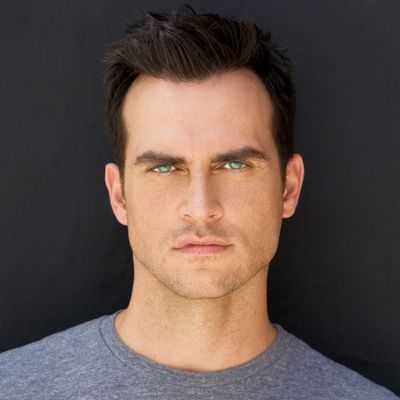
Buckle up for a deep dive into Cheyenne's journey from humble beginnings in Washington State to becoming a Broadway star, TV favorite, and proud father. From his breakout role in All Shook Up to his stints on 30 Rock and American Horror Story, Cheyenne reflects on the unexpected twists that shaped his career, like a chance encounter with Tina Fey that landed him a role on 30 Rock. He shares candidly about the challenges of growing up in a religious, conservative environment and coming to terms with his identity, along with his battles with sobriety.
Throughout the conversation, Cheyenne reveals his love for storytelling, opening up about tough career choices, including the emotional trade-offs between stage and screen work. With humor and heart, he talks about the joys and demands of being a father to twins, balancing an eight-show week, and why his children still don’t quite understand his fame. Wrapping up, he shares advice for aspiring performers: follow your dreams only if it’s the first and last thing on your mind every day.
Cheyenne Jackson is a multi-talented performer known for his roles across Broadway, film, and TV. His Broadway highlights include All Shook Up, Xanadu, and Into the Woods, while TV fans know him from Glee, 30 Rock, and American Horror Story. Offstage, Cheyenne is a passionate advocate for LGBTQ+ rights and a devoted father. He is currently starring in La Cage aux Folles at Pasadena Playhouse.
Connect with Cheyenne:
- Instagram: @MrCheyenneJackson
Connect with The Theatre Podcast:
- Support the podcast on Patreon: Patreon.com/TheTheatrePodcast
- YouTube: YouTube.com/TheTheatrePodcast
- Threads, Twitter & Instagram: @theatre_podcast
- TikTok: @thetheatrepodcast
- Facebook.com/OfficialTheatrePodcast
- TheTheatrePodcast.com
- My personal Instagram: @alanseales
Transcript
This transcript was automatically generated and might contain errors.
[0:00] Cheyenne Jackson: Hey, this is Cheyenne Jackson, and you are listening to The Theatre Podcast with Alan Seales.
[0:12] Alan Seales: Hey, everyone. Welcome to The Theatre Podcast, intimate and personal conversations with the industry's biggest names. I'm Alan Seales, and I am so excited to bring this episode to you now with Cheyenne Jackson. On one of my very first trips to New York before I ever knew that I was going to live here permanently, I saw him in All Shook Up and was just blown away. I've been a fan of his ever since and have been aching to see him back on the stage again, but obviously also enjoying that he's found so much success on TV. He's also an extremely transparent person, and we dive into a lot of what makes him incredibly unique, including his sobriety journey after leading a hard and somewhat insulated childhood, a random encounter with Tina Fey that led to his stint on 30 Rock, being a dad to twins and how hard it might be to them now that he's back on the stage at Pasadena Playhouse, and believe it or not, hair plugs.
So you want to watch the video version of this interview? Head over to my Patreon account and check it out. Also make sure to follow the podcast on social media at theatre underscore podcast. Everyone now please enjoy this episode with Cheyenne Jackson.
[1:26] Alan Seales: Come on, everybody. Today's Academy Award nominated guest needs no introduction, but I'm going to give him one anyway. Put on your blue suede shoes and don't be cruel because he's a true roustabout in the entertainment world. His breakout Broadway role as Chad in the 2004 production of All Shook Up allowed him to continue to follow that dream with additional Broadway credits, including Xanadu, Finian's Rainbow, The Performers, and most recently Into the Woods. On television and movies, he's also been a little less conversation and a lot more action appearing in hit shows like 30 Rock, Glee, Call Me Kat, American Horror Story, and United 93. He's also a proud advocate for the LGBTQ plus rights and never hesitates to stand by me when it comes to using his voice for causes that matter. But amid that gruff and handsome exterior, he just wants to be your teddy bear and can now be seen in the Pasadena Playhouse production of La Cage. Cheyenne Jackson, welcome to the theatre podcast.
[2:18] Cheyenne Jackson: Wow. Who wrote that intro?
[2:20] Alan Seales: That would be this guy.
[2:22] Cheyenne Jackson: Wow. This guy. Can you tell I love All Shook Up?
[2:24] Alan Seales: Well done. Well done. I wondered how many you could fit in there. You did it all.
[2:27] Cheyenne Jackson: I had more, but then I was like, we're going to be here all day. We got to at least get to start talking.
[2:32] Alan Seales: I love it. All Shook Up was one of the very first shows I ever saw when I moved to New York back in the day. And I had assumed that you were just this powerhouse Broadway performer that had been doing this for decades and decades because you were so damn good. Like All Shook Up, I still play that cast album when they're like, hey, what should I listen to? I'm like, hold up. This is good.
[2:56] Cheyenne Jackson: Oh, right on. Thank you. So yeah, just touch on that real quick. I think it was in the same season as Good Vibrations, and I think it was often confused because that was not so good.
[3:11] Alan Seales: Yeah, there were a few jukebox musicals that did not work right before us.
[3:16] Cheyenne Jackson: What was the other one? Lennon, maybe?
[3:20] Alan Seales: Oh, yeah. That was around that time.
[3:22] Cheyenne Jackson: Yeah, there were a few, and I think the public, no matter how good ours was or how clever the book was, they were just like, no. So yeah, we didn't get as long of a run as we'd like, but yeah, All Shook Up. My dad was the biggest Elvis fan ever, so that was so exciting. I remember going in for that. They were like, oh, there's this Elvis musical. Someone else's cast, but his contract stuff may not work out. And I was like, oh, this is a sign because my whole teenage years on, I'd always been told I looked like a young Elvis. I would go to the county fair and I would sing Elvis music on those little karaoke's, remember? With the background and stuff. And I just thought, well, this has to be meant to be because I grew up, I knew all these songs.
But like you said, it was a big musical. I think maybe, I don't know, maybe $12 million. I can't remember what they said at the day. 2004, that's expensive. And to trust really an unknown, at that point, I really was. That was pretty major.
[4:36] Alan Seales: And you left Alter Boys, right? You didn't transfer with Alter Boys to Off-Broadway because you originated Matthew, the character of Matthew in Alter Boys at Nymph. And then you didn't transfer with them. I think you were the only one of the five to not transfer because you left for Ultra Cup, right?
[4:50] Cheyenne Jackson: That's right. Yeah. That was a hard decision because I was actually a missionary. I went on three mission trips. I went to a private Christian school. I grew up listening to only Christian rock, Amy Grant, Michael W. Smith, DeGarmone Key. If you know, you know. And so, yeah, Alter Boys was very near and dear to my heart. So that was tough. But yeah, it was definitely had to. And then we wouldn't have gotten the delicious Scott Porter. I'm sure we would have, but you know what I mean? He would have taken a different route.
[5:24] Alan Seales: That's interesting. And man, it's interesting to me that you said that it was a hard decision because being the lead in a $12 million show, I mean, nothing against the small stuff. Everything has to start somewhere. But you're like, I guess, was it the religious aspect of that that stuck you to Alter Boys?
[5:39] Cheyenne Jackson: When I say hard decision, I just mean I was super emotionally attached to Alter Boys. And it was the first thing I'd ever created by myself. You know, the first thing that I, you know, I was the first to ever sing these songs and create something. So, yeah, I used to have a sense of ownership about these new projects. So but no, it was not a difficult decision in terms of like the Elvis musical. Come on. But yeah, it hurt for sure, just because you had to let go of your baby.
[6:13] Alan Seales: Sure. I guess if, yeah, you have like a crude analogy here, if you nurse a car back from the dead and then all of a sudden you just get a brand new car, you still love your old car, but the new car is much nicer. You know, like, see ya, see ya, Hyundai.
[6:29] Cheyenne Jackson: So you were born in Spokane, Washington. Do I have that right?
[6:37] Cheyenne Jackson: Spokane.
[6:39] Alan Seales: Spokane!
[6:41] Cheyenne Jackson: Even though there's an E, yes. People from Spokane get very testy about that.
[6:46] Alan Seales: Obviously, yeah. Spokane! And I didn't realize that there was a religious aspect to your childhood too, but tell me about that.
[6:50] Cheyenne Jackson: Yeah. So I grew up about an hour away from Spokane in a little town right on the border of Idaho and Washington. This little town called Old Town, Idaho, and a little town called Newport, Washington. Truly the river ran between the two states. And so I lived in one state and went to school in another state. So I essentially grew up in both. Oh, wow. I'm very, very Republican, conservative, white, probably 40 miles away from the Ku Klux Klan Aryan Nation compound in northern Idaho by Coeur d'Alene. So yeah, it was clear very early on what path you were supposed to take and who you were supposed to be. But yeah, religion and Jesus especially was a big part of my childhood. I went to a private Christian school up until eighth grade, and my parents, my sister, my brother is a pastor. It was just a big, big part of my life up until I was 18.
[8:01] Cheyenne Jackson: Oh, I meant to say a second ago that one of my first serious relationships to impress a girl's parents, I went to a Michael W. Smith concert with her.
[8:11] Alan Seales: And so we did that in jars of clay, and then I was like, wow, this is a lot.
[8:16] Cheyenne Jackson: Yeah. Yeah.
[8:17] Alan Seales: Michael W. Smith, jars of clay. I forgot about that.
[8:21] Cheyenne Jackson: They crossed over into mainstream for a hot second in the flood because they didn't say the word God in it, I think.
[8:24] Alan Seales: Oh, yeah. No, no. I remember when Amy Grant did a secular duet with Peter Cetera. Remember?
[8:35] Cheyenne Jackson: Next time I fall in love. Yeah, yeah, yeah. And I remember in the church, everybody was outraged that Amy Grant had done a secular song. And I remember there was this Christian bookstore in Spokane. They took her CDs off the shelf because she'd done the secular song, and it was nutso. But what are you going to do? I came from a place like that in North Carolina, small teeny town North Carolina, and now after being in New York for 18 years, it seems like everybody's grown up and everyone's gotten better and doesn't do that anymore.
[9:12] Alan Seales: That's not the case. Look at the political divide we're going through at the moment.
[9:16] Cheyenne Jackson: 50-50, baby.
[9:19] Alan Seales: Yeah, you're absolutely right. It's sad. So getting into the activism side of things as well, you're very outspoken for gay rights and being a gay man yourself, growing up in the religious background. That's actually why I was trying to talk on that a little bit. So when did you know you were gay? Was it hard for you to come out until you moved away from there? What was that process?
[9:39] Cheyenne Jackson: I didn't know what it was, but I definitely knew that I liked boys when I was seven. That's my first memory of a boy at school. I didn't want to just be his friend. I wanted to kiss him. I wanted to hold his hand. There wasn't any sexual feelings, but it was just a feeling of closeness. I remember feeling like, I want to marry him. And then up until, I guess maybe I was probably when I was 13, when I hit puberty, I really, for the first time in my brain or in the privacy of my bedroom, would say it out loud.
[10:18] Alan Seales: You would say it to yourself in your bedroom?
[10:21] Cheyenne Jackson: Just to myself. Like I said, I had girlfriends and I went on three mission trips. On my last mission trip, I was 18 years old and I just had this epiphany on the beach in Mexico one night. And I had had it. I had a girlfriend. I was in the church and I just thought it was all such bullshit. And I was tired of the fear and I was tired of the intensity and the narrow-mindedness and the judgment. Not all Christians are like that, but in my experience, I just did not sit with who I wanted to be. I remember it was my 18th birthday and all of my friends on the beach had gotten me one of those cheap birthday cakes with bright blue frosting that turns your whole mouth blue. I had a piece of that and I remember I went out swimming in the waves and I remember watching everybody on the beach and watching all my Christian friends.
They were playing and they were crying and I was looking at them and I was just thinking, no, no, this is not me anymore. I'm going to go for a little swim and when I come back, that's it. I don't believe in Jesus. I mean, I think Jesus was probably a person, but I don't believe in this and I'm not a Christian and I'm gay and that's just how this is going to go. It was that black and white. I was done.
[12:02] Cheyenne Jackson: After that mission trip, I came home, came out, moved to Spokane, Washington, a big city, got into a little gay youth group so I could meet some other people like me, a gay volleyball league called Safe Sets and kind of began my life as a queer person in kind. I met people of color for the first time. I met other queer people, got into the theater and the rest is history.
[12:31] Alan Seales: Your family, your friends, did you have to reset? Hopefully, your family, hopefully there's a nice story there, but friends, did they accept you or was it just like, nope, black and white, he's out. He's not one of us anymore because that's how I felt. That's why I was trying to impress this girl's parents.
[12:47] Cheyenne Jackson: It was a mixed bag. My parents had a hard time with it at first. It was very shocking for them and we kind of mutually decided that we would just take a little sabbatical from each other for about a year. We kept all of our conversations just very cordial, but no, it was very difficult for them. I did understand. I had read this article about when you come out, you have to understand your parents are mourning.
[13:22] Alan Seales: Welcome back to The Theatre Podcast. I’m your host, Alan Seales, and today I’m thrilled to welcome the incredibly talented Cheyenne Jackson. Cheyenne, it’s great to have you here.
[13:32] Cheyenne Jackson: Thanks for having me, Alan. I’m excited to be here.
[13:35] Alan Seales: So, let’s dive right in. You’ve had such an incredible journey from your beginnings in Washington State to becoming a Broadway star and a TV favorite. Can you tell us a bit about those early days and what inspired you to pursue a career in the arts?
[13:50] Cheyenne Jackson: Absolutely. I grew up in a small town, and my family was very religious and conservative. I was always drawn to music and performance, but it was a bit of a struggle to reconcile that with my upbringing. I found solace in storytelling and the arts, and it became a way for me to express myself and connect with others.
[14:12] Alan Seales: That’s really powerful. You mentioned the struggle with your upbringing. How did you navigate that as you began to embrace your identity and pursue your career?
[14:23] Cheyenne Jackson: It was definitely a journey. I had to come to terms with who I was and what I wanted to do. There were moments of fear and doubt, but I also found a lot of support from friends and mentors along the way. I think the key was finding my voice and being true to myself, even when it was difficult.
[14:45] Alan Seales: That’s such an important message. You’ve had some amazing roles, from Broadway to television. Can you share a memorable experience from your career that really stands out to you?
[14:58] Cheyenne Jackson: One of the most memorable experiences was my breakout role in All Shook Up. It was such a whirlwind, and I remember feeling like I was living a dream. The energy of the audience and the excitement of performing on Broadway was something I’ll never forget. It really solidified my love for the stage.
[15:20] Alan Seales: And then you transitioned to television with shows like 30 Rock and American Horror Story. How did that shift feel for you?
[15:29] Cheyenne Jackson: It was a different kind of challenge. I love the immediacy of live theater, but television has its own magic. Working with people like Tina Fey was incredible. I had a chance encounter with her that led to my role on 30 Rock, and it was such a fun experience to be part of that world.
[15:50] Alan Seales: That’s amazing! It sounds like you’ve had some serendipitous moments in your career. Speaking of challenges, you’ve also been open about your journey with sobriety. Can you share a bit about that experience and how it has impacted your life and career?
[16:05] Cheyenne Jackson: Sure. Sobriety has been a huge part of my life for several years now. It’s been a journey of self-discovery and healing. I’ve learned a lot about myself and what I need to do to stay grounded. It’s not always easy, especially in an industry that can be so chaotic, but it’s been incredibly rewarding.
[16:27] Alan Seales: That’s inspiring. It takes a lot of strength to face those challenges head-on. Now, you’re also a proud father. How has being a dad changed your perspective on your career and life in general?
[16:39] Cheyenne Jackson: Being a father has changed everything for me. I have twins, and they bring so much joy and chaos into my life. Balancing an eight-show week with parenting is definitely a challenge, but it’s also the most rewarding thing I’ve ever done. My kids keep me grounded and remind me of what truly matters.
[17:03] Alan Seales: I can only imagine! It must be a unique experience for them to have a dad in the spotlight. Do they understand your fame at all?
[17:11] Cheyenne Jackson: Not really! They’re still so young, and I think they just see me as their dad. They don’t quite grasp what it means to be on stage or on TV, which is kind of nice. It keeps me humble and reminds me to focus on what’s important.
[17:30] Alan Seales: That’s a beautiful perspective. As we wrap up, what advice would you give to aspiring performers who are listening?
[17:38] Cheyenne Jackson: I would say, follow your dreams only if it’s the first and last thing on your mind every day. It’s a tough industry, and you have to be passionate and dedicated. If you truly love it, that will carry you through the challenges.
[27:45] Cheyenne Jackson: At City Center Encores! with Jane Krakowski and Sean Hayes, and Tina Fey came to that performance, and she asked to meet me afterwards, and she came backstage and looked up at me, and she's like, I love your big midwestern face and your comic timing. Classic Tina Fey. Classic Tina. And I said, yeah, well, I'm from the northwest, but thank you. And she said, I have this part on 30 Rock that I would love to gauge your interest, and that was it. That's how I got 30 Rock. Nothing has ever been that easy ever again, by the way. So I started working on 30 Rock and did that off and on for four years, and that led to getting some pilots and some films, and they even let me do the revival of Finian's Rainbow while I was shooting that, which was crazy.
I would never, ever do that again, a show while I'm doing a TV show. It's too much. But yeah, that's how that all started. Then you get used to the TV schedule, and you get used to the TV money. It's early in the morning, and someone's like, would you like a coffee? Would you like this? Everybody's like, yes, I would, because Broadway is just so damn hard. It's so hard. And it doesn't pay well compared to TV and film. No, and you put everything in your entire... I used to think like, oh, Broadway, so you do one show at night. Oh, that's doable. It's a few hours. You have the rest of the day. No, bitch. Your whole day is focused on that performance at night, taking care of your voice, taking care of your body.
You do it, and then you're like, and you do it again the next day, and twice on Wednesday. Yeah, so I got used to doing that for a long time. Still love TV, but this last few years, stepping my toe back into stage has been really, really wonderful. I took about a 10-year break.
[29:49] Alan Seales: Well, I was about to say, you've been in LA 12 years now, right?
[29:54] Cheyenne Jackson: Yeah. So yeah, 12 years. So you're going to do La Cage now, starting on November 12th, December 15th, La Cage at Pasadena Playhouse, opposite Kevin Cahoon. Brilliant, funny guy. I can't wait to see you two in this. But in 12 years of being in LA, this is the first time you've done theater there?
[30:15] Cheyenne Jackson: Yeah, I know. It's weird. I've always wanted to, but it never seemed to work out. Yeah, it's crazy. And yeah, I didn't do anything on stage for 10 years, and then I stepped in for my pal Gavin in Into the Woods, and yeah, and then just did What's Upon a Mattress in January. But I haven't done a lot of stage in a long time, so a little rusty. It's the same skill set, but you get used to sitting around in your trailer, people bringing you coffee.
[30:53] Alan Seales: So Cheyenne, you also have twin children who are, you said they're eight today?
[31:00] Cheyenne Jackson: They're eight today. Eight today. And I was bringing up the kids stuff because now you're going back doing this eight show a week schedule, and you have kids. Being a dad, and being a parent, and having, especially to two children of similar or same age, that's nuts. And now you're throwing yourself back into this rigorous eight show schedule where, like you said, your whole day is dedicated to it, and you can't just not talk. You can't save your voice, Chey, because your kids need to make you yell at them and all that.
[31:28] Cheyenne Jackson: Yeah, they don't care. They don't care, nor should they. So yeah, I don't know how it's going to go. I've had a lot of talks with them. I'm like, listen, I'm going to be able to make it to five of Willow's basketball games and four of Ethan's soccer games, and we're going to just kind of work it out, but I don't know how it's going to go. Do they know Daddy's on TV, that Daddy's got three quarters of a million Instagram followers? Do they know how big of a deal Daddy is? Because I preface this by saying, because my kids can search for me on YouTube and I pop up in videos, they think I'm super famous. They have no context.
[32:08] Cheyenne Jackson: Yeah, they do know, and it's only been in just recent years, mostly because now that they go to school, they're in second grade. I'm in the Disney movie The Descendants, the second Descendants movie. I don't know if your kids watched that or not.
[32:19] Alan Seales: Yeah, I've seen it.
[32:26] Cheyenne Jackson: Yeah, yeah. So to eight and nine-year-olds, I'm Hades, and they think it's so cool. It's pretty cute. At school, I was there today because it was their birthday, and my daughter, she gets real possessive of me and holds on to me real tight. She's like, yeah, whoever, Peyton just said that she thought you were Hades, and I was like, yeah, he's Hades, and it's very cute. They also are kind of wildly unimpressed too, which I love. I brought them to set on Call Me Cat. I brought them to set because we had an episode where I was milking a cow, and so they were really excited to see the cow. My son was like, this is so boring. You're doing it over and over and over. I'm like, that's what we do. We do it like eight times, and then you do it again, and he's like, yeah.
So yeah, it was pretty cute though. I did some concerts in P-Town this summer, and I brought my family. My son and daughter are both very theatrical. I wonder where they get it. They worked up this little intro for me on their own. They were like, hello everybody, welcome to P-Town. I'm Will-O, and this is my brother. They had lines. You couldn't pry the microphone out of their hands. It was so cute.
[33:44] Alan Seales: Don't go anywhere. We'll be right back after this break.
[33:53] Alan Seales: Welcome back to the episode. Let's see. So four seasons of American Horror Story, which I think... Let's see. So Glee was first working with Ryan Murphy, right? So 30 Rock opened the door for Glee, which then introduced you to Ryan Murphy, and then American Horror Story. What's that sequence?
[34:04] Cheyenne Jackson: Well, actually Ryan saw me in Xanadu.
[34:12] Cheyenne Jackson: Yeah, Ryan saw me in Xanadu and then talked to me about auditioning for Glee. I auditioned for Mr. Shoe, the part that Matt Morrison got. Then he wrote me something for the second season. So yeah, that's the first time I worked with him. It's just been one of these fun, creative relationships where I never know what he's going to call. I never know what it's going to be. You just always know it's going to be something different than you've ever done, probably something weird. You're for sure going to be bloody. You might be naked. It's fun. It's fun to have those people in your life.
[34:49] Alan Seales: Did any of your characters ever make it to the end of the seasons? I just remember Kathy Bates always killing you.
[34:52] Cheyenne Jackson: No. Yeah. I was joking with Kathy the other day about that. I don't think so. No. One, two. Roanoke. Did I die in Roanoke? I'm sure. Oh, yeah, yeah. I did. And then, yeah, Apocalypse. I died three times, I think, in that same... Yeah, no, I've never made it to the end. I'm always the... Yeah, I always long for my American Horror Story, my wild season. The wildest was Roanoke when I got to play it, but normally I'm the straight man to everybody else's crazy, which is fun. It's great. I love it.
[35:31] Alan Seales: That's interesting. Oh, I want to go back to Superman. You said you were in one of the finalists for Superman. Did you audition for the movie that Henry Cavill got? Was it that remake?
[35:35] Cheyenne Jackson: No. Before. The Brandon Routh era.
[35:42] Cheyenne Jackson: Oh, interesting. Interesting. Yeah. I went for a hot year trying to get a TV and film and sent in a tape to execs for that. It went to Henry Cavill. So him, eh, whatever. He had a lot of muscles. I didn't. I get it. And yeah, it was that one. And then Zachary Levi. I auditioned for Chuck for both the role of Chuck and Morgan, the goofy best friend. Obviously didn't get either of those. But yeah, it's always interesting to see these finished products when they come out and all that. It's like, oh yeah, there's a reason they didn't go with me. They're way better at this. They're way better.
[36:19] Cheyenne Jackson: Yeah, it really is. I've really learned. Because it used to be so painful when I wouldn't get something and then you're like, that guy? And then you see it and you're like, oh, well, yeah, actually. Speaking of Zachary Levi, I remember the final group for Tangled was me and Gavin Creel and Zachary Levi.
[36:34] Alan Seales: I know. I know. Crazy.
[36:42] Cheyenne Jackson: Wow. Wow. Wow.
[36:46] Cheyenne Jackson: Yeah. It's such a small world though because everybody, you really are typed. And so I think you get brought in with the same people. So you see the same people over and over again. I think probably less so in theater because of the makeup and the wigs and things. But on TV and film, you're close up. You can't really hide that. You and Henry Cavill could be stunt doubles.
[37:09] Cheyenne Jackson: I'd be his. Yeah, for sure.
[37:16] Cheyenne Jackson: Yeah. And every time you think you're, people always tell you, you're special, you're unique. There's no one like you. Just really play into that. And then you go into these rooms and you look down the line and there's like 20 dudes with black hair and blue eyes. You're like, but I'm special. It's all about how big you make your eyes during the murder scenes.
[37:35] Alan Seales: Yeah. That's funny. And let's see, you were, and maybe still are an international ambassador for AMFAR. Are you still an ambassador for that? The Foundation for AIDS Research?
[37:41] Cheyenne Jackson: Yeah. I mean, not in any actual position, but yeah, I'll definitely do their events. And when they call and ask me, it's a great, great organization. I love those guys.
[37:56] Alan Seales: Yeah. SERVS is the National, let's see, the Hetrick-Martin Institute, which aims to create a safe and supportive environment in which lesbian, gay, bisexual, transgender, and questioning youth ages 12 to 24 can reach their full potential. It's interesting it goes above 18 because you would think like, oh, you're legal. You're on your own now. But I think exactly to your story, the point of your life story, once you're able to go out on your own after 18 is when you start to really experiment and question things. And you need a family. You need a chosen family. You need support for sure.
[38:31] Cheyenne Jackson: Yeah. So what made you want to get involved in that kind of support? Because there's one thing to be like, I identify like this, but there's another thing to say, I'm going to devote and give my time, which is everyone's most precious resource to something like this.
[38:47] Cheyenne Jackson: Yeah. Everything that I take part in, it's something that I wish that I had had. So Hetrick-Martin and the Harvey Milk High School, it's just I wish that I had had resources like that growing up. The Trevor Project, I got at 15 in Idaho, this big queer kid feeling so alone and other. I would have loved to be able to just get on the phone and talk to somebody and be like, oh my God, are there other people like me? So I think that's really what it is. I can't give a lot of money, but I can give my time and I can give my platform and my energy. So that's why.
[39:29] Alan Seales: Tomorrow, you're going to pick up the phone and some other kid's going to say, I just came out of the ocean and realized I don't believe in Jesus. And you'll be like, I've been there. I've been there. Go get them, Tiger.
[39:39] Cheyenne Jackson: Go get them. You don't need to go to the Michael W. Smith concerts anymore.
[39:45] Alan Seales: And let's see. So if we can, do you mind talking about sobriety for a little bit?
[39:50] Cheyenne Jackson: Okay. Let's see. So I was reading that you identify as an alcoholic and relapsed actually last year in 2023 after 10 years of sobriety. So when did you start to realize that there was possibly a substance abuse problem? I think.
[41:38] Cheyenne Jackson: We missed all that. But really, my group of people was like Gavin and Shoshana and Eden Espinosa. There was a group of us that were kind of in the same little fraternity of sorts. I never, ever, ever drank at work, but it was always something as soon as I was done with my show, I just wanted to fucking get hammered. I think for so long I was so pent up in the church and I just didn't feel free. I just took it to the extreme. I had a couple of scary situations where I drank too much or did too many drugs. There were definitely a couple of scary moments in there where I had to get it together. So about 12 years ago, when I first walked into a little AA meeting with a girlfriend and just fully identified and thought, oh wow, they are me and I am them. And that was it.
[42:42] Alan Seales: Is that a relief to be able to find another chosen family, to find that support group? Did you have to work through shame, embarrassment? I'm going through all the things in my mind that I think could have happened emotionally.
[43:00] Cheyenne Jackson: Yeah, I think it was all of that. I definitely felt like, oh, what a drag, first of all, that I'm going to have to be going to meetings for the rest of my life. That was the one thing. You know, God. But no, most of it was, this is good news. This is good news that there is a way, there is a solution and you don't have to live in this pain. I remember my hangovers used to be just so brutal. I could not even, I couldn't even lift my head up until noon. I'm talking just, yeah, I don't know how I made it through, how I made it through all those nights. But I just, yeah, I didn't want that anymore. And I wanted to feel good about myself and I wanted to make good decisions. And yeah, so. Yeah, then fell off the wagon in last year.
[43:53] Cheyenne Jackson: Somebody was telling me something the other day that if you break your streak of anything, whatever you're doing, whether it's Duolingo or posting on something to earn awards, that it's not the end of the world if you, like, it's okay. It's acceptable. It's human to break a streak and then you just start over again. Yeah. I mean, for many people, relapse is part of sobriety. It's part of your deal. So nobody is perfect. There are a few people that once they got sober, they never, ever, but that wasn't my story. But yeah, the urge to drink and to, I don't have that anymore. I don't have that. And, you know, falling off the wagon, I guess that's one way, I think that's how I may put it, but it wasn't even like a big dramatic thing.
It was just like, you know, COVID had happened and my show had been canceled and my best friend had died. And I was like, you know what? I'm going to have some wine. I'm going to fuck it, you know? And so for like a week or so, I drank and then I was like, this doesn't feel good. This doesn't feel like it didn't, was not anything like it used to be, but it just, I've become so accustomed to feeling great and waking up clearheaded and feeling, I just like, that's not my thing. So for better or worse, I'm very transparent. One of my girlfriends, she said recently, she's like, honey, you don't have to tell everyone that, right? You're such an open book. I'm like, I know, but I always have been.
And so I feel like if I can help somebody by talking about it, then I will, you know? That's why I talked about my hair plugs, because like, who fucking cares? So I lost my hair. So I got hair transplants, like these-
[45:38] Alan Seales: I didn't know that. I didn't find that on the internet.
[45:42] Cheyenne Jackson: Yeah. No, no. I talked about it. Yeah. I mean, but I, but I just remember like-
[45:46] Alan Seales: He says as he gracefully strokes.
[45:48] Cheyenne Jackson: It is. I rub my hands through my hair. But, you know, these things that we have shame about, these things that we put on ourselves, like you're, we say in recovery, you're only as sick as your secrets. So I don't really got any secrets. And so I'm not sick. And that's what makes me feel free by being, you know, open and honest. And I'm not perfect, but I'm good today.
[46:16] Alan Seales: How do you choose what your next projects are now? With two relatively young kids and the demands of an eight show theater schedule, of course, plug again, La Cage aux Folles at Pasadena Playhouse, November 12th through December 15th. How do you choose your next work? Because, I mean, you're also on Dr. Odyssey, which I just started watching. I think it's so cute.
[46:37] Cheyenne Jackson: Yeah, it's really cute. Um, how do I choose? Well, I can't, I can't, beggars can't be choosers right now. It is a nutso time in Hollywood. So I am, I'm taking almost anything I can. I did two, three indies this year for about four bucks and did a few guest spots, you know, just to get my hours so I can still qualify for my insurance for my family. It is real. It is a real thing. I mean, I barely qualified for health insurance just now, just two weeks ago. And I was the lead of a sitcom two years ago. Like it is, and this is 18 years of being a professional actor. It's, it is a real thing. So, um, how I choose is if it's, if it's something that I think I can, uh, bring to life and it's not too, too, too long of a, I mean, like I try to not be away. The longest I've ever been away from my kids is three weeks and it's, that's pretty tough. So as long as it's not too long, I'll do it.
[47:38] Alan Seales: Would you re would you relocate them temporarily, at least to New York, if you had something like life changing out here?
[47:43] Cheyenne Jackson: I think so. We know we've talked about that for like a year. I think, I think they're little enough to where it could be still an adventure. It would have to be the right thing though, because I've been offered a few things and it's just, I turned them down Broadway things and I've turned them down because I just could not even just doing Into the Woods and, uh, Once Upon a Mattress, we're only like a month long. It was just, you know, it's your tribe. It's your little, it's your little pack. My life is for them and with them. And I don't really want it without them. You know, I know it has to be that way sometimes, but, but I would for the right thing. Sure.
[48:27] Alan Seales: Hmm, man. And my kids still get upset when I go out to see a show once a week and don't put them to bed. I can't imagine like being gone every night. That just, it makes me, I don't know how the college is going to go with the bedtime schedule. They know that I'm going to miss basically two months of bedtimes and bedtime is, it's a big deal in our house. So you sound like you do, you're a funny voices guy when you're reading to them. You gotta be a funny voices guy.
[48:45] Cheyenne Jackson: Oh yeah. Yeah. But although now they're at the age where they're supposed to read to themselves. So I'm, I'm not supposed to do the reading. They're supposed to read to me and I'm only supposed to help if they can't do a word. I still split it because I like, I like it when they cuddle up on me and you know, and they cuddle in and start falling asleep while I'm reading. But yeah, we still have them read first.
[49:07] Alan Seales: Yeah. Yeah. Yeah. Same. Don't go anywhere. We'll be right back after this break.
[49:14] Alan Seales: Welcome back to the episode. Okay. So as we wrap up here, we're going to play a quick little game called plot in 60 seconds. So we have 60 seconds up on the screen and I have a list of 16 popular musicals and then you're going to give me your choice one through 16 that will correspond to a show on my list. And then you have to give me that plot of that show in 60 seconds.
[49:29] Cheyenne Jackson: Oh geez, I'm not going to be good at this. Okay. Maybe I will. All right. All right. One through 16.
[49:44] Cheyenne Jackson: Uh, five.
[49:45] Alan Seales: That is Les Mis go.
[49:51] Cheyenne Jackson: Oh God. Oh, a guy steals a loaf of bread and he has to go to jail for a long time. And then there's this guy Javert and he's chasing him. And then there's this prostitute and she has to sell her hair. And then she has a kid and then Javert dies. And then Jean Valjean, like the daughter goes to these creepy guys, the Thernardiers and they're abusive to the little girl. And then the little girl grows up and then, uh, Jean Valjean dies and then they, they, they win the war.
[50:13] Alan Seales: All right. 29 seconds. That was terrible. I love it.
[50:22] Alan Seales: Uh, you, you tell, you tell stories like, like my younger son does. And then, and then, and then details. I mean, I, I, I am a, I am so good when it comes to lyrics and things like that. But you asked me like the dates or like a plot. No, but whatever. Let's do the second.
[50:39] Alan Seales: All right. That was good. Okay. So I have three standard closing questions. The first one just very simply is what motivates you?
[50:46] Cheyenne Jackson: I, um, see, I could get really deep and I could get really annoying. My family. Yeah. My family, my family motivates me. Everything I do is for them. For sure.
[50:58] Alan Seales: What advice would you give to your younger self and younger people listening now starting out down a similar path?
[51:03] Cheyenne Jackson: Um, man, I still have to edit this long pause out. Um, if you can think of something else that you'd rather do with your life, then you should do that. But if you wake up every morning and telling stories and singing and making people feel inspired and creative and, uh, entertaining, entertaining, if, if, if being an entertainer and an artist is the first thing you think about in the morning and the last thing you think about at night, then you have to do it. If not, don't do it. Go be an ad exec. That's what I would say. Yep.
[51:44] Alan Seales: And now last question. If you could only see one show for the rest of your life, but you can see it as many times as you want, what would you see?
[51:48] Cheyenne Jackson: One show? Um, see it. How could anyone choose one show to see? This is the hardest question. Hardest of the whole interview. One show to see for the rest of my life. I'm going to have to go with Les Mis because it's so long and I don't know the plot and, um, I need to see it so many times so I could figure out the plot. So yeah, Les Mis.
[52:21] Alan Seales: Oh, okay. I love that. Um, all right. So where can we find you online on social media? Plug all your stuff?
[52:25] Cheyenne Jackson: Yeah, just, I'm on Instagram, just at Mr. Cheyenne Jackson. Um, that's it. I'm not on TikTok, although I probably should be, I don't know, not on Facebook, but, um, yeah, pretty much everything is funneled through there. If I'm in a concert or something, everything's on there.
[52:43] Alan Seales: Awesome. Awesome. And, uh, again, one last time, go see him in, uh, in La Cage aux Folles at Pasadena Playhouse, beginning November 12th through November 15th. And you can get more of me at Threads, Instagram, TikTok. Uh, I got some stuff on Patreon. Leave a rating and a review wherever you're listening. Thanks to Jukebox The Ghost for the intro and outro music and Cheyenne Jackson. Thank you. I have been looking forward to this interview since 2004.
[53:15] Cheyenne Jackson: Alan, this was awesome. Since I saw you in All Shook Up. And now I'm going to go listen to the album.
[53:19] Alan Seales: Oh, such a good album. Stephen Arimus, man.
[53:22] Cheyenne Jackson: Thank you, Cheyenne, so much. You've been a pleasure.
[53:24] Cheyenne Jackson: Thank you. My pleasure.
© Broadway Podcast Network, All Rights Reserved