

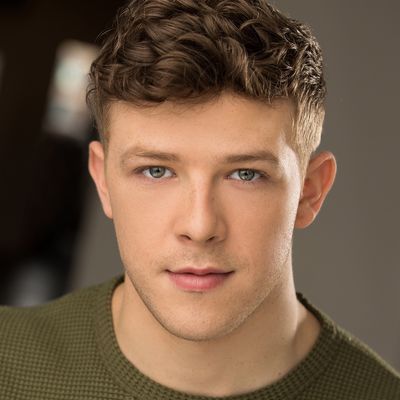
Kevin Csolak shares his journey from growing up in his mom’s New Jersey dance studio to starring as Tulsa in the Broadway revival of Gypsy. He opens up about performing alongside Audra McDonald and Danny Burstein, the artistic influence of the live orchestra, and how the cast is breathing new life into a classic... Read More
From the show: The Theatre Podcast with Alan Seales
Guests
Featured Shows
About
Kevin Csolak shares his journey from growing up in his mom’s New Jersey dance studio to starring as Tulsa in the Broadway revival of Gypsy. He opens up about performing alongside Audra McDonald and Danny Burstein, the artistic influence of the live orchestra, and how the cast is breathing new life into a classic. Kevin also reflects on what it means to approach each show with intention and curiosity—even months into the run.
He takes us behind the scenes of his whirlwind audition for Steven Spielberg’s West Side Story, including the surreal moment of dancing in front of the director himself. Plus, he recalls the unexpected overlap between his commercial dance career and Broadway—like performing at the Super Bowl with Justin Timberlake just hours before starting Mean Girls rehearsals. Throughout, Kevin shares insight into how rejection can fuel reinvention, and why staying creatively sharp is non-negotiable.
Kevin Csolak is a Broadway, TV, and film actor known for playing Tulsa in Gypsy, Diesel in West Side Story, and Aaron in Mean Girls. His screen work includes roles on Jessica Jones, Boardwalk Empire, Animal Kingdom, and the Apple TV+ series The Crowded Room. He's also danced in major live performances with artists like Justin Timberlake and Hayley Kiyoko.
Follow Kevin on social:
- Instagram: @kevincsolak
Connect with The Theatre Podcast:
- Support the podcast on Patreon and watch video versions of the episodes: Patreon.com/TheTheatrePodcast
- Twitter & Instagram: @theatre_podcast
- Facebook.com/OfficialTheatrePodcast
- TheTheatrePodcast.com
- Alan's personal Instagram: @alanseales
- Email me at feedback@thetheatrepodcast.com. I want to know what you think.
Transcript
This transcript was automatically generated and might contain errors.
[0:00] Kevin Csolak: Hi, I'm Kevin Csolak, and welcome to The Theatre Podcast with Alan Seales.
[0:11] Alan Seales: Hey, everyone. Welcome to The Theatre Podcast with Alan Seales. That is me. I'm Alan, and our guest today is Kevin Csolak, who has carved out a career that bridges passion, precision, and pure joy. He's currently playing Tulsa in the revival of Gypsy, alongside theatre legends like Audra McDonald and Danny Burstein, and he just opens up about what it's like to bring this character to life in this amazing revival. Of course, Tony-nominated at this point, as I am recording it. No idea if it's going to be Tony-winning or not. I'm sure something will hit. We also dive into the differences between doing the film adaptation of West Side Story, directed by Steven Spielberg, of course, and the Broadway revival of West Side Story that opened and closed, actually, I guess, right as COVID hit.
But growing up as a child around a bunch of dancers in a dance studio, he, of course, has that incredible background that led him to perform at the Super Bowl with Justin Timberlake, which actually happened the day before starting rehearsals for Mean Girls the musical. So that story's kind of wild. But being a young dancer in LA, it just shaped his approach to performing now here in Broadway in New York. His conversation is great. Seems like a grounded guy. If you haven't seen Gypsy yet, of course, go see that. Find me online on all the social medias. Leave a rating and a review wherever you are listening or watching this episode. Speaking of watching, you can watch it on Spotify or Patreon.
Special thanks to welcometotimesquare.com. We recorded in their studio. Check them out, and you too can be a star for a day. And now, everybody, please enjoy this episode with Kevin Solak. All right. Today, we join Martown's an actor, dancer, and singer. His career spans Broadway, film, and television. I don't know why I did an Australian accent. His impressive stage credits include roles in Mean Girls, West Side Story, and currently he's captivating audiences as Tulsa in the Broadway revival of Gypsy. On screen, he's appeared in acclaimed series like Boardwalk Empire, Jessica Jones, and Animal Kingdom, and he brought the character Diesel to life in Steven Spielberg's film adaptation of West Side Story.
Beyond acting, Kevin has shown his dance talents in high-profile performances with artists just like, you know, Justin Timberlake at the Super Bowl and Hayley Kiyoko at the VMAs. Kevin Solak, welcome to the theater podcast.
[2:37] Kevin Csolak: Thank you. Thank you. Why do they make me nervous?
[2:39] Alan Seales: Your own resume makes you nervous?
[2:41] Kevin Csolak: Yeah, I'm like, okay, now I have to be extra on. No, but thank you. Thanks for having me.
[2:46] Alan Seales: Well, so, I've got a surprise guest. Steven Spielberg is out. No, I'm kidding.
[2:50] Kevin Csolak: Wouldn't that be great?
[2:51] Alan Seales: That would be so great. I miss him. He was the best.
[2:54] Kevin Csolak: Hey, screw you for being able to say that. But also, that's super cool.
[2:58] Kevin Csolak: Yeah, I know. I pinch myself. It feels like a fever dream. Yeah, looking back at that time. What did you... Okay, well, let's start there then. Like, I know you've got acting, singing, dancing experience, but then coming and bringing Diesel to life in such an iconic story with a director that has created so much of the things that have just defined our childhood and adulthood, right? How did you get the audition? When did you know he was involved? And then, third part of this long-winded question, when you got it, how the hell did you celebrate?
[3:29] Kevin Csolak: Oh, I mean, I got the audition, actually, when we were doing a workshop of the West Side Broadway production, which if anyone has seen it, it was set in 2017, 2018. We all were tatted up. It was this day and age. We had phones and screens and all. So doing that and then getting an audition for this or for Stevens, I was kind of like, okay, cool. The traditional, like, all right, what's this going to be? What can I take into the audition? But I tried to just kind of separate the two. But we went through six or seven rounds of auditions. My first audition was a self-tape for Tony, actually, that I sent him to Cindy Tolan's office. I haven't found that self-tape, but I don't know if I want to. But it got me a callback to come in for Riff.
And then I was auditioning for Riff all the way up through the final callbacks. Yeah, it was like two or three rounds of just vocal and scene work. And then we had the dance audition. And our first dance cut, when we came back, Steven Spielberg was in the room. We were learning the combo, and he came in. His face was just like lit up. He was so excited to be there. I think it must have been his first or one of his first dance calls that he had to go to. But there was a whole film crew, of course, filming him. We had to sign NDAs. But he was so fun. He was just smiling from ear to ear the whole time. You could just tell that we were kind of igniting something with our movement. And he was like looking left to right.
He had a little camcorder that he was recording us already. It seemed like he was just someone, in an instant, you're just like, right, you are someone who are just so enveloped in this medium of storytelling through the lens. But yeah, and then the last couple calls, the callbacks, were just us doing these long eight-hour days where we were dancing in the morning and then doing scene work. And then we were doing like, okay, now we're all going to sing the Jet song, but we're going to run around the room and jump off of things. They wanted to see, I think, all like we did some improv games. I think Steven really wanted to see just who we were as artists, but also, I think, as just like little musical theater boys.
I can imagine Steven Spielberg being like, all right, circle up, time for Zip Zap Zop. All right, let's do this. No, it wasn't that. I mean, but basically, honestly, those games are for something, you know?
[5:36] Kevin Csolak: Oh, yeah. Because it definitely, we all were in that room like, okay, where was Steven Spielberg? You just have to go for it. People were like, there was, I remember we were at a dance studio rehearsal space and there was like ballet bars and people were like jumping like off of those. And I was like, wow, if those ballet teachers could see what was happening in this room. But it was remarkable, man. And the last, you know, the last couple auditions were just, it was like four of us who were down to riff. They were using the riff material. And, you know, I got to, Steven, I got to sing the Jet song in front of like, they lined up like the producers and like some of the choreographers like in a line so you could sing at them.
And that was crazy to do that, to look like it looks at someone right in the eye, you know, and have to do that. And Steven's over their shoulder looking at. And then right after that, I celebrated in the stall of the bathroom at the rehearsal studio because I finished. And the producer looked at Steven was like, well, I believed him and he went, well, he gave me chills. And I was like, okay, thanks. Is that it? They're like, yeah. Okay, thank you. I went into a stall and just like freaked out for a second. And then when I found out, long winded answer, when I found out, I, of course, just called my mom and it was just like me, my mom, my brother in my apartment, just crying, you know, just because like it's that moment of just like, right. Wow. That whole process happened. And now we're about to like open ourselves up into this whole other world, you know, over the next year.
[6:57] Alan Seales: Yeah. And it was crazy.
[6:59] Kevin Csolak: So the West Side Story revival, that was 2015, 2014?
[7:04] Alan Seales: No, it was actually a little bit later. The revival, we were rehearsing in 2018 for the workshop and then we started 2019. We only we ran for three months of previews. We ran for two and a half weeks of actual shows. And the pandemic, it was right before the pandemic.
[7:20] Kevin Csolak: Right, right, right, right. Yeah. That was that was in the Broadway theater.
[7:24] Alan Seales: Yeah, the Broadway, yeah. Where Gatsby is now.
[7:26] Kevin Csolak: Right. I remember that. That was because we were all like, why isn't that coming back?
[7:29] Alan Seales: Yeah.
[7:30] Kevin Csolak: Yeah. So I was weird because I did the workshop of that audition for the West Side film. Then we shot the West Side film the next summer. And then after that, we went into the actual run of the West Side Broadway.
[7:41] Alan Seales: Oh, that's crazy.
[7:42] Kevin Csolak: Yeah.
[7:43] Alan Seales: Well, then where did you get your initial start? Did you start singing, acting or dancing? Or where did they all kind of come together?
[7:47] Kevin Csolak: So my mom owns a performing arts center school in New Jersey. So I kind of grew up with both of my brothers dancing and like just in the rehearsal studio, like outside watching my mom teach and choreograph. And that's just kind of where I feel like I came into consciousness in the world was just like sitting there and wanting to dance and be in the studio. But the Performing Arts Center had acting classes, had vocal, had people learning how to play drums and piano. So I was truly just kind of like, surrounded by it. And I just kind of wanted to like taste everything. But mainly I would say I started out with dance because I think at the age of four or five, my mom lets little kids come take dance and point their foot, you know, little ballet slippers.
So I started out with dance. And then around the age of like eight, nine, ten, I started to kind of do those, you know, zip, zap, zap games. And I started taking some vocal lessons. And then I kind of just everything was just I feel like throughout my career, there's been like when I was younger, there were certain things I focused on more like dance. And then it was kind of just acting and then vocal and dance. And then more recently, everything just kind of go to college or, you know. But yeah, so it was my mom's school that really I just was like, oh, this is exactly what I want to do for the rest of my life. Really that young. So it was never a question like going through middle school, high school of like, maybe I'll just go get an accounting degree or something else. You always wanted to perform.
[9:06] Kevin Csolak: I always kind of did. It was honestly when I was applying for college and I was like, okay, we're going to be spending X amount of money. What should I do? Safety, security, like long term goals or just thoughts like what I want to do the rest of my life. That's the most secure. Yeah. Let's spend like 50, 60 thousand dollars a year to me. You know, it's a tough it's a gamble. But I just kind of was like, you know, my heart's in this. And I had already been acting professionally a little bit, too, here and there. And I just kind of like, you know, I really want to just put all my eggs in this basket. And then coming out of college. So what was the first thing that sort of was a success for you that that led you down to where you are now?
[9:43] Kevin Csolak: I mean, well, so college, I only went to a year of college at Pace University musical theater program. I had to take a gap year for scholarship stuff. And long story short, within that summer, I really realizing that I couldn't go back to college. I had to take a gap year. I had a mentor of dance in Los Angeles who had like a spare room in his house that was like tiny air mattress, like no dresser, nothing. It was like a spare room for extra cash. And you can stay there. You take care of our dogs on the weekends because they all were dancers who flew to different cities every weekend and you paid utilities. So I was like, all right, let me go try that out, because that's like that's cheap. I can get a job and pay for it, pay for that.
And what I thought was going to be three months was like three and a half, four years in Los Angeles. So I kind of just was like in L.A. training. That's really where I think I was really hit the ground running as far as my dance training and acting training. And I was auditioning for a little TV and film things. But I would say what kind of brought me back to New York and really launched me back into the city was Mean Girls on Broadway. And that was kind of I would say that Mean Girls launched so many people's careers. It really did.
[10:54] Alan Seales: Yeah. And you just came in right at the tail end as we're recording this.
[10:59] Kevin Csolak: I did back to back interviews now with you and Erica Henningsen. And so to watch the two of you get, you know, give each other hugs. And I don't know how long it's been since you've seen each other. But she was just saying about how that is such a unicorn of a cast because it feels like summer camp where you just come in. It's not a job. You come in and you're like, this is what I'd love to do. How can I be so lucky? And now everyone seems to be so close. And the person that everyone wants to work with again, like it's this unicorn of a cast that come together and has created content far beyond Mean Girls. Now that Mean Girls is over.
[11:33] Kevin Csolak: Yeah. Yeah. No, it really has. You know, I think that was such a young, like talented cast. I think we all kind of came in fully thinking like summer camp, having fun. But then I think in the moment, a lot of us didn't realize the results that were happening or kind of, you know, like the the spread of our of our performances that were really connecting people. Yeah. But it's so great to see Erica. I haven't seen her. And no, I saw her a few months ago. We always run into each other. Well, I mean, the theater community, we all know.
[12:00] Kevin Csolak: So small, but also so vast and reaches some. You always meet someone, you're like, oh, you know these 80 people that I know. Facebook suggested you have 162 mutual friends, like really? But I've never heard of you. But we have the same common interest. We love to do jazz hands. The TV and film side is one thing. Theater is one thing. Commercial, industrial dancing is a whole separate medium. So talk about how you got involved with dancing with Justin Timberlake at the Super Bowl. That's no small thing.
[12:39] Kevin Csolak: No. When I moved to LA after Pace, my mentor of dance, he was a dancer for Justin Timberlake before, and he kind of was out there training and teaching. So I was LA, like a lot of LA or even New York too. I mean, it's everywhere now. But it's a lot of just taking class and being very rigorous about trying to get in front of those choreographers who are teaching class every so often. And I feel like it was maybe even a little easier back then than it is today, because a lot of stuff is direct booked, people just knowing people. But for me, I just like when I was in LA, I just was, when I got there, I realized I needed to take class a lot and train and get in front of these people, have them see me and see my personality, because a lot of classes out there, I feel like, are auditions.
And it was kind of before people were filming a lot, people started starting to film a lot. But yeah, no, when I was out there, I just I got a job at Millennium, the dance complex, which is the big red background room that if you see the dance videos. So I work study so I can get free classes. So I was just taking class. And I think I was taking class every day as much as I could, as much as my body could take. But I really was honing in on kind of the style of Marty Koudelka and Ivan, and people that they were around, as well as diversifying my classes that I was taking. But it was really just a slow pace of getting to know them, being someone who's in their class a lot, and really working hard.
And it really was I actually funny enough, the story is that I found out that I booked Mean Girls because I happen to be in New York, when Casey Nicholaw was like, Hey, I want you to come in for Mean Girls to audition. And I was like, Okay, great. Well, how did he know you? I knew him because I did a workshop of The Prom. I did the one of the first workshops of The Prom. Wow. Talk about like things that took a while to get to Broadway. Yes, I did that one of the first ones when I was in when I was at Pace. And then he knew that I was moving to LA. So then I got a call from literally from him. And I was in my apartment in LA. And I was like, um, he's like, you want to come back and audition for this?
I was like, yeah, yeah. Whatever you want. Can you imagine if I was like, um, I'm okay. I'm okay. I'm good. Actually. Casey Nicholaw. But so I was just kind of like, yeah. So I came back. I did that. But I had to go back to LA. When I found out that I booked it in LA, I was like, okay, well, all this training and pushing towards kind of dancing with Justin in some capacity, I think is gonna have to be put on the kind of a sideburner. And I was like, that's okay. That's okay. At some point, hopefully in my life, I'll get to work with him in some capacity. And I think it was about two months before I was leaving LA, I was packing up my apartment when I got a call from the choreographer, Marty Koudelka, saying we want to book you on the Super Bowl.
And I was like, no, what am I supposed to do? And the dates worked out that the Super Bowl was on like, February 6, and February 7, literally the next day was our first rehearsal for Mean Girls. Oh, wow. So I, I, because they were two separate worlds, and they didn't really I feel like if it was like, you know, maybe another Broadway contract, they might be like, you need to pick one. But because I just kind of like didn't tell either of them about the other. Until I figured out that I could do it. I just read Yes. And then I was like, and I figured out there was like a couple is like one or two red eye flights from Minnesota to New York. So I did the Super Bowl, went to the hotel got my bags went right onto it.
And I got in at like 5am or 6am drop my bags off at my friend Teddy's apartment in Queens like I was staying on his couch. And then I went to 10am rehearsal with Casey. And at that point, once I figured out it could happen, he knew and they knew that I was doing that. Because I was like, just so you know, I might be a little tired, but I wasn't I was I was I was very much awake. And it was a crazy experience. You know, I think it took me a couple days to kind of come down from the high because the Super Bowl was it was my first time performing in a stadium of like 60,000 people.
[16:26] Alan Seales: I was gonna say yeah, that is a massive audience.
[16:31] Kevin Csolak: It was but it was so beautiful. I got to I got to dance a lot everyone who was in the number for the Super Bowl like where a lot of my I had looked up to and trained behind and lived with and those are the guys that I was taking care of their dogs on the weekend. You know, they were it was it was a big kind of moment for me that like I could kind of look left and right and see those guys and it was it kind of wrapped up my training in those three and a half years in LA with a crazy bow, performing in Minnesota and then coming to New York to jump into Mean Girls with Tina Fey and Casey Nicholaw. So the hard hitting question then is do you know who the person was in the shark suit for Katy Perry who was dancing in the wrong direction?
[17:06] Kevin Csolak: I don't. I wish I did. I honestly, through all of my through all of my like, commercial dance friends, I probably could figure it out. And I should.
[17:12] Alan Seales: You should because a lot of the dancers are they work for multiple artists. So I'm sure someone knows. Like, damn it, Steve. He's always starting on his left instead of his right.
[17:21] Kevin Csolak: Yeah. Yeah. Oh my God. Classic Steve. I forgot about the shark. Yeah, that was a meme for a long time. We should never forget the shark.
[17:27] Alan Seales: Never forget the Katy Perry shark. Don't go anywhere. We'll be right back after this break. Welcome back to the episode. So now coming into Gypsy. Uh, gosh, alongside such a cast of seasoned actors. I mean, just Audra and Danny Burstein alone, right? Like two people that I have the utmost respect for. You know, even comparing that to the cast of Mean Girls, you said was young and just kind of fresh, right? Like coming back into a show that's not only part of so many people's theater canon, but now has these two icons that have just won almost every Tony that's ever been given out.
[18:02] Kevin Csolak: Yeah. Right. Like, talk us through that, that process. It's I mean, it was, I would say, yeah, to your point. Yeah, I've done a lot of young shows, young theater shows like Mean Girls or, or West Side Broadway, or when I was younger, I did How the Grinch Stole Christmas, which was I was I was a kid doing that I didn't really I wasn't really aware. I feel like Mean Girls was kind of felt like my Broadway debut from my heart and my, but no, it day one, like I just you just felt like you're like, Oh, these are titans of our industry of doing it and the love that they have and the passion that they have is unfathomable. And you just let me put it this way, watching like Audra day one, come in and do the table read like she was ready for opening night.
Really? Right, right then like, like the performance was and we didn't we weren't singing any of the material we had to we had to monologue everything. So to watch her monologue all of her songs and be so invested in so in it. And then from then on, every single day seeing her and Danny kind of come into the space and rehearsal and it felt like every day was like a performance with like a full audience. We're really giving their all every single day. So I think that is something that I'm taking away from this experience. It kind of she just she and him, especially just set the bar from day one of like, this is the kind of work we're going to be doing. And you step up to the plate, you know, or there's the door.
But there was no there was the sweetest. They were so amazing. And it's just, yeah, I'm pinching myself instantly, even now, what, six months into the run, six, five months. And still like every day, I'm just I'm just so enthralled by the work that they do and their work, I think.
[19:52] Alan Seales: Well, you you too. I mean, you have an incredible number and the character of Tulsa is pivotal to the story.
[19:59] Kevin Csolak: Yes, very pivotal. The most pivotal, actually.
[20:05] Alan Seales: Yeah, right. And so approaching this from your standpoint from compared to the other things that you've done, and it's probably, I guess it's way less of a dancing role than, of course, dancing at the Super Bowl.
[20:09] Kevin Csolak: Well, very much. It poses a similar or different, so different, so different, but it's still but also difficult. You know, it's a stamina game. Even even after seven months, you still find parts difficult?
[20:22] Kevin Csolak: Well, no, I like to I like to challenge myself, I'll say. What do you do? I mean, for me, I just I never I think it's this is my first time with a principal role on Broadway. And I think because of what how Audra approaches every show, I kind of never want to settle and be like, OK, now I'm just like sitting back into my like, you know, eight show a week show. I think I'm kind of I always try to push and find new moments. And yes, I just kind of try to like every day before the show or before my number really just kind of go, OK, like, who is this for? What part of me can I explore in this? And what what moment? I don't know. I love to listen to the orchestra. I always keep telling the sound department, I'm like, can you please just turn the orchestra up a little bit more on stage?
Give me a little bit more of them. Can I have a little more drums? I guess it possible I should honestly probably give bring them a gift or some coffee, because I love to just hear the different accents and different things and what different colors are. How did that person play that today? And how can that be represented in my body and the numbers? So I try to I don't know. I'm trying not to just like go out there and be like, all right, let's just see what it is. I'm trying to really excavate and explore everything.
[21:36] Alan Seales: You're listening that closely, I guess that intuitive, intimate, intimately.
[21:40] Kevin Csolak: Well, yeah, you're listening that intimately with each individual instrument of the orchestra. I kind of I would say it's not I'm not like fine tooth combing it, but I'm just I'm just aware and noticing like there is one moment that I do where I do a little like double heel click. And the other day within the two heel clicks, there was a little symbol crash that wasn't usually there. And I was like, oh, that's interesting. So then the next day I kind of was a little double heel click and then I added a little like look to the right to like accent that little like moment. So there's I don't know, I think eight times a week. I think that's how I kind of find my ways to explore, I think, is with the music.
And I'm not fully changing too much choreography, Camille. I'm not changing. But I think I'm just noticing the textures of it. And I think that's the beauty of performing with a live band and a live orchestra. Especially I think this is one of the biggest orchestras on Broadway right now. So for me, yeah, I really just try to like kind of open my ears a little kind of see what else I can hear what else happens.
[22:38] Alan Seales: That's interesting. And in the hundreds of interviews I've done, I think you're one of the few people. I mean, the only of recent that I can remember that talks specifically about using the orchestra to make the performances fresh every night.
[22:44] Kevin Csolak: Yeah, such an interesting perspective. Yeah, it was. I mean, it's Julie Stein. Like, come on. I think it's just, you know, I think what was a couple weeks ago, I got to sit in the pit for the overture. And like, even just doing that, I just closed my eyes. And I was just hearing the different melodic lines that just the strings do, because I think there was a seat that I could sit by the strings. So I sat by the strings. And now next week, I want to sit by the brass. But yeah, I think just little things like that. I think it's just like playing within every aspect and element that I can that I can play with, you know, I mean, even in another aspect, my, my the bottom of my shoes that I wear for my number keep getting worn out really, really quickly.
So one of the things that they have to do is that they keep rubberizing them and with different textures to kind of figure out because the when the humidity changes, like it changes how I feel on the ground with my feet. Yeah. So even having more grip or having less grip, like there was one show a couple days ago where it was so slippery, but I was like, Okay, well, then that means I have to pull this part back because that that part I would probably fall if I did that a little too full out. And then that means that I can accent this part a little bit more. But then that made me notice the strings the number a little bit more like there's little, you know, as well as storytelling and all the things you know, you know, I'm like,
[24:30] Kevin Csolak: Is he dancing on water in that moment? I try to kind of create the canvas every night and allow the things that might make me mess up or feel weird to be gifts... I dunno? Oh my god I feel like I'm just doing such actor talk right now! It's fascinating to me. Dancing is the weakest of the triple threats that I possess, if I'm even a single threat.
[24:57] Alan Seales: We're all triple threats.
[24:58] Kevin Csolak: There you go! We're all triple threats. We are! Yeah, so to think about how the music colors what you're doing in your mind to then add to your performance, I think it's this extra layer that I hadn't considered before. And I think it probably comes from being such a kid in your mom's dance studio, where you're just hearing, you're seeing dancing and movement, and it's all about connecting with the music.
[25:22] Kevin Csolak: Oh my god, yeah, yeah, yeah, yeah. I feel like that's what really when someone is, not speaking of myself, but when I've seen Colton Kraus and these other performers, one of my best friends, Jacob Guzman, and other people who are these dancers, shout out Curtis Holland, but you see Christine Shepard, oh my god they're all coming to my brain now, but when you see how they manipulate the sound, you know when you watch a dancer and they make you hear all the little tiny things in the music, it's those kind of things that I want to try to do and I think that's what makes I think dance and then like artistry when you really are crafting, you know, I think it makes it remarkable and I think that's what makes dance such an important storyteller.
[26:00] Alan Seales: Do you play an instrument? Any instruments?
[26:04] Kevin Csolak: I can kind of play the drums, my dad's a drummer, so I grew up with drum sets in my basement, so I can't read music but I can mess around. I used to play the saxophone in school, that was my middle school, you know, and then I can play the piano a little bit more and guitar I can do. No, it's just interesting because you said that, you know, now in the overture, you get to sit down and you want to move around and I know I was saying like, do you play violin? Is that why you sit there next to them or is it just being immersed in that sound?
[26:32] Kevin Csolak: It's just being immersed in the sound, man, like I just I can't wait the album comes out on the night of the 24th at midnight, everyone's got to go listen, because I think like what Andy Einhorn and what they, it's just, it's just giving like, it feels like you're listening to like a classic Broadway album for the first time, you know, I think like a lot of the times I always say that about like, music that I love, like Bee Gees, Earth, Wind and Fire, like Michael or anyone Prince and I'm like, oh, I really wish I could listen to like 1999 by Prince, like just for the time, you know, and I think that's what this album, I think is going to feel like it's like hearing these songs kind of for the first time.
[27:04] Alan Seales: Did you see the Laura Benanti production the last time Gypsy was with Patti and Laura?
[27:12] Kevin Csolak: I've seen the bootlegs and then the videos online. I haven't gotten a chance to actually, I've never seen a production. I've never seen a production of Gypsy.
[27:19] Alan Seales: Really?
[27:20] Kevin Csolak: In a seats. Yes.
[27:21] Alan Seales: So you got to call out and see.
[27:22] Kevin Csolak: I know I got to be like, yeah, it's in the bag. I know I really, I really want to, but I'm always I'm always peeking out the curtain to watch like any number that I can.
[27:32] Alan Seales: Well, I was asking because I feel like the message is consistent and sort of timeless, like parents want the best for their kids and the kids are going to grow up and do their own thing. And no matter what the parents try to do, the kids are always going to grow up.
[27:46] Kevin Csolak: Yeah.
[27:46] Alan Seales: And so that that sort of thing is timeless. But I I wonder, like the the Gypsy of today, the Audra Gypsy, what a friend of mine told me the other day, she was like, my friend texted me and said, what's Audra Gypsy? Is that a new show?
[28:00] Kevin Csolak: It is.
[28:01] Alan Seales: It is.
[28:01] Kevin Csolak: You got it.
[28:02] Alan Seales: It is. It definitely is. Audra Gypsy. So you're Audra Gypsy.
[28:06] Kevin Csolak: Yeah.
[28:08] Alan Seales: The feedback you're getting as like as a principal of this version with Audra, you know, because like Patti has left behind a legacy period, but especially in Gypsy and now being taken over by an equally elevated, if we want to, diva in a good way. I use the term diva in a good way. You know what I mean? Like, how has that been for you observing the audiences, observe the show?
[28:32] Kevin Csolak: It I think as far as like friends who have come to see it, who are in the industry, strangers at the stage door, I think everyone is kind of like it feels like their eyes are open to like just the text. It just feels like everything has just this new light to it. People who knew the show or people who had no idea. There's a lot of people who've come to see the show, even in the industry, who are some of my friends who are like, I actually didn't know the show at all. So I think like I think that's why this show gets brought back every like 10 years with a new titan of the industry taking the helm. It's like the King Lear for women on Broadway. But the reaction truly has just been that, like, I think what George C. Wolfe has done.
And I think he's, I think he's like added this extra layer with every character. And also all the female leads being women of color, like it, it just, it adds a whole new perspective of like, what, you know, a woman of a woman of color who's trying to get her daughters famous in like the late 1920s around the United States and in this country, like, what does that it just adds an extra element when she's singing Rose's turn, when is it going to be my turn? Don't I get a dream for myself? Like, all of these aspects. I think because of that, and because of what Audra was doing day one, it just feels like, yeah, like, this text is just has this brightness to it. And darkness that I think made us all kind of look at each character and go, okay, well, how we can honor what has been done before.
But how do we also put that on the shelf and go, okay, that wasn't that was great. Now, what is this for me? One of those things for Tulsa's me and the director were talking is like, well, what if he's actually not like a confident guy, he's only confident when he really is dancing, but he's actually kind of a little bit awkward. And maybe him and Louise can kind of connect in that way. And that was a beautiful thing that we both kind of went, huh, he's always been this like presented guy, like, let me do this, I'm going to show you do that. But what if he's this guy who's kind of like a little bit awkward. And then I think really, me and Joy Woods have found really beautiful that it's like, I think a lot of people come across my role after talking about it.
And they're like, wait, we really thought you were going to go with Louise, I thought you and Louise were really going to be like, you guys are so good for each other to be mad at me. Like, why didn't you? Why would you why'd you run away with June? And I'm like, we got to ask Arthur Lawrence that. Right? Yeah, that wasn't my decision was not my decision. But um, but yeah, I guess to wrap up all that. It's just I think it was it's been a really beautiful thing being like, okay, we know this show, everyone's gonna know it coming into it. But how do we really make everyone kind of go? Okay, wow, this is this feels different.
[31:04] Alan Seales: So 15 years from now, the show's still running, you're still in it. You've been these knees are still in okay. But you're doing the Danny Burstein's left and you're you're doing the Danny Burstein role now. Right? Like because you're going to age out of Tulsa into that. So who, who, who now? Would you say 15 years from now is going to age into a perfect rose?
[31:20] Kevin Csolak: A perfect rose? Oh my god. 15 years from now. Like is is Patty Murin? Maybe do you maybe even joy, joy, joy, joy could really be doing Mama Rose. I mean, this woman would still look the same, but she would be an amazing Mama Rose is still a Pfeiffer. She's gonna be so mad at me. She's gonna be so mad at me that you think in 15 years, baby, you'd be amazing. So you'd be amazing at Mama Rose, you'd crush the material. And you would still look the same as you do today.
[32:00] Kevin Csolak: Yeah, there are some powerhouse built. Oh, Bonnie Milligan. Bonnie Milligan. Oh, Bonnie Milligan would sing. Right? Joy would sing that down to Jordan Tyson to Oh my god. Jordan Tyson. I feel like she contains multitudes. And I feel like she's in like 40 minutes of this show. But she's everyone walks away really talking about Jordan Tyson. I have to tip my hat to her. So I think she could really, really go somewhere with Mama Rose. I'm excited to see Jasmine Amy Rogers beyond. Boop. Yes. Because I think the way she has created this if she can embody a character, to the extent that she has embodied.
[32:37] Alan Seales: Have you seen?
[32:37] Kevin Csolak: I haven't seen a lot of friends. They're neighbors. I know. I know. We have I think we're on the same schedule. It's just how it happens.
[32:41] Alan Seales: Yeah, always these amazing shows. And boy, if you're in it, it's like this double edged if you're in a show, it's double edged sword.
[32:48] Kevin Csolak: No, there's so many. You're so right. There's so many women of the generation right now who are incredible talents that I think could all attack Mama Rose in a beautiful, interesting, different way.
[33:00] Alan Seales: So you've had the string of successes. Obviously, we've talked about so many of the stuff that's worked for you like in at a young age, you knew what you wanted to do, but it seems like it's come easy and nothing ever in this world. So like what's what's been those moments when you've been like, did I make the wrong choice? How do I deal with this? What am I doing next?
[33:17] Kevin Csolak: Oh my God. I mean, I think that happened. It happened so much. I think to anyone in the industry, in this industry, or just the entertainment industry, I'm sure as actors or any other, it's just consistency is rarely the case. And I think if like, even when you were listing off my credits, I'm like, right, wow, that's it's been it's been a I've been so blessed and honored, but it has not been consistent. I feel like every few years, you know, you have a year or like a year, you know, right before I did. Right before I did Gypsy, I did Outsiders right before Outsiders, I was, I didn't work for about a year and a half is like, it was kind of I was kind of like, okay, and it was a moment of like, did I make the right decision?
Do I have to go back to school? No, I should, you know, I think it's, but I think it's in those moments that I think you really, really kind of take a second to go, no, this is what I loved. And if it means doing some sort of avenue that keeps me around the same industry, I think I would. But for me, I think it's a lot of the times that like, I know, I've had a lot of rejection in my career as well. And I think a lot of the no's, you know, when you get really close to something, and you get a no, or you get something and then like, actually, we're going to shift to this, you know, I've had a couple times in my, in my career where I've had a job, and then they've been like, actually, we're so sorry.
Thank you very much. And we're I'm like, okay. But George Seawolf actually quoted this in reference to Gypsy. He said, he said, it takes someone else telling you no before you can tell yourself yes, or say yes to yourself. That's what it is. It takes someone else telling you no before you can say yes to yourself before you can fully say yes to yourself. And I think in those moments of rejection, I think it made me really just grind kind of into myself and go no, no, no, this is exactly where I'm supposed to be. This is what I'm supposed to do. I love this thing. And now let me get to work and you know, work harder because it's a it's a it's a career path where you have to kind of if you don't use it, you'll need to keep sharpening your tools and sharpening your knife.
And I think because it's an ever evolving medium, both TV, film and stage. So I think that's what I kind of love about it. I kind of love that like, it's never over, you have to keep learning and keep getting back in the studio. You know, I think growing up in my mom's studio, I think that's she really instilled like, the process is what you need to fall in love with. Because if you don't, then, you know, you're gonna you might drive yourself insane.
[35:43] Alan Seales: Don't go anywhere. We'll be right back after this break.
[35:47] Alan Seales: Welcome back to the episode.
[35:49] Kevin Csolak: Oh, yeah, rejection is your friend and you learn and like, but to put that in practice is so difficult.
[36:59] Alan Seales: Welcome back to The Theatre Podcast. I'm your host, Alan Seales, and today we have Kevin Csolak with us. Kevin, it's great to have you here.
[37:19] Kevin Csolak: Thanks for having me, Alan. I'm excited to be here.
[37:39] Alan Seales: So, you grew up in your mom’s dance studio in New Jersey. How did that shape your journey into the world of performing arts?
[38:01] Kevin Csolak: It was everything for me. I mean, being in that environment from such a young age, I was surrounded by creativity and passion. It really instilled a love for performance in me.
[38:21] Alan Seales: And now you're starring as Tulsa in the Broadway revival of Gypsy. What has that experience been like for you?
[38:41] Kevin Csolak: It's been incredible. Working alongside legends like Audra McDonald and Danny Burstein has been a dream come true. The energy of the live orchestra really adds to the magic of the show.
[39:01] Alan Seales: I can only imagine. You mentioned the live orchestra—how does that influence your performance?
[39:21] Kevin Csolak: It brings a whole new level of excitement. The music is so dynamic, and it changes every night, which keeps us on our toes and allows us to breathe new life into the classic material.
[39:41] Alan Seales: That’s fascinating. You also had a whirlwind audition for Steven Spielberg’s West Side Story. Can you tell us about that experience?
[40:11] Kevin Csolak: Absolutely. It was surreal. I remember dancing in front of Spielberg himself, and it was both thrilling and nerve-wracking. The whole process felt like a dream.
[40:31] Alan Seales: What was going through your mind during that audition?
[40:41] Kevin Csolak: Honestly, I was just trying to focus and give it my all. I knew this was a huge opportunity, and I wanted to make the most of it.
[40:51] Alan Seales: And you also performed at the Super Bowl with Justin Timberlake just hours before starting rehearsals for Mean Girls. How did you manage that transition?
[41:11] Kevin Csolak: It was a whirlwind for sure! I had to switch gears quickly, but the adrenaline from performing at such a high-profile event helped me dive right into Mean Girls.
[41:31] Alan Seales: That’s impressive. How do you stay creatively sharp amidst all these transitions and performances?
[41:51] Kevin Csolak: I think it’s all about intention and curiosity. Approaching each show with that mindset, even months into the run, keeps things fresh and exciting.
[42:11] Alan Seales: That’s a great perspective. You’ve also mentioned how rejection can fuel reinvention. Can you elaborate on that?
[42:31] Kevin Csolak: Sure! Rejection is a part of this industry, and instead of letting it discourage you, it can be a catalyst for growth. It pushes you to reinvent yourself and find new paths.
[42:51] Alan Seales: That’s such a healthy way to look at it. What advice would you give to aspiring performers dealing with rejection?
[43:11] Kevin Csolak: I would say to keep pushing forward and stay true to your passion. Every “no” can lead you closer to the right opportunity.
[43:31] Alan Seales: Wise words. As you continue your journey, what inspires you the most about being in this industry?
[43:41] Kevin Csolak: The people, for sure. Collaborating with such talented individuals and sharing stories through performance is what keeps me motivated.
[43:51] Alan Seales: Thank you for sharing your journey with us, Kevin. It’s been a pleasure having you on the podcast.
[44:01] Kevin Csolak: Thank you, Alan! I appreciate it.
[44:11] Alan Seales: And to our listeners, make sure to follow Kevin on social media to keep up with his work. Until next time, this is The Theatre Podcast.
© Broadway Podcast Network, All Rights Reserved