

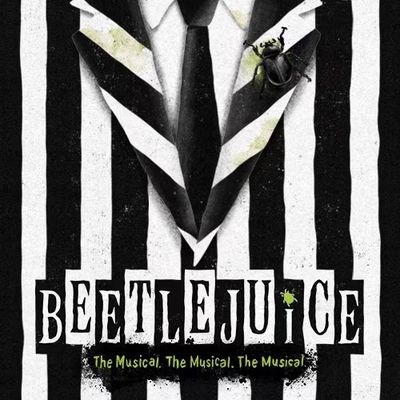
PART 1: A 6-time Tony Award winner (with 17 total nominations) over his 43 year career as a costume designer on Broadway, this Raleigh, NC native shares his incredible story. This two-part episode is the first of several coming at you this month as part of a Beetlejuice the Musical takeover!.. Read More
From the show: The Theatre Podcast with Alan Seales
Guests

Featured Shows
About
PART 1: A 6-time Tony Award winner (with 17 total nominations) over his 43 year career as a costume designer on Broadway, this Raleigh, NC native shares his incredible story. This two-part episode is the first of several coming at you this month as part of a Beetlejuice the Musical takeover!
William Ivey Long literally lived in a Raleigh Little Theatre dressing room for the first few years of his life before ultimately leaving the University of North Carolina at Chapel Hill (where he originally studied art history) to attend the Yale School of Drama, rooming with some modern day celebrity powerhouses and studying set design under Ming Cho Lee.
In 2000, Long was chosen by the National Theatre Conference as its "Person of the Year" and was honored with the "Legend of Fashion" Award by the Art Institute of Chicago in 2003. He was inducted into the American Theater Hall of Fame for 2005. His professional credits go on forever, but he won his Tonys for Nine, Crazy for You, The Producers, Hairspray, Grey Gardens, and the 2013 revival of Cinderella. He now has two productions currently running on Broadway: Beetlejuice and Tootsie, which both opened in the 2019 season 1 day apart from each other.
Connect with Beetlejuice the Musical online:
- Instagram: beetlejuicebway
- Twitter: beetlejuicebwayYouTube
- https://beetlejuicebroadway.com
Connect with The Theatre Podcast:
- Support us on Patreon: Patreon.com/TheTheatrePodcast
- TikTok: @thetheatrepodcast
- Twitter & Instagram: @theatre_podcast
- Facebook.com/OfficialTheatrePodcast
- TheTheatrePodcast.com
- Alan's personal Instagram: @alanseales
- Jillian's personal Instagram: @jillianhochman
- Email me at feedback@thetheatrepodcast.com. I want to know what you think.
Thank you to our friends Jukebox The Ghost for our intro and outro music. You can find them on Instagram, Twitter, and Facebook @jukeboxtheghost or via the web via jukeboxtheghost.com.
A very special thanks to our patrons who help make this podcast possible!
If you would like to see your name in this show notes or get a shout out on the pod itself, visit ttp.fm/patreon to become a member and show your support!
Transcript
This transcript was automatically generated and might contain errors.
[0:00] Alan Seales: Welcome to The Theatre Podcast. Intimate personal conversations with theatre's biggest names. I'm Catherine O'Hara. I don't remember anyone else from that movie. Oh, you're so young. Beetlejuice scared me when I was a kid. Like I went to see the show and there were a couple moments that I had flashbacks of having nightmares when I was a child. Like the shrunken head scared the ever-living Jesus out of me. Well, in case you didn't figure it out, we're talking about Beetlejuice, which now has taken over September here on The Theatre Podcast. And so the first, the first two episodes actually are with William Ivey Long, who now with Tootsie and Beetlejuice are his 74th and 75th Broadway credit as a costume designer.
This dude just does not stop. When we got the opportunity to interview him, my heart dropped. I flipped out. My nerdiness just exploded. He is beyond incredible. He's done some of the most amazing choices and producers and now he's doing Beetlejuice and all these different things where it's just like, wait, you're real? You're here? Oh my God. And ironically, I don't know why I knew this, but I had forgotten it, that he's from Raleigh. Everyone's from North Carolina with me. And he literally as an infant lived in a stage right dressing room in the community college where I got my start. And there's a plaque on the wall. At the time when I was just starting out, I didn't know who he was. I saw this plaque and I was like, okay, cool.
Some person has been here. But then remembering as an adult, being in this business for a while and like, holy crap, like that's a big deal. But yeah, we gushed on each other and we, in our Southern draws came back out a little bit. And you know, it was really funny for me though, was at the end, after we stopped recording, he was telling me that he took off his glasses so that he couldn't see me clearly because it helped him relax because he was nervous to do the interview. That's so cute. He was nervous to do an interview. This legend, this man that has been in the business forever. That just shows you that even if you are a legend or even if you have this amazing long career, you're still a person and everybody is still just making their way through.
Yeah. Yeah. Such a nice guy. So I can't wait to share this with you. And actually, like I said, this is going to be a two-part interview. We're going to release in two episodes. So this is part one. And stick around in a few days. We'll release part two because we talk so long that we want to split it up for you. So before we get into it, as always visit us at ttp.fm/patreon to show your support, or just visit us at ttp.fm to listen, subscribe, share with your friends, give us a rating, give us a review, follow us on the Instas, all of that fun stuff. Enjoy this takeover month with Beetlejuice. Please go see the show. It is phenomenal. And now enjoy this episode, part one of William Ivey Long.
[3:21] Alan Seales: I'm truly honored and humbled to sit with my guest today. This six-time Tony Award-winning costume designer has won for the shows Nine, Crazy for You, The Producers, Hairspray, Grey Gardens, and the recent revival of Cinderella. Over his phenomenal 43-year Broadway career, he's garnered an additional 11 Tony Award nominations and has even gone so far as to be nominated against himself this past award season for costume design for both Tootsie and Beetlejuice, both currently running on Broadway. William Ivey Long, welcome to The Theatre Podcast.
[3:48] William Ivey Long: Thank you. I love this area here way above Broadway.
[3:55] Alan Seales: Yeah, it's great. Yeah, this is a great space. I love it. I love it. But you, I did some math, 43 years, starting from your first...
[4:05] William Ivey Long: Is it really 43 years?
[4:05] Alan Seales: Your first Broadway credit. And you have done, you're credited with 75 Broadway shows.
[4:11] William Ivey Long: That's correct. Beetlejuice, in fact, we called it my diamond jubilee. Another excuse for a party.
[4:18] Alan Seales: And 38 off-Broadway shows.
[4:25] William Ivey Long: Okay. Which, that does not include the touring production of Dreamgirls, five films, or the six TV shows, but just Broadway and off-Broadway is almost three shows a year for almost half a century.
[4:30] Alan Seales: Oh my God. That's me?
[4:35] William Ivey Long: That's me. No wonder I'm tired.
[4:38] Alan Seales: Well, why do you do so? How do you do so much?
[4:46] William Ivey Long: I'm a Virgo. When you're born and raised in Raleigh, North Carolina, something you must know about.
[4:51] Alan Seales: That's right. That's where I'm from.
[4:51] William Ivey Long: You come out running, not running away, just running, running in place. And I actually don't know how to answer that question. I think I love it. I think I love it. And the people we work, it's all about the people. It's two things, the stories we tell and the people with whom we tell them. That is the key to why you do anything in the theater, I think. The stories you tell, do they have a purpose? Do they have a zinger? Do they have a life-changing motivation and result? Hopefully, yes, yes, yes, yes. And then the people with whom you work change your life constantly, constantly.
[5:34] Alan Seales: As a costume designer, that's really interesting to me that you're thinking about the results and the change that these characters are bringing to the world.
[5:38] William Ivey Long: Oh, you wanted me to talk about chiffon and gussets? No, I can do that too. You're the first costume designer I've interviewed on the podcast and obviously an extremely successful one. And so there's something about you that has just worked. And so we're going to dive into that.
[6:01] William Ivey Long: Well, I don't think I've ever been asked that, even in my wildest dreams, and there've been some wild dreams. But gosh, what makes Sammy run? I mean, wasn't that a novel, a film? What was that, a Broadway musical? Passion, motivate, yeah, yeah. I don't know. I think there's that carrot. There's an elusive carrot that you want. You want a whole bushel of carrots to spell out your name at the end of your life. And if you have W and I and L in it, it makes easy carrot spelling. And you really want to have done something. And I'll never forget that. This is the hubris. Okay, get ready. I'm going to be shot down for saying this. But I remember I was in college, one of my colleges, my first college, William and Mary in Williamsburg.
And I remember realizing, because I was a painter, I've always painted, I've always drawn, I've always sketched. You're lucky there's no pencil right in front of me or I'd be ruining this table. I realized I wasn't going to be Michelangelo. And at the time, this was, because when you're in college, you're profoundly into the ethos and you're profoundly into everything that means something. So it was only decades later that I realized how preposterous and presumptuous this was. Wait a minute, William and Michelangelo, let me think. But seriously, that was a turning point. I realized I was not going to be a great artist. And so you look around and see what, you go, wow.
[7:43] Alan Seales: So you went to William and Mary with a degree in history.
[7:46] William Ivey Long: That's right.
[7:47] Alan Seales: So you weren't even drawing.
[7:48] William Ivey Long: Yes, but there's the world. But artist is a big letter A and a little letter A and a, you know, like that.
[7:57] Alan Seales: Well, let's back up.
[7:58] William Ivey Long: I'm just telling you the truth. I mean, you know, you're asking me why our runs do so much. And I just, I don't know. That slowed me down, that one, when I realized, oh my, I'm not it.
[8:09] Alan Seales: Well, I think everybody needs to reinvent themselves multiple times in their life.
[8:13] William Ivey Long: Absolutely. That was the first of many, and I hit one this morning.
[8:19] Alan Seales: So reinvention, you know, are us.
[8:22] William Ivey Long: Right, right. Well, I actually want to have you clarify. Wikipedia says you're from Raleigh. You said you're from Raleigh, but I read somewhere you're from Seaboard, North Carolina. Is that a little suburb of Raleigh?
[8:30] William Ivey Long: Well, oh Lord, am I supposed to tell the truth? I was supposed to be born in Raleigh, North Carolina. There was a polio outbreak in Raleigh the summer of 1947. And my great grandmother, and you know, Southern great grandmothers, she laid down the law and she says that my first great grandchild will not be born in polio-infested Raleigh. So I, it was sort of like we got on the mule and started going towards Bethlehem and we landed in Pennsylvania. And I was born in Williamsport, Pennsylvania. I like to think the town was named after me, but...
[9:17] Alan Seales: You were named after the town?
[9:19] William Ivey Long: No, my father, but also after the town, of course. But anyway, so I was actually born in, but I claim, well, I claim Seaboard sometimes, but I claim Raleigh as my birthplace. I think you can do that, right? You can rewrite. Especially in this year, that man's fake news, we can just say anything.
[9:40] Alan Seales: It's an alternative fact. You can just put that out there and now it's true.
[9:44] William Ivey Long: So I was born and raised in Raleigh, North Carolina. I have such a hard time right now, not letting my accent slip back in.
[9:50] Alan Seales: I'm just going to egg you on and we're going to be a mess.
[9:56] William Ivey Long: I ditched it.
[9:57] Alan Seales: I ditched it so hard and I go back.
[9:59] William Ivey Long: I tried to, too. I don't have one at all, except when I'm goaded.
[10:04] Alan Seales: You want to put on a charm a little bit.
[10:06] William Ivey Long: I can do that a little.
[10:07] Alan Seales: Yeah. So then what was your childhood like? Like your parents?
[10:12] William Ivey Long: Actually, the reason we were in, well, I was the first child, first son, first grandson, first great-grandson, our first child, you know, like that person, I guess. But back then you used gender words. And to be born and raised in Raleigh, guess where my first childhood home? It was literally my home coming at age six weeks until I was three and a half years old. I grew up in the stage left dressing room of the Raleigh Little Theater outdoor amphitheater. And about four years ago, Raleigh has a sense of humor. They declared, well, it might be a long day. And they put a plaque on that beautiful WPA built stone building with a slate roof. And it was just a big party. And literally, that's my childhood home. So when you grow up in a stage left dressing room, you open the door to go out and you step on the stage.
[11:12] Alan Seales: Yes.
[11:13] William Ivey Long: So that is what I, I'd be careful where you raise your children. And I remember fireflies. I remember, I have no fear of lightning. And when you live in a little tiny brick house with a slate roof, that's a dressing room. Everything is magical. Everything is theater. Everything is stories. The firefly, I remember the fireflies. I remember the Easter sunrise services. Finally, somebody was up when I was awake. Because I've been an early farm boy riser forever. And there's a rose garden. Canty Suchan is her name.
[11:51] Alan Seales: I was going to ask if it was there.
[11:52] William Ivey Long: You know the rose garden, of course. People get married there all the time.
[11:55] Alan Seales: They do.
[11:56] William Ivey Long: And there was and is a fountain, a little circular fountain. And I heard, Billy, don't run near that fountain. Well, of course, that was my destination constantly all day long. And I would swim and bob up and down in that fountain. And there are pictures of me in the fountain. And it was a boy with a dolphin. And the dolphin would be spouting the water. And I just loved that. I thought, well, all it was. Then when I saw, years ago, Cocteau's Beauty and the Beast. And I saw all those arms holding torches and candelabras and things like this. And I thought, well, that's like, of course you go. And there's this little boy with a dolphin. The dolphin is creating the water in that pond. So it all tied together with me.
Surrealism and playing in the rose garden. And then in the plays, the very first awareness I had of what theater was or what alternate reality was, I remember going into a very long, dark room about, I guess, 20 feet. I had no concept of place. But people were about the size of my hand. And I watched a man yell at my mother and pull her hair. And she cried. And I remember crying. And then I don't remember being there anymore. I was watching, I was told years later, my mother in Death of a Salesman. And there's no trauma like childhood trauma. But...
[13:24] Alan Seales: So it scarred you enough to get you into the theater?
[13:27] William Ivey Long: It did. I couldn't stay away. And so my father was technical director of the Raleigh Little Theater. That's his first job since I was born. And my mother was a stay-at-home master's degree, multi-master's degree winning writer.
[13:45] William Ivey Long: So that lasted exactly as long as each of the three of us were born. And then she started on her own feet and flying away. But we lived there. It was magical. There were fireflies. There was thunder. Oh, thunder, you know. Oh, yes. Lightning is angels striking matches. And thunder is angels moving furniture. That's such a Southern thing. Isn't that a Southern thing? Because, you know, there's so much furniture to move. Bless your heart. Bless my heart. So anyway, those are my memories. But they're pretty seriously big memories. Yeah. Oh, gosh. I thought everyone lived in the theatre. I got my... I used to perform. I guess you're always an actor if you're an actor. It never leaves your soul. But I got my start, my serious start when I fell in love with theatre at RLT.
[14:40] Alan Seales: Amazing. Amazing. Was Haskell? Haskell was in charge then. Artistic director.
[14:47] William Ivey Long: Yeah. I was bouncing back and forth between John McElwee at NC State.
[14:53] Alan Seales: Yes. John, he just retired.
[14:55] William Ivey Long: Amazing. Yeah. John at NC State and Haskell at RLT. And then with Ira David Wood. Who I grew up with at the Lost Colony Theatre in the park. And that was my triangle.
[15:07] Alan Seales: Oh, my goodness. Wow. Well, I still work with David. And I just finished... I'm currently in the Lost Colony, still running. This is my 49th season with the Lost Colony. I have been for the last 20 years a production designer, meaning scenery, costumes, props. And David's the director. And my parents were there. My father was in it like the third year on. And then he directed it. And my mother played Queen Elizabeth as we, my brother and I say on stage and off. And so we're all Lost Colony people. And well, North Carolinians are storytellers and are history storytellers. History tellers. And there's so much of the history. And that's where the whole country of invading Anglo-Saxons landed. And that's where at Fort Raleigh.
[16:06] William Ivey Long: Yeah. Yeah. And then got lost. I believe it is correct that Theatre in the Park, the Christmas Carol at Memorial Auditorium. Is it still called Memorial Auditorium? I think it is.
[16:17] Alan Seales: We call it that. Yeah. That's what it'll always be to me.
[16:23] William Ivey Long: Yes. Is part of like tour books now. It's like, if you're here during this time of the year, this is a North Carolina staple you must go see.
[16:27] Alan Seales: Really? The Christmas Carol?
[16:33] William Ivey Long: Yeah. Yeah. Well, good for David. Good for Dickens. Yeah. For those who don't know.
[16:39] Alan Seales: Yeah. Ira David Wood. He and.
[16:41] William Ivey Long: The third. The third. Yeah. He and Terrence Mann originally wrote this script like coming up about four years ago or something. And it changes. It's like a three hour long production. Changes every year to add in jokes and bring in pop culture references. Correct. And it's this comedy of Christmas Carol that still has such heart. And it's a completely unpaid. No one's paid. Community theater production that sells out the largest venue in the area. And his son is now playing. Yeah. Yeah. Ira the fourth. Ira four. Ira another great. Well, I grew up with David and we didn't call him Ira then. We call him David and Terry and Billy. And we were all in the Lost Colony. And I think I was 19 and the two of them were 17.
[17:22] Alan Seales: Really? Isn't that crazy? And we're still working together. I'm working with Terry all the time. Was Evan Wood. Evansville was. Was she already in L.A. at this point?
[17:32] William Ivey Long: Evan Rachel Wood? No. When we were 19 and 17. Oh, you were 19 and 17. Yes. Yes. Yes. She was not. She was not even a spark in a. Yeah. In an eyebrow. She wasn't even a raised eyebrow at that moment. All right. All right. So back to you here. Okay. So you you went to William and Mary degree in history and then you find yourself at UNC Chapel Hill.
[17:55] William Ivey Long: Then I go back home. See all the longs. There were two long brothers from North Hampton County, where Seaboard is. North Hampton. North Hampton County. Yeah. Well, David's from Enfield and I'm from Seaboard. Right. And Raleigh, as you noticed. But anyway, there were two long brothers in the first class. So all the longs, if you can read and write and walk and talk sort of intelligently, you go to Chapel Hill or you just don't go. And so the longs of my brother, we all got my parents met there. They were Carolina playmakers. My father then taught there. My brother and I both graduated from there. And well, he graduated from there. I was in art history and as my first graduate school and I'd gone to William and Mary.
I was the rebel because, you know, in the 60s, I was being rebellious. So my version was not to go to the family school, go to another school. So I went to an even older school, went to William and Mary. But then when I got to William and Mary, one of our neighbors from growing up and somebody who taught my parents, both of them playwriting, Betty Smith, who wrote A Tree Grows in Brooklyn and lived on Rosemary Street, said, let Billy come and stay with me. So Billy stayed with Betty for three years. Well, little did we all know what was happening in the ethos. Betty had gone to, she was in the original class at Yale Drama School, George Pierce Baker's dozen of playwrights, meaning there were 13 playwrights.
She was one of the 13 playwrights. Well, through osmosis, I shifted my focus from Renaissance and Baroque architecture, where I was a Samuel H. Kress teaching fellow at Chapel Hill. This was really my passion. I was going to be a historian. I was going to, you know, just spend my life in the architrave of life. Entisist was going to be how I stood, you know, like that. And somehow I shifted my focus and found myself after, you know, after my final class, applying to the Yale Drama School, dropping, and so cocky, you notice since I, of course, just am full of it. I dropped my application into the post office box and got on the plane and went to Florence because they had scholarship money for studying and I was Renaissance and Baroque architect.
So I continued, went to Florence for the summer, came back, opened my acceptance. I just thought life was going to be like that. Wow. It's amazing. We aren't shot down more often. I have been since, but back then it was pretty magical. That's ridiculous. Okay. So then you go to Yale School of Drama. To major in Scenic Design with Ming Cho Lee, my great teacher, the greatest teacher probably still living on the planet. He's still living. He's 88 now. Oh no, he's not. I think he's in his nineties. Hasn't he kicked into the ninth? I don't know. I think so. I think Wikipedia tells me he's 88. Well, there you go. Youngster. So he was in his forties when you were studying with him. That's right.
[21:17] Alan Seales: And who was your roommate?
[21:22] William Ivey Long: Oh, now you've been reading this pulp fiction. No, really my William and Mary roommate. See, I was really nervous and scared. I would alternate between cocky and scared. Well, I didn't want to go up North with all those Yankees. And so we got in his Winnebago and parked in some parking lot down at the Knights Templar building in New Haven, not making this stuff. It's still there. Still the ugliest brown building you've ever seen in your life. And it looks like a Noguchi prototype of a big trash can and it isn't. But anyway, we parked in that parking lot. You wake up, it's all this burnt brutalist brown and we go to the drama school and I'm too scared to go to the green room. And he goes in and comes back with a, what we now call a hanging Chad.
He got the last roommate wanted on this yellow post-it thing and pre-post it. And I go in and I discover that evening that my roommate is this very, five of us in this Victorian building. My roommate sharing a bathroom was this beautiful brunette young lady to whom I looked up and who went by the name of Sigourney. And the next morning when we were all dividing the shelves in the kitchen, one floor below, there was this beautiful blonde girl by the name of Meryl. And they and Barry Marshall and his wife and I made up this five-person Victorian house. I know, cannot make it, can't make that.
[23:03] Alan Seales: So Sigourney Weaver, Meryl Streep, they knew each other or did they meet potluck roommates?
[23:07] William Ivey Long: That's where they met too. We all met. Well, Sigourney was in her third year. See the Yale Drama School MFA program is a three-year program. She was the grownup. She was the third year and Meryl and I and Barry were in our own class. Soon to be called within that very year, the Meryl Streep class. Honest to goodness. That is crazy. So, okay. So you're coming to work. She even became an adjective. But Walt Jones, who was the director, he and Barry were the two directors, Barry Marshall and Walt Jones in our class. And Walt Jones invented the term to streep it up, which means focus, focus, take over, own the stage, streep it up. And he made that up that very first year. I imagine all of you getting privately very like off the wall crazy.
And then publicly, you know, you got to keep your image, but it was college. It was pretty crazy. It was pretty crazy. Yeah. Yeah. Do you tell me any secrets? No, not at all. Meryl's lawyers will come down on us. Good taste is timeless. Yes, yes, yes.
[24:15] William Ivey Long: So Ming-Chu Lee, he was a major influence on your work. You've been quoted saying that.
[24:19] Alan Seales: He's been a major influence on my life. What an ethic. He sent us, Ming-Chu Lee, as I previously referred to him as the greatest teacher ever. We showed up to the first, there were only six of us in our design class and Ming, that was it. And we showed up and he asked, it was a Wednesday morning, I think at nine or ten, can't remember. And he said, has everyone registered to vote? And of course we all looked and said, no. He canceled the class and sent us down to the quad down in New Haven so that we would register to vote. Now, if that isn't the best way to focus your design students on what we're here on the planet for and how engaged we must become in order to tell these important stories. So Ming-Chu Lee, ladies and gentlemen. Wow. And he got his own Tony in 1983 for scenic design. And then in 2013, a Lifetime Achievement Award.
[25:22] William Ivey Long: That's right. That's right. Lifetime Achievement Tony Award. Yeah. He's the greatest. He's just, I mean, through example, through his ethical example, through his brushstrokes, through his drawing, through his, there's a monograph on that Aronson did, Arnold Aronson did on him. And it's, when you get, you finish all the earth shattering scenic, you know, milestones and the, you know, along with Boris Aronson, I mean, and come on, these are, you know, there you are. And Mel Zener, the 20th century. And along with these milestones. And then at the end, almost as a post script are his watercolors. And you just go, oh, just stop my heart right now. And just everything he touches is magical. And the best part of working with Ming is his script analysis.
Now remember English is his second language. Mandarin is his first language. And Chou Li Ming, I think that's how it goes. And I.M. Pei was his first cousin. So when you'd go to his Christmas parties, there'd be I.M. Pei. So that's a cultured crowd there. And just the moral intensity and the, why do we do theater? What can theater do to change lives? What to do when you have no, when you, you're stumped, how do you get off your no imagination bench? You know, all of these things, these are major things to be instructed on. I didn't say, how do you find creativity? I said, how do you, because that, I don't think anyone has ever said that to me. Some people ask it now. Oh, well, how do you teach creativity?
Well, I don't even know what that is. Some people ask it now. Oh, well, how do you teach creativity? Well, I don't even know what that is. You're just creative. I don't know what that means, but when you're stumped, Ming, there are several things you can do that you go back and you research and you go back and do another layer of deeper, deeper study. And so three years of Ming Chou Li is an.
[28:00] William Ivey Long: What is this story telling? How is this Shakespeare best interpreted this week? Huh. Like that. Yeah. No, I'm talking big stuff. Right. Big stuff. Okay. So then, God, there's so much I want to talk about here. I've only taken one costume course. Do you have that down there? No, I didn't. Oh, that's my new announcement. Okay. I usually keep it secret. But, yeah, I took one two-hour course and then focused on me. No kidding. Yes. Yes. I've taken more lighting design courses than costume courses. So, well, how did, tell me the story. Well, you pick it up along the way. I've always been fascinated by clothing and by costume and telling stories of people's lives through either red herring, what they're wearing, what they're not wearing, or where are they going, where are they not going, how do they want to confuse you?
Clothing can do so many things. So, I think I've just always been fascinated, but I've never formally studied it. It's always been my, I guess, abvocation. That is incredible. Yeah. And you only, I'm trying to find it in my notes here. So you were in 1970, until 1978, you were an apprentice in New York for someone doing scenic design, right? No, I moved to New York. I was, you know, farm boy from Rolla, North Carolina, and with no sophistication whatsoever. And I wanted some desperately. Guess what? I'm still searching for it. Still no sophistication whatsoever. Just ask all my friends. And so I thought, okay, I need to go. Because one of the things, well, I had two best friends at drama school.
One was an undergraduate, Paul Rudnick, and the other was the year right after me, Wendy Wasserstein. So the three of us were sort of this crazy group, but especially Wendy and I, she did work study. She was the librarian at the drama school library. And so we would do all manner of crazy things. I can't even tell. If we had more time and this were cocktail hour, I'd tell you about the few things we used to do, which probably are yet to be discovered in those books. But anyway, we'd write little things and put them anonymously in books. Love letters from Bob Brustein to Norwood Brustein, and we'd make up love letters and we'd write like Congreve would write, or we'd write like Sam Shepard would write.
And we'd write love letters and then fold them up either perfectly, or we imagined who the person was, crumpled them and then put them in another book. So, and we did this for like years. So there's probably this whole parallel world of the love letters of Bob Brustein and Norma Brustein, but as imagined by Chekhov and shall we say, I don't know, what did I just say? Sam Shepard. But anyway, we were in the library and that's where I discovered both Interview Magazine and Woman's Wear Daily. And through studying, and I wanted to go to New York. When you go to the Yale Drum School, or I guess back then, any design school, you were destined for only two places, Los Angeles to do movies, or New York to do Broadway.
So of course we all wanted to go to Broadway, except for those of us who didn't, then they all went out to LA. And some few of us, like the blonde roommate and the brunette roommate, of course, went everywhere because they were ladies of the world and could do anything and still can. And so, well, after what really occupied us was writing these love letters, anyway, that Wendy and I would then post. But studying Warhol's and Fred Hughes' interview and then Woman's Wear Fairchild's, Woman's Wear Daily, I, all of a sudden, this light bulb went off and I said, I have to move to New York. I have to move to the Chelsea Hotel because that's where Charles James lives and works. And I need to apprentice myself to the great couturier, Charles James.
All of that is what I did. It took me six months of stalking him and leaving these little crumpled love letter notes. That's my style, I guess. And no one reads them, obviously. So, it took me six months and then I started doing gopher work for him. And I sort of was a glorified gopher person around. You know, it's not called an assistant or an apprentice per se. I don't know. I was sort of, back then you were making up, as you can tell, how you were doing it. But I was there until he died. And he died like four years later. And right after he died, I left the Chelsea Hotel. So, I wanted to be, because when I came to New York, oh, by the way, when I graduated, I realized, oh, well, I know nothing, all of this, in spite of the great Ming Chi Li training, because the more you know, the more you realize you don't know.
In other words, he was successful. So, and I thought, what am I going to do? And I said, well, I have to go, I have to now become a couturier, since I probably learned how to spell it, not pronounce it. And so, I worked with him. And that's another amazing character in my life who has influenced me enormously. Right. And okay, so, and then in 78, you got hired on the Inspector General. My first Broadway show. First Broadway show. Because someone, the director was supposed to be doing it, doing the costumes, Liviu Ciulei. And again, Ming Chi Li got Karen Schultz to replace him. Ming was supposed to do the scenery, Liviu was doing the costumes. And Ming had to drop out for something for Liviu.
Liviu Ciulei, by the way, the great Romanian director, stenographer, costume designer, interpreter, writer. I did ultimately three major works with him all over the world later. But the first was, he, Ming had to drop out. So, Ming recommended Karen Schultz, one of our classmates, Yale Drama School. And then Liviu got too busy directing and interpreting and working with these pesky, untrained, unirassable American actors. So, he needed someone to do costumes. So, he said to Karen, just get somebody. And Karen said, I have my friend William. And he said, just get somebody. I bring my portfolio. I have never done anything. He doesn't look at the portfolio, starts giving me notes. And that's how I get my first Broadway show.
Wow. Well, I was, I had a question of like, where were you? You got the call. You didn't get a call. You just showed up. Karen said, oh, you've got an interview with, maybe he'll hire you. He said, get somebody. And I, so I never interviewed, didn't look at a damn thing. Just started telling me about the characters, Bob Chinsky and, you know, never forget it. What was the feeling when you realized? With Theodore Bacall. Oh my goodness. Theodore Bacall, the great, you know, artist and activist was, oh my goodness. He, Max Wright, wonderful actors in it. And I just thought, good Lord. And my producer of them, Ted Mann, of course, and Paul Libin. And I remember going to Paul Libin, my first Broadway producer and crying because we had no more budget and I needed boots for Theodore Bacall and tears down my, my, my cheeks that I remember.
And I, of course, Paul Libin is, was, and is the great, the great Paul Libin. And I call him uncle Paul ever since. And people think I'm being cheeky and I'm not being cheeky. It's out of love. He's uncle Paul. And that was a great first, oh, and there was a newspaper start strike. So there were no reviews, except there was one review of the inspector general from the Christian Science Monitor. Of course, didn't mention me. I didn't get a review until years later and that it was serviceable, the serviceable costume. Anyway. That, wow, that's ridiculous. It sounds like a wild ride, doesn't it? It is. And it was, and it made no sense. And that was just getting to Broadway. And then, yeah, then you're on Broadway.
On Broadway. And after inspector general, what like, did you take over? Well, still working for Charles James because I've got to mention, I would start working for him at 10 at night. That's when he wanted to do things. All right. So that left you all day and a full Broadway course of time to do whatever that is. And then I'd go back to the Chelsea and work with Mr. James. Wow. So he just gave you show after show for a while or? No, no. You mean Leave You Truly. No, I didn't. I then did an opera, a Wojciech in the Welsh National Opera. And what was another? Oh, and we did a famous Hamlet, infamous Hamlet at the public theater with Kevin Kline as Hamlet. Finally, Kevin Kline got to be Hamlet.
And you, cause you know, there was a father son relationship with Joe Papp and Kevin Kline. I mean, that's a famous, and it was something to see. And Joe Papp was something to experience too. And he directed another thing that I did. Oh my goodness. So many stories, but Leave You directed it. And Kevin was so horrified by the directing style. This is Romanian. This is ultimo europeo sofisticato. Okay. So this, he did blocking. Leave You Truly told everyone where to go, when to breathe, when to say this. And of course, Americans were just not having it, not in the seventies. So there was a little problem there. So that was fabulous to be working on that show. Wow. But anyway, yes. So I did those things.
When did I really get started? Well, that was the first one. Yeah. And then the second, what was my second Broadway show? Was it really, oh, the 1940s Radio Hour, which is the first musical. And we had done this as our, oh, because my class, you know, my class at the Yale drama school with the blonde and the, you know, the two directors I mentioned. And so we, of course, weren't going to go to the public theater or to Williamstown, which is the two places you'd go and for free, spend your summers doing different shows. We created our own theater. So I converted a squash court in one of the buildings. And so I designed the theater with all the fire exit codes. So, well, the codes, you know, then and now, gosh, that's why so much is so ugly.
Codes design so much of your architecture and your interior and then OSHA and your rules and this. So, but back then we were following all those things. So it was this God awful looking theater that I designed with exit lights everywhere as part of the set. It's crazy. It's almost like Times Square, like guys and dolls with exit signs. And so I did the sets for the whole, for the next three years, I did all the scenery and costumes and Rudnick showed up to be my costume assistant. Wow. And the first show we did that first year was the, was called the 1940s Radio Hour. And my brother had inadvertently started, he had followed me up to Yale too. So I guess it was our second year we did this and he had a sound project.
My brother, Robert Long, Robert Long, he builds theaters, by the way, all around the country and the world. And he had a sound design assignment from his technical theater area and he asked Walt Jones to direct a little, you know, five minute sound thing. And Walt asked Meryl and the two of them made railroad noises and slamming doors and, you know, coconuts on tables of the horses, you know, it was crazy. I don't know where this recording is, but Robert got an A and Walt Jones had decided to write this musical, which is now done all over the country. You know, it's done by every high school and college in the world. So we did the first and we did it every year for the next three years. And then someone saw it at the, from the arena stage said, oh, let's do this. These kids can do this. And so the kids did it. And then someone saw it. We came to Broadway and that was my first musical.
[40:45] Alan Seales: Thanks for listening all the way to the end of part one with William Ivey Long. You can get me online, theater underscore podcast on Instagram and Twitter. Leave a rating, leave a review everywhere that you're listening right now. It helps. This is produced by Jillian Hockman, edited by Matthew Hendershot. Thank you to Jukebox the Ghost for all of the intro and outro music you're hearing underneath us right now. In a few days, we'll release part two, so stay tuned.
© Broadway Podcast Network, All Rights Reserved