

From a horse ranch in Texas to the Great White Way, this Broadway production stage manager has never stopped... Read More
From the show: The Theatre Podcast with Alan Seales
Guests
Featured Shows




About
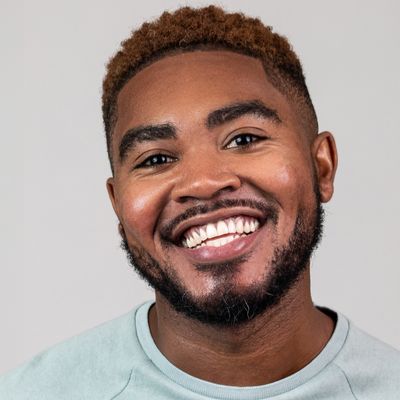
From a horse ranch in Texas to the Great White Way, this Broadway production stage manager has never stopped. Cody Renard Richard takes us behind the scenes of what it’s like to be a stage manager for some of the biggest shows on Broadway and TV live shows such as Dear Evan Hansen, The Lion King, Hamilton, Motown the Musical, the 2019 Tony Awards, #HairsprayLive, #TheWizLive and #JesusChristSuperstarLive just to name a few. He is currently the stage manager of Freestyle Love Supreme. We get an insight to what it actually takes to make a career in stage managing and all of the aspects that come along with it.
In this episode, we discuss:
- How Cody made being a Stage Manager a career
- Getting his start with Cirque du Soleil
- Breaking down what exactly a stage manager does
- Being true to who you are, no matter where you are
- The complication of being stage manager for TV live shows
Interview content begins at 2:02.
Closing standards begin at 40:53.
Connect with Cody:
- IG: @codyrenard
- Twitter: @codyrenard
Connect with The Theatre Podcast:
- Support us on Patreon: Patreon.com/TheTheatrePodcast
- Twitter & Instagram: @theatre_podcast
- Facebook.com/OfficialTheatrePodcastTheTheatrePodcast.com
- Alan's personal Instagram: @alanseales
- Email me at feedback@thetheatrepodcast.com. I want to know what you think.
Thank you to our friends Jukebox The Ghost for our intro and outro music. You can find them on Instagram, Twitter, and Facebook @jukeboxtheghost or via the web via jukeboxtheghost.com.
A very special thanks to our patrons who help make this podcast possible!
Cheryl Hodges-Selden, Paul Seales, David Seales
If you would like to see your name in this show notes or get a shout out on the pod itself, visit ttp.fm/patreon to become a member and show your support!
Transcript
This transcript was automatically generated and might contain errors.
[0:00] Alan Seales: Welcome to The Theatre Podcast. Intimate personal conversations with theatre's biggest names. I am your host, Alan Seales, and this episode is with Cody Renard Richard, who is this podcast's first stage manager. Several people have written in and asked for me to interview a stage manager, and man, Cody has an amazing story. We cover all of what a stage manager does, how he got into it, and everything. But he started out growing up as a kid living on a horse farm in Texas. That's what his family does. And then he made his way to New York City after going to college in St. Louis. But he went to college for stage management, not thinking he'd make a career out of it, which is just really awesome in my opinion.
And his attitude is incredible. He tells a story of how he finally got into managing, being a production stage manager, not just an assistant stage manager, but a PSM on Broadway. And he just never let a negative response stop him. He kept going. He kept emailing. He kept calling. He made friends somehow with Lin-Manuel Miranda, Chris Jackson, the original guys from Freestyle Love Supreme. And now, like 18 years ago, and now he's the PSM for Freestyle Love Supreme. He even was the stage manager this year for the VMA Awards and the actual 2019 Tony Awards. So man, I just can't wait for you to hear this. Again, as always, before you dive in, please visit me online at ttp.fm and show your support.
Every episode, there's a question or two that's asked by patrons. And at a certain level, you get to submit your own questions and I can include them in the interview. So check that out online at ttp.fm slash Patreon, P-A-T-R-E-O-N. And now everyone, please enjoy this episode with Cody Renard Richard. Here you go, one, two, three.
[2:12] Alan Seales: His guest today has been behind the scenes ensuring that many of your favorite shows from The Lion King to Dear Evan Hansen to Hamilton happen exactly as they should show after show after show and night after night. He's even worked on some of the last few years live theater events such as Hairspray Live, The Wiz Live, Jesus Christ Superstar Live. And he's currently the production stage manager for one of Broadway's newest hits, Freestyle Love Supreme. Cody Renard Richard, welcome to The Theatre Podcast.
[2:38] Cody Renard Richard: What an intro. Thank you.
[2:40] Alan Seales: When you put it all together like that, it feels good.
[2:43] Cody Renard Richard: It does.
[2:44] Alan Seales: So you're actually my first stage manager.
[2:47] Cody Renard Richard: Oh, really?
[2:48] Alan Seales: Yep. Popping my stage manager chair here on the podcast.
[2:51] Cody Renard Richard: Happy to do it.
[2:52] Alan Seales: So I have so many questions. I think this is going to be an interesting story, but I want to start where I do with everybody on the podcast and tell me about your childhood. Tell me about where you grew up.
[2:59] Cody Renard Richard: I am from Hockley, Texas, which is right outside of Houston, Texas. I should just say Houston. People don't really know what Hockley is. I grew up on a ranch. My entire family raises horses and they're cowboys and cowgirls.
[3:19] Alan Seales: No kidding.
[3:20] Cody Renard Richard: Yeah, that was my upbringing. I got into theater around high school and then I went to college for it in St. Louis and then eventually moved here and then things started happening.
[3:31] Alan Seales: All right, so you glossed over the high school thing. So in high school, I mean, Texas is very competitive in the arts.
[3:38] Cody Renard Richard: Right.
[3:40] Alan Seales: And in everything, but yeah.
[3:43] Cody Renard Richard: Everything's bigger in Texas.
[3:44] Alan Seales: Absolutely.
[3:45] Cody Renard Richard: Even the competition.
[3:46] Alan Seales: Well, there you go. Yeah, so I started off, I kind of fell into theater. I had to pick up an extracurricular when I was in high school and I just started doing drama, as we call it. And I was acting, as most kids do, because that's what we know. And then my high school theater director actually told me I should stage manage one of the shows. And I had no idea what it meant, but in my mind I was like, oh, I get to be in charge. I was like, sure. And then she told me, she said, I had a way of making people listen to them without yelling. And she's like, that's going to take you far. And at the time, I had no idea what it meant, but I was like, sure, I'll do this thing. And then that kind of just fell into my groove of stage managing, I guess. I did one show and I liked being the person that everyone came to. And then I just continued to do it throughout the rest of my time in high school.
[4:33] Alan Seales: Okay. So what point in high school then were you thinking, this is it, this is what I want my career to be?
[4:40] Cody Renard Richard: Well, I didn't necessarily know of it as a career, because it was kind of unheard of in Texas and no one else before me had done it as a career. But it was just something that I enjoyed doing. And I wanted to leave Texas for college. So I was like, oh, I'm doing this thing now. And then I started applying for schools that had stage management programs. And it wasn't until I got into one, I was like, oh, this can actually be a career. So it was well into my college years that I realized that this could be something long term.
[5:15] Alan Seales: That's strange to me. So you went to college for something that you didn't necessarily think at the time you wanted to make a career out of?
[5:21] Cody Renard Richard: Yeah, I wanted to work in the theater. And I didn't know what it was going to be yet. But I majored in stage management because it's what I was doing. And I knew that it was something that I thought I knew what it was. And then I finally realized and got more experience and learned more about it throughout college. And then kind of made up my mind to pursue that a little more. Because also, when you're 18, you're so impressionable. So you don't really know what you want to do.
[5:53] Alan Seales: I'm 39, I still don't know what I want to do.
[5:55] Cody Renard Richard: Exactly. So I was like, I can do this thing because apparently people tell me I'm good at it. And then I just kind of saw it through.
[6:03] Alan Seales: All right. So graduated with a degree in stage management. So I know what various acting curriculums are and dance curriculums. And there's singing curriculums, depending on what school you're going to. But tell me about a stage management curriculum. Is it just like, how do they test you? How do they throw monkey wrenches in your situations and like your final exams? It's like, oh, no, we're opening act. Our actor isn't here for opening. What do we do?
[6:32] Cody Renard Richard: I mean, it varies. The college that I went to, I went to Webster Conservatory. And our program was very loose in structure. We got most of our experience by working and just by learning through doing. We weren't taught by a book. We had a seminar class where we kind of like an open forum where we would sit down and we would talk about the shows that we're working on. And then we would problem solve within that class. And then we would take that out and apply it to what we were working on and just life. So there really wasn't. Yeah, we didn't read a book. We didn't. You weren't taught like you take blocking this way or you have to talk to someone this way, which I think was really incredible because you end up learning from your peers.
You learn from professional stage managers and you kind of just pick what works best for your style and who you are, which I think is a valuable life lesson, too, because you can just be yourself within the job instead of trying to be a mold of what someone says stage management should be, which was interesting. I know a lot of other programs where you do read books and you have to do certain things the way the professor is taught. But our program, it was kind of free for all, but it was definitely loose in structure with books and final exams. And we would get graded, I mean, I guess graded on the type of work that we did on the shows because that professor was a dean of the college, actually, but he was also very hands on.
So he would be with us in tech and he would watch us throughout the process and then he would guide us through that. And it's kind of how we succeeded in those moments was kind of our grading process, I guess.
[8:20] Alan Seales: Okay, so we said Webster Conservatory. Is that around here?
[8:24] Cody Renard Richard: It's in St. Louis.
[8:30] Alan Seales: St. Louis. Okay. St. Louis. Are there, I don't know much about Webster. Is there a big acting contingent there, too?
[8:33] Cody Renard Richard: There is.
[8:37] Alan Seales: So you have people there that are there for performing that are students and then all of the crew, like costumes and design and everything?
[8:45] Cody Renard Richard: Yeah, so Webster Conservatory is on the campus, is, sorry, the Repertory Theater of St. Louis is on the campus of Webster Conservatory. So there's also a professional theater that's in partnership with the conservatory.
[8:54] Alan Seales: Oh, cool. So we produce our own shows. There are, you know, however many musical theater majors and there's also acting majors. And then there's the design tech and stage management classes that we all work together and do shows. But we also get the opportunity to work with professional actors and designers who come in and stage managers who are there to kind of gain that knowledge as well, which is kind of, you don't do it on your earlier shows, but you do it like your junior and senior years. And then you come back and you apply that to like your final show that you're doing there. But yeah, the school is also pretty big on musical theater and acting. So it's great to work with a conservatory that's all encompassing that has, you know, all these other programs. I feel like everybody's in it together too.
[9:36] Cody Renard Richard: Yeah, no, absolutely. Absolutely. Yeah, that's fun.
[9:41] Alan Seales: Okay. So then graduation. And when did you become New York bound?
[9:47] Cody Renard Richard: I knew very early on that I wanted to move to New York. I, it was my freshman year spring break. No, sophomore year fall break. I came to New York. It was my first time coming to New York and I was obsessed, especially coming from a small town in Texas. I've never been in a city quite like this. There's not a lot of horses around here.
[10:04] Alan Seales: There's none. I mean, well, there's the few cops, but we're not talking about that. But yeah, it was, it was, it was mind blowing. And I think I saw like seven Broadway shows within like five days because I was obsessed. And, and I went back to school and I had this bug and I was like, oh my God. And I just kept thinking about New York and I just became very obsessed about what New York was. And then throughout the, throughout my years in college, I was like, okay, I was very oriented on figuring out how to move here and just do, you know, start working. So I knew very early on I wanted to move here. And then my senior year, I got my equity card in St. Louis and then I moved here in October. Yeah. The fall of, the fall after I graduated.
[10:49] Alan Seales: So Actors' Equity covers, the union covers crew and stage management.
[10:53] Cody Renard Richard: Yeah. Well, it covers actors and stage managers. It doesn't cover company managers or any of the other crews.
[10:59] Alan Seales: Right. Okay. So you're part of, you're part of equity and you have all those benefits. Okay. And yeah, I was wondering about, about the, the adult side of that. Adulting is hard. It's nice to, equity helps you out a little bit. Okay. So moved to New York. So what, how long ago did you move to New York?
[11:15] Cody Renard Richard: It's nine years this year. I moved here in 2010.
[11:22] Alan Seales: Wow. Okay. So then it's been a while. It doesn't feel like it, but then again, it does. But okay. So I'm still, I'm still, I'm fascinated by this. Cause I don't, like I said, I don't talk to many stage managers, but in your intro, there was like multiple nationally live TV shows and some of the biggest shows on Broadway, still Lion King, Dear Evan Hansen, Hamilton. And in your state, you're working with this and, and ASM and assistant stage managing some of them. And now you're stage managing your primary, PSM?
[11:49] Cody Renard Richard: Yeah. PSM, production stage manager. Yeah. PSM and ASM.
[12:00] Alan Seales: So you're working on all these other shows. How, I guess, is it like paying your dues? How do you get in? What's the foot in the door?
[12:06] Cody Renard Richard: I mean, there are many ways to get in and there's never a right answer. And everybody's journey is very different. I, I fortunately moved here with a job. It wasn't connected to Broadway, but I moved here with a job that was well-paying. I years ago, I was an intern at the Alley Theater and there was a stage manager who was working there and she went off to work with Cirque du Soleil. And then I come here to do an internship and I was supposed to invite her on Facebook and I went back to school and she thought I was still living here. So she called me and she's like, Hey, I'm coming to New York for this show. Are you still around? I want you to, to assist me. And of course I lied. I was still in St. Louis.
I was like, yeah, I'm still in New York. Exactly. Which actually I had to move here in two weeks because the show started in two weeks. Paramore, right? No, this was Wintuck at Madison Square Garden. Oh. Back in what? 2000, yeah, 2010. So I moved here and I was working for Cirque du Soleil, which was insane. Especially being like my first real job in New York. It was crazy. It was, it was mind opening. I learned a lot. And then also, and then the show closed cause it was a limited run. It was a holiday show and I didn't have a job. I didn't know how to get a job because I'm 22, 21 in New York city. Don't really have connections just here trying to work, you know, and, and being from St. Louis, I'm not from St. Louis, but going to school in St. Louis, you're not really taught how to find a job in New York city because New York city is very different than the regional market or like the St. Louis market or the Houston market.
So I, I got on Playbill and I just started looking at people who were looking for assistance or PAs. And of course I didn't hear back from any of them because people get emails all the time. And then I found this, the transport group was doing this show called Hello Again. And there was a bunch of Broadway actors in it. And I was like, Oh, I should just work on that so I can meet these people. So I reached out to the artistic director of that transfer group. And I was like, Hey, I don't know if you need a PA or an assistant. I would love to work on the show. I didn't know him, but he was very nice, Jack Cummings. And he wrote me back and he was like, we don't have any stage management openings, but if you're willing to PA, we can pay you a Metro card and you can observe and be around blah, blah, blah.
And I was like, absolutely, you know? And at that time, I don't know how long the company has been going, was open then, but they couldn't afford to add on more people, which I get. And it's New York and it's off Broadway. So, you know.
[14:38] Cody Renard Richard: So I was like, absolutely, I just want to be in the room with these people. And I'm just hoping that, you know, like just being, I find that like, you know, when you surround yourself with certain people who are doing things, it will come back to you in some way, because you're orbiting around that energy. So I was like, I have to be in this room. So I got the show and I was in there and it was, it was great. And it was terrible. And it was great. And you know what I mean? Just because, I don't know. Anyway, it was a wonderful experience overall. And that led to the next thing, which was Lysistrata Jones, the transport group was also producing. And I PA'd that for MetroCard for a couple of months.
And they announced that show was moving to Broadway. And in my mind, I was like, great, we're going to Broadway. Because, you know, I've been working on the show and all the cast is going. So I was like, of course, of course, right? But no, what happened was the show moved to Broadway and they hired a new stage management team. They wanted people with more experience and people who had worked on Broadway. And it was totally understandable. But at the time, I didn't get it out. You know, it was my second show in New York. You know, I just figured I would go with it, you know? So I was determined to stay with the show. So I wrote the director and I wrote the associate choreographer. And I wrote one of the actors just because I didn't know.
I was like, listen, I feel like we have a good relationship. I feel like, you know, I'm an asset to the show because I know the show. I would just love to be a part of this in the next step. And then they all wrote back and they responded very positively. And they sent my information to the PSM at the time. I interviewed with her and then I got that job. So that was my first Broadway show as a PA for Lysistrata Jones. Yeah, just from being persistent and just not letting it go. You know what I mean? And also because I was cherished and that was valuable and they liked me. So that helped. But yeah, that was my first show. And then things just kept moving on from there, you know? Once I got my foot in the door, I was able to meet new people and interview new people. And my name started circulating a little bit. And that kind of led to the next thing.
[16:46] Alan Seales: You're right. It didn't occur to me either that a crew, I guess, like the core crew, would not travel with a show. Because like your designers, you said designers. They were all the same. Well, I mean, in that world, more often than not, I mean, sometimes designers are replaced and people are replaced all the time. It's not new. But the off-Broadway and the Broadway world aren't as connected as you would think, just because it's a different type of, it's a different game. The rules on Broadway and the rules off-Broadway and the way shows run on Broadway. So more often than not, general managers and directors want people with experience from working on Broadway, just because it's more high stakes.
There are union rules. There are a multitude of things that you have to learn by doing. And so it's just a different beast, which I recognize and know more of now. But being young and not really knowing is kind of like, wait, what? It's interesting how many people I've talked to that have, just like that, have gotten jobs, not out of ignorance. I guess just not being aware that how they assumed things happened is not how it actually happened. So you're just like, oh yeah, I guess I'm going to go. Well, I didn't. So let me just write them and see what's up. Like how many other people could have had the job and just didn't think like, I'm just going to write and be nice. And also it's just, you know, I mean, now I have more of a mindset of this.
People are going to say no all the time. So like one no should not stop your journey. You say someone says no, great, move on. Someone will eventually say yes. And you have to have that mindset of that someone will say yes, and then eventually they will. And then it keeps going. All it takes is one. Absolutely. Well, in high school, it was one person who said you should be a stage manager. Yeah, absolutely, absolutely. One trip to New York, like this is where I want to go. And one email, it like gets you Lysistrata Jones as a PA nonetheless, not even like, but it gets you foot in the door. Absolutely. Right. Yeah, that's incredible.
[18:53] Alan Seales: Okay. So you were working as a PA and then it's just, you were saying you were interviewing with the PSM for other shows. And what is an interview like? I mean, I'm still like the metrics, the measurement, the success, like how does one say, oh, he's a successful stage manager? Well, I mean, success is very relative, but I will say that the interview process is very different for different shows. When I was interviewing for Cirque, their interviews are so extensive. They're all in French. Well, sometimes, no. But their interviews are so extensive. Like they give you a scenario, like how would you respond to this? And it's always mind blowing. You're like, I don't know, because I'm not in that moment.
So you can BS an answer, but in the moment, everyone responds to something differently. And more often than that, for a theater show or regional Broadway, off-Broadway, there's less of those moments. And I find that it's more about personalities and seeing if you can work well on a team together, your knowledge of where you've been. Because if you're in the room, then usually you have the talent, you've worked, you have the experience. So it's more about like, do we vibe? Can we do this show? At least that's been my experience lately. When you're younger, they want to know where you want to go, more of your experience. But I think the older you get is more about personalities and how you work on a team and managing people and stuff like that.
[20:18] Cody Renard Richard: Yeah. I hear that sometimes too. It's just the nicest person in the room sometimes gets the job.
[20:23] Alan Seales: Sometimes. Sometimes.
[20:25] Cody Renard Richard: All things being equal.
[20:26] Alan Seales: Yeah.
[20:28] Cody Renard Richard: You want to work with a nicer person.
[20:36] Alan Seales: I would 100% work with the nicer person than the jaded person with more experience, hands down.
[20:43] Cody Renard Richard: Yeah, true. So then how did you make the transition into TV? Because I've got down here too, you were the SM for the Tony Awards this year.
[20:47] Cody Renard Richard: Yeah, this year. Yes. And the VMAs this year. It's been a big year for me. I got into TV with The Wiz Live. The Wiz Live was happening and I loved the show and I was trying, I was racking my brain trying to figure out how to get involved with it. And then Andrew Gottlieb, who is now a producer for NBC, he used to be a stage manager on Broadway and he was one of the stage managers on The Wiz Live. I knew him socially. I didn't know him very well, but I knew that he was involved. And I saw that The Wiz Live was a co-production with Cirque. And at this time, I think I had done three Cirque shows or two. So I felt like that was like an end for me. I come from Broadway and Cirque and I knew the director, Kenny Leon, who was directing.
So I reached out to Andrew and I was like, I don't know how any of this works. I don't know if you're hiring people. I would love to be in this room. I would love to work on this. This is where I come from, X, Y, and Z. And he responded to that and we started chatting. And then a couple of months later, he invited me to join the team on the show.
[22:00] Alan Seales: Oh, that's amazing.
[22:01] Cody Renard Richard: Yeah, no, it was great.
[22:02] Alan Seales: Okay, so I guess first off, I was going to ask what's the difference between PSM-ing a live show versus a stage show. But first of all, I guess walk me through your normal day when you're, like for Freestyle Love Supreme, which you're currently PSM for, what's your normal day like?
[22:12] Cody Renard Richard: Well, Freestyle Love Supreme is a unique show. It's not your typical Broadway show. Yeah, I guess bad example. But no, no, no. I mean, so typically we get to the theater about an hour and a half before the show. The actor call is usually half hour before the show and we get there an hour before. We get there and we check in with the crew and we make sure everything's okay while they're starting to prep for the show. And then we distribute a document called the in-out to just let everyone know who's in and out of the show, like who's playing in the show that night. For Freestyle, because it's an improv show and it's never the same each night, Mackenzie Murphy, who's the assistant on the show, who's incredible by the way, we kind of sit in the office and we figure out what the show's lineup's going to be.
It's because we put new games in each night and certain members do a different feature each night, which is different from a typical Broadway show where people have their tracks. And unless someone's out, usually new people aren't going into something. But with our show, we try to keep it interesting so we mix people up so everyone's not doing the same feature and not playing the same game, just so it's fun. So we determine that before the show and then we redistribute that to the crew. And then the cast starts to filter in and we check in with them and just let them know what the lineup is and handle any things that have come up from the previous show and just try to maintain what's going on in the building.
[23:39] Alan Seales: That's interesting. For Freestyle, I've had Chris Sullivan and Anissa. Anissa's been right where you are. Anissa folds on the show and Anissa was talking about when she found out like five minutes before she had to go on stage that she was doing the, what's the game called where you keep throwing words at?
[23:55] Cody Renard Richard: Oh, Foundations.
[23:56] Alan Seales: Yeah, Foundations. I thought they set their own order.
[24:02] Cody Renard Richard: Oh, no. I mean, that is you. You pull the strings. I started with this show, we did it off Broadway at Ars Nova at the beginning of the year. And they have been doing this show for I think 15, 18 years. They've been doing this show for a very long time. And I came into the show back then, so I didn't really know what it was. And it was very, it was an eye opening experience. I had never done improv. The only people I knew coming into this were Lynn and Chris Jackson, the Hamilton guys, and Tommy and all those, but I didn't know the other core group of members. So just getting to know them and figuring out the structure of the show was such a learning curve. And then I think once I figured it out, they were very happy to hand that over.
So then it just takes it out of their hands and they can just do the show and they don't have to worry about the politics of it. You know what I mean? So then it's not favoritism. It's just like, okay, tonight I'm doing this. And there are days when someone comes in and I'm feeling vocally tired, or I'm exhausted from doing this thing all day, or just my mind isn't in it. You know what I mean? So I try to structure the show to fit the needs of the cast. Obviously, I can't accommodate everybody all the time, but we try to make sure that everyone's happy and we're playing to their strengths.
[25:13] Alan Seales: All right. Pop quiz, hotshot. Let's see. No, you said, I'm vocally tired. I can't go in. And we try to cater to that. Imagine if Adrienne Warren comes in. Have you seen Tina?
[25:25] Cody Renard Richard: Oh, she's incredible.
[25:26] Alan Seales: Tina Turner?
[25:27] Cody Renard Richard: She's incredible.
[25:28] Alan Seales: Adrienne Warren comes in and she's like-
[25:29] Cody Renard Richard: She's unreal.
[25:30] Alan Seales: She's like, Cody, I'm a little vocally tired today. Can somebody else sing that one song?
[25:34] Cody Renard Richard: Well, that's very-
[25:35] Alan Seales: You can't do that.
[25:35] Cody Renard Richard: But that's very different. That's why I say freestyle is very unique and different than any other show I've ever done. And I don't mean they come in like, oh, I can't talk. Some songs, they're yelling the entire time.
[25:47] Alan Seales: Right.
[25:48] Cody Renard Richard: And because our show is like a chess or checkerboard, you can move people around and the integrity of the show stays the same. With something like Tina, if Adrienne can't sing a song, then she can't do her job, so she wouldn't do it. Or she would work with the music director about figuring out ways for her to navigate the song that doesn't take away from the show.
[26:06] Alan Seales: I guess that was what I was asking. If you were the PSM for Tina right now and Adrienne did come in and say, oh, I'm having issues. I don't think I can sing that high note on that one song or whatever happens, how do you- okay, if this was an interview and I was interviewing you, here's your scenario. How would you handle that?
[26:23] Cody Renard Richard: I mean, well, it's very different because Adrienne's a beast and I'm sure she would muscle through it and figure it out. No, I'm kidding. It's just you have a very real conversation with whoever's coming to you with what they have for the day. And then you talk through the show and you're like, what can you actually do? And more often than not, if a singer comes to you and they're like, I cannot sing today, then they will call themselves out of the show because no one wants to go on stage and let 1,500 people down because they're not playing to their best ability. But there are some times when people just don't want to call out and they go on. And then there has been times when I've been on shows where we lowered keys for people or they just did the best they could and they got through and we moved on.
[27:09] Alan Seales: Did you just lower a key?
[27:11] Cody Renard Richard: I mean, these people are amazing. I mean, sometimes we don't and they get through it the best they can. But there are times, yeah, there are times when someone sings an octave lower because they can't hit the high notes tonight or they navigate a way to use their head voice instead of- you know what I mean? So we work with the music director a lot if there are vocal problems. If someone's injured, it's kind of the same thing. We'll work with the dance captain about modifying some things. Some shows it's trickier to modify, so we encourage people to call out if they can't do their full track. Some shows, like Paramore, for instance, because we started off with that show, there weren't any swings on the show.
And swings are people who get thrown on mid-show or are scheduled when people are out, yada, yada, yada. So with that show, we didn't have swings to start with, so we had to create cut tracks or create modified tracks because we had to do the show. So without that luxury, it's a very different beast. Most shows have swings. Almost all shows have swings, so you're able to put somebody else on when someone's injured.
[28:19] Alan Seales: And standbys.
[28:20] Cody Renard Richard: Exactly.
[28:20] Alan Seales: And alternates.
[28:21] Cody Renard Richard: Right. There's a list of offstage people who can-
[28:26] Alan Seales: Right. It's incredible to me how all the- Like you said, you get there an hour and a half early. The actors get there a half hour early in most cases. There's not a lot of time to say, oh, we need to go modify this or let's go rework a track because the house has to open at 30 o'clock, right?
[28:43] Cody Renard Richard: Well, we get there an hour and a half early, but sometimes my job starts at 10 AM or 8 AM. I was just doing Evita at City Center, and it's on course, so there aren't covers because it's a quick process. We rehearsed for 10 days, and for this show, we ran for two weeks. And on our final show, we had one of our tango dancers injure herself the previous night, and she was like, I can sleep it off. I'll be fine the next day. She woke up and she couldn't put weight on her foot. I get a call from her at 8 AM the same-
[29:17] Cody Renard Richard: I can't walk, I need to go to the ER. So, we get in touch with the company manager, the company manager gets her there, and at that point, we have to figure out how to do the show without a swing and without, you know, because it's our last show, which is the other unfortunate thing.
[29:32] Alan Seales: Oh, no.
[29:33] Cody Renard Richard: You know? So, like, sometimes, like, our day starts extremely early, so you start problem solving very early, and you get in touch with the dance captain, or in this case, we didn't have a dance captain. The other stage managers and I, and then with the associate director, and our director was very involved still, and so was our choreographer, so we got in touch with all of them. We started figuring out a plan of, like, things we can take her out of, or, like, things that other people could, like, re-space, or just take a certain feature away from her, just in order to get through the show. So, sometimes, you're right, an hour and a half isn't enough, so you kind of roll with the punches, and you have to start early.
[30:08] Cody Renard Richard: For the big shows, you know, Hamilton, Dear Evan Hansen, you go in there, and after the director leaves, I know the director comes back every now and then, and they do a little brush-up rehearsal, or give some notes, but do you have, like, you have all the blocking in your book, you're calling cues, you're sitting in the booth doing all that. Are you writing down, like, you were five steps out wrong over here, and, like, do you give notes to people afterwards?
[30:34] Cody Renard Richard: We do. Usually, not after the show. It's usually before the show the next day, but now, a lot of times now, there are resident directors and choreographers who stay on with the show, so we work with them with noting the show. Sometimes, they're watching the show every night. Sometimes, they watch the show, like, maybe twice a week, or whatever the contract is. They'll come in, and they'll watch the show, and they'll note the show, but when they're out of the building, when we're watching the show, we do, you know, we'll take notes if something's out of whack, or if something felt wrong, or if, you know, people are off of their marks, or anything like that.
[31:08] Cody Renard Richard: So, yeah, we have to be engaged and very focused throughout every show, just to make sure that it's still running, and people are still feeling fresh and having fun, but also keeping what the director, the vision of what the director wanted, too, you know?
[31:20] Alan Seales: Right. I mean, do you have the power to go up to someone like Kaci Levy, and you're like, Kaci, I feel like you really just let it go. Like, you just are not in it tonight. I mean, are those the kind of things you can say?
[31:33] Cody Renard Richard: Well, with Kaci Levy, because she's amazing, and I love her, like, you probably could walk up to Kaci and say something like that, and she would laugh. But, I mean, yeah, I mean, there are, yeah, I mean, absolutely. Like, once the director leaves, and you're working with the associates and stuff, we, you kind of divide and conquer with certain notes. And if someone is not performing to the intent of what the director wanted, as well within our right, as well as the associate directors, to talk with them, and note them, and get them back to what the director intended for the show to be.
[32:10] Alan Seales: Oh, that's nice. Yeah, so there's always somebody there watching, and kind of like-
[32:14] Cody Renard Richard: Yeah, absolutely.
[32:15] Alan Seales: Keeping it. Yeah, because I feel like, especially for shows that just run for years-
[32:19] Cody Renard Richard: Right.
[32:19] Alan Seales: With some of the same people, that you got to-
[32:22] Cody Renard Richard: Well, most of those shows, like Chicago, and Lion King, and Phantom, they all have resident directors, because it's been there forever. So there are people whose job is to look after the show, and they have an office in the building, and they're always there, and they're around. And we still work with them about, with notes, and just uptake, and scheduling, and all that stuff. But with most long-running shows, there's a dedicated directing presence in the building, which is nice, because they help alleviate some of the work.
[32:54] Alan Seales: Right, right.
[32:56] Cody Renard Richard: Well, okay, so speaking of the work, then, you are currently PSM for Freestyle Love Supreme, but you said that you're also in rehearsal for something else.
[33:03] Cody Renard Richard: Yes.
[33:03] Alan Seales: But then you also just mentioned that you did a VEDA for-
[33:09] Cody Renard Richard: How does the scheduling work?
[33:14] Cody Renard Richard: For me, personally, my last three or four months have been extremely busy. I'm very grateful for that, and I've just been able to make it work. When I was doing a VEDA, I was also doing Freestyle Love Supreme at night, so I would go to rehearsal from 10 to 6, and I would leave there and go to the theater from 6, because our schedule at Freestyle, we do 7 o'clock and 10 o'clock, which is crazy. So I would go there, do those shows, go to sleep, wake up, do a VEDA, do Freestyle, go to sleep, wake up. And now I'm doing a workshop of a new musical called Lempicka, directed by Rachel Chavkin. So right now, we're in rehearsal, so we rehearse that, and I go do Freestyle at night. And that's not unheard of.
A lot of people do double duty. It's hard, but it's because it's time-consuming, and you have to split your brain into two different places. But it's also, it's fun, because it's keeping you on your toes, and you get to dabble on a lot of other things. It's also exhausting, but you find time.
[34:14] Alan Seales: Right, yeah.
[34:15] Cody Renard Richard: Save that coin, man.
[34:16] Alan Seales: Exactly.
[34:17] Cody Renard Richard: Working off all your bills.
[34:18] Alan Seales: We got bills.
[34:20] Cody Renard Richard: That's right. Okay, so do you jump in and out of shows, though? How long are your stints in the shows, I guess?
[34:31] Cody Renard Richard: Well, that's a very... Well, right now, I'm with Dear Evan Hansen, and with Lion King, and what else? If Then, and...
[34:44] Cody Renard Richard: After Midnight, Motown, Kinky Boots.
[34:46] Alan Seales: Well, those are different.
[34:47] Cody Renard Richard: Ghost.
[34:47] Cody Renard Richard: But those three, the three that I've mentioned, I'm a sub for, so I go in and out when I'm in between jobs, or when they needed a vacation swings, or a vacation cover, or something.
[34:56] Alan Seales: Oh, in the same swings.
[34:57] Cody Renard Richard: Yeah, exactly. So I'm not full-time. I have not been full-time at Lion King or Dear Evan Hansen, but since those are long-running shows, they're kind of like the gift that keeps on giving. So whenever I close a show, or I have time off, and there's a need for a sub stage manager, I just reach out to them, and I'll go in to cover personal days, or sick days, or time off. So I'm on-call, which is very nice, because those shows are amazing, and hopefully, they're not going anywhere. As far as... After Midnight is the only show, and Freestyle will be another show, or the only two shows that I've started and closed. Motown, I started, but I left early to go do After Midnight. And then, the other shows, I think the longest I've been with the show has been nine months, just because of something else would come up, to do the live TV shows, and then when I'm there, something else happens, and I move on to another show. So I guess you can say I jump around. I don't like to think of it that way, but yeah, I mean, I don't know.
[36:01] Alan Seales: Is that typical for the job, or is that typical for you?
[36:05] Cody Renard Richard: No, I don't think it's typical for the job. I think most people, because it is not always easy finding work, I think a lot of people find a job, and they're like, this is my job, I'm staying on this. Personally, for me, I take it by a job basis. If the need of the show, the show needs me to stay there, then I will stay there. I feel like if there's a greater opportunity, or another opportunity, that falls into my lap, that is calling me, and it's not going to affect the show that I'm leaving, then I will try to make it work to move on to the other opportunity.
[36:38] Alan Seales: So contractually, and actors are in it for, and they have year-long contracts, is it sort of the same with ASMs and PSMs?
[36:48] Cody Renard Richard: To a certain extent. Contracts are all very different. Most principals are signed for a year, and then a lot of the ensemble are signed for a six-month writer, and then they can renew. And then they're on either open-ended contract, or they keep signing a new writer. For stage managers, sometimes you can sign a term contract, if they really want to. You sign on for a year, or you sign on for two years. Most stage managers don't sign on for a term. Most of our contracts, we sign on with the ability to have a four-week out, just because of, it's not, I don't know, it's just kind of how our contracts usually work. But sometimes general managers or producers will ask that you commit to a year. And then you see that through, or if you can't, then you will approach that and figure out what the options are.
[37:36] Cody Renard Richard: More problem-solving.
[37:37] Alan Seales: Exactly, exactly.
[37:38] Cody Renard Richard: Okay, so I have a Patreon account, and so patrons of a certain level can ask their own questions. So I got a patron question here. Your Twitter account is very theater-focused, more behind-the-scenes, while your Instagram account is very full of a hot, muscular lifestyle. So why the difference, and what message are you trying to convey with each account?
[38:02] Cody Renard Richard: Well, my Twitter account, I hop on there maybe once every year. I'm barely on Twitter. I get on Twitter, and I'll repost something, or I'll talk about a show or something. Instagram is kind of, I find it to be more of a free-for-all. I like to share pictures of my life. It's more of a personal journey, I guess, less about my work. So yeah, I mean, yeah, I don't know. I'm not really trying to convey... I don't know. That's funny. But thank you. I'm very single if you... I'm kidding. No, my Instagram is just pictures of me and my life.
[38:38] Alan Seales: Well, okay. So what's your sexual orientation?
[38:42] Cody Renard Richard: I am gay.
[38:43] Alan Seales: Okay. So Byron Jennings is a friend of mine, long-time listener, and I think he would get along very well. I'm just saying.
[38:50] Cody Renard Richard: Well, well, there you go.
[38:51] Alan Seales: Shout out to Byron. Hey, Byron. So here we go, matchmaker. Anyway, yeah, so I actually wanted to ask you about being gay on Instagram. It's very, like a very lifestyle-oriented, like we were talking about. And is it important for you to share that side of yourself in a public way like that? Because you've got a lot of followers now.
[39:12] Cody Renard Richard: Well, I actually just spoke about this. I was speaking at a college, and I was talking to people about social media. Because a lot of teachers of the older generation speaks highly on how you present yourself on social media because people will look at you a certain way. And I just said, you have to just be honest. If you present yourself in a way that is authentically you, it doesn't matter how other people are perceiving it because people are going to perceive you however they want to. Personally, for me, being a young Black man from Houston, a small town in Texas, and moving to New York City and accomplishing what I have without knowing how to do it, I think it's very important for me to highlight that for other people.
I think it's also important for me to live my life authentically within doing that. And that's what I try to convey. I don't really worry about if I post a picture of me in a speedo on the beach, how people are going to take it. Because you know what I mean? My work is my work, and my life outside of that is my life outside of that. And I also just like to spread joy. Most, 95% of the time, everything I post has a tone of joy because this is how I operate. I like to be happy. So I like to share that, and I think that people need that.
[40:41] Alan Seales: Exactly. Well, Freestyle Love Supreme is wearing off on you because it's all about living your truth.
[40:46] Cody Renard Richard: Absolutely.
[40:46] Alan Seales: Spreading joy.
[40:47] Cody Renard Richard: Yeah, it's kind of the perfect show for me.
[40:49] Alan Seales: Having each other's back.
[40:51] Cody Renard Richard: Yes, yes, yes. It's a great show. Okay, so there are three standard closing questions that I ask everybody to wrap up every episode. The first one, very simply, is what motivates you?
[41:00] Cody Renard Richard: What motivates me? My friends motivate me a hell of a lot. I have a lot of friends, but I have a great circle of friends, and we check in on each other all the time. And even when we're not working or even when we're feeling down, someone always can sense it, and they always check in. And that sense of brotherhood and sisterhood and communion motivates me to continue to just go.
[41:34] Alan Seales: Next question is, what advice would you give to your younger self and younger people listening now starting out down a similar path?
[41:41] Cody Renard Richard: Oh, wow. The first thing I would say to people, and I know people say this all the time, and I think that we cannot ever not say it enough, is that who you are is enough. Just being yourself in a room, walking into a room, and not trying to be someone else or trying to appease someone by dressing a certain way or talking a certain way, but just walking in and owning who you are, I think that goes a long way. And that's a lesson that I didn't learn up until maybe a couple years ago. I'm 31, you know what I mean? And that leads to the second thing, everybody's journey is different. You realize things at a certain time, you get the dream job at a different time than your best friend or your colleague or your peer, you know what I mean? So just trusting the journey, being yourself, and living authentically.
[42:35] Alan Seales: All right. So last question, this is the hardest one. If you could only see one show for the rest of your life, but you can see it as many times as you want, what show would you see?
[42:44] Cody Renard Richard: Oh, that's hard. Yikes. Does it have to be running right now?
[42:50] Alan Seales: No, any show.
[42:52] Cody Renard Richard: Oh, God. I would probably say, oh, this is hard. This is so hard. I was going to say Aida because I'm obsessed with Heather Headley and I want to just see her perform that all the time. But I probably would have to say Dreamgirls.
[43:08] Alan Seales: Ooh.
[43:09] Cody Renard Richard: 1000%. Yeah.
[43:10] Alan Seales: Yes.
[43:11] Cody Renard Richard: It's a beautiful show, that cowboy beginning. Come on. You laugh, you cry, you go on a journey. It's amazing.
[43:17] Alan Seales: I love it. All right. So we can find you on Instagram, at Twitter, at Cody Renard. Anywhere else that you want to plug?
[43:22] Cody Renard Richard: No, that's it.
[43:23] Alan Seales: That's it. All right. So you can get me at thetheaterpodcast.com, support and get your questions in for my guests at thetheaterpodcast.com slash Patreon. I'm on Instagram and Twitter, theater underscore podcast. You can listen, leave a rating, leave a review. I love to read those. This is edited by Matthew Hendershot. Thank you to Jukebox the Ghost for the intro and outro music. And Cody, thank you most of all. This has been wonderful.
[43:47] Cody Renard Richard: Thank you.
© Broadway Podcast Network, All Rights Reserved