

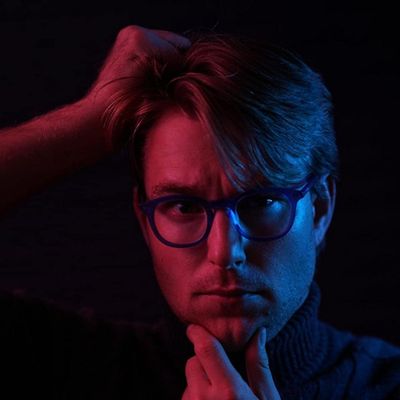
Jesse McAnally is a mega nerd – and therefore one of our absolute favorite people. He’s a film director, actor, YouTuber, songwriter, podcaster, and a Dungeons and Dragons enthusiast. He has been making movies since he was 5, acting out elaborate plots with dolls, and forcing his family to watch... Read More
From the show: Was It Chance?
Guests
About
Jesse McAnally is a mega nerd – and therefore one of our absolute favorite people. He’s a film director, actor, YouTuber, songwriter, podcaster, and a Dungeons and Dragons enthusiast. He has been making movies since he was 5, acting out elaborate plots with dolls, and forcing his family to watch. After graduating from Wayne State with a degree in Media Arts and Studies, he decided to return to his high school hobby: sharing his passion for musical theatre with others through his podcast, Musicals With Cheese, where he teaches a layperson new to the community the ins and outs of being a theatre nerd. He now has a feature film in the works called The Daughters of the Domino that I am super excited to talk about. Jesse, welcome!
Jesse also graced us with an impromptu performance of Shut The Fuck Up Alan! Stay until the end so you don’t miss it.
Support Jesse’s Kickstarter for his first feature film, The Daughters of the Domino.
Check Jesse out on Instagram and Twitter.
- Make sure to follow this podcast everywhere you find podcasts, leave a rating and a review, and slip into our Instagram DMs at @wasitchance.
- More about Heather via @heather_ vickeryandco on Instagram and Threads, @Braveheather on TikTok, and listen to The Brave Files
- More about Alan via @theatre_podcast on Instagram and listen to The Theatre Podcast with Alan Seales
EPISODE TAKEAWAYS
- Jesse was a media Obsessed child that wanted to soak it all in and put his own spin on it
- Creativity comes from discovering “it’s possible” - whatever “it” is for you!
- The fourth wall NEEDS to be broken down. Modern streaming society has stripped this from the “crowd-facing” content and it’s a shame.
- Partner with folks you enjoy working with! It’s really important to have fun while you work.
- Be a great friend first, then a collaborator.
- It never hurts to be kind.
- The worst sets are the ones where people are afraid of the director.
- Ask yourself if you’re in an emotionally space safe to take on intentional risk.
- The all-or-nothing element of a Kickstarter really motivates people to participate in your project.
- The quality of the crew greatly affects the final product.
- You can have massive fear of rejection and still show up and do big, brave things.
- Many performers and public figures are quiet and introverted.
- All that exists is because YOU are here and you created it! BE PROUD OF YOURSELF!
Transcript
This transcript was automatically generated and might contain errors.
[0:00] Heather Vickery: I feel like all three of us have had in our lives the person that pitched you something and you think it's great and then they just never do it. And that breaks your heart more than anything. Do you know there's a thousand better podcasters than me? There are a thousand better filmmakers than me. There are a thousand people that just gave up.
[0:29] Heather Vickery: Hi everyone and welcome to Was It Chance, the podcast about embracing opportunity and taking intentional risk for your creative life. I'm Heather Vickery.
[0:39] Alan Seales: I'm Alan Seales.
[0:40] Heather Vickery: Heather and I started off as two perfect strangers who met by chance and embraced opportunity. Listen in. Oh, wait, that's your line, because I'll do the intro. You do the next slide.
[0:51] Alan Seales: And also it's so fun to hear how you're going to announce it.
[0:55] Heather Vickery: I'm gonna relate this to something super not related. My nine-year-old and I are watching Sabrina the Teenage Witch. And if you haven't watched it, and now it's old school, it's from the early 2000s on YouTube or Hulu. You can't fast forward through the opening. But she has a mysterious magical costume each time. So this is how I feel here waiting to hear how Alan is going to say met by chance and embraced opportunity.
[1:24] Alan Seales: Oh, whatever. It's really fun. She's nine. We're like, is she gonna be a kitty cat today? She can be a few. Okay, okay. I'll give you a next slide. Come on, come on, pick up the pace here. Mom, dad, stop fighting.
[1:42] Heather Vickery: Listen in as we chat with other successful people about the risks they've taken to put themselves on a path to creative success. Our guest today is an amazing guy, and he's a director, so that's why I'm directing right now. He is Jesse McAnally, he's a mega nerd. He needs no direction. He's a mega nerd and therefore one of my absolute favorite people. He's a film director, an actor, a YouTuber, a songwriter, a podcaster, and a dude.
[2:10] Alan Seales: I was about to do what?
[2:14] Heather Vickery: No, no, no. No, I wrote in the notes it says DD enthusiast, which of course is Dungeons and Dragons, but I was about to say, do not disturb.
[2:21] Alan Seales: You love doing this.
[2:22] Heather Vickery: And then Gaiu do not disturb. Do not disturb me. Do not disturb.
[2:27] Alan Seales: All right. So he's been making movies since he was five, acting out elaborate plots with dolls, and forcing his family to watch after graduating from Wayne State with a degree in media arts and studies. He decided to turn his high school hobby, which is sharing his passion for musical theatre, with others through his podcast called Musicals with Cheese, where he teaches Andrew DeWolf, a lay person who is new to the community, the ins and outs of being a theater nerd. He now has a feature film in the works called The Daughters of the Domino that I'm super excited to talk about. Jesse, well, now we're finally here. Let's talk.
[3:03] Jesse McAnally: We're finally here. We were talking for like 15 minutes.
[3:07] Alan Seales: Yeah, in case you didn't know, I was dancing with the intro music that we also hear. Like it's real. They play it in the room.
[3:13] Heather Vickery: Of course. That's the uh yeah, the Was It Chance intro music was composed originally completely by uh Heather's four children.
[3:24] Alan Seales: Oh, that's incredible.
[3:25] Heather Vickery: Really?
[3:26] Alan Seales: That's not true.
[3:27] Heather Vickery: It's not true.
[3:28] Alan Seales: That's not true. So, fun fact Alan knows this, but every mid-show we do we read all of our patrons' names. Most recently, I had Bree give me a beat, and I rapped. I freestyle rapped like a connection line between each name. Boy, that was a fun time.
[3:43] Jesse McAnally: That takes some skill, dude. That's work.
[3:45] Alan Seales: That is definitely where no I uh improv is some serious business. Like to get it good, right?
[3:52] Jesse McAnally: Oh, dude. Speaking of which, this is a complete plug for something unrelated to all of us. I saw Hiprov the other day. You know, this is improv under hypnosis. And uh yeah, I got I want to go to play play bill, right?
[4:06] Alan Seales: No.
[4:06] Jesse McAnally: Um Colin Mockery.
[4:08] Alan Seales: Colin Mockery is the improvisationist improvner.
[4:12] Jesse McAnally: And uh and the night I saw it actually, he was out on vacation, and it was um I mean I forget her name. It's Flo from Progressive.
[4:21] Alan Seales: So she was a great uh she was a great improv.
[4:24] Jesse McAnally: But um Anand uh this guy is a mentalist and puts people straight up under hardcore deep hypnosis. And when people are not trying to be funny when they are actually the character, it is so funny to watch because there's nothing pretentious about any of it.
[4:40] Alan Seales: I love it. I love it.
[4:41] Jesse McAnally: Oh my god, um to go to there. Uh Jess.
[4:45] Alan Seales: Yes.
[4:46] Jesse McAnally: Wow. You do a lot of things, you're very funny, you're animated. I'm sad that our audience can't see all of your animation.
[4:55] Jesse McAnally: Um I have a face made for podcasting, I know.
[4:58] Alan Seales: How did that is not true? How did you get here? Like, what uh chance did you embrace when you were younger that led you down this path?
[5:10] Jesse McAnally: Sincerely, I honestly don't know. Um, because a lot of folks don't like you see people that are like, oh, they were meant for this. I'm sure you've interviewed Alan on your podcast. People are like, oh, I've been doing this since I was in the womb, and I've been knowing what I wanted to do. I've been singing, and then I got into CMU and I was immediately put into my first Broadway show and all that. Um, and that was not the case. I just kind of would doodle and would think of things I'd like to see because I was like this media obsessed child that just soaked it all in, and rather than just like soaking it in and letting it sit there, I wanted to turn it into my own stuff. Because that seemed much more interesting.
[5:51] Jesse McAnally: So every camera I can grab I shot something with, anything I could do that could get my like friends involved with. Um I so you know how I made money in high school? There was two forms of revenue. First one is I would shoot everyone's senior project videos and turn them into like cinematic things, and I'd get paid like two hundred and fifty dollars per gig for that.
[6:14] Alan Seales: Wow.
[6:14] Jesse McAnally: As well as creative writing projects that they'd have to make little videos. They're like, okay, Jesse knows how to shoot this 300 bucks, everyone puts a hundred in, let's go.
[6:22] Alan Seales: That's good beer money.
[6:24] Jesse McAnally: I mean, that's embracing chance, I think. Like you just wanted to put your own spin on it and do it your way, and you were like, Well, how does that manifest itself? Where does that come from?
[6:33] Jesse McAnally: I think it just comes from discovering that it's possible. I think my generation, specifically like the ones that grew up with like the DVD commentaries, which I think it's like younger Gen Z, older Gen X are younger Gen X and whatever. Um, we had like those at our fingertips for the first time as media consumers. We got the ability to see what a director was, see what the first AD did, and really break it down into a process that no other generation had before, and really now the generations don't really have anymore because it's not a part of streaming media.
[7:13] Jesse McAnally: I always I always love the the yeah, the behind the scenes and the bloopers. The blooper because the blooper as funny as the bloopers are to watch, being serious about this, it showed me the creative process, a window into the creative process because you get to it's real people being these oftentimes serious characters and breaking because they're having so much fun, even being angry or being uh mad at each other. And that to me was what really attracted me to performing was was exactly that, just seeing inside behind you know, breaking down the fourth wall.
[7:45] Alan Seales: Yeah, and that fourth wall is something that needs to be broken down, and now everything's signed by NDAs and everything that you do get is drip dra drip put out there by the corporations themselves to help make the brand stronger rather than showing you an actual description of what happened behind the scenes. Because even before my generation, there was like Hearts of Darkness, which was the falling apart of Apocalypse Now, which I think inspired a lot of the filmmakers we currently have coming out today. And now we get the sanitized version of that. We will never know what really happened behind the scenes of Don't Worry Darling, because no one's gonna let any of that footage come out.
[8:23] Jesse McAnally: You know what about I really want to.
[8:25] Alan Seales: Yeah, we all really want to.
[8:26] Jesse McAnally: And I really want to. And in 2005 on the DVD, there'd be a four-hour documentary that would have told us everything. My ex was really into Kevin Smith, and I'm a fan of Kevin Smith as well. So we watched all of the movies. We we watched that version. That which is when I started to actually really appreciate Ben Affleck as an actor. Anybody who can make fun of themselves that much. Alright, you're okay with me.
[8:55] Alan Seales: Well, Ben Affleck is oh, sorry.
[8:57] Jesse McAnally: No, I was gonna say, making fun of themselves. I I just watched on Netflix the other night. Um, End of the World, the Seth Rogan movie. Is that what it's called?
[9:04] Alan Seales: Oh, yes, the world's end.
[9:05] Jesse McAnally: Or the world's end. No, that's this is the end.
[9:07] Alan Seales: This is the end, something like that, with him and James Franco. And like everybody in there plays themselves. And it's not even exaggerated versions of themselves. They're just playing themselves in the middle of an apocalypse, and it's just like Paul Rudd falls down the hole and dies, and Mindy Mindy Kaling dies, and like every major celebrity that shows up I love I absolutely love that. Like Seth Rogan, Ben Stiller, all of these people have such an ability to make fun of themselves and laugh at or laugh at themselves. And I think that's what's carried people through. Um especially like with their careers as long as they have been, they can adapt because the funny things people are saying about them, they just incorporate into their next project.
[9:48] Heather Vickery: Speaking of next project, back to Jesse McAnally.
[9:51] Jesse McAnally: That's me.
[9:52] Heather Vickery: Nice. Um side note, I'm gonna go on a tangent a second. You ever heard the song Chimpanzee riding on a segue?
[10:02] Alan Seales: Alan's gonna go on it.
[10:03] Jesse McAnally: I it's just this just yeah, this has occurred to me. There is I'm gonna insert it here at this point in editing as a song that I've introduced to my children. That it's just a video of a chimpanzee writing on a segue, and it's catchy.
[10:16] Heather Vickery: Can we can we talk about Jess?
[10:17] Jesse McAnally: Yeah, of course we can.
[10:18] Heather Vickery: But here's the song. Chimpanzee Radnosegue, Chimpanzee Red, no to segue, chimpanzee ran, noticing way, man. Chimpanzee Red, not a single chimpanzee, red, no single chimpanzee, red, no single band, the bab band.
[10:36] Jesse McAnally: And we're back.
[10:37] Heather Vickery: Okay, Magic of editing.
[10:40] Jesse McAnally: Wow! Forget anything I have to say. That is the best song. That is what I'm dedicating the rest of my life to is that song.
[10:48] Heather Vickery: Monkey on a segue for president.
[10:51] Jesse McAnally: Zimpancy on a segue for ruler of the free world. This is the only thing I can't. Fuck podcasting. I'm out of here.
[11:00] Heather Vickery: That is life-changing. Podcast day. Musicals with cheese, one of my absolute favorite podcasts of all time. So okay, embracing chance. Talk about this. You got into musical theater. How did you meet Andrew DeWolf? Why did you start the podcast? And how the hell have you grown it like you have? Like all of these are little chances that you're just like, let's eat this.
[11:23] Jesse McAnally: Um, that's a good question. So the other, I mean, that's a series of good questions. You might call it a monkey on a segue.
[11:31] Jesse McAnally: Um as my six-year-old calls it a chimpanzee on a subway, but yeah. Because he doesn't want a segue. We've got our VP here, the subway chimpanzee. Alright, alright, back to you.
[11:44] Jesse McAnally: Okay. Um, so I it it was just good luck, and I really don't try I it was just very lucky. I started doing YouTube videos about musical theater when I was very young. Um, back when YouTube was very good at getting every video out there. The algorithm was very good for smaller creators. And I developed a small audience back then. I left it behind when I went to college because I'm like, I want to focus on my education for a bit now that I'm paying for it.
[12:13] Jesse McAnally: So I left it behind, graduated from college, literally five months after I graduated. Um, I graduated in May 2018, started Musicals With Cheese in September 2018. Like that was the day that we started. And Andrew was just someone I knew from the old YouTube days. We did collaborations, we were on the old website together. Days back when YouTube was a thing, it's not it was. I mean, we were both like 15 years old, and we just like we have similar interests, and I think you're funny. And it was we have a good dynamic, even though we're very different human beings, and we just kept in touch, and I had this idea, which has now become an entire series of podcasts in and of itself of why don't I just show someone that doesn't like musicals, musicals, which in 2017 for a podcast idea that was pretty novel.
No one had quite done it. There's like 50 of them now. I don't want to claim I'm the first, but I was one of the early adopters to that. Um, and I just thought Andrew is easily funny. Like, I don't if I set him up, he's not gonna be like, I don't get where you're going. He will follow down that road no matter where you set it up. And he's so he's so deadpan too, which is the best part of all of it. It is, but that goes well with my energy, which is much bigger, so I can be big and get the audience engaged, and he will just land the punchline and it's a good back and forth.
[13:38] Jesse McAnally: Well, talk about the manifestation creativity, the embracing of the chances. Um, the podcasting is a frickin' hard business, and at some point I've seen so many people around us who have I coined or no, I didn't coin this, I used the term podfaded. They're just like, you know what? Wait a second, I'm not an overnight millionaire, I'm out. And because you're like, oh, Joe Rogan, Dak Shepherd, yeah, these guys got like a billion dollar deal with Spotify, cool, that'd be a damn doing it. And then they get to this point and they're like, wait, I gotta do this myself every week or multiple times a week, or whatever the case is. So there had to have been a point. Was there a point for the two of you when you're like we're doing this for fun?
We can make a little money off it. We are, we're doing okay, but we're gonna do this for fun because it's just freaking low. We love it, it's passionate, and it's gonna lead to other things. There was never that idea behind it. Um, when we started, Andrew was very big, like, who's gonna care about musical theater? It's such a big niche. Why don't we do something more broad? I'm like, it's because no one else is really involved in this niche that people will flock to us because no one else is talking about their hyperfixation. So we were really embracing being seven favorite people's favorite thing as opposed to a hundred favor people's eighth favorite thing. So I really wanted to get as niche, get as specific into it as we can, and I knew that people would keep coming back if we follow what where the trend in theater was going.
Um, and the fact is when we started, I still had a little bit of that fan base still lingering there from when I was in high school that were like, Oh, you're back, okay, let's see what you've been up to. And starting that up, they followed, and then they grew. And the thing is, no one ever left. The same people that were there when we started with episode one are still here when we're on episode 207. Um, and I keep in touch with them. There is I try to not keep a barrier between the people that enjoy us and us. If they have a thing to say on Twitter, I will respond to almost every person because I feel like the back and forth is just as important as the content itself. And I feel like that's where a lot of folks tend to drop the ball as far as their content goes, where they forget the give and take of it.
[16:04] Jesse McAnally: Because they want to— Did you just point to yourself?
[16:07] Alan Seales: I did, I put it in myself because I don't make the time. We were just talking about the ticker talkers. Making the ticker talkies, I don't use my own voice because I'm doing it at a time where I can't record with my own voice because I don't make the time to step away and do it.
[16:19] Jesse McAnally: I'm with you, Jess. I personally respond to anybody who comments, reaches out messages, DMs for both my both podcasts and my work. They're very effective. And if you respond to someone, you could make their day. You really could. And it doesn't cost you anything to make someone's day better by just saying you thank you for doing this, it really means a lot to us. Or what we're doing now is we're reading our emails and stuff on the podcast, if they're like obviously, um, and reviews, because it's incentivizing interaction, which incentivizes our tweets and Instagram things going further. Like if you make them rewarded for being an active participant, they'll keep coming back, is what I've discovered.
[17:06] Alan Seales: Well, I love that. And I also enjoy that you go you read the names of patrons, which the names are often changed purposely. Like the patrons will change their own names because then they know that you're gonna read them on air. Do you have any favorites that you can remember off the top of your head?
[17:25] Jesse McAnally: Oh my gosh. There's one that's stuck around for a while. He's been around or they've been around for a couple months, and their name is literally Birdman69, all one word, and I laugh every time.
[17:35] Alan Seales: That would make my kids laugh too. I have those kind of kids. I'm that kind of parent.
[17:41] Jesse McAnally: But there was one time when we had Tom Allen Robinson on, and I accidentally slipped and called him Tom Allen Robbins, and we just made a joke of it. Alan, you were there. Um, the entire podcast. Backwards. His name actually is Tom Allen Robins. Okay. I said one or the other. Either way. I s and then because if he hears this, he's gonna be angry with me for not correcting you. Um, but when I got we got to the Patreon read, um, we were just like, what if they all just said Tom Allen Robbins next week? At least ten of them changed into Tom Allen Robinson next week. So you're like, and today we're sponsored by Tom Allen Robbins. Tom Allen Robbins, Tom Allen Robbins. It was a great gag. It was a great gag. And sometimes they'd be like they just add Alan Robbins to the end of their name. Like it'd be KG Marie Allen Robbins.
[18:30] Alan Seales: I love it.
[18:32] Jesse McAnally: Which made it so much better. Um, if they get what you're doing, they will want to be a part of it, and they will love the give and take. Where did the love of musical theater though come in? Because like the stuff I was reading, YouTube and Dungeons and Dragons, not do not disturb. Yes, all of these things that you're into are very like you're directing film, short films, um doing all these things in high school that are camera related. So where where are the musical theater love? Where where are the performing love?
[18:55] Jesse McAnally: So I always knew I wanted to be in some kind of arts. Like I knew like film, but the word director for a five-year-old that doesn't quite ring. So when you tell your kid your your parents, like, hey, I want to make movies and then be in movies or whatever, because I I don't think I'm an actor, sincerely, but then they're like, Well, the only thing we can think to do is send you to acting class because that that makes sense, right? And it makes sense if you're thinking about it. So I was put into acting class and I was performing Sound Time at age six. Like I was like in these big concerts, and I'm singing together wherever we go, and like five different other songs from the Mama Rose musical. Um, and yeah, it was the Mama Rose musical. Yeah, that's what it's called now. Um, I don't think it has another title.
[19:41] Alan Seales: Oh no.
[19:41] Jesse McAnally: No, we can't say the other title. Not politically appropriate.
[19:45] Alan Seales: Here's what I'm curious about. So, first of all, you've said so many things that just fascinate me that I don't even think you register as being fascinating to you. Um, you've thrown in things like back in my YouTube days, and I still had a little fan base from high school, and those are sticking like that doesn't happen for everybody, right? Like, we don't just keep a fan base. I I only know the names of two people I went to high school with.
[20:12] Jesse McAnally: Yeah, high school you have four people in it, so that's understandable.
[20:15] Alan Seales: No, there were there were two thousand people in my graduating class.
[20:18] Jesse McAnally: Oh, that's a big where'd you go?
[20:19] Alan Seales: Chicago?
[20:20] Jesse McAnally: Yeah, it's a big school.
[20:21] Alan Seales: And I had friends. Now, does it are they listening? Some of them remember me. Maybe I don't know, maybe it's some sort of blocked childhood trauma, but I I don't remember a lot of those folks.
[20:33] Jesse McAnally: So you maintain relationships.
[20:35] Jesse McAnally: I mean, something happened. You maintain relationships, they're following your YouTube, they're gonna go. I mean, you've established this expertise, they're gonna follow you wherever you are, and I think that's even shown up, and I know we're gonna talk about your movie and your Kickstarter. That's even showing up now.
[20:49] Jesse McAnally: That's funny that you bring that up. So I've been we're gonna jump into like musical theater, got into it when I was young because I didn't know what a director was, got out of it, but still had a deep appreciation for that. Um, started making films basically from high school before as favors for other people. And then in college, I already had all my expertise. I knew every editing software, I knew non-linear editing programs, I knew how to do graphic effects, I knew everything. So college was not all that useful to me, aside from meeting all the wonderful people that would assist me and become lifelong friends and partners. My last film that I shot that I won first place in our local 48-hour film festival, four people I graduated from high school were involved, including two ex-girlfriends. Like I keep connections very good.
[21:41] Jesse McAnally: Um, and a lot of the other ones were people I went to college with, and people I just was like, hey, I respect your work, come want to come collaborate. And that's how I work. I work as friends first and collaborators second, because I think that's the better way to work.
[21:59] Alan Seales: Well, you have to enjoy the people that you're with. And I I go back to Ben Stiller again, actually. This is something that my mom pointed out to me when I was in high school, I think, is we were watching yet another Ben Stiller movie with yet most of the same people in it, and she was like, Yeah, he just cast all his friends in his movies all over the place. And uh, I mean, look at um Rob Schneider, he wouldn't have a career without Adam Sandler. Let's just put that out there, right?
[22:26] Jesse McAnally: So you've got all the all these people in Hollywood too that are just that are just helping each other out, and now now the thing is is is you're if you're an actor, you executive produce your own series. So if you have the executive producer credit and get that power, you can start even having more control, more say over who gets hired and who doesn't. So it's a good thing.
[22:46] Jesse McAnally: Do you want to know who probably would be if you're looking in credits to try to look for the repeating names, either the cinematographer or first AD, go through a director's entire filmography and see how often the first AD or the cinematographer changes. And you can tell how good a director is and how kind they are. Um, like Steven Spielberg has had Yamush Kaminski as a cinematographer since 1994.
[23:12] Alan Seales: You know what?
[23:14] Jesse McAnally: Like those are a little fact that I enjoy is the on Team America, World Police, get down on the ground. Um that they use I forget the guy's name, but they used the DP who did the Matrix because they wanted the action, they wanted everything to be an action shot. And and you can tell when you go back and you look at all of this, all of like the explosions and stuff that they put in there. It's like it's very matrix-esque. I loved it.
[23:36] Jesse McAnally: I love the advice that I carry over that someone told me on once was be the person that you want to that others want to work with the next time. And and I hold that in my head every time.
[23:49] Alan Seales: Mm-hmm.
[23:50] Jesse McAnally: And also it never hurts to be kind in all in all things, in all collaborative means. You don't wanna be the dick on anyone's set. You don't want to be the dick in anyone's podcast. You don't want to be the one that people are gonna be like you don't want to be anyone's worst thing, whether it be guest, anything like that. Never hurts to be kind.
[24:14] Alan Seales: That's true. Never hurts to be kind. All of this is culminating in I mean, you've how many short films have you done?
[24:21] Jesse McAnally: I'd say over like there's some that are just not exist and aren't credited, and some that I have worked on others, so I'd say probably over a dozen at this point.
[24:33] Alan Seales: So you've got all of this work under your belt and all this everything now, and now this is leading up to your first feature film.
[24:40] Jesse McAnally: Feature.
[24:41] Alan Seales: Yes.
[24:42] Jesse McAnally: So the Daughters of Domino. So uh tell us uh I guess why why now?
[24:49] Alan Seales: Why now is the time for for you to to dive into the feature film world.
[24:56] Heather Vickery: And Heather you looked like you had something to say.
[24:59] Jesse McAnally: Well I just want to add on to that because I want to know that too but what intentional risks did you take in making that decision?
[25:08] Jesse McAnally: Good question. Um I'll answer Alan's first and I'll swing back around to that. So why now? Um every filmmaker always has one date in the back of their head from the moment they start. Orson Wells made Citizen Kane at 25. Like that is one thing that's always just a flair in the back of your head. I believe Sam Raimi made his when he was like 22. So you always have these arbitrary deadlines that mean nothing. So the why now really could be that but honestly it's just like I wasn't ready three years ago. I wasn't ready ten years ago I wasn't ready until right now where I'm like yeah this feels like a manageable port point in my life where I could do this. I could do it right do it with kindness do it in a way where not anyone's gonna be overworked or underfed or any of those things. Because if you're gonna do it you don't want to be the dick about it.
[26:04] Jesse McAnally: And there's a lot of ways you could be the dick about it and still get it done but that's not the right way to do it. Well a lot of people think it is a lot of people think that that's how they displayed dominance.
[26:17] Alan Seales: Dominance.
[26:18] Jesse McAnally: Okay, I'm gonna I'm gonna say something here that's I've worked on a lot of sets in my life. Um I'm in Michigan, but I've done a lot of sets, not even just in this state, out of state. The worst sets are the ones where the crew is terrified to tell the director something's wrong because we can all see it. And it's like there's a stain on the shirt, but everyone's too afraid to tell you it. The best thing about my crew is if they see something's wrong, they feel welcomed enough to tell me, and God, that is such a blessing that you don't know you have until you don't have it.
[26:50] Heather Vickery: What were you doing that you knew were calculated risks as you were doing them?
[26:54] Jesse McAnally: I mean, there's just the fear that, like, hey, you might burn bridges, and hey, this is a big ask of a lot of people, and hey, you're gonna put your life on pause and your relationships on pause, not just you, but an entire crew for many weeks for a quite a long time, because these these don't happen overnight. Are those things you're really willing to take on? Do you feel like you're in an emotionally stable enough space where you could do this healthily, which uh is very important and a lot of artists, artistic people don't realize is so important, as well as financially, uh do you have the time to do this, or do you have the means to do this?
[27:38] Jesse McAnally: So those are the risks that you have to take as well. Like COVID. COVID's a big thing that we are all gonna have to maneuver around, and we already have something set up for it where every week everyone has to get tested, um, everyone has to mask, like we're basically gonna take it as protocol of 2020 because we can't risk losing days. We really can't.
[28:06] Alan Seales: Wait, so so you're already how far into pre-production of the f on this are you? Because it sounds like you've already already got your COVID protocols in place.
[28:11] Jesse McAnally: Yes.
[28:16] Jesse McAnally: You you're a little bit down the the timeline. So while we do have a Kickstarter, um we are preparing for this no matter what.
[28:26] Alan Seales: Good for you.
[28:27] Jesse McAnally: It's happening.
[28:28] Alan Seales: Yes.
[28:28] Jesse McAnally: It just would be nice if it had some financial.
[28:31] Jesse McAnally: It's the difference between if I'm paying for it all out of my pocket or if I yeah.
[28:36] Alan Seales: So think of that as a calculated risk yourself too.
[28:39] Jesse McAnally: There you go. Well, I mean, but so is a Kickstarter, right? Like I did a Kickstarter for my create brave manifestation cards with my my friend Rachel. And I'm curious why a Kickstarter versus other routes of funding.
[28:54] Jesse McAnally: Why Kickstarter? Well, there is a pro and con to everything. Um specifically with like taxes and how much they take out, and I think when people see a Kickstarter, the all or nothing side of it makes them f a little bit more driven to help out. Um there is a little bit more of a fire under your ass if you don't get any of it if you don't hit the goal, as opposed to like an Indiegogo or if I only make half, I still get to keep it. There is the promise of something with this where there isn't with others. And I think that's a little bit more of an effective incentive to get folks to support and feel like they're part of a community than like can hey, if I only make five dollars, I get that five dollars.
[29:43] Alan Seales: Well, the because that's that's the fan base that you've cultivated, though.
[29:49] Jesse McAnally: Is it I mean, we'll see. We uh we're recording this before this launches. It could be a horrible failure. We could find that out.
[29:56] Heather Vickery: Well, so uh yeah, check the show notes, the episode notes for this episode, and of course we'll have the link to the uh Kickstarter in there. Um it will be going from October 1st to October 31st, which is Halloween.
[30:10] Jesse McAnally: So I'm either gonna be drinking to celebrate on Halloween or drinking for other reasons on Halloween.
[30:18] Jesse McAnally: So this is like a full-blown straight up production. And I'm always so curious. Uh like I've been on on big sets and I've been on little sets, and I've been uh seen the results of both depending on the quality of I mean, like the quality of the crew obviously is gonna greatly affect uh the finished product.
[30:43] Alan Seales: But at what point um I guess d uh did you do you learn um how to run production, or you are you just like I'm just gonna make a giant spreadsheet?
[30:55] Jesse McAnally: I I I like when you say run to met production, what do you mean?
[31:01] Alan Seales: Well, yes.
[31:03] Jesse McAnally: So this is what I mean. Um it's one of those things where like if you say, Alan, go make a movie, um, then uh all of a sudden I'm like oh oh crap. Um we need to pay people and we need to schedule things, we need to scout locations, and we need to uh storyboard, we need to get a storyboard and and outline our shots, get a shot list and finish the script. Like there's all this stuff that's gotta happen that I know of project because there we are. Because of our yeah, project management because I've already been part of uh this world, but like when you're the in charge for the first time, um, how do you learn this stuff?
[31:38] Jesse McAnally: And uh are there things that you still don't know that you're just like I figured out when I get there.
[31:44] Jesse McAnally: There's an you should well, A, never just figure it out when I get there. That is advice number one. Not when it comes to movie making no, no, no.
[31:53] Jesse McAnally: Um, I am very meticulous in anything I do. I think Alan might know that a little bit about me. I am big on my spreadsheets, I am big on very heavy planning in all facets of everything. So like right now it's just me.
[32:08] Jesse McAnally: Like I am currently making storyboards. I have about 78 pages of storyboards already drawn up. Um I have my locations mapped out for what I want and how I think the floor plan should look. I've been everything.
[32:22] Jesse McAnally: And I don't like auditions, like even actors. I hate auditioning. I'd rather it be a conversation and working it out and sharing work and all that, because I think an audition, you're never gonna get the best work out of people. And I've had so many actors blow up in my face because of audition.
[32:40] Jesse McAnally: So you have to use your hands, get in there and figure it out yourself. Um, of course, my producer Gloria Kohler, fantastic producer in LA, um, been involved in so many different productions that I wish I could name drop right now, but I cannot. Um very talented though.
[32:56] Jesse McAnally: What one of the best of the best out there. So she's been taking the load off of my back a lot more recently, but still you gotta do it yourself and you gotta know how to do it. And the only way to learn how to do it is by doing it before, which is why you do 12 shorts before you do the feature.
[33:15] Alan Seales: Right. I was gonna ask about casting. So you said you don't like auditions, traditional auditions.
[33:23] Jesse McAnally: But yeah, like what's happening with the casting of this movie?
[33:28] Jesse McAnally: She's at casting what the Kickstarter tier is to buy an audition. I'm not asking.
[33:33] Jesse McAnally: Okay, I might be I might be asking that then.
[33:39] Jesse McAnally: Is fun. Um I really don't want to go into it because I don't say anything until the contracts are signed, but I'm pretty happy with what's locked in right now.
[33:50] Heather Vickery: Well, what I think is so fascinating with the onset of YouTube and TikTok and all of these ways to go viral with your skills and your talents, is asking that question wasn't necessarily asking about SAG rates.
[34:04] Jesse McAnally: Like w like my kids, so I have four daughters. The oldest is gonna turn 18 in a week.
[34:11] Jesse McAnally: Didn't she just turn 17 like that? But they know that's what happens.
[34:16] Heather Vickery: Yeah.
[34:16] Jesse McAnally: They know all of these viral YouTube TikTok stars I've never heard of, but there are lots of ways to be a big name these days. It's really fascinating.
[34:25] Jesse McAnally: But that is something we are talking about right now. Um But there's also other things which I'm against. Like I I don't there's a character in it. Like it's a detective murder mystery. You go to a bunch of different characters, and in order to get a name, someone's like, Do you want what if they were just a Zoom character and they just call in over Zoom? And I'm like, I'm not doing that.
[34:46] Jesse McAnally: No, no.
[34:50] Jesse McAnally: So you kinda gotta know what your limits are.
[34:55] Jesse McAnally: Like, has anyone seen 13, the new Jason Robert Brown Netflix movie?
[35:00] Alan Seales: All I saw was a headline saying it was not very good.
[35:04] Jesse McAnally: Yeah, um, let's just say Josh Peck is in it, but it's it's obvious he's zoomed in for the movie, and I'm like, Oh, there it is in real life. That does happen.
[35:12] Alan Seales: Well d how many times how many times over the pandemic, right, did we watch talk show hosts and even like that SNL episode where they where they recorded everything in their apartments.
[35:24] Jesse McAnally: I was like, oh this is this is terrible.
[35:26] Alan Seales: I laugh with people, not at people.
[35:29] Jesse McAnally: This is terrible.
[35:30] Jesse McAnally: But then you get things that work like the ratatouille at home musical, which I think is proper theater.
[35:36] Alan Seales: Well yeah, so that's a performance.
[35:38] Jesse McAnally: That's not like uh SNL doesn't work in isolation because you need the audience laughter to to give you the vibe and give you the timing of the comedy.
[35:47] Alan Seales: But ratatouille, yeah that's a performance.
[35:49] Jesse McAnally: It's a proper like you know scripted performance. Not that SNL isn't proper scripted, but um you know what I'm saying.
[35:51] Alan Seales: You know what I'm saying.
[35:56] Jesse McAnally: So Jess, here's my question. You seem super prepared and very comfortable in your skin, in your role uh with your audience with all of that. So what is your relationship with fear or rejection?
[36:14] Jesse McAnally: Fear and rejection um wow. We took a turn. Thanks Heather let's I gotta try to pull it back. It's a consistent challenge. Like in my art it's rarely there, sadly. I get it. It's a weird it's a weird thing to s say but and my real life in like a real life fear and rejection is a big part of it.
[36:35] Jesse McAnally: Um, my significant other has told me before like the only time you seem really confident is when you are doing these things. When you are doing the podcast, when you are on a set. That's like when I see you and that is you, and you feel it's like watching a duck in water. That's where it belongs. But like seeing you at a party and whatnot, it's just like, oh, okay. It's a differ well I'm an introvert also, so I feel that I'm not. It's going back to what you asked at the beginning. I can't remember if it was before we officially started the episode or not. But like when you're uh when we were talking and you asked, like when you're going on stage, right? When you're doing public speaking, what version of yourself are you putting out there?
And there's yeah, so there's there's social party me. There's talk on stage presenting something me, there's corporate event me, there's podcast me, there's dad me, which as it's then comes the the uncomfortable question, which one's the real you? Which one is the most you version of? Aren't they all though?
[37:44] Alan Seales: Yeah. Like, why aren't they all just elements of you that show up when you need them to?
[37:48] Jesse McAnally: I don't know. There's like something about coding where some people are like, that doesn't seem like you. Like the zero to one hundred of me when it's just one-on-one with a person and me when I'm performing, acting, whatever, presenting, is so much of a whiplash for people close to me that they get uncomfortable by it. Give me give me an example because I Yeah, I was like, I was like, maybe that's just some internal because when you said you have to dial back to be on stage, I I call bullshit on that with the right sp spec stage training.
[38:21] Alan Seales: Well, let's just say professionally. Um, like if you're just being like, here is a boring presentation on why our metrics are going down. I'm not gonna be like, hey guys, let's go! We're gonna look at some metrics today.
[38:34] Jesse McAnally: Why not? Just cause why are you not gonna do that?
[38:36] Alan Seales: You have to know the audience that you're presenting for. It's all about the audience, what time of day it is, who's gonna react to it. If I got teenagers in the audience, of course that's what I'm gonna do. If I got 50 year olds that just don't want to hear me talk, I'm gonna be like, all right, let's just all right, just just the facts, ma'am. Um let's go. So there's that side of it. Um but sometimes like I'll just be so quiet and just not want to say much, which is quite often. Then you go and you hop up and do something, or you answer the phone and it's like, hello, what are you up to, guys? Let's go. I gotta do they're like, who the fuck was that that just answered that phone? What was that?
[39:17] Jesse McAnally: Is it but but is that you every minute of every day anyway? Like, do you feel that level?
[39:22] Alan Seales: Um maybe you do.
[39:25] Jesse McAnally: I d I don't. I'm not that level every second of every day. Depends. It really depends. And sometimes it's exhausting.
[39:31] Alan Seales: Do you ever just get exhausted from being turned on?
[39:35] Jesse McAnally: Well, that's a different conversation. That's not that's not what he means. Wait, hold on, explain.
[39:40] Alan Seales: Absolutely I do. So I when I coach, I can only coach a certain number of clients or programs even in a week, not even just in a day, because it's you're on and you're really focused, and if you're doing your job right, you're listening well and you're engaging and you're asking good questions and you're fucking tired when it's over. I get tired.
[39:58] Jesse McAnally: Yeah, I get tired of being on all the time. Not turned on, but just being on. Like because uh it's well, what it is is I get tired of of trying to support Okay, so here's here's a little glimpse of the real me. I feel like it's my job to m bring everybody everybody's positivity up if they're especially if they're feeling blue or down.
[40:23] Alan Seales: And so why is that? Who brings up your positivity, Alan?
[40:26] Jesse McAnally: Yeah, I'm like, why is that your job?
[40:28] Alan Seales: It's just who I am. That's part of who I am in the inside.
[40:31] Jesse McAnally: Because I'm a very similar way, but then comes who brings up your positivity, Alan. Who's looking out for you?
[40:38] Alan Seales: Me.
[40:39] Jesse McAnally: Heather.
[40:40] Alan Seales: Um who's the one gonna check in on you to make sure that you're feeling okay? Because you're always the one doing that for others, and that's an uncomfortable place to be in.
[40:50] Jesse McAnally: Insert awkward silence here. Cricket noise. What's your answer, Jess? Who's that person for you?
[40:55] Jesse McAnally: There is none. You you you just have to live as that being and know that you're gonna have to give yourself extra time to figure it out. I think you're ahead of the curve. Uh, I think a lot of people don't do that pre-planning work. They don't know how to check it. I mean, you said something, I'm gonna look back at my notes because I take notes that I just thought was really, really powerful, which was knowing if you have emotional capacity, if you're emotionally safe to take on a project or to do something.
[41:28] Alan Seales: That's that same skill. Like I have to know when to rest, when to pull back. Some people don't. They need a person to be like slow your roll, dude.
[41:39] Jesse McAnally: I mean, there's that, but then there's a lot of just emotional, especially in the film and theater industry, there's a lot of emotionally damaged white men that have a god complex that think they can do whatever they want. And that's true. That leads to a lot of people getting hurt, and I feel like the most damaging thing to any art form is emotionally damaged white men.
[42:00] Alan Seales: I used to have a client who would say whenever she wanted to get the courage to do something that felt scary, she would just channel her inner straight white dude.
[42:13] Jesse McAnally: Because those fuckers will try anything.
[42:15] Alan Seales: I've heard that before. I mean, I'm being completely serious. I've heard multiple women say that.
[42:20] Jesse McAnally: Yeah.
[42:22] Alan Seales: Cause y'all are not scared, and it's amazing.
[42:25] Jesse McAnally: It is, but you also need to know how you need to have enough empathy to know what it looks like when you're doing things quite often. Um, like for this film, I have a lot of younger actors. There are two teenage characters in the film, and you have to be very cautious when you're courting younger actresses of how it looks, making sure you're being as transparent about what's going on as possible, making sure that they all the keeping the parasocial para as opposed to that. Because you can become friends, you can do all that stuff, but you need to know how it looks, how it feels, and take yourself out of yourself, no matter how good your intentions are.
[43:07] Alan Seales: You are evolved. I mean, I just I need to say that for anyone who's listening, and maybe just for you to recognize this about yourself. I think that you are evolved, and lots and lots and lots, and I'm gonna just go ahead and say it. So come at me if you need to, of men, particularly white men aren't there yet.
[43:29] Jesse McAnally: Consert awkward silence.
[43:32] Alan Seales: I I agree. Like I see there's nothing to add to that, and I feel like if I say more, it'll undermine the truth that you just said.
[43:39] Jesse McAnally: Yeah.
[43:40] Alan Seales: But thank you. I appreciate you. So looking forward then with your transition. I'm gonna ask. Listen. Play some bouncy news. I is evolved also. I will say that. Alan's one of the most segue. What Alan, you're one of the most evolved, not just not just men, people that I know. And you know, present that persona. That fear of what if somebody sees me is there? We've had that conversation. I don't know if it was before we were recording or not, but uh having had lots of really interesting conversations with you, you are incredibly evolved.
[44:25] Jesse McAnally: So I I don't want to take that away from you.
[44:28] Alan Seales: I've got a lot of work to do, so I was not looking for any compliments, by the way. But everyone has a lot of work to do. And I think that's a statement of being evolved, is recognizing that and saying, Oh, I can see that from your perspective. And this isn't what I thought, but huh. Let me think about that. And you ask those good questions and you think about what someone else's experience might be like, and you're open to changing your fucking mind.
[44:51] Jesse McAnally: That's all we're asking.
[44:53] Alan Seales: That's true. I'll give you that.
[44:54] Jesse McAnally: I agree. I agree. I agree 100%. But Jesse, looking forward, I I did have a question there. Um so you've got the daughters of the domino in the camp.
[45:02] Alan Seales: In the camp, in the works. Kickstarter can shooting in March.
[45:12] Jesse McAnally: Yes. Kick kick kick carter kick. Kickstarter campaign will be live when this episode drops. So looking forward then, do you have um uh do you look this far ahead? Do you have another risk that you're calculating? Do you have another chance that you're thinking about taking that you want to use to push something else big forward in your life right now?
[45:31] Jesse McAnally: Yes. Um I I I'm very happy with the choice I am. I love my podcast, I love what I do, but you kind of want to legitimize what you do eventually. I I there's a very telling line in the most recent Tic Tic Boom movie where um Jonathan Larson's like he's at the age where he stops being uh composer with a day job and starts being a waiter with a hobby. And that like we all have that fear. Like we all like realize that there's some people that just need to get a real job and whatnot. I don't want to do that yet. So you make a film as a calling card, and you either go to the West Coast or the East Coast, um, to show that you can do it without their help. But look imagine what I could do if I had your help. That is why you make one, and I feel like that's what this is going to be. And I think that answered your question in the most cryptic way I could. It I think if you're clever, you'll you'll know what I'm saying there.
[46:38] Alan Seales: It did. Uh you're dangling your own carrot for yourself.
[46:44] Jesse McAnally: Yeah. Um because you can't promise anything. Like the worst fear is like, Alan, well, let's just be transparent here. You were there for a reading of this script. I would hope you'd be like pulling me aside, like, man, I I'm not sure this is the one. But you seem to enjoy it.
[47:02] Alan Seales: I I did, and I want to do that. I don't want to be in the thing. I'm telling you. Like, I w I told I texted you afterwards. I'm like, I love it. Where can I audition? And I'm still waiting for Michael.
[47:12] Jesse McAnally: You don't have to audition, you just need to have a really heartfelt conversation.
[47:16] Alan Seales: Exactly. That kinda is the way it works. Um, although I don't and this is a problem. I don't tend to white write for men. There's not many like really dive deepy kind of roles for men in this script as sad as that is.
[47:29] Jesse McAnally: Oh no.
[47:29] Alan Seales: He doesn't need a deep dive in a role. He just needs a little bit more.
[47:31] Jesse McAnally: Yeah, I just need like like two or three days. Two days on sale. That's it. That's fine. And so that way I can be like, okay, if you pay your own way, if you pay your own way and your own living, I'm there. Which makes like work. I'm totally there. I will be that guy who's like, hey, get out of my way. Like, I'll be that dude. You know, just to sweat all day in the Michigan heat.
[47:53] Alan Seales: Yeah, just I'll wait around standing by all day for my three lines. That's all I need. Um, but no, that's I am sincerely glad that you sat in for that. I'm glad that I you seem to enjoy it uh and think I'm assuming I might be putting words, it might be an effective thing in the end.
[48:11] Jesse McAnally: Well, you showed me the concept art. I was just blown away by like again, how much uh how much effort and and drive and direction uh you've already taken with this because I'm used to people all the time of like, hey man, we should we should really like go start this next multi-billion dollar idea. Uh okay, you go do it.
[48:40] Jesse McAnally: But people talk about it all the time like, wouldn't it be cool if and you and the three of us here are these are the people who are like, well, yeah, it would be cool, so why not do it? But that's the exception, I think, where it's hard to follow through with a good idea because nothing is easy.
[49:02] Alan Seales: No, everything is so hard.
[49:04] Jesse McAnally: And I feel like all three of us have had in our lives the person that pitched you something and you think it's great, and then they just never do it. And that breaks your heart more than anything. Do you know there's a thousand better podcasters than me? There are a thousand better filmmakers than me. There are a thousand people that just gave up and just did nothing with it and just thought they weren't good enough. And self-doubt kills more artists than opium in the French Revolution. I don't know. That's our cold open. Self-doubt kills more than the French Revolution.
[49:42] Heather Vickery: It's well, right before that, I think that is our cold open. I will go ahead and say that.
[49:47] Jesse McAnally: But I love that you said that because for people listening who their bullshit story in their head is there are a thousand more talented people than me out here doing this. Why should I bother? Just told you why. Show the fuck up. Do the thing, be passionate about the thing, and you're already ahead of the game.
[50:11] Jesse McAnally: Do you okay? So I am a big fan of mentorship. Like that is something that's super important to me. That's the only reason why I do anything I do, is I had mentors, and so I take it very seriously. Everyone like there's so many kids that I saw grow up through the same high school I went to that I bring onto my sets as PAs and they work their butts off, and I get them jobs and full-time positions at places where I know I have connections because they're worth it. And even someone will do that for you if you just step out. People want to help you. They would are never going to I know we're in a horrible business where people want to step on each other, but more often than not, people want to try to get you in a place better than you are because you're worth it. No matter what you think, you're worth it.
[51:01] Alan Seales: That's hard to grasp onto, especially in an industry with imposter syndrome. Like I said, every gosh, probably every industry has imposter syndrome to an extent. But I was gonna go back to something that you said a second ago about, you know, there are a thousand better this and a thousand better that, and the people who gave up aren't gonna make it. Obviously, that's a hundred percent confirmation rate that if you give up, you're not gonna make it. And why my question then is why are why do you not give up?
[51:36] Jesse McAnally: Because some people are are s like you look at a Steve Jobs type where it's like he's in his own reality distortion field and he just believes so wholeheartedly that he is right and everything else is wrong and no matter what, right? And then that turns into a form of success. And there's others and this is sort of the camp that I'm in, is that I don't stop because I'm afraid of what I'm gonna miss if I do. There's that, and sometimes I'm just like, this sounds like too much fun. Why should I let someone else have the fun? But then you have the old Groucho Marx saying where, hey doctor, my brother thinks he's a chicken and I swear it's driving me nuts. He's like, Well, why don't you just move out while I need the eggs?
It doesn't make sense, but it feels like it all connects. It all is a very effective way of getting your art out there and connect like having fun with people. At the end of the day, this is about going out to a random place, getting the camera rolling, doing creating something that wasn't there. Like as Son Time said, making a hat where there never was a hat. If I didn't exist, musicals with cheese wouldn't have existed, no matter what. Like either or if I didn't exist if Alan didn't exist, BPN wouldn't exist in its current form, no matter what. If both of you didn't exist, this podcast wouldn't exist. This was not just created from thin air, it's created from people. And I think the people make are are just fun. Like, it's fun. Be with like-minded people. Um that's a pointed in the same direction. A rising tide lifts all ships. Other sayings that help you feel better about yourself. Insert here.
[53:19] Heather Vickery: No, I love that. I mean, I really love it. I think it's it's a of course it's right. Like everything that exists exists because we're here and we bring it forth. And it wouldn't be the same without us. Do we get this introspective every episode, or is this a special occasion?
[53:35] Jesse McAnally: It's kind of my thing.
[53:36] Alan Seales: Okay.
[53:37] Heather Vickery: Yeah, this went this went this went more heather this episode. Less dad jokes, more heather, yeah.
[53:42] Jesse McAnally: Yeah.
[53:42] Heather Vickery: But I like it.
[53:43] Jesse McAnally: So chimpanzee on a channel.
[53:45] Heather Vickery: When Alan shuts up, it's my thing.
[53:47] Alan Seales: No.
[53:48] Jesse McAnally: I am it's the coach in me.
[53:51] Heather Vickery: Alright, so check the show notes for the Kickstarter link.
[53:55] Jesse McAnally: Give me your money!
[53:57] Heather Vickery: Give Jess your money. Where else can we connect with you and musicals with cheese on the social medias?
[54:03] Jesse McAnally: Okay, you can find me over on Twitter at Jesse D Mac and Alley. Spelled M C A N A L L Y. It is not pronounced phonetically. I should probably change it one of these days. Also, you can find us over at Cheesy Musicals on Twitter. Check that out. Um we also um I don't know if you hear you heard about this, but on the Broadway Podcast Network, I host a podcast called Musicals with Cheese and The Dear Friends Podcast, and maybe uh a special new one coming up. But we'll we'll see where that one's going in a few few months. But that's exciting. Woo!
[54:38] Alan Seales: Wow.
[54:38] Jesse McAnally: Um Alan might be involved with that one.
[54:41] Heather Vickery: Spoils.
[54:41] Alan Seales: Spoils, spoils.
[54:42] Jesse McAnally: Well, thank you.
[54:43] Heather Vickery: Just what Alan needs, another podcast.
[54:46] Alan Seales: Becoming a parody of himself.
[54:48] Jesse McAnally: That's really podcast at a time.
[54:50] Heather Vickery: A whole podcast where we talk like this.
[54:53] Jesse McAnally: Yeah.
[54:54] Heather Vickery: In a world where you podcast so hard that you podcast your podcast.
[54:59] Jesse McAnally: Wow.
[55:00] Heather Vickery: The two of you are perfect for each other. It's amazing.
[55:04] Jesse McAnally: Got a yes and we're real Colin Mockery's over here.
[55:08] Alan Seales: We don't even need the hypnosis.
[55:10] Jesse McAnally: Clearly.
[55:12] Heather Vickery: Oh my goodness. Jess, this has been so much fun. Thank you so much, Heather and Alan. It has been a great time.
[55:16] Alan Seales: Thank you, Jesse McAnally. That's been a lot of fun. I'm gonna support the Kickstarter. I think I want my voice involved.
[55:20] Jesse McAnally: That's a $500 level, right?
[55:24] Alan Seales: Yeah. If I remember when I looked at the notes.
[55:26] Jesse McAnally: Yes. Um, your voice is actually preferred for what we're using it for, so that's great.
[55:32] Alan Seales: Ooh, my voice is perfect.
[55:35] Jesse McAnally: Female voiceover. Hello. How are you today? This is female number three.
[55:41] Alan Seales: Did I get the job? Did I get it? Did I get it?
[55:44] Jesse McAnally: Oh my gosh, that audition. Perfect.
[55:48] Heather Vickery: Thank you. We just won't tell him how you feel about auditions.
[55:51] Jesse McAnally: Just thank you so much for you. Thank you so much, Heather and Alan. Good luck with the kissing.
[55:54] Heather Vickery: Thank you so much. Wish me luck.
[55:56] Jesse McAnally: You got it. Break a leg.
[56:01] Heather Vickery: These things always start with me going, that was so fun. I really like that person. That was so fun. I really liked Jesse McAnally. That was cool. Obviously, you two are two peas in a pod.
[56:11] Alan Seales: He uh If only the audience could have heard the shenanigans that went on after we finished the interview. He's uh he's a very cool guy. I've known him for a couple of years now through the Broadway Podcast Network scene.
[56:24] Heather Vickery: Um yeah, musicals with cheese was one of the first the first indies that we brought in.
[56:29] Alan Seales: Uh and they've just been great. Like it's really cool to watch how seriously Jess takes it because he realizes that all of this in the creative space is incredibly hard work and nothing's gonna fall in your lap.
[56:44] Heather Vickery: So I've taken some of uh some things that I've done I've taken from him and and Andrew from Musicals with Cheese. Um even this conversation we just had about uh about working with others and um just organizing and following through with what you're gonna say. Like all of this is just like reinforcement that that says to us, oh yeah, that that is what we need to continue to do because sometimes it feels like we're just pushing water uphill.
[57:11] Alan Seales: Absolutely. I I love that he's just rewriting it. He's just doing it. I mean, I anyone who's ever been in an audience where I was a keynote speaker or been a client of mine knows that I only have one rule, and that one rule is that there are no fucking rules. And I feel like Jess perfectly, he's like, I will do this the way I want. I'm not doing auditions, we're we're come you're I'm calling you in, we're having a conversation, we're gonna see what works. Kickstarter, like all of it, even back from making the videos in high school and keeping those people in his circle. Like he is just writing it up any way that he wants, and it's working.
[57:48] Heather Vickery: And uh I think it's cool. I think it's really fascinating to watch. And I wonder if it has something to do with the generation of people who are just tired of old school bullshit ways of doing things.
[58:03] Alan Seales: I think so.
[58:04] Heather Vickery: Uh well, it's definitely generational in like the creating and the keeping of followers, too, because when I was coming out of high school, that was that was 98. So there was no YouTube. Um, barely anybody even had a website. So, how was anybody at that point, other than being on traditional TV or radio, there weren't really any ways to have to build a following or to get known.
[58:30] Alan Seales: So I was just telling my daughter that I had to go to the computer lab and log into my DOS-based email to email friends in college.
[58:40] Heather Vickery: That thing did definitely did not exist until the end of the computer.
[58:44] Alan Seales: To do your math project, yeah. We had this like program.
[58:46] Heather Vickery: That was advanced for us.
[58:49] Alan Seales: We I'm older than we had to like go to this.
[58:52] Heather Vickery: Yeah, this program that did like just graphing of derivatives and bullshit that like your smartphone can do now, but we had to have this anyway. I digress.
[59:02] Alan Seales: Okay, that's a big surprise.
[59:05] Heather Vickery: Um, I think that it's fun. I think it's really fun that he's bringing the Kickstarter element in because it's not just about raising funds, it's about raising friends and getting people involved and invested.
[59:15] Jesse McAnally: And there are lots of ways to manifest your creative success.
[59:19] Heather Vickery: Yes.
[59:22] Alan Seales: Sounds like you wanted to still say something.
[59:25] Heather Vickery: Nope. I just wanted to make that statement for everyone listening. There are lots of ways to manifest your creative success. And and Jess's format and formula is a really fascinating one.
[59:37] Alan Seales: And we want to hear what you are doing, listener, to manifest your creative success. Please slip into our DMs on Instagram at wasitchance. You can send us an email at wasitchancepodcast@gmail.com. And we want to know. We want to know what you're doing and how are you breaking the mold.
[59:56] Heather Vickery: Actually, I want to know did you come out of high school with followers? Did you?
[1:00:01] Alan Seales: Yeah, could you could you message us on Instagram? Could you could you like, you know, send a carrier pigeon with a message on its leg or or messenger owl?
[1:00:12] Heather Vickery: Um I don't even know how much a stamp costs.
[1:00:14] Alan Seales: Mike Allen and I did. And let us know.
[1:00:18] Heather Vickery: Anyway, that's funny. You've been listening to Was It Chance. The podcast about embracing opportunity and taking intentional risk for your creative life. Thanks for joining us on our victory. Uh, I'm Alan Seales. We'll talk to y'all soon.
[1:00:32] Heather Vickery: Thanks.
[1:00:33] Alan Seales: Bye.
© Broadway Podcast Network, All Rights Reserved