

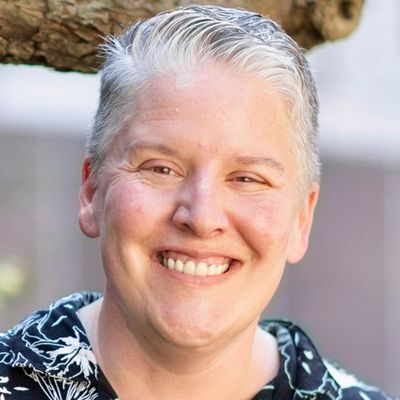
Meet Rowan Jetté Knox, the award-winning Canadian writer and human rights advocate who embodies the power of embracing change and living authentically. Rowan courageously shares his family's journey towards acceptance of both his middle child and wife's transgender identity in his bestselling memoir "Love Lives Here"... Read More
From the show: Was It Chance?
Guests
Featured Shows
About
Meet Rowan Jetté Knox, the award-winning Canadian writer and human rights advocate who embodies the power of embracing change and living authentically. Rowan courageously shares his family's journey towards acceptance of both his middle child and wife's transgender identity in his bestselling memoir "Love Lives Here". This journey, marked by vulnerability and unconditional love, has normalized the existence of LGBTQ2S+ families and sparked international change. Rowan's advocacy extends beyond his personal narrative, confronting the stigma of mental illness and championing the rights of transgender youth. His work has earned him recognition such as the Order of Ottawa. Rowan's story is a testament to the transformative power of embracing truth and living authentically. He first started questioning his own gender while in therapy for deep trauma. Despite the challenges, Rowan has learned valuable lessons about self-worth, the importance of community, and the intentional risks necessary for growth. He reminds us that you don't have to transition to be Trans and encourages those questioning their gender to seek out Trans voices. Rowan's journey, including his own transition and non-monogamous relationships, is a powerful example of what it means to live a life true to oneself.
Connect with Rowan on Instagram, Threads, or his website and grab a copy of his books Love Lives Here and One Sunny Afternoon.
- Make sure to follow this podcast everywhere you find podcasts, leave a rating and a review, and slip into our Instagram DMs at @wasitchance.
- More about Heather via @heather_vickeryandco on Instagram, @Braveheather on TikTok, and listen to The Brave Files
- More about Alan via @theatre_podcast on Instagram and listen to The Theatre Podcast with Alan Seales
If you are struggling and need some support here are trusted resources.
United States:
- The Trevor Project: A national organization providing crisis intervention and suicide prevention services for lesbian, gay, bisexual, transgender, queer, and questioning young people. Available 24/7 at 1-866-488-7386 or by texting START to 678678.
- Trans Lifeline: A peer support service by trans people for trans and questioning folks. Call 877-565-8860.
- National Suicide Prevention Lifeline: Available 24/7 at 1-800-273-TALK (8255).
Canada:
- Kids Help Phone: A 24/7 service providing support for youth. Call 1-800-668-6868 or text CONNECT to 686868.
- Trans Lifeline Canada: A peer support service by trans people for trans and questioning folks. Call 1-877-330-6366.
- Canada Suicide Prevention Service: Available 24/7 at 1-833-456-4566.
EPISODE TAKEAWAYS
- Rowan's Journey: In 2014 Rowan would have described his family as a Mom, Dad and three sons. Shortly thereafter their middle child came out as a Transgender girl (later, non-binary), and then less than two years after Rowan’s spouse came out as a Transgender woman.
- Consciousness of Truth: “We are more subconsciously aware of our truths than we think we are.” When Rowan’s middle child came out he was, at the time, a well-known “mommy blogger” and the post sharing the coming out story of his child went completely viral. There was a little hate but also a massive out pouring of love.
- Expanding Love: Rowan’s family adopted their middle child’s best friend at the age of 15 and beautifully extended their circle of love. It was much easier for Rowan to give love and support to his Trans family members than it was to give it to himself.
- Self-Worth: When the world constantly teaches you that you are NOT worthy of love, it’s nearly impossible to find yourself worthy. Rowan and his wife Zoè are in a Polycule relationship that began in 2022 and now they all live together, very happily, in Toronto.
- Important Reminders: Rowan wants to remind everyone that you do NOT have to transition to be Trans. If you’re questioning your gender start following some trans folks on social media listen to what they have to say and learn from the source.
Transcript
This transcript was automatically generated and might contain errors.
[0:00] Alan Seales: We have a foundation upon which we build our lives. Everybody has it. And mine has just crumbled to the ground several times, explosions. And then I have to sort of look at them and go, what do I build from the rubble? Okay, I gotta build something from the rubble. So you always gotta come back up. You just gotta figure out what it's gonna look like.
[0:25] Heather Vickery: Hi everyone, welcome to Was It Chance, the podcast about embracing opportunity, dealing with Alan Seales, and taking intentional risk for your creative life by Heather Vickery.
[0:35] Alan Seales: And I'm Alan Seales. Listen in as we chat with other successful people about the risks they take and put themselves on the path to creative success.
[0:45] Heather Vickery: Oh, Heather and I started off as two perfect strangers who met by chance and embraced opportunity. And now I'm reading our intro out of order. And that is life, and we roll with it, baby Heather. It's been a little bit of a shit show start. My microphone seems to have gone kaput, and we've just been sh you know shooting the shit for a solid 20 minutes. So whatever, it's all good. I am really glad we have this particular guest today because other somebody might have been very offended by the way this went down, but not the handsome and charming and friendly and wonderful Rowan Jetté Knox, who I'm just gonna say is my friend because we've been like threads friends and I don't know, there's social media's weird, and you like it. We need a word for that. You make so many threads friends, it should be friends. There is a word for it. Friends, are you my are you my are you my friend, Rowan?
[1:32] Rowan Jetté Knox: I am absolutely your friend, Heather. And now now that we have toured around your house trying to find microphone cables, etc. Now we're friend friends. We've taken it offline. I love that. I'm excited for you all to meet Rowan, an award-winning Canadian writer and human rights advocate who embodies the power of embracing change and living authentically. As the author of best-selling memoir, Love Lives Here, Rowan courageously shares his family's journey towards acceptance of their transgender identities. And that doesn't even get to his own. I cannot wait for this conversation. The goal, of course, is to normalize the existence of LGBTQ2S+ families. Also, I am queer and I don't know what all those letters are, Rowan.
I need help. His story is a testament to the transformative power of vulnerability, unconditional love, and the unwavering support of those around us. I'm not gonna read any more of it because we're gonna just get we need to get started. You've won all sorts of awards. You've been written up everywhere. You're very cool. Welcome, Rowan.
[2:35] Rowan Jetté Knox: I I'm just gonna give you the names and sorry, I have a cold, by the way, but I also usually sound this great as well. I just good T voice. Um, if I could just give you the names and numbers of the people who are mean to me in high school, and you could just tell them that I'm very cool.
[3:02] Alan Seales: Yeah, I got it. I got it. I want to talk to that bitch who set you on fire.
[3:06] Rowan Jetté Knox: Oh, yeah, there were two of them. Oh, they were they were nasty. People can be mean. I don't like it.
[3:14] Alan Seales: That's beyond mean.
[3:15] Rowan Jetté Knox: Yeah, yeah, yeah. Uh-uh. Yeah, life-threatening, I think, at that point.
[3:18] Alan Seales: Life-threatening.
[3:19] Rowan Jetté Knox: That's it. So I, as I was prepping for this conversation, I'm like, wow, stuff moves faster than I can keep up with because I know LGBTQIA plus, but I've never heard 2S plus. So can you tell us?
[3:34] Rowan Jetté Knox: Sure. Yeah. 2S is two spirit, which is an indigenous identity. And it embodies all different kinds of things. Like it embodies sexuality and gender. It's basically anybody who is queer and who identifies with that term and is indigenous.
[3:51] Alan Seales: Okay. Oh, indigenous. Thank you for that.
[3:54] Rowan Jetté Knox: Yeah. Yeah, it's a really cool term. Um, and it is, yeah, it's very specifically for indigenous people, but I really like it because it's kind of like saying, I mean, I don't want to, I don't want to say too much because I don't identify as two spirit myself, but it it's a really nice way of saying queer, you know. I mean, two spirit, it you're you're you're more than one spirit. There's something more to you there. I love the the two spirit concept. I don't want to call it, I think I believe it's real. I'm just saying like that as an idea, it feels makes me feel warm and fuzzy inside.
[4:25] Rowan Jetté Knox: Yeah, I agree. Totally. Yeah, it's it's it's wonderful. There's there's a lot of information on it online. If anybody wants to look it up, there's some really really good explanations. Way better than I just gave. Like way better. I've just never seen it listed at the at included in LGBTQ. Um, and I had this whole moment, like, well, I don't know what that means. Should I change it? And I'm like, well, no, I'm not gonna change it because that's what we're in the bio. So let's just talk about it. And there's so much that I want to ask you, and there's so much I want to talk about, but I think it might be easier as we go through the conversation to sort of go backwards, if that feels like it fits you.
You've got two best-selling books out. Um, they talk, well, the first one talks specifically about the transition of both your spouse and one of your children. All of this written as a cis woman, which you reference several times in the book, and you and you sure do are not a cis woman.
[5:21] Rowan Jetté Knox: I am not in fact a cis woman.
[5:23] Alan Seales: No, I know. Isn't that funny?
[5:25] Rowan Jetté Knox: It's funny when I wrote that. Um, a lot of trans people came up to me and they were like, Rowan, you you really, I think this is the best depiction of trans people I've ever seen written by a cis person. I was like, oh, thank you. Why is that slightly uncomfortable to me? But thank you. That's great.
[5:44] Rowan Jetté Knox: And and and the thing to know about me is if you know my if you know anything about me, and we can get into this as well. I'm I'm an open book about this, but if you know about me and you know my past, I carry a lot of childhood trauma, a lot of trauma. And that trauma and everything that I went through, including what we referenced at the beginning being set on fire in front of my school. That was uh the you know, the um catalyst of years and years and years of bullying. But when you look at that, what that taught me was find somewhere to hide. Just find somewhere to hide, just stay there, follow the rules, nobody will bother you. So I convinced myself very, very well for a very, very long time that I was in fact a cisgender woman.
And I started to slowly realize uh after uh um, you know, we can get into that too, but after a breakdown a few years ago, I started to get treatment for my trauma. And as I started to unpack that, I realized that I was actually at least not cisgender. So I decided maybe I was non-binary, and that that fit okay. It worked for a while until it didn't. And I realized unfortunately, sorry, Alan, but you know, you know, unfortunately, that I am a man. Like I wouldn't necessarily have picked it, it's just the truth. Yeah, it was really annoying. It was really annoying to figure that out. I was like, oh no. And I'm really mad, I was actually mad about it. Like I started.
[7:20] Alan Seales: I know.
[7:20] Rowan Jetté Knox: It was so annoying. I was like, no, not after everything I've done and everything I believe in. Oh no.
[7:29] Alan Seales: Yeah.
[7:30] Rowan Jetté Knox: Yeah, you know, it's it's the ultimate. If we we can talk about chance or we can maybe talk about um what I believe more is that we're all on this life path. I really firmly believe that we all come here and we we we have a bit of a plan and maybe we deviate a little bit here and there, but we're all here to learn some lessons, right? And um, so to me, I guess my lesson was ha ha you're actually you're actually full of cooties, you're a boy.
[7:56] Alan Seales: Yeah, yeah.
[7:58] Rowan Jetté Knox: Yeah, my own cooties are kind of nasty. Uh so at this point, I guess when you realized this, were you already in a committed relationship?
[8:06] Rowan Jetté Knox: All right, so I'll set it up for you. Okay. 2014. If you had asked me to describe my family back then, I would have said, uh, we're a mom and a dad and three boys, because that's what we look like to me and to everybody else. And in February of 2014, our very, very unhappy middle child wrote us an email after I had just had this last minute talk about I didn't know it was called gender expression at the time, but it gender expression. We were out hunting for pink shirts for something that happens here in Canada called Pink Shirt Day, and it's an anti bullying, anti-homophobia day. It's it's very prominent in schools, especially, and like a really great parent with ADHD. I did not take them shopping until the night before.
So I'm taking two of the three kids out to find pink shirts. And our little guy at the time, he's he's seven, Jackson. He's getting really mad, right? And he's like, I I don't understand. Like, why can't I find a pink shirt in the boys' section? This is ridiculous. And he's like, I really like pink. And he did like pink. Like he he was the kid who liked having his fingernails painted. He liked to steal my heels sometimes. He was he was that guy, you know. Um, and and so I was like, Yeah, you know what? Did you know that pink used to be a boy color and uh and and blue used to be uh a girl color, and then they switched them around at some point, and that men used to wear heels, and then it became a woman's thing.
You can wear whatever you want, it doesn't say anything about you, whatever you want to wear and whoever you want to be, that's fine. And we went home after finding pink shirts, thank goodness. And I felt like a really good parent to Jackson. And what I didn't know at the time was that we had this other 11-year-old child who had listened to every single word and thought, this is it, this is where I'm gonna come out. So they wrote us an email and they sent it to my partner. And we had been married at that point for 17 years. And uh my partner came into the room and said, You need to read this right now. So uh it it basically said, just please try to understand. Please don't be mad. And so this is 2014, and it's written in 11 year old language, but they said, uh, you know, I'm I'm not I'm not a boy.
Like I'm I think I'm a girl that's trapped in a boy's body. So our child came out to us initially as a trans girl, and then later on, because they learned about non-binary identities realized that's more what I am I'm I'm a non-binary person and ever since then it they they have gone by uh they them pronouns I didn't know what to do uh i just knew that we had to show love because there were many times of my life where i wasn't shown love when i really needed it so i thought you need your parents' love more than anything else in the world so even if we don't fully know what to do with an 11 year old who just said I'm not a boy we have to we have to do something so that's what we did and we went into their room and we just said we love you no matter what uh we're we're gonna be there for you no matter what and we'll figure this all out so that was the first person to come out in my family a year and a half not even a year and a half later just as you know the dust is settling and and you have to understand from my point of view I had learned because I was so horrendously bullied I was so picked on for being different I was I was very obvious early on that I was queer um that my attractions did not lie I was I was raised as a girl and my attractions did not lie with boys although I did try I did try very hard I had boyfriends I just was never into them but um I was picked on very very badly so I learned that in order to stay safe you just fly under the radar and you and you just do what everyone expects you to do.
[12:06] Rowan Jetté Knox: So I had gone on to marry someone that I thought was a man and we had had children and I find out um a year and a half later, after our child comes out, that the person that I married was not in fact a man but a woman. So that's the start.
[12:26] Heather Vickery: And I loved, well, I loved your book. It was heartbreaking and also so heartfilling. But I really loved hearing that part because so I didn't come out as a lesbian until I was 38. And it just it settled so well. It made so much sense to me that of course this person that you chose as your life partner. You're like, well, I don't know why I feel safe with this guy when I haven't felt safe with any guy, because it wasn't, because she wasn't a man. And so to me, that just further shows us that we always are who we are. Again, back to you so beautifully describing what it means to be transgender and not even understanding why you had that language. I was like, oh, this just makes so much sense to me. It felt really lovely to witness that. It was I felt so honored that you shared it with us in a book.
[13:22] Rowan Jetté Knox: We are, first of all, thank you. And and secondly, I think we are more subconsciously aware than we give ourselves credit for. And I think I've talked to a lot of people who've come out, whether it is as gay, as uh pan, as uh as asexual, as trans or non-binary. Like I've talked to so many people who've come out later and they've said, it's like I it's like I knew but I didn't know. I knew but I didn't know, right? Like that I look back and I can see all these times where I was like, oh yeah, that's pretty obvious. Okay, that's pretty obvious. And I knew my sexuality was not straight, although I guess now you could maybe argue that it is. Um, that was the other thing. I was like, I'm a straight white man. Oh I mean, that's why I love the you the term that we've reclaimed queer because it it just shows that uh it's not super heteronormative more than anything.
[14:16] Alan Seales: It exactly. I mean, I think that's that's the thing. One of the things that trans men talk about a lot is feeling like once we transition, like I'm a year onto Sostro now, two, three years from now, I'm probably just gonna look like any other dude walking down the street. And and a lot of trans men I've talked to have said, yeah, it feels like you know, you walk into a queer space and people go, what's that what's that straight white dude doing here, or whatever it might be, right? And and so it's you sort of lose your community a little bit. So yeah, I like to say that I'm queer more than anything because it is true. I mean, I definitely am. Um no matter who I happen to love, my identity is certainly queer.
[14:54] Rowan Jetté Knox: But yeah, so my wife came out and then we had two trans people in a family, and that felt like a really good time to write a book. That felt like a really good time to tell that story because even though there was hardship, even though it wasn't always easy, we had so much love and support as a family. We had built this really beautiful community around us, and our families really, well, frankly, especially mine, really surprised me. My family, my family is Catholic, and I was not sure how they were going to be. But the love that they all have for us far exceeds anything else. And you know, that's you know, Jesus was all about love. And so if you follow that teaching, that's the teaching they went with.
And I love that for all of us. What were you doing then when you decided to write the book? What were you doing then before that? And was this a pivot? Was this a chance you were taking to be like, I'm gonna set aside all of my other hobbies and be an author now? And um, by the way, it's gonna be best selling.
[15:59] Rowan Jetté Knox: Oh, yeah, I did not see that coming at all. I really thought this was gonna be like a niche book. Um I was I'm gonna I'm gonna preface this by saying I was very, very fortunate. So I had a blog and I wrote I when my child first came out as trans, I was going to shut that blog down because there was no way that I was going to out my child to the world. That felt very wrong and very unsafe. And they were the one who said, No, no, no, I really need you to tell this story because it took me a long time to come out to you. I couldn't find a lot of stories of supportive families. I found a lot of really sad stories. So if you could tell this story and just let people know that you can love your child, that would probably help a lot of people. So that was their gift to the world at 11 years old. We had a lot of talks about it before I decided to do it, but that was their gift.
[16:53] Rowan Jetté Knox: Yeah. So I did that first. And then my wife came out.
[16:58] Heather Vickery: You were like, I'm sorry to cut you off. I apologize. You were, and I'm gonna use this term, I think because you've used it. And if you want to cut it out, we can cut it out. You were one of the original mommy bloggers.
[17:09] Rowan Jetté Knox: I was yeah, yeah, you can say mommy blogger. You were big deal in the mommy blogger community. I know you probably don't want to say that, but I think that the stats show that you were. I mean, I wasn't like the blogess who I think was like the the mummy blogger at the time. Like I certainly wasn't way up there, but yeah, I had I had a following. It was, you know, I had a decent following. When I wrote a post about my child, I actually wrote it, I think it was during Oscar's night. I actually I had written it before, but I purposely hit publish during an awards event, thinking no one's gonna read this, but at least I did it. I did it. And then like my little niche people who read me will see it, and that'll be that.
Like that, that's the end. It went viral on award night. Like while everybody was talking about that, suddenly everyone was also talking about this. Not not to the same extent, obviously, but a lot of people who I had never seen talk about my blob before were now talking about my blog. So that was happening, and that was terrifying. And yeah, we got some hate. But overall, it was it was fairly sport. Lost some friends, unfortunately, that happens too. But I mean, yeah, overall, we, you know, it was it was okay. But that transformed everything.
[18:27] Rowan Jetté Knox: We're gonna take a quick break. Stay tuned for more of the episode. And now we're back. Suddenly, I went from just writing about my family and some funny stuff and lightness, you know, just trying to be positive, to writing about what it's like to affirm a trans child. And that that was a very different audience and a very at the time uh newer thing. It wasn't we weren't the first, but we were one of the first.
[19:09] Rowan Jetté Knox: Overall, although she can't be now because she's with me, but she yes, she but but but but you know, just by nature, and I said to her, I'm like, I really want to protect you, and I really, you know, but now, you know, we have there's no way we're too recognizable. People know us all over Canada. There's no way that you can just transition quietly. So that was hard, actually. And one of the reasons why I kept a lot of it for a book, because I wanted to own the story for our family. I wanted to make sure that that story was told kindly, delicately, respectfully, and that it helped people and that it wasn't sensationalized. So that's that is the reason why I wrote that book. Um, and but I wasn't anywhere near writing it the book when I was approached by a publisher. I had an idea of writing the book. And suddenly I had a publisher asking me if I would like to sign a contract to write that book with them.
[20:15] Rowan Jetté Knox: So that's how it happened. So they came to you, but you already had you're already thinking about the process, and they came to you. The publisher came to you and and put this into action. So without that happening, do you think you would have just like continued to write it? Or is was this sort of like the push you needed to get you across the finish line? Because sometimes, you know, you if you're I feel like somebody you said you have ADHD. I'm pretty sure I've undiagnosed ADHD as somebody who just needs constant stimulation and it's easy to get pulled in different directions. Do you think you would have gotten to where you are now without that poll?
[20:52] Rowan Jetté Knox: Probably not. Probably not. That's the truth. I mean, I think I would have written it eventually. I do. I don't think I would have written it at the right time in the right way, with the right supports, because there's a whole team that goes behind you when you write a book. I mean, it's not just you. There are there's an editor or two, there's, you know, there are marketers, there are, you know, people sort of deciding when the book's going to come out. And it they don't a lot of people don't realize that from the time you sign a contract to the time the book is actually on the shelf can be three years. I mean, it's it's it's it's a long time. And I think having well, actually, I'm gonna set the scene for you.
So I'm having this back and forth with with the publishers. And I am the guest speaker at a gala in Ottawa where we used to live. And I'm I am literally at the time putting my dress on, doing my hair, and I get this email from one of the higher-ups in the company. It was like, hey, look, do you do you think you could get me your chapter summary by uh tomorrow morning? I had no idea what a chapter summary was. What is that? I was like, yeah, sure, no problem. I am I am putting on mascara while I am Googling like what is a chapter summary. And I wrote it out while I'm getting ready, and I was like, hope that's good enough. And I just sent it over. It worked, apparently.
[22:24] Rowan Jetté Knox: It was good enough. It worked. Wow. So really your life has been trial by fire, kind of the whole time.
[22:34] Rowan Jetté Knox: The whole time. It was a point to our terms, wasn't it? I'm sorry, Rose. I was like, wait, was that intentional? I've been in therapy. I'm I'm good now. We can make all the jokes you want. And I want to just say that anyone listening, it is not funny. It is not, there's nothing about the trauma that Rowan experienced that is in any way funny. Although I really didn't mean to use that word given your your background. But it's actually funnier because you didn't mean to use it. No, I mean it's not funny. What people, you know, when people are cruel to you, it's not funny. Um, trauma and having to deal with trauma is not funny, which is why I make jokes about it. Because otherwise, the darkness would have swallowed me up years ago.
I know what trauma does to people, and I know what unexpected change can do to people, especially when that unexpected change is not at all in a direction you ever envisioned. And that has been my entire life. My entire life, my first early part of my life was Rowan, if you stand out in any way, everyone's going to hate you, and your life is going to be very dangerous. So don't stand out. And then it was like, hey, the universe is like, you know what? Let's give you a trans child. And I'm not trying to take away my trans child experience and their own thing that they're going through. But from parental perspective. Yeah. Yeah. It's 2014. The world is barely aware that trans children exist. Let's give you a trans child.
Okay, you know what? Now that you're just settling into that, your partner's gonna come out as trans too. Okay. Um that's that's that's not enough. Okay, well, other than we adopted a child, by the way. So now we have four children. We adopted a teenager, our our wonderful daughter Ashley. So we um so we we did that. And then I came out as trans myself a little while later. So many things have happened. So every time I get settled in my life, there's so many things we can get into, but every time I get settled in my life, there's an upheaval. And I look, I I sort of visualize it as we have a foundation upon which we build our lives. Everybody has it. And mine has like just crumbled to the ground several times, explosions.
And then I have to sort of look at them and go, what do I build from the rubble? Okay, I gotta build something from the rubble. So you always gotta come back up. You just gotta figure out what it's gonna look like.
[25:01] Heather Vickery: Oh man, just let me ask something somewhat personal about you said you have four children, and I am I think moderately emotionally stable, uh and arguably, and I Are you talking about yourself?
[25:19] Rowan Jetté Knox: Yeah, I'm definitely talking about me. And moderately, and I have two kids, and there's no way I want three, let alone four. And so what I'm getting at is like with all of this, all of this change that's going through, and all of these uh upheavals, as you put it, that are constantly coming at you, you continue to keep adding children, which I respect so much, but I want to know why you're leaning into that that uh while you're embracing that.
[25:49] Rowan Jetté Knox: Well, I mean, first of all, so you you did you did the the thing where you're like, I have two, this is great. Two is you know, two is level, two is two is. You might have been there, maybe once yeah, Rowan. Yeah, yeah, I get that. And and then it was like, surprise, you're having a third child. So we had all these infertility issues and these fertility issues with our second one. Um, and I thought, well, there's no way we're ever gonna have a third, and then boom, third child. Once you have three, you have fallen over the precipice. That's true. Because I have four, and that's right. And so what's four, right, Heather? Like, like, I mean, you have three. What's a fourth? A fourth, what's a fifth?
Especially if they if if it's a teenager. I mean, teenagers are hard, but uh, you had a really grateful teenager to have a family and a home, and you know, you don't have to change their diaper or feed them, or like exactly. No, she's she's delightful. We love her. Great. She's 22 now. But she's uh, but yeah, we we she came to live with us at 15. She was our uh our non-binary kid's best friend in middle school, and uh was in and out mostly in foster care. And they get to an age, unfortunately, kids in foster care where they're sort of deemed um not adoptable. Yeah, and so they they age out of the system in in in group homes usually, and that just didn't seem right. So our our non-binary kid sat us down and was like, okay, uh I need I I think I think she needs to come live with us.
And we're like, yeah, well, I mean, we've already been through so many things. What's what's one more thing? That that that was easy compared to a whole lot of other things, and and and you just you know, it's just more love, it's just more love, and it's it's more support for the kids when we're no longer here, and it's just it I love it. I love it. I love the chaos. I love I love the unconditional love that it brings to my life. It is the most rewarding thing I have ever done ever.
[27:53] Heather Vickery: I uh is is having these kids. I love that. Okay, so I'm curious. You you went through this process of coming to terms and loving, accepting your trans child, your trans spouse. How was coming to terms with loving and accepting yourself different, if at all, than the other two?
[28:16] Rowan Jetté Knox: It was much harder. Thank you. I figured that it was. Yeah, it was much harder. It is so much easier for me to send that love outward than it is to give it to myself. Right. And it's something that I've had to work on consistently. And my therapist will will definitely agree with me there. Um it is it is really hard when the world did not do a great job at showing you love when you're younger to feel worthy of love, which is ironic because my dead name actually means worthy of love. So funny. So funny. Um you can look up my dead name online if you need it. But it does. That's that look up the meeting then and it will say it's a it's Greek and it means worthy of love. Um it it was really tough.
It was first tough because I was I think my actually my immediate thought was okay, the world did a pretty decent job at accepting two trans people in our family, but we're gonna make a laughing stock of the trans community if I come out too. So I stuffed it down. I was really worried because I I am rather well known in in in queer spaces. And I was very concerned that because I'm also very hated in anti trans spaces. Um I'm well unfortunately well known there too. And so I know that there are people who watch everything I say and everything I do.
[29:51] Rowan Jetté Knox: And if I do anything wrong or deemed wrong, they'll weaponize it against the whole community. And I've seen them do that with other people. I've seen them do that with me. So I didn't want to come out. And so I just stuffed it down and stuffed it down. I'm like, no, this is fine. I'm fine. This is fine. When I figured out that I was trans, like and I needed to transition. If it weren't for my loved ones, I don't know if I would have because I needed that support. So I think I need to go back just a tiny bit and talk about polyamory. Can I do that on here? Can I?
[30:30] Alan Seales: Of course.
[30:32] Rowan Jetté Knox: It was on my list after you gave your permission for anybody listening. I wasn't gonna sick that on her own without permission.
[30:40] Rowan Jetté Knox: Yeah. So polyamory for those who don't know, is it it means you know, it's it's it's a form of ethical non-monogamy, but in in a way that it isn't it isn't just sexual for most people who identify as polyamorous, it means more than one intimate partnership, like a loving romantic partnership. And I was always like, Oh, totally cool with polyamory for other people. Never for me have I mentioned I have four children and that I there's no way, but you know, children get older, and sometimes you just fall head over heels for someone, and I fell head over heels for a woman named Danny, and Danny lived in Toronto. We really tried to be friends for a good while. Really, really tried. And my therapist sat me down one day and I was like, So, when are you going to admit you have feelings for Danny?
And I was like, feelings for Danny, that's silly. And yeah, she really pushed on that one. And I was like, okay, fine. I have feelings for Danny. But even if I have feelings for Danny, that's never gonna work because we're just friends. We're just friends. I went home and I had a conversation with my wife, who is a very open-minded, wonderful, supportive person. And I said, Zoe, I think I might have feelings for Danny. She's like, Oh, yeah, we all knew that. We're just waiting for you to say something. Everybody knows that. Like, okay, good. You admitted it to yourself. So when are you gonna tell her? I'm like, I'm never gonna tell her. And she really did she and Danny's wife, Dame really pushed us together. They both, Danny was already openly polyamorous. And they both really pushed us together in 2022. And so we started dating. And that escalated quickly because now we all live together in Toronto.
[32:35] Rowan Jetté Knox: Um yeah, yeah. So we started dating, and I was like, you know what? Let's start a group chat and just get the two wives in here too, and like they can, you know, everyone can know each other. And Zoe and Dame fell head over heels for each other in this one in a million chance.
[32:53] Alan Seales: Oh my gosh, yeah, right.
[32:56] Rowan Jetté Knox: Yeah, it's it's yeah, Heather. I know you want to ask something about this.
[33:00] Heather Vickery: Well, I don't, I I know the answer to this, but I think that it just continues. It's just such a cool story. All three of your partners are also trans women, yes?
[33:09] Rowan Jetté Knox: Yes, they are.
[33:10] Rowan Jetté Knox: Yeah, yes, they are. So at the time, I am identifying as non-binary, and I am not doing anything medically to transition. Some, some first of all, you don't need to medically transition to be trans. I really want to say that because some people think that you do, like you don't. You absolutely don't. Um, and even if you are a trans woman, you can you can choose not to, or some people just can't, unfortunately, medically transition or a trans man. And there are non-binary people who do transition medically and some who don't, and all of that is totally okay. Um I was not medically transitioning, and I would say that a lot. Like, oh, I don't need to, I don't need to. And like they all knew, which is the funniest thing, right?
Because when you've done this yourself, you can see it in other people. And they're like, Well, Rowan is really persistently saying that he does not need the transition. Wow. Okay, all right. Just kind of waiting. And um, yeah, but we all we all moved in together in this house in Toronto, and it's been wonderful. Like we have this really wonderful life.
[34:15] Rowan Jetté Knox: Um a few months before when Zoe and I first moved into move moved to Toronto. Our children were all older, and it was, you know, was it was a good opportunity for us to move. Toronto's a great city anyway, and I had lived in Ottawa my entire life, so we had not, but I had. And it just, you know, I don't need I'd always said I would never ever leave Ottawa because I do love it there. But um, you know, change I've learned is good, it's healthy, it's growth. So I so we did. Uh I even spearheaded the move, which shocked everybody. Everybody, because you know, I'm very much like a you know, as I've described, very much don't change things that you don't need to change. But yeah, so we moved here.
[35:00] Alan Seales: We're gonna take a quick break. Stay tuned for more of the episode.
[35:04] Rowan Jetté Knox: And now we're back. I guess I I've never asked them, but I feel like Zoe and Danny talked about this a lot without me around. And they both said to me at different times, more than once, you know, Rowan, if you there's something you need to tell us, you can always tell us. And you know, if you ever needed to medically transition, and I know you say you don't need to, and that's fine, but if you ever needed to, just know that whatever you need to do to be happy is you, uh, you know, I support, I love you, and I'll be there for you no matter what. So I had all of this support behind me. I was very really really, really fortunate there. But I I don't know if I if I had stayed in Ottawa, if I had not taken that chance, if I had not left this life that I had carved out for myself, where I was this other person who everybody knew, you know, I would go out on the street and like half the time I get recognized.
People knew me there, right? And I, you know, my name's up on City Hall in three different places. Like I am very, very established there. And it would have been terrifying for me. But coming to a new city and starting a new life and taking these risks, I think that is what unlocked it for me. And I was able to finally do it. So yeah, I I I don't know if I would have done that otherwise.
[36:29] Heather Vickery: What a beautiful story.
[36:31] Rowan Jetté Knox: Right. And then and so now all you're glowing. I wish you could see what maybe we'll be able to pull this as a as a reel as a clip because I I mean that you're like you just look so delightfully happy.
[36:44] Rowan Jetté Knox: Like I want everyone to have the look on their face that you have on your face right now.
[36:48] Rowan Jetté Knox: I smile bigger now. I smile bigger now. I'm calmer now. Uh every day I wake up and think about how fortunate I am. Every single day, even if it's a hard day, I get up, I make my coffee, I sit in the living room, and I look at the trees outside and I hang out with the dog and whoever else makes it down at that time of day. And I just I just think about how fortunate I am. I don't think about years wasted. I think sometimes a lot a lot of trans people will say, like, I wish I had transitioned sooner. And I've never felt that way. I feel like I transitioned when I needed to transition. I needed to go through every single thing that I went through to get here and have the strength to do it. Because uh, as you probably know, Heather, people are not very kind about my transition a lot. And I I don't know if I would have had the strength to go through with it and deal with all of that if I hadn't been through everything else.
[37:48] Heather Vickery: Absolutely.
[38:00] Rowan Jetté Knox: That's the lesson.
[38:02] Rowan Jetté Knox: Yeah, that's that's what it is. It it is very much about like I always try to remind myself, even when I'm in a really bad place or uh like after I came out, I I thought this is gonna tank my career. This is absolutely gonna take everything. But I I had to come out. I had no choice at that point. And I was like, even if I lose everything, I I it's worth it. But yeah, it was it was a hard year. The first year was really tough.
[38:26] Heather Vickery: Well, so on that specifically, your second book, uh One Sunny Afternoon. You came you came out as trans literally days before the second book was released, and the second book is under your dead name, written by your dead name. So how how was that justified? Did your publisher say, like, this is a terrible idea? Did you tell them ahead of time? Like what what what happened here?
[38:50] Rowan Jetté Knox: That was a that was a really tough time. So I have a wonderful literary agent. Um, and uh shout out to Samantha Haywood. She's fantastic. And we were talking about it, and I said, I don't know what to do, Sam. Like I it was it was I think late spring, and the book was scheduled to come out in August. And I said, I think I'm gonna have to tour this as my old name. I'm gonna have to. And uh, and I'll use my old name here because I think it's more, it's it's it's more impactful when you hear what she said to me. But um, I said, I don't think I'm gonna have to tour this under my old name. I'm I'm not gonna have a choice. And she said, Okay, I understand why. I said, like everyone's put so much work and belief into this book and everything, and I don't want to let anyone down.
And she said, Okay, Rowan, I I completely understand where you're coming from here, but I want you to think about what that month or two or three after your book comes out is going to feel like when you are consistently being called Amanda. You are consistently seeing your name up somewhere as Amanda. You are being deadnamed over and over. Like, is that something that you are gonna be able to handle? Because that sounds really painful. And I was like, Yeah, I don't know. And she said, I I think we should talk to them. Let's talk to your publisher. And they were wonderful. They were wonderful. So again, shout out to Penguin Random House. They uh Penguin Random House Canada specifically. They were they were really fantastic.
Like Rome, we got you. We've never done this before. Um I don't I don't think actually anyone has ever done this before. And unfortunately, that book, the the thing again, think about books, they time when they come out, right? So that book had been printed and sitting in warehouses.
[40:45] Rowan Jetté Knox: Yeah, you can't just go ready to go. Change the name, yeah. No, you can't change the name. So what do you do? And it was tough. It was really tough. Um, but you know, we made it work. We made it work. And I was so I didn't care. I already had a bestseller. My my first book was a bestseller. So at this point, I was like, I already have no, but you know what I mean? It was like, I think some people are like, oh, best seller. I mean, to me, it was it was more a book about hope and about, you know, I was like, I don't care. I don't care if it makes lists, I don't care, you know, but I really want people to read the message of the book because the book is about healing from trauma and healing from suicidality and coming back from these horrible places and and finding hope.
So I was like, I don't want to, I don't want to muddy the message. Like I don't, I don't want to do that. That sounds like a really um like a like like I put so much work into this book and it to help people. So I want people to read it. Um, it still made the bestseller list. And that made me so happy that people were able to look beyond what name was on the cover and just go pick it up anyway.
[41:53] Rowan Jetté Knox: Um yeah, but it was a really tough that was a tough year. Tough year because on top of that, the political climate for trans people, like it just got worse and worse. This past year's been horrible for us. And I used to um most of my money like that I make used to come from speaking engagements, and then suddenly the speaking engagements were practically non-existent. And it wasn't just me, it was uh a lot of trans people I know who do this kind of thing for a living, who educate. They weren't getting calls either. Uh people were afraid, and many are still afraid to have a trans person at their company. So it was it was very, very tough. Um, and and I still don't regret it, not for a single day.
[42:37] Heather Vickery: What an incredible message. Your second book is specifically about mental health crisis, really.
[42:45] Rowan Jetté Knox: I for lack of a better term, that's what happened.
[42:48] Rowan Jetté Knox: Um, based on all the things you've shared with us previously, is what led to this. And and I kind of think again, we always show up where we need to be, even though it doesn't always feel that way.
[43:00] Heather Vickery: Of course, that contributed to you hiding. There's the dog shaking, sorry.
[43:06] Rowan Jetté Knox: Um, all of that contributed to you hiding not just who you were from the world, but from yourself for so long. So it it all flows. Are is there gonna be another book?
[43:19] Rowan Jetté Knox: I will neither confirm or deny that there would be a third memoir, which is actually frankly embarrassing. When I I I I sit back and I'm like, I'm 48 years old. Like, how on earth would I have three memoirs in me already? Like, that's like like what is that even? What life is this? What did I sign up for? I'm listening to uh Danny Shapiro's Inheritance right now. I like to listen to memoirs because I really can feel connected to the authors, and she's got like four memoirs out, and she's like 56, so you can do it.
[43:58] Rowan Jetté Knox: Yeah, yeah. I mean, it's it was never my intention to make my life my work. Like that's not what I set out to do. I I was, I mean, I if you look through the things that I did beforehand, um, I ran a uh daycare out of my home. I worked at a school, I worked, I I did support in classrooms. Um, you know, I cleaned houses and I also did uh training as uh on my way to becoming a lactation consultant. So I just sort of like I was a breastfeeding counselor. So I did all of those things. And it just, and then I was I was sort of getting into TV.
[44:40] Rowan Jetté Knox: I was thinking about me, writing a sitcom because I wrote a lot of funny stuff online. So I started looking into writing a sitcom. I even had a pilot all written out, uh, ready, ready to start pitching. And that week that I was going to get ready to pitch it, um, my child came out as trans. And I was like, hit the brakes, hit the brakes and support my child. And then I just never went back because I realized that support was so needed for so many children and so many adults. And I'm not gonna say I'm the best at this job. I'm I I there are some amazing people doing this work, but one thing that I can do is I can talk to people like I'm sitting across from them at a coffee shop and telling them a story.
And that allows me to connect with people who maybe wouldn't listen if I were talking down to them or using a lot of big words or whatever it is that I've I've sometimes seen happen. And so that's my contribution. And it's why I stay in this. Not, it's definitely not for the money. Nope. I'm not the breadwinner in this family, let me tell you.
[45:55] Alan Seales: Okay. Well, so I kind of a two-pronged question that relates to that. You have received a number of honors and awards. Which one are you most proud of or excited by?
[46:08] Rowan Jetté Knox: Oh, okay. I think honestly, um the the one I'm most excited about, the only one hanging on my wall right now is a little plaque from um, I can't remember what year now. Um it was like 10 years ago. Um I I graduated high school at 38 years old. And uh I went back at 37 because I was I was living I was I was living in shelters and halfway houses and stuff when I was you know 16, 15, you know, 16 years old. And and I I just I tried, I kept trying to go to school, and I kept moving so much that it was so hard for me. I was just trying to live. So I went back and I graduated with honors, and I won the English award, which was before I even wrote any books. So that actually is my favorite award. It's not the ones you might be thinking of. That's the one, and that's that's the one that's on my wall.
[47:14] Heather Vickery: That's really cool. That is so amazing. I love that. And my the second part of that question was um for folks who are hearing this and maybe questioning for themselves or want to be supportive of the LGBTQS community. What resources? I know you're a Canadian, and I don't know if you have some in other places, but what resources would you recommend that they just start with? Where would you start?
[47:43] Rowan Jetté Knox: Um, I would definitely start with if you are questioning, say if you're trans, follow some trans people. Um if you if you're questioning, say say you think you might be a trans man, follow some trans men online. Uh go to social media and look some of us up and listen to what we have to say, watch our videos, um, if we've written anything, maybe read those books, um, you know, just look at our social media and learn from the source and learn maybe, you know, see if there's anything you identify with. You'll know pretty quickly if if this is the path that you need to take, probably. And if you don't know very quickly, that's okay too. I didn't know very quickly when I say that, I'm like, don't worry, you're gonna figure it out quickly.
No, that's not always true. Do you know how many trans people I was around all the time before I figured this out? But what I'm saying is, um, you know, definitely that it doesn't matter where you are at that point. That is the beauty of social media. I will talk about how evil it can be till the cows come home because there are some real issues with social media and the hate that people get online and how we end up in these little echo chambers and like you know, all sorts of things that can happen there. But I will say that it if I I grew up in a smaller town outside of a larger city, and I only really knew people who were um well, almost everybody was white, almost everybody was Christian, almost everybody, you know, had this goal of growing up getting a government job because it was, you know, Ottawa, the capital of Canada, and uh and and getting married and having children, getting married to somebody of of another gender and and having children, right?
So this is this is what I learned growing up. If I had been a younger person of this age and I had access to social media, I could have connected with people from all over the world who don't look like me, who don't sound like me, who don't have the same lives as everybody around me. And maybe I would have figured myself out a lot sooner. So that is what I think you should do. Whether you are an ally or whether you are um or whether you are questioning yourself, find community and embrace that community because that's where you're gonna learn the most.
[50:15] Heather Vickery: Yeah. I resonate with that so deeply because I always joke. I didn't like I said, I didn't come out until I was 38. I had four kids, I'd been married a decade. And um, I always say, I guess I just didn't, I didn't find the lesbians in college. The story might have been different if I'd found the lesbians in college, but I didn't know any gay women. I only I knew some gay men, but no gay women, and it just like never occurred to I mean that sounds ridiculous, but I just did the thing that I was told I was always supposed to do, like from society and TV and my parents, and you know, you don't question that unless something makes you question that.
[50:48] Rowan Jetté Knox: Oh, can I, yeah, this is this is another story I have to tell because I think it's so important. So my my mom, when I came out to her, uh well, when so when Zoe came out, I remember she said to me, She said, Oh, oh no, I guess you two are gonna have to get divorced. That's so sad, right? Because in she just thought that I was her daughter and that I was into men. And I had never told I'd figured out by that point that I certainly was leaning lesbian, but I was already married and I didn't, you know, I had all these conflicted feelings, and you know, I I really liked women though. And and I really loved Zoe. So that you know, when she came out, I was like, Oh, great, okay, this works out well and wonderful.
But I had to tell my mom, and I was like, Mom, I just it's like, why didn't you ever tell me that you weren't straight? I'm like, mom, because we were Catholic and there's like everyone around us was straight, and like I just never had the I just I wasn't sure what you would do with that. She's like, Rowan, don't you remember that group of women from work that I used to hang out with all the time and I played guitar with? I'm like, yeah, of course I do. So and so, so and so, yeah, they were all lesbians. Wow. I'm like, why didn't you tell me? She goes, Well, why would I? It just didn't matter. No, but that's why representation matters, and that's why talking about truth matters. That's why we don't say we don't see color, right?
Because our experiences matter. Right, right. And I mean, I don't fault my mom because she's lovely, but like, yeah, but but if I had known that the women coming to our house all the time were lesbians, I think I would have found some community there, even though I I myself am not a lesbian, but I think I would have, I mean, like, wow, queer people in my house. Like that would have been so cool. And and later on, I said to our child, I'm like, hey, kiddo, like, why did it take you so long to come out to us? Like, we've always been really open and told you we'd love you no matter what. And they were like, yeah, but you always said, if you're gay, we'll love you, right? You never said if you're not the gender that you think I am, like we think you are, or you know, that you're trans.
I had never spelled it out. Now, again, 2014, people aren't really talking about being trans. A lot has changed in 10 years. But um, but yes, if I can just get that message out to people, like be very specific. Make sure, especially if you have children, that you just say it doesn't matter who you love, and it doesn't matter what gender you are. Like, be specific so that they know that you're safe. Because we really thought that we had it in the bag, and our child was terrified.
[53:36] Heather Vickery: Wow. Wow. Wow. I'm gonna tell my kids that tonight.
[53:42] Rowan Jetté Knox: Yeah, yeah. Important.
[53:45] Alan Seales: It's such a we're all Alan and I are very rarely left speechless, but we're just both sitting here going, yeah.
[53:52] Heather Vickery: Okay. We're gonna take a quick break. Stay tuned for more of the episode.
[53:58] Rowan Jetté Knox: And now we're back. Can I can I go back to something you had said that you didn't think you needed to clinically transition, but uh uh you've now decided to do the clinical transition and you are now on testosterone. And how has that changed you? How's that changed your brain?
[54:20] Rowan Jetté Knox: Oh, I love this question so much. Okay. Um, so testosterone has obviously done a lot physically. It's changing my body, it's changing my face. I have the worst teen mustache coming in. It's so bad. And I do this every day, several times a day. I'm like always feeling my chin. And I'm like, look, more hairs. And I'm like, feel my muscles, right? Like I'm like, I'm doing the whole teenage boy thing. I'm hungry all the time. So those are all the things that happen, and like I'm getting hairier often in places I don't want to be hairy, but you know, it just is what it is. Um, so a lot of things are changing in that way, but we don't talk about how it changes the brain. And there there are differences.
Now that I've lived on like both sides of like the hormone world, there are absolutely differences for me. Anyway, but I am I'm a lot calmer than I used to be, for sure. But I hear that from trans women too, people who start people who start estrogen. That same thing. So I take a gel, I put a gel on my body every day. You can also take uh injections. There's a few ways to take to have hormones in your body, but I use a gel. And I remember the first time I put that gel on, about three hours later. This it's like a noise in my brain stopped that I didn't even know was there. What? It's like if you've been living in a city your whole life and you drove out to the country and you stepped out of the car and it's silent, and you're like, what is this?
So that's what happened. People often describe that with ADHD meds too. I'm not on meds, but like I have heard that that people take ADHD meds and like, oh wow, like all the noise in my brain calmed down. So it was like that. It's like my brain was like, oh, they're finally, finally figured out what I need. Good job. Good job, bro. And only took you like four decades, four and a half decades. Good job.
[56:11] Rowan Jetté Knox: Yeah, so that happened. The other thing I noticed, and I think this has made me very aware of men's mental health, is that I still cry, I can still cry. I cry less, but the feelings aren't less. So the feelings just kind of get locked in there sometimes. And I have to find a way to release them. And that's hard. Like, I don't think sometimes I think sometimes women think, you know, oh, you know, like just cry more. Sometimes we physically can't cry more. The toxic masculinity is a thing. Um, and and definitely men are taught to be, you know, these macho guys who are like strong and silent, and and all of that stuff is true, and we can do so much to uh unlearn those things as a society and help so many younger men um grow up healthier.
But there is also, I think, a component that has to do with hormones. And so it is a little harder for me, sometimes a lot harder for me to express my feelings. I seem like I don't have feelings, but inside they're all there. So that has definitely happened too.
[57:26] Heather Vickery: Yeah, isn't that weird?
[57:28] Rowan Jetté Knox: It's really fascinating. I'm so grateful to hear you say it because it I just don't think anybody who hasn't experienced it, and because you've experienced it from two different gender perspectives, you can pinpoint it. Like Alan, I don't know that you would know that you have those feelings, but you don't know how like I wouldn't have no perspective on it. Experiencing that. And that does give you such a different perspective on being patient and being understanding and how you can support men in your life.
[57:56] Rowan Jetté Knox: Yeah, yeah, definitely. Also, we brood more. I think this is a thing that I've I've noticed. At least for I say we, I shouldn't make generalizations like that. Like everybody's so different. But I know for me, I now brood more, which is why I have this office you see behind me. It's if you if you are watching any kind of clip online, this office is because my family members were like, you know what, Rowan, I think you just need your own space to go be alone sometimes. And I'm like, Yes, I do. And now I understand the man cave, right? My dad had a garage. He literally built a garage with his own two hands so he could have his own space away from his four children and his wife. And I was like, why? But now I get it.
[58:43] Rowan Jetté Knox: You could also just be a projector in human design. So if you ever want me to pull your human design chart, let me know. Because I'm a projector and I really need my own space. Like it requires sleeping alone on occasion. Yeah. Go on solo retreats. That's a so it could be a man thing or a testosterone thing. Uh also could be your human design. Oh, yeah, absolutely. Could be that too. I guess what I'm trying to say is that I never felt the need for these things before, or at least not as strongly as I do now. So even if they were part of it, they've certainly become more relevant and and and surface level now. So I come in, I come into my little space and like I read books and I like drink a little bit of scotch, and like I just have like my little oh I'm a scotch guy now. I'm like a whiskey man. Like, I don't know what happened to me.
[59:32] Rowan Jetté Knox: And you know, lots of things, lots of things have changed. So you want to talk transition, changing things. I I'm I'm I'm I'm just full in. I'm full in. Um, yeah. So I I I think that that's some of the stuff that has really changed. And I was scared. I was scared of losing when I started tea, like I knew that I had to. I knew that I needed to medically transition. And at the same time, I was really scared of losing the person that I was. And everyone's like, Don't worry, Rowan, you're just gonna become a better version of yourself. And I was like, I'm not so sure. Like, I I'm I'm not sure. But it's true. I actually like who I am a lot better now. Uh and I'm like, I'm excited for things like Halloween now in a way I never was before.
I thought I hated Halloween, like I really did. And then I was in, you know, I was I was in Spirit Halloween not too long ago, and I'm looking around at things, and I was like, I could totally see myself in that that costume, that costume. And I was like, Oh, I just didn't want my femininity. Because you know what, you know, like a lot of like women's costumes tend to be like really accentuate the feminine. Yeah, I hated that. Now I know, right? Now I'm just I mean, I guess I could have just dressed like a hot dog anyway. But now I'm really excited to dress like a hot dog.
[1:00:49] Alan Seales: Of course you could have because pink is for everyone.
[1:00:52] Rowan Jetté Knox: Yeah, that's right. Um yeah, okay. Well, I am pretty sure that if I allowed it to be a four-hour interview, it could be. We could just keep talking, but in the interest of everyone's time and being respectful, like to ask one question that we ask every episode, which is and I I think you might have touched on this, but I'm really curious to hear how you succinctly share it. What is your relationship with failure?
[1:01:16] Rowan Jetté Knox: Oh, that's a big question. Wow, you just throw that at people, huh?
[1:01:21] Heather Vickery: Well, if people listen to the show before the interview, then they know we ask every time.
[1:01:27] Rowan Jetté Knox: Yeah, yeah. I was just telling my partner earlier today, I was like, and I never listen to the podcast that I go on because I just like to go in with no preconceived notions. Now I have regret. I'm regretted. That's not my transition, but this. After this because you know it that's gonna be a great show.
[1:01:43] Alan Seales: Yes, exactly. Exactly. Now I'm a fan.
[1:01:45] Rowan Jetté Knox: Um failure really shows me where I am at with my relationship to myself. So when I fail at something, if I'm in a good head space, if I'm feeling confident and healthy, I can go, okay, that didn't work. What did I learn from it? Because I am I'm a lesson guy. I really like to learn lessons, right? So it's like failure is just getting me closer and closer to what I am trying to achieve. I might change it a little bit here, here, here, but it's okay. When I'm not in a good head space, the shame creeps in. And I go, I'm garbage at this. I should never do this again. I should just go away and and and and hide under my desk and never do anything again. And that's not about the failure itself. It's about an old wound.
It's about hurt inside me. So it's a really good check for me. But when I'm in a good space, yeah, absolutely. If I fail at something, that's okay. It just gives me that opportunity to just try it again in a different way. If we didn't allow ourselves to fail, we would never grow. And we all need to grow.
[1:02:55] Alan Seales: Yeah.
[1:02:55] Rowan Jetté Knox: And I think that that awareness of the way you're gonna respond to the failure tells you where you are. Also could maybe just be a gift, right? Because then you can check your, you can go, I need to get in it into a therapy call, or I need to do some of this self-care stuff that I maybe haven't been prioritize. I don't know about you, but like the rest of the world, prioritizing because when things are good, we sometimes let all that self-care and mental support lack just a little.
[1:03:25] Heather Vickery: We absolutely need it right now.
[1:03:28] Rowan Jetté Knox: Yeah, yeah, I know. I know for me, if I don't take care of myself consistently, I fall apart very quickly. And that's that's a trauma survivor thing too. I have I have a complex PTSD. So I have to exercise, I have to meditate, I have to take time alone, I have to connect with people, and I get regular therapy. And I do all of those things, and I take a little pill every day that helps my brain. And I I do those things all the time, and even still failure can really hurt sometimes. And that's okay. Like it's it's it's all right not to be perfect. So yeah, it's it's about learning to be gentle with yourself, and and we're we're not we're not here to be perfect, we're here to learn.
[1:04:09] Heather Vickery: Yes, yes, yes, yes. Good reminder. Alan likes that reminder every time we have an interview.
[1:04:15] Alan Seales: Yes, yes, I don't have to be perfect.
[1:04:18] Rowan Jetté Knox: Yeah, Alan, you don't have to be perfect.
[1:04:21] Alan Seales: Thank you.
[1:04:22] Rowan Jetté Knox: Thank you. Thank you.
[1:04:22] Alan Seales: I mean, you are perfect, Alan, but you don't have to be.
[1:04:25] Rowan Jetté Knox: Yeah.
[1:04:25] Alan Seales: Oh, thank you.
[1:04:27] Rowan Jetté Knox: Thanks.
[1:04:33] Heather Vickery: So, how can we connect with you online? Plug all your books, your social media, every way that we can reach out if we have questions and and thoughts.
[1:04:45] Rowan Jetté Knox: Yes, our listeners can follow you.
[1:04:47] Rowan Jetté Knox: Okay. Um I am everywhere as Rowan Jetay Nox, J-E-T-T-E-K-N-O-X. Um, you can follow me. I'm most active on threads, I think. I've really found a home on threads. I really like it. Yeah, I love I love threads. It is the new place. Uh, Instagram, blue sky, Facebook. I am the Maven of Mayhem. You will find my personal account under Rowan Jete Nox. I might friend you, I might not, depends on how many friend requests I'm getting because sometimes it gets a little, a little overwhelming. Um, and I have a website, Rowan Jetey Nox.com. Bet you didn't see that one coming. You can also reach me via email that way. If you're trying to send me hate mail, please know that for self-care purposes, I have somebody else read all my email and only send me the happy stuff.
So I do that. I do that because I just started getting so much of it. I was like, nope, nope, I'm too old for this. Um, and uh you can if you're interested, you can read or listen to my books. They are Love Lives Here, a story of thriving in a transgender family, and One Sunny Afternoon, a memoir of trauma and healing. And then there may or may not be a third one. We will never know, or we will never know if there is a third one unless it gets involved.
[1:06:08] Heather Vickery: I hope that we know eventually.
[1:06:10] Rowan Jetté Knox: I'll be lined up. Be on your launch team, whatever you know about it.
[1:06:13] Heather Vickery: Amazing thanks. Um, the books are are really, really good. Not just our uh beautiful, well told stories, but important stories. So I hope y'all will go and check them out. Like I said, I loved listening to them. Um and it is an interesting perspective because you definitely sound different. Um, but you are you, and that shows through all the way. I am so grateful that you came to spend some time with us today, and thank you for your patience with us because we are a little wacky.
[1:06:45] Rowan Jetté Knox: So thank you.
[1:06:46] Rowan Jetté Knox: Hey, look, hit me up if you need another co-host. I'm just I'd be here.
[1:06:50] Heather Vickery: Okay.
[1:06:52] Rowan Jetté Knox: Maybe if one of us can't show up one time, we'll be like, Roman, you want to sub?
[1:06:55] Rowan Jetté Knox: I'm here. I'm here for it.
[1:06:56] Heather Vickery: Yeah.
[1:06:58] Rowan Jetté Knox: Cool.
[1:06:58] Heather Vickery: Thank you.
[1:06:59] Rowan Jetté Knox: Thank you. Thank you. This has been uh so enjoyable. So good.
[1:07:02] Heather Vickery: Thank you.
[1:07:07] Rowan Jetté Knox: Oh my goodness, he was so much fun.
[1:07:09] Heather Vickery: Isn't he great?
[1:07:11] Rowan Jetté Knox: And we were, y'all don't even know. It was 20 minutes of of debacle. If my sound is a little askew, it's because my really fancy microphone is not working, and we tried to troubleshoot and it didn't work. Um, and it was just a little bit of chaos, and Rowan really rolled with the punches well.
[1:07:28] Alan Seales: I feel like Rowan is used to rolling with punches.
[1:07:31] Rowan Jetté Knox: I get that impression.
[1:07:32] Alan Seales: Yeah, yeah.
[1:07:33] Rowan Jetté Knox: Yeah, yeah.
[1:07:34] Alan Seales: I have uh an oh, I was gonna ask him, maybe I'll ask him several. I was gonna ask him how he selected his name because I have a lot of trans friends and I have a trans nephew, and I remember my nephew telling me how he got his name. And I just think it's kind of an interesting, fun thing to do. But I know a lot about trans folks, and I still learn things, and I don't know that you have quite as much exposure as I do. And I'm curious to sort of what your takeaway is from all of that.
[1:08:02] Heather Vickery: That's a really good question. And I'm trying to find a way to answer it succinctly because uh I I am not someone who wants to make a big deal about someone being different, right? They just are who they are. They are queer, they are straight, they just it doesn't matter, they are just them. And while at the same time, how do you balance being an advocate and stand up when you do things that are wrong? When you see people doing things that are wrong, and etc. etc. Right., right? So you can't like let bad stuff happen, but you don't want to just make it a plot point to every freaking movie. So I I have trans friends, I follow trans people. I mean, even before um, I mean, god, this was back in literally 2000-2001.
Eddie Izzard was one of my favorite stand-up comedians, and not and and I just because she was funny, she was fucking funny, not because she put on women's clothing, she just had funny comedy. And I've always just been like you do you, and then after talking with Rowan and just kind of learning, I mean, I've always been a strong believer that sexual orientation is not sexual preference, right? Of course, it's two completely different things. Obviously, we just had an hour interview where Rowan uh exemplifies this. And I don't know, coming out of this conversation, I just feel so uh in in love with him. Is that the right way to put it?
[1:09:31] Alan Seales: Yeah, no, he he's easy to fall in love with. He really is.
[1:09:34] Heather Vickery: Um I fell in love with him as a friend before I realized who he was and who he had published books, the name he had published books under previously. Like, I did not know that connection, and then I was like, Whoa, this is so cool.
[1:09:51] Alan Seales: Oh, right, right, because you knew his books under his dead name, yeah.
[1:09:54] Heather Vickery: No, I knew him on threads as him, and I didn't realize that they were the same people.
[1:10:01] Alan Seales: Oh, yeah, yeah.
[1:10:02] Heather Vickery: But what I love about what you just said, and I think so. I grew up, and you probably did too, in the um colorblind phase where we were supposed to not see color, you're not, it's not supposed to matter. And in theory, that makes sense. But where that falls apart, and it's what you just said or alluded to is we need to recognize and honor the things that set us apart and make us different. And that's how we normalize it. And that's how, you know, that's part of our our chemical makeup. It's what makes us special and unique. So we don't want to erase those things. We want to celebrate them. And I think Rowan does that so magically.
[1:10:44] Alan Seales: Yeah.
[1:10:44] Heather Vickery: Yeah, he really does. And he's an open book about everything. And I think that's needed right now in the last 10 years with the just explosion of social media and the uh even in the last eight years in the US with the explosion of the hate of our political system. We need so many people who are out there fighting for positive change, fighting for uh letting their stories be heard. And these are very personal things and very hard traumas for Rowan to relive. And he's he was like yeah you know like trial by fire you accidentally made that pun and now he can laugh at it but that's really freaking serious that he can he was set on fire to be bullied as a kid and now he's like I've worked through it. I'm cool. Let me tell the story and I'm going to help others through it. Like that that sort of um I I'm I'm so happy and I respect him so much that he can just relive these difficult moments over and over again and help other people find their path forward as well.
[1:11:48] Heather Vickery: Absolutely. I just want to say to anyone who's listening to this who might be questioning or struggling, if you're struggling at all, I'm going to quickly share three uh numbers with you. The trans, this is these are US based, um, and also some in Canada. So the Trans Lifeline is a peer support phone service that's run by trans people. That number in the US is 1877 565 8860. And if you're in Canada, it's one eight seven seven three three zero six three six six. There's also the Trevor Project, which is a crisis intervention and suicide prevention service for LGBTQ youth. Um, that phone number, it is US based, is one eight six six four eight seven three eight six. And then in the US, there's also the LGBTQ national hotline. It is a 247 hotline for support and information and resources. And that number is 1888 843 4564. If you are struggling, please, please reach out and get some help.
[1:12:54] Rowan Jetté Knox: You can also reach out to me if you need to. Um, you know, I can guide you to these places. I don't have the I'm not trained, but I will help. I promise.
[1:13:02] Heather Vickery: And I know that Alan would do this too.
[1:13:04] Alan Seales: And if they want to reach out, how can they do that?
[1:13:06] Heather Vickery: Oh, hey, nice transition there. Uh, we are in most of the places. They, if you want to send us a DM on Instagram, we are wasitchance on Instagram and on threads. We check those DMs ourselves. Actually, I check those DMs myself, and then sometimes I share that information with Alan. But usually it's just me, Heather Vickery on the other end of that, uh, even though I sign both of our names. And we are on threads. We are on TikTok at wasitchance pod uh and YouTube. Was it chance? You can email us, was it chance podcast at gmail.com. We would love to hear from you.
[1:13:40] Alan Seales: We would love to hear from you, wouldn't we, Alan?
[1:13:42] Alan Seales: Yes, we would.
[1:13:43] Heather Vickery: And I see the notifications. I know you're on them, so I just don't respond.
[1:13:46] Alan Seales: We don't need to.
[1:13:47] Heather Vickery: We'll take care of it.
[1:13:48] Alan Seales: I got you.
[1:13:48] Heather Vickery: You do you pull your weight, I pull mine. It works out.
[1:13:51] Alan Seales: That's right.
[1:13:52] Heather Vickery: That's right. Folks, thank you so much for being here with us today for this absolutely incredible and important conversation. You've been listening to Was It Chance, the podcast about embracing opportunity and taking intentional risk for your creative life. I'm Heather Vickery.
[1:14:06] Alan Seales: And I'm Alan Seales.
[1:14:09] Heather Vickery: And we're going to talk to you next time.
[1:14:11] Alan Seales: Bye.
[1:14:12] Heather Vickery: Bye-bye.
© Broadway Podcast Network, All Rights Reserved