

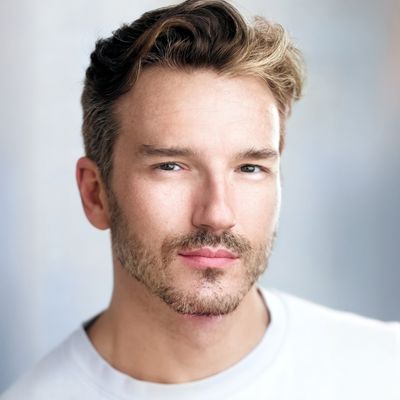
Meet Pepe Muñoz, the artist whose path from professional dancer to renowned fashion illustrator and now Broadway performer will leave you inspired. With a career marked by intuition and bold risks, Pepe has seamlessly merged his passions for movement and visual art... Read More
From the show: Was It Chance?
Guests
Featured Shows
About
Meet Pepe Muñoz, the artist whose path from professional dancer to renowned fashion illustrator and now Broadway performer will leave you inspired. With a career marked by intuition and bold risks, Pepe has seamlessly merged his passions for movement and visual art. From collaborating with Céline Dion to gracing the stages of Paris Couture Fashion Week and Broadway's Moulin Rouge, Pepe's story is a testament to the power of embracing one's versatility and trusting the universe's plan.
Connect with Pepe on Instagram and TikTok.
- Make sure to follow this podcast everywhere you find podcasts, leave a rating and a review, and slip into our Instagram DMs at @wasitchance.
- More about Heather via her website and connect with her on LinkedIn, YouTube, and BlueSky. Listen to The Brave Files
- More about Alan via @theatre_podcast on Instagram and listen to The Theatre Podcast with Alan Seales
Key Episode Takeaways:
- Intuition guides purpose: Pepe's decisions, from quitting a stable job to pursue illustration to taking on new performance roles, have been led by a strong trust in his gut feelings.
- Versatility is strength: Rather than limiting himself to one field, Pepe has allowed his various skills in dance, illustration, and theater to fuel his creative journey.
- Hard work meets opportunity: While Pepe has certainly seized chance opportunities, he emphasizes that his success stems from a foundation of relentless hard work and dedication.
- Self-definition holds power: Pepe believes that the labels you choose for yourself carry greater significance than external measures of success.
- Openness allows growth: Even at the height of his Broadway success, Pepe remains open to the universe's next path and how his skills can continue to evolve.
- Support nurtures the soul: Pepe credits his husband with providing constant reminders of his worth, highlighting the importance of a strong support system in any creative endeavor.
Transcript
This transcript was automatically generated and might contain errors.
[0:00] Pepe Muñoz: Make it up as you go, and just convince yourself that you are, because that’s what I did. And I didn’t know that I was manifesting, I didn’t know that was a thing. But I literally, I was still in Vegas performing, and when I went, I would meet somebody new, they would say, so what do you do? And I would say, I’m an illustrator. Lies! Lies! I had just bought a sketchbook and a pen, and I was still performing in a G string in Cirque du Soleil. But I kept telling people, I’m an illustrator. This is who I am.
[0:28] Heather Vickery: Hey folks, welcome to Was It Chance?, the podcast about embracing opportunity and taking intentional risk for your creative life. I’m Heather Vickery.
[0:42] Alan Seales: Oh hey, I didn’t see you there. Hey, I’m Alan Seales. Heather and I started off as two perfect strangers who met by chance and embraced opportunity. Listen in as we chat with other successful people about the risks they’ve taken to put themselves on a path to creative success. Nice to see you, Heather. How are you doing today?
[0:59] Heather Vickery: It’s nice to see you too. I was actually thinking today, I was going to try really hard not to laugh while you did your portion of the intro.
[1:08] Alan Seales: Fail.
[1:09] Heather Vickery: I can’t do it, and everyone wants to know what, they’re like, what is wrong with her that she’s laughing in every intro? And it is because Alan Seales acts a fool and makes me laugh, and it’s one of the reasons I love you.
[1:20] Alan Seales: I got to keep my morning sane somehow. Listen.
[1:23] Heather Vickery: Somehow. I guess it’s at my expense, but that’s okay.
[1:27] Alan Seales: No, it’s not your expense.
[1:28] Heather Vickery: We should do a little montage of Alan and me laughing.
[1:33] Alan Seales: It’s partnership. Oh, there you go. There you go.
[1:35] Heather Vickery: Okay, okay. Let’s get down to business. Alan, who is joining us on the podcast today?
[1:40] Alan Seales: Get down to brass tacks. Let’s get down to business. All right. Our guest today is Pepe Muñoz, and Pepe is a multifaceted artist whose journey from dancer to acclaimed fashion illustrator has captivated audiences worldwide. He is known for his close creative partnership with Céline Dion, and he seamlessly transitioned from the stage to the art world and then back again, but he gained attention for stunning illustrations featured in major fashion showcases like the Paris Couture Fashion Week. Did I say that right? I don’t know. His work embodies elegance and passion, blending his deep-rooted love for movement and visual art. So now, we are going to get into the inspiring story of Pepe Muñoz, a true testament to artistic versatility and innovation, but also make sure to catch him on stage now as Santiago in the Broadway production of Moulin Rouge. Pepe Muñoz, welcome to Was It Chance? Ta-da!
[2:38] Pepe Muñoz: Hi, good morning. We’re so glad to have you here. We had a little rough start. We had some tech stuff and we did some deep breathing. We’re good now. We’re so excited to have you here. I stopped sweating. Thank you for having me.
[2:51] Alan Seales: Listen, once you realize that all of us are just here to, like, give each other shit.
[2:56] Pepe Muñoz: Give each other shit? I give my chef shit.
[2:58] Alan Seales: No, we can’t talk today.
[3:00] Pepe Muñoz: No.
[3:01] Alan Seales: You guys were so calm, and I was literally panicking, sweating, testing my neighbor. I was like, I need wire headphones. No wire hangers.
[3:09] Pepe Muñoz: That was great. It seems to me that you might be too young to know that reference, but also I loved it.
[3:18] Pepe Muñoz: But I am very gay, so I do know that reference.
[3:22] Alan Seales: I love that. Oh, that’s perfect. Oh, my God, that’s so great. No, anyway, thank you for having me. Thank you so much for having me.
[3:30] Heather Vickery: So your background is so incredibly cool. I was going to say weird, but it’s not weird. It’s just unique and full of, I guess, creative manifestation and taking challenges and risks. Because I think, if I have this right, well, you tell the story, but you were, you’re from Spain, yes?
[3:51] Pepe Muñoz: I’m from Spain. I’m from Malaga, the south of Spain, yeah.
[3:54] Heather Vickery: And then what got you into dancing? Because that was like where you were sort of aiming first, right?
[3:59] Pepe Muñoz: Yeah, it was very, very, you said weird, and I can say also that it was very weird. Everything that’s happened in my life has been very unexpected, and I’ve just taken a leap and just said, OK, why not? But when I was 13, I came to New York, and I saw Cats at the Winter Garden Theatre when I was a 13-year-old. And if you ask my friends in high school, I never said I wanted to be a dancer. I said, I want to be a Jellicle. I didn’t want to be in any other show ever. There was no need. My goal was to be a Jellicle cat. That’s all I needed.
[4:35] Heather Vickery: Which one? Which cat?
[4:38] Pepe Muñoz: Yeah, which cat?
[4:40] Pepe Muñoz: I didn’t even care. I didn’t care. I just wanted to wear leg warmers and kick my legs and be a Jellicle.
[4:47] Heather Vickery: You need to be a guest on our fellow podcast, The Wrong Cat Died.
[4:54] Pepe Muñoz: Yeah.
[4:55] Pepe Muñoz: I heard about this, but a few friends of mine have been. I already gave your information to Mike Abrams, the host of that podcast, so he will be reaching out.
[5:04] Pepe Muñoz: I would love, because I did it in three different languages, in so many countries. I guess I manifested that. I also grew up in a time with no YouTube, no Google, no nothing. So I had this little brochure, a little triptych that I took home with me. And I would look at that thing over and over and over to the point where, and you’re going to laugh at this, I did a Royal Ballet Summer Intensive in London. And I had leg warmers on my arms during ballet class at the Royal Ballet in London. And the teacher came to me and said, Would you mind taking those off? And I said, I can’t. I’m a Jellicle.
[5:45] Pepe Muñoz: Like an original furry before they were furry. And I have witnesses that work in the business. Drew McHoney, who directed King Kong here on Broadway, was in my class. And he tells his story all the time. Anyway, I was convinced I was going to be a Jellicle, and that’s the only thing I wanted. And then it was fast forward to 2003. I’m in Madrid taking another summer course, ballet. And we went to see Phantom of the Opera that was playing in Madrid. And I didn’t know, I did not know they were going to do Cats in Madrid. And that day when we went to see Phantom, it was a Saturday, we bought tickets. And my friends, we were all from the ballet summer thing, we started dancing for money. We started dancing in the Gran Via in Madrid, which is the little Broadway.
And we put a hat on the floor, and people started taking pictures. And the resident choreographer of Cats was walking to see Phantom. And they saw us. And they asked for a phone number. And I went to a casting call. I was 19. I had never sang before. I had never performed professionally. And I went to this audition, and I got Cats in Madrid. So, this little boy, suddenly, who had been wearing leg warmers in my arms for years, was auditioning for Cats in Madrid. And it was, yeah, it was very crazy. Everything in life has been very unexpected. There have been very dark times where I don’t know where life is going to take me. And I don’t know what I want to manifest. But somehow, the universe seems to guide me in the right way.
[7:24] Heather Vickery: Who did you get cast as?
[7:26] Pepe Muñoz: I was Macavity, Understudy, Rumtum Tiger, and Munkestrup. I was 19, which was crazy. But then, not only that, I finished after a year. And I needed more. The show closed, and I needed more. So, I learned the German cast. I learned German, just to be in Cats in Germany. That’s how much I loved the show.
[7:46] Heather Vickery: Wait, did they translate the songs to German and to Spanish?
[7:50] Pepe Muñoz: Everything is in German. Everything was in Spanish.
[7:53] Pepe Muñoz: So, I’ve done the show in three languages. That’s how much I love it.
[7:56] Heather Vickery: How do you say Macavity’s not there in German?
[7:58] Pepe Muñoz: Macavity’s nicht da.
[8:02] Pepe Muñoz: Macavity’s nicht da. And in Madrid, it was Macavity’s no está.
[8:10] Heather Vickery: I love it. Okay, so really, taking intentional risk has just come naturally to you since you were 13.
[8:18] Pepe Muñoz: Yes, but I didn’t know this was a thing. I didn’t know. I wasn’t aware. And then, years later, somebody gave me the secret, the book. And I didn’t even finish it, because after four pages, I said, Wait, this is what I’ve been doing all my life without knowing. I wasn’t aware. I didn’t do it on purpose. I didn’t do it. I didn’t know there was a technique. I didn’t know that this was a thing that people do, manifestations. I just really wanted it. That’s all. I just really loved it.
[8:43] Heather Vickery: Yeah, but that’s actually something I love about super intuitive people. And you and I are similar in that way, Pepe. I’m learning all of these things. I’ve been studying all of these things for a decade. But as I discovered them, I was like, Well, I already do that. No, I already do that. That’s natural for me. I already do that. So folks who are super connected to their intuition, we’ve sort of just known. Like, that’s the thing, but we didn’t know why. And getting the science behind it, I think, is incredibly cool and just very validating. But I feel you on that.
[9:18] Pepe Muñoz: Yeah, and it’s very interesting, because people would ask me during my performing career. It’s always a very common question. What do you want to do after? What do you want to do after? And I didn’t know there was an after. I thought I was going to dance for the rest of my life. But I couldn’t, or I didn’t want to. And then I started my other career by accident. I think the other career found me.
[9:41] Heather Vickery: So, but then I’m back on stage.
[9:43] Pepe Muñoz: As an illustrator, you mean?
[9:44] Pepe Muñoz: Yeah, yeah, yeah. I was doing Cirque du Soleil in Vegas. And I did a show called Zumanity, which was designed by Thierry Mugler.
[9:51] Heather Vickery: I’ve seen Zumanity.
[9:52] Pepe Muñoz: Me too.
[9:53] Alan Seales: Oh, yeah. I was there. I was one of the, it was called the two-man act. We were two guys.
[9:57] Pepe Muñoz: Love.
[9:59] Alan Seales: Back in the day, we danced and then we kissed. And for a European, it meant nothing. But I guess in Vegas, it was very outrageous.
[10:06] Pepe Muñoz: Yes.
[10:07] Alan Seales: So risky, two boys kissing.
[10:09] Pepe Muñoz: Yeah.
[10:10] Alan Seales: So how do you say Macavity’s in Cirque du Soleil in German?
[10:17] Pepe Muñoz: Macavity hat in Cirque du Soleil gearbeitet.
[10:25] Alan Seales: So how did you end up doing Cirque?
[10:28] Pepe Muñoz: So, and this is why I think life has been always very kind to me. I did Cats Madrid. I did Cats in Germany. After two and a half years of Cats, I thought I had to dance something else because I had never been a human on stage. So I thought to myself, hey, if you want to be a performer in musical theatre and show business, you should do a different show. So I was in Germany already and they were doing Dirty Dancing in Hamburg. So I thought, okay, I’m going to audition for the show. And I got the job and I joined the company. And the first day, theatres in Germany, I don’t know if you’ve been to any there, but musical theatre in Germany is huge. I had no idea.
[12:31] Pepe Muñoz: Based on a true story… So I guess that stayed in my brain for years and years. And then I left the show, did musicals in Europe, came back to Vegas in 2012. And if you really want to know the whole tea, my grandpa was an illustrator. Because he died before I was born. And when I was in Vegas, my grandmother passed. And out of nowhere, out of absolutely nowhere, this cathartic moment came up to me. And I started drawing and drawing and drawing and drawing. And I went to the office and I told the resident director that I was done performing and that I was an illustrator. And she said, have you drawn before? And I said, nope. And she said, but you're leaving Cirque with health insurance to be an illustrator.
And I said, yes. Trust in that intuition, baby. I said, yes. And I left. I left Cirque. I went back to Spain to my parents' basement, trying to figure it out. The drawings weren't very good. And nobody told me. Nobody told me, Pepe, this is bad. But I was convinced deep within that I was an illustrator. And I said, never, never, I won't dance ever again. Oh, well, and also, that didn't stick either. That didn't stick either.
[14:15] Alan Seales: So, okay. I want to pull your human design chart, Pepe. You've got to be a manifesting generator. No, so at some point, and this happened a few years ago, I told my husband, you know what, mi amor? I'm just going to let the universe decide for me. Because whatever I decide, they have a plan that turns out to be a little better than what I had predicted. So I'm here for it. I'm here for it. And that's how I ended up now on Broadway, which was a dream of mine. I did a stupid high school show called A Dream Called Broadway that I designed with my friends at 16.
[14:49] Pepe Muñoz: That's so cool. Okay, so let's talk about the illustrator work for a while. What did that look like? What did you love about it? And then when the universe gave you a new path and option, what led you out of it? Yeah, yeah. So this is what happened. I was in Cirque. I started drawing, and then it didn't happen in two days, but what happened over three, four months, I suddenly realized that I never thought something was going to bring me as much pleasure as performing. So one day, I just looked at the desk. I was about to go to work to the theater, and I realized that I didn't want to leave the apartment to go to the theater and be in a G-string in Vegas on a stage. I wanted to stay home and draw.
So that's what triggered my, I have to be done. So then I left, went back to Spain. How things happen in life, a friend of mine who was a babysitter for Celine Dion's kids in Vegas, who was a retired performer in Vegas as well, contacted me out of nowhere saying, Pepe, are you in town? And I said, no, I'm not in humanity anymore. I'm back in Spain. Why? She said, oh, because I work for Celine, and Celine is looking for one dancer to go on tour. And I thought of you, because you're tall, and you can dance, you're good at partnering, whatever. So I said, oh. So I went to Vegas. I auditioned for her. I got the job. And that is what kind of took off in terms of illustration, because I started working for Celine.
I said, her dancer, and she didn't know that I drew. But one day, she saw me drawing, and then she asked me, hey, you draw? And I said, oh, yeah, yeah, yeah. I wasn't dancing anymore. I was retired. She was like, oh, but this is fashion. You like fashion? I said, I love fashion. She went, oh, me too. I said, I know. And then it became a very natural and organic, do you want to come to a show with me? I would love to go to a show with you. Do you want to come shopping? I need help. So then it became kind of just an artistic collaborative partnership in terms of she was pulling out of me everything that I could do, and I loved it, because I was dancing with her on stage, but then she also wanted me to help with some staging and some artistic direction and some styling.
So that was 2017, 2018, 19. And right before COVID, I was part of her creative team, and I would use my illustration abilities to, if somebody wanted to make custom gowns for her, I would draw the modifications, and we would send them back to Paris, and we would be at fittings with her, and I would help her. Maybe the neckline should be more like this. And it was a very—I never thought that celebrity styling was something for me, and clearly it's not, because I don't love it. I haven't pursued it after my adventure with Celine was over. But it led me into the fashion world, and it led me into the people who saw my work. And now I get opportunities thanks to that chapter of my life that was very intense, but very wonderful.
[17:57] Pepe Muñoz: We're going to take a quick break. Stay tuned for more of the episode. And now we're back. What I do is I draw what other people have designed. So what I love is helping and—how do you say?—adding what has already been created. So, for example, Carolina Herrera, the designer, they hired me to make some video content for their perfumes. So what I did was the gowns that were already designed, I made some videos of the dresses with—you know, I do watercolor and ink. So it's very flowy, and it moves. So I create content for them. I draw at events. So I've drawn for Manolo Blahnik. I've drawn for Messica, the jewelry brand. So, yeah, there's a gallery in Palm Springs that contacted me a few years ago, and I sell my work there.
In fact, you can't see, but their floor is full of papers, because I have to send more pieces to the gallery for next week, because there's a party. No, so illustration just feels like it's a part of you, I think. The way you talk about it is different, believe it or not, than the way you talked about being a Jellicoe cat.
[19:06] Alan Seales: Yeah, I think—it's wild. I think—and maybe this is getting too personal, but maybe I can help someone out there by saying these things—being on stage naked and being in a G-string in a Cirque du Soleil show in Vegas was a little bit traumatizing for me, in terms of we already come with body dysmorphia and a lot of issues as people. Not even gay people, just people. So to be on stage and have to dance and have to stay, you know, the weight, the diet, the blah, blah, blah. Suddenly, illustration was something that was making me very happy without an image, without me being Pepe as Pepe with my face or my arms or my body. People were buying the art because of what I was making, and that was making me very, very, very happy.
In fact, it still makes me happy now. On social media, you know, you can post a picture of yourself and when people comment about you, yeah. But when I post something and people say, hey, I want to buy this or I love your work, that gives me much more satisfaction than, oh, I saw your show and you look great. Thanks. Thanks. That's great. I love singing and dancing, but do you want some art?
[20:10] Pepe Muñoz: Is that something that you want to pursue in parallel to, like, on stage and performing? Like, do you want to start sort of your own fashion line? No, no. I want to help. If there's designers out there, like, for example, I work with a designer called Christian Cowan, which is wonderful, here based in New York. And I help him with the illustrations because he's so busy. So when they need artwork to send to celebrities or custom clients, I do that. And I would love to do that for more designers, you know. But I love creating my own just drawings. I mean, yeah, I just want to draw. I don't want to design costumes or clothes. I just want to paint them.
[20:47] Alan Seales: Have you ever worked with Kenneth Cole?
[20:50] Pepe Muñoz: No. But I've heard of Kenneth Cole.
[20:52] Alan Seales: Of course you have.
[20:53] Pepe Muñoz: Yeah.
[20:55] Alan Seales: All right. All right. I got a connection. I got an in with Kenneth.
[20:56] Pepe Muñoz: Are you serious?
[20:59] Alan Seales: Listen, absolutely. I never say no. And like I say, I'll send my portfolio. And if they don't like it, it's okay.
[21:06] Pepe Muñoz: Yeah.
[21:08] Alan Seales: Yeah, we'll connect offline. We'll get your portfolio and I'll send it to his people.
[21:11] Pepe Muñoz: Thank you so much. Alan's such a master connector. I love that. Thank you.
[21:15] Alan Seales: Okay. So I'm curious with all of these different mediums, right? Dance, illustration, theater. How do these art forms intersect in your mind, in your life? And how does it influence your work?
[21:28] Pepe Muñoz: I always thought that by saying I was something, it was excluding the other thing. So for example, when I started illustrating, I never told anybody that I was a dancer because I thought it would make me less of an illustrator. Fast forward seven, eight years now, I've realized that I'm just Pepe. And Pepe does these things. So if you want me to sing and dance, I can do that. I did that for years and I can still do it okay. But I also draw, you know? And I can also do other things. So I've come to understand that we are more complex than just one thing, you know? So yeah, I don't really know how to find the words around it. But doing something else doesn't delete the other side of your talent.
[22:21] Alan Seales: Well, it shouldn't. Does that make any sense? I think it should all add on. Everything should augment.
[22:25] Pepe Muñoz: Yeah, yeah. But for years, I thought it was the opposite. I don't know why.
[22:29] Alan Seales: Well, so go ahead.
[22:32] Pepe Muñoz: Well, I think it's very programmed into us. Pick one thing, stick with it. Don't change your mind. See it all the way through. And so, right? That's why I think you're a manifesting generator. And I don't think you know what I mean when I say that. It's human design. I'm a human design reader. It's really cool. But manifesting generators are designed to be multi-passionate. So I bet money on it. If you ever want me to do your reading, let me know. But I think I imagine for you there is intersection, right? When you're watching a show or when you're dancing, can you see it translated into illustrations? Is that just something like, yeah?
[23:07] Pepe Muñoz: Oh, absolutely, absolutely. And many people told me, and I didn't realize, but many people told me when they saw my art at the very beginning and even now, they always say, oh, the way you capture movement. And I always say, oh, because I was a dancer. Because movement is what drives me. Movement, everything is movement. Even when I watch a fashion show, I go, oh, the artistic expression or the movement, the way the things move. It's not just this static aspect of things. And that's the dance. Or when people told me, oh, my goodness, you've gotten, your style has developed so much. I think it's because the discipline of the dance world, you know? It's never good enough. You always keep going. I didn't give up because I knew that when I started dancing, it wasn't good at first, but it got better. So I had that vision perhaps of thinking, if I keep going, it has to get better. Practice makes perfect, they say, no?
[24:02] Pepe Muñoz: Things you’ve probably never heard about from the beauty of music. We get more inspired, and I’m not talking about the current state of the world, but we get more inspired when times are tough, you know? And we get more united.
[25:09] Alan Seales: Well, that is true. Because we’re all looking, like, how are we going to reinvent and protect and reinforce and collaborate in the face of the shit show that we’re currently in.
[25:22] Pepe Muñoz: Exactly. That’s cool. That’s really cool. So, what’s something, though, that you have been afraid to try in this area? Because if you’re, like, all of a sudden, you’re just like, yeah, I’m just going to go fly to Vegas and audition from Spain. Not even, like, a two-hour trip from L.A. or three-hour, you know? Like, you’re traveling countries just to audition.
[25:43] Pepe Muñoz: Yes. There was, when these things have happened in the past, I was younger, so you’re, I don’t know if this is a thing or a term, but your risk consciousness is lower.
[25:56] Alan Seales: Sure.
[25:57] Pepe Muñoz: Yeah. So, when I went to that audition in Vegas, it was the first time Cirque held an open call for dancers, and I remember going to the thing, and it was full, they weren’t letting any other people in. And I remember knocking on the little window, and I said, no, no, no, you don’t understand. I flew from Germany. I must be seen. And I got very nervous, because I thought, I must be seen, you have been taking me for somebody else. No, I was like, I must be, please, at least let me dance. It doesn’t matter if, even if I don’t get the job, but I, there’s this, there’s this thing that I’ve had inside of me when I was younger that there was no question. Is that a thing? There was no question. It’s like, no, it has to work, because it must. I, I don’t know, I don’t know, and I’m not saying must getting the job, but I must go and dance there, because.
[26:47] Alan Seales: You must at least get an opportunity.
[26:48] Pepe Muñoz: Yes. Yeah. Exactly, exactly. I didn’t, I don’t mean I deserve it. No, no, no, no, no. I was like, Vegas? There was no doubt. I was like, oh yeah, I’m going, and if nothing happens, I’ve discovered Vegas, and I made friends along the way, and then I came back, and that’s an experience that nobody will take from me, but then it turned out that I got the job, so then it always brought me something else after, and it’s been really crazy.
[27:11] Alan Seales: What’s something unexpected that it brought you, though? You know, like you went over to be a dancer. I guess the, the, the fashion side, right, the, the illustrator side?
[27:19] Pepe Muñoz: Yeah, yeah, the being, the being so connected with, but I didn’t know that until the second time I did Zumanity, because I did the show twice. So the first time I was so young, and I just remember, I remember seeing people in Cirque, they stay for many, many years in the same show, but I was very young, and I still wanted to work, so I decided, no, I’m gonna, just gonna do a year, and then I’m gonna do other things, but I remember, I went back to Europe, and then Cats was doing a, a European tour, and they needed a swing for six weeks. I took that job, because I didn’t have anything else, and somebody in that cast said to me, Have you ever done Chicago? And I said, No. They said, Oh, I know the dance captain in London, you’re, you’re really the type they look for, let me send him a message.
So then I went to that audition that they invited me to, with no resume, no headshot, no nothing, I just showed up, and I got the job, and that brought me to London, to the West End. So I thought, Oh, okay. So it’s always been little, like, wonderful accidents all my life, like, wonderful coincidences, and wonderful, and I’m so grateful.
[28:21] Alan Seales: I mean, essentially, your whole life is what this show is about. One intentional risk after another.
[28:26] Pepe Muñoz: Yeah. And then what took you back to Broadway, and now in Moulin Rouge, and all of this, like, you had two careers prior to this one. Broadway, I have the goodbye poster, we had a poster in Cats Madrid in 2004, and one of my castmates wrote, Good luck on everything, I’ll see you on Broadway. And that was in 2004, because I always talked about Broadway, you know, you guys are American, and you live here, and Broadway is just there. For Europeans, or especially for Spaniards, who dream about musical theatre, Broadway is the top. Broadway is the top, it’s the Mecca, it’s the creme de la creme, it’s Broadway. But there’s always all these things that, you know, you’re not from here, you don’t have a work permit, it’s just really complicated.
So throughout my career, and especially when I left Cirque, I decided, You know what, Pepe? You didn’t make it on Broadway, and that’s okay, that doesn’t make you less of a performer. So I had made my peace with not having made it. Because for me, as a musical theatre performer, I guess, because I didn’t perform on Broadway, I was thinking, there was just a little bit that I, not regret, not sadness, there was just like, oh. But I was really content with my career, and thinking, it’s been great. Fast forward, I moved to New York in 2018, I meet Brayden Newby, my wonderful husband, and we start dating, and he’s a performer, he’s a wonderful dancer, and his dream was Broadway too. So I thought, oh, life is teaching me.
Now it’s not my dream anymore. We can struggle together! No, but it was different, because I was drawing, and I was working for Celine at the time, and dancing was not on my radar anymore. But I thought, life is sending me a lesson, life is sending me a message. Hey, now it’s his dream, so support as much as you can, and help him. And it’s not that I, I never thought, when I met my husband, and he is still a wonderful performer, I never thought how proud my parents were watching me perform, until I saw my husband perform the way he does. And I went, oh, wait, wait, wait, this is why my mom gets so excited after a show. I didn’t know you could feel like that for somebody else. Does that make sense?
[30:45] Alan Seales: Of course it does!
[30:46] Pepe Muñoz: It was weird! I love that! It was so weird! Like, waiting at the stage door with flowers for him was better than being in Cirque! It has no price! Like to see him perform, it was amazing! So then, COVID happened, everything stopped, fast forward, I don’t work for Celine anymore, we’re both in New York, and he gets Moulin Rouge, the national tour, he gets the job. And we are over the moon, it’s right after COVID, nobody has a job, he’s about to go on this wonderful national tour, and I went to visit him constantly, because I didn’t have a job, I was waiting for my green card, I couldn’t work, I couldn’t travel outside of the U.S., so I went to see him all the time, Chicago, Denver, L.A., all the time.
And there was only once, I saw the show I think 17 times, and there was only once when watching him dance in Roxanne, I had a moment here that I thought, oh, I miss dancing! Do I miss dancing? But then I put it away, I put it in a box again, because I was like, no, that was just a one-off. A one-off, I was just really proud. A few weeks later, he says, hey, I know you don’t want to dance anymore, but one of our swings is leaving, and he understudies Santiago, who is Argentinian, and they hire Hispanic people to play that part, I know you haven’t danced in a long time, but would you go to the audition? And I said, you know what, mi amor, if I get the audition, they’re going to do this boot camp, which is for one week, and it’s paid, so the goal is to get the boot camp.
I get paid for a week, so I can pay rent, mi amor, because I haven’t worked in a long time. So I went to the audition, and I got the job. So then I joined the national tour of Moulin Rouge with my husband. So he was in the ensemble, and I was a swing. So suddenly, life said, no, little boy, you’re wrong, you’re going to perform again. That’s how performing came back into my life, out of necessity, out of nowhere, and then I didn’t realize that, again, I could still draw, and I could still dance and perform. So suddenly they’ve both blended together, we toured for a year, then he got transferred to the Broadway company, and again, as much as I, when I was younger, loved Broadway and wanted it to be for me, I understood that it was his chance.
I went to watch his Broadway debut, and it fell, like our Broadway debut, because we share an apartment, we share a life. So yeah, it’s really weird. Broadway became his thing, and by accident, my thing too, because he was my husband.
[33:37] Pepe Muñoz: So I was just a very proud husband. Fast forward to last summer, I get an email from my agent saying, hey, they’re still looking for a Santiago, would you go in to be seen? Okay, I’ll go.
[33:51] Alan Seales: You were still on tour at this time?
[33:53] Pepe Muñoz: I had left the tour, and I was in New York, and I had just taken a month in Spain because I was, you know, regrouping and wanting to, I didn’t know, New York gets really hot in the summer, and I said, you’ll be on Broadway in July, I’m going back to Malaga, I’m going to the beach, I can’t be here sweating. And while I was there on the beach, I remember, I got the email, and I didn’t tell my parents, I was with my mom and my dad on the beach, but I didn’t tell them, because, you know, when you tell them, it becomes even more intense, so I kept it a secret, and I only called them when I got the job. I didn’t even want to tell them that I had gone in for it, because they suffer, sometimes I feel like they suffer more than you, and that’s how I ended up on Broadway, but I, do I want to be on Broadway? Yes, I did want to be on Broadway for years, for decades.
[34:41] Alan Seales: We’re going to take a quick break, stay tuned for more of the episode.
[34:46] Pepe Muñoz: And now, we’re back. One does not simply stop dancing, and then go back into one of the hardest dancing shows on Broadway.
[34:55] Alan Seales: No, I know.
[34:56] Pepe Muñoz: So.
[34:57] Alan Seales: You’ve got talent, Fred.
[34:58] Pepe Muñoz: Right. I’ve got Tylenol.
[35:00] Alan Seales: That’s the episode. It’s not talent, it’s Tylenol.
[35:02] Pepe Muñoz: Sponsored by. No, it’s, it’s, I’m 40, you know, there’s, I remember when I was younger, and I was looking at the older cast members, and I was like, wow, they warm up all the time, why? Well, now I know why, because they weren’t paid.
[35:26] Alan Seales: Yeah. Has, but maintaining that skill and talent with the help of Tylenol, was that something you continued to do once you stopped professionally dancing?
[35:32] Pepe Muñoz: No.
[35:36] Alan Seales: No, that’s what makes this really impressive to me, because Moulin Rouge! is no joke.
[35:41] Pepe Muñoz: I know. I didn’t take a dance class, I did not take a singing class, I did not do anything, and then, I guess it was habit, your body just remembers, and I do remember, I kept saying during the tour, damn it, if this show would have caught me when I was 28, I could dance it so much better. But there’s also a part of wisdom that comes with age, that you do not have.
[36:02] Pepe Muñoz: But yeah, it was really hard and I was in a lot of pain and you know, with OPT on tour and Tylenol and Tiger Balm and ice and everything. But the good thing about this is that I don't know where life is going to take me after this. But I'm not, I don't know what's going to happen, but I'm not planning on doing other shows after this. This for me, this a great bookend to my performing career. It's a role on a Broadway show with my accent. I don't have to pretend, put on an accent. I have my own. So, I... Santiago is one of the hardest dance tracks, I think. Like, that Roxanne number every show. Yeah, but... It's intense. It's not easy, but then I look at the ensemble and they work quadruple. And I go, I know what you're going through because I did this for a year on the road.
So, I have that hats off to all of my cast members because I know what they're going through. So, I don't complain in front of them, ever. Because I don't deserve... That's probably a good plan. Yeah, yeah, yeah. Never say you're tired because they are, they are. Oh no, that opening number is like a marathon. It's insane. It's like running a marathon. It's a seven and a half minute opening number with kicks and throws and everything. It's nuts. And how wonderful to also... There are many wonderful Broadway shows, but how wonderful for me, as this little boy who watched Moulin Rouge! in the movie theaters in Spain in 2001, I think it came out, to now do it on Broadway. What? Do you think you want to keep dancing on Broadway?
No. No, he said this is it. Bookend. I think this is it. I think this is it. And I told my agent, and my agent always laughs at me because every week I send an email with a different... But I think, I think in my, I mean, I won't move the computer, but I have an easel next to me and paper and pencils all over the floor. But when I wake up in the morning, I love, I love drawing and I love painting. However, when I go to the theater, I am so happy. I put on this little makeup and I put this little matador outfit and I go out there and it's great. I just don't know if I'm going to be as happy as I am playing Santiago, playing a different role. I don't want to pretend that I don't have a Hispanic accent.
I don't want to pretend that I'm not who I am anymore. So if there's another role for a Spaniard in a show with an... Absolutely, I'll go and audition. But I'm not striving for that. I'm not, you know, I see all my castmates going to other auditions or doing self-tapes for TV shows or for commercials. I'm like, nope. No, not your jam. My time off. No. I could see you as the dad in Aunt Juliet, because he's... I haven't seen it. Should I go see? Yeah. Yes. Yeah. Paulo Schott. He's, he's Pole, Polish, I want to say. Polish and Brazilian. Originally from Poland, I think. Grew up in Brazil. So he's got a very cool accent. Grew up in Brazil. Grew up in Brazil. But it's his natural accent. The woman playing Angelique originally had a Jamaican accent.
Like they are... I think they're open to whomever is going to be the best in the role. Also, do you say that I could play the dad? Yeah. That's insane, huh? When you realize that now you can play dad. Well, you can't play the... He's not an old dad. He's just a dad. He's just a dad. I do agree. You're 40. You're 40. I'm 44. Like, I've got kids. You could play a dad. You could be a dad. I could be a dad. No. You could definitely be a dad. Yeah. It's, it's something that, like I say, if it happens and they're looking for one and somebody comes to the show and goes, oh, let's have this guy come in and sing a song for us. Let's see how he does. And if not, that's okay because I'll keep drawing or whatever.
I don't know. I, like I say, I always thought I had a plan and the universe said, no, ma'am, this is my plan for you. So I don't know. I don't know. I don't know. Pepe, what advice would you give to other artistic folks who want to maybe transition in and out of different artistic fields like you have done? I would say to make it up as you go and just convince yourself that you are, because that's what I did. And I didn't know that I was money. I didn't know that was a thing, but I literally, I was still in Vegas performing. And when I went, I would meet somebody new, they would say, so what do you do? And I would say, I'm an illustrator. Lies. Lies. I had just bought a sketchbook and a pen and I was still performing in a G-string in Cirque du Soleil.
But I kept telling people, I'm an illustrator. This is who I am. Where do you keep your pencils, big boy? Exactly. Lies. No pockets. Okay. He is not appropriate. This is the story of my life. It's okay. I'm European. I'm European. I love that approach. So what that says to me and something I think people who are listening can really hold on to is, it isn't necessarily what you produce that makes you so. It is who you decide to be that makes you so. Exactly. I said it as a joke, but what I meant to say was, the first step was believing that I was it and not the best illustrator. Just one. Just one. One more. An illustrator and waking up in the morning and going, okay, I'm going to do what my friend told me.
I'm going to draw every day and things will come. Things will come because they have to. When you work, I always think of reward. I always think that when you work honestly on something and you put all your heart into it, there is no other way. It has to come to you because you do it with all your heart and honesty, you know? And like I say, I never wanted to be the best dancer or the... No. I just wanted to make a living. I just wanted to be happy and go to bed every night thinking, I've done my best. That's all I wanted. I go to work now and I know my friends say that I'm super cheesy, but I know that if there's young kids in the audience, that lady who crawled on my seat at the winter garden has changed my life.
Oh, I love that so much. I love you. I want to be your best friend. No, it's true. I think it's true. So I try to think that I have that responsibility to those kids that are in the audience or teenagers to say, no, I will do my best every night because I might be changing their life and they're not even aware yet. That's 100% accurate. When I talk to Broadway people, when they get tired, when they get fatigued, they tell themselves, yeah, there is somebody who has never seen a Broadway show before. This is their first show, their first experience, and they do it for that one person. They do it for that kid who inspired them to be involved in the arts. And for those three hours, you leave your issues in that dressing room and you go and sing and dance because we get paid to sing and dance.
Let's not forget. I'm not digging in a mine. I am singing and dancing wearing Leduca $400 shoes, okay? So no, I mean, come on. There's bigger problems out there. So yeah, we are very lucky. We are very fortunate. Very, very fortunate. So what do you think has kind of been the key to finding success across multiple disciplines? Because you've just done so much. And I guess, well, maybe you answer this a little bit because you sort of go where the universe pulls you. But yeah, I guess where do you find... What is it about you that you lean into that allows you to find success in these different areas? I think I've been told a few times in the past, oh, you've been very lucky. No, no, no, no, no, no. I have been given the opportunity, but then I've worked my ass off because let's not forget that working for Cirque, it's not easy, you know?
And not getting the job, maintaining the job. So I think once I decided to be an illustrator, I wasn't just saying that I was without any correlation. No, no, no. I was drawing and drawing and drawing and drawing. So I think once when you've given something, you've got to work really hard. And that's what my ballet teacher used to say all the time, a little Cuban Adolfo. He used to say, Pepe, it's 10% talent, 90% hard work. You just work. You work. So yes, yes. And when things are tough, I go, okay, I might not have gotten that gig, but just keep drawing, keep drawing, keep drawing. And you know, you see other friends being more successful or getting other gigs, but you go, it's okay. We all have a space.
We all have a place. So things will come. Things will come, you know, I think. I don't know. I think it's always come for you. You have so much evidence that if you keep showing up for life and saying yes to the opportunities that are presented to you, that more of them will come. Your whole life shows that that's true. There's no reason not to believe it. But there's also a moment, Heather, when for three years I didn't work. Let's not forget, you know, that there are moments where the universe might have been on lunch break because I did not get an opportunity. Wait, but what was happening during that time? How did you find joy? How did you, I mean, maybe you weren't working the way that you wanted to, but what was working for you?
True, true, true. Or maybe you're growing on a different aspect of your life that then prepares you for this opportunity that I've been given now. And you're absolutely right. What I'm trying to say is that there's going to be some times, like you say, for the people listening, like what can I say? What can I tell people? I guess don't get discouraged. Don't lose faith. Don't lose, it'll come. It's going to come. It has to come. Just think that it has to come and it will come. And sometimes it takes longer. Don't forget, I just want to reiterate on the fact that I made my Broadway debut at 40, at 40, you know? And I thought it would never happen, and I was okay with it. I just didn't know I was going to love it this much.
Yes, you did, my little Jellicoe. You knew. It's a dream, you know? It's a silly dream that we all have. And it's wonderful. I am very grateful. Very, very, very grateful. Well, so you were saying that, you know, you had accepted that you weren't going to make your Broadway debut. There was periods, years where you didn't work. Overall, what is your relationship with failure? Interesting, because failure might mean different things for different people, you know? And what failure, what I might think I failed at for other people might be a great success. For me, going into a room to audition in New York and not getting a job is failure. For somebody who's never auditioned in New York, just being in the room might be a success.
So my relationship with failure is a complicated one, because I'm very hard on myself sometimes, you know? So, like I say, I try not to be ungrateful about things. But, wow, I might have to come back to you on that one, because it's a big question.
[48:33] Pepe Muñoz: You are being outrageous. Like, what do you mean? Like, I, I, I mean, I'm gonna say something very personal, but I got a job right after I got off the tour. And I mean, this is recorded. You don't have to use this. It's not that big of a deal. But I come back from the tour, and I get a call from the agent saying, Hey, they are auditioning for the Kiss of the Spiderwoman, the movie with Jennifer Lopez. And I went to the audition, and I get the job, but I only got one dance number, when I know there's four dance numbers in the movie. So for me, getting that one number was a failure. What? See, because I thought, I thought, wait, wait. So I called her back, and I said, No, but wait, what are the other numbers?
There are other numbers in the movie. And they said, Okay, yeah, but they only see you for the, for me, that was the biggest failure. My husband sitting on the sofa with me said, Are you insane? You know how many people were in that room? You've gone to two auditions in New York City. One was the tour, and one was this movie. So can you shut the fuck up?
[49:36] Alan Seales: I like your husband.
[49:38] Pepe Muñoz: Oh, he's the best. He's the best. He's the best. But so yeah, my relationship with failure is very interesting, because I'm not greedy in a bad way. But I was willing to do more and more and more. And so if I don't get I went, Oh, I even called the agent. I said, I'm not doing the movie for one number. I'm not doing the movie.
[49:57] Alan Seales: What?
[49:59] Pepe Muñoz: I was so sad. I was so sad. I thought it was a failure.
[50:02] Alan Seales: Yeah.
[50:03] Pepe Muñoz: Hopefully, you took the job, right? Like your agent said that's dumb?
[50:07] Alan Seales: Yeah, yeah.
[50:08] Pepe Muñoz: Your agent was like, I am not telling them that. No.
[50:11] Pepe Muñoz: I did. I did. I did cry. I did cry a little bit though. And I, I had to deal with jealousy. And that's something that I've worked with my therapist too. Somebody else's success does not mean that you don't have success. So I had to take deep breaths and look at my friends who were doing more dance numbers and go, congratulations.
[50:33] Alan Seales: Well, look at, look at Broadway, a Broadway musical specifically how many people go into making every single show happen that you never see that the audience never sees never knows about never hears from, you know, every single person that is in front of house, back of house, the crew, the creatives that that come in every now and then for for cleanups, all of this that the public never sees that goes into this, you can be successful and well known for the people who matter. And everybody else, don't worry about it.
[51:05] Pepe Muñoz: Easier said than done, though, right?
[51:07] Alan Seales: Oh, totally. I need to take my own advice.
[51:10] Pepe Muñoz: That should be a t-shirt.
[51:12] Alan Seales: Yeah, that was beautiful. That was beautiful.
[51:15] Pepe Muñoz: Who has two thumbs and can't take his own advice? This guy.
[51:19] Alan Seales: We're gonna take a quick break. Stay tuned for more of the episode.
[51:23] Pepe Muñoz: And now we're back.
[51:25] Alan Seales: We usually ask folks, like, what intentional risk do you think you'll take next? Or what's coming next? And I want to ask you that. But I feel like you're gonna say, I don't know.
[51:35] Pepe Muñoz: And that's my answer. That will be my answer. I, I don't know. But I cannot wait to see what it is. Oh, does that make sense?
[51:43] Alan Seales: It's gonna be another Broadway show.
[51:45] Pepe Muñoz: It's probably because you've said no, it probably is.
[51:49] Pepe Muñoz: But it may be and if it's okay, I only this is what I want to put out in the universe. And this is what I'm going to manifest. And this is what's happening right now at work. And I only want to do more. If I laugh the same exact amount of laughter that I get every day at work now, because I go to work and I laugh, I laugh with my cast mates, I laugh on stage, I laugh with my, so if if if more work on Broadway means that I'm going to be this happy and laughing like this, bring it on. If it's just going to be a no, then no, then I'd rather draw somewhere else.
[52:26] Alan Seales: There are so many, so many tours and shows and everything. Go back and do Cats in Germany. Like, go out there. Go there.
[52:36] Pepe Muñoz: If it's Cats, Pepe's in.
[52:39] Alan Seales: Only if it's Cats, I love that so much. Okay, well, everybody is going to want to watch. They're as excited as you are to see what happens next. How can folks connect with you and follow you and just sort of go on this really cool ride with you?
[52:55] Pepe Muñoz: All right, thank you. I don't use Twitter and my TikTok. I just use it to watch other people's work. So they can follow me on Instagram. It is ads and then it's Pepe Munoz. But there's a little trick because there was already a Pepe Munoz. So it's P.E.P.E. and then M-U-N-O-Z. Apparently there was already a Pepe Munoz. So I'll have to get creative.
[53:15] Alan Seales: Well, I'll link to it in the show notes as well.
[53:17] Pepe Muñoz: So thank you so much.
[53:20] Alan Seales: Well, thank you so much for chatting with us. This has been fun. And Heather, have a good life in Chicago. I'm in Brooklyn. So Heather, come to New York. We're going to come see you in Moulin Rouge.
[53:29] Pepe Muñoz: Yeah, if we come see you in Moulin Rouge, can we get a hug?
[53:32] Pepe Muñoz: Absolutely. You get a hug, you get a backstage tour, and we get a little beer after.
[53:36] Alan Seales: All right, we're going to do it. We're going to coordinate our schedules and make it happen.
[53:39] Pepe Muñoz: What if he said no? He's like, no, this is business. This is business. We don't mix business and pleasure.
[53:43] Alan Seales: Time is up. Time is up.
[53:45] Pepe Muñoz: We've had a moment, cried together. We've gotten goosebumps together. We're bonded now.
[53:51] Alan Seales: I didn't know we were going to go. Anyway.
[53:53] Pepe Muñoz: That's what we do here on Was It Chance. So do us a favor and tell everybody, I've never done an interview like this before, and help us get more listeners.
[54:04] Alan Seales: Thank you so much.
[54:05] Pepe Muñoz: Thank you, thank you, thank you. Thank you, guys.
[54:08] Alan Seales: What is it about these wonderful, heart-centered, big-feeling Hispanic performers?
[54:21] Heather Vickery: Because Pepe felt like that felt like a conversation with Javier Munoz, so maybe there's not related at all, but I'm just making a bad joke.
[54:31] Alan Seales: Maybe it's just us in America, especially as men, being unable to talk about our feelings.
[54:38] Heather Vickery: Could be, but also with Mao, same thing.
[54:43] Alan Seales: Yeah, Mauricio Martinez.
[54:45] Heather Vickery: Yeah, so tender-hearted and kind. I wanted to ask Pepe if he could do Shut the Fuck Up, Alan, but I had a feeling he was going to react like Javier did, which is like, but I have no hard feelings for you.
[54:58] Alan Seales: I can't possibly tell him to shut the fuck up. They're not motivated.
[55:03] Heather Vickery: I don't know why I would say that.
[55:06] Alan Seales: Javier was so upset with me for asking him. I was like, okay, never mind. I'm sorry. I'm just not a nice person, apparently. But it's really funny when people sing Shut the Fuck Up, Alan.
[55:16] Heather Vickery: Oh, I know. I know. I mean, but yeah, Pepe is so feeling, so open, like, was holding back tears the entire interview, just thinking about the enjoyment he got of every turn in his life. He just found something fun in what he was doing and went with it.
[55:36] Alan Seales: I think that's a testament to being open with your feelings and just being open to the universe in general, that when you're open to feelings and go with, I guess, lead with your heart and not your head, you can get to different places that you may not otherwise have gotten to.
[55:59] Heather Vickery: It was great. And we were texting each other on the side. I'm like, oh, my God, I love him. He's so sweet. Like, I just, he was just lovely and so vulnerable and honest. And I don't know, I felt a little bit of a connection with this whole, I don't really know what the hell is going to happen with my life, but I'm curious to find out.
[56:19] Alan Seales: Let's just see what the universe says, because I feel very much in that same boat pretty much all the time in my life. Like, I'm definitely not in charge.
[56:28] Heather Vickery: I still don't know what I'm going to be when I grow up. Yeah, no. No, there's no way.
[56:33] Alan Seales: Although I did yesterday post on TikTok and say, I just want to get paid to read books and travel, but I should add podcasting in. I want to get paid to read books, travel and podcasts, and I want to read books and podcasts while traveling. Is it too much to ask, universe?
[56:48] Heather Vickery: Why don't you make a podcast about traveling and then write a book about it? Read a book about it.
[56:53] Alan Seales: Will you, will you host it with me? I don't want to do it by myself.
[56:56] Heather Vickery: Yeah, let's do it.
[56:58] Alan Seales: Let's just add something else to our list. Would you guys listen to a travel podcast? We would be hilarious traveling together, though. Let's be honest. That'd be funny.
[57:06] Heather Vickery: Where am I? We're in the middle of the Sahara Desert. I can't find my hotel.
[57:13] Alan Seales: It would be one dad joke and one annoyed, really, Alan? After another. No. Okay. So Pepe's amazing.
[57:22] Heather Vickery: A dad joke and a lesbian walk into a desert, a podcast.
[57:26] Alan Seales: Okay, well, wait, that's the show we already have.
[57:32] Heather Vickery: Though we're not in a desert.
[57:50] Alan Seales: Oh, you never know what's going to tickle that funny bone, do you?
[57:56] Heather Vickery: I appreciate that folks like Pepe exist in the world that are willing to try new things and explore and step out of any sort of comfort zone they have and go, I don't know, let's do this instead, or this is what feels right. And I'm just, I'm just grateful that we got to have this conversation with him.
[58:13] Alan Seales: And straight. All right, Heather, how can people connect with us and find us online and all the good stuff?
[58:19] Heather Vickery: Yes, my darlings. We are so easy to connect with because we're on almost all of the platforms. You can find us at WasItChance.com. That's our website. You can listen on wherever you're listening right now or any other podcast app. You can share it with your friends. And if you're doing that, we would really love for you to subscribe or follow or whatever it is on your platform of choice. Rate and review us. It makes us feel good.
[58:45] Alan Seales: Comment on Spotify.
[58:47] Heather Vickery: It is new. And yeah, tell us what you're loving about the episodes and we can engage back. And that definitely helps us get the show in front of other people.
[58:55] Heather Vickery: We are WasItChance on Instagram and threads. WasItChance podcast on TikTok. Did I miss anything? Email us at WasItChance podcast at gmail.com.
[59:06] Alan Seales: Sure. Yes. Yeah. Yes.
[59:08] Heather Vickery: OK, that's it.
[59:11] Alan Seales: They have been listening to what's the name of this show?
[59:15] Heather Vickery: I don't know. Dad Joke and a Lesbian Walk into a Desert, the podcast.
[59:23] Alan Seales: Maybe you should tell them what they're listening to.
[59:25] Heather Vickery: You've been listening to Dad Joke and a Lesbian Walk into a Desert, the podcast.
[59:30] Alan Seales: I'm Alan Seals.
[59:33] Heather Vickery: You've been listening to WasItChance, the podcast about embracing opportunity, dealing with me and Alan and our bullshit because it makes you laugh.
[59:40] Alan Seales: And we hope that it does. And taking intentional risk for your creative life.
[59:44] Heather Vickery: Thanks for tuning in, folks. I'm Heather.
[59:46] Alan Seales: I'm a dad joke.
[59:48] Heather Vickery: That's all you are. We'll see you soon.
[59:50] Alan Seales: Bye.
[1:00:02] Heather Vickery: Bye.
© Broadway Podcast Network, All Rights Reserved