

Meet two forces from the Bay Area Children’s Theatre: Nina Meehan, the theater’s founder and CEO. And artistic director, Khalia Davis. Bay Area Children’s Theatre is one of the leading theaters for young audiences in California... Read More
From the show: When Lightning Strikes!
Guests
About
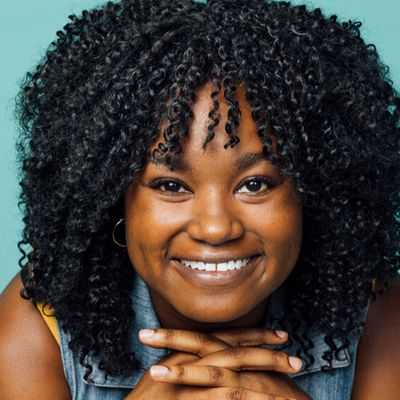
Meet two forces from the Bay Area Children’s Theatre: Nina Meehan, the theater’s founder and CEO. And artistic director, Khalia Davis. Bay Area Children’s Theatre is one of the leading theaters for young audiences in California. Since its inception in 2004, this theater has served more than 750,000 children and adults in the Bay Area and beyond with their musicals and Academy program. They have produced over 37 new musicals for young audiences including an adaptation of Chelsea Clinton's book "She Persisted."
This month as part of their new Sunday Spotlight series they are sharing the performance of Khalia’s adaptation of A Kids Book About Racism by Jelani Memory. The show, A Kids Play About Racism, uses the power of theatrical storytelling to give children the tools to participate in the conversation with grown-ups.Part of the theater’s mission is to help create conversation and inspire positive social change.
To quote from A Kids Book About Racism, “Racism is one of the worst kinds of mean someone can be. Because racism thinks someone being different is bad. BUT being different is actually good. Like REALLY, REALLY, REALLY, REALLY REALLY, REALLY, REALLY GOOD. 1000 percent good.”
The play will be available all day on February 20th and 21st, and February 26th and 27th. To RSVP to see the show visit https://www.bactheatre.org/#/outreach-program. (CAN YOU HYPERLINK THE WEBSITE? THANKS!)
The premiere of their Sunday Spotlight series with Khalia Davis will run as an interactive companion piece to the play. On Sunday, February 28th, 10:30 am PST/1:30pm EST, Davis will reunite with the cast as they tackle some difficult topics, share their experiences working on the show, answer questions from young people, and lead everyone in some critical thinking and interactive storytelling activities related to the show. To RSVP for this Sunday Spotlight series go here. CAN YOU PLEASE HYPERLINK THIS? https://docs.google.com/forms/d/e/1FAIpQLSef0rVuUHpR0YyYmDLu3YFDH6WgU39XwXB2VWqqbV8V7ILbtg/viewform)
Future Sunday Spotlights will include a focus on Women’s History Month in March, Autism Awareness Month in April and Mental Health Awareness Month in May.
Transcript
This transcript was automatically generated and might contain errors.
[0:00] Jeryl Brunner: From Shakespeare to Schwartz, from Fawcy to Alvin Ellie, from Santham to Burelis, from McNally to Faye. It happened to the greats, it still happens every day. When lightning strikes is the moment you know. When lightning strikes, where your mentor goes, you can stand in Chalureka, do whatever you like. You'll never forget the moment when lightning strikes.
[0:25] Jeryl Brunner: Hi, this is Jeryl Brunner, and you're listening to When Lightning Strikes, where we talk about the tingly, heart-stomping, mic drop moments that led you to becoming an artist. Today I have two forces from the Bay Area Children's Theatre: Nina Meehan, the theater's founder and CEO, and artistic director, Khalia Davis. Bay Area Children's Theatre is one of the leading theaters for young audiences in California. Since its inception in 2004, this theater has served more than 750,000 children and adults in the Bay Area and beyond with their musicals and Academy program. They have produced over 37 new musicals for young audiences, including an adaptation of Chelsea Clinton's's book, She Persisted. This month, as part of their new Sunday Spotlight series, they are sharing the performance of Khalia's adaptation of A Kids Book About Racism by Jelani Memory.
The show uses the power of theatrical storytelling to give children the tools to participate in the conversation with grown-ups. Part of the theater's mission is to help create conversation and inspire positive social change. I love this quote from the book: “Racism is one of the worst kinds of mean someone can be because racism thinks someone being different is bad. But being different is actually good. Like really, really, really, really, really, really, really, really, really, really, really, really times a thousand. A thousand percent good.” Welcome. Thank you for joining me. How are you both?
[2:24] Nina Meehan: So good.
[2:25] Khalia Davis: Thanks so much for having us.
[2:27] Nina Meehan: Yes, thank you.
[2:29] Jeryl Brunner: Well, tell me how you're keeping sane during this very surreal time and continuing to thrive as a company.
[2:45] Khalia Davis: Take it away, Khalia.
[2:47] Khalia Davis: Oh, great. So I would have to say that the very first thing that is keeping me sane is the fact that I continue to be able to create art during this time. I think if I was not able to do something artistic in any medium, any form because I'm a multidisciplinary artist, it would be really, really hard. So I have to say that I feel very fortunate that like even with the shutdown, I was still able, we switched over to digital and virtual classes and then coming up with these cool projects. So that's really kept me sane. Also, I have a puppet named Nia, and I created a puppet show with her, and that's been keeping me really sane as well because I love puppetry. That art form is really fun to me. And I'm grateful that this company, Bay Area Children's Theatre, really decided to pivot in a fun and innovative way. So when I joined the team full time, I was already able to jump in with ideas and different things like that. So that's been what's helping me.
[3:51] Nina Meehan: It's wonderful.
[3:52] Khalia Davis: Yeah, and I would say the same thing. You know, we started this new project called Play On, which are audio musicals with an accompanying adventure kit that we started sending out this fall. And I would, you know, it was really the parents getting back to us with text messages and emails, being like, oh my goodness, my child is obsessed. They've done nothing but act out this story all day. And it's those stories coming back to us. We as theater artists are so used to that immediate feedback circle. The show is happening, the audience is watching, and kids make such an incredible audience. You know, they're so honest, they're phenomenally brutally honest. You know instantly the impact you're having.
And in this digital world, that impact, it's like there's this weird delay, and we're not used to that. So I think that's been really good for me to be able to still work with our team to create these wild and wacky stories and then know that they're having positive impacts on kids literally around the world, because we've had, you know, people ask for shipments from Australia and England. So that's been great. And then also just the strength and support of our team at Bay Area Children's Theater. From day one, we started meeting on a regular basis, you know, almost daily. And back in March, April, and May, I mean, to be honest, that felt like a lifeline, you know, like, oh, there are still people in the world. And as the team has continued to make art and create, that has only strengthened.
[5:33] Jeryl Brunner: Can you take me to your lightning strikes moment, specifically, Nina, with the Bay Area Children's Theater when you knew this had to be? And I love that now you have this reach, you know, because of the pandemic, you know, one positive element is that you're able to connect with so many more people around the globe, which is a beautiful thing. But let's talk about your lightning strikes moment, the theater.
[6:01] Nina Meehan: So I'm gonna, I'm actually gonna take you even further back, but before Bay Area Children's Theater was anything, I'm gonna take you to Nina Meehan, age seven. Perfect. In my second grade play, I am dyslexic. So as a kid, school was this very strange mix of very positive and very hard. You know, reading did not come easily, writing did not come easily, math, I would switch the numbers. So I had a, I was actually very shy, and I didn't have all that huge of a circle of friends. I just had this incredible world of my imagination. And the first time I stepped on stage was in second grade. I played a postman, and I had, I think I had about three lines, and one of them became a laugh line. And this moment when I had memorized the words so I didn't have to read them, and I got this response from the audience, and I recognized that there was this incredible power in what you can do on the stage.
And you know, my second grade brain didn't process all of that. My second brain just thought, oh, this is fun. And oh, I can I feel alive here, I think is really what was happening in that moment. So then, you know, fast forward to about 18 years later, I was performing with a hospital chain here in California that has an educational theater program. And I had studied children's theater in college, and this moment just hit where I was chatting with a friend who was also who'd also studied children's theater in college, and we both looked at each other and said, why isn't there an amazing children's theater here in the Bay Area? You know, there's one in Seattle, there's one in Phoenix, Arizona.
And we sort of said, hey, you know, let's start a company. And it was in that moment that we it just, you know, we were fabulously optimistic and young, and we just said, great, let's do it. And then, you know, fast forward two years after that, we were performing our first big musical, Junie B. Jones, and there was a line around the theater for tickets, and we just didn't know what to do. I mean, it was so exciting, and like we had to send like little girls and their moms away in tears because we were sold out, which isn't a positive, but like it was this moment of oh, this community needs this work. So I guess that's three moments, but they kind of all follow the same arc. Because I believe it can be many moments. We're not just one thing.
[8:56] Jeryl Brunner: Yeah, what do you, this might sound crazy, but do you remember what those lines were when you were a little girl reciting the line?
[9:04] Nina Meehan: I don't remember the postman lines, but I do remember that this. So we did two plays in second grade. And the second one, I played a maid, and I decided to give her a cockney accent. And she said the words, “Who did all Aunt Bell's peeling?” And I remember that very clearly. It's very like that.
[9:26] Khalia Davis: That's right.
[9:28] Nina Meehan: My seven-year-old Cockney self.
[9:32] Khalia Davis: Yes.
[9:33] Jeryl Brunner: Fabulous. Now, Khalia, tell me how. So how did you get involved?
[9:38] Khalia Davis: Sure. And when was your lightning strikes moment? Because I know you wear many, many hats in your life.
[9:45] Khalia Davis: I do. So I'm gonna take you back to Khalia, age five. So this is a story that my mom loves to share because she's like this is in her mind the moment where I took agency over my career as a professional artist. So at five years old, I was watching an episode, a rerun of The Cosby Show, and I turned around and I said, “Mom, I don't want to just be a model” because at the time I started modeling at 18 months old. I said, “I don't want to just be a model, I want to be an actor.” And she's like, “What?” I was like, “Yeah, like Rudy, like Rudy is. I want to do that.” And my mom is from New York, she knows nothing but theater and Broadway. So TV and film for her freaked her out, but she's also an educator and works in education.
So she immediately was like, “Well, then we're going to school.” So luckily in the San Francisco Bay Area, there's an incredible kids on camera program started by Judy Berlin in San Francisco. And so she took my shy little quiet five and a half year old self to her. And then she helped me discover my voice. Because I was a very quiet, shy, avid reader, and I didn't really speak much. So it was really a lovely opportunity to finally express myself in that way. And the reason that I think of that as my lightning strike moment is because what happened was I saw someone who was a reflection of me doing something that I think was amazing and felt like I could achieve what she was doing. And that has stuck with me with my practice, with my mission in the art that I create and the art that I'm a part of.
I'm always trying to figure out how can I be that representation for that other little black girl that needs to see herself doing that thing, whatever it is. So as a teaching artist in front of the classroom, doing drama games, directing kids' plays, then directing adults and then having those adults perform for kids, touring shows, getting an opportunity through Bay Area Children's Theater to bring to life new characters that initially in the illustrations of a book present as white, and then I get to play the role as a black identifying woman, and the kids are like, “Oh, we don't care. It's not a big deal.” And that's something that has always really stuck with me. So I would say, yeah, definitely like me at five, being like, “This is what I want to do. I want to be a performer.” And it's because I could see myself as a performer, which I think is really awesome.
[12:27] Jeryl Brunner: That's a beautiful thing. What would you like people to know, both of you, about the Bay Area Children's Theater? If somebody said, “Why should, if they didn't know anything about the theater, what would you like to tell them?”
[12:48] Nina Meehan: It is a place that everybody can feel accepted. Even if you are someone who's afraid of what theater, quote unquote, is because you might have like seen someone do some intense Shakespeare, which is beautiful, and I do Shakespeare, I'm classically trained. But or like a huge musical with lots of sets flying in, and the spectacle is like incredible. And you're like, whoa, whoa, whoa, this is a little intimidating. I would say that the thing that's so special about children's theater and theater for young audiences is that it's family theater, and we make it accessible for all ages.
[13:27] Khalia Davis: So we make sure that there are lines and moments and sight gags that kids are gonna relate to and laugh at. But at the same time, we understand that the parents have to bring the kids to the theater. They have to be entertained. So we also have those really beautiful, heartfelt moments and insight jokes that only adults are gonna really understand. And it's really interesting to be able to bring something to a young person in that type of tangible way in an immediate way, as opposed to maybe a TV show or a movie, which a kid could watch and also kind of have some of those experiences, but there's still something that's preventing them from fully engaging in real time with the artist. So it's really lovely to be able to say, like, hey, come to our theater where your kid is going to be able to sit on the floor at the same level as the actor that's performing with them.
And they're gonna, the actor might even need their help to say to save the town or do the adventure. They need the audience to participate. Your kid is the final piece of the puzzle in creating our show. We need them in our audience as their full authentic self.
[14:39] Nina Meehan: I'm gonna just piggyback right on what Khalia is saying because I think, you know, for Bay Area Children's Theater, there's sort of two things that really stand out to me as sort of what makes our specific art and our new shows unique. And it is exactly what Khalia's talking about, this interaction. Um, and when we talk about audience interaction in our world, we're not talking about, you know, hey, is everybody happy out there? Like it's where we take audience interaction to a phenomenally absurdist place. And I think this is you know partly just you know my sense of humor, but also like putting people in this zone that we love to what why have rules? There are no rules. You know, if I could, I would break down the doors and have no walls.
Um, and the um, so I'll give two specific examples. Um, when we did Beautiful Oops, the musical, which is based on this beautiful little book by Barney Salzburg. Um, and it's all about the uh basically that uh a mistake is an opportunity to make something beautiful. There was a moment in the show where we needed to transform uh from go to one location to um the Antarctica where the penguin was living, obviously. And so the way we did it is we had the entire audience take out their playbill, rip a page out of their playbill, rip it into little pieces and throw it up in the air. So the entire theater was suddenly filled with snow. And that snow of that, the paper, we then, of course, on the stage itself had a typical snowdrop, but it was filled with little pieces of ripped paper that we recycled for every show.
When I say interaction, the audience is truly creating the show as it happened as it is happening. We did a show called Press Here, which is based on a New York Times bestselling book, where there was a moment that a phone rang on stage, and the two actors who were trying who were you know trying to keep things from falling apart, look at an audience member and one of the kids and say, Hey, could you get that? And this kid has to run up on stage and get the phone in order for the play to move forward. So there's this, you know, we and then in our theater for the very young program, it's that same what exactly what Khalia was talking about, where the kids are the show just as much as the story is the show.
Um, and then the other part that I think is very unique about what we do, and this is I've learned through feedback from other people who um kind who came to our theater like from who visit a lot of theaters around the country. And the feedback I heard was, you know, Nina, everyone in your audience knows each other. And I was like, what do you mean? What are you what are you talking about? And then I started to watch, and I I took this just as if like everybody did this, but people come to our theater in in groups. They meet their friends. It's a community experience. So we have families that started coming together, like three or four family units when their kids were like 18 months old that have continued through age six, age seven.
So there is this feeling when you're sitting in the audience of this amazing connection that is both within the fabric of the audience as well as the audience to the stage. So you kind of end up with this like I don't know, a grid of connection.
[18:05] Khalia Davis: So can you talk about how you choose your pieces? And specifically a kid's play about racism, how that came to be.
[18:15] Nina Meehan: So in terms of how we choose our pieces in general, um, there's a ton of different ways. Um we have specialized in adaptations of children's literature. So you know, sometimes we'll have a librarian come and tell us, hey, you know, so that's where we Where the Mountain Meets the Moon, which is a musical adaptation we did, um, of Grace Lynn's book by and Min Kong did the adaptation. A librarian came and told me, hey, you should know the kids are all reading this. And it's a beautiful story. And I read it and was like, yes, absolutely. Um, sometimes it's, you know, I have three kids, sometimes it's just what I see them reading. Um, sometimes, you know, the artistic team will come and say, Hey, I, you know, I saw this in Target and it looked interesting.
I mean, it really is everything. Our audience gives us ideas. Um, and sometimes it's one author to the next. When uh from Beautiful Oops with Barney Salzburg, he introduced introduced us to the author of um Goodnight Gorilla. So it's it's a whole bunch of different ways, but in specifically in the book, in the case of a kid's book about racism, which we we then turned into a kid's play about racism. Um, after the horrendous murder of George Floyd and the incredible outpouring of voices to say, hey, it's time to make a change. I had had my eye on the kids' book about series for a while, because I track these things. And I called Khalia and said, Hey, there's this book, you need to read it. And that's Khalia, I want you take her from there.
[19:57] Khalia Davis: Sure thing. And so what's really cool nowadays is that you can actually just go on YouTube for so many different read alouds of popular books. And so before I could even uh purchase the book to have it ship to my house and then read it, it felt like this was such an immediate thing. I just Googled it and I was like, I wonder if I could just hear it. And then the thing that was so exciting is that Jelani Memory himself narrates his own book. Beautiful. Isn't it great? And beautiful. It brought it to life in a way where I said, oh, this definitely can be a theater for young audience show. It's already one. Like, and then and actually, um, this is an insider uh secret that I initially was just going to have it be one actor doing that, and then maybe have like some shadow work or something around them, especially because of COVID and the restrictions.
We were trying to figure out how we can be adaptable in the creation of this performance. So I was like, oh, well, if it's just one actor, it's gonna be easier to do. But I recognize that actually that isn't going to express everything that he's trying to get out of what he wrote. Um, there's a reason why you write this book, and then he shares his book, but then you say, Hey, I want to expand your world and adapt it in a different medium so that it's accessible in another way. So that's why uh there's all these other characters that come into play in the in the play version of the book, because I recognize that he had already done the solo show where he's just reading it verbatim. That being said, viewers should know and listeners should know that if you were to see this performance, they would actually get to hear every single word from the book.
With his permission, I was able to work collaboratively with him. And he said, Yeah, you can use my words. And I said, Great. And then thanks to Nina having some pretty cool ideas, she's like, I feel like you should ask him about his stories. Just find out some more about him. And I did, and he in that conversation, he shared some very specific moments of microaggression, um, which is like uh when there's an underlying or an undertone of racism, but it's not necessarily overt, people don't necessarily notice it unless you're really paying attention to macro aggression, where it's like, oh no, this is blatant, it's in your face and it's harmful in that way. So it was really cool to hear his own stories and then be able to honor them and respect them by translating it into the adaptation.
[22:45] Nina Meehan: That's wonderful that he was involved and that you got and that you're telling partially his story or that his voice is so prevalent in this. And can you tell people how they can experience the piece?
[23:00] Khalia Davis: Sure thing. So we specifically for this month, um, which is an honor of Black History Month where we're honoring Black History that's happening now, including the incredible work of Jelani Memory and the work of my artists in the show. We have um opened up again an opportunity for public viewing of the piece because initially the history of the piece is that Broadway on Demand picked it up back in August and it was only supposed to run for two days, but then it had such amazing response that they were like, hey, Nina, Khalia, is it okay if we actually extend it for a full week? And we said, uh, yes, please. So we were really grateful for Broadway on Demand for initially giving us that platform.
And then we created a free program for educators through a kidsbook about, then their partnership said, yes, we want educators to get this material. We believe it's important, and it's a really cool way. As the school systems are in such influx, we're in school, we're not, we're hybrid, we're asynchronous, we're not. It's it so much that to have a virtual um theater production that they could watch and interact with and then have a study guide attached was really helpful. But now for February, we are releasing showings of it this weekend and next weekend. You can get all that information at our website, BAC Theater with an RE dot org. Or they could also check it out at a kidsplay.org or kidsplayabout.org. But those are two different avenues that they can RSVP whichever day they want, and then they can either this weekend or next weekend, and at any time they can watch it and they can have their own fun viewing party and have those conversations.
And we're really excited that we could re-release this work for the public, but it is something that is consistently available for free as a study guide and as a student matinee option for educators in schools.
[25:15] Nina Meehan: And there is one other thing I want to throw in about this, about the the creation of this piece. First of all, I also just you can tell why I adore working with Khalia. Because you have to appreciate this this book has no pictures and no specific narrative. It's not like this is a once upon a time story. So like to be able to collaborate with somebody who is just as wacky as I am, then I'm like, yeah, of course we can adapt a book that has no pictures and no story. Duh. I mean, it's just like I really love and value that about Khalia. Um, and the other thing that happened that with this particular piece, which was really amazing, is um Khalia came on to direct and adapt and started that process and came up with a beautiful vision for the piece.
And we reached out to our colleagues across the nation in the TYA field, and we ended up having this be a co-production or co-commission across 41 theaters. 41 TYA and also some adult theaters that have strong TYA programs, all came together to make this piece possible. And I just I think that there's something really amazing and profound. First of all, I don't think that's ever happened, like in the history of theater, 41 theaters all cooperating, um, 41 artistic directors being like, yes, let's do this.
[26:38] Khalia Davis: Uh, but it uh it it allowed the reach to be nationwide. And that was so beautiful. And that means that all of those theaters are releasing it to the teachers on their mailing list so that this piece has had a reach of hundreds of thousands of kids, and that just means a lot to us. And it is, it is such a beautiful thing that you you've made this into a theatrical piece.
[27:03] Khalia Davis: Kelly, what, and I know you said that Gelani was involved. How did you create the vision of putting it on stage? You know, I I know you said you wanted it partially include Gelani's story, but how did you make it into a theatrical piece?
[27:23] Khalia Davis: Oh, yes. So, what I love to say is that a kid's play about racism was the launching point for a lot of digital theater we see today, in that we decided to be super crazy and creative and take theatrical storytelling, but utilize a film medium to do so. Uh, again, trying to be adaptable in the times in which we are living, and noting that this also opened up an opportunity for me to work with actors across the country. We've had actors in Hawaii to New York and everywhere in between. And it was because everything was digital and virtual, we could create it. The vision that I had for the show was that Gelani at 12 years old is grappling with instances and experiences that he has had growing up thus far, and he doesn't know how to process it.
And instead of going through all of his different emotions and accepting all of those emotions, he's pushed them down and said, I got this. I'm an expert at this. I'm fine. I it's not a big deal. And what's so interesting is I got this idea because I working with young people, there's this sense of they think they're little adults. And they're like, I could tell you what's up. And you go, okay, excuse me. And so there's this really fun thing that they do where they assume they know everything already, even though they're so young. They have not experienced life. And I wanted to bring that out because that's a mirrored reflection of the kids that are going to be watching. They're going to see themselves in that, but also uh this idea that because you think it's not a big deal, you're ignoring some really important parts of you that are trying to break out and trying to help you process.
And so we created these emotions, we call them team emotion, in kind of the same style of the inside out by Pixar, where you get to see the feelings come like be personified as actual beings. And the thing that I wanted to really make clear with the editing that you see in the piece is, you know, that was built in Zoom, but we had incredible animators that signed on and they put them in the same world. So it looks like everybody is in the same place, which is Gelani's head. Um, and I wanted to make it that very clear as well that Gelani's going through his own journey. Even the journey he's taking with the audience, he himself is recognizing, oh, actually, I have been harmed by these words. And it is really difficult.
And I don't understand it because I like who I am. I think I'm great. I love my mom. I love my dad. Why are people outside of my family saying these hurtful things? I don't understand. And it was really lovely to have these emotion figures have their own perspective and talk with him and work through all of that as well. So we have a show that's 30 minutes long. So don't worry, y'all. It's good. You got it. Um we also chose um our main actor, David Morales, one in part because he is multiracial, just like Jelani Memory. And I wanted to be respectful of that experience. It's a very specific experience to be biracial or mixed in this conversation. And also because he is not just an incredible actor, but he himself is a rap and uh spoken word activist and poet.
So we were able to utilize that skill that he has and create these really amazing musical moments. So it wouldn't necessarily call this a full musical show, but we have three specific musical moments that, as you know, Gerald, when it comes to musicals, you get those emotions. You can't do anything but sing. You have to sing. And so we make sure that we have those. And we created these really cool music videos that go with that to also just help illustrate even more the topics we're trying to talk about and make it again, something fun and engaging for the kids as they're listening to something very serious. They're also able to see the joy behind it. Um it's been really exciting to see the response and to hear the response after people have been watching it. And I know a key component is to inspire conversation, to make kids feel included, to bring them into the fold. Can you talk about that and what you've seen with some of the kids who have seen?
[32:11] Nina Meehan: I'm gonna let Nina share her stories too. I gotta just say on that, the thing that's been really amazing is to see the gorgeous rainbow of young people who have watched this, and it has been a universal like universal experience. So everybody from all walks of life and all shared experiences and lived experiences have been able to get something tangible from it. And it's also something that's really exciting that these 41 theaters discovered that this is something that we need to be doing now. This is an actionable step that we can be making in creating empathy in our young people and helping them, our next generation be the change makers we want. So that if you notice, a lot of those same theaters have produced since then culturally specific shows or social justice pieces, or they have actually opened their seasons up to other types of stories because this work they recognized was actually, and I hate to say it this way, but it's true, especially when it comes to BIPOC and BIPOC, meaning black, indigenous, and people of color work.
Um, and I'm grateful to Nina and the other producing teams for saying, it's okay, Khalia, that you have an entire cast and creative crew that are BIPOC identifying. Um, but it's hard because sometimes they do get nervous and they get worried about like the viability of it. Can it sell these traditional business marketing terms when it comes to the theater you're making? And so I was really grateful that the way in which my artist embodied the work and how we created the performance, it was received across the board, across the nation in a really positive way. And then therefore, those kids having that response has led to theaters making changes in the types of work they're producing now in their seasons.
[34:20] Nina Meehan: And I can just speak um on a personal level. You know, I have I at the time they were four, eight, and twelve. So one of the powerful things about the piece that Khalia has created is that it speaks to a lot of different ages in a lot of different ways. And um, you know, my four-year-old watched the show and she looked at me and she said, Mommy, everyone should be nice to each other. And that's that was her, that was how she was processing it. My eight year old reflected back on because we saw it and um two, I guess a month earlier, um my kids had come with me to volunteer at a family march that was uh that Children's Fairyland was um, it was started at Children's Fairyland. So we were supporting uh people, uh Black Lives Matters March with, you know, water and making posters and that kind of thing.
So my my eight-year-old reflected back on that experience and talked about how seeing kids at that march and how important it is for all kids to understand this because otherwise nothing's gonna change. My 12-year-old was in the middle of taking a summer class on social justice and was just learning about the work of John Lewis. So he reflected from this, you know, this sort of, oh wait, there's a whole history here. So it sort of was this the like this this stepping stone, right? Of just right now, in this immediate moment, we should be kind. My eight-year-old who was able to see it in the now as we have, you know, kids today, we can make an impact. And my 12-year-old who was able to say, whoa, this isn't just today, this is an entire history of racism.
And it's a really important thing that we talk about it now because we have to learn from our mistakes. And so I think, you know, as the uh you know, obviously that's just my family, but it's always in in the time of COVID, like, you know, we only have the people around us to reflect. And um, we also, of course, got, you know, lots of really amazing responses and feedback from families all over the place. Um, but it it going back to what we were talking about originally, that you know, in what Bay Area Children's Theatre's sort of unique style, it is that interaction and it is sparking those communication, those um conversations. And what Khalia created is a piece that completely sparks conversation, but also while the kids are watching it, it feels like an interactive piece. They are drawn into the story. They are drawn into the characters. They see the story in a way that they can process it and understand it from where their educational and developmental viewpoint is.
[37:10] Khalia Davis: That's wonderful. What have you heard from Jelani?
[37:16] Nina Meehan: So, like we said, we actually premiered this back in August. And so we had a stream of video submissions and photo submissions of families in real time watching it and how they were watching it. And Jelani has a really beautiful big blended family. And hey, they have this incredible living room. And he took a photo of all of his kids sitting on this huge couch, and they had streamed because it's really cool. Now you can make it look like you're on the big screen when you just like stream it to the TV. Um they were watching it, and he sent us this picture, and he's like, This is the one of the first times my whole family is watching something together. And he's like, Thanks for making me look cool by casting these artists to say my words.
And now they're able to understand even more why it's so important. So he was really appreciative of the fact that we took his words and we only elevated it and amplified it. We did not try to change anything about the narrative that he had initially set because this is his truth. Um, but at the same time, he used his experience to speak to a bigger issue. And so we were really happy that he was on board with it.
[38:36] Khalia Davis: And also, I just want to say Jelani is somebody who is very similar to Nina and myself, where he's just excited to try things. The reason I think a kid's book about company is doing so well as a newer company is because he keeps just saying yes. He's like, sure, let's try that. I've never done a theater piece. Okay, let's try podcasts now. Let's try writing books about voting. Let's do that, you know. And it's been really great. And I will, I will actually plug that we were able to do a really fun, quick adaptation of his book, A Kids' Book About Voting, that we presented right before the election this fall. And we were able to use actual teenagers because the book, a kid's book about voting, is written by teenagers. So it was really cool that he's just constantly been in support of the work we're trying to do and how he can blend his company with ours.
[39:35] Nina Meehan: That's so phenomenal. And I love your Sunday spotlights and how you're going to focus on women's history month in March, autism awareness in April, mental health awareness and May. Can you talk about that? What inspired these Sunday spotlights?
[39:57] Khalia Davis: I'm just gonna give Nina her flowers now because that's what you're supposed to do. You're supposed to give them their flowers now. Nina has been a constant advocate and supporter of me and my visions since 2012. And I make it very clear to people that she has never been someone who's like, "Oh, Khalia, I created her." She's always been like, "Oh, Khalia, I knew she had it in her, and I pushed her to do these things." So when you started in 2012 with the game.
[40:28] Khalia Davis: Yes, as an actor, I played cow number two. I'm proud about it. I was cow number two in a Click Clack Moo, cows that type musical adaptation show. So very proud. Um, which is a very political show. Like just to be clear, it is very, it is very political about me at the title.
[40:50] Khalia Davis: Yeah, you have me at the title. Click click. It's so great. And I, um, in that, it was one of those moments, again, kind of bringing it back to what your show is trying to talk about that lightning strike. It was another one of those moments where Nina, by giving me an opportunity to flex that performance muscle for young audiences in that way, she also awakened this deep passion that I actually really have, which is performing and creating art for young people.
[41:20] Khalia Davis: So Sunday Spotlight to tie it in, because don't worry, I'll tie it in. Sunday Spotlight was a response to, oh, I'm artistic director now of this theater company that already has an incredible reputation, but I want to put my own stamp on it. Like everybody already knows that I did a Kids Play About Racism. They know I did She Persisted the musical, they know I did a clown show called Judy Moody and Stink. But I wanted them to also know that I had the ability to create engagement, community engagement, and outreach opportunities for our people.
[41:55] Khalia Davis: And so Sunday Spotlight is literally that we shine a light on individuals who are making an impact in their chosen fields, specifically because we are an arts organization, we are trying to find ways to incorporate people making certain forms of art that are using their art to create a better world, whether that's through social change, environmental awareness. Um, we're really trying to bring in individuals so that young people can hear about them, see them, ask them questions.
[42:29] Khalia Davis: Each Sunday Spotlight is open to families. And I make it very clear that yes, adults, please listen to this incredible person talk about their life and ask them questions. But this is really for the kids. And so we have a portion of this where we talk to the artist or the activist and we say, "Hey, what's going on? How did you do this? What is your life?" And then we have the second half of our Sunday Spotlight, which is an activation of engagement with the young audiences, usually doing some form of that art.
[43:00] Khalia Davis: So we've had artists come on who have written songs with kids in real time. We have had our voting um one happen where we were asking kids, "Hey, let us know. These are questions that actually need to be answered in the book. Are you ready to vote yet? What can you do if you're five years old and you can't vote yet? How can you still be involved?" So it's really exciting that um Nina has through her openness in like kind of saying, "Okay, Clea, I brought you into the fold. What you got?" Um has said, "Sure, go ahead."
[43:38] Khalia Davis: But also has pushed me to even think bigger because initially I was trying to keep it small. I was like, "Okay, like my friends, I'll just bring my friends in." And she goes, "No, no, no, no, no. This could be an opportunity, especially because Sunday Spotlight right now is virtual and it can reach a wider audience. That who else would you like to dream bigger? Who else would you like to talk to?"
[44:01] Khalia Davis: So actually for Women's History Month, I've been doing a lot of cold reach outs. If they're listening right now, I reached out to some incredible puppeteers from Sesame Street. Um, if anyone knows the history of puppeteering in the United States, there have not been many prominent female puppeteers. And it's really actually quite impressive and exciting to note that Sesame Street has four incredible women who have been there for years who have created these shows.
[44:33] Khalia Davis: They, a couple of them have took over for Fran Brill, um, some of her characters and have created incredible puppets. And so I did a bunch of like emails to them because I love to puppetry is something that I'm excited about. And it would be cool to be able to say, like Sesame Street and Sesame Workshop, they have not only brought an art form that is accessible for children, but also they aren't afraid to talk about some of the harder issues, and they're doing it in a really engaging, interactive, entertaining, and educational way.
[45:11] Khalia Davis: So trying to do that, we uh have for April, you mentioned Autism Awareness Month. We are so excited that we have people on our team who are very passionate about this community of young people. And we've created programming for years, actually, that has catered to that um community of neurodiverse learners. And um, we still have some programming now, and we wanted to really just send a message that says there's room for all types of humans who want to create and do art.
[45:45] Khalia Davis: And so we're grateful that Mickey Rowe has agreed to come in. And Mickey Rowe is uh was known for being one of the first um actors with autism to perform a role as a performer who actually has autism in Curious Incident and The Dog in the Nighttime, as well as starting the National Disability Theater, um, who just recently partnered with uh La Jolla Playhouse in their school tour program, creating a really incredible show about that.
[46:15] Khalia Davis: So, again, finding access points, being like, "Yes, this is my opportunity to shine a light on someone or a few people doing something amazing for young people, but also so that young people could be like, 'Oh, I could do that. Oh, okay, cool. Let's do that now. Let's see what we could do with it in the moment.'" That was such a long-winded response to your question. I'm very proud of what we're doing right now in the event.
[46:42] Khalia Davis: And so forgive me for business needed. I love the full circleness, how you started as what cow number two. And now you when did you become artistic director?
[46:57] Khalia Davis: I became artist, I assumed role fully in the middle of August, but um again, because everything is so topsy-turvy. Really, I like to say, like, I started my duties at the beginning of September, like right when fall started school year. I was in it. In August, it was really an opportunity for me to take some time with each member of our team.
[47:17] Khalia Davis: And we are a tiny but mighty team, and talk to them about what they bring to the table and how I can help. Um, uh there's a show called New Amsterdam, and I always feel like the main character because he always says on that show on NBC, "How can I help?" And I felt like for two weeks, that was literally all I was doing was just going, "How can I help? Whatever is you're already doing, I'm here now. What can I do to make this even more awesome?"
[47:44] Khalia Davis: And before you were artistic director, you were what one of the what was your title before that?
[47:50] Khalia Davis: I was um a resident artist. So after I got bit by the berry, a children's theater bug in 2012, I was invited back in 2013 that summer to perform Sally in uh Cat in the Hat. And very different from our military uh show, uh Cows that type. But I in that summer, that was the year that Nina and her team said, "We are actually wanting to create an original school tour."
[48:22] Khalia Davis: And it's going to be centered around the gold rush because at the time that particular age grade didn't really have an artistic form of what they were doing in history. And so they wanted to fill that void. And so it was my first foray into developing new work. And earlier, Nina had brought up that Bay Area Children's Theater. That's what we really love doing is developing new types of performance.
[48:49] Khalia Davis: And so that was an opportunity where again, I was like, "You know what? Okay, I'm gonna say yes, I'm gonna be here for the full year. I'm going to help bring to life these school tours, and I'm going to also help bring to life these new mainstage shows that are original works." And it was really great to uh to experience that.
[49:07] Khalia Davis: And then from there, I had always been directing young people. I was like, "I love kids, I love choreographing. I'm a dancer, so I love and a mover, I love creating dance pictures and creative movement. I love directing the kiddos." I was comfortable there. Let me tell you, I loved it. And then Nina was like, "No, you need to come and do it with adults." And I said, "I don't, I don't like it. I don't think it's gonna work."
[49:34] Khalia Davis: But actually, what I didn't realize is that oh, uh it's the same, like working with kids or working with adults, especially adults at children's theater, it's fine. And it was really great to be telling a story, you're telling a story.
[49:53] Jeryl Brunner: What is your dream? You've accomplished so much with the Bay Area Children's Theater, but what is your dream? What would you like for it to become or what or continue as?
[50:07] Khalia Davis: You know, I want to hope that the lived experience of the last year of COVID, of Black Lives Matters, of our education system moving online, of the incredible emergence of TikTok musicals. I mean, there are so many factors that there is no way a year ago we would have known where we are today. And my dream for the entire theater industry, because I might as well dream on behalf of you know a whole bunch of people, is that we all have listened and respond to what is happening in our world, and that the work we create as we are coming out of all of this, because I have hopes and dreams and visions of having audiences outside, small indoors, then larger indoors.
[51:01] Khalia Davis: It's gonna happen. Yes. And I want to see innovation. I want to see new stories. I want to, I mean, honestly, I want to see us really looking at our business model and saying, "Hey, how can we make change on so many levels that this what has been an awful time? Has we have to find the positives that can come out of it." And I think that's my big dream is that Bay Area Children's Theater can become an incubator and launch pad for new ways of looking at the work that we do and looking at who we are as artists and theater makers.
[51:48] Jeryl Brunner: Amen to that. Well, thank you so much for coming on. It's just been a pleasure talking to you two. And uh, I can't wait to see more of what the Bay Area Children's Theater is going to do.
[51:50] Khalia Davis: Thank you again.
[51:50] Nina Meehan: Thank you so much. This has been super fun.
[52:08] Khalia Davis: Thank you. And I want to just I want to say thank you so much for it understanding that children's theater has a place in the entire industry. We have been working really, really hard to advocate for the importance of theater for young audiences in the zeitgeist of the theater industry as a whole, that we are the first four-way for children, the first stepping stone into creating future patrons for all of our amazing adult or mainstage theaters that are out there.
[52:37] Khalia Davis: So thank you also for recognizing that we should also be talked about as well. So I really do appreciate you taking the time to prop up children's theater.
[52:47] Jeryl Brunner: Oh, it's a joy because I know how transforming theater is, especially when you're young. It still happens every day when lightning strikes is the moment you know.
[52:59] ♪ Musical number: "When Lightning Strikes" — performed by Tom McGovern ♪
[53:02] Jeryl Brunner: This episode was edited by Kyle Moore, and the talent was booked by Anna Strauss.
[53:08] Khalia Davis: Lightning strikes.
© Broadway Podcast Network, All Rights Reserved