

Black History Month: Black Women Whose Artistry Made Change. This episode shines a light on the activism and society contributions of Black female musicians, poets and actors... Read More
From the show: Women of Tomorrow with Laura Bell Bundy
Guests
Featured Shows
About
Black History Month: Black Women Whose Artistry Made Change. This episode shines a light on the activism and society contributions of Black female musicians, poets and actors. Some of our favorite people include Phyllis Wheatley Peters, Bessie Smith, Billie Holiday, Ella Fitzgerald, Maya Angelou, Jamilla Jones, Nina Simone, Motown Diana Ross, the Supremes, Martha and the Vandella’s, & Mickey Guyton.
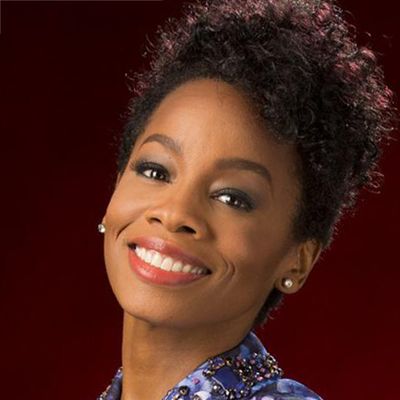
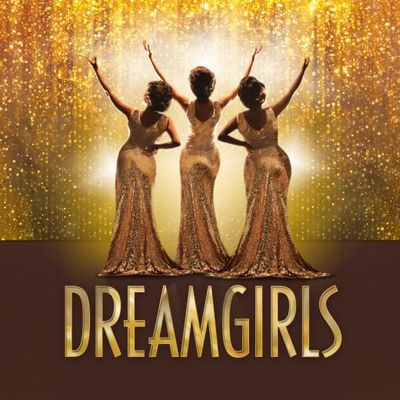
All this, followed by an interview with history maker, Anika Noni Rose, best known for voicing Tiana, Disney's first African-American princess, as seen in the The Princess and the Frog. She was named a Disney Legend in 2011. She is also known for her starring role as Lorrell Robinson in the Academy Award-winning film Dreamgirls.
Connect with us:
- Listen to Women of Tomorrow
- Insta: @womxnoftomorrow
- TikTok: @womxnoftomorrow
- Insta : @laurabellbundy
- insta : @sheasheacarter
Produced by Dori Berinstein and Alan Seales.
A proud member of the Broadway Podcast Network.
Transcript
This transcript was automatically generated and might contain errors.
[0:07] Laura Bell Bundy: I'm Laura Bell Bundy, and I'm Shea Carter's.
[0:10] Shea Carter's's: We are partners in Feminist Crime.
[0:12] Laura Bell Bundy: It's Black History Month, and since our podcast and album are about using artistry for activism and equality, today we celebrate, honor, and hold up the legacies of the black women in American history that did the same.
[0:24] Laura Bell Bundy: Today's episode is called Black Women Whose Artistry Made Change.
[0:28] Laura Bell Bundy: Often, it is easier for people to hear hard truths when they are housed in poetry, a melody, a rhythm that makes their body move and their hearts feel the flutter of love.
[0:42] Laura Bell Bundy: The black women we are featuring today made artistic contributions to society that changed the collective consciousness in our country and abroad.
[0:52] Laura Bell Bundy: They not only made contributions to equal rights, but they made contributions to the fabric of America and that which we take such pride in today.
[1:03] Laura Bell Bundy: There is no American music without African American music.
[1:08] Laura Bell Bundy: There is no soul, no blues, no jazz, no rock and roll, no pop, no hip hop, and no contemporary country music without African American music.
[1:19] Laura Bell Bundy: No tap, jazz, swing, disco, hip hop, crunk, moonwalk, or modern dance without African American dance.
[1:32] Laura Bell Bundy: People from all over the world listen, visit, and mimic our pop culture, a culture where the cake's primary ingredients include the words and melodies and movements created by our black brothers and sisters.
[1:46] Laura Bell Bundy: Just another massive contribution the black community has had on America's capitalism and power that cannot and should not be discounted.
[1:57] Laura Bell Bundy: Because black poetry, black music, black dance, and black life is American poetry, American music, American dance, and American life.
[2:11] Laura Bell Bundy: And it matters.
[2:14] Laura Bell Bundy: Today we focus our episode on the contributions of just a handful of black women who, through entertainment, change history.
[2:21] Laura Bell Bundy: And we interview history maker and actress Anika Noni Rose about her career and what inspires her.
[2:28] Laura Bell Bundy: Let's go back in time to the time of our founding fathers.
[2:38] Laura Bell Bundy: Phyllis Wheatley Peters.
[2:40] Laura Bell Bundy: She was the first African-American author of a published book of poetry.
[2:45] Laura Bell Bundy: Phyllis Wheatley Peters was born in Senegal and she was sold into slavery at the age of seven and shipped to North America, where she was enslaved by the Wheatley family and was living in Boston.
[2:56] Laura Bell Bundy: She learned how to read and write, and she wrote her first poems at the age of 13.
[3:00] Laura Bell Bundy: And in 1773, she became the first black person ever to be published.
[3:04] Laura Bell Bundy: She lived during the American Revolutionary War, and she spoke through her poetry about liberty and religious freedom, and she did it all while being enslaved.
[3:15] Laura Bell Bundy: Phyllis Wheatley had a lot of fans.
[3:18] Laura Bell Bundy: Thomas Jefferson was not one of them.
[3:21] Laura Bell Bundy: Thomas Jefferson actually criticized her poetry and tried to diminish her abilities, claiming she wasn't capable of writing her work.
[3:29] Laura Bell Bundy: Because the idea that African people were intellectually inferior was a justification for slavery.
[3:36] Laura Bell Bundy: And Thomas Jefferson needed a reason that liberty for all would not be for all.
[3:42] Laura Bell Bundy: And here was Phyllis, a celebrated poet, a literal genius.
[3:46] Laura Bell Bundy: Her very existence was dangerous to an idea that the United States was founded on.
[3:53] Laura Bell Bundy: That not all men were created equal, let alone a black enslaved woman like Phyllis Wheatley.
[4:01] Laura Bell Bundy: Phyllis Wheatley Peters had a disdain for the institution of slavery, and her use of art was to undermine its practice.
[4:11] Laura Bell Bundy: To quote her, for in every human breast, God has implanted a principle, which we call love of freedom.
[4:18] Laura Bell Bundy: It is impatient of oppression and pants for deliverance.
[4:22] Laura Bell Bundy: Before she died, Phyllis Wheatley founded three distinct intellectual movements.
[4:28] Laura Bell Bundy: The American poetic tradition, the black literary tradition, and the woman's literary tradition, all in her second language, English.
[4:37] Laura Bell Bundy: One of her most famous poems on being brought from Africa to America, it's gonna be read now.
[4:44] Laura Bell Bundy: Twas mercy that brought me from my pagan land and taught my benighted soul to understand that there is a God and a savior too.
[5:02] Laura Bell Bundy: One sigh redemption never sought nor knew.
[5:07] Laura Bell Bundy: Some view our sable race with scornful eye.
[5:12] Laura Bell Bundy: Their color a diabolic die.
[5:15] Laura Bell Bundy: But remember, Christians, that Negroes, black as Cain may be refined.
[5:24] Laura Bell Bundy: And join the angelic train.
[5:36] Laura Bell Bundy: Starting at the turn of the 20th century, a wave of mass migration occurred in America.
[5:41] Laura Bell Bundy: From 1916 to 1960, a time dubbed the Great Migration.
[5:47] Laura Bell Bundy: More than five million African Americans moved from the South to the urban cities in the North and West.
[5:55] Laura Bell Bundy: Faced with segregation and discrimination, lynching and lack of social and economic opportunities, this wave of people moved to find a new life, settling in large metropolitan areas in the north, including New York City, Chicago, and Philadelphia.
[6:12] Laura Bell Bundy: A significant population landed in the neighborhood of Harlem, located in the borough of Manhattan, right up above Central Park.
[6:21] Laura Bell Bundy: It was the dawn of the jazz age, and as music, art, and literature converged with this great migration, the Harlem Renaissance was born, an explosion of cultural, social, and intellectual and artistic expression rooted in the black experience.
[6:40] Laura Bell Bundy: From the end of World War I through the middle of the 1930s, black poets, writers, musicians, and artists flocked to Harlem, making it the Mecca for new ideas and sounds to be freely expressed.
[6:53] Laura Bell Bundy: Sounds from jazz artists like Bessie Smith and Billie Holiday.
[6:59] Laura Bell Bundy: Once I lived the life of a millionaire.
[7:05] Laura Bell Bundy: Been in my money.
[7:09] Laura Bell Bundy: I carry my friend.
[7:14] Laura Bell Bundy: Bessie Smith.
[7:15] Laura Bell Bundy: I mean, if you love the blues, you love Bessie Smith.
[7:19] Laura Bell Bundy: Bessie Smith was the most popular and highest paid singer of her day.
[7:23] Laura Bell Bundy: She was nicknamed the Empress of the Blues.
[7:27] Laura Bell Bundy: She started out as a street performer, and she signed with what became Columbia Records in 1923.
[7:35] Laura Bell Bundy: And as a singer and songwriter and composer, she released 160 recordings under Columbia Records.
[7:41] Laura Bell Bundy: She sold millions of records, performed on Broadway, and made her first and only silver screen appearance in the 1929 film St. Louis Blues.
[7:52] Laura Bell Bundy: Bessie's music touched on social issues like poverty, interracial conflict, female sexuality, and bisexuality.
[8:02] Laura Bell Bundy: Though her career was lampooned as the Great Depression wreaked havoc on the record industry, she continued to tour and to record up until around 1933.
[8:14] Laura Bell Bundy: But in 1937, Bessie Smith was fatally injured in a car accident in Mississippi that left her bleeding to death while awaiting an ambulance.
[8:23] Laura Bell Bundy: And because of the Jim Crow laws at the time, she was not allowed at the local white hospital and therefore had to be transported to the GT Thomas Afro-American Hospital where she died.
[8:36] Laura Bell Bundy: Her grave remained unmarked until 1970.
[8:42] Laura Bell Bundy: Okay, this is the Empress of the Blues in an unmarked grave for almost 40 years.
[8:52] Laura Bell Bundy: And at that point, Janis Joplin and Juanita Green, a woman who worked for Smith as a child, they both paid to have her tombstone engraved.
[9:03] Laura Bell Bundy: When I began to fall so low, I didn't have a friend and no place to go.
[9:13] Laura Bell Bundy: The Harlem Renaissance movement was a turning point in Black history because it helped African American writers and artists gain more control over the representation of black culture and experience.
[9:27] Laura Bell Bundy: And Billie Holiday was one of those artists who sang the truth.
[9:35] Laura Bell Bundy: Billie Holiday is one of the most well-known jazz vocalists in history.
[9:40] Laura Bell Bundy: Lady Day, as her fans called her, was born Eleanora Fagan in Philadelphia in 1915.
[9:51] Laura Bell Bundy: She took the name Billie from her favorite actress Billie Dove, and Holiday from her father, Clarence Holiday.
[9:57] Laura Bell Bundy: She began singing in Harlem nightclubs as a teenager and recorded her first song at the age of 18.
[10:03] Laura Bell Bundy: She signed with Brunswick Records in 1935 and was hired and later fired as she was in Count Basie's band in 1938.
[10:14] Laura Bell Bundy: A month after her firing, Holiday was hired by Artie Shaw, making her one of the very first black singers to lead an all-white orchestra.
[10:24] Laura Bell Bundy: In 1939, Billie Holiday recorded and performed Strange Fruit.
[10:45] Laura Bell Bundy: Black bodies swinging in the southern breeze.
[10:53] Laura Bell Bundy: Strange fruit hanging from the poplar tree.
[11:00] Laura Bell Bundy: And Strange Fruit is considered one of the first protest songs outside of hymns and spirituals.
[11:10] Laura Bell Bundy: Strange Fruit left quite a mark on the world.
[11:15] Laura Bell Bundy: Though originally it was a poem written by a white Jewish man who was a school teacher, Abel Meeropol, even though he used the pen name Lewis Allen.
[11:26] Laura Bell Bundy: This song brought awareness to the horrors of lynching, as well as the targeting of black Americans.
[11:34] Laura Bell Bundy: And this song was subversive due to the overarching metaphor of black people as the fruit of trees.
[11:44] Laura Bell Bundy: But also in the ritual of Billie Holiday's performance.
[11:49] Laura Bell Bundy: Lady Day would still and quiet the crowd and turn off all the lights except for a single spotlight on her face.
[11:57] Laura Bell Bundy: Being that she often performed for mostly white or integrated audiences.
[12:17] Laura Bell Bundy: Billie Holiday truly was an activist who used her music and her platform to speak the truth about what was going on and the injustices that the black community was feeling and her family.
[12:34] Laura Bell Bundy: And her place in life caused her to struggle.
[12:37] Laura Bell Bundy: It caused her to have an addiction to alcohol and drugs, and in some cases landed her in jail.
[12:45] Laura Bell Bundy: At one time, she went to prison and was released for good behavior and then went to Carnegie Hall very shortly after to perform.
[12:54] Laura Bell Bundy: Um, but she had a troubled life, but she used her platform and really opened the door for artists after her.
[13:07] Laura Bell Bundy: And kiss me.
[13:10] Laura Bell Bundy: Just hold me tight and tell me you miss me.
[13:17] Laura Bell Bundy: While I'm alone and blue as can be.
[13:23] Laura Bell Bundy: Dream a little dream of me.
[13:27] Laura Bell Bundy: Billie Holiday and Ella Fitzgerald were pit against each other as rivals.
[13:33] Laura Bell Bundy: But they did what we women really should be doing, and they became friends.
[13:40] Laura Bell Bundy: And Ella Fitzgerald, who also had a nickname.
[13:46] Laura Bell Bundy: Her nickname was the First Lady of Song. She also just transcended race in terms of her appeal in her singing and really was, I think, very influential in the standards movement that preceded, you know, when you hear Adine Martin and Frank Sinatra and Doris Day. Doris Day basically credits Ella Fitzgerald with her ability to sing because she would just listen to Ella Fitzgerald. She had such an impact, a very, very broad, broad impact. And Ella Fitzgerald was born April 25th in 1917 in Newport News, Virginia. Her mother passed away when she was 15 and left her in the care of an abusive stepfather until 1933 when she moved to Harlem to live with an aunt. She was later placed in a segregated girls' orphanage in the Bronx after skipping school and allegedly working as a lookout for a numbers runner.
But because of overcrowding, Ella Fitzgerald was transferred to the New York Training School for Girls, and she escaped from that place and became homeless for a time. And it was while she was homeless that she performed at the Apollo Theater, taking the top prize of a week-long residency, which she never really was awarded, possibly due to her disheveled look. But that was the beginning of something for her.
[15:52] ♪ Musical number: "Dream a Little Dream of Me" — performed by Ella Fitzgerald ♪
[16:30] Laura Bell Bundy: But she really shattered gender and racial barriers, most notably when she became the first Black female singer to win a Grammy at the inaugural award ceremony in 1958. She would go on to win a total of 13 Grammys in her lifetime, including the Lifetime Achievement Award in 1967. She and Carol Channing were the first celebrity Super Bowl halftime performers. Prior to that, they didn't have celebrity performers at halftime. She went to places that many African Americans would dare not go in the late 1950s and 1960s during an era of racial segregation. But her undeniable talent allowed her to open doors not only for herself but for many African American performers who followed her. Fitzgerald was working with a manager named Norm Grants. And Grants was an avid civil rights activist who fought hard to ensure equality for the musicians that he managed. And he did this by fighting to keep their shows free of discrimination.
[17:41] Laura Bell Bundy: So one interesting story is in October 1955, Grants met with a ticket seller in Houston prior to a Dizzy Gillespie and Ella Fitzgerald performance with the concert tour called Jazz at the Philharmonic. And it was a series of concerts and recordings performed by some of the biggest jazz stars of all time. And it was produced by this manager, Norm Gans. And in Houston, he made sure to tell the ticket seller that this would be an integrated show. And on October 7th, he proceeded to take down the Negro and White labels from the bathroom doors. And Houston had a history of being extremely conservative. So this attempt to integrate the show was not well received. And once the first show came to its close, police stormed into Fitzgerald's dressing room and arrested her, Dizzy Gillespie, and other musicians.
They were treated like criminals. And yet, once they were taken to the police station, Ella Fitzgerald recalled being asked by the police officer for her autograph. Despite some of these types of setbacks, Ella Fitzgerald and her manager Gans had much success in integrating her concerts. It was very difficult for venues to deny Ella on the basis of race when her talent was loved by so many and she could draw a huge crowd.
[19:17] Laura Bell Bundy: One of her fans was Marilyn Monroe. And there is a story that in 1957, Marilyn Monroe called the Mocambo Nightclub in Los Angeles on Ella Fitzgerald's behalf. And she said, quote, "If you don't open these doors to everybody, I'll make sure nobody shows up." So Marilyn Monroe ended up using her social status and popularity to make a deal with them that if they allowed Ella to perform, Marilyn would show up every single night and sit in the front row, which she did. And her presence in the front row created very powerful publicity for the club. And as a result, Ella Fitzgerald became the first African American to perform at Mocambo. And Ella Fitzgerald later said, after that, "I never had to play a small jazz club again."
So that was Marilyn Monroe on the Allied ship there. But the other thing that's really amazing about Ella Fitzgerald is that she had a charitable foundation that existed to enrich the lives of the less fortunate people of all backgrounds and all cultures and beliefs. And she enabled scores of people to receive basic human necessities, the right to good food, shelter, healthcare, education, and the arts, especially music.
[20:43] Laura Bell Bundy: And much of the foundation's work benefited disadvantaged children, providing them with music education, cultural enrichment, and health and dental care. I think Ella definitely had a hard time as a young child growing up and a teenager, and had experienced homelessness, and that this really impacted the way that she gave back to less fortunate people, including other young African Americans who were having a much harder time in the world than she was. And this foundation also did something called a "Book Just for Me" program. And annually, she placed over 100,000 brand new books into the hands and homes of at-risk kids and families. She loved to read and she loved kids. And she not only was the First Lady of Jazz, she was a great humanitarian.
[21:59] Laura Bell Bundy: Dr. Maya Angelou was an American poet, a memoirist, and a civil rights activist. She published seven autobiographies, three books of essays, several books of poetry, and is credited with a list of plays, movies, and television shows spanning over 50 years. She's received dozens of awards and more than 50 honorary degrees. I've personally read every book she's ever written. She's brilliant, but she talks to you like she's your sister, best friend, and mother. Having lived in so many places and embodying so many roles, Maya Angelou has the ability to relate to all people, regardless of gender, race, culture, or socioeconomic stature, which has made her work so universally beloved. Having worked alongside Dr. Martin Luther King Jr. and Malcolm X, Maya was a leading figure during the civil rights movement. And she was the queen of firsts, the first female cable car driver when she was still in high school.
[22:57] Laura Bell Bundy: In 1993, it was arranged for her to recite an original piece at President Bill Clinton's inauguration, which made her the first Black woman to read an original work at a presidential inauguration. She was the first African American to have the longest-running book on the New York Times bestseller list. She received the Presidential Medal of Freedom from President Barack Obama in 2010. She was the first African American female member of the Directors Guild of America. She has won three Grammy Awards, and she was the first African American woman to have a screenplay produced as a movie. Maya Angelou has been a mentor to some of the most influential women of our time, including Oprah Winfrey. Her acclaimed autobiography, I Know Why the Caged Bird Sings, touched everyone who read it. Her bravery, her vulnerability, and her ability to express herself with such clarity made her writings timeless.
[23:58] Laura Bell Bundy: Like Phyllis Wheatley, her love for freedom and equality is really the foundation of all of her writing. And because she might be one of the most articulate women to ever have lived, I'm going to play a clip of Maya Angelou speaking about an ancient African song she learned and the story that proceeds.
[24:24] Laura Bell Bundy: So here is Dr. Maya Angelou.
[24:29] Maya Angelou: Years ago, I sang with Tito Puente. I was a singer with Clinted. And one of the there were two drummers. There was Mango Santa Maria, the congoist, greatest congoist at that time, and Willie Bobo. Willie was a drummer. And Willie's paper were from Cuba. And he taught me a song. And the song is Baba Fururu Ereo. He taught me the whole song. And I started holding the song like this. He said, "No, you can't snap your fingers and do that. That's a religious song." So I asked him, what does it mean? He said he didn't know. But his mother taught it to them and to all her children, and they sang it, and he knew his mother used that in ritual. So I just learned it and just put it in my brain. Years later I was living in Egypt, and my next door neighbor was her husband, was the first secretary of the Nigerian embassy.
And she said to me, "Sister, you speak so many languages, and you even speak Cossa. But sister, you don't speak any other African language." So I said, "I know a song. I believe it's African, but I don't know what it is, and I don't know what it means." And I started singing it.
[26:18] Maya Angelou: I looked over and she was crying. This woman, I mean, Mrs. Young was her name. She was married to the first secretary at the embassy and very elegant. She always wore jewelry. She lived next door to me. She'd come over to have tea with me and put all this stuff on. I mean, she was really. And she was crying, so I stopped singing. She said, "No, please, sister, sing, sing." So I sang the rest of the song as I knew it. She said, "Sister, it's old Yoruba. It's ancient Yoruba. And it says, Father, Father, they have taken me from your compound, and they treat me worse than they you treat a dog in your compound. And I'm now asleep. Is your magic strong enough to cross all this water? They've taken me across water wetter than tears."
[27:23] Anika Noni Rose: So I began to think, well, if that has been kept, my grandmother sang a hymn. And it was "Bread of Heaven, Bread of Heaven, feed me till I'm on the more great of heaven." Every Sunday, the preacher was saying, now we'll be privileged with a song from Sister Henderson every Sunday. My grandmother would say, "Me." And the children, I mean, it was so embarrassing. I just think, "Mama, get up and sing." Everybody knows you're gonna sing, they know what you're gonna sing, my kid. And the children in the children's pew would just be sliding off the piece, saying, "Your grandma doing it again." But finally, she would stand up and hold that pew in front of her and sing. And the woman had this huge voice and knew she could sing.
At least once a month, somebody would get happy in the church and throw her old purse at the preacher. She just now, when I sang that to a man I was going to marry, an African, he said, "But that's African." The melody is African. There's a famous poem by Maya Angelou called "Mask," which is actually her expanding upon a Paul Lawrence Dunbar poem, "Mask." And she talks about a woman who she observed on a bus for months who would laugh when people got on the bus and when people got off the bus, and it was sort of this hysterical laughter. And Maya Angelou realized that she wasn't laughing because something was funny; she was laughing to mask the pain. And there are lines in the poem. One of them is, "The child that I work for, she still calls me girl."
And I laugh when I think about myself. So when you see people smiling and you see people laughing, sometimes there's something deeper underneath, and that can be the severe pain of oppression. And she was able to articulate all this in this beautiful poem and with her theatrical style of performance to really allow the audience who may not have gone through those traumas to understand them and to empathize with them in an entirely new way.
[30:21] Anika Noni Rose: She's a maid, she has two shopping bags. When the bus stops abruptly, she laughs. If the bus stops slowly, she laughs. If the bus picks up someone, she laughs. If the bus misses someone, she... And hides our eyes. This debt we pay to human God. With torn and bleeding heart, we smile and mouth with myriad subtleties. Why should the world be overwise in counting all our tears and sighs? Nay, let them only see us while we wear the mask. We smile, but oh my God. Our tears to thee from tortured souls arise. And we sing, hey, David, we sing, hey. But oh, the clay is vile beneath our feet and long the mile. But let the world think otherwise. We wear the mask. When I think about myself, I almost laugh myself to death.
My life has been one great big joke. A dance that's walked, a song was spoke. I laugh so hard, I almost choke when I think about myself. Seventy years in these folks' world. The child I work for calls me girl. I say, yes, ma'am. For working's sake, I'm too proud to bend and too proud to break. So I laugh. Until my stomach ache when I think about myself. My folks can make me split my side. I laugh so hard. I nearly died. The tales they tell sound just like lying. They grow the fruit but eat the rind. I laugh. Until I start to cry. When I think about myself. And my folks. And the little children. My fathers sit on benches. Their flesh count every plank. The slats leave dents of darkness deep in their withered flank.
And they nod like broken candles, all waxed and burnt profound. They say, but sugar, it was our submission that made your world go round. There in those pleated faces, I see the auction block. The chains and slavery's coughles, the whip and lash and stalk. My father speaking voices that shred my fact and sound. They say, but sugar, it was our submission, and that made your world go round. They laughed to shield their cry. They shuffled through their dreams. They stepped and fetched a country and wrote the blues in screams. I understand their meaning. It could and did derive from living on the ledge of death. They kept my race alive by wearing the mask.
[35:02] Anika Noni Rose: Nina Simone is the epitome of an artist who used her platform and her voice for activism. She was born Eunice Kathleen Waymon in 1933 in Tyrone, North Carolina, to a family of 10 kids. And around the age of three, she began to play piano, and it soon became evident how gifted she was, and her dream was to become a classical concert pianist. So she began to play at her local church, and at around the age of 12, she had her very first performance, classical recital performance debut. And during this performance, she had her first real profound encounter with racial discrimination because her parents were taken from the very first row where they were watching her perform and asked to be seated in the back to make room for the white patrons.
So Nina refused to play over and over again. She kept stopping the concert that she was giving and refused to play until her parents were put back in their original seats in the front row. Now this really says a lot about Nina Simone during this time, who this would have been 1945 in North Carolina, to be this bold at the age of 12 and understanding that people were enjoying listening to her music enough that she had some power. And this became really kind of a turning point for her where her profound passion to become an advocate for black rights sort of seamlessly connected into her music. In her teenage years, the people in her town raised money for her to go to Juilliard School in New York.
And she met with a lot of barriers being a woman and being a black woman in terms of becoming a classical pianist. And there were things that she ran into in terms of glass ceilings that she could not get through. And at one point, she got a job singing at a jazz nightclub in Atlantic City, and the owner expected her to sing. And so she was a little bit nervous about this. But she had written many songs and she had this really eclectic style. She played this sort of synthesis of jazz and blues and gospel and classical and folk music. And she became an instant success. And the word began to spread about this prolific songwriter and quote generous interpreter of music from various genres. And she caught the interest of record labels.
[38:26] Anika Noni Rose: And I'm feeling good. And that's when she officially began her recording career with songs like "Put a Spell on You" and "Feelin' Good." And if you watch the inauguration of Joe Biden and Kamala Harris in January, you will hear John Legend cover "Feeling Good," which was a Nina Simone song, which is one of my favorite songs, and he just did an incredible rendition of that. But post those songs that really, you know, those songs were fairly neutral. And Nina began to put her focus into her activism. And she became known as the voice of the civil rights movement with songs like "To Be Young, Gifted and Black" and "Mississippi Goddam." And "Mississippi Goddam" was a visceral response to the 1963 killings of Medgar Evers in Jackson, Mississippi, and the four girls in a church bombing in Birmingham, Alabama.
She is quoted saying, "An artist's duty is to reflect the times." I personally credit her with being the main inspiration for me in using my artistry for activism and a strong motivation in our making of this album, "Women of Tomorrow," and this podcast. That quote has really stuck with me, and it's reminded me when times have gotten hard in the promotion of an album that has to do with spreading information about the experience of being a woman. You know, Nina Simone really never gained the kind of celebrity that she deserved. Radio stations would refuse to play her music, venues were hesitant to book her because they feared that she'd speak her mind on stage and she would open her mouth against injustice and discrimination.
But if it weren't for her outspokenness, she might have reached the top of the charts. And it's interesting because while she didn't necessarily reach the top of the charts and she ended up moving out of the United States, she did change lives. And there is a song that she wrote with Langston Hughes, "Backlash Blues." Here's a little clip of that.
[41:05] ♪ Musical number: "Backlash Blues" — performed by Nina Simone ♪
[41:29] Laura Bell Bundy: She grew up in Alabama and she sang professionally as a teenager. In 1958, she came to the Highlander Folk School for nonviolent activist training. And while she was there, it was raided by the police. They shut off all the lights in the building, and she found the strength to sing out into the darkness, "We Shall Overcome." And she got louder and louder with the singing of that verse until one policeman came in and he said, "If you have to sing," and he was shaking, "do you have to sing so loud?" And she couldn't believe it. Here, these people that had all the guns, the billy clubs, the power, and this police officer was asking her while shaking if she could not sing so loud. And it was at that time that she realized and really understood the power of music.
[41:33] Laura Bell Bundy: The Highlander Folk School in Tennessee is where activists would come from around the country to be trained in nonviolent philosophy and to learn songs from the movement. Music played a really important role in the civil rights movement. We had singers and musicians collaborating to spread songs to activists, knowing that their words were going to stretch farther with music than just spoken aloud.
[43:05] Laura Bell Bundy: Then we had Motown Records. Over 50 years ago, a young African-American songwriter named Barry Gordy founded Motown Records with a loan of $800 from his family. Motown Records was an irresistible force of social and cultural change. It made its mark not just in the music industry, but on society at large, with a sound that has become one of the most significant iconic musical accomplishments of the 20th century. The lineup includes Diana Ross and The Supremes, Smokey Robinson and the Miracles, Stevie Wonder, The Temptations, The Four Tops, Marvin Gaye, Michael Jackson and The Jackson Five, Gladys Knight and The Pips, Lionel Richie and The Commodores, and just so many more. Their music communicated and brought together a racially divided and segregated society around the world.
It touched all people of all ages, of all races, of all cultures. No other record company in history has exerted such an enormous influence on both the style and substance of popular music and culture. They had 180 number one hits worldwide, and counting.
[44:25] Laura Bell Bundy: That influence is still being felt today from every genre of music—pop, country, hip hop. Motown recently celebrated the 60th anniversary of the company's founding. Motown Records Corporation was actually named Motown because it started in Detroit, which was Motor City. So Detroit was called Motor Town, and Motown was the condensed Motor Town. It was originally called the Hit Factory, which was perfectly named because they just made hit after hit and it worked like an assembly line. It was a small operation run by people that believed in the music and the artists, and I believe Barry Gordy's sisters, who were models, were originally in charge of artist development and making sure everybody looked nice and polished, and it was a real family affair.
[45:17] Laura Bell Bundy: You hear people talk about Motown Records and they always talk about the family. And I think having that kind of unity and belief in what this record company was going to do is the reason that Motown has been so successful. And now it's not just a record label. Motown is a genre, it's a sound that is still influencing music today and will influence music for future generations to come.
[45:43] Laura Bell Bundy: So Motown Records really got its taste of Billboard success with "Please Mr. Postman," which was the Marvelettes. And when that did so well, a lot of focus came into developing these talented girl groups. And Barry Gordy was really canny at finding beautiful, talented young women and developing this talent, including the Supremes and Diana Ross, who would eventually become a symbol of beauty and fashion all over the world and for years to come, and a great influence on other artists after her, including Beyoncé, who essentially portrayed her in the movie "Dreamgirls."
[46:25] Laura Bell Bundy: Alongside, you know, these girl groups are really doing songs about love and romance and heartbreak, but occasionally they would sing songs that had a little bit more socio and political concern. And definitely the male groups did this, and the male artists on Motown. But since our show is about women, we talk about the female groups. But the song really is a protest song. And what's great is that Motown had the most catchy and infectious melodies while they were slipping these messages inside that raised the collective consciousness and brought attention to issues that needed to be worked out.
[47:38] Laura Bell Bundy: And then there was the song "Nowhere to Run." And that's essentially about an unhealthy, damaging relationship, potentially an abusive relationship. But it was 1968, the album "Love Child," that Diana Ross and the Supremes addressed a more delicate topic like pregnancy, illegitimacy, and motherhood. And really, this was quite a feminist message and a message about the culture. And Pam Sawyer, who came up with the idea for the track, persuaded Barry Gordy to consider releasing it. But she was right, and it was a number one.
[49:06] Laura Bell Bundy: Since our show is about the double standard and feminism and equal rights towards women, we can't not play this clip of Diana Ross being interviewed and the Supremes being interviewed and being asked how much they weigh in an interview. This clip to me is so infuriating. What was not discussed was the quality of their music and their process or anything. They were literally like, "How much do you weigh, Diana Ross? You look like you've been putting on weight." I can't even. If this would happen today, the announcer would be fired.
[49:59] Laura Bell Bundy: Does that have much of you weigh?
[50:01] Diana Ross: 103 pounds.
[50:05] Diana Ross: That's more than I thought. I used to weigh a little more. I was weighing 115. But since we've been working so constantly, and I use up a lot of nervous energy because I'm quite excited with the way things are.
[50:17] Laura Bell Bundy: Is that why she's thinner than you?
[50:18] Diana Ross: She works harder.
[50:20] Diana Ross: Um, I think I eat more than she does.
[50:26] Diana Ross: Well, I eat just enough outside.
[50:31] Laura Bell Bundy: I want to talk about the sound again. I want to still go back to this because you are unique among the trios. There's something else that explains the enduring power of Motown. Gordy, recalling a tour of the American South, said that despite the hostility and racism we faced, we knew we were bringing joy to the people. The audiences were segregated, the venues had a rope down the middle of the audience separating blacks from whites, but soon the rope was gone, and black kids and white kids were dancing together to the same music. It created a bond that echoed throughout the world.
[51:06] Laura Bell Bundy: Not only did these Motown artists transcend racial divides, they used their platform to speak about women's issues. And they gave us a beat that every person, no matter their color or creed, could dance to. And the irony is this is the music that makes you feel so good, but its basis is in the soul that was born out of suffering. On the label, also on the Motown label, Gordy released an album of Martin Luther King's address to the Freedom Rally held in Detroit on June 23rd, 1963. They really did not only use their platform to bridge racial divides, but also to spread information. And these Motown artists really influence and paved the way for our modern black female pop artists, Whitney Houston, Rihanna, Beyoncé, who, like Diana Ross, became symbols of beauty, fashion, and power all over the world.
[52:08] Laura Bell Bundy: And you know, Great Britain may have the Queen, but we have the Queen B. Beyoncé is really American royalty. And I honestly don't know a single woman who's not obsessed with her. You know, her authenticity, her grace, her power. And then this is a woman who has evolved and has used her voice to bring awareness to subjects that need changing. Now, this podcast would be 24 hours long if Shea and I really went into every modern pop, R&B, and rap African-American female artist that we've had from the 80s to today. The impact on culture, dance, and music that these women have made is immeasurable. I mean, you have Whitney Houston, you've got Janet Jackson, TLC, Salt and Pepper, Little Kim, Mary J. Blige. The list goes on.
[53:04] Laura Bell Bundy: Brandy, the list goes on and on and on. And the impact that they made to white culture as well is immeasurable. But I want to circle in on an artist who is really going places that not many artists are bold enough to go. This year, Mickey Guyton became the very first black female artist to be nominated for Best Country Song with "Black Like Me." Mickey is using her artistry to bring awareness to systemic racism and women's issues, but she is doing this to a historically conservative crowd. This is not preaching to the choir. This takes great courage and a deep understanding of the country music fans' belief system.
[53:53] Laura Bell Bundy: Here is a clip of "Black Like Me."
[53:56] ♪ Musical number: "Black Like Me" — performed by Mickey Guyton ♪
[54:18] Laura Bell Bundy: Well, that wraps up part one of our Black History Month episode, Black Women Whose Artistry Made Change. Please check out part two, our interview with History Maker and Tony Award winner Anika Noni Rose. If you like our podcast, please like and subscribe and check out our music off of our album Women of Tomorrow available everywhere.
© Broadway Podcast Network, All Rights Reserved