

TYA, Theater, Anti-racism training, Khalia Davis is a bright star who is building a better future by working with children in the arts. Connect with Tonya via her community phone number at +1 917-724-8998! Produced by Dori Berinstein and Alan Seales, edited by Derek Gunther, music by Cat Dail... Read More
From the show: You Can't Say That!
Guests
About
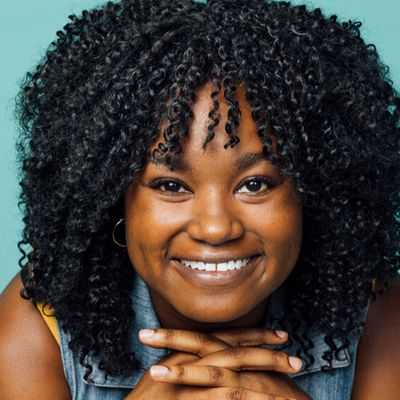
TYA, Theater, Anti-racism training, Khalia Davis is a bright star who is building a better future by working with children in the arts.
Connect with Tonya via her community phone number at +1 917-724-8998!
Produced by Dori Berinstein and Alan Seales, edited by Derek Gunther, music by Cat Dail.
A proud member of the Broadway Podcast Network.
Transcript
This transcript was automatically generated and might contain errors.
[0:00] Tonya Pinkins: Hello, this is Tonya Pinkins, and you are listening to You Can't SAY THAT on the Broadway Podcast Network.
[0:13] Tonya Pinkins: We gotta say what truth for you.
[0:25] Tonya Pinkins: It is right now, it is like April 27th. I feel like I haven't recorded in, I definitely haven't recorded in about four or five months, but I'm excited to get back here today. And my guest is Khalia Davis, who is the artistic director of the Bay Area Children's Theater.
[0:46] Tonya Pinkins: I don't know which generation she would be from, but it's definitely not mine. And I am looking forward to having a conversation with her about many of the things I don't understand about the new generation. Um, Khalia has directed the world premiere of She Persisted: The Musical, which was inspired by Chelsea Clinton's best-selling book, A Kid's Play About Racism, and she adapted it from Jelani Memory's book, A Kids Book About Racism. So she's committed to amplifying BIPOC voices, and I got so many questions. So join me in welcoming Khalia Davis, who is in Oakland right now.
[1:29] Khalia Davis: Hey.
[1:29] Tonya Pinkins: Yes.
[1:30] Khalia Davis: Hello, hello, hello.
[1:33] Tonya Pinkins: So, you know, what generation are you from? Do you have letters or something?
[1:36] Khalia Davis: I don't even know if my generation has letters.
[1:38] Tonya Pinkins: What is your generation?
[1:40] Khalia Davis: I'm a millennial. Born in '88.
[1:42] Tonya Pinkins: And that's millennial. And what comes after that and when do those people born? Because I really don't know.
[1:46] Khalia Davis: So I thought it was officially Gen Z comes right after Millennial, but apparently there's like this window of individuals that are right between Millennial and Generation Z that I do not know the title of, but I truly don't care. I just know that I no longer can relate to high schoolers. Like I used to be able to be like, oh, I understand you, I can get on your level. And then I taught high school last year, and I was like, oh, I don't understand what you're talking about. And I don't understand this. I don't understand it.
[2:19] Tonya Pinkins: And what tell me specifically what you didn't understand? Because there's so many things I don't understand. What didn't you understand?
[2:24] Khalia Davis: I didn't understand this desire to constantly be in connection with your friend group, even though your friend group was right there. So I worked with the Atlantic Theater Company in the program called Staging Success through their Atlantic Acting School. And we would go into high schools, and specifically I was in a high school in Brooklyn, and these kids would have their phones on them and they would be texting with their friends who were right outside the door. And I'm like, I don't, y'all, you got me for 45 minutes, and then you could have your friends for the rest of the day. Uh, and whenever I would ask them to please put their phones down, it would be so difficult for them. And I was like, I don't understand why this is so difficult.
45 minutes, just give me 45 minutes, y'all. That's it. But it is, it's truly like, because as a millennial, I got to experience a world without the immediacy of a phone and an internet and social media. I still was coming up with the VHS Blockbuster Hollywood video era. I got AOL Instant Messenger, like that was my generation, so I truly don't, I don't really get this hold that a cell phone has over young people right now.
[3:42] Tonya Pinkins: Have you ever heard of transhumanism?
[3:44] Khalia Davis: No.
[3:42] Tonya Pinkins: Well, there's many branches of transhumanism, but the sort of gist of what I understand of it is about people who want to merge with the technology and they feel like that is what we're supposed to evolve to, to the point where we are not just humans but we are a combination of human and technology. And I feel like what you're describing with the high schoolers is that they have not, the phone isn't implanted in their bodies yet, but the fact of relating to the world with the phone as the phone is an appendage is a thing. And I've experienced that like with my daughter a couple of times. We were standing in the rain and I was saying we need an umbrella, and she was looking at her phone and she's like, no, it's sunny. But we were literally standing in the rain.
[3:42] Khalia Davis: I'm sorry, what? Yeah, it happens like that. They'll check out and it is so interesting to work with this group of young people of this era knowing that we're trying, especially as a theater practitioner and an artist, I'm like, hey y'all, like be you, let's explore together, let's like tap into your inner self. But they are so surface. They really work on the external because they're constantly thinking about how am I presenting? And that, and that I appreciate, but at the same time, I'm like, but in theater, you can go deeper than that. But it's hard for them sometimes to make that jump and to go deeper. So I, yeah, I got to my 30s and went, oh, I don't, I don't get you anymore.
[5:32] Tonya Pinkins: Well, you can imagine for me in my 50s, like I so don't get it. And there's this thing, I don't know if you've encountered any friends who have had this of a lot of people, I guess they would be right in that space where they're like ghosting family. Like they've just decided we don't, we don't like our family anymore, and they don't talk to any of their family anymore. And there's no conversation, just family canceled.
[6:01] Khalia Davis: That's, you've seen that, yes.
[6:04] Tonya Pinkins: And I think it stems from a legitimate place of like post-family trauma. So you're like, okay, I don't want to put myself through the trauma that was inflicted upon me as a young person by going and doing family vacations or visits or things like that because I know I will be triggered. So I appreciate people wanting to protect themselves, their energy, and their spirit. However, I think that the thing that is frustrating as an outside observer of that is that you aren't allowing your family to grow either. So if you are canceling them and you're cutting them off completely, you aren't giving them an opportunity to come back at you and say, actually, we see you, we love you, and we will accept and we just need a time. Like you're not giving us time to fully embrace everything about you now.
[6:54] Khalia Davis: I went through that personally with my mom. My mom is a queer black woman, and she grew up in a time that obviously was not something that you could be. And she assumed that her family did not accept her and therefore did not want her. So she left the East Coast and came to the West Coast. And it's just recently, within like the last 10 years, she has been able to repair a lot of those relationships and to have aunts and uncles and cousins tell her, like, we love you, Joyce. We love everything about you. You're the one that left us. We miss you. We wanted to know more. So it was a really awakening moment for her, and then also for me and my sister to just appreciate like, you know what, you may not understand me, but I'm going to give you time to process who I am so that we can eventually come back to love.
[7:45] Tonya Pinkins: Now, just so you know, your mother comes out as queer identified. At what point in your life was that, and how did you take it?
[7:54] Khalia Davis: So I grew up, I had two moms growing up.
[7:54] Tonya Pinkins: Always?
[7:54] Khalia Davis: From what age? Uh, since I was born.
[8:02] Tonya Pinkins: Oh, oh, whoa. Okay, well, this is fascinating. Okay, tell me.
[8:05] Khalia Davis: Yeah, so I've always had this thing where I'm like, I don't understand any sort of antithesis against the queer community because in my opinion, I was raised by a village of incredible black lesbian women. Um, and I also, though, appreciate that my sister, who is four years younger than me, she doesn't see it the same way that I do because our relationship with our moms were different.
[8:36] Khalia Davis: So I see it as I was raised by two women, they were both considered my moms. My sister, because they got separated again, at the time, you couldn't get a legal marriage, so they had a civil union ship, so that was dissolved, and it wasn't really pretty. And so I tell people all the time, I'm like, just because I had two moms doesn't mean that I didn't also experience what it's like to live in separate households, have two separate Christmases, two Thanksgivings, having to share space and time. And that really rocked my little sister to the point where she's like, I don't see, I see my birth mother as my mom. And then I see this other woman as a person who's been in my life. And I think that, and I appreciate that.
But for me, I'm like, oh, but no, I was, I felt like I was truly raised by both of these women. And it's so interesting because I saw so much power and beauty in them and who they surrounded themselves with. But then later on in life, there was this time period where my mom, I wouldn't say she went back in the closet per se, but she definitely was not as expressive in who she truly was with the rest of the world because she was still so concerned about perception.
[9:17] Khalia Davis: And I think that it's been so lovely representation is a part of my mantra, it's a part of my mission. And I think it's so great that there's been so much more forward representation, positive representation of queer women, queer stories. She's like, oh, well, I'm just gonna be me. And I'm like, yay.
[10:11] Tonya Pinkins: Now, do you and your sister have the same birth mom?
[10:15] Khalia Davis: Yes, we have the same birth mom and birth dad.
[10:18] Tonya Pinkins: Because my mom was like, I ain't playing this like multiple baby daddy things, like I have multiple baby daddies for my children.
[10:25] Khalia Davis: Okay, so okay, go ahead.
[10:26] Tonya Pinkins: Yeah, she was like, she wasn't about it because she was, I don't want to have to think about all the different stuff.
[10:31] Khalia Davis: So my dad is great, he understood the situation, he understood the arrangement. Um, and we have a really interesting family dynamic, but it's good and it works for us.
[10:43] Tonya Pinkins: Do you have a relationship with the birth dad?
[10:46] Khalia Davis: I guess he's the sperm donor.
[10:48] Tonya Pinkins: Yes, okay.
[10:48] Khalia Davis: I do. Yeah, we made sure of that. And my mom, uh, it was when I was three years old, and I went to daycare for the first time, and I saw men, and I saw like kids.
[10:58] Tonya Pinkins: That was your first time seeing men in like registering that they are in relation to the child.
[11:04] Khalia Davis: So before then, I, like I said, I was like in a village of just like strong black women, and then I go to preschool, and I'm like, who's that? And they're like, that's my dad. And I was like, Dad, I want to know what a dad is. And then my mom was like, oh, okay, well, this is John. This is your dad. And so since then we've had a fine relationship.
[11:31] Tonya Pinkins: I mean, it's not, it's obviously not as um well. What was that like? Like, okay, you're a girl, you've been around girls, you all can be naked and everything all together. Now there's this other alien being. Like, what was that like?
[11:43] Khalia Davis: It was fine. I mean, the thing is that he had his own life in San Francisco. He was not. Um, and so he was doing what he was doing. He has his sons as well, so he also had children from other people. Um, and so it was, you know, Easter's church service. He would attend with us. Uh, we would do, I would go and visit for a couple hours on Christmas just to be like, hi, me and my sister would say hi to him and his wife. So, like, it's just it's really interesting how we kind of made it work, but it truly stemmed from me just wanting to be like, Who is this person? I want to know who he is, and the fact that he was around, that my mom had a relationship with him in that they were co-workers, and she wanted to make sure that whoever was the sperm donor was somebody that she trusted. She knew their history, um, and felt confident that they would be understanding of what that situation looked like. And that was this man.
[12:43] Tonya Pinkins: So yeah. I'm gonna tangent for a minute because there's something that I've learned from the new generation, and I want to uh bring it in uh right now in the midst of my podcast. So I'm gonna model it and then I'm gonna invite you to do it. And that is that I am in New York City, which is the unceded territory of the Lene Lenape people. And um I honor them and my um privilege to be in the presence of their land, and that I am a uh black, but a sort of cafe au lait caramel colored woman. I've got some folux in my hair. Uh, I'm in my 50s, I'm zoftig. And uh yes, and so I invite you, Khalia, to do the same.
[13:28] Khalia Davis: Yes, definitely. And my apologies for not doing that in my introduction earlier. Hi, everybody. I'm Khalia Davis. I use she, her, hers pronouns. I am calling in right now from the unceded territory of the Mewekma Alone tribal lands. Um, also recognizing that we are using the internet space, so this is still the same tribe of Silicon Valley and Zoom and Google. I also will give an image description for myself. I am a black identifying woman. I have medium brown skin. I'm currently rocking a curly hairdo that comes to about my shoulders. I'm wearing a black hat that I am obsessed with and I wear almost too often. And I'm sitting in a closet and I'm also rocking a scarf and an orange shirt. And I'm very grateful to be here.
[14:17] Tonya Pinkins: Oh, I just wish people could see your beautiful shiny chocolate face. It's so beautiful. I wish that people could see you. Um, I have to remember I want to do that every time I start a podcast. As I said, I haven't done one in about six months, but in participating in other meetings with people, I think it's a beautiful way. It's a beautiful um evolution that we are having of acknowledging what came before us and writing previously wrongs and making it possible for other people to experience the podcast who can't. Uh, I mean, most people can't see a podcast, but that we are inviting people for whom the visual uh sense is not there for them at all to have a deeper uh connection with uh people in this auditory uh platform that we are in.
[15:08] Khalia Davis: Amen. So, you know, I'm gonna just keep picking your brains about all things millennial. You described yourself as a woman. Does that make you cisgendered?
[15:17] Khalia Davis: Yes. And and so just because I'm just curious, when you grow up and you're all around women and you're seeing women relate to each other in a you know, a sexually loving way. I remember myself as a child kissing my girlfriends, playing all the sexual things with my girlfriends, not even thinking about whether that meant anything for my future. It was just we were there with each other, we saw things, we were curious, we tried it out on each other. Was it the same for you and your generation? And did that affect any identity issues?
[15:49] Khalia Davis: You know what? It actually wasn't that it wasn't to that extreme, but I definitely remember being in high school and noticing that I was really taken with a couple of my friends and one in particular. And I just I remember telling my mom one day, I was like, I think I have a crush on my friend. And she went, Oh. Okay. And and I appreciated her not pushing for me to explain more or go further with that. But then I realized that actually I think it's just an appreciation of the female body, the pre the female form. I just, I just there's something so beautiful about a woman. Um, and I have always just really admired it. But I do identify as straight. I uh am in a really beautiful relationship with a man, a cisgendered man, a black man who also appreciates, uplifts, and amplifies the black woman. Um, and so I'm really grateful for that.
[16:45] Khalia Davis: But yeah, so it's interesting. And then with my little sister, she kind of had the same thing where she's like, we didn't really experiment or anything like that, but definitely just a relaxed comfort in showing affection to our female identifying friends. And so for me, when I think about this lack of experimentation, which I definitely experienced for my children who are now all adult between the ages of 22 and 35. I remember when my youngest was um, he was probably about four, and he was playing, you know, doctor with this five year old. And um, he was staying overnight at a friend's and um they were experimenting, you know, under the cover. The friend came in and was like, oh my god, they were under the cover, they had any clothes on.
I I'm just terrified, and I was like, what? Like, yeah, this is when they should be doing this. Like when they're like 10 and 12, when people start mincing and stuff, that that's okay. When they this young, they should be playing and figuring all of it. Like, so that shit is not even interesting later. They've already done that. But I remember that, you know, he took his daughter to a therapist, and therapist was like, She should never have any more sleepovers ever again. And that's how that went.
[18:00] Tonya Pinkins: So when I hear you say no experimentation, I'm like, like, I can't even imagine that that was such a part of my growing up with me and my girlfriends, me and my brothers, like we just did. And certainly I felt guilt because there were other kids who didn't. I remember some of my friends, their parents found out about it, and I could hear them getting beaten, you know, in the next house. And my mother, you know, who had me at 14, she was just had a very I mean, she would beat me for other shit, but she wasn't beating me about sexual experimentation. Right.
[18:36] Khalia Davis: Okay.
[18:36] Tonya Pinkins: So for you to say that that wasn't even, I mean, especially with how much sexual content is available to young people via the phones and the internet, that that wasn't even something you were doing or even thinking about till high school, I'm I'm kind of astonished.
[18:50] Khalia Davis: Sure. I will also just throw in the mix that I am a practicing Christian. I've been a Christian my whole life, and I come from Christian women and Christian family members. So I think there is also just a sense of um what sort of uh visuals are we going to be putting in front of our children in the home that continue to uplift some of these other types of ideals, and I think that helped maybe shield a little bit, but I will say, and just I want to honor that you that anybody going through any sort of experimentation, I think is so valid and beautiful.
[19:25] Khalia Davis: And I will say that there was one time when you mentioned your mom beating you. There was one time that I got my butt whooped so hard that I never, never did anything I feel like wrong again because I was like, I just need one time. My sister's a different story, she's a tourist. So she she's seen the belt a few times. But I remember that I at in like five, six years old, was under the trampoline with a male classmate of mine. And I got discovered by the classroom teacher under the trampoline. And that was when my mom was like, This happened. Did this happen? What and wanted to help me say the truth. And I was like, nope, I'm fine. And I didn't, I didn't know. And then that was why she she took the belt out because she's like, You will not lie to me. I know exactly what you did. And then I haven't lied to her since.
[20:22] Tonya Pinkins: Okay. Ooh.
[20:25] Khalia Davis: Okay.
[20:26] Tonya Pinkins: And it was really about the lying, not about what you were doing.
[20:32] Khalia Davis: No. If you would just said this is what we were doing, it would have been different.
[20:35] Tonya Pinkins: Exactly.
[20:35] Khalia Davis: Exactly. And then she and she's spoken about that when I was older. You know, we had a great conversation about how, especially when you know you start going through the changes, and then boys start to become like a legitimate situation and concern. And my mom's like, listen, let's have a conversation about this. And I and she goes, that's all I wanted to do. Like, you if you lie, you don't allow me to have a conversation with you in a protective way, so that you are getting knowledge and information from a trusted source. I don't want you to have to go somewhere else to get that knowledge. I want you to get it from me because I know I can give it to you.
[21:12] Khalia Davis: And it and it's it's real. It's the same with like drug use. Like marijuana, she's like, if you're interested in weed, come to me and I will find I know the right people who aren't gonna lace it with anything, who aren't going to modify it. I know who I can get you, you know, like that. That's the type of person she was. She's like, you have to give me an opportunity to show you that I'm open to anything that you want to talk about. But if you cut me off, then that's the problem.
[21:40] Tonya Pinkins: Wow, this sounds so like awesome. And I'm like, oh my God, like I thought I tried to do that with my kids, but my kids can be so conservative and very judgy. And I and I'm just like was like, I guess maybe kids just don't listen to their parents, but you sound like you do. But would if I were to talk to your mother, would she be like, honey, all that stuff she told you?
[22:02] Khalia Davis: No, not my experience of her at all. No, if you talk to my mom, she'd be like, Yeah, that's her.
[22:09] Khalia Davis: Because I what I was such a goody two shoes. I was a people pleaser. I was like, I will do anything you want so that you are proud of me. I'm still like that. I'm I just will, I'm doing it for her. Um, and so it's just really funny that you said that because I'm like, actually, she would. And then if you ask about my sister, she'd be like, Oh, I got stories. Um, because my sister was the type of kid that at four years old was like, Well, I you already got the good kid. Like she legitimately said that one day. And my mom went, you also can be my good child, you know. She's like, and has all in a sense had this situation of like authority does not really compute in her brain. She's like, we are on the same equal footing. She came out the womb like that. She's like, Y'all, my people. I don't care if you're a teacher, I don't care if you're my parent.
[23:00] Tonya Pinkins: I know, we talk in as equals. And my mom's like, no, you are a baby. Okay. Okay. So I know you have this sort of I was on the website and I was reading this whole anti-racist platform. I really want to get into that and how you do that with young people, especially with the huge movement right now, people that they don't want to hire. I just saw something out of Miami. They don't want to hire teachers who've been vaccinated. Um, I think Tucker Carlson was saying last night that they wanted people who, you know, to actually attack and confront people who have been vaccinated. Um, you know, how are you even, uh, the Brewerly School? I don't know if you saw this father who sent a whole letter to the 650 parents at the Brewery School about, you know, this teaching about black history.
There has been no racism since the 60s. You've got young people that you're teaching theater to. Um, I'm assuming, even though it's Oakland that there must be a mixed population. Uh, how are you bringing in quote anti-racism since some people are saying there's no such thing as racism?
[24:08] Khalia Davis: Oh my gosh. Did you watch speaking? I will answer your question, but on Tucker Carlson, who is like, uh, have you did you watch his whole thing about? I don't watch him at all. I don't, uh, anything that I want to go away, I try not to give any energy to it. I never said that man in the White House's name. It was 45. Because I felt like all of those, the more energy you give to anything, the more you elevate it. You know, all the different little acronyms with the name and all of that. I was like, you're just beating it, you're just making it bigger. So I try to remove my energy from things that I don't want to have be in the world. So go ahead. Yes, he said something.
[24:46] Tonya Pinkins: I'm the same way. My friend posted being like, what is happening? He had a whole segment about, uh, confronting mask wearers.
[24:56] Khalia Davis: Yes, yes. I read about that. Oh, I was like, y'all, just leave people alone. I'm just I'm a huge fan of leaving people alone. Mind your own business. Anyway, back to your question. Yeah, it's been interesting to experience, uh, two different kinds of realities right now as a teaching artist. As a teaching artist, you, um, especially someone like myself who was pretty much the only, um, member of the global majority that would be in these classes and in front of these in a predominantly white institution, predominantly white classroom. I mean, I would go I love that you call it as the global majority. I'm going to borrow that.
[25:31] Khalia Davis: Oh yeah, I will be calling it the global majority, and I've been calling the other because I've experienced sometimes going out, and when I use that W H I T E word, people go, why are you talking about that word? And like, oh, so now just use that word as a slur. So I just talked about the Crayola people, people who define people out of the colors of a crayon box, the Crayola people.
[25:52] Tonya Pinkins: I want to use that. That's very on brand for children's theater. So thank you. I'll take that. But it is interesting because I have progressive parents, liberal parents who have read all the things, who are trying to be very active and are like wanting their kids to also be as active as them. And then on the other side, I have some really conservative parents who are like, we just want kids to have fun in a theater class, and that's it. Like, do not talk about any of these other things, don't put real world issues into the class. And so trying to make sure that as an employee, I'm not pushing too hard, but at the same time, I want to give space. I think that's the way that I've approached education, arts education in this time is that I want to always provide space for a kid to show up as their true authentic self in that moment.
[26:45] Khalia Davis: And it can be an access check-in. Like, what are your access needs today? What's going on with you?
[26:51] Tonya Pinkins: Um, it could be what's an access check-in? I don't know what that is.
[26:55] Khalia Davis: Oh, okay. So it's something that I've implemented, especially with my staff since joining Bay Area Children's Theater, where, uh, before we start anything, we do an access check-in, which is an opportunity for them to say either their access needs are being met, which means you're safe, you're protected, you're housed, you got food, you got water, you know, like I'm fine. Everything is or also it's an opportunity for you to go deeper. Um, I used access check-ins quite a bit during a lot of the unrest that was happening in the summertime of the pandemic, and I was very honest with them, and I would say I'm showing up today really hurt. Um, I didn't get a lot of sleep last night. Um, I just so that this is an opportunity for the full ensemble, the full staff, whoever you're in community with, we can all come to a communal understanding of where everybody is at, and then we can proceed forward as business, whatever needs to happen.
But recognizing that if someone says my Wi-Fi is being really spotty, and then they cut out, we're like, oh, we understood that that was gonna happen probably because they told us during the access check-in. Or, hey, my nanny is sick, so I'm watching my kiddo today, and then a child shows up during the Zoom, and you're just like, this is amazing. I love babies. Um, but yeah, just to give, I just, you know, we're artists, but we're humans, and I just want to make sure that we are checking in with your human self first, and then we can get to the business after that. And the same with the kids, right? Like you're, you I get it, you're children. There are so many other things besides memorizing lines to Aladdin Jr. Like there's a lot of other things happening right now, and I want to make sure that at the beginning of my class, I've given space for it.
And sometimes that means we may not get to friend like me. That means we may sit in a circle and we may just be sharing some feelings right now, and that's okay. We have not stopped. And I and that's anti-racist because white supremacy ideals uphold this idea of pace, time, um, getting things product-based, finishing the product within a time frame. You can't lose um that precious opportunity to work and it, but if you take a moment and you just say, well, the world literally this summer, especially in California, the world was on fire. Um, as well as the reckoning that was happening in all industries due to the Black Lives Matter movement resurgence. Like you we gotta talk about it, okay? These babies are seeing it. I can't deny it, I can't hide it. I gotta show them.
[29:41] Tonya Pinkins: Yeah, and I love I love this whole thing that you're talking about. It's something now I'm you're teaching me, and I'm going to carry forward because I was just reading about a book that just came out of one of the university press talking about the deep connection between capitalist business models and slavery and how they are identical. That, uh, when you have control of your work of your labor force, you can do anything with them. So that they would, uh, quote have a competition for how much cotton you could pick, and you'd get some nominal prize, and then based on how much you picked, which probably you're like, I'm gonna work myself to death today to get this prize, and then I can rest tomorrow, but then that amount became the new bottom line for what you had to do, and how this whole capitalist patriarchy, middle, you know, military, industrial, carceral thing is built upon the fact of an enslaved population that has no rights that you can treat like property because the Crayola people treat animals better than they treat human beings.
So I love this idea of bringing the beginning of the day of every day with any group of people. It's something I do in my women's circles where we talk about where we're coming from. That we meet as human beings, and so then everybody, nobody has to be hiding what their day or their life is, and we can factor into that how the day's gonna go. So much more connected to humanity.
[31:20] Khalia Davis: I love it. I find that those of us from marginalized communities, that's what we gravitate towards because that is what we have been denied. Where white people, they are allowed to be fully who they are. We see it in theater, we see it in media, we see it in entertainment, we see it in sports, we see it everywhere. They can just be. They can be in a grocery store and cursing out the clerk and nobody does anything. But we have never really gotten an opportunity to just be who we are. There's always something that comes with it, like, oh, well, why are you saying it like that? Oh, you hurt my feelings, or are you sure you feel you seem a little upset? Like, there's it's really great to be able to like give that opportunity to those of us that haven't really had it.
[32:17] Tonya Pinkins: Hi, this is Tonya Pinkins, and that was part one of my conversation with Khalia Davis, who is head of the Bay Street Children's Theater. Come back for part two of You Can't SAY THAT! on the Broadway Podcast Network.
[32:37] ♪ Musical number ♪
[32:37] Tonya Pinkins: You is kind, you were smart, you is important, you is dead.
[32:43] Tonya Pinkins: My horror film Red Pill brings African American perspective to progressive movement.
[33:11] Tonya Pinkins: This place is spooky.
[33:13] Tonya Pinkins: Some people like to live dangerously.
[33:15] Tonya Pinkins: Yes, why are you so jumpy tonight?
[33:18] Tonya Pinkins: You know what, guys? I'm gonna go back tomorrow.
[33:21] Tonya Pinkins: Did you hear about the creature woman that attacked a father and son hunting down here?
[33:26] Tonya Pinkins: I don't see the case.
[33:28] Tonya Pinkins: This place creeps me out.
[33:33] Tonya Pinkins: I think we should call the sheriff's office.
[33:50] Tonya Pinkins: The only people missing or dead are brown people.
[33:55] Tonya Pinkins: They're after all of us.
[33:59] Tonya Pinkins: What do we do, Amelia?
[34:01] Tonya Pinkins: We die.
[34:03] Tonya Pinkins: But we take some of them with us.
[34:08] Tonya Pinkins: Hi, I'm Tonya Pinkins, and I would love to hear from you. You can text me at 917-724-8998.
[34:17] Tonya Pinkins: Tell me what you're up to, and I'll let you know what I'm up to. Text me.
© Broadway Podcast Network, All Rights Reserved