

TYA, Theater, Anti-racism training, Khalia Davis is a bright star who is building a better future by working with children in the arts. Connect with Tonya via her community phone number at +1 917-724-8998! Produced by Dori Berinstein and Alan Seales, edited by Derek Gunther, music by Cat Dail... Read More
From the show: You Can't Say That!
Guests
About
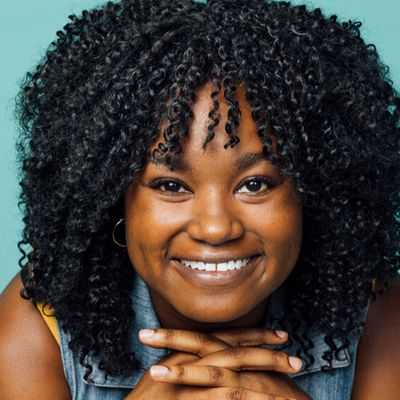
TYA, Theater, Anti-racism training, Khalia Davis is a bright star who is building a better future by working with children in the arts.
Connect with Tonya via her community phone number at +1 917-724-8998!
Produced by Dori Berinstein and Alan Seales, edited by Derek Gunther, music by Cat Dail.
A proud member of the Broadway Podcast Network.
Transcript
This transcript was automatically generated and might contain errors.
[0:00] Tonya Pinkins: Hi, I'm Tonya Pinkins.
[0:01] Tonya Pinkins: And you're listening to You Can't SAY THAT on the Broadway Podcast Network.
[0:06] Tonya Pinkins: This is part two of my conversation with Khalia Davis, an anti-racism trainer and a teacher of young audiences and the head of the Bay Street Children's Theater.
[0:23] Tonya Pinkins: We gotta say what rules for you.
[0:36] Khalia Davis: Well, I don't know if you've watched the new Raoul Peck documentary, Exterminate All the Brutes.
[0:43] Tonya Pinkins: Have you seen it yet?
[0:44] Khalia Davis: No, but you see, you keep giving me this good.
[0:46] Khalia Davis: Oh, you must, you must, it's a must-watch.
[0:48] Khalia Davis: If all students in America just watched those four hours, they would have a better history education than they get in 12 years.
[0:56] Khalia Davis: And another thing I want to put out for people is in class with Carr, which is on YouTube every Saturday, it is my church, largest African American studies program in the world, and it's just true history.
[1:07] Khalia Davis: But the fact that the Crayola people, you know, the difference between them from any other people on the planet, and they are the last civilization to evolve.
[1:18] Khalia Davis: Europe is the youngest civilization.
[1:21] Khalia Davis: What set them apart from the rest of the world is their willingness to call others not human and to commit mass extermination of them from a distance.
[1:35] Khalia Davis: The Chinese, you know, discovered gunpowder in the 13th century, but they didn't use it to go around the world wiping people out.
[1:42] Khalia Davis: Only the Crayola people did that.
[1:44] Khalia Davis: And so this, and there was a book called No Humans Involved.
[1:49] Khalia Davis: The Crayola people's culture has embedded in it that folks that don't resonate with, they aren't human, that there are no humans involved.
[2:01] Khalia Davis: So anytime the global majority represents with qualities that they feel only belong to themselves, it is distressing, upsetting, it is inappropriate because it is embedded in them that there are no humans other than me and my tribe.
[2:20] Tonya Pinkins: Yeah, oh that is all very, very accurate.
[2:25] Tonya Pinkins: And we have had to reclaim our humanity in the eyes of these white gatekeepers and white leaders.
[2:33] Tonya Pinkins: I mean, the fact that we've literally all the whole thing has either been civil rights, you know.
[2:39] Tonya Pinkins: Michael Che has that really beautiful moment in his stand-up from a few years ago, being like, oh, we were asking were civil, just be civil.
[2:47] Tonya Pinkins: So now black lives matter.
[2:49] Tonya Pinkins: So we're that's it.
[2:50] Tonya Pinkins: Like, we just want you to acknowledge that we matter.
[2:55] Tonya Pinkins: We are human.
[2:55] Tonya Pinkins: We are we are human like you are human.
[2:58] Tonya Pinkins: It's it blows my mind.
[3:00] Tonya Pinkins: 2021, we you know, I am my ancestors' wildest dreams, but also at the same time, yo, we still fight and we're still going, and that's crazy.
[3:10] Tonya Pinkins: Let's what with all of the access we have, with all the opportunities that are put forward, it blows my mind that there is still such a hard fight to even just show these people that we are human and need to be treated as such.
[3:27] Khalia Davis: So I know from my perspective what boggles my mind about it.
[3:33] Khalia Davis: From a scientific point of view, I look at it evolutionarily, and I know these are the youngest, you know, these are the least evolved humans on the planet, and somehow we allowed them to start running the planet because they got access to gunpowder.
[3:47] Khalia Davis: I often think that the global majority is sort of very kind to them because they're like, oh, those are the kids.
[3:53] Khalia Davis: The kids are wrecking have it, the kids are being crazy, the kids are violent.
[3:57] Khalia Davis: But the kids in, you know, under 2,000 years are about to destroy the world, the whole planet.
[4:05] Khalia Davis: Our planet.
[4:07] Tonya Pinkins: Right.
[4:09] Tonya Pinkins: Right.
[4:09] Khalia Davis: The kids, this Western civilization folks, they're about to destroy the planet.
[4:14] Khalia Davis: What boggles you about their inability to understand humanity of others?
[4:23] Khalia Davis: I could appreciate when you had limited resources to experience others' realities, as in the movies and newspaper clippings and books that were being written, you just it was very one note.
[4:41] Khalia Davis: It was from one perspective, a shared perspective, and therefore that's what they assumed was the thing.
[4:46] Khalia Davis: But now we have a plethora of opportunities to like interact with different forms so that we know and can appreciate other people's lived experiences.
[4:59] Khalia Davis: You can watch a TV show on Netflix, you can open up.
[5:03] Khalia Davis: But I don't think they choose to do that.
[5:05] Khalia Davis: I think that the fact that we have more opportunities has given them the opportunity to limit their world to those things that are resonant for them.
[5:15] Khalia Davis: I mean, I think that that's this movement towards 1619 project can't be in schools, no anti-racism curriculum in schools, no rewriting of history.
[5:24] Khalia Davis: And I would go a little further to say that I think this model of, you know, why we see so many young white mass murderers is because the history is so inaccurate that all they see is Crayola people, hero, conqueror, and there's no more places to conquer.
[5:49] Khalia Davis: And so what can they be other than a mass murderer?
[5:53] Tonya Pinkins: Yeah.
[5:53] Khalia Davis: Because this is the history of their ancestors.
[5:56] Khalia Davis: The ancestors were mass murderers.
[5:58] Khalia Davis: So they really are following the model laid before them.
[6:01] Khalia Davis: They truly are also that model was based off of fear and not abundance.
[6:05] Khalia Davis: So they are operating from a place of fear.
[6:08] Khalia Davis: They fear that whiteness will disappear because they're seeing it disappearing.
[6:13] Khalia Davis: And to them, that is bad, as opposed to most of us being like, that's great.
[6:18] Khalia Davis: Let's go.
[6:19] Khalia Davis: They're also so that that I'm not sure.
[6:23] Khalia Davis: Well, I gotta say that there's no such thing as that.
[6:23] Khalia Davis: That's some Crayola ideology.
[6:23] Khalia Davis: There's no such thing.
[6:31] Khalia Davis: It never existed, it doesn't exist, and the greatest genetic diversity on the planet exists on the continent of Africa, where two Africans from one tribe have a greater genetic diversity than any two people once you leave the continent.
[6:47] Khalia Davis: So this idea of this pure Crayola color, yes, it is going to cease to exist because evolutionarily it never existed.
[6:57] Khalia Davis: And if you continue to try to make it, you will just become extinct.
[7:00] Khalia Davis: Like nature and science has told you that.
[7:03] Khalia Davis: You may want to project it that these other people are doing something to you, but your own ideology is going to extinct you.
[7:10] Tonya Pinkins: Oh, definitely.
[7:11] Khalia Davis: Also, white people in the ones that came up with the term race to begin with, because they wanted to separate the enslaved people they were bringing from the continent of Africa from those coloners that were already there.
[7:22] Khalia Davis: Like they were like, We have to make sure they understand that we are above them.
[7:28] Khalia Davis: That's why we are their masters.
[7:29] Tonya Pinkins: And you're like, okay, but you truly had no concept of that when indigenous people were living here.
[7:36] Tonya Pinkins: Like you didn't, that's not something you brought up yet.
[7:38] Tonya Pinkins: And it wasn't until black people came.
[7:40] Khalia Davis: That's when black people didn't come.
[7:42] Khalia Davis: Black people were kidnapped and brought here.
[7:44] Tonya Pinkins: So how do you deal with this with little children?
[7:47] Khalia Davis: You know, separating this Crayola, the Crayola box with children.
[7:53] Khalia Davis: So here's the thing.
[7:54] Khalia Davis: Kids, if we can get to them early, we can help start to mold and shape their minds so that they can be more empathetic, compassionate human beings.
[8:05] Khalia Davis: And so that's why I have such a passion for the creation of art that can be speaking to young audiences specifically.
[8:12] Khalia Davis: And in my work with anti-racism, I created a show called A Kids Play About Racism.
[8:18] Khalia Davis: It's based off of Jelani Memory's book, A Kids' Book About Racism.
[8:22] Khalia Davis: And the reason why it spoke to me was that it was speaking to his lived experience as a multiracial black man in the Puget Sound area.
[8:32] Khalia Davis: And he was writing it for his son.
[8:34] Khalia Davis: So he just wanted his son to know who he was and therefore who his son is, and also speak about his experience as a kid being told certain things, being hurt, hearing certain language being put on him and as an identity, and that it was really hurtful.
[8:52] Khalia Davis: And it was very simple, but it was compelling and impactful, and it was something that a kid could digest.
[8:59] Khalia Davis: And I've always said that children can participate in any conversation as long as you provide them some tools so that they can be active in that participation.
[9:10] Khalia Davis: If you come at them with the really intense highbrow language, then of course, if an eight-year-old is gonna be like, okay, well, hold on, I'm not young Sheldon.
[9:20] Khalia Davis: I do need to know a little bit about what you're trying to say.
[9:23] Khalia Davis: Can we simplify that a bit?
[9:25] Khalia Davis: And then you do, and they're like, oh, I get it.
[9:28] Khalia Davis: So my play was an opportunity to really just enhance that, where we had our main character, 12 years old, Jelani grappling with this idea that adults have made racism so big and awful and horrible and dramatic.
[9:47] Khalia Davis: But I'm a kid and I can speak to kids, and I'm gonna make it simple and easy.
[9:52] Khalia Davis: And as he's going through that journey, he realizes that it's not easy.
[9:56] Khalia Davis: It is complicated, and that's okay too.
[10:00] Khalia Davis: I have manifestations of feelings kind of very inside out where you are seeing delight, you are seeing anger and rage, you are seeing grief and sadness and love, like really it's right there.
[10:15] Khalia Davis: These are characters that are talking to him and he's interacting with them.
[10:18] Khalia Davis: And we're basically highlighting the importance of it's okay to feel how you feel about this situation. And you need to appreciate and understand that there are kids next to you in your class that are going through this. And how are you going to be an ally for them? How are you gonna be an advocate for them? How are you gonna stand up for them if they are in a position where they can't stand up for themselves? Um, and it was the best part about children's theater and TYA is the opportunity to engage before and after the show.
[10:52] Khalia Davis: So we had um Seattle Children's Theater and Alliance Theater together, their education department put together a beautiful, active audience guide that gave those tangible resources and tools that teachers, parents could use with their kids, coloring pages, um, word searches, things that kids can appreciate and understand, but having a theme around racism and how to be a better ally. And then after the show, I would moderate sometimes, or my colleagues would moderate, or some of my actors would moderate, post-show discussions with kids and asked some questions.
[11:29] Khalia Davis: Well, tell me some of the highlight moments of what a kid would say versus a parent would say. Yes. So my favorite times were when kids were, I would give kids an opportunity to be like, okay, so what was something that stood out to you during this show? What did you remember from this show? And a lot of them remember this one very intense scene that I purposefully kept in the show. It's uh it is hard to watch, but it is all truth. Um, Jelani Memory himself gave me permission to use these words that others had used against him.
[12:08] Khalia Davis: And I animated it so that the characters were being real, they were huge and they were literally throwing the word stay down on top of Jelani and crushing him. And Gelani is crying and saying, like, you do why don't you see me? These words hurt me. I'm hurt. Please stop. And they weren't. And that is a moment that really spoke to so many kids because they were like, I didn't like when those mean people were saying those mean things to Jelani that wasn't nice, that wasn't okay.
[12:42] Khalia Davis: And and I love that. It is so innocent and so simple. And yet at the same time, it is exactly the message we're trying to get across. You do not need to say those things. It hurts someone. And you need to appreciate that. And then my other favorite story I like to tell is that there is a little child who came off of mute during one of the Zoom talkbacks and said, Hi, I just I love the show, but is it okay that I'm white? I feel bad.
[13:14] Khalia Davis: And I was so happy that this child felt safe enough in the space that we cultivated for him to even share that. Um, he made, I'm guessing seven years old, feeling like this piece that we just saw that only had black identifying artists in it made him feel badly for being white, and to have my actors jump in and be like, it is not bad that you're white. We just want to make sure that you're not using that against anybody else.
[13:48] Khalia Davis: Um, that you recognize that there's privilege there, but that you can actually be a friend, you can help, you can make a difference. Um, and it was a really beautiful moment. And to me, it touches a lot on what I I want. I just want to be able to have all types of kids from any lived experience come together and be able to have a common shared consensus on on an issue like race and racism.
[14:14] Khalia Davis: Do you know Tony Morrison's book, The Book of Mean People?
[14:20] Tonya Pinkins: I don't know that book, but I know a lot of Tony Morrison.
[14:23] Khalia Davis: So I am very excited. The book of Mean People, I highly recommend it to you. It is one of her few children's books. And what comes to me about that is uh, you know, they're little, it's all illustrated, and it's like, you know, some people smile when they are being mean.
[14:42] Tonya Pinkins: Yes.
[14:42] Khalia Davis: And when you were describing the scene with Gelani, you know, where it was all mean, but I think that for me growing up, there were all these times when Crayola people said, you're not like most black people. And they always had a smile on their face, and they would thought they were saying something nice. We had and there was nothing nice about it. Like, what do you mean? All the black people I know are just like me. So what are you doing?
[15:02] Khalia Davis: We had we had that exact scenario. It was it I strategically placed it in the show so that in the first part, when you we called them the bullies section, just so that the actors knew, like, oh, I'm now playing this character. But these were all things that were said to Jelani himself, and it was like that. It was like, uh, you don't sound like most black people.
[15:28] Khalia Davis: Um, like it's just it was to them, they didn't think that their microaggression or their racist comments were racist because they're like, we're we're just making an observation. Um, we're we're complimenting you. It's actually a nice thing to then later on in the show, have it turn into something more sinister.
[15:50] Khalia Davis: Was it we were able to show how these seemingly harmless things that they're saying could actually have a really intense effect on someone later in life. So, yes, I'm so glad you brought that up. It's really crucial and important that people understand that it doesn't necessarily have to be pitchforks and leak lit hiki torches, you know, with the noose.
[16:14] Tonya Pinkins: Like you don't have that isn't have to be it.
[16:17] Khalia Davis: It can be those small little microaggressions that not can that is mostly what it is. It is mostly these very subtle little things that you know, Crayola people have a kind of a market on ignorance. Um that they don't have to know, they don't have to be educated, they don't have to be traveled or uh uh nuanced or understanding of other cultures because there are no consequences to their ignorance.
[16:49] Khalia Davis: Whereas the rest of us, if we don't know the way to behave in different rooms, etc., they're great consequences to us. So I I I I don't know that it's fear. I think that a lot of it is just ignorance. And they're allowed to be ignorant. We're not allowed.
[17:06] Tonya Pinkins: No, we don't get that pass.
[17:08] Khalia Davis: No. And I I'm fascinated. Uh, do you encounter this that there's this um like I've kind of gotten to the point where I don't see uh them evolving in my lifetime. I don't, I don't, I don't see it happening um in my lifetime. Um so I I often wonder uh how I can even be useful.
[17:30] Khalia Davis: Like you are clearly working with young kids to help immerse them in new possibilities while they're young. I don't know that there's anything I'm gonna get to do.
[17:41] Tonya Pinkins: That is an interesting thought and feeling. I'm curious if you're basing it on a specific form of action that you you're assuming maybe n has to happen, um, or like on a uh a tangible physical change that you can see, because I would argue, and I would love to amplify you in this moment and affirm that I believe you what you're doing, providing a platform for artists to come on and say whatever they want to say and talk about whatever they want to talk about, is giving uh a little bit of hope in that there's going to be those people who are listening and go, oh, this episode actually spoke to me.
[18:27] Khalia Davis: Wow. I didn't think about that.
[18:29] Tonya Pinkins: I think that is why I do this. I think that I uh agree to do this podcast because I realized that most people aren't as curious um and advent adventurous as I am. And I'm interested in all kinds of people. So this was as this podcast is a safe opportunity for people to experience other people and conversations that they would never have access to or choose.
[18:56] Khalia Davis: There you go.
[18:56] Tonya Pinkins: And so they can safely engage, turn it on, turn it off at will, and hopefully someone's life will be changed for having listened to it. But I have to say that most of the time I feel like it's throwing pearls before swine.
[19:13] Khalia Davis: Ooh.
[19:14] Tonya Pinkins: Yeah, and I and I'm gonna also acknowledge and name that you have had such an illustrious and long career within the arts and have seen from the beginnings of your emergence into the professional sphere to now in the industry.
[19:29] Khalia Davis: Like I'm curious from your perspective, have you seen enough of the needle moving in the direction you would like it to move?
[19:40] Tonya Pinkins: Um do you feel like that's it's coming?
[19:44] Khalia Davis: Um, I do see this new generation from the millennials on. I see things changing as I see people making stories, talking about things that could not have been spoken about in my life. So I'm excited. The fact that, you know, some of the things that I hear young people complaining about that they find unacceptable behavior is so like you found that unacceptable?
[20:06] Khalia Davis: Like that was just we just had to expect that every day. Like that was every day. Like that wasn't what we was calling the abuse. That was like, okay, that's just the price of admission. But this generation is like, no, that won't stand. So I'm like excited about that. I see changes from this generation saying, oh no, no, no, in the future we're not going to. And and and I love that. I love the protesting and saying we're not gonna work for you and the calling people out.
[20:32] Khalia Davis: I'm all for it. What I haven't yet seen is the vision for the future. And I feel that right now there's still movement away from discomfort rather than moving towards something better. And so I'm waiting for the visions for this better so that we all can marshal this unlimited source of the energy of love to build this better rather than just always focusing on what we don't like, what we don't want, what we don't want anymore of. What do we want? What are we building? Yes. I also find that there are so many siloed conversations and actions and organizations happening. And it would be interesting to see how much we can combine and come together and unify because there are so many different pathways to get to that place.
And I appreciate all the different ones that are happening, but I'm also wondering if that's too much of a splinter, and therefore we can't become concise in what exactly we're asking for. Um, if we have too many different things, tentacles coming out. But I want all of them, but I'm just wondering. And I want more tentacles. I want as many people as there are. I think there are that many tentacles. And I think that there's no reason why there can't be a world where this person gets that and that person gets that. For me, it's like this trying to consolidate it into something. To me, it's the same as, you know, the colonialists going to countries and saying, well, we're just gonna make this a country, we're just gonna draw an arbitrary border around all these people, and we won't make them this one people, even though there's 20,000 languages in this territory, and we've split some of them out of it. I want there to be, yep, you can have it your way, and you can have it your way, and you can have it like that less consolidation, more like the plethora of possibilities existing for people.
[22:33] Khalia Davis: Then how would we get to a common goal? Why do we need a common goal? To push to move forward in a positive direction. If what we're saying is we all believe in a lot of things that are really important, how do we enact those things and make it all happen? And I think there's been multiple ways in which that's happening, and I'm excited about it. I was just coming back on your question and like in your thoughts and sitting and feeling of not knowing if what you're doing right now, if you're gonna see that happen. But I was thinking that actually I feel like I'm seeing it, I'm seeing a lot of stuff happening and moving forward. I mean, just the way in which that march on Broadway, like just all of the people that came out in support of change within the union, within Broadway itself.
I was like, that's dope. There's so much happening, and that and so many different types of people, um, which is so cool. I was watching Soul of a Nation and they're on ABC, and there's this one that is talking about faith specifically, and a pastor shares that there's jealousy. Like when he was coming up in the civil rights movement, it was pretty much black people really fighting for black rights. Now there's such a gorgeous like rainbow of people that are fighting for black rights and fighting for Asian rights and fighting for everybody. Um, and he was commenting that he's jealous of that and the movements that can be happening, and I was like, that's really interesting. I you don't think about that, and I appreciate you uplifting YouTube channels and books and resources to find out more about our history, because I think that we have been so um blind, like we just have not had our history um given to us, and it's really frustrating.
[24:46] Khalia Davis: And I'm gonna uplift again, Dr. Greg Carr. Uh in Karen Hunter's class with Carr on YouTube every Saturday. There's about 60 of them, and the need for critical thinking. And that means whatever you're ingesting, um, you know, documentaries, whatever, that you have to be critically thinking about what it is that they're pointing out. I have a lobbyist friend who said to me, whenever I see a newspaper article, I always think, who placed that? What's their agenda? Um, and one of the things Dr. Carr talked about is that documentaries all have an agenda and that they are no substitute for reading and educating yourself. So um I think it's just my personal practice that whatever is going on, I question it.
I don't accept anything from anybody. And a lot of times people take it very personally. Like Tanya doesn't, she doesn't trust me, she doesn't like me, she doesn't take my advice. Tanya don't take anybody's advice. Tanya like keeps asking questions until something sits with my gut and goes, I can live with this decision, even if it goes sideways. There you go.
[25:51] Tonya Pinkins: I accept, I receive it. I want to be more like that. I totally want to be more like that, just making sure that I know what I want and I'm doing my work to know like what I believe in, as opposed to feeling like I'm being told or fed that, and then I therefore have to go with what the mainstream is saying. Yes. And my last words because we wrap up here is to watch The Push, which is Darren Brown, was on Broadway a couple of years ago, and he shows the power of compliance and how through compliance and social pressure he can get people to commit an atrocity. And so I'm always uh questioning anything that requires compliance. Khalia, it has been a joy to speak with you. I am excited to know more about your work. Can you tell my listeners where they can keep up with you and support you in what you're doing?
[26:43] Khalia Davis: Thank you so much. Uh, hey listeners. Um, I am not the best at it, but I do have social media stuff. So you can follow along with me on Instagram at Khalia S H D. That's K H A L I A S H D. You can Google me at my website, and I update stuff there too. KaliaDavis.com. Um, and yeah, that's that's really what's going on. Bay Area Children's Theater is excited for the reemergence of being able to provide in-person programming soon. California is starting to lift a lot of restrictions. We're grateful for that. Um, so follow along, Bay Area Children's Theater with an R E if you want to learn more. And yeah, that I'm truly honored and feel very blessed to have been able to share space with someone who I have admired for many years. So thank you so much for welcoming me into your show, into this space, and also for giving me so much. It was a much it was a very enriching conversation, and I learned so much.
[27:47] Tonya Pinkins: Oh, Khalia, it was my pleasure to speak with you. And thank you for listening to You Can't SAY THAT. I'm Tonya Pinkins, and you are listening to the Broadway Podcast Network.
[28:04] Tonya Pinkins: Thanks for listening to You Can't SAY THAT, the show where you can. I'm Tonya Pinkins, and You Can't SAY THAT is part of the Broadway Podcast Network, produced by Dori Berinstein and Alan Seales, edited by Derek Gunther, with music by Cat Dail. If you like what you hear, don't forget to subscribe and rate this podcast highly wherever you stream. Follow me on Instagram, Twitter, and Facebook at Tonya Pinkins. And to learn more, visit BPN dot FM forward slash YCST.
[28:48] Tonya Pinkins: Stay safe. You is kind. You is smart. You is important. You is dead. Tonya Pinkins horror film Red Pill brings African American perspective to progressive movement. We are a majority in this country. This place is spooky. Some people like to live dangerously. Yes, why are you so jumpy tonight? You know what, guys? I'm gonna go back tomorrow. Did you hear about the creature woman that attacked a father and son hunting down here? I don't see the case. This place creeps me out. I think we should call the sheriff's office. The only people missing or dead are brown people. They're after all of us. What do we do, Amelia? We die. But we take some of them with us.
[30:26] Tonya Pinkins: Hi, I'm Tonya Pinkins, and I would love to hear from you. You can text me at 917-724-8998. Tell me what you're up to, and I'll let you know what I'm up to. Text me.
© Broadway Podcast Network, All Rights Reserved