

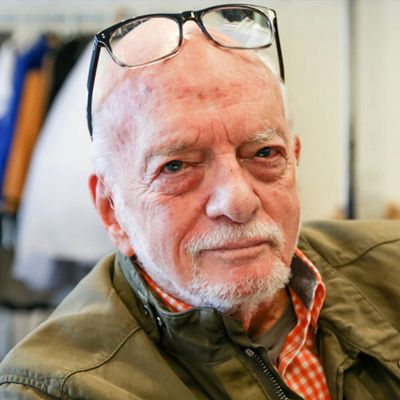
The second of a three-part program paying tribute to legendary Broadway director and producer Harold “Hal” Prince, known for among many other shows, WEST SIDE STORY, FIDDLER ON THE ROOF, and SWEENEY TODD... Read More
From the show: Anything Goes
Guests
Featured Shows
About
The second of a three-part program paying tribute to legendary Broadway director and producer Harold “Hal” Prince, known for among many other shows, WEST SIDE STORY, FIDDLER ON THE ROOF, and SWEENEY TODD. Celebrating Prince’s 55th birthday, this episode features music from his iconic shows, including FIORELLO!, TENDERLOIN, A FAMILY AFFAIR, and SHE LOVES ME.
Featured songs: “SOMETHING’S COMING,” “LITTLE TIN BOX,” “LITTLE OLD NEW YORK,” “THERE’S A ROOM IN MY HOUSE,” “A TRIP TO THE LIBRARY,” and “FAR FROM THE HOME I LOVE.”
Originally produced and broadcast in 1983. For more information go to AnythingGoesPL.com or BPN.FM/Anything Goes. Theme music arranged by Bruce Coughlin. Associate producer Jeff Lunden. Anything Goes – Backstage with Broadway’s Best – is produced and hosted by Paul Lazarus.
Transcript
This transcript was automatically generated and might contain errors.
[0:00] Paul Lazarus: Hi, this is Paul Lazarus. In the 1980s, I produced and hosted a radio series called Anything Goes, a celebration of the American musical theater. Now, the Broadway Podcast Network is bringing back these shows. This is the second of a three-part series celebrating the extraordinary career of producer-director Harold Hal Prince. This program originally aired in 1983 on the occasion of Prince's 55th birthday and covered the first 30 years of Prince's storied career, from Pajama Game to A Doll's Life.
[0:39] Paul Lazarus: New Girl in Town was the last Griffith and Prince show. Prince's next show was one of the masterworks of the musical theater, West Side Story. He describes how he came to be involved in this project, and I have to backtrack a little bit and talk about his meeting and his first encounter with Stephen Sondheim. West Side Story had been owned by Cheryl Crawford in association with Roger Stevens. Stevens had financed the formative years of that project. When Miss Crawford bowed out, Stephen Sondheim brought us in, us being Bobby Griffith and Harold Prince. He, Steve, and I had first met in the audience on the opening night of South Pacific in April of 1949. He was there with his mentor, Oscar Hammerstein II, and Mary Rogers introduced us.
It's curious that Steve was a composer whose reputation had reached me all the way from Williams College, where he had written book, music, and lyrics for a show called Climb High, which was the story of a young man with aspirations to produce on Broadway. Steve reminds me that soon after we met, I reasoned with him over a bacon, lettuce, and tomato sandwich in Walgreens that we were the natural inheritors of the theater we were entering. I've always been an optimist, Steve a pessimist. I never doubted the inevitability of his acclaim, but I will persist that his pessimism accounted for some of the delay in getting recognized.
[2:04] Paul Lazarus: Anyway, going on, Prince describes a very rough week in New Girl in Town. We were going into our last tryout week there in Boston. Gwen Verdon was out of the show ill, rehearsals were stymied, and I was on the phone with Steve Sondheim. It was 3 a.m. and I had documented our woes to the last detail. Eventually, it occurred to me only politely to ask Steve how things were going with West Side. With six weeks left before scheduled rehearsals, Cheryl Crawford had called the whole thing off. I sympathized. What else could I do? I had my own problems. I said good night, lay awake a few hours, then phoned him back and suggested Bobby Griffith and I fly to New York the following Sunday, meet with the creators, hear the score.
Bernstein was very proprietary about that score. No one was supposed to have heard it, though I knew every note of it via Steve. If we were happy with each other that day, they would have to agree to leave us alone during the remaining week in Boston, during the New York previews. They would have to wait until after New Girl opened, they agreed. We flew into New York, had a marvelous meeting with them. Sondheim and Bernstein played the score, and soon I was singing along with them, and Bernstein would look up and say, my God, he's so musical, a musical producer. I simply grinned, stopped singing temporarily, forgot again, and got complimented again. Putting West Side out of our minds, we flew back to Boston. It was not very long thereafter that West Side Story was to weigh very heavily on the minds of Hal Prince and Bobby Griffith.
[3:21] ♪ Musical number: "Something's Coming" — performed by Larry Kurt ♪
[5:41] Paul Lazarus: Prince's next show with Bobby Griffith was Pulitzer Prize winning, just about every prize winning, Fiorello, with a score by the young team of Sheldon Harnick and Jerry Bach. And there's so many stories that go along with this wonderful show, including the finding of Tom Bosley to play Fiorello. They first thought that Eli Wallach could play the role, but his singing voice just wasn't up to the task. And the finding of and convincing of Abbott that Harnick and Bach could do the score required several numbers to be written on spec by the team of Bach and Harnick. And one of the ones they wrote early on in the process was Politics and Poker, the very famous opening sequence based on Jerome Wideman's early version of the book, Fiorello.
And interesting stories about acquiring the rights from Fiorello's wife, Marie LaGuardia, and she, when asked who she would like to have played her husband, she replied that the only entertainer who ever really reminded her of Fiorello was Frank Sinatra.
[7:18] Paul Lazarus: And some great numbers were written out of town, and perhaps the most effective song written on the road was Littleton Bach's, and it came at 11 or thereabouts when the curtain went up at 8:30. This is Prince writing again. We're somewhat mired in the sad period of Fiorello's life. He'd lost his first wife in childbirth, and politics was going against him. To make it even jollier, we were in the Depression. Faced with all of that, Bach and Harnick wrote a second song for the Ward Heelers, a companion piece to Politics and Poker, and it stopped the show cold. Hastily, Abbott and Wideman tied up the love story, and Fiorello was on his way to City Hall.
[8:22] ♪ Musical number: "Little Tin Box" — performed by Unknown performer ♪
[10:19] Paul Lazarus: Next witness. Mr. Why, we've been told you don't feel well, and we know you've lost your voice. But we wonder how you managed on the salary you make to acquire a new Rolls Royce. You're implying I'm a crook and I say no, sir. There is nothing in my past I care to hide. I've been taking empty bottles to the grocer, and each nickel that I got was put aside, that he got was put aside.
[10:48] ♪ Musical number: "Little Tin Box" — performed by the cast of Fiorello! ♪
[12:22] Hal Prince: Tenderloin's score was a good one. The book never settled on a tone. Tenderloin was not without its problems. We had as good an opening number as I have ever seen, as good as the form or the train scene in The Music Man, which, for that matter, will come from Cabaret, of course. And the number was called "Little Old New York is Plenty Good Enough for Me." It was sung by the pimp handlers, the pimps, the fixers who inhabited the Tenderloin, which is a district of New York City in this time period. From 14th to 42nd Street, from 4th Avenue to the Hudson stands the largest area of undiluted vice and corruption in the world today. People of New York City, we must close up the Tenderloin.
[13:10] Hal Prince: Why can't this damn do-gooder keep his hands off? Little Old New York is plenty good enough for me. Good enough for me, good enough for me. Little Old New York is plenty good enough for me. Keep your hands off Little Old New York. I don't want no Bible spouting, gospel shouting preacher nosing around, drying everything up, closing everything down. Don't want no roly-poly, holy foley purifying the town. Not my Little Old New York. Right now she's wide open, here's hoping she'll always be this way. Right now she's wide open, anyone doesn't like it here, he don't have to stay. Little Old New York is plenty good enough for me. Good enough for me, good enough for me. Little Old New York is plenty good enough for me.
Lots of pork in Little Old New York. We got a golden goose here, a running loose here, we don't need to compete. Let the minister work the other side of the street. That way we're all in clover with enough left over to tip the cop on the beat. That's my Little Old New York.
[16:22] Hal Prince: Sondheim had brought the show to his attention with music by John Kander and book and lyrics by the Goldman Brothers, James and William. It was a comedy about a middle-class Jewish wedding from engagement to wedding march. In fact, the show begins with Larry Kirk asking Rita Gardner to marry him and her saying yes, and then the final moment of the show is their getting married. Though there were sufficient conflicts en route to the altar, there was also a certain predictability about them and never a doubt where the show was going. For this reason, I didn't want to do it, so I let it go as producer, and it fell to Word Baker as director. Later on, on the road, I came in to fix it, and after, I guess, a great deal of work, I phoned George Abbott for advice.
George Abbott asked if everything wrong with the show were fixed, did I think it would be a hit? I replied no. He warned me to remember that, and no doubt I would do good work, the improvements would be real, but I must be careful not to be seduced by the experience into wishful thinking of success because that would turn an otherwise marvelous experience into a disappointment.
[17:45] Hal Prince: There's some fine, fine moments in this early John Kander score with lyrics by James and William Goldman. It might be nice to have a house, city, country, kitchenette or mansion. I don't care, Sally, I don't care. Anywhere, not just anywhere. It's a tradition, everybody says so. It can't be just anywhere. There's a house in my imagination, bought and paid for, ready to be lived in. Come with me, Sally, come with me. Are you listening to anything I say? Wait and see. There's a room in my house where you'll cook me marvelous meals, baked Alaska custard and chocolate pie.
[19:18] Hal Prince: There's a room where our folks can stay. There's a room where our kids can yell. There's a room where the weather's nice when the weather gets cold. I can kiss you and hold you. All the rooms in our house need the touch of someone inside, need the touch of someone who loves me. Sally, who loves me? This is Gerald N. Segal. Well, I guess when you get rid of the tooth, that's all there is. Is my heart.
[20:35] Hal Prince: Prince's next show was A Funny Thing Happened on The Way To The Forum, one of Sondheim's first efforts writing both music and lyrics, and since we played a song from that earlier, I'm going to skip over that musically because there's so much to play for you today on Anything Goes. This is a tribute to Harold Prince, Harold Prince, of course, on his 55th birthday, which occurs today, Sunday, January 30. He was born in 1928, and this is a small tribute to him and his 30 years, or roughly 30 years, of active work in the theater. After Forum, Prince both produced and directed the charming Bach, Harnack, and Jomastroff show She Loves Me, which it's never had, until recently, it's never had the great reputation that it deserves.
[21:36] Paul Lazarus: I think it's one of those small shows, I guess is the way. Even Prince in describing it says, it was a style piece, an unsentimental love story. It had irony and an edge to it. It was funny, but not hilarious. It was melodic, but not soaring. There were only two dances and they were small. No one came to the edge of the footlights and gave it to you. It was soft sell. And because of this soft sell, oh, he also added, and in 1963 when it was first done, we were at the peak of the noisy, heavy sell musical. I guess because of its softness and its music box charm, it never became considered a masterwork or an extraordinary piece of musical theater. And yet, it's one of the things Prince is most proud of.
In fact, he writes, "She Loves Me" is one of the best things this office has done. And as far as I'm concerned, it's as well directed as anything I've ever done. And though this book that I'm reading from came out in '74, my guess is that he might still say that. And it's a gorgeous piece of musical theater. I thought because everyone knows the famous songs from this score, and I've played them many, many times, we'd play something different today, "A Trip to the Library," Barbara Baxley's big number in the show.
[22:54] ♪ Musical number: "A Trip to the Library" — performed by Barbara Baxley ♪
[27:45] Unknown Speaker: So you are leaving your home to join that hero of yours, but why won't you tell me where he is?
[27:52] Unknown Speaker: It is far, Papa, terribly far. He was arrested. He is in a settlement in Siberia.
[28:00] Unknown Speaker: Siberia? And he asked you to join him in that frozen wasteland and marry him there?
[28:07] Unknown Speaker: No, Papa, he did not ask me to go. I want to go.
[28:12] Unknown Speaker: What huddled baby?
[28:15] Unknown Speaker: Papa, how can I hope to make you understand why I do what I do? Why I must travel to a distant land, far from the home I love?
[31:13] Paul Lazarus: From "Fiddler," "Far from the Home I Love," Sierra Mostel and Julia McGinnis. Obviously, even though I didn't pre-introduce that, Harold Prince production directed, in this case, by Jerome Robbins.
[31:50] Paul Lazarus: Anything Goes Backstage with Broadway's Best is produced and hosted by Paul Lazarus. For more information, visit anythinggoespl.com. If you enjoyed this episode, be sure to rate and follow us. Thanks for listening.
© Broadway Podcast Network, All Rights Reserved