

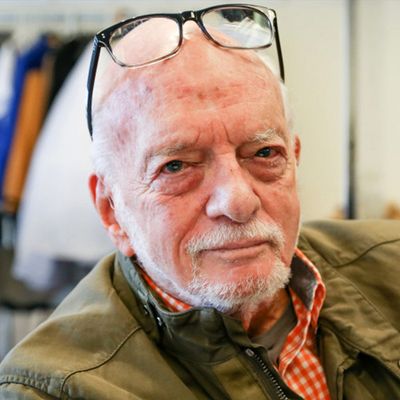
Harold Prince has left an indelible mark on theatre as a whole. He will be greatly missed, while becoming stardust in our community!.. Read More
From the show: Theatre Geeks Anonymous Podcast by Ebony Vines and Pamela Shandrow
Featured Artists
Featured Shows

About
Harold Prince has left an indelible mark on theatre as a whole. He will be greatly missed, while becoming stardust in our community!
Transcript
This transcript was automatically generated and might contain errors.
[0:08] Ebony Vines: Don't you see? It's so simple. Step one. We Google the biggest flops on Broadway. Step two, we find the craziest stories behind them. Step three, we see how they lose millions of dollars. Millions! Broadway isn't cheap. A lot of fancy people want to be producers. Step four, find out why the show won't go on. Step five. End this episode and head to Times Square.
[0:31] Pamela Shandrow: Times Square! That'll never work. Only Broadway successes are in Times Square.
[0:36] Ebony Vines: Oh, yeah. Welcome. What's up, Theater Geeks?
[0:44] Pamela Shandrow: Hey, I'll tell you what's up before we start.
[0:46] Ebony Vines: Okay.
[0:47] Pamela Shandrow: While we were recording, I get this text message from your roommate. And I have to read it because it's really sweet. She goes, ladies! I loved the high fidelity episode. It was so spot on in every way. And then she said, I would be specific, but it would be the longest text ever. So thanks, Megan.
[1:09] Ebony Vines: That's funny. And now I'm texting her that she made a cameo in this episode.
[1:19] Pamela Shandrow: Oh, um, so this episode is um our usual length for a regular episode, but it is quite different than our usual episode. Because we are not going to talk about just one show. We are actually just going to spend this time talking about a person.
[1:39] Ebony Vines: Um, and we mentioned him back in I think probably August. We had an episode where we talked about um his passing, but his memorial service is coming up in the next by the time you get this, it may have happened already. Um, so this episode is completely dedicated to Hal Prince.
[2:02] Pamela Shandrow: Um and young people who might be listening to us, because sometimes we do have teenagers. If you don't know who Harold Prince is, you're gonna want to look him up because he changed he He changed the face of theater. He he and Steven Sondheim they there a lot of us the reason that we are obsessed with theater is because of the things that they made, and not only because of the things that they made, but there were people older than us who became obsessed with the things that they made, and then they made things that we then became obsessed with.
[2:41] Ebony Vines: And the reason I mean, and and there's some things that you all love, um, without necessarily knowing who Hal Prince is. Like there are things that you all love that were only created because a young person saw what he made and then wanted to make something else. And Lynn Manuel Miranda is one of those people. So if you love Hamilton, if you love In the Heights, the only reason we have those shows really is because of Hal Prince and what he made.
[3:09] Pamela Shandrow: Yeah. Because that that and uh Jonathan Larson, those those men are like why we have those shows.
[3:16] Ebony Vines: Yeah. Um so so during this episode we're gonna talk about his life and we're gonna talk about his contributions and geek over them super hard.
[3:28] Pamela Shandrow: Evan he grabbed a bunch of tissues just before starting the recording.
[3:32] Ebony Vines: I did. I when he passed, I'm not a crier. And everyone who knows me knows that. I'm not a big crier, but I I couldn't pull it together um much of the day when I already died, and I didn't under I was like, why? I the whole day sitting at my desk and I wasn't like uncontrollably weeping because I would have had to leave and go home. But but it was just like tears would just randomly I'd think about like a show would pop in my head and like a moment because like so for me um my mother was like the impetus for me beginning to love the theater and she's passed away five years now and one of the many moments that we had were there was ones Sundays she would and I may have told the story I don't know but Sunday she would she was a teacher and so on Sunday night she would be finishing up grading papers before school the next day and there was one Sunday evening where my brother and sister were playing outside and I think I was having back pain or something and I was in the living room and uh my mom and I used to do like the TV guide channel and we'd wait and we'd see what was on television and we'd watch it together.
[4:50] Pamela Shandrow: Yes.
[4:51] Ebony Vines: And so this one afternoon I'm sitting on the floor and she's like, Eb, go to the the TV guide channel. So I do, and I'm sitting there while she's grading papers and I'm calling out things that look interesting if I don't know what they are. And we got to um West Side Story.
[5:08] Pamela Shandrow: Yes.
[5:09] Ebony Vines: And it said musical. And I was like, West Side Story. Mom, what's that? And she goes, Oh, that's good, go to that, go to that. And I've not been the same since as I feel most. I was like, Truly. What is that? And the the only reason there is a West Side Story movie is because there was a West Side Story musical that was saved by Hal Prince. Because a producer pulled out at the last minute, and Steven and Hal were best friends, and Steven Sondheim had been talking to Leonard Bernstein and all these great men who were making this musical about his friend for months. They weren't really moving towards adding him as producer. This woman named Cheryl bowed out at the very last minute, and the show was gonna lose a bunch of money. And Steven gave it one last push. My friend Hal is a producer. Can we please add him to the roster? They did save the show, and that's why we have West Side Story.
[6:19] Pamela Shandrow: I it's truly incredible to me.
[6:22] Ebony Vines: It's truly incredible. And the relationship between Steven Sondheim and Hal Prince. From let's just say from birth, because I don't know. I mean, I really don't know how long they were childhood friends, you know, college friends. So um the it was South Pacific, so they were about, let's see. Um Hal would be 92 next year, and Steven will be 90 next year. So they were two years apart. So Hal was 19, Stephen was 17 when they met. That's how old they were.
[6:56] Pamela Shandrow: Yeah.
[6:56] Ebony Vines: So they I mean But their relationship was lifelong at that point.
[7:02] Pamela Shandrow: Totally.
[7:03] Ebony Vines: And um they met at South Pacific, I think was was what I read, or what I saw with South Pacific. I know it's a huge weird full circle moment for Hal because the first show we saw was it wasn't the first show show he saw because the first show he saw was um Julius Caesar. But um he saw South Pacific met Steven and then the show that's still on Broadway 30 years later is at that same theater that he directed called Phantom of the Opera.
[7:36] Pamela Shandrow: Yeah.
[7:37] Ebony Vines: At the Majestic Theater. And so it's this like crazy his story is just it's just crazy.
[7:43] Pamela Shandrow: It's okay and we both watched the PBS.
[7:46] Ebony Vines: Yeah.
[7:46] Pamela Shandrow: Um it wasn't great performances, was it?
[7:49] Ebony Vines: No, it's it's called American Masters.
[7:51] Pamela Shandrow: American Masters, thank you. Um where it's like basically a a documentary about him and it's just really spectacular. But he tells the story but he he the way that he paints it is so it's so him and in the way that he would create. Where he was talking about South Pacific and he said, you know it was cinematic. You know he would watch the the the stage and before the last scene left there would be a scrim that would come in and the whole next scene would come in and then that scrim would come out and and then they were able to create these like close up moments simply by using their lighting. And he was so impacted by that that that is ultimately where his style and where his creative um trajectory came from in in just a massive way.
[8:43] Pamela Shandrow: Yeah.
[8:44] Ebony Vines: He's incredible.
[8:45] Pamela Shandrow: He really is and to hear him talk too, because he's so humble and so modest. Like he'll just be telling a story about how he created the you know, you know, when um uh so basically what'll happen is that there's a couple of people that are sitting on stage, and um you'll kind of hear some mumbling, it'll be a little bit weird, and there's just a bunch of set pieces, and they're all covered up with silk, and um uh, you know, you'll hear some it'll just make you feel a little uncomfortable, and then out of nowhere you uh you'll you know, you'll hear this kind of like a crack and uh uh and then this, you know, this man who's who's high above, high above, he'll uh he'll just start talking and he'll start selling things, and uh then you've got this veiled woman in a wheelchair and she'll say 25. You know, and it the way he described that's the beginning of Phantom of the Opera.
[9:33] Ebony Vines: And it's so funny because I had to kind of watch and just listen to this documentary because I was dealing with dog vomit, but that's a story that you should have heard last time. Um but I overheard him talking about this particular scene, and I went, I know that show because I did that show, but I was in that scene, like I was on stage during that whole thing, but it was also like nobody understood. None of us actors understood why the heck we were there because my partner and I were behind the curtain in the dark, okay, essentially.
[10:12] Pamela Shandrow: Yeah.
[10:12] Ebony Vines: Just to stage right of the auctioneer who is way up on a a ladder, um getting ready to plug in the chandelier. And then you've got all the people before the curtain, and they can all be seen, but some of them are in the dark as well, and we're just clapping. Uh huh. You know, if if someone's if they sell something, but you know, he did it. This was funny too, because he mentioned this as well, and we were all told, yeah, just don't worry about clapping, just kind of change it up, you know, so that it's erratic. It's just like, okay, I don't understand, but okay, whatever. It was not until I saw the documentary that I finally understood what the heck I was doing.
[10:57] Pamela Shandrow: That's so funny.
[10:58] Ebony Vines: But I love that about him too because he was so forthcoming with his actors. Uh it said in one of the scenes in the documentary, um, and I can't remember who was talking at this point, but she it was a woman, and she said he was it may have been Susan Strowman. Okay. She said he was so good about explaining the entire arc of the scene before he blocked it.
[11:19] Pamela Shandrow: Yeah.
[11:19] Ebony Vines: So that by the time he had people on the stage, everyone kind of just knew how to do it and how to do it naturally. I think that's birthed from, and he said this, you know, he loves actors.
[11:30] Pamela Shandrow: Yeah.
[11:30] Ebony Vines: And I think I think some directors don't like actors.
[11:35] Pamela Shandrow: Yeah.
[11:37] Ebony Vines: That's a problem.
[11:38] Pamela Shandrow: Oh, yes.
[11:38] Ebony Vines: And for people who directors who love actors and have a true appreciation, understanding, and reverence for the fact that they're pouring their heart and soul into a character and laying it on display for everyone to judge and critique.
[11:57] Pamela Shandrow: Well, and and let's be honest, yes, people do talk about the directing, but if we fail, it's we that we it is the actors on stage that fall flat on their face.
[12:09] Ebony Vines: Yeah. So it's it it's really wonderful to hear somebody who is that revered and that respected also respect the craft of those that he understands that this is a collaboration and understands that like if I don't tell you where we're going and what we're doing, and I don't because one thing he said, and I love this he said, You don't tell Angela Lansbury how to act.
[12:37] Pamela Shandrow: Yes.
[12:41] Ebony Vines: She knows what she's doing. You have to trust your actress.
[12:44] Pamela Shandrow: Yes. And if you can't trust them, then you shouldn't hire them.
[12:49] Ebony Vines: Yes. Yes. This is what I love too, because you mentioned he was like, the only thing that I really don't like about this business is the auditioning.
[12:57] Pamela Shandrow: Yeah.
[12:57] Ebony Vines: But he said it because he was like, it's just awkward. And you don't, you know, you're not it's a terrible system.
[13:03] Pamela Shandrow: Yeah.
[13:03] Ebony Vines: He said, he said, oh, I wrote the quote down.
[13:06] Pamela Shandrow: Yes, please read it.
[13:07] Ebony Vines: It's so I'm sure it's the exact same thing that I'm thinking of right now.
[13:10] Pamela Shandrow: No, totally totally.
[13:11] Ebony Vines: Because I remember I was like, I like I don't like auditioning people. Okay, this is his quote.
[13:17] Pamela Shandrow: Auditioning is the worst possible way to cast a show, except for any other way.
[13:24] Ebony Vines: Yes. It was so brilliant, but he said it in his Hal Prince way. So it was like, it wait, it took me a second to be like, oh, oh.
[13:32] Pamela Shandrow: It's so true though, but I'm so glad that he finally, you know, that someone had the guts to finally say it.
[13:38] Ebony Vines: And nothing's gonna change, obviously. It's been that way for hundreds of years. It's not gonna get any worse.
[13:43] Pamela Shandrow: But he mentions why.
[13:45] Ebony Vines: And one of the reasons he says is that some people are just really good at auditioning.
[13:49] Pamela Shandrow: Yeah.
[13:50] Ebony Vines: And this reminds me, I was listening to NPR earlier. Well, I was actually listening to WNYC, but a lot of NPR plays on W. Anyway.
[13:58] Pamela Shandrow: Uh, and there was a story of a girl who couldn't get in, she's doing like community college because she can't get good a good enough ACT score, SAT score, whatever it was, the test with that she was taking because she's just not good at taking tests.
[14:14] Ebony Vines: But she's got amazing grades, which is why you know she's able to take the classes that she's taking right now anyway. But like how the testing system is antiquated and it's geared towards the rich and the people that are able to afford to um you know to have their kids sleep well and eat well and get a tutor if they need to.
[14:36] Pamela Shandrow: And so like it's this skewed system, and it reminded me so much of the auditioning system because it's true, there are just some people that are so skilled at auditioning.
[14:46] Ebony Vines: Yeah, I am not one of them. I do amazing work when I'm rehearsing when I'm in the show, but my auditions are terrible, and it is only by the grace of the people that have seen me, like Kristen Belodgett and Patrick McCullum, who were able to see past the nerves and past the you know, just anxious and desperation, probably, uh, to see there's potential there.
[15:13] Pamela Shandrow: And that's what Hal was saying as well.
[15:16] Ebony Vines: He's like, I, you know, I like to look past all of that, and I want to see the people that will succeed with me.
[15:26] Pamela Shandrow: And that's what I loved about him too.
[15:27] Ebony Vines: And you said it just oh a second ago, collaboration. His whole life was about collaboration.
[15:32] Pamela Shandrow: That is so hugely important because I think that there are so many people that are in this business, especially in the directing and the producing side, that are just like me, me, me, I'm the most important, I'm the top of the ladder, and everyone else, you know, it goes down from there, which is not the case at all.
[15:49] Ebony Vines: It's a big huge circle. And it needs to be.
[15:51] Pamela Shandrow: I um I am a novice at this directing, producing thing, but like I you know, I I had, you know, this last show, I had an actress who was like, I mean, not like she was writing her life story, and she's bloodletting on the page, and then she has to go and perform her life story on a stage in front of people.
[16:22] Ebony Vines: And so, like, when you when you understand that you are facilitating a space in which a human being is bearing scars, wounds, bloodletting, and just putting it all out there on display to, like I said before, be judged and critiqued, and and for your entertainment or your connection to so that you can feel like as an audience member that you too have been seen and heard, and that somebody is telling a a part of your story so that when you as a producer or director understand what your actors are giving to you and an audience, you should have the most reverence for the work that they're doing, and the most respect for the work that they're doing, because it is so extremely hard.
[17:25] Pamela Shandrow: And without your actors, you have nothing.
[17:28] Ebony Vines: Right. If you're a producer or director, who are you directing if you don't have an actor?
[17:32] Pamela Shandrow: Nothing.
[17:33] Ebony Vines: You you know what you're directing, you're gonna do like Hal did when he was a little boy, and you're gonna have a cardboard box and you're gonna have some toy soldiers and nurses, and that's gonna be your show.
[17:44] Pamela Shandrow: If you don't know how to have respect for for your actors, and if you don't understand that it is absolutely a collaboration and you have nothing without them.
[17:52] Ebony Vines: Yeah.
[17:54] Pamela Shandrow: Yeah. I mean, it's just the like you just don't have anything if you don't have them.
[17:59] Ebony Vines: I don't I don't understand this this hierarchy I'm better than you situation because you're not.
[18:07] Pamela Shandrow: You don't have a show without them.
[18:10] Ebony Vines: Right.
[18:12] Pamela Shandrow: Right.
[18:12] Ebony Vines: It makes no sense to me.
[18:14] Pamela Shandrow: It really doesn't.
[18:14] Ebony Vines: I mean, that is the the kind of crux to this world where we're made to feel almost less than.
[18:22] Pamela Shandrow: And I'm just gonna go on a tangent because you know that's what I love to do.
[18:26] Ebony Vines: Um so oh shoot, I just lost my train of thought.
[18:33] Pamela Shandrow: What were we just talking about?
[18:34] Ebony Vines: No, it's collaboration.
[18:36] Pamela Shandrow: Thank you.
[18:36] Ebony Vines: Wow, that's old person brain right there.
[18:39] Pamela Shandrow: Um so you've got your stage actors and you've got your cinema actors.
[18:46] Ebony Vines: And there's such a delineation in terms of how they are treated, how they are paid.
[18:53] Pamela Shandrow: Yeah.
[18:54] Ebony Vines: I mean the payments.
[18:56] Pamela Shandrow: Huge discrepancy.
[18:57] Ebony Vines: Huge. A lot of actors who love theater more, they do movies and TV just so they can survive.
[19:04] Pamela Shandrow: Yeah.
[19:05] Ebony Vines: And then leave and immediately go to theater as fast as they can.
[19:09] Pamela Shandrow: I just read an article about with Maggie Smith.
[19:13] Ebony Vines: Don't we all love Maggie Smith?
[19:14] Pamela Shandrow: Love her.
[19:16] Ebony Vines: And she was talking about the the two hugest most well known roles that she has ever had, which are um the part in uh Harry Potter, McGonagall, and the part she has on Downtown Abbey, and she was like, It's not fulfilling work.
[19:35] Pamela Shandrow: I didn't feel challenged.
[19:37] Ebony Vines: Uh she was like, I really want to be doing theater. The woman's in her eighties.
[19:42] Pamela Shandrow: She'd rather be on stage doing eight shows a week.
[19:45] Ebony Vines: Yeah. But like than making a million dollars an episode.
[19:48] Pamela Shandrow: Right.
[19:49] Ebony Vines: Sitting in a chair all day, basically.
[19:51] Pamela Shandrow: No, mind you, she's excellent.
[19:53] Ebony Vines: No, she's amazing.
[19:54] Pamela Shandrow: No, we're not taking away she would like talent is talent.
[20:07] Ebony Vines: And all these different things, like you you have to get some television work, you have to get some film work because it's just like the discrepancy is so huge.
[20:17] Pamela Shandrow: It's ridiculous.
[20:18] Ebony Vines: That's that's like the other thing that's really fascinating about Hal, right?
[20:18] Pamela Shandrow: Oh yeah, that's your we talk.
[20:27] Ebony Vines: Um, is that like his story about he I already told you about what happened when he was a little boy, but his family was at first like quite wealthy, and then the Great Depression happened, and so in um he said around 1938 they lost most everything, and they ended up in this little apartment on the upper west side, and he would be sitting at his window looking out the window, feeling terrible about the world and about how things were, and he would go to opening nights and all these different things in his mind, and at 14, he was having a nervous breakdown.
[21:10] Pamela Shandrow: Yeah.
[21:10] Ebony Vines: Because he was finding himself walking through the the streets of Central Park talking to himself. And it's like to have a nervous breakdown and feel like the world is closing in on you at such a young age.
[21:26] Pamela Shandrow: And somehow miraculously be able to pull yourself up out of that and be like, no, no, no.
[21:33] Ebony Vines: I have to survive and I have to push forward in order to pursue my dreams and then have dreams that, like Pamela said, most people are like, but what's your backup plan? Hal never had a backup plan.
[21:45] Pamela Shandrow: He, like I said, he was listening to the opera when he was a little boy with a cardboard box, some nurses and soldiers, because that's what you could get at the five and dime, and he was directing shows.
[21:59] Ebony Vines: Like he didn't this is what he always wanted to do.
[22:02] Pamela Shandrow: And I think um I think encouraging kids' dreams, yeah, encouraging people who are going to pursue their dreams instead of immediately um putting a black cloud over them it's hard enough to be a creator.
[22:20] Ebony Vines: Oh, completely to be one and all of the mental gymnastics that you already have to go through in order to create a thing, and then to have somebody not be supported not just somebody, almost everybody, from family members and friends to complete strangers that decide they're gonna give their two cents whether you want it or not.
[22:44] Pamela Shandrow: That's the hard part.
[22:46] Ebony Vines: It really is. I mean, the number of times I heard it when I was in high school, too. Cause I told them I'm gonna move to New York and I wanna be on Broadway, I'm gonna be on Broadway.
[22:55] Pamela Shandrow: But that can't be accepted.
[22:58] Ebony Vines: They have to well, they have to warn me, and it's all coming from a good place where they want me to succeed. So you've got to have a backup plan.
[23:04] Pamela Shandrow: Well, I don't, because I'm not gonna go to college.
[23:06] Ebony Vines: That's another zinger for you. What else are you what else can you say to me about that?
[23:10] Pamela Shandrow: Do you know what I mean?
[23:11] Ebony Vines: And it's like, you know, I think actually, though, that kind of helped me a lot because I I tend to fight against authority.
[23:19] Pamela Shandrow: So if authority is saying, well, no, no, college is the next step.
[23:23] Ebony Vines: Uh not for me. Sorry. The exact opposite of what you did.
[23:25] Pamela Shandrow: Exactly.
[23:29] Ebony Vines: You know, I didn't enjoy my time this last 12 years, so I shall bid adieu to the academic system and find my own way. Thank you so very much.
[23:40] Pamela Shandrow: But it was, yeah, it's I mean, it's ridiculous stuff like that.
[23:42] Ebony Vines: So to tell a 14-year-old that he can't have his dream because his dream isn't gonna pay the bill.
[23:49] Pamela Shandrow: Right.
[23:49] Ebony Vines: Well, he was already in a depressed state.
[23:52] Pamela Shandrow: Because honestly, at that time too.
[23:55] Ebony Vines: Right. During the Great Depression, though, kids had to grow up real fast.
[24:01] Pamela Shandrow: There just wasn't any way around it.
[24:03] Ebony Vines: So at 14, he was probably closer to his mid-20s.
[24:06] Pamela Shandrow: Totally, totally.
[24:07] Ebony Vines: I mean, the remember the sketch of him as a 14-year-old in Central Park. He's wearing a suit and tie.
[24:16] Pamela Shandrow: I'm like, I don't know any 14-year-olds who I mean most of the people.
[24:19] Ebony Vines: Well, that might have been that time of course.
[24:21] Pamela Shandrow: Now it's like you got can you just pull up your pants?
[24:23] Ebony Vines: Right.
[24:24] Pamela Shandrow: I just would like you to wear a belt.
[24:26] Ebony Vines: If I could get you an update, or just a pair of pants that fits something.
[24:30] Pamela Shandrow: I'm cool with that.
[24:31] Ebony Vines: Just so that, like, you know, they're above your butt, I'd be real happy.
[24:35] Pamela Shandrow: I feel like that's where we're at at this point in time.
[24:38] Ebony Vines: Um but yeah, so like he pulled himself up out of that space, and then uh he went to college, and then he walked into the agent's office and did a resume of all the shows he wished he had directed but had directed none of them, and like gave it to this agent who's on the phone with um with uh a man who ran a summer stock company and he got the job and bankrupted the summer stock company in two shows.
[25:10] Pamela Shandrow: So funny.
[25:11] Ebony Vines: Um maybe not for the summer stock company.
[25:14] Pamela Shandrow: Not for the summer stock company, but like in hindsight, I mean now you can be like, Hal Prince bankrupted us, you know what I mean?
[25:22] Ebony Vines: Right. Tried to bring it back or whatever, but it's just like I was like, oh my. But it's like nowadays you could never do that.
[25:27] Pamela Shandrow: No, like because the internet blow up while you're lying.
[25:31] Ebony Vines: Yes. You know, like you can't just do that.
[25:32] Pamela Shandrow: As well, it should.
[25:34] Ebony Vines: Yeah, truly. Although the thing is is that if those things hadn't worked out right in the way that they had, he wouldn't be who he was.
[25:42] Pamela Shandrow: Well, I think, uh, well, and I will just go a step further and say that I think that we put too much stock nowadays in what you have done already.
[25:51] Ebony Vines: Totally. When if I'm a newbie, how am I supposed to get the experience that you want me to have if you don't give me the chance to get experience?
[25:59] Pamela Shandrow: Totally. And it's a thing that I think a lot of us have um butted up against.
[26:04] Ebony Vines: Yeah. The thing I'm constantly butting up against, and it's just why I just do my own stuff because it's like if you could just have a little bit of imagination, right? It's like everyone I work with is like, oh, she's great at this. Why aren't you doing this full time?
[26:21] Pamela Shandrow: You, if you want to talk about it.
[26:23] Ebony Vines: From your mouth to God's ear. Thank you. I do I do remember, you know, because this happens every once in a while. And this is maybe not the best thing to ever say to anybody. But, uh, I had just finished a I was playing Pennywise in You're in Town, and one of my one of the other guys in the cast who I had also done another show with said, uh, why don't they want to cast you? I don't get it.
[26:49] Pamela Shandrow: Yeah.
[26:50] Ebony Vines: And you're just like, thanks. I I I don't know how to take that. I also don't know how to answer. Like, I I don't know. Would you like can you talk to them? Oh, why aren't you working?
[27:01] Pamela Shandrow: Yeah.
[27:02] Ebony Vines: Gosh, I just wish I knew because if I know, then I could actually, you know, be get cast. That would be kind of that would be thrilling for me. Thanks. I do I I just such a stra I mean, and I get it. Right. It's coming from a place of like, you're so talented. And it is frustrating. It's frustrating for people that are watching it happen to talented people. And it's equally, if not horrendously more frustrating for the people that are going through it.
[27:30] Pamela Shandrow: Right, right. Totally, totally. We need more Hal Princes in this world.
[27:35] Ebony Vines: We need people like Hal Prince, like Kristen Plotchit, who I mentioned earlier, like Craig Burns, who are willing to take a step outside of what society wants and of what the money people behind them want and say, you know what? I hear what you're saying, but I see something special about this person.
[27:56] Pamela Shandrow: It's fun to watch like West Side stories, uh sorry, previews this week or I think it opened. And like 90% of the cast, it's their Broadway debut.
[28:08] Ebony Vines: Yeah. Which is flipping awesome.
[28:10] Pamela Shandrow: I know, I love that.
[28:11] Ebony Vines: It's flipping awesome. And it's just like this is the kind of Broadway we should be having more of and and less of let's just put a name in.
[28:24] Pamela Shandrow: Now I will say I'm gonna put a little bit of a paw on this because with a show that has already proven itself that people are gonna come to anyway, it doesn't matter as much if you've got names.
[28:36] Ebony Vines: Right. But like look at all the shows that have their own name that they still put a name in. You know what I mean? Like there's so many shows like that. I'm just like, but we don't need a name for this. Everybody knows this show. Just put somebody who need like who would be amazing. Right no one knows. Why? Why can't you do that? Not enough Twitter followers.
[29:00] Pamela Shandrow: I maybe I don't know. It does make me want to like, I wish that he was sitting on this couch with us and we could ask him like what he thinks of the way things are going now.
[29:11] Ebony Vines: No. That it he he he was able to touch a little bit on it because he he definitely talked about like just the cost of trying to fund a show anymore when he was, you know, he said when he first started out, it was like a couple thousand dollars, tens of thousands. Now it's millions, you know, it was like Hamilton's like twelve million dollars. Uh these I really don't understand where that money goes.
[29:39] Pamela Shandrow: So expensive to to get a show up anymore. And which is why I feel like we've got so many episodes to talk about.
[29:48] Ebony Vines: Yeah. Honestly. It's really true. Because if you have already put all of your money into something, yeah, then you don't have time or freedom to let it fail for a little bit.
[30:02] Pamela Shandrow: Right.
[30:03] Ebony Vines: It has to succeed immediately. And that's sort of, I mean, and that and that's sort of what like Beetlejuice has the because it has Warner Brothers behind it, it had the ability to kind of wait until the audience found it. Whereas like a I mean, but you would you would think that with SpongeBob, right? Like m like it had Nickelodeon, but it was it was doing like five hundred thousand, three hundred thousand, which is not very good.
[30:32] Pamela Shandrow: And um, especially for a show that's not cheap like that.
[30:35] Ebony Vines: That is a and it was a huge cast. Yeah, yeah. So, you know, I it's just really interesting to listen to to this man who's been around for so many years just talk about he's like, I don't know if I could be producing anymore because it's so expensive, and he has 21 Tonies, you know, it's just it's crazy, it's crazy.
[30:58] Pamela Shandrow: Yeah. Um then the other thing that was like really I loved about his story, he goes, he works for George Abbott, he goes to the Korean war, he gets drafted into the Korean War. He and then George Abbott says, When you come back, you'll have a job, kid. He writes to George Abbott for the two years he's gone. George Abbott never writes him back.
[31:20] Ebony Vines: He he um the war ends, he comes home before he goes home to his parents, who were probably like, my son, you know what I mean? Before he goes home to his parents, he's like, I'm sorry, I've gotta make a stop first. And uh George Abbott was working on what was he working on? I can't remember the name of the bottom. I don't remember the show that George George Abbott was working on a show we'd all know, I guess the name of it right now.
[31:46] Pamela Shandrow: He goes directly to the theater as soon as he is finished.
[31:49] Ebony Vines: And George George's assistant is like is like the has the normal response to seeing someone who's just come back from or George Abbott says, back so soon. And Al's like, it's it's been two years. And he's like, Well, time goes by fast. But then he's like, Oh, but I do have a job for you. And he he becomes the ASM at Wonderful Town.
[32:19] Pamela Shandrow: Yeah.
[32:20] Ebony Vines: And um becomes friends with the gentleman who's the stage manager there. I have his name. Bobby let's see. Bobby Griffith. Um, and there is when he decides to become a producer. They're like, Well, we we should he's like, we should become producers, so they do. Um, and they get they decide that the first show ends up being the pajama game, and they decide that if they get George to direct, they'll have a name attached to it so that they'll be able to get funding.
[32:53] Pamela Shandrow: Um, they have a great interview with George Abbott on there, who's in his 90s, I think by that point, and says, They were telling me the story, and I was like, I don't think this is gonna work. But the thing that I loved so much about all of the interviews there, um, also when I watched um I rewatched the documentary, The Best Worst Thing That Could Have Ever Happened, and on YouTube, um, there's a few other interviews with Hal from when Prince of Broadway came um came to Broadway.
[33:30] Ebony Vines: Um and also there's one from 1978, which is magical because it's baby Hal, Baby Joel Gray, Steven. It's so great. Just go go on YouTube and watch it. It's just delightful. Um and it's it's when Hal's about to go direct Evita for the first time. It's super fun.
[33:53] Pamela Shandrow: Oh, I loved the conversation that uh Andrew Lloyd Weber was having too about Evita specifically because Hal brought so much and this is what I loved about the collaboration because even these like big people, Stevenson Time obviously, but also like Andrew Lloyd Webber was like, Oh yeah, Evita wouldn't have been the show it was without Hal. He gave me this whole idea for Perone and for this, you know, for I can't remember the name of the song, but the song where they do the musical chairs with uh with one Perone and the other uh military men.
[34:28] Ebony Vines: But yeah, I thought that was amazing. That was great. But he did that with several shows. But I and I loved what he said. Cabaret was a cool story too. Oh, and I was thinking more about the story that he was telling about Candor and Ebb and The Kiss of the Spider Woman, where he kept saying, I don't like this song. The song doesn't work, so rewrite it. And they would rewrite it and send it to him, and he would say, Nope, that's the same song, rewrite it. And they would rewrite it, no, that's the same song too. It's just backwards. Write it again.
[34:54] Pamela Shandrow: And so they finally go, you know, Hal, you're on vacation right now, and you don't have anything to lose in this. Like we're you know, we're we are rewriting the song over and over again, but they finally wrote the song again, and he was like, It's the best song in the show. I can't remember the name of the song though, right now.
[35:10] Ebony Vines: I I just remember, um, I remember uh Cheetah is in a white tuxedo with um oh my gosh what is the name of that song and she's and she's dancing and I can't remember it's the Latin sounding oh shoot I'm gonna look it up because what he says is basically when you tell a writer to rewrite something and they come back to you and they say um and they push back on it it's because they don't think that they can write anything better.
[35:41] Pamela Shandrow: Yeah.
[35:41] Ebony Vines: And it's that that constant belief that Hal has in the people he's working with like an unshakable belief that deep within them is something magical he knows it's there and he's going to he's going to push you until you you birth it right like I can't tell what the title is. But that's totally what it is that's the right mm-hmm what you want I don't know anyway but it's yeah anyway.
[36:13] Pamela Shandrow: Um yes that's what I loved about him yeah because he knew if he had to push you and then he said something like I would ask them the question do you think this is the do you think this is the best it can be and their answer would either be um I mean I guess you know this could change or that could change and then he goes but then you'd have oh no he was speaking specifically about Steven uh Sondheim and he Steven would be like my guy could change this up it could be a little bit better here but there but then every once in a while he'd be like that's the song like that's that's gonna that's gonna make the show.
[36:44] Ebony Vines: Oh no or no, you're gonna make that song or something like that. Steven said, no, this is what it was. Stephen would Stephen Sondheim would say to him, um, uh he said he would say, um, just work on it first.
[37:01] Pamela Shandrow: Yeah.
[37:02] Ebony Vines: So that's right. That's right. So then he knew when he got to the rehearsal room and Hal started working on it, he'd be like, oh like they're so cute. They like even Steven even says in the documentary, he's my best friend.
[37:04] Pamela Shandrow: So cute.
[37:19] Ebony Vines: I know. I that almost got me because I was like, his memorial service was like, I don't think I can deal with an upset Stephen Sondheim.
[37:27] Pamela Shandrow: Oh I can like a 90-year-old Steven Sondheim is not a thing I can handle.
[37:32] Ebony Vines: It's not I mean, this is if we're gonna really get into the modeling here. We've lost someone in this world that made such an impact, and it's hard to even imagine what it's gonna be like now.
[37:52] Pamela Shandrow: And I know that he wasn't as active in the business for the last decade or so. I don't know, because like you look at Prince of Broadway, which like he directed, right?
[38:03] Ebony Vines: Yeah, and then um I have one of the women who um did um plays for the women's cycle, she has friends that were writing a musical and Hal was working with them.
[38:18] Pamela Shandrow: Oh my gosh, wow.
[38:20] Ebony Vines: And so, like when he came when he was supposed to come back from Switzerland from his vacation, like they were supposed to be having a meeting with him, like it was calendar, and he had been working with them already for a while.
[38:31] Pamela Shandrow: So he was still very active doing what he loved at 91.
[38:35] Ebony Vines: I mean, if you watch these interviews, he's, you know, late 80s, early 90s, his mind is still sharp and clean.
[38:42] Pamela Shandrow: Oh, yeah.
[38:42] Ebony Vines: Oh, oh yeah. He's using words, I still I don't know. I'm like, that's a SAT word. I don't know. I don't know. I I think I get the gist, but I'm not quite sure.
[38:50] Pamela Shandrow: I'm picking it up in context.
[38:51] Ebony Vines: Yeah.
[38:52] Pamela Shandrow: Oh.
[38:52] Ebony Vines: But it's it is it is a tragic thing for us to to have lost a man like them. But on the positive side, so many people have been inspired by him that he's not disappearing.
[39:04] Pamela Shandrow: No, no, no.
[39:05] Ebony Vines: No, no, no. He's stardust in this community.
[39:08] Pamela Shandrow: It's true.
[39:08] Ebony Vines: He'll be there for ages.
[39:10] Pamela Shandrow: He'll be there for millennia.
[39:12] Ebony Vines: He's ageless. Um I I've told you my story. Do you want to hear it again?
[39:15] Pamela Shandrow: What story?
[39:17] Ebony Vines: My Hal Prince story.
[39:19] Pamela Shandrow: No, I just know the Andrew Lloyd Webber story.
[39:22] Ebony Vines: I didn't know Prince story.
[39:24] Pamela Shandrow: I know the Andrew Lloyd Webber story. I know the Laura Bonante story.
[39:29] Ebony Vines: I do not know the Hal Prince story.
[39:31] Pamela Shandrow: Okay, okay, so buckle up.
[39:33] Ebony Vines: Tell it.
[39:33] Pamela Shandrow: This might have to be the end of the episode.
[39:35] Ebony Vines: I'm not done there.
[39:37] Pamela Shandrow: Well then I'll wait.
[39:39] Ebony Vines: Okay. I'm just saying it's getting close to my bedtime.
[39:41] Pamela Shandrow: Oh, I know.
[39:43] Ebony Vines: I'm fading back. Sorry. Um, I do want to talk about um.
[39:53] Pamela Shandrow: Oh, I did want to talk a little bit about Hal's wife.
[39:57] Ebony Vines: Oh, love her.
[39:58] Pamela Shandrow: Yeah, I really because that and um and what happened after Sweeney Todd and a quote from Mandy Patinkin, because the quote from Mandy Patinkin is a good one.
[40:09] Ebony Vines: Yeah, I know exactly what you're gonna say.
[40:10] Pamela Shandrow: What our whole show is about.
[40:12] Ebony Vines: It really is.
[40:13] Pamela Shandrow: Yeah.
[40:13] Ebony Vines: Um, so the reason why I want to talk about um Judy Prince is because one of the things that Hal said about her was that like the whole reason he did any most of the shows he did was because of her.
[40:27] Pamela Shandrow: Like she would say, she would ask him the right questions and and she she reformed his version of what success was because she got very angry when he would say she said to him, I wish you'd stop calling things either a flop or uh or no failure or a um hit.
[40:47] Pamela Shandrow: Yeah, a hit or a flop.
[40:48] Ebony Vines: A hit or a flop, and she would she would get mad about that and she said, I wish you'd start calling them a success or a failure.
[40:55] Pamela Shandrow: And the reason why she wanted him to change his his um verbiage around these issues was because she felt like there were a lot of things, and he said this, you know, that were an artistic success, but not not necessarily a financial success.
[41:11] Ebony Vines: Yes, right.
[41:12] Pamela Shandrow: Like he felt like uh, you know, and so she wanted him to really have the correct perspective because if at the end of the day he felt like he did the absolute best he could do on something and he was actually really proud of it, even if the audiences didn't quite understand it, then that didn't mean he failed.
[41:30] Ebony Vines: That didn't mean that it was a flop, it didn't mean that it was a waste, it didn't mean that. It just meant that the audience didn't understand, but that that was still something that you could be proud of.
[41:41] Pamela Shandrow: And a lot of those shows that have found audiences people they have cult followings and people love them.
[41:49] Ebony Vines: Totally. It's a huge one. I mean, there's there's a movie that's going to take twenty years because they're trying to doing Merrily We Roll Along in increments until the actors are of the age that they're supposed to be.
[42:01] Pamela Shandrow: I think that's amazing.
[42:03] Ebony Vines: That's gonna be really cool.
[42:04] Pamela Shandrow: It's gonna be so great.
[42:05] Ebony Vines: Um, and so that's why I wanna talk about I wanted to talk about Judy Prince because you know, we're when we're talking about like shows like Fosse/Verdon, that's just happened, and these very powerful women, which you know, we who Judy doesn't have 21 Tonies, right?
[42:22] Pamela Shandrow: But like the reason Hal has 21 Tonies is because of Judy.
[42:26] Ebony Vines: Yeah.
[42:27] Pamela Shandrow: And when there's a strong man, there's an equally strong woman behind them.
[42:30] Ebony Vines: If not stronger.
[42:31] Pamela Shandrow: Right.
[42:32] Ebony Vines: Um, and so then the reason why I also want to talk about Sweeney Todd was because Sweeney Todd, everybody knows this show.
[42:40] Pamela Shandrow: It won a record number of Tony Awards.
[42:43] Ebony Vines: Yeah, it swept.
[42:44] Pamela Shandrow: It swept.
[42:45] Ebony Vines: And then Hal said he entered into the longest drought of his entire career.
[42:52] Pamela Shandrow: Yeah.
[42:52] Ebony Vines: Immediately following the biggest hit of his entire career.
[42:56] Pamela Shandrow: It was nine years.
[42:58] Ebony Vines: Wow.
[42:59] Pamela Shandrow: I don't remember hearing that.
[43:00] Ebony Vines: Nine years.
[43:03] Pamela Shandrow: Yeah.
[43:04] Ebony Vines: He would he would he would direct a show, it would get terrible reviews, and the thing that he would always do is 10 a.m. the next morning, he would always have he would always have um a meeting on his calendar that 10 a.m. For the next show.
[43:20] Pamela Shandrow: Yeah, for the next show. It was 10 a.m. after the opening night. He would always do that.
[43:23] Ebony Vines: And there are a lot of producers nowadays, young people who like try to follow the Hal Prince model because the thing was like he never ever gave up, even during the longest drought of his career.
[43:36] Pamela Shandrow: And things like Merrily We Roll Along that I mean, sadly, you know, if you watch the best worst thing that ever happened, you'll see that you know, they they say basically that Steven and Hal didn't um do another collaboration after that, and it wasn't like they weren't best friends because they're still best friends.
[43:55] Ebony Vines: You can find plenty of pictures of them laughing at each other faces. Like I said, that documentary was done last year and Steven's like, he's my best friend. Like they just they were brothers.
[44:06] Pamela Shandrow: But it was such a huge wound for them because it birthed like if you watch that documentary, the amount of actors and creators that we love now, you know, for our generation came like they grew up like loving Hal and Steven.
[44:25] Ebony Vines: Loving them, you know?
[44:27] Pamela Shandrow: And so they felt like they let all these kids down.
[44:29] Ebony Vines: Yeah.
[44:30] Pamela Shandrow: And that just broke them.
[44:32] Ebony Vines: Just broke them. Um just love those men.
[44:36] Pamela Shandrow: It just them so I know.
[44:39] Ebony Vines: What's uh I know what the quote is, but tell me the Mandy Patinkin quote that you've got.
[44:43] Pamela Shandrow: Yeah, so the Mandy Patinkin quote is it okay. One of the greatest gifts that the guys like Hal and Sondheim can give us is when they fail.
[44:56] Ebony Vines: Because if those guys can fail doing the best they can, so can we. They forget what a gift their struggle is because they are so fallible and great at the same time.
[45:06] Pamela Shandrow: I'm like that's what our entire podcast is about.
[45:10] Ebony Vines: Right.
[45:11] Pamela Shandrow: That right there.
[45:12] Ebony Vines: Yeah.
[45:13] Pamela Shandrow: That 'cause I we call them flops in the way that we s we talk about this show, Broadway flops, six hi you know, hits and misses, whatever it is.
[45:23] Ebony Vines: But behind those flops are some very talented people.
[45:28] Pamela Shandrow: Not just Steven and Hal.
[45:30] Ebony Vines: Right.
[45:31] Pamela Shandrow: But incredibly talented people who just didn't have a great show that time.
[45:36] Ebony Vines: And the important thing is that even if you do have a failure or a a s a show that isn't successful in the critical sense, that you just keep on trying.
[45:47] Pamela Shandrow: Right.
[45:47] Ebony Vines: Because chances are maybe not the next one. But one of the times that you try again is going to be the time that you succeed.
[45:55] Pamela Shandrow: And we will all be blessed for it.
[45:57] Ebony Vines: Yeah, it's true.
[45:59] Pamela Shandrow: It's true.
[45:59] Ebony Vines: I mean, even some of those flops, like we just love.
[46:03] Pamela Shandrow: Yeah.
[46:03] Ebony Vines: Alright, so now I've got seven minutes to tell you my story.
[46:09] Pamela Shandrow: So we were in Washington, DC with the Phantom Tour.
[46:12] Ebony Vines: We had just finished the show. Bow to the audience, everyone's clapping, they're all on their feet. It's great. Curtains close, and just to the right, standing unobtrusively, with his glasses perched on his forehead.
[46:28] Pamela Shandrow: Hal Prince.
[46:30] Ebony Vines: And we all see this. And we're all kind of looking at each other, going, God, do you guys see? Is that is that Hal Prince? Like, and so it's like this hub that starts, and then all, and then all of a sudden he just walks in, he's like, hey kids, uh, I'm uh I didn't know you were here. I'm here in Washington, DC. I'm here to see my friend Mario, but uh I saw that you were here, so I wanted to just stop by. You guys are great, keep up the good work, and then he left, and it was like the most amazing experience because I don't he didn't see the show. I know I was visiting my friend, and I had to come by and say hi.
[47:14] Pamela Shandrow: It's like he's just like your next door name.
[47:16] Ebony Vines: That's exactly what it felt like. Like, hey kids, and he called us kids, and I love that. Hey kids, I was just in, I just happened to be in town, and I saw that you guys were playing. I just wanted to say, and it was just, I mean, it was truly remarkable.
[47:31] Pamela Shandrow: It's and it's one of those experiences that I will never ever forget.
[47:35] Ebony Vines: And the feeling that I had at the time that it happened. Because I remember like blue curtain, velvet curtain closed, and then the lights, you know, we have to wait for the lights to come up again. Lights come up.
[47:44] Pamela Shandrow: It's not Hal Prince.
[47:53] Ebony Vines: I think that's Hal Prince. It was amazing. I mean, you couldn't see that acting just then because I just remembered that this was a podcast.
[48:01] Pamela Shandrow: It was really great.
[48:02] Ebony Vines: I was looking around, searching for, I was looking at the other people on stage with me, asking if they knew that that was Hal Prince. That was what was going on. Uh, but anyway, I mean it was it was really remarkable. But that that right there is the kind of person that Hal Prince was, is, and forever shall be remembered being.
[48:21] Pamela Shandrow: Is just that true human being, kind, collaborative, compassionate.
[48:28] Ebony Vines: And his uh a lot of people said his infectious.
[48:28] Pamela Shandrow: Oh yeah, everyone said infectious.
[48:35] Ebony Vines: Passion and excitement, yes.
[48:38] Pamela Shandrow: I love that this is I I promise we'll end on this note. I think he he had so much energy at the very beginning that he he was like, I knew I was a pain.
[48:42] Ebony Vines: I knew I was a pain.
[48:53] Pamela Shandrow: It was just so excited, and so on every legal pad at the start of like every show, he would just write in all caps, watch it.
[49:01] Ebony Vines: Because he knew he was annoying and he was he was didn't want he didn't want to be annoying, he was just so excited.
[49:07] Pamela Shandrow: Yeah, you know, and so then like his in that infectious excitement and joy just like permeated, and Mandy Patinkin said, He's just so positive. Sometimes you want to punch him.
[49:18] Ebony Vines: Yes.
[49:21] Pamela Shandrow: I was like, oh But I feel like Mandy Patinkin is kind of the exact opposite of Hal Prince, which is I think why he would he would just yeah, but anyway.
[49:31] Ebony Vines: Although I mean he's a m he's an amazing no, I'm not saying right, but when you when you see like the interviews, like like even Marile I I love Mandy said he was so jealous he wanted to be in the show with the kids so bad.
[49:44] Pamela Shandrow: And he was like, I was too old.
[49:46] Ebony Vines: Yup. Poor Mandy. He just I mean, whatever became of him.
[49:51] Pamela Shandrow: Just kidding.
[49:52] Ebony Vines: Everyone just I mean, everyone just wanted to be around those.
[49:56] Pamela Shandrow: Yeah, it's true.
[49:57] Ebony Vines: It's true. One of my friends told me a great Stephen story yesterday, and then I was like, I totally get why they were friends, because they're both just the nicest.
[50:07] Pamela Shandrow: Yeah.
[50:08] Ebony Vines: And they're just like really get excited about the smallest thing. And what he what Hal said he thought the most important thing in finding an actor was is truth.
[50:18] Pamela Shandrow: And they were truthful people.
[50:20] Ebony Vines: They were true human beings, they were true people.
[50:22] Pamela Shandrow: Yeah.
[50:23] Ebony Vines: And I think that is what it is.
[50:25] Pamela Shandrow: Yeah, really. Truth is a magnet for truth.
[50:28] Ebony Vines: Alright. We have to sign off now.
[50:32] Pamela Shandrow: Thanks for listening.
[50:33] Ebony Vines: Alright.
[50:34] Pamela Shandrow: Bye.
© Broadway Podcast Network, All Rights Reserved