

This is a special encore episode of Broadway Nation. March is “Women’s History Month”, so this seemed like the perfect time to revisit one my earliest episodes. Creative and talented women have played vital and important roles in the Broadway musical from the very beginning, but their contributions are often overlooked or undervalued... Read More
From the show: BROADWAY NATION
Guests


Featured Shows



About
This is a special encore episode of Broadway Nation.
March is “Women’s History Month”, so this seemed like the perfect time to revisit one my earliest episodes. Creative and talented women have played vital and important roles in the Broadway musical from the very beginning, but their contributions are often overlooked or undervalued. My students in the Broadway musical history course that I teach at the University of Washington School of Drama are always surprised to discover so many women in leadership positions in the world of theater, beginning even before women had the right to vote!
While we might expect that women would be well represented in the ranks of Broadway choreographers, what is perhaps more surprising is that women were the principal forces behind the artistic and technical creation and development of theatrical lighting design.
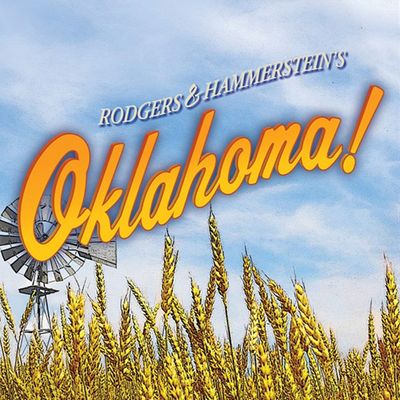
Appropriately, three of the women that I highlight in this episode have important March milestones: Hanya Holm was born March 3rd 1893, Onna White was born on March, 24th in 1922, and the original production of Brigadoon with choreography by Agnes de Mille opened on March 13, 1947. Once they get that proverbial time machine perfected, I would recommend that we all head back for our own Agnes de Mill "festival". That week you could experience her groundbreaking choreography of not just Brigadoon, but also the still running original productions of Oklahoma! and Carousel.
The sound balancing of this episode is not quite up to my current standards, but the content is fascinating, and I suspect that it will introduce even the most avid Broadway history buffs to some dynamic women that you have barely if ever heard of before. Here we go!
Transcript
This transcript was automatically generated and might contain errors.
[0:00] David Armstrong: Welcome to a special encore episode of Broadway Nation.
[0:03] David Armstrong: March is Women's History Month, so this seemed like the perfect time to revisit one of my earliest episodes.
[0:10] David Armstrong: Talented and creative women have played vital and important roles in the Broadway musical from the very beginning, but their contributions are often overlooked or undervalued.
[0:19] David Armstrong: The students in my Broadway musical history course that I teach at the University of Washington School of Drama are always surprised to discover so many women in leadership positions in the world of the theater, beginning even at a time before women had the right to vote.
[0:34] David Armstrong: While we might expect that women would be well represented in the ranks of Broadway choreographers, what is somewhat more surprising is that women were the principal forces behind the artistic and technical creation and development of theatrical lighting design.
[0:48] David Armstrong: Appropriately, three of the women that I highlight in this episode have important March milestones.
[0:54] David Armstrong: Hanya Holm was born on March 3rd, 1893.
[0:58] David Armstrong: Onna White was born on the 24th in 1922, and the original production of Brigadoon with choreography by Agnes de Mille opened on March 13, 1947.
[1:09] David Armstrong: And once they get that time machine perfected, I would recommend that we all go back for an Agnes de Mille festival, because that week you could experience her groundbreaking choreography of not just Brigadoon, but also the still-running original productions of Oklahoma and Carousel.
[1:26] David Armstrong: The sound balancing of this episode is not quite up to my current standards, but the content is fascinating, and I suspect that it will introduce even the most avid Broadway history buffs to some dynamic women that you have barely, if ever, heard of before.
[1:41] David Armstrong: Here we go.
[1:46] David Armstrong: Welcome to another episode of Broadway Nation, the radio show that tells the extraordinary story of how immigrants, Jews, queers, African Americans, and other outcasts invented the Broadway musical and how they changed America in the process.
[2:01] David Armstrong: I'm David Armstrong, and I call this episode It Takes a Woman, the Women Who Invented Broadway Part Two.
[2:09] David Armstrong: In a previous episode, we explored how three late 19th century comedy teams, the Irish Americans Harrigan and Hart, the Jewish Americans Weber and Fields, and the African Americans Williams and Walker, all simultaneously created shows that were early embryonic, not quite yet musicals.
[2:29] David Armstrong: But prior to all of them was a woman named Lydia Thompson, who would be equally instrumental in inspiring this new soon-to-be art form.
[2:44] David Armstrong: Lydia Thompson was an English dancer, singer, actress, director, and producer who formed her own troupe of performers that she called Lydia Thompson and her British blondes.
[2:54] David Armstrong: When she first brought them to New York in 1863, she and her troupe quickly became a sensation.
[3:01] David Armstrong: The shows that she presented were burlesques in the original form of that term.
[3:05] David Armstrong: Irreverent spoofs of popular, serious, high culture novels, plays, poems, operas, myths, and legends, such as Faust, Alibaba and the Forty Thieves, St. George and the Dragon, and Robin Hood.
[3:19] David Armstrong: All of them were presented in ridiculous versions filled with puns, wordplay, slapstick comedy, songs, dances, and general nonsense.
[3:29] David Armstrong: And Lydia smartly added a heavy dollop of sex to the mix.
[3:34] David Armstrong: Her shows were quite racy for the time, including sexual innuendo and dozens of women who often played the male roles wearing skimpy costumes and displaying their legs in tights.
[3:46] David Armstrong: You have to keep in mind that this was still the Victorian era, when proper women went to great lengths to hide their bodies under bustles, hoops, and layers of fabric, and when even the legs of tables and pianos were draped so that they would appear less provocative.
[4:01] David Armstrong: So the idea of young ladies appearing on stage in form-fitting costumes was truly shocking.
[4:08] David Armstrong: The eventual evolution of satirical burlesque shows into sexy girly shows began here with Lydia, but it would be decades later before the strip tease acts that became synonymous with the term burlesque were introduced.
[4:22] David Armstrong: According to all reports, Lydia was a highly skilled and wonderfully captivating performer.
[4:27] David Armstrong: One critic described her like this: Miss Thompson breathes life into everything she does.
[4:33] David Armstrong: She is charming to look at, a good singer, a really clever dancer, and the life and soul of every scene.
[4:41] David Armstrong: Lydia specialized in playing the leading male roles, the swashbuckling romantic heroes of legendary tales.
[4:48] David Armstrong: And often her entire troop of British blondes would follow her into battle dressed as sexy soldiers and marching in military drills.
[4:57] David Armstrong: This seems to have given birth to the now classic showbiz concept of chorus lines of girls dressed in tights and executing precision choreography.
[5:06] David Armstrong: There'd be no roquettes without Lydia.
[5:15] David Armstrong: The music in her shows was a pre-copyright era hodgepodge of tunes borrowed from classical music, operas and operettas, folk songs, popular songs, and marches, the top 40 of its day, and often fitted out with new lyrics created specifically for the story at hand.
[5:32] David Armstrong: As one critic of the day noted, the music is taken from all quarters.
[5:37] David Armstrong: Offenbach's lively airs are liberally used, and the latest popular songs are introduced freely.
[5:44] David Armstrong: The dances, especially one that resembles very much the walk around of the Negro minstrels, are all comical, and the ensembles delightfully absurd.
[5:55] David Armstrong: Her unique combination of comedy, parody, satire, improvisation, song and dance, cross-dressing, extravagant stage effects, risqué jokes and saucy costumes took New York by storm.
[6:08] David Armstrong: It also inspired fierce criticism from the conservative establishment who condemned her for going far beyond what they considered to be the boundaries of decency.
[6:18] David Armstrong: Others were more disturbed by the presumption of a woman who had the audacity to swagger boldly about the stage acting like a man.
[6:26] David Armstrong: The historian John Kendrick describes the effect of Lydia's shows like this: Underdressed women playing sexual aggressors, combining good looks with impertinent comedy, and in a production written and managed by a woman, unthinkable.
[6:41] David Armstrong: No wonder men and adventurous wives turned out in droves, making Thompson and her British blondes the hottest thing in American show business.
[6:52] David Armstrong: Thompson's first season in New York played to standing room only, engrossed over 370,000.
[6:59] David Armstrong: Over the next five years, between 1868 and 1873, Lydia and her troop brought 17 productions to Broadway, many of them produced by, directed by, and starring Lydia herself.
[7:12] David Armstrong: In between, she took her troop on cross-country tours of America, going as far as Seattle.
[7:17] David Armstrong: Everywhere they went, they were met with the same enthusiastic reception, as well as a lot of fierce disapproval.
[7:24] David Armstrong: After all, Lydia Thompson represented a new kind of independent woman that had seldom been seen before.
[7:37] David Armstrong: Lydia's shows were, of course, only precursors to the musical, but they had a huge influence on this emerging form and the other powerful women who would help to invent it.
[7:48] David Armstrong: Clearly, following in the dancing footsteps of Lydia Thompson are three early inventors of the Broadway musical: Ada Overton Walker, Gertrude Hoffman, and Albertina Rausch.
[8:20] David Armstrong: Her family moved to New York during her childhood, where she received considerable musical training and education.
[8:26] David Armstrong: While still a teenager, she joined Black Paddy's Troubadours, where she met her soon-to-be husband George Walker.
[8:32] David Armstrong: She became an acclaimed actress, singer, and especially dancer, often billed as the Queen of the Cakewalk.
[8:39] David Armstrong: And most importantly, for our purposes, she was also a gifted choreographer.
[8:44] David Armstrong: She created innovative dances for Williams and Walker's Hit Vaudeville Act and became Broadway's first female African-American choreographer when she created the dances for the musicals in Dahomey, Abyssinia, and Bandana Land.
[8:57] David Armstrong: It is said that her original dances broke away from the traditions of the minstrel show and offered a new and more positive view of black people.
[9:05] David Armstrong: Tragically, she died of kidney failure in 1914 when she was only 34 years old.
[9:11] David Armstrong: Gertrude Hoffman designed the dances for 15 Broadway shows between 1903 and 1927.
[9:27] David Armstrong: She was born in San Francisco in 1883, the daughter of Irish immigrants.
[9:32] David Armstrong: She danced in Vaudeville and created her own scandalous controversy with a sexy dance called A Vision of Salome, in which she portrayed the biblical temptress.
[9:42] David Armstrong: After a performance at Hammerstein's Victoria, she was arrested for offending public decency, but the judge threw the case out based on Hoffman's very reasonable defense that she had already performed the dance over 400 times previously without being arrested.
[9:57] David Armstrong: After dancing in several early Broadway musicals, she formed her own troupe, the Gertrude Hoffman Girls, who performed her very athletic acrobatic choreography, including leaps, kicks, and even aerial gymnastics in shows around the world, including the sexy Schubert Brothers reviews, Artists and Models, A Night in Paris, and A Night in Spain.
[10:20] David Armstrong: The amazing Albertina Rausch was an Austrian Jewish immigrant who choreographed 33 Broadway shows, including many of the biggest hits of the 1920s and 30s.
[10:31] David Armstrong: Born in Vienna in 1891 to a Polish Jewish mother and a Russian father, she began studying at Vienna's Imperial Ballet when she was just seven years old, and she joined the company as a professional dancer while she was still in her teens.
[10:45] David Armstrong: She was brought to New York in 1909 when she was just 18 years old to be a leading dancer at the gigantic Hippodrome Theater, which with 5,000 seats was purported to be the largest theater in the world and was known for its spectacular productions.
[11:00] David Armstrong: After dancing for various companies and shows in New York and across Europe, she opened the Albertina Rausch Dance Studio in 1923, offering private and group lessons in ballet and interpretive dance, including a strict regimen of body alignment and breathing exercises that set her students apart from the typical vaudeville and Broadway dancers of the day.
[11:22] David Armstrong: The studio became wildly successful and led to the formation of her own troupe, the Albertina Rausch Dancers.
[11:29] David Armstrong: By 1925, 150 dancers were performing under her name on vaudeville stages across America.
[11:36] David Armstrong: She created a new style of dance that she named New World Ballet.
[11:40] David Armstrong: It was a hybrid of classical ballet and modern American jazz dance styles and music, and it became her signature.
[11:48] David Armstrong: She said that she believed instead of traditional realism, Americans preferred dynamic surprises, action, and syncopated sensations.
[12:01] David Armstrong: Her Broadway career began when 20 of her dancers appeared in George White's Scandals of 1924.
[12:08] David Armstrong: Then in 1927, she choreographed five Broadway musicals, including three ballets for the Ziegfeld Follies, McCarthy and Tierney's hit Rio Rita, Victor Herbert's Mademoiselle Modiste, and The Gershwin's Showgirl, which included a ballet set to an American in Paris 20 years before the Gene Kelly movie.
[12:28] David Armstrong: Among her most notable achievements was her work on three Deach and Schwartz musical reviews, Three's a Crowd, Flying Colors, and The Bandwagon, which starred Fred and Adele Astaire.
[12:40] David Armstrong: Her work on those shows included the production numbers Dancing in the Dark and Body and Soul, which was described as a choreographic feast.
[12:48] David Armstrong: Albertina Rausch frequently collaborated with master stagers Hassard Short and Moss Hart, who I profiled in our episodes on the queer creators of Broadway.
[12:58] David Armstrong: Their collaborations included Irving Berlin's Face the Music, Cole Porter's Jubilee, where she created the choreography for Begin the Begin, and the landmark musical Lady in the Dark.
[13:14] David Armstrong: She also had a vibrant career in Hollywood where she choreographed more than a dozen films.
[13:19] David Armstrong: Two interesting side notes to her career.
[13:21] David Armstrong: She was married to the legendary Dmitry Tiamkin, one of the greatest film composers in the history of Hollywood, and she was involved in launching the famed New York restaurant, The Russian Tea Room, which for several years was called the Albertina Roush Russian Tea Room.
[13:37] David Armstrong: This brings us to arguably the most important woman in the history of Broadway.
[13:42] David Armstrong: In 1943, the ballet and modern dance influenced the work of Agnes DeMille, ushered in a new age for Broadway choreography.
[13:51] David Armstrong: With her work on Oklahoma, DeMille pioneered a dramatic, story-based approach to choreography that delved deeply into the emotions and psychology of the characters.
[14:01] David Armstrong: Here's DeMille being interviewed by Sylvia Fine Kaye regarding her work on that landmark show.
[14:08] Agnes DeMille: There's something I've always wanted very much to know.
[14:11] Agnes DeMille: Who thought of putting the ballet, that kind of ballet into Oklahoma?
[14:15] Agnes DeMille: Me, I did.
[14:24] Agnes DeMille: Why was the dancing so important to Oklahoma and really to the whole American theater after that?
[14:30] Agnes DeMille: Well, it was new.
[14:31] Agnes DeMille: It was new because it had a lot of emotional impact and content.
[14:37] Agnes DeMille: And because all the people in the dances were people, and they were characters in the play.
[14:42] Agnes DeMille: They kept their characters right through the play.
[14:45] Agnes DeMille: And all their gestures and all their style belonged to that play and couldn't possibly be used in any other musical.
[14:53] Agnes DeMille: Not possibly.
[14:54] Agnes DeMille: And the, for instance, the lead, Curly and Laurie, the two leads, have dancing counterparts.
[15:02] Agnes DeMille: There's a dancing Laurie and a dancing Curly.
[15:05] Agnes DeMille: And they're interchangeable.
[15:07] Agnes DeMille: And we could continue the plot during the dances and during the ballets.
[15:11] Agnes DeMille: Let me tell you about the plot.
[15:13] Agnes DeMille: You know, the plot of Oklahoma is simply.
[15:17] Agnes DeMille: Well, a girl has to make up her mind whether she'll take this boy or that boy to a picnic.
[15:22] Agnes DeMille: This is a situation that has been faced before.
[15:25] Agnes DeMille: True.
[15:28] Agnes DeMille: But in this case, in this case, she was very deeply in love with one boy and terrified of the other.
[15:37] Agnes DeMille: Well, if she was frightened of him, why didn't she send him packing?
[15:40] Agnes DeMille: Because there was a strange dark hold over him.
[15:46] Agnes DeMille: I think he rather attracted her in a sinister way.
[15:49] Agnes DeMille: But she makes up her mind in the ballet.
[15:52] Agnes DeMille: During the ballet, she makes up her mind, and at the end of the ballet, she has decided to go with him.
[15:59] Agnes DeMille: And so the second act is totally different and rather more sombre and serious than it would otherwise have been.
[16:06] David Armstrong: Now tell me something.
[16:07] David Armstrong: Why do you think Oklahoma was such a great success?
[16:10] Agnes DeMille: It was good.
[16:11] Agnes DeMille: Oh, that awesome.
[16:18] David Armstrong: Why it was such a success.
[16:22] Agnes DeMille: Yes.
[16:23] Agnes DeMille: It was done during the war.
[16:25] Agnes DeMille: And New York was the biggest staging area in the whole United States.
[16:29] Agnes DeMille: And everybody who came to that show, all the soldiers went overseas for the duration.
[16:34] Agnes DeMille: And I remember so well at the St. James Theater, that triple row of uniforms at the back.
[16:41] Agnes DeMille: The men standing there watching this folksy show, happy, light, with the tears streaming down their cheeks because it symbolized home and what they were gonna die for.
[16:55] Agnes DeMille: And then after the war, when the war was over, we took it to London.
[16:59] Agnes DeMille: London had been woefully hurt.
[17:02] Agnes DeMille: It was terribly damaged.
[17:04] Agnes DeMille: And the beautiful Ruury Lane Theatre had been torn up.
[17:08] Agnes DeMille: The roof had been torn open.
[17:10] Agnes DeMille: But they mended it and they put it back, and they asked Oklahoma to come.
[17:14] Agnes DeMille: And all the audience dressed up in gala and went there for the first time they were dressed since London went into the war in 1939 and the Blitzers started.
[17:26] Agnes DeMille: And they unchored every single song.
[17:29] Agnes DeMille: And at the end, they all stood, joined hands, and sang the whole score with the cast standing singing on stage.
[17:39] Agnes DeMille: It will never, never be forgotten.
[17:41] Agnes DeMille: Well, they tore the rope off the theater again.
[17:46] David Armstrong: Broadway Nation will be back with more dynamic women right after this short break.
[17:52] David Armstrong: Agnes DeMille's 16 Broadway musicals included Oklahoma, Carousel, Bloomer Girl, Brigadoon, and Gentlemen Prefer Blondes.
[18:01] David Armstrong: At one point in 1945, she had four hit Broadway musicals all running at the same time, and was featured on the cover of Life magazine.
[18:10] David Armstrong: With Rogers and Hammerstein's musical Allegro, she became the first woman to both direct and choreograph a Broadway musical.
[18:18] David Armstrong: Although the show's limited success proved to be a setback for her career and soured her relationship with Rogers and Hammerstein.
[18:26] David Armstrong: Even so, she is without a doubt one of the most significant Broadway creators of all time.
[18:32] David Armstrong: DeMille was closely followed by three of her colleagues from the dance world, Helen Tamaris, Hanya Holm, and Onna White.
[18:40] David Armstrong: Helen Tamaris was a pioneer of American modern dance.
[18:44] David Armstrong: She was born Helen Becker in 1902 in New York City to Jewish parents who had fled Russia and emigrated to the United States.
[18:52] David Armstrong: She would eventually go on to choreograph 13 Broadway musicals, including Up in Central Park, Annie Get Your Gun, Plain and Fancy, and Fanny.
[19:17] David Armstrong: Holm, who is considered to be one of the founding mothers of modern dance, also choreographed 10 Broadway musicals, including the legendary hits Kiss Me Kate, My Fair Lady, and Camelot.
[19:35] David Armstrong: Onna White choreographed 16 Broadway shows, including The Music Man and Mame, and she also choreographed many musical films, including the Academy Award-winning Best Picture Oliver.
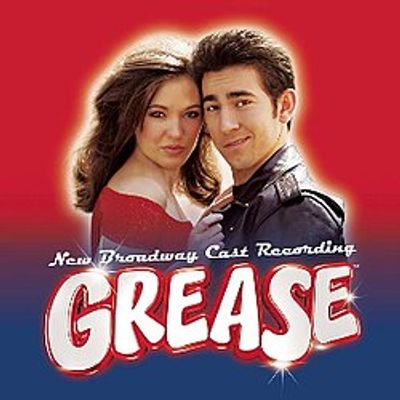
[19:52] David Armstrong: Even more prolific is Patricia Birch, who started as a dancer in Martha Graham's company and went on to choreograph 21 Broadway musicals, including A Little Night Music, Pacific Overtures, Cande, and the Lunning Blockbuster Grease.
[20:09] David Armstrong: She later recreated and adapted her Broadway dances for the movie of Grease, as well as directing the film Grease 2.
[20:21] David Armstrong: Still active is the wonderful Graziella Danielle, who was born in Argentina and has choreographed 13 Broadway shows over the last 40 years, including the original productions of Ragtime and Once on This Island, which she also directed.
[20:37] David Armstrong: Two female choreographers have dominated Broadway, with 30 shows between them over the last 30 years.
[20:45] David Armstrong: Five-time Tony Award winner Susan Stroman's 15 shows include Crazy for You, Contact, and The Producers.
[20:52] David Armstrong: And Kathleen Marshall's 15 shows include acclaimed revivals of Kiss Me Kate, Wonderful Town, The Pajama Game, and Anything Goes.
[21:02] David Armstrong: And in addition to choreographing, Marshall and Stroman have also directed many of those productions.
[21:08] David Armstrong: Which leads us right up to today where we are experiencing a landmark season for female directors on Broadway.
[21:15] David Armstrong: Hades Town is directed by Rachel Chavkin.
[21:18] David Armstrong: The Revival of Company is directed by Marianne Elliott, and Jagged Little Pill is directed by Diane Paulus.
[21:24] David Armstrong: I think Lydia Thompson would be very proud of these remarkable women who have followed in her amazing footsteps.
[21:32] David Armstrong: As you might expect, from the earliest days of the musical, there have been many great female costume designers, including Lucinda Ballard, Irene Shiraff, Patricia Ziprott, Florence Klotz, Theoni Aldridge, Willa Kim, Catherine Zuber, Ann Hold Ward, and the unusual female design group known as Motley, to name only a few.
[21:52] David Armstrong: And there have also been a handful of women set designers, especially in recent years.
[21:58] David Armstrong: However, what you might not expect is that the names of two queer women dominate the history of Broadway lighting design, Jean Rosenthal and Theron Musser.
[22:09] David Armstrong: Jean Rosenthal largely invented what we know today as stage lighting design.
[22:14] David Armstrong: In the early 20th century, the lighting of a play or musical was the responsibility of the theater's electrician, who tried as best he could to fulfill the vision of a set designer and the director.
[22:25] David Armstrong: Rosenthal developed lighting into its own design element.
[22:29] David Armstrong: She turned a technical craft into an art form.
[22:32] David Armstrong: Born in 1912 in New York City, the daughter of Russian Jewish immigrants, she studied acting and dance and became a technical assistant to modern dance pioneer Martha Graham.
[22:43] David Armstrong: She later took design classes while studying at Yale, and then went on to become a technical assistant of the Federal Theater Project, working with Orson Welles.
[23:04] David Armstrong: Between her first show in 1942 and her death in 1969, Rosenthal designed 85 Broadway musicals.
[23:18] David Armstrong: Most notably West Side Story, Fiddler on the Roof, and Cabaret.
[23:23] David Armstrong: Rosenthal didn't just create the profession, she also advanced its technology and its artistic potential.
[23:31] David Armstrong: She added new elements such as saturated color washes of back and side light to the lighting designer's vocabulary.
[23:38] David Armstrong: In the middle of her career, she became the mentor of another woman who would go on to further define the profession.
[23:44] David Armstrong: Theron Musser was born in 1925 in Virginia, went to college in Kentucky, where she got interested in working in the theater, and then went on to Yale, where she got interested in lighting design.
[23:56] David Armstrong: After working as Rosenthal's assistant, she moved off on her own career.
[24:21] David Armstrong: She also brought groundbreaking technological and artistic contributions to the field.
[24:26] David Armstrong: She was the first designer to use a computerized electronic lighting board on Broadway.
[24:31] David Armstrong: This was for A Chorus Line in 1975, and by 1981, every Broadway show used one.
[24:39] David Armstrong: Rosenthal died in 1969, and Musser passed away in 2009.
[24:45] David Armstrong: But they have been followed by many outstanding female lighting designers.
[24:49] David Armstrong: Jennifer Tipton, Marcia Madeira, Peggy Clark, Peggy Eisenhower, Beverly Emmons, and Natasha Katz, to name only a few.
[25:20] David Armstrong: Broadway Nation is produced and written by me, David Armstrong.
[25:23] David Armstrong: Our production engineer is Nick Terabini, and special thanks to Alan Fitzpatrick for his voice acting contributions.
[25:30] David Armstrong: I also want to thank everyone at KVSH 101.9 FM, the voice of beautiful Vashon Island, Washington, and especially everyone at the Broadway Podcast Network.
[25:42] David Armstrong: If you love this podcast and want to delve even deeper into the world of Broadway musicals, I invite you to become a member of the Broadway Nation Backstage Pass Club.
[25:52] David Armstrong: For as little as $7 a month, members will receive exclusive access to never before heard unedited versions of every season two interview and many from season one as well.
[26:03] David Armstrong: And this includes additional in-depth conversations with my frequent co-host Albert Evans.
[26:09] David Armstrong: Last but certainly not least, you will receive special on-air shout-outs and acknowledgments of your vital support for this podcast.
[26:17] David Armstrong: To join, just click the link included in the show notes for this episode on our website at www.broadway-nation.com.
[26:26] David Armstrong: That's Broadway-Nation.com.
© Broadway Podcast Network, All Rights Reserved